



Galiximab
Based on 1 publication(s) in Google Scholar
Galiximab (IDEC-114) is a primatized monoclonal IgG1 antibody targeting CD80. Galiximab variable regions are primatized, and the constant regions are humanized. Galiximab induces antibody-dependent cellular cytotoxicity by blocking CD80-CD28 binding. Galiximab has antitumor activity and can induce apoptosis in tumor cells. Galiximab can be used in the research of relapsed Hodgkin lymphoma and solid tumors.
For research use only. We do not sell to patients.
- Purity : 99.23%
- CAS No.: 357613-77-5
- Molecular Weight:145.24 kDa
-
Storage:Shipping with dry ice
Please store the product under the recommended conditions in the Certificate of Analysis.


To place orders, for customer services and technical support, please contact: MedChemExpress USA
Tel: 609-228-6898 E-mail: [email protected] [email protected]


-
 Biological Activity
-
Chemical Information
- Protocols
- Purity & Documentation
- References
-
 Help & FAQs




Biological Activity
Description
IC50 & Target
CD28L/CD80
In Vitro
Galiximab (25-100 μg/mL; 36 h) in combination with Doxorubicin (HY-15142A) significantly enhances apoptosis in Raji cells[1].
MedChemExpress (MCE) has not independently confirmed the accuracy of these methods. They are for reference only.
-
Cell Line:Raji cells treated Doxorubicin (HY-15142A) (0.05-1 µg/mL)
-
Concentration:25, 50 and 100 μg/mL
-
Incubation Time:36 h
-
Result:Enhanced cell apoptosis in a dose-dependent manner.
In Vivo
MedChemExpress (MCE) has not independently confirmed the accuracy of these methods. They are for reference only.
-
Animal Model:Female CB17 SCID mice aged 6-8 weeks old treated Raji cells or SKW6.4 cells[1]
-
Dosage:Raji model: 0.1, 1, 3, 10, 30 mg/kg; once weekly; 3 times in total
SKW6.4 model: 5, 10, 30 mg/kg; once weekly; 4 times in total -
Administration:Intraperitoneal injection
-
Result:Showed dose-dependent tumor growth inhibition and survival prolongation in both models.
- Detection of Apoptosis
- TUNEL staining for apoptotic DNA fragmentation
- Cell Cytotoxicity Assay
- Mammalian live/dead viability and cytotoxicity staining
- Annexin V plus membrane-impermeant dye apoptosis staining
- Apoptosis Solutions
- Subcutaneous Cell-Line-Derived Xenograft
- Cell Viability Determination by MTT Colorimetric Assay
Clinical Trial
| NCT Number | Sponsor | Condition | Start Date |
Phase

|
|---|---|---|---|---|
| NCT01329991 | 2011-05 | PHASE1 |
Application
ELISA, FACS, Functional assay
Verified Bioactivity
-
 Immobilized B7-1/CD80 Protein, Human (HEK293, HY-P70651) can bind Galiximab, The ED50 for this effect is 2.33 ng/mL.
-
 Flow Cytometry analysis of Raji cells labelling CD28L/CD80 (red) with Galiximab (anti-CD28L/CD80) (HY-P99293). Goat Anti-Human IgG (Alexa Fluor 488) (HY-P83776) at a dilution of 1/1000 was used as the secondary antibody. Blue-Human IgG1 kappa (HY-P99001). Black-Unlabelled control, cells without incubation with primary antibody.


Product Details
-
CAS No. 357613-77-5
-
Accession P33681
-
Synonyms IDEC 114; Anti-Human CD80 Recombinant Antibody
-
Molecular Weight 145.24 kDa
-
Species Reactivity
Human
-
Conjugated
Unconjugated
-
Isotype
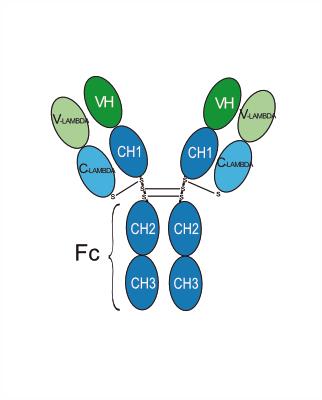
Human IgG1 lambda
-
Recommend Isotype Controls
-
Format
-
Human IgG1 lambda
-
Product Properties
-
Appearance
Liquid
-
Formulation
Please refer to the lot-specific COA for specific buffer information.
-
Purity
99.23%
-
Reconstitution
The product can be reconstituted/diluted with sterile PBS or saline.
-
Storage & Stability
Please store the product under the recommended conditions in the Certificate of Analysis.
-
Shipping
Shipping with dry ice.


Publications (1)
-
Journal Impact Factor
-
Most Recent
-
Sci Rep
CD80 (B7-1) as a potential therapeutic target in Epstein-Barr virus‑associated B cell diseases. [Abstract]2026 May 26. PMID: 42191836
Purity & Documentation


References
[1]. Hariharan K, et al. Galiximab (anti-CD80)-induced growth inhibition and prolongation of survival in vivo of B-NHL tumor xenografts and potentiation by the combination with fludarabine. Int J Oncol. 2013 Aug;43(2):670-6. [Content Brief]
[2]. Smith SM, et, al. The anti-CD80 primatized monoclonal antibody, galiximab, is well-tolerated but has limited activity in relapsed Hodgkin lymphoma: Cancer and Leukemia Group B 50602 (Alliance). Leuk Lymphoma. 2013 Jul;54(7):1405-10. [Content Brief]

Calculators
Concentration (start) × Volume (start) = Concentration (final) × Volume (final)


Galiximab Related Classifications
HY-P99293 Related Classifications
 Powered by Bioz