



Hodgkin Lymphoma
-
Hodgkin Lymphoma (11)

- 1
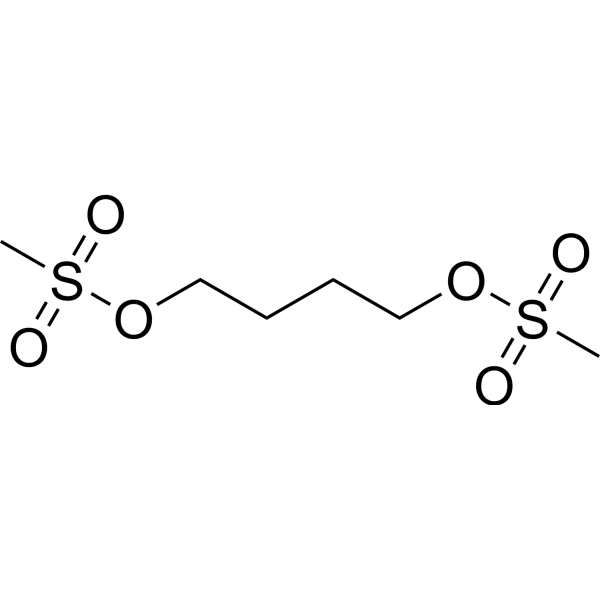
- Formula: C6H14O6S2
- Molecular Weight: 246.30
Busulfan is a potent alkylating antineoplastic agent. Busulfan causes DNA damage by cross-linking DNAs and DNA and proteins. Busulfan inhibits thioredoxin reductase. Busulfan induces apoptosis. Busulfan is an immunosuppressive and myeloablative chemotherapeutic agent.

- Formula: C51H56F2N5O11PS
- Molecular Weight: 1016.05
AK-1690 is a selective PROTAC degrader targeting STAT6 (DC50=1 nM) with a Ki of 6 nM against human STAT6. AK-1690 degrades STAT6 via the interaction of STAT6 with cereblon and a ubiquitin-like process. AK-1690 effectively depletes STAT6 protein in mouse liver and lung tissues, and is applicable to research related to leukemia, Hodgkin's lymphoma, follicular lymphoma, etc..

- Molecular Weight: 153000 (average)
Brentuximab vedotin (solution) (cAC10-vcMMAE) is an antibody-drug conjugate (ADC) comprising an anti-CD30 antibody and the cytotoxic agent Monomethyl auristatin E (MMAE). The antibody portion is Brentuximab (HY-P99151), and the drug-linker conjugate for ADC is VcMMAE (HY-15575). Brentuximab vedotin (solution) inhibits CD30-positive cells with an IC50 of 2.5 ng/mL. Brentuximab vedotin (solution) can be used for the research of relapsed and refractory Hodgkin lymphoma.
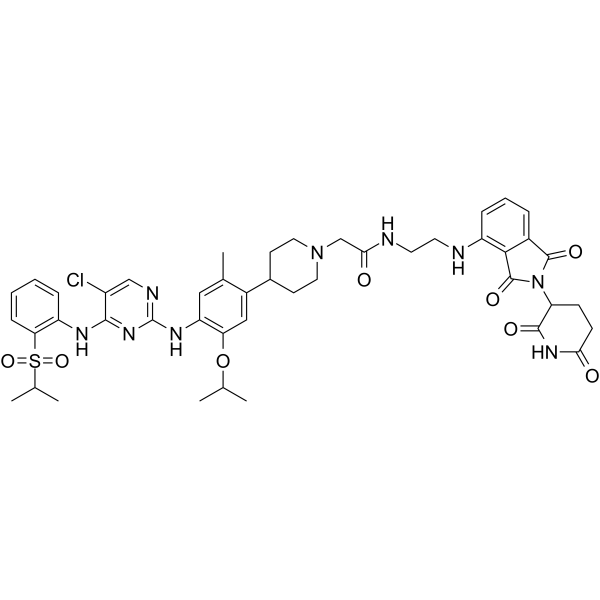
- Formula: C45H52ClN9O8S
- Molecular Weight: 914.47
MS4078 is a ALK PROTAC degrader with a DC50 of 11 nM in SU-DHL-1 cells and a DC50 of 59 nM in NCI-H2228 cells, and its Kd value for ALK binding is 19 nM. MS4078 induces ALK degradation via the ubiquitin-proteasome pathway by recruiting cereblon, and inhibits the phosphorylation of ALK and STAT3, thereby suppressing cancer cell proliferation. MS4078 is applicable for the research of non-small cell lung cancer and anaplastic large cell non-Hodgkin's lymphoma.
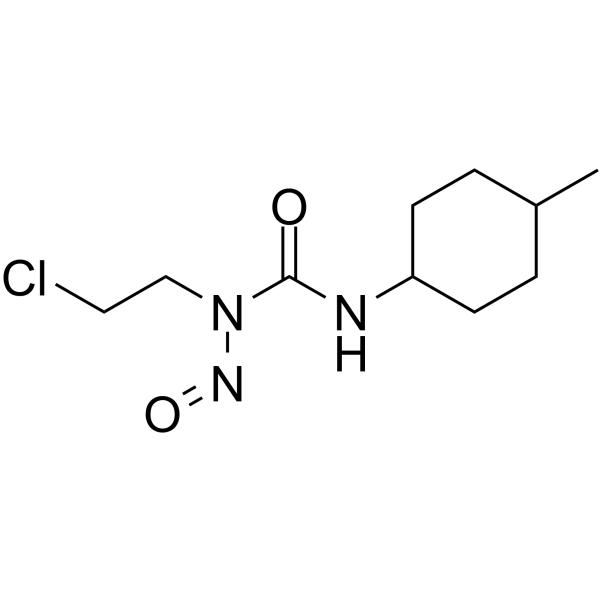
- Formula: C10H18ClN3O2
- Molecular Weight: 247.72
Semustine is an orally active, blood-brain barrier permeable antitumor alkylating agent with a binding affinity of 1.53 × 10³ M-1 for guanine and thymine residues in bovine DNA. Semustine undergoes major groove-directed alkylation at guanine residues to form O6-chloroethylguanine and N1-O6-ethanoguanine adducts, and generates dG-dC interstrand crosslinks. Semustine induces partial B- to C-type transition of DNA, base stacking and helical structure distortion, mild dehydration, as well as partial DNA double-strand unwinding. Semustine can be used in research related to Lewis lung cancer, leukemia, Hodgkin's lymphoma, malignant melanoma, glioma, and diffuse large B-cell lymphoma.

- Formula: C69H77ClF3N9O10S3
- Molecular Weight: 1381.05

- Formula: C38H65N5O8
- Molecular Weight: 719.95
Auristatin S is a potent Auristatin payload. Auristatin S binds to the vinca-binding site on tubulin, thereby inhibiting microtubule assembly and inducing cell cycle arrest and apoptosis. Auristatin S acts as a cytotoxic component of antibody-drug conjugates (ADCs) and exerts target-specific cytotoxicity against cancer cells. Auristatin S can be used in the research of lymphoma, anaplastic large cell lymphoma and Hodgkin lymphoma.

- Formula: C40H66F3N5O10
- Molecular Weight: 833.97
Auristatin S TFA is a potent Auristatin payload. Auristatin S TFA binds to the vinca-binding site on tubulin, thereby inhibiting microtubule assembly and inducing cell cycle arrest and apoptosis. Auristatin S TFA acts as a cytotoxic component of antibody-drug conjugates (ADCs) and exerts target-specific cytotoxicity against cancer cells. Auristatin S TFA can be used in the research of lymphoma, anaplastic large cell lymphoma and Hodgkin lymphoma.

MDX-1401 is a fully human IgG1 (κ isotype) monoclonal antibody against CD30, with a Kd value of 0.83 nmol/L. MDX-1401 induces antibody-dependent cellular cytotoxicity in CD30-expressing cells and inhibits tumor growth in CD30+ lymphoma xenograft models. MDX-1401 can be used in research related to malignant lymphoma and Hodgkin lymphoma.

TPP-9476 (BAY-943 antibody) is an anti-human IL3RA (CD123) monoclonal antibody with human IL3RA Kd of 11 nM and cynomolgus monkey IL3RA Kd of 16 nM. TPP-9476 binds specifically to human and cynomolgus monkey IL3RA, undergoes target-dependent internalization into lysosomes of IL3RA-positive cells.TPP-9476 exerts antiproliferative effects in IL3RA-expressing acute myeloid leukemia and classical Hodgkin lymphoma cells, reduces tumor burden, improves survival, and induces complete tumor remission in relevant xenograft mouse models.

- Formula: C23H29N7O2
- Molecular Weight: 435.52
Nampt-IN-22 is a nicotinamide phosphoribosyltransferase (NAMPT) inhibitor. Nampt-IN-22 blocks the NAD+ salvage synthesis pathway by inhibiting nicotinamide phosphoribosyltransferase (NAMPT). Its tertiary alcohol forms hydrogen bonds with His191 of NAMPT and enhances lysosomal stability via intramolecular hydrogen bonds. As an ADC payload, Nampt-IN-22 exhibits low nanomolar cytotoxicity against tumor cells after conjugation to an anti-CD30 antibody, prolongs survival in a disseminated L540 Hodgkin lymphoma mouse model, and suppresses subcutaneous tumor growth. Nampt-IN-22 can be used in studies related to Hodgkin lymphoma.
- 1



