1. Search Result
Search Result
Results for "

STAR

" in MedChemExpress (MCE) Product Catalog:

27

Inhibitors & Agonists

1

Screening Libraries

1

Fluorescent Dye

1

Biochemical Assay Reagents

1

Peptides

2

Inhibitory Antibodies

5

Natural
Products

17

Recombinant Proteins

3

Isotope-Labeled Compounds

4

Antibodies

5

Oligonucleotides

Cat. No. Product Name Target Research Areas Chemical Structure
  • HY-Y0740

    Environmental Pollutants Endogenous Metabolite Metabolic Disease
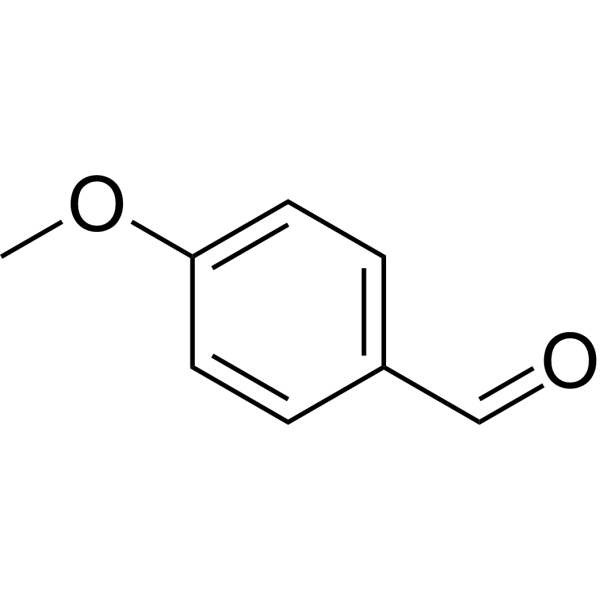
    4-Methoxybenzaldehyde (p-anisaldehyde) is a fragrant phenolic compound. 4-Methoxybenzaldehyde has been found in many plant species including horseradish, anise, star anise. 4-Methoxybenzaldehyde is a possible neurotoxicant and it has shown effects that include mortality, attractancy, and interference with host seeking .
    4-Methoxybenzaldehyde
  • HY-15483
    DY131
    3 Publications Verification

    GSK 9089

    Estrogen Receptor/ERR Smo Endocrinology Cancer
    DY131 (GSK 9089) is a potent and selective ERRγ and ERRβ agonist. DY131displays inactive against ERRα, ERα and ERβ . DY131 also inhibits Smo signaling .
    DY131
  • HY-12502A
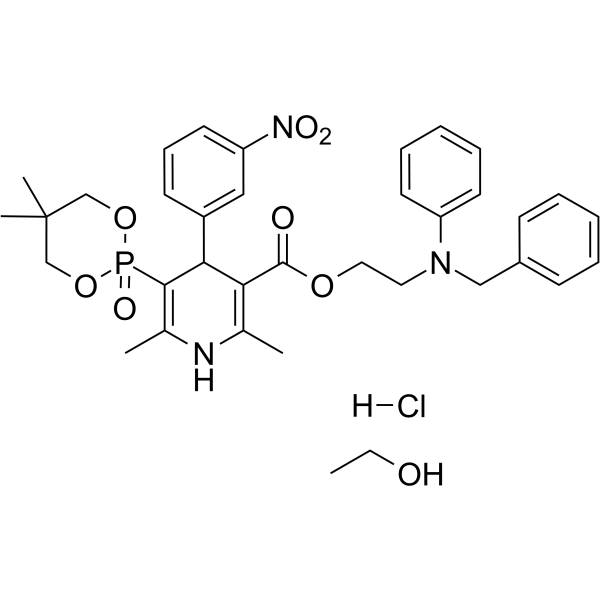
    Efonidipine hydrochloride monoethanolate
    1 Publications Verification

    NZ-105 hydrochloride monoethanolate; (±)-Efonidipine hydrochloride monoethanolate

    Calcium Channel SARS-CoV Cardiovascular Disease Neurological Disease Cancer
    Efonidipine (NZ-105) hydrochloride monoethanolate is an orally active dual L-type and T-type calcium channel blocker (CCB) with IC50 values of 1.8 and 350 nM, respectively. Efonidipine hydrochloride monoethanolate inhibits SARS-CoV-2 main protease. Efonidipine hydrochloride monoethanolate modulates adrenal steroidogenesis by increasing the expression of steroidogenic acute regulatory protein (StAR), dbcAMP-or angiotensin II-induced StAR mRNA expression and DHEA-S production, while suppressing the biosynthesis of aldosterone and cortisol. Efonidipine hydrochloride monoethanolate reduces plasma aldosterone levels in vivo. Efonidipine hydrochloride monoethanolate improves cardiac function in heart failure models by inhibiting T-type calcium channels (via both tonic and use-dependent blockade), independently of blood pressure reduction. Efonidipine hydrochloride monoethanolate can be used for research in hypertension, heart failure, and disorders involving dysregulated steroid hormone synthesis .
    Efonidipine hydrochloride monoethanolate
  • HY-W073128

    PFTeDA

    PPAR Apoptosis PGC-1α AMPK Akt mTOR Reactive Oxygen Species (ROS) Endocrinology
    Perfluorotetradecanoic acid (PFTeDA) is an orally active perfluoroalkyl substance. Perfluorotetradecanoic acid directly binds to the ligand-binding domain of purified hPPARγ, with a Kd value of 157.8 μM. Perfluorotetradecanoic acid significantly reduces the activity of the SIRT1/PGC1α and AMPK signaling pathways while stimulating the activity of the AKT1/mTOR signaling pathway. Perfluorotetradecanoic acid significantly upregulates the expression of corticosterone biosynthesis genes. Perfluorotetradecanoic acid increases ROS levels and promotes Apoptosis. Perfluorotetradecanoic acid impairs Leydig cell function and male reproductive endocrine function in adult male rats .
    Perfluorotetradecanoic acid
  • HY-12502
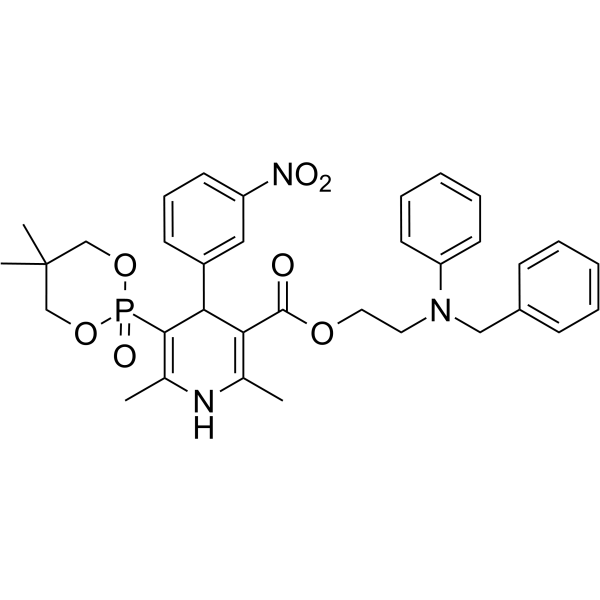
    Efonidipine
    1 Publications Verification

    NZ-105; (±)-Efonidipine

    Calcium Channel SARS-CoV Cardiovascular Disease Neurological Disease Cancer
    Efonidipine (NZ-105) is an orally active dual L-type and T-type calcium channel blocker (CCB) with IC50 values of 1.8 and 350 nM, respectively. Efonidipine inhibits SARS-CoV-2 main protease. Efonidipine modulates adrenal steroidogenesis by increasing the expression of steroidogenic acute regulatory protein (StAR), dbcAMP-or angiotensin II-induced StAR mRNA expression and DHEA-S production, while suppressing the biosynthesis of aldosterone and cortisol. Efonidipine reduces plasma aldosterone levels in vivo. Efonidipine improves cardiac function in heart failure models by inhibiting T-type calcium channels (via both tonic and use-dependent blockade), independently of blood pressure reduction. Efonidipine can be used for research in hypertension, heart failure, and disorders involving dysregulated steroid hormone synthesis .
    Efonidipine
  • HY-134462

    Orphan Nuclear Receptor Metabolic Disease Cancer
    RJW103 is an acid-stable SF-1 (NR5A1) and LRH-1 agonist with pEC50 values of 6.5 and 5.9, respectively. RJW103 activates SF-1- and LRH-1-mediated transcription of endogenous target genes. RJW103 can be used in research on cancer, endocrinology and metabolic diseases, such as adrenocortical tumors .
    RJW103
  • HY-D2348

    Fluorescent Dye Infection Others
    ACE is a low-background, photostable fluorophore with nanomolar binding affinity for the Okra RNA aptamer. ACE enables clear visualization of mRNA in live bacteria and mammalian cells, including tracking the trafficking of mRNA to stress granules and dual-color super-resolution imaging of RNA in live cells. (Ex=488 nm, Em=555 nm) .
    ACE
  • HY-W1048851B

    4-Arm-PEG10000-Mal

    Biochemical Assay Reagents Others
    4-Arm-PEG10000-Maleimide (4-Arm-PEG10000-Mal) is a four-arm star-shaped multifunctional PEG crosslinker with an average molecular weight of 10 kDa and maleimide terminal groups. 4-Arm-PEG10000-Maleimide efficiently conjugates biomolecules via thiol-Michael reaction, and is widely used in protein modification, antibody-drug conjugation and biomaterial preparation .
    4-Arm-PEG10000-Maleimide
  • HY-12502B

    NZ-105 hydrochloride; (±)-Efonidipine hydrochloride

    Calcium Channel SARS-CoV Cardiovascular Disease Cancer
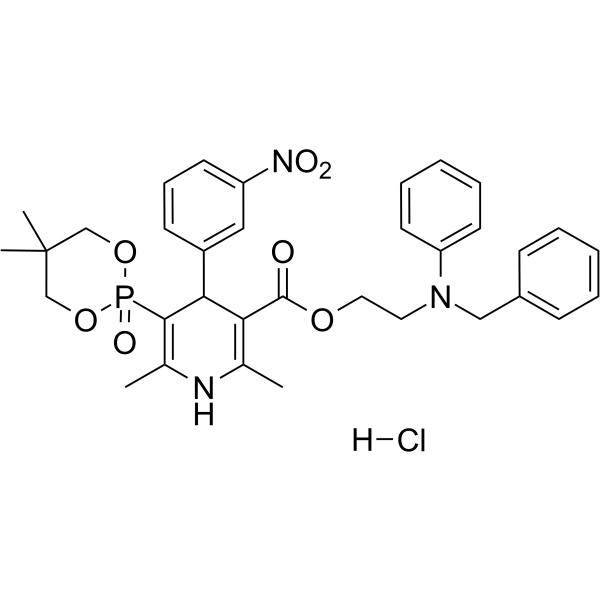
    Efonidipine (NZ-105) hydrochloride is an orally active dual L-type and T-type calcium channel blocker (CCB) with IC50 values of 1.8 and 350 nM, respectively. Efonidipine hydrochloride inhibits SARS-CoV-2 main protease. Efonidipine hydrochloride modulates adrenal steroidogenesis by increasing the expression of steroidogenic acute regulatory protein (StAR), dbcAMP-or angiotensin II-induced StAR mRNA expression and DHEA-S production, while suppressing the biosynthesis of aldosterone and cortisol. Efonidipine hydrochloride reduces plasma aldosterone levels in vivo. Efonidipine hydrochloride improves cardiac function in heart failure models by inhibiting T-type calcium channels (via both tonic and use-dependent blockade), independently of blood pressure reduction. Efonidipine hydrochloride can be used for research in hypertension, heart failure, and disorders involving dysregulated steroid hormone synthesis .
    Efonidipine hydrochloride
  • HY-Y0740R

    Reference Standards Endogenous Metabolite Metabolic Disease
    4-Methoxybenzaldehyde (Standard) is the analytical standard of 4-Methoxybenzaldehyde. This product is intended for research and analytical applications. 4-Methoxybenzaldehyde (p-anisaldehyde) is a fragrant phenolic compound. 4-Methoxybenzaldehyde has been found in many plant species including horseradish, anise, star anise. 4-Methoxybenzaldehyde is a possible neurotoxicant and it has shown effects that include mortality, attractancy, and interference with host seeking .
    4-Methoxybenzaldehyde (Standard)
  • HY-P10780

    Neuropeptide NPVF (mouse)

    Neuropeptide FF Receptor Apoptosis MDM-2/p53 PERK Endocrinology
    RFRP-3 (mouse) is a functional ortholog of avian gonadotropin inhibitory hormone (GnIH), binding to GPR147. RFRP-3 (mouse) reduces Progesterone synthesis by inhibiting FSHR and key enzymes involved in steroidogenesis (P450scc, 3β-HSD, StAR). RFRP-3 (mouse) induces Apoptosis (increase of p53). RFRP-3 (mouse) also suppresses the ERK signaling pathway. RFRP-3 (mouse) can be used for research of follicular development .
    RFRP-3 (mouse)
  • HY-RS24627

    Small Interfering RNA (siRNA) Others

    Star Rat Pre-designed siRNA Set A contains three designed siRNAs for Star gene (Rat), as well as a negative control, a positive control, and a FAM-labeled negative control.

    Star Rat Pre-designed siRNA Set A
    Star Rat Pre-designed siRNA Set A
  • HY-RS13875

    Small Interfering RNA (siRNA) Others

    STAR Human Pre-designed siRNA Set A contains three designed siRNAs for STAR gene (Human), as well as a negative control, a positive control, and a FAM-labeled negative control.

    STAR Human Pre-designed siRNA Set A
    STAR Human Pre-designed siRNA Set A
  • HY-RS18153

    Small Interfering RNA (siRNA) Others

    Star Mouse Pre-designed siRNA Set A contains three designed siRNAs for Star gene (Mouse), as well as a negative control, a positive control, and a FAM-labeled negative control.

    Star Mouse Pre-designed siRNA Set A
    Star Mouse Pre-designed siRNA Set A
  • HY-143656

    Autophagy Endocrinology
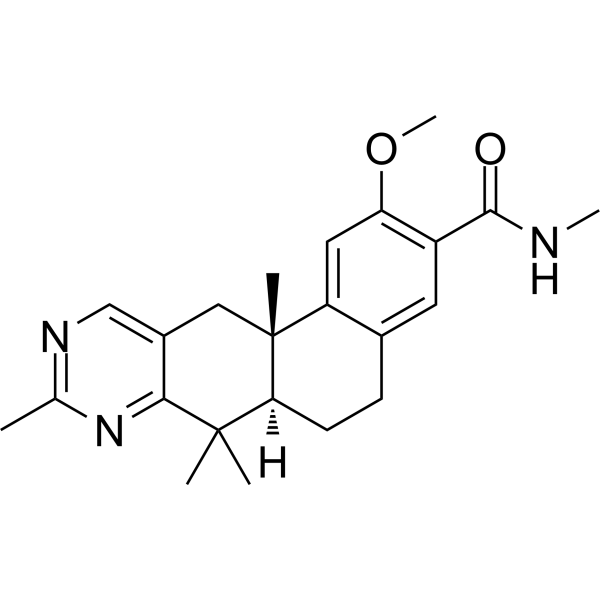
    SH379 is the derivative of 2-methylpyrimidine-fused tricyclic diterpene. SH379 is a potent and orally active anti-late-onset hypogonadism agent. SH379 significantly promotes the expression of the key testosterone synthesis-related enzymes StAR and 3β-HSD. SH379 stimulates autophagy through regulating AMPK/mTOR signaling pathway .
    SH379
  • HY-161384

    Parasite Infection
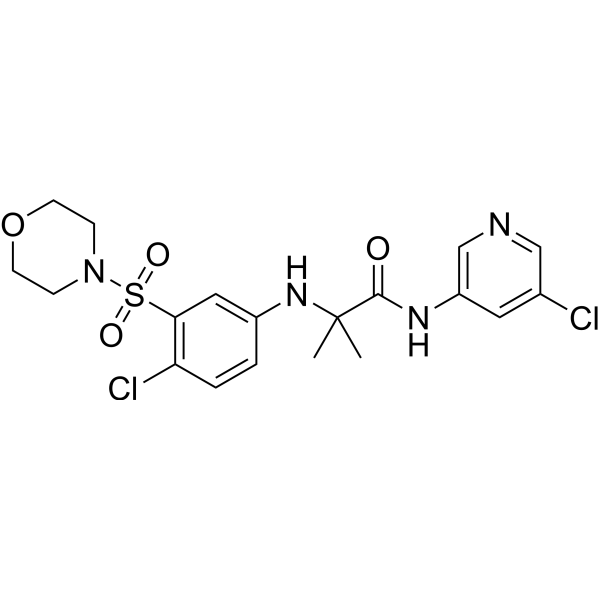
    WJM-715 is an antimalarial agent with an EC50 of 0.015 μM by trageting STAR-related lipid transfer protein (PfSTART1) with a KD of 14 nM .
    WJM-715
  • HY-N12136

    Others Others
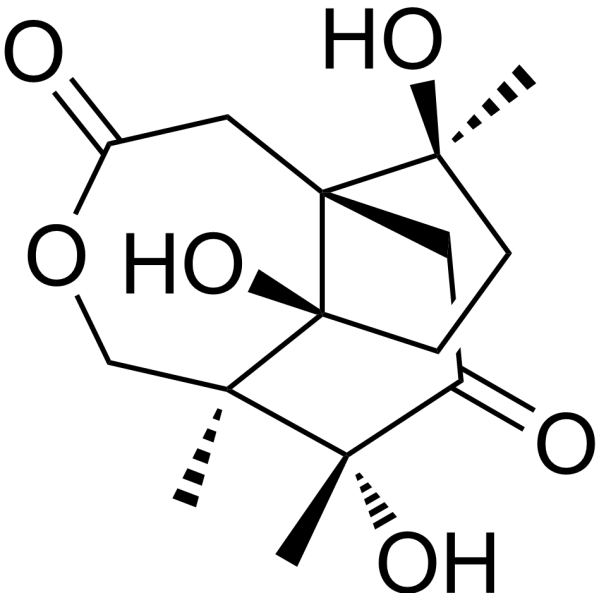
    1α-Hydroxy-3-deoxypseudoanisatin (Iso-γ-fagarine) is a sesquiterpenoid obtained from star anise (Illicium merrillianum) isolated from the peel .
    1α-Hydroxy-3-deoxypseudoanisatin
  • HY-RS02193

    Small Interfering RNA (siRNA) Others

    CD163L1 Human Pre-designed siRNA Set A contains three designed siRNAs for CD163L1 gene (Human), as well as a negative control, a positive control, and a FAM-labeled negative control.

    CD163L1 Human Pre-designed siRNA Set A
    CD163L1 Human Pre-designed siRNA Set A
  • HY-N12102

    HBV Infection
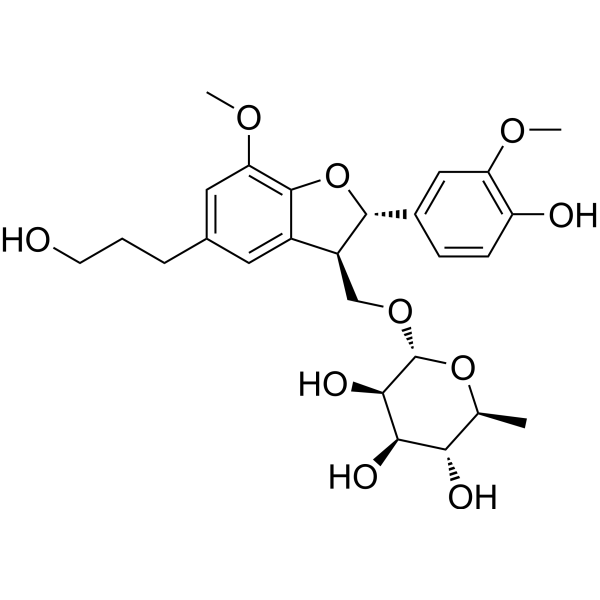
    Dihydrodehydrodiconiferyl alcohol 9-O-α-L-rhamnopyranoside (compound 1) is a lignan with anti-HBC activity. Dihydrodehydrodiconiferyl alcohol 9-O-α-L-rhamnopyranoside targets HBV surface antigen with IC50s of 0.58 mM (HBsAg) and >2.4 mM (HBeAg). Dihydrodehydrodiconiferyl alcohol 9-O-α-L-rhamnopyranoside can be isolated from star anise .
    Dihydrodehydrodiconiferyl alcohol 9-O-α-L-rhamnopyranoside
  • HY-RS05921

    Small Interfering RNA (siRNA) Others

    GUCY2C Human Pre-designed siRNA Set A contains three designed siRNAs for GUCY2C gene (Human), as well as a negative control, a positive control, and a FAM-labeled negative control.

    GUCY2C Human Pre-designed siRNA Set A
    GUCY2C Human Pre-designed siRNA Set A
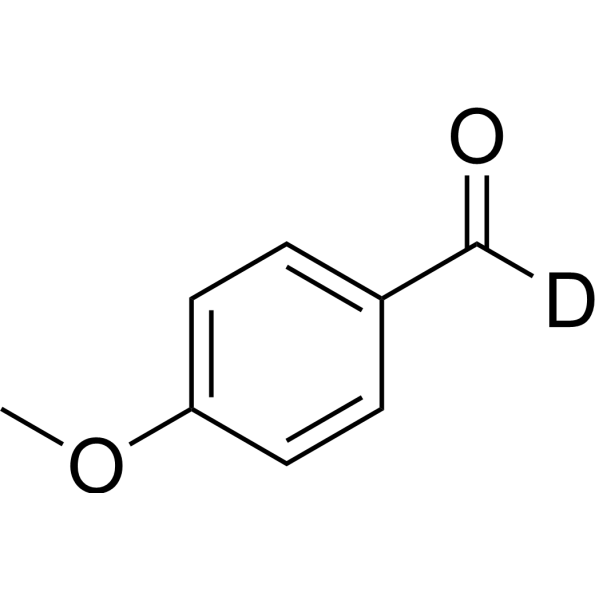
  • HY-Y0740S

    Endogenous Metabolite Others
    4-Methoxybenzaldehyde-d1 is the deuterium labeled 4-Methoxybenzaldehyde . 4-Methoxybenzaldehyde is a naturally occurring fragrant phenolic compound. 4-Methoxybenzaldehyde has been found in many plant species including horseradish, anise, star anise. 4-Methoxybenzaldehyde is a possible neurotoxicant and it has shown effects that include mortality, attractancy, and interference with host seeking .
    4-Methoxybenzaldehyde-d1
  • HY-Y0740S1

    Endogenous Metabolite Others
    4-Methoxybenzaldehyde-d3 is the deuterium labeled 4-Methoxybenzaldehyde . 4-Methoxybenzaldehyde is a naturally occurring fragrant phenolic compound. 4-Methoxybenzaldehyde has been found in many plant species including horseradish, anise, star anise. 4-Methoxybenzaldehyde is a possible neurotoxicant and it has shown effects that include mortality, attractancy, and interference with host seeking .
    4-Methoxybenzaldehyde-d3
  • HY-12502AR

    NZ-105 hydrochloride monoethanolate (Standard); (±)-Efonidipine hydrochloride monoethanolate (Standard)

    Reference Standards Calcium Channel SARS-CoV Cardiovascular Disease
    Efonidipine (NZ-105) hydrochloride monoethanolate (Standard) is the analytical standard of Efonidipine hydrochloride monoethanolate (HY-12502AR). This product is intended for research and analytical applications. Efonidipine (NZ-105) hydrochloride monoethanolate is an orally active dual L-type and T-type calcium channel blocker (CCB) with IC50 values of 1.8 and 350 nM, respectively. Efonidipine hydrochloride monoethanolate inhibits SARS-CoV-2 main protease. Efonidipine hydrochloride monoethanolate modulates adrenal steroidogenesis by increasing the expression of steroidogenic acute regulatory protein (StAR), dbcAMP-or angiotensin II-induced StAR mRNA expression and DHEA-S production, while suppressing the biosynthesis of aldosterone and cortisol. Efonidipine hydrochloride monoethanolate reduces plasma aldosterone levels in vivo. Efonidipine hydrochloride monoethanolate improves cardiac function in heart failure models by inhibiting T-type calcium channels (via both tonic and use-dependent blockade), independently of blood pressure reduction. Efonidipine hydrochloride monoethanolate can be used for research in hypertension, heart failure, and disorders involving dysregulated steroid hormone synthesis .
    Efonidipine hydrochloride monoethanolate (Standard)
  • HY-W721611

    Herbicide Others
    Terbucarb is a phenylcarbamate herbicide. Terbucarb disrupts the mitotic microtubule organizing centers in plant cells, leading to the formation of multipolar spindles and branched phragmoplasts, thereby inhibiting plant growth. An "anaphase star" pattern induced by Terbucarb is observed in onion root tips. Terbucarb is cytotoxic to isolated rat hepatocytes, inducing cell death accompanied by depletion of intracellular ATP, protein thiols and glutathione .
    Terbucarb
  • HY-P992132

    STAR-0310

    TNF Receptor Inflammation/Immunology
    Solaprubart is a humanized IgG1-κ monoclonal antibody targeting TNFSF4/OX40L. Solaprubart regulates immune homeostasis by blocking the OX40L-OX40 signaling pathway and can be used for the research of autoimmune diseases such as atopic dermatitis .
    Solaprubart
  • HY-W750726

    Endogenous Metabolite Others
    7,8,7’,8’-Tetradehydroastaxanthin is a glycopeptide isolated from the carotenoid protein of red sea star (Asterias rubens) .
    7,8,7’,8’-Tetradehydroastaxanthin
  • HY-Y0740S2

    Isotope-Labeled Compounds Metabolic Disease
    4-Methoxybenzaldehyde-d2 is the deuterium labeled 4-Methoxybenzaldehyde (HY-W041300). 4-Methoxybenzaldehyde (p-anisaldehyde) is a fragrant phenolic compound. 4-Methoxybenzaldehyde has been found in many plant species including horseradish, anise, star anise. 4-Methoxybenzaldehyde is a possible neurotoxicant and it has shown effects that include mortality, attractancy, and interference with host seeking .
    4-Methoxybenzaldehyde-d2

Inquiry Online

Your information is safe with us. * Required Fields.

Salutation


Country or Region *

Applicant Name *


Organization Name *

Department *


Email Address *


Product Name *

Cat. No.


Requested quantity *

Phone Number *


Remarks

Inquiry Online

Inquiry Information

Product Name:
Cat. No.:
Quantity:
MCE Japan Authorized Agent:

