21 Results for "

Simulated moving bed-chromatography

" in MedChemExpress (MCE) Product Catalog:
Products (21)

21 Results for "Simulated moving bed-chromatography" in MCE Product Catalog:

1
1 Cited Publications
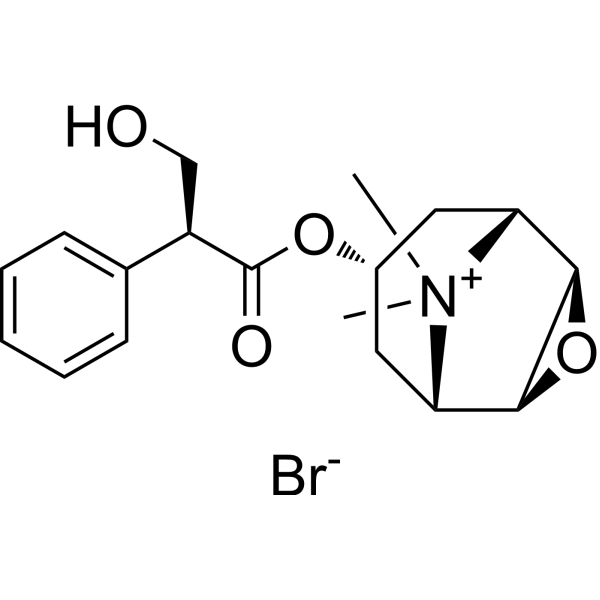
Cat. No.: HY-B0344
CAS No.: 155-41-9
Synonyms: (-)-Scopolamine methyl bromide; Hyoscine methyl bromide
Target:  

mAChR

Research Areas:  

Neurological Disease

Methscopolamine bromide ((-)-Scopolamine methyl bromide; Hyoscine methyl bromide) is a peripherally acting muscarinic receptor (mAChR) antagonist that cannot cross the blood-brain barrier. Methscopolamine bromide blocks the muscarinic negative feedback regulation of acetylcholine release from striatal cholinergic terminals, thereby increasing acetylcholine release in the striatum of freely moving rats. Methscopolamine bromide does not induce motor excitation in freely moving rats, nor does it alter the duration of ethanol-induced loss of righting reflex in mice. Methscopolamine bromide fails to antagonize the arecoline-mediated reduction in the duration of ethanol-induced loss of righting reflex in mice .
loading...
    loading...
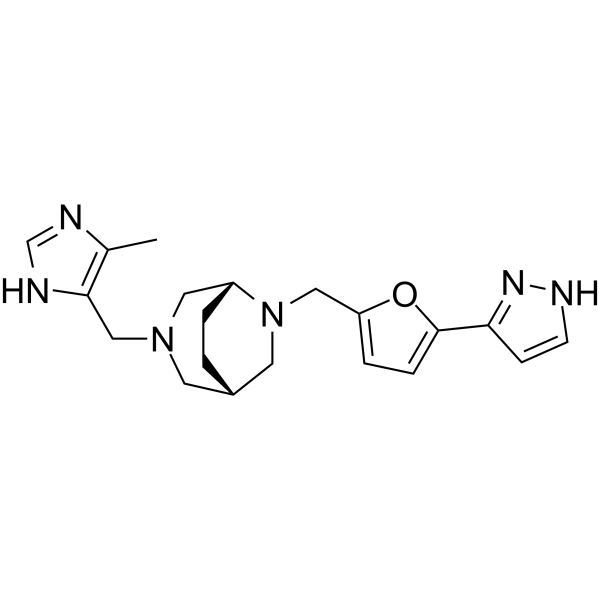
Cat. No.: HY-152086
CAS No.: 1453028-33-5
Target:  

Dynamin

Research Areas:  

Cardiovascular Disease

DRP1i27 is a potent inhibitor of human Drp1 (dynamin-related protein 1). DRP1i27 binds to the GTPase site of Drp1, with hydrogen bonds to Gln34 and Asp218. DRP1i27 targets Drp1-mediated mitochondrial fission in cell line models and protects against simulated ischemia-reperfusion injury .
loading...
    loading...
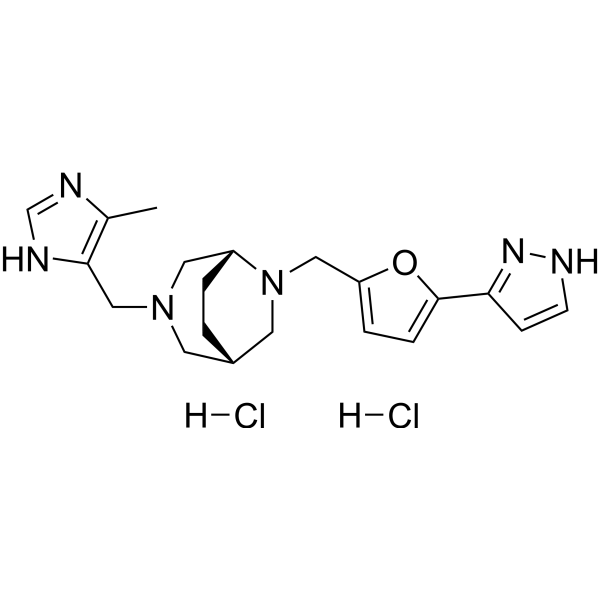
Cat. No.: HY-152086A
Purity:  98.63%
Target:  

Dynamin

Research Areas:  

Cardiovascular Disease

DRP1i27 dihydrochloride is a potent inhibitor of human Drp1 (dynamin-related protein 1). DRP1i27 dihydrochloride binds to the GTPase site of Drp1, with hydrogen bonds to Gln34 and Asp218. DRP1i27 dihydrochloride targets Drp1-mediated mitochondrial fission in cell line models and protects against simulated ischemia-reperfusion injury .
loading...
    loading...
Cat. No.: HY-41588
CAS No.: 10343-06-3
2,3,4,6-Tetra-O-acetyl-D-glucopyranose, 96% can be used in simulated glycosylation experiments.
loading...
    loading...
Cat. No.: HY-10306
CAS No.: 183547-57-1
Target:  

Integrin

Research Areas:  

Cardiovascular Disease

Gantofiban is a GPIIb/IIIa integrin receptor antagonist. By binding to this receptor, Gantofiban can effectively inhibit platelet aggregation, thereby exerting its antithrombotic effect .
loading...
    loading...
Cat. No.: HY-131041
CAS No.: 2250019-90-8
Target:  

Calcium Channel

Research Areas:  

Cardiovascular Disease

Ned-K is a nicotinic acid adenine dinucleotide phosphate (NAADP) antagonist. Ned-K is effective at dampening simulated ischaemia and reperfusion (sIR)-induced Ca 2+ oscillations in cardiomyocytes .
loading...
    loading...
Cat. No.: HY-11056
CAS No.: 1010382-72-5
Target:  

Dopamine Receptor

Research Areas:  

Neurological Disease

PF-04363467 is a highly preferring D3R antagonist. PF-04363467 produces dose-dependent changes in the EEG profile of freely moving rats. PF-4363467 attenuates opioid drug-seeking behavior without concomitant D2 side effects. PF-04363467 can be used for the study of addiction, cognitive and mental illness .
loading...
    loading...
Cat. No.: HY-114527
CAS No.: 102660-13-9
Research Areas:  

Cancer

TPMP-I-2 is an anticancer agent that induces cancer cell lines Apoptosis and decreases protein levels of stearoyl-CoA desaturase. TPMP-I-2 prolongs the survival time of nude rats in a simulated micrometastatic cervical cancer model and reduces tumor growth in a breast cancer model in nude mice combined with immunotoxins .
loading...
    loading...
Cat. No.: HY-162109
Target:  

Thrombin

Research Areas:  

Cardiovascular Disease

Thrombin inhibitor 11 is an orally active, competitive and selective α-Thrombin inhibitor, with a Ki value of 65 nM against h-αThrombin and a Ki value of 10.3 nM against rat-derived α-thrombin. Thrombin inhibitor 11 can be used for the research of thrombotic diseases .
loading...
    loading...
Cat. No.: HY-P11943
CAS No.: 265980-98-1
VGINYWLAHK is an antioxidant peptide and ACE inhibitory peptide. VGINYWLAHK maintains antioxidant activity during simulated gastrointestinal digestion, and it can enhance the antioxidant capacity of goat milk powder after being added to the product .
loading...
    loading...
Cat. No.: HY-171925
CAS No.: 752237-69-7
Target:  

Cathepsin

Research Areas:  

Neurological Disease

BI-1124 is a cathepsin S inhibitor that exhibits simulated sufficient ocular pharmacokinetic-pharmacodynamic coverage in rabbit models via topical ocular administration. BI-1124 can be used for the research of age-related dry eye disease .
loading...
    loading...
Cat. No.: HY-184755
CAS No.: 25087-26-7
Synonyms: PMAA
Research Areas:  

Others

Poly(methacrylic acid) (PMAA) is a pH/ionic strength-responsive swelling agent and polycation complexing agent. Poly(methacrylic acid) undergoes reversible swelling and size changes through carboxylic acid ionization and sodium ion charge shielding. As a weak polyacid, Poly(methacrylic acid) forms cross-linked hydrogels and hollow capsules for the entrapment and storage of macromolecules. Poly(methacrylic acid) forms electrostatic complexes with polycations to reduce capsule permeability, and high-salt conditions disrupt such complexes to enable macromolecule release .
loading...
    loading...
Cat. No.: HY-184820
CAS No.: 54193-36-1
Synonyms: PMAA sodium
Research Areas:  

Others

Poly(methacrylic acid) sodium is a pH/ionic strength-responsive swelling agent and polycation complexing agent. Poly(methacrylic acid) sodium undergoes reversible swelling and size changes through carboxylic acid ionization and sodium ion charge shielding. As a weak polyacid, Poly(methacrylic acid) sodium forms cross-linked hydrogels and hollow capsules for the entrapment and storage of macromolecules. Poly(methacrylic acid) sodium forms electrostatic complexes with polycations to reduce capsule permeability, and high-salt conditions disrupt such complexes to enable macromolecule release .
loading...
    loading...
Cat. No.: HY-P83658
Synonyms: CATE antibody; CATE_HUMAN antibody; Cathepsin E antibody; Cathepsin E form II antibody; CTSE antibody; Erythrocyte membrane aspartic proteinase antibody; Slow moving proteinase antibody;

Host:  

Rabbit

Application:  

WB, IHC-P

Reactivity:  

Human, Mouse, Rat

loading...
    loading...
Cat. No.: HY-115499A
CAS No.: 1310540-31-8
Target:  

Drug Intermediate

Research Areas:  

Cancer

MPC-0767 free base is an orally active prodrug of Hsp90 inhibitor. MPC-0767 free base undergoes rapid biotransformation to the parent Hsp90 inhibitor MPC-3100 via enzyme-mediated luminal cleavage. MPC-0767 free base is applicable to the research of refractory and recurrent cancers .
loading...
    loading...
Cat. No.: HY-181051
CAS No.: 3068378-51-5
Research Areas:  

Cancer

PLK1-IN-16 is a selective polo-like kinase 1 (PLK1) inhibitor with an IC50 of 0.25 nM. PLK1-IN-16 exhibits lower inhibitory potency against PLK2 and PLK3, induces G2 phase cell cycle arrest, induces apoptosis, and exhibits antiproliferative activity against tumor cells. PLK1-IN-16 can be stable under simulated gastric acid environmental conditions, and acceptable CYP 450 inhibition. PLK1-IN-16 can be used for the study of triple-negative breast cancer (TNBC), breast cancer, leukemia .
loading...
    loading...
Cat. No.: HY-L216
68 compounds

Polysaccharides are long chains of carbohydrate molecules, consisting of multiple smaller monosaccharides. Polysaccharides are found mainly in natural sources such as plants, microorganisms, algae and animals. Polysaccharides have a large number of active functional groups, different chemical compositions and different molecular weight ranges, which determines their diversity in nature and structure. Also in the field of medical research, polysaccharides act as a class of functional compounds and thus play a role. For example, nanocarrier construction, immunomodulation and vaccine development, new strategies for antitumor therapy, tissue regeneration engineering applications and disease diagnosis. With the advancement of glycomics and synthetic biotechnology, human beings are moving from “knowing polysaccharides” to “designing polysaccharides”, which will provide innovative solutions for materials science, precision medicine and sustainable development.

MCE offers 68 polysaccharides that can be used in biomedical studies.

Cat. No.: HY-W751921
CAS No.: 54593-83-8
Target:  

Insecticide

Research Areas:  

Others

Chlorethoxyfos is an organophosphate insecticide. Chlorethoxyfos undergoes oxidation to form its oxon in chlorinated laboratory water .
loading...
    loading...
Cat. No.: HY-N17277
CAS No.: 107110-16-7
Indigoticoside A is a phenylpropanoid lignan natural product that can be found in the traditional Chinese medicine Banlangen (Isatis indigotica Fort.), with antioxidant and anti-inflammatory activities. Indigoticoside A scavenges DPPH free radicals, superoxide anions and hydroxyl radicals in a dose-dependent manner, exhibiting significant in vitro antioxidant effects. The blood-absorbed components of Banlangen containing Indigoticoside A inhibit LPS (HY-D1056)-induced inflammatory responses in macrophages and reduce the production of inflammatory mediators such as NO, PGE2 and TNF-α .
loading...
    loading...
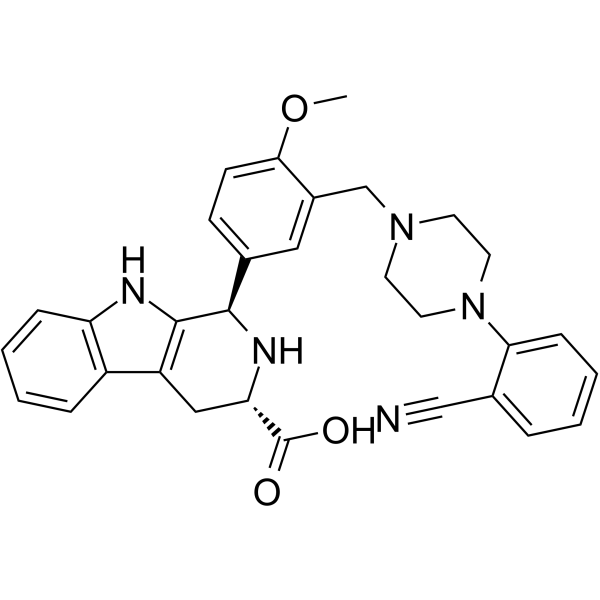
Cat. No.: HY-177797
CAS No.: 30439-19-1
Research Areas:  

Neurological Disease

5-Methoxytryptoline acts as a modulator of the Serotonin transporter complex, as well as a ligand for the 5-HT2A and 5-HT2C receptors, with Ki values of 130 nM and 140 nM for the 5-HT2A and 5-HT2C receptors, respectively. 5-Methoxytryptoline inhibits the active uptake of Serotonin (HY-B1473A) and Tryptamine (HY-B2132) in platelets. 5-Methoxytryptoline induces behavioral excitation, cortical electroencephalographic desynchronization, and dose-dependent elevation of plasma prolactin, followed by behavioral sedation and partial recovery of cortical electroencephalographic voltage. 5-Methoxytryptoline antagonizes Reserpine (HY-N0480)-induced sedation, reduced locomotor activity, and hypothermia. 5-Methoxytryptoline exerts dose-dependent effects on behavior and cortical electroencephalographic activity in freely moving rats. 5-Methoxytryptoline can be used in depression-related research .
loading...
    loading...

