16 Results for "

T. mentagrophytes

" in MedChemExpress (MCE) Product Catalog:
Products (16)

16 Results for "T. mentagrophytes" in MCE Product Catalog:

2
2 Cited Publications
Cat. No.: HY-15660
CAS No.: 164650-44-6
Purity:  99.84%
Synonyms: KP-103
Target:  

Fungal

Research Areas:  

Infection

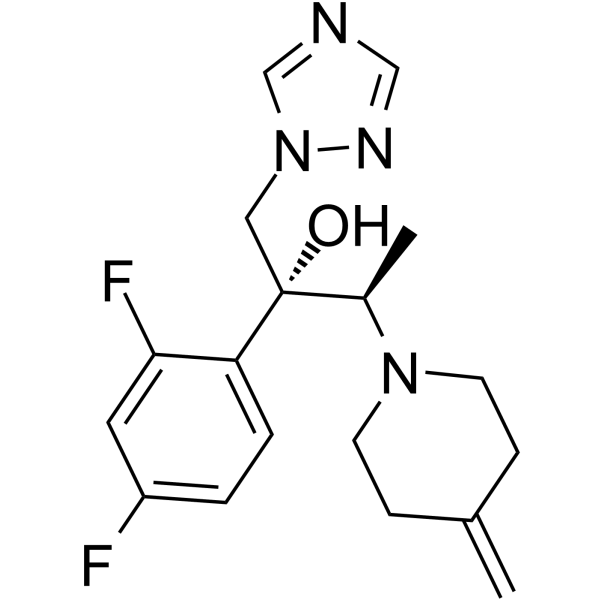
Efinaconazole (KP-103) is a triazole antifungal agent and againsts T. mentagrophytes SM-110 and C. albicans ATCC 10231 with MICs of 0.0039 μg/mL and 0.00098 μg/mL, respectively . Efinaconazole has a potent in vitro activity against fungal pathogens including dermatophytes, Candida and Malassezia species .
loading...
    loading...
2
2 Cited Publications
Cat. No.: HY-N5142
CAS No.: 98-55-5
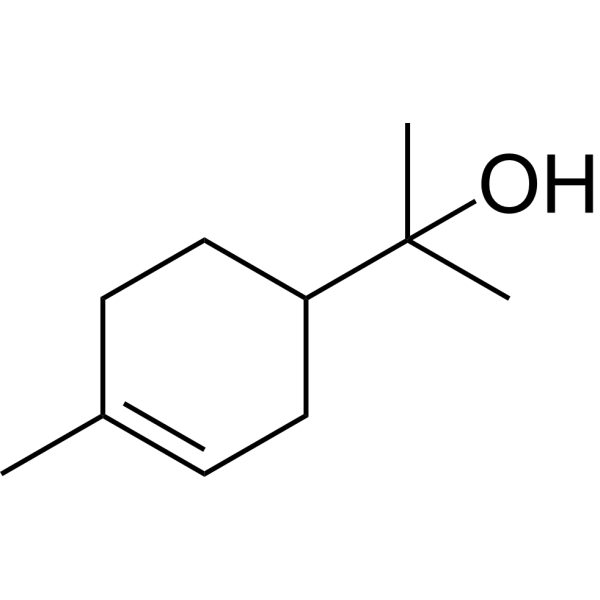
α-Terpineol (with oral activity) can be found in Eucalyptus globulus Labill. α-Terpineol exhibits strong antimicrobial activity against periodontopathic and cariogenic bacteria.α-Terpineol possesses antifungal activity against T. mentagrophytes, and the activity might lead to irreversible cellular disruption. In addition, α-Terpineol exhibits antineuropathic and anti-inflammatory activities. α-Terpineol can be utilized in research related to diarrhea, neuropathic pain, infections, and inflammation .
loading...
    loading...
1
1 Cited Publications
Cat. No.: HY-N0535
CAS No.: 6681-18-1
Synonyms: Magnoflorine chloride; α-Magnoflorine chloride; Thalictrine chloride
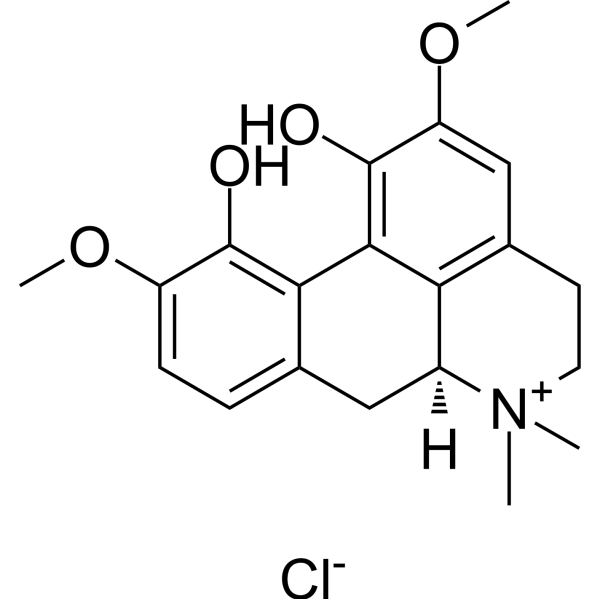
(+)-Magnoflorine (α-Magnoflorine) chloride is an orally active aporphine alkaloid with multiple biological activities. (+)-Magnoflorine chloride promotes Parkin/PINK1-mediated mitochondrial autophagy, inhibits the activation of NLRP3/Caspase-1 pathway, regulates the intestinal microbiota, and exhibits significant anti-inflammatory and immunomodulatory activities. (+)-Magnoflorine chloride inhibits JNK and TLR4/NF-κB signaling pathways, activates Sirt1/AMPK pathway, alleviates neuronal oxidative stress and apoptosis. Magnoflorine chloride upregulates miR-410-3p, inhibits HMGB1/NF-κB pathway, and has anti-tumor activity. (+)-Magnoflorine chloride also has significant antifungal activity .
loading...
    loading...
Cat. No.: HY-N0334
CAS No.: 2141-09-5
Synonyms: Magnoflorine; α-Magnoflorine; Thalictrine
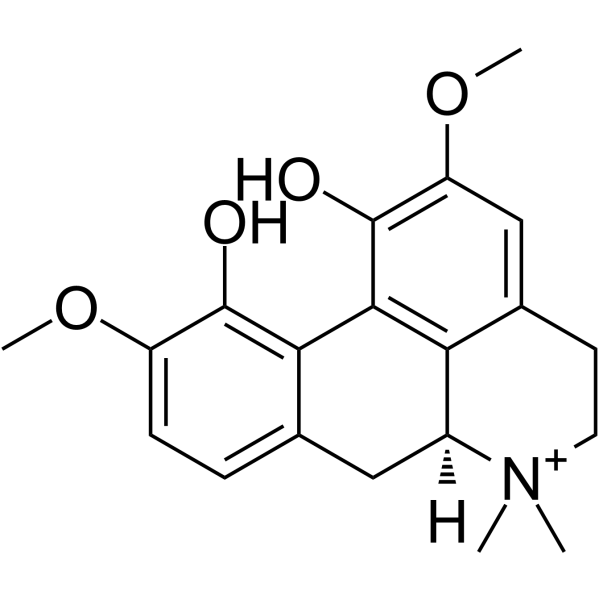
(+)-Magnoflorine (α-Magnoflorine) is an orally active aporphine alkaloid with multiple biological activities. (+)-Magnoflorine promotes Parkin/PINK1 -mediated mitochondrial autophagy, inhibits the activation of NLRP3/Caspase-1 pathway, regulates the intestinal microbiota, and exhibits significant anti-inflammatory and immunomodulatory activities. (+)-Magnoflorine inhibits JNK and TLR4/NF-κB signaling pathways, activates Sirt1/AMPK pathway, alleviates neuronal oxidative stress and apoptosis. Magnoflorine upregulates miR-410-3p, inhibits HMGB1/NF-κB pathway, and has anti-tumor activity. (+)-Magnoflorine also has significant antifungal activity .
loading...
    loading...
Cat. No.: HY-163540
CAS No.: 544420-99-7
Research Areas:  

Infection

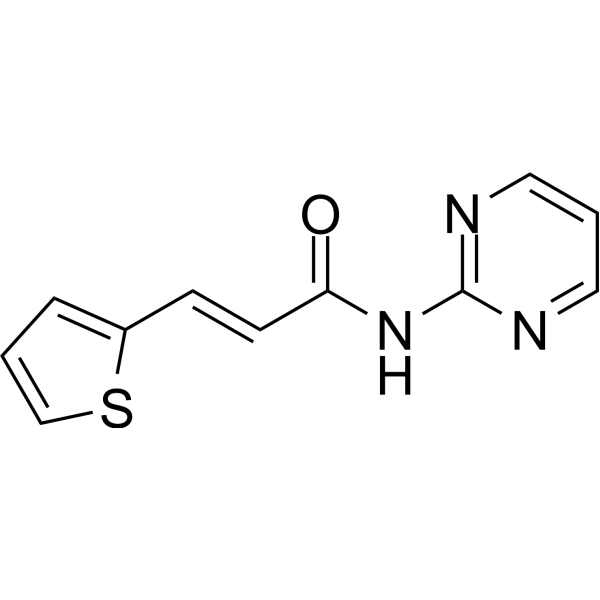
NP-BTA is an allosteric inhibitor for glutaminyl-tRNA synthetase (GlnRS). NP-BTA exhibits antifungal efficacy against Candida albicans, with MIC50 of 6.25 μM .
loading...
    loading...
Cat. No.: HY-N3344
CAS No.: 142628-53-3
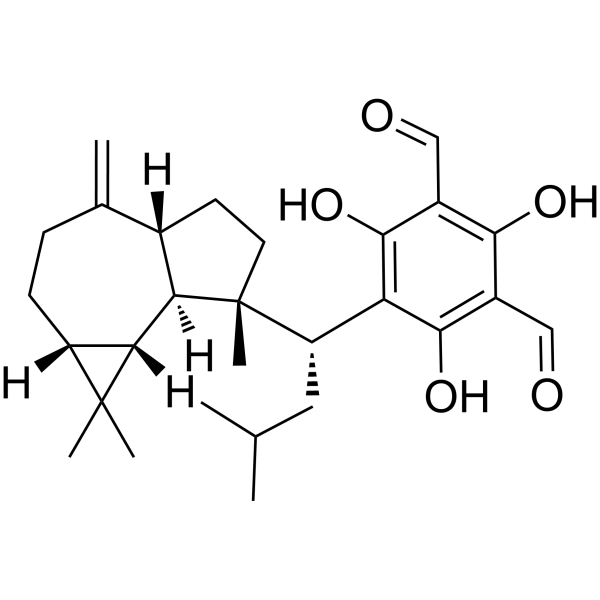
Macrocarpal C can be isolated from the 95 % ethanol extract of fresh leaves of E. globulus. Macrocarpal C inhibits the growth of T. mentagrophytes via an increase in the permeability of the fungal membrane. Macrocarpal C increases the production of intracellular ROS and? induces apoptosis as a consequence of DNA fragmentation .
loading...
    loading...
Cat. No.: HY-N5142S
CAS No.: 203633-12-9
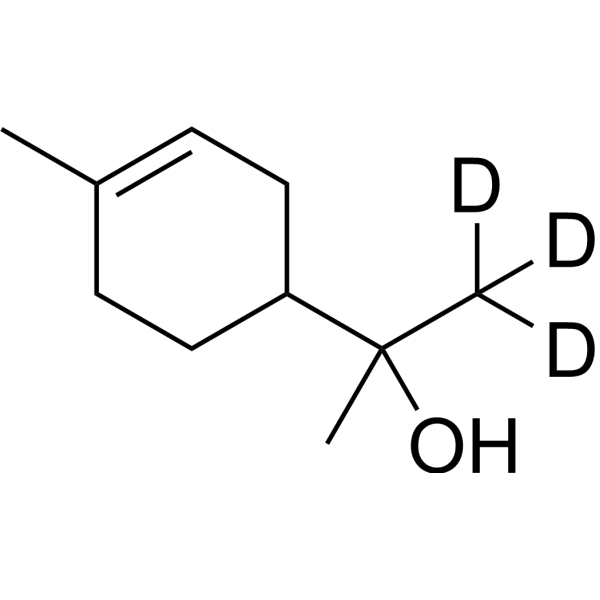
α-Terpineol-d3 is the deuterium labeled α-Terpineol . α-Terpineol is isolated from Eucalyptus globulus Labill, exhibits strong antimicrobial activity against periodontopathic and cariogenic bacteria .α-Terpineol possesses antifungal activity against T. mentagrophytes, and the activity might lead to irreversible cellular disruption .
loading...
    loading...
Cat. No.: HY-15660S
CAS No.: 2928042-41-3
Purity:  99.91%
Synonyms: KP-103-d4
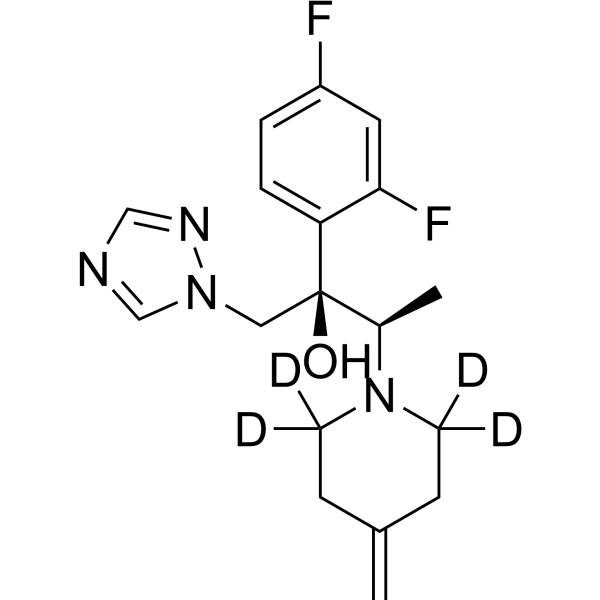
Efinaconazole-d4 is the deuterium labeled Efinaconazole. Efinaconazole (KP-103) is a triazole antifungal agent and againsts T. mentagrophytes SM-110 and C. albicans ATCC 10231 with MICs of 0.0039 μg/mL and 0.00098 μg/mL, respectively . Efinaconazole has a potent in vitro activity against fungal pathogens including dermatophytes, Candida and Malassezia species .
loading...
    loading...
Cat. No.: HY-W714137
CAS No.: 4430-39-1
Synonyms: Lesquerellin; 6-Methylthiohexyl isothiocyanate
Target:  

Bacterial

Research Areas:  

Infection

(6-Isothiocyanatohexyl)(methyl)sulfane (Lesquerellin; 6-Methylthiohexyl isothiocyanate) is an isothiocyanate found in wasabi (W. japonica) and has various biological activities. (6-Isothiocyanatohexyl)(methyl)sulfane is active against the bacterium Bacillus subtilis and the fungus T. mentagrophytes (MIC=25 μg/mL). (6-Isothiocyanatohexyl)(methyl)sulfane also has anthelmintic activity against blue mussel (M. edulis). (6-Isothiocyanatohexyl)(methyl)sulfane has antifouling activity when applied to polyvinyl chloride (PVC) panels at a concentration of 50 μmol/cm2 in a conventional immersion test.
loading...
    loading...
Cat. No.: HY-106472
CAS No.: 40198-53-6
Synonyms: EMD 26644
Target:  

Bacterial

Research Areas:  

Infection

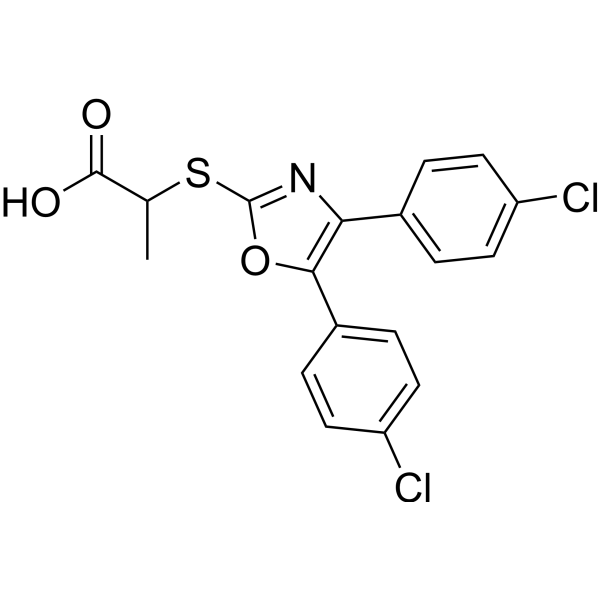
Tioxaprofen is a new anti-mycotic drug against Trichophyton mentagrophytes and T. rubrum, and is a potent uncoupling agent of mitochondrial respiration .
loading...
    loading...
Cat. No.: HY-124555
CAS No.: 3653-39-2
Synonyms: Benzimine
Target:  

Fungal

Research Areas:  

Infection

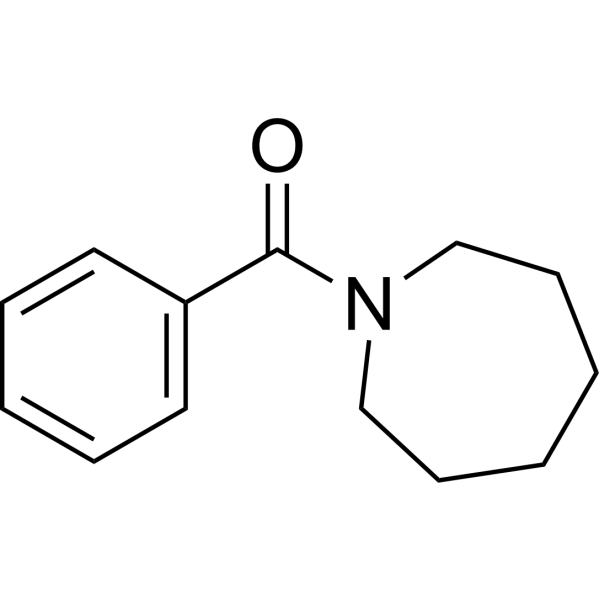
Hexamide (Benzamine) is a fungal inhibitor. Hexamide is effective against Trichophyton .
loading...
    loading...
Cat. No.: HY-N3837
CAS No.: 20460-33-7
Synonyms: Isotaraxerol; 3α-Taraxerol
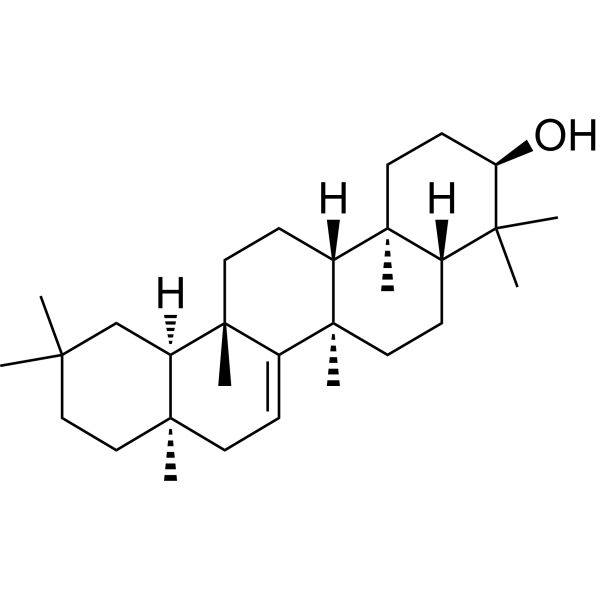
Epitaraxerol (compound 6) is a natural product isolated from the leaves of E. neriifolia. Epitaraxerol shows moderate antifungal activity against C. albicans and low antimicrobial activity against T. mentagrophytes, A. niger, S. aureus, E. coli, P. aeruginosa, and B. subtilis .
loading...
    loading...
Cat. No.: HY-N5142R
CAS No.: 98-55-5
α-Terpineol (Standard) is the analytical standard of α-Terpineol. This product is intended for research and analytical applications. α-Terpineol is isolated from Eucalyptus globulus Labill, exhibits strong antimicrobial activity against periodontopathic and cariogenic bacteria . α-Terpineol possesses antifungal activity against T. mentagrophytes, and the activity might lead to irreversible cellular disruption .
loading...
    loading...
Cat. No.: HY-169684
CAS No.: 177602-12-9
Target:  

Fungal

Research Areas:  

Infection Cancer

Vaccarin C (Compound VIII) is a cycloheptapeptide with good antifungal activity against pathogenic fungi and dermatophytes M. audouinii and T. mentagrophytes with MIC values of 6 µg/mL. Vaccarin C also has high cytotoxicity against Dalton's lymphoma ascites (DLA) and Ehrlich's ascites carcinoma (EAC) cell lines with IC50 values of 3.35 and 5.72 μM, respectively .
loading...
    loading...
Cat. No.: HY-N8256
CAS No.: 77480-55-8
Synonyms: Mycousunin
Target:  

Fungal

Research Areas:  

Infection

(–)-Mycousnine is a microbial metabolite and derivative of Usnic Acid (HY-N0656) originally isolated from M. nawae that has antibacterial and antifungal activities. It is active against the Gram-positive bacteria B. subtilis, K. rhizophila, and S. aureus (MICs=4, 8, and 4 g/ml, respectively) but not the Gram-negative bacteria E. coli, S. typhimurium, and K. pneumoniae (MICs=>128 g/ml for all).2 (–)-Mycousnine is also active against the fungi T. mentagrophytes, T. rubrum, and C. albicans (MICs=25, 25, and 100 μg/mL, respectively).
loading...
    loading...
Cat. No.: HY-N5142S1
CAS No.: 1263090-98-7
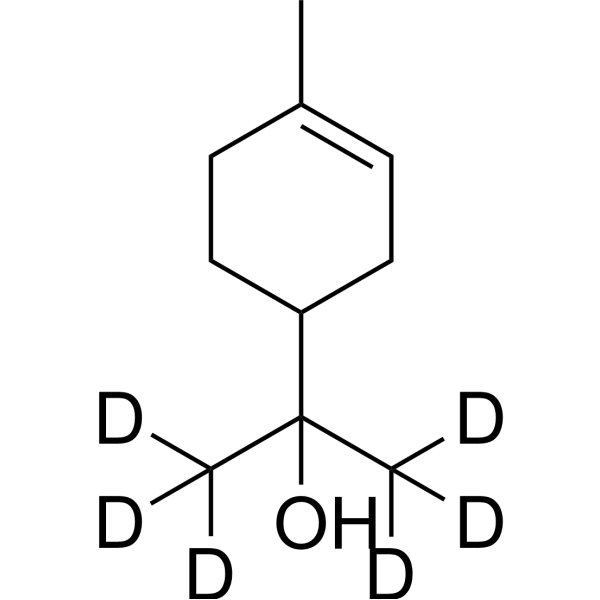
α-Terpineol-d6 is deuterated labeled α-Terpineol (HY-N5142). α-Terpineol (with oral activity) can be found in Eucalyptus globulus Labill. α-Terpineol exhibits strong antimicrobial activity against periodontopathic and cariogenic bacteria.α-Terpineol possesses antifungal activity against T. mentagrophytes, and the activity might lead to irreversible cellular disruption. In addition, α-Terpineol exhibits antineuropathic and anti-inflammatory activities. α-Terpineol can be utilized in research related to diarrhea, neuropathic pain, infections, and inflammation .
loading...
    loading...
  • 1

