
1. Search Result
Search Result
Results for "

Tau aggregates

" in MedChemExpress (MCE) Product Catalog:

21

Inhibitors & Agonists

2

Peptides

3

Inhibitory Antibodies

Targets Recommended:
Cat. No. Product Name Target Research Areas Chemical Structure
  • HY-W143216

    Monomethylthionine

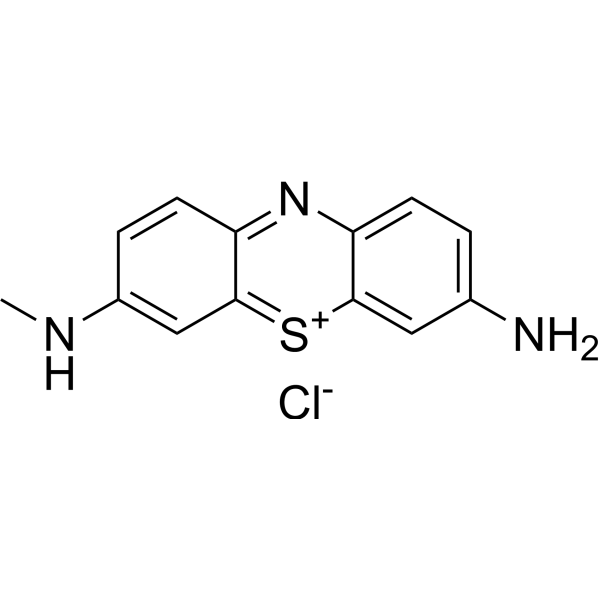
    Amyloid-β Tau Protein Neurological Disease
    Azure C acts as a tau oligomer modulator and Aβ42 oligomerization inhibitor. It regulates hsp70 ATPase activity, thereby mediating the clearance of tau protein. Azure C reduces the levels of toxic tau oligomers by promoting the formation of non-toxic tau aggregates, rescues neuroblastoma cells from tau oligomer-induced toxicity, and binds to and inhibits Aβ42 oligomerization without suppressing its fibrillization. Azure C is generated via sequential oxidation of methylene blue or Azure B through a horseradish peroxidase-mediated reaction, and accumulates in HRP reaction media. Azure C can be used in studies related to tauopathies, including Alzheimer's disease .
    Azure C
  • HY-P991480

    Transmembrane Glycoprotein Tau Protein Amyloid-β Neurological Disease Cancer
    ONC-841 is a blood-brain barrier-permeable, humanized monoclonal antibody targeting SIGLEC10. As an immune checkpoint inhibitor, ONC-841 restores the functions of immune effector cells such as T cells and enhances anti-tumor immune responses by blocking inhibitory signals mediated by SIGLEC10. ONC-841 restores the phagocytic and migratory activities of microglia, and promotes the phagocytosis of Amyloid-β and Tau protein aggregates by microglia. ONC-841 is applicable to research related to solid tumors and Alzheimer's disease .
    ONC-841
  • HY-P99163

    ABBV-8E12; C2N-8E12

    Tau Protein Neurological Disease
    Tilavonemab (ABBV-8E12) is a humanized anti-tau monoclonal antibody that binds to amino acids 25-30 near the N-terminus of the tau protein. Tilavonemab can block the ability of human and mouse neurons to uptake tau aggregates. Tilavonemab can be used for research on Alzheimer’s disease and other tauopathies .
    Tilavonemab
  • HY-P10861A

    Tau Protein Neurological Disease
    RI-AG03 acetate is a proteolytically stable tau aggregation inhibitor that crosses the blood-brain barrier and exhibits oral efficacy. RI-AG03 acetate inhibits tau aggregation and promotes the formation of alternative amorphous aggregates that are non-amyloidogenic. RI-AG03 acetate mediates cellular uptake through direct membrane penetration and macropinocytosis, and its conjugation with cell-penetrating peptide sequences (CPPs) enhances the binding of cells to liposomes. RI-AG03 acetate suppresses aggregation-dependent neurodegenerative and behavioral phenotypes, and extends the lifespan of Drosophila models of tauopathy. RI-AG03 acetate can be used for research on tau-related diseases such as Alzheimer's disease .
    RI-AG03 acetate
  • HY-134880

    PI-2620

    Microtubule/Tubulin Neurological Disease
    Tau tracer 2 (PI-2620) is a Tau tracer used for imaging Tau protein aggregates. Tau tracer 2 can be used to diagnose neurodegenerative diseases .
    Tau tracer 2
  • HY-179492

    hnRNP Neurological Disease
    ACI-19278 is a TDP-43 PET tracer with an average Kd of 25 nM. ACI-19278 only binds to pathological TDP-43 aggregates and does not cross-react with Aβ, Tau, etc. [ 18F]ACI-19278 successfully visualized the TDP-43 pathology in the human brain through positron emission computed tomography. ACI-19278 can be used for in vivo diagnosis of TDP-43 protein lesions .
    ACI-19278
  • HY-138643

    Amyloid-β Neurological Disease
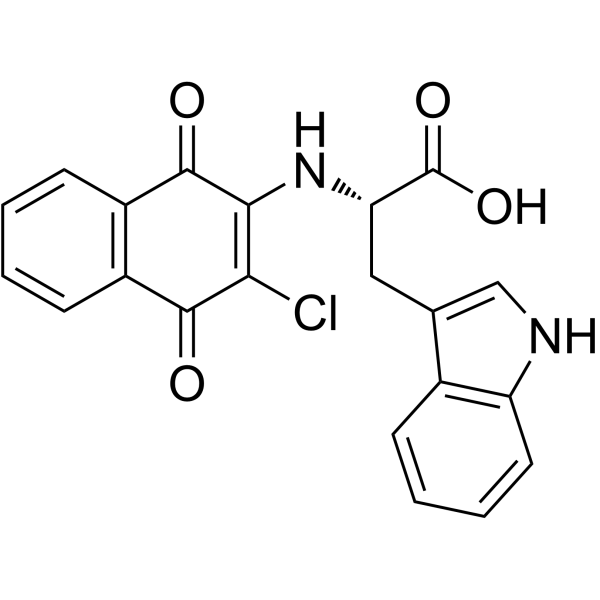
    Cl-NQTrp signifcantly disrupts the preformed fbrillar aggregates of Tau-derived PHF6 (VQIVYK) peptide and full-length tau protein .
    Cl-NQTrp
  • HY-P10861

    Tau Protein Neurological Disease
    RI-AG03 is a proteolytically stable tau aggregation inhibitor that crosses the blood-brain barrier and exhibits oral efficacy. RI-AG03 inhibits tau aggregation and promotes the formation of alternative amorphous aggregates that are non-amyloidogenic. RI-AG03 mediates cellular uptake through direct membrane penetration and macropinocytosis, and its conjugation with cell-penetrating peptide sequences (CPPs) enhances the binding of cells to liposomes. RI-AG03 suppresses aggregation-dependent neurodegenerative and behavioral phenotypes, and extends the lifespan of Drosophila models of tauopathy. RI-AG03 can be used for research on tau-related diseases such as Alzheimer's disease .
    RI-AG03
  • HY-173291

    Tau Protein Neurological Disease
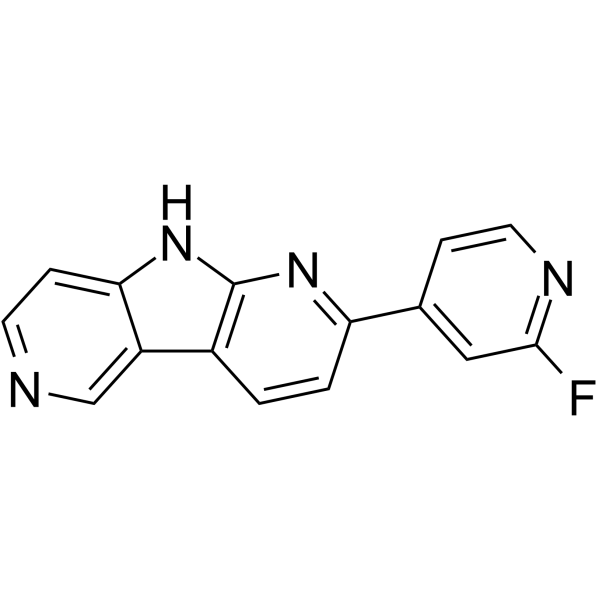
    Tau ligand-1 (Compound 75) is a ligand for aggregated tau protein that can penetrate the blood-brain barrier . In tissues from patients with Alzheimer's disease, progressive supranuclear palsy, corticobasal degeneration, and Pick's disease, Tau ligand-1 exhibits high affinity for aggregated tau protein, with equilibrium dissociation constant (KD) values ranging from 1 to 3.8 nM . Tau ligand-1 can serve as a potential positron emission tomography (PET) tracer and holds promise for application in positron emission tomography imaging studies of tau-related diseases in the central nervous system .
    Tau ligand-1
  • HY-176130

    ATTECs Tau Protein Autophagy Neurological Disease
    MRL828 combines a Tau pathology-binding ligand and modified guanine moiety based on the ATTEC technology to selectively designate aggregated tau proteins for clearance via the ALP. MRL828 decreases intracellular Tau aggregates and promotes the secretion of Tau .
    MRL828
  • HY-109116A

    Leukomethylene blue dihydrobromide; LMTM dihydrobromide

    Tau Protein Neurological Disease
    Hydromethylthionine dihydrobromide (Leukomethylene blue dihydrobromide) is a potent inhibitor of TAU protein aggregation. Hydromethylthionine dihydrobromide reduces neurodegeneration by interacting with TAU proteins and preventing them from forming neurotoxic aggregates. Hydromethylthionine dihydrobromide can be used in the study of Alzheimer's disease and other TAU related disorders .
    Hydromethylthionine dihydrobromide
  • HY-101182

    Microtubule/Tubulin Neurological Disease
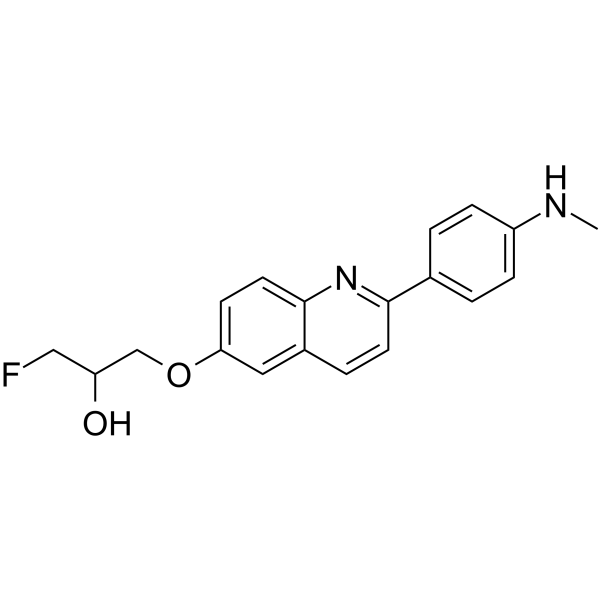
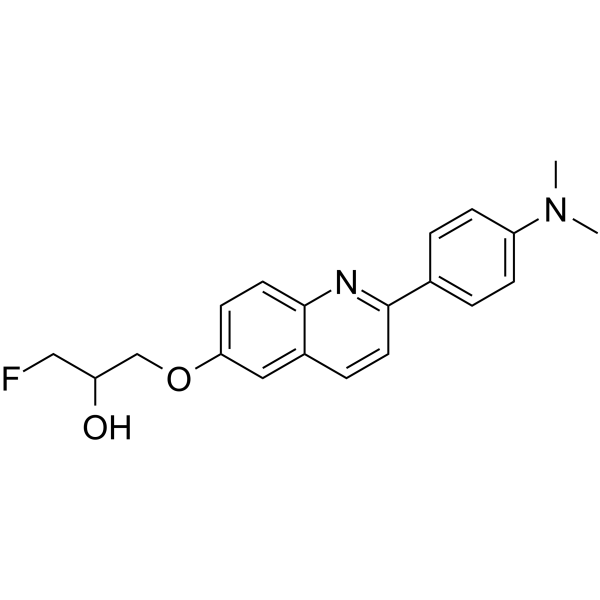
    THK-5117, an arylquinoline derivative, displays high binding affinity to tau fibrils with a Ki of 10.5 nM. THK-5117 has high binding affinity to tau protein aggregates and tau-rich Alzheimer disease (AD)  brain homogenates. 18F-THK-5117 has the potential to act as a tau imaging PET probe .
    THK-5117
  • HY-W098905

    GSK-3 Cytochrome P450 Amyloid-β Tau Protein Neurological Disease
    GSK3β-IN-3 is an ATP-competitive GSK-3β inhibitor (IC50 = 0.90 μM). GSK3β-IN-3 can reduce the phosphorylation level of tau protein in the BR5706 strain and reduce the deposition of aggregates in the CL2006 strain, and can be used to research Alzheimer's disease (AD) .
    GSK3β-IN-3
  • HY-161458

    GSK-3 Tau Protein Neurological Disease
    GSK-3β inhibitor 16 (compound 7c) is a GSK-3β inhibitor with the IC50 of 4.68 nM. GSK-3β inhibitor 16 decreases Tau hyperphosphorylated aggregate and alleviates cognitive impairments in the Scopolamin (HY-N0296)-induced model in mice .
    GSK-3β inhibitor 16
  • HY-134879

    Microtubule/Tubulin Neurological Disease
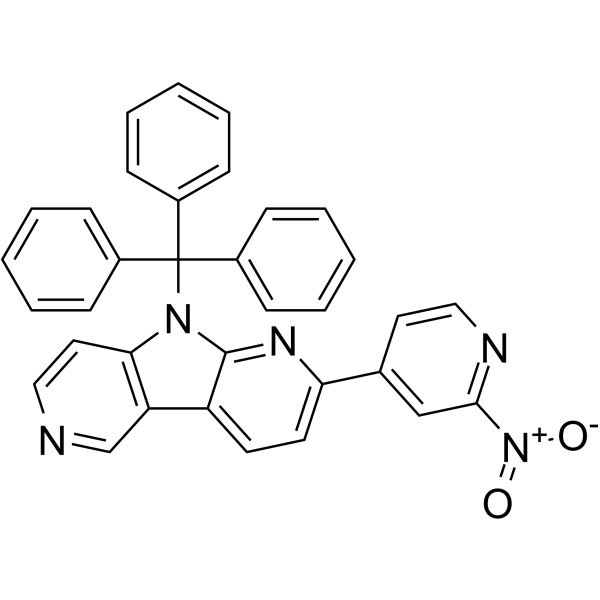
    Tau tracer 1 is a Tau tracer used for imaging Tau protein aggregates. Tau tracer 1 can be used to diagnose neurodegenerative diseases .
    Tau tracer 1
  • HY-101181

    Microtubule/Tubulin Neurological Disease
    THK-5105, an arylquinoline derivative, displays high binding affinity to tau fibrils. THK-5105 has high binding affinity to tau protein aggregates and tau-rich Alzheimer disease (AD)  brain homogenates. 18F-THK-5105 has the potential to act as a tau imaging PET probe .
    THK-5105
  • HY-181083

    Tau Protein Neurological Disease
    Tau ligand-2 is a tau aggregate ligand with a Ki value of 0.99 nM. Radiolabeled ( 18F) Tau ligand-2 serves as a PET tracer. Tau ligand-2 is applicable to research related to Alzheimer's disease .
    Tau ligand-2
  • HY-W569115

    Tau Protein Neurological Disease
    JNJ-64326067 is an aggregated tau-binding agent with blood-brain barrier permeability, with a Ki of 2.4 nM. JNJ-64326067 selectively binds to aggregated tau protein but does not bind to aggregated β-amyloid protein, and shows no significant off-target binding to the tested receptors, ion channels, transporters, kinases or monoamine oxidases. JNJ-64326067 is applicable to the research of Alzheimer's disease .
    JNJ-64326067
  • HY-P992172

    Tau Protein Neurological Disease
    ADEL-Y01 is a humanized and parental murine blood-brain barrier-penetrating monoclonal antibody against tau-acK280. ADEL-Y01 specifically recognizes tau-acK280 and its surrounding residues, mediates the neutralization and phagocytosis of acetylated tau aggregates, and interferes with the activity of pathological tau protein. ADEL-Y01 prevents the progression of tauopathies, increases neuronal survival rate, reduces tau-related pathological changes, and improves memory impairment. ADEL-Y01 can be used in research related to Alzheimer's disease and tauopathies .
    ADEL-Y01
  • HY-183660

    Autophagy Amyloid-β Tau Protein Neurological Disease
    F-SLOH is a brain-penerant and orally active TFEB activator and amyloid-β inhibitor with an IC50 of 3.4 μM against amyloid-β. F-SLOH promotes nuclear translocation of TFEB, driving autophagy and lysosomal biogenesis. F-SLOH reduces amyloid-β oligomers and Tau aggregates via autophagy lysosomal degradation pathway. F-SLOH can be used for the research of Alzheimer’s disease .
    F-SLOH
  • HY-182893

    α-synuclein Reactive Oxygen Species (ROS) Tyrosine Hydroxylase Neurological Disease
    SK-129 is a blood-brain barrier-permeable inhibitor of α-synuclein (αS) oligomers with a Kd of 221 nM. SK-129 preferentially binds to neurotoxic αS oligomers over physiological αS monomers, inhibits αS aggregation, blocks the interaction and co-aggregation of αS with tau protein, and prevents the maturation of αS-tau condensates into amyloid aggregates. SK-129 reduces ROS production, rescues dopaminergic neuron degeneration, improves motor function, restores endogenous dopamine synthesis, increases the number of Tyrosine Hydroxylase-positive neurons, prevents brain histopathological changes, alleviates neuroinflammation, and improves survival rates in relevant models. SK-129 can be used in research related to Parkinson's disease (PD) and Lewy body dementia (LBD) .
    SK-129

Inquiry Online

Your information is safe with us. * Required Fields.

Salutation


Country or Region *

Applicant Name *


Organization Name *

Department *


Email Address *


Product Name *

Cat. No.


Requested quantity *

Phone Number *


Remarks

Inquiry Online

Inquiry Information

Product Name:
Cat. No.:
Quantity:
MCE Japan Authorized Agent:

