

Search Result
Results for "
Tauopathy
" in MedChemExpress (MCE) Product Catalog:
| Cat. No. |
Product Name |
Target |
Research Areas |
Chemical Structure |
-
- HY-B0478
-
|
AF-1161
|
5-HT Receptor
Serotonin Transporter
Histamine Receptor
Adrenergic Receptor
|
Neurological Disease
|
|
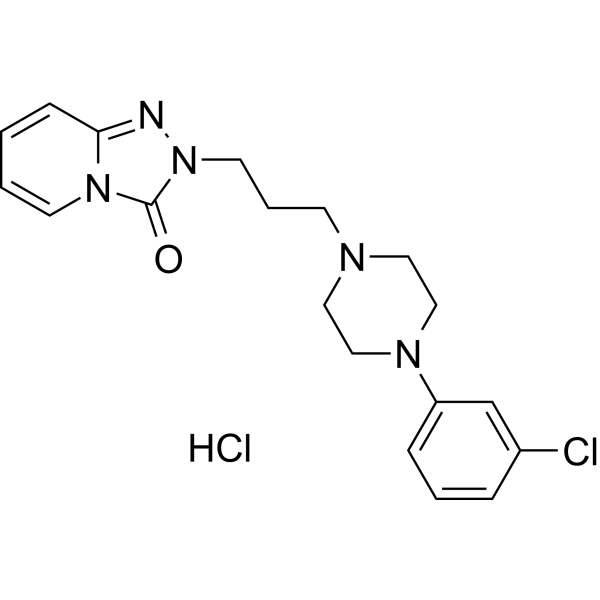
Trazodone hydrochloride (AF-1161) is a triazolopyridine derivative that belongs to the class of serotonin receptor antagonists and reuptake inhibitors (SARIs). Trazodone hydrochloride has anti-depressant and anti-insomnious activity. Trazodone hydrochloride exerts antagonistic properties against a1- and a2-adrenergic receptors and histamine H1 receptors, with minimal anticholinergic effects .
|
-
-
- HY-134850
-
|
|
PROTACs
Tau Protein
|
Neurological Disease
|
|
QC-01-175 is a heterobifunctional molecule, which degrades aberrant tau. QC-01-175 reduces the levels of A152T and P301L mutant tau protein and protects neurons from tau-mediated toxicity and improve cell survival (Pink: ligand for target protein Aberrant tau ligand 1 (HY-W453397); Black: linker NH2-PEG3 (HY-W007545); Blue: ligand for E3 ligase Pomalidomide (HY-10984)) .
|
-
-
- HY-134968
-
|
|
Tau Protein
|
Neurological Disease
|
|
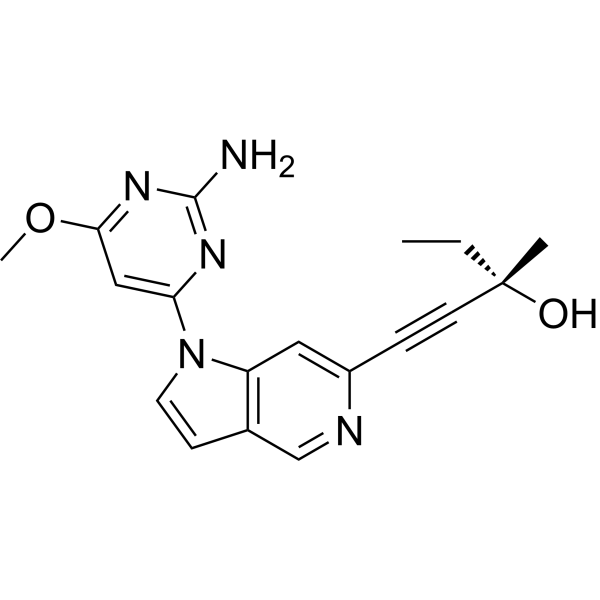
TTBK1-IN-1 is a potent, selective and brain-penetrant tau tubulin kinase 1 (TTBK1) inhibitor with an IC50 of 2.7 nM. TTBK1-IN-1 can be used for the research of alzheimer’s disease and related tauopathies . TTBK1-IN-1 is a click chemistry reagent, it contains an Alkyne group and can undergo copper-catalyzed azide-alkyne cycloaddition (CuAAc) with molecules containing Azide groups.
|
-
-
- HY-D0961
-
|
|
Fluorescent Dye
Wnt
β-catenin
|
Neurological Disease
Inflammation/Immunology
Cancer
|
|
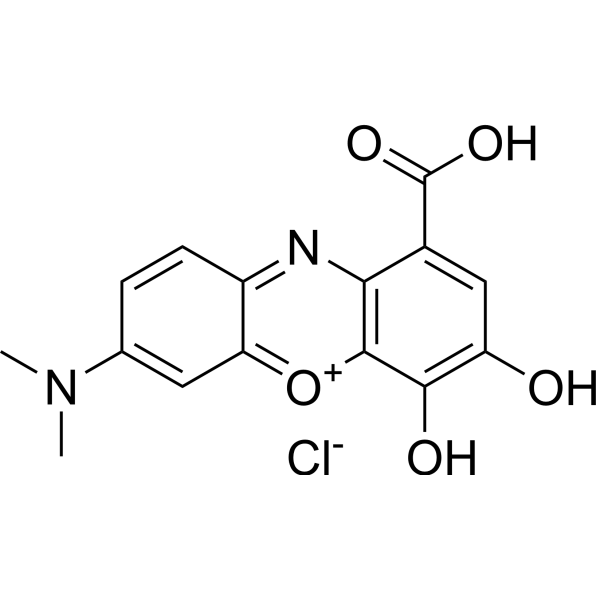
Gallocyanine chloride is a synthetic blue dyestuff that can be used as a potential agent for the research of Alzheimer's disease and related neurodegenerative tauopathies. Gallocyanine chloride inhibits DKK1/LRP6 interaction (IC50=6.38 μM), activates Wnt signaling pathway, and causes β-catenin accumulation. Gallocyanine chloride exhibits anti-metastasis, anti-inflammatory and anti-fibrosis activities. Gallocyanine chloride can be used as a fluorescent probe for detection of superoxide anion radicals .
|
-
-
- HY-W143216
-
|
Monomethylthionine
|
Amyloid-β
Tau Protein
|
Neurological Disease
|
|
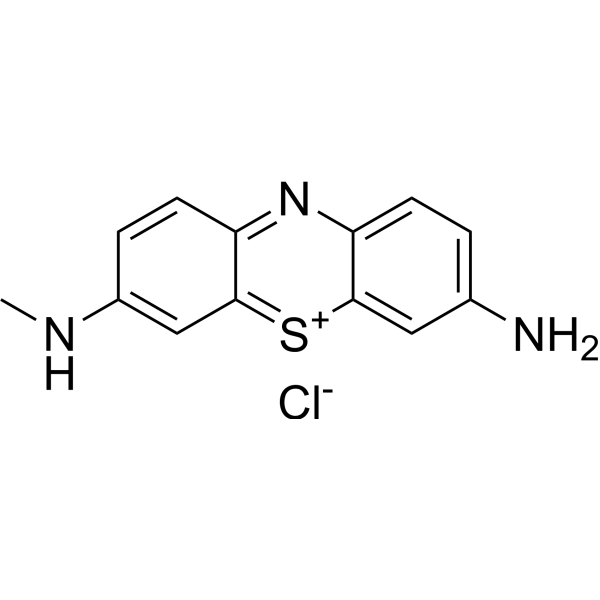
Azure C acts as a tau oligomer modulator and Aβ42 oligomerization inhibitor. It regulates hsp70 ATPase activity, thereby mediating the clearance of tau protein. Azure C reduces the levels of toxic tau oligomers by promoting the formation of non-toxic tau aggregates, rescues neuroblastoma cells from tau oligomer-induced toxicity, and binds to and inhibits Aβ42 oligomerization without suppressing its fibrillization. Azure C is generated via sequential oxidation of methylene blue or Azure B through a horseradish peroxidase-mediated reaction, and accumulates in HRP reaction media. Azure C can be used in studies related to tauopathies, including Alzheimer's disease .
|
-
-
- HY-161307
-
|
|
HDAC
Microtubule/Tubulin
|
Neurological Disease
|
|
T-518 is an orally active, BBB-penetrant and potent DFMO-based HDAC6 inhibitor with high selectivity (IC50 = 36 nM). T-518 improves axonal transport. T-518 ameliorates object recognition deficit. T-518 can be studied in research for Alzheimer’s disease and tauopathy .
|
-
-
- HY-144681
-
|
LY3372689
|
OGA
Tau Protein
|
Neurological Disease
|
|
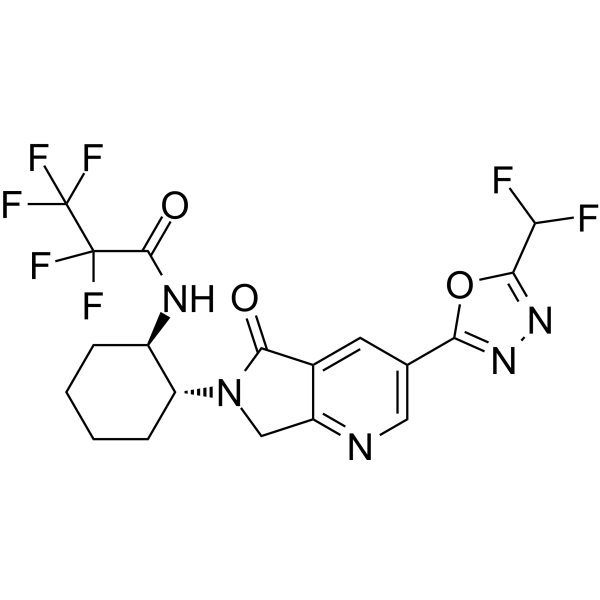
Ceperognastat (LY3372689) is an orally active O-GlcNAcase (OGA) enzyme inhibitor. Ceperognastat can be used for tauopathies research, including Alzheimer’s disease .
|
-
-
- HY-132582C
-
|
IONIS-MAPTRx sodium; BIIB080 sodium; ISIS 814907 sodium
|
Tau Protein
|
Neurological Disease
|
|
Diranersen (IONIS-MAPTRx) sodium is an antisense oligonucleotide that targets the human MAPT gene to inhibit the production of tau protein. Diranersen sodium can be used in research related to Alzheimer's disease and tauopathies .
|
-
-
- HY-156586
-
|
ASN90
|
OGA
Tau Protein
|
Neurological Disease
|
|
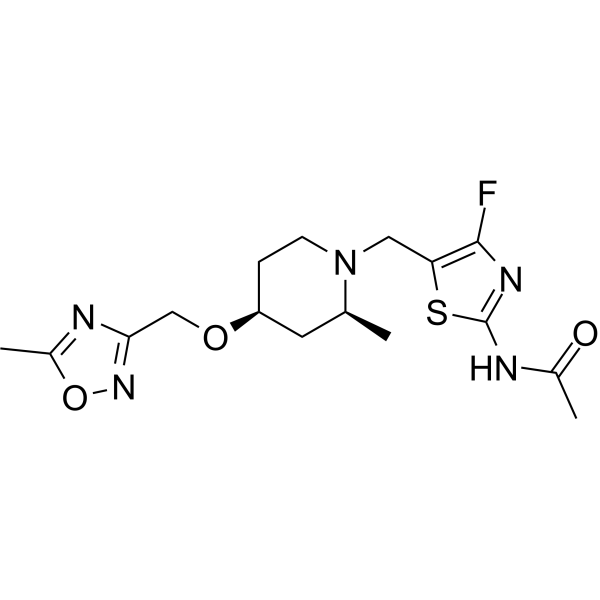
Egalognastat (ASN90) is a selective, brain-penetrant and orally active O-GlcNAcase (OGA) enzyme inhibitor with an IC50 value of 10.2 nM. Egalognastat increases O-GlcNAcylation of intracellular proteins like tau and α-synuclein, preventing their aggregation and toxicity. Egalognastat does not inhibit hexosaminidase (Hex). Egalognastat can be used for the research of neurodegenerative diseases, such as tauopathies and α-synucleinopathies (e.g., Alzheimer’s disease and Parkinson’s disease) .
|
-
-
- HY-P10861A
-
|
|
Tau Protein
|
Neurological Disease
|
|
RI-AG03 acetate is a proteolytically stable tau aggregation inhibitor that crosses the blood-brain barrier and exhibits oral efficacy. RI-AG03 acetate inhibits tau aggregation and promotes the formation of alternative amorphous aggregates that are non-amyloidogenic. RI-AG03 acetate mediates cellular uptake through direct membrane penetration and macropinocytosis, and its conjugation with cell-penetrating peptide sequences (CPPs) enhances the binding of cells to liposomes. RI-AG03 acetate suppresses aggregation-dependent neurodegenerative and behavioral phenotypes, and extends the lifespan of Drosophila models of tauopathy. RI-AG03 acetate can be used for research on tau-related diseases such as Alzheimer's disease .
|
-
-
- HY-137557
-
|
APN1607; PM-PBB3
|
Tau Protein
|
Neurological Disease
|
|
Florzolotau (APN1607) is a positron emission tomography (PET) ligand that can be used for the detection of Alzheimer's disease (AD) and other tau proteinopathies. Its binding sites are located in the β-sheet of paired helical filaments (PHFs) and straight filaments (SFs) of tau protein, as well as in the C-shaped cavity of SFs. In addition, APN-1607 binds to intraneuronal inclusions in Alzheimer's disease (AD), primary age-related tauopathy (PART) and posterior cortical atrophy (PCA). Florzolotau shows promise for PET imaging studies of neurological disorders, particularly tau proteinopathies .
|
-
-
- HY-132582
-
|
IONIS-MAPTRx; BIIB080; ISIS 814907
|
Tau Protein
|
Neurological Disease
|
|
Diranersen (IONIS-MAPTRx) is an antisense oligonucleotide that targets the human MAPT gene to inhibit the production of tau protein. Diranersen can be used in research related to Alzheimer's disease and tauopathies .
|
-
-
- HY-P99163
-
|
ABBV-8E12; C2N-8E12
|
Tau Protein
|
Neurological Disease
|
|
Tilavonemab (ABBV-8E12) is a humanized anti-tau monoclonal antibody that binds to amino acids 25-30 near the N-terminus of the tau protein. Tilavonemab can block the ability of human and mouse neurons to uptake tau aggregates. Tilavonemab can be used for research on Alzheimer’s disease and other tauopathies .
|
-
-
- HY-174311
-
|
|
Glycosidase
|
Neurological Disease
Metabolic Disease
|
|
GT-02216 can bind to GCase allosterically and enhance its activity. GT-02216 enhances the activity of GCase in primary human fibroblasts dose-dependently reduces the accumulation of its substrate, hexosylsphingosine (HexCer). GT-02216 reduces the Tau accumulation in mutant GBA1 fibroblasts. GT-02216 can be used for the study of Parkinson’s disease .
|
-
-
- HY-P10861
-
|
|
Tau Protein
|
Neurological Disease
|
|
RI-AG03 is a proteolytically stable tau aggregation inhibitor that crosses the blood-brain barrier and exhibits oral efficacy. RI-AG03 inhibits tau aggregation and promotes the formation of alternative amorphous aggregates that are non-amyloidogenic. RI-AG03 mediates cellular uptake through direct membrane penetration and macropinocytosis, and its conjugation with cell-penetrating peptide sequences (CPPs) enhances the binding of cells to liposomes. RI-AG03 suppresses aggregation-dependent neurodegenerative and behavioral phenotypes, and extends the lifespan of Drosophila models of tauopathy. RI-AG03 can be used for research on tau-related diseases such as Alzheimer's disease .
|
-
-
- HY-148112
-
|
|
Casein Kinase
|
Neurological Disease
|
|
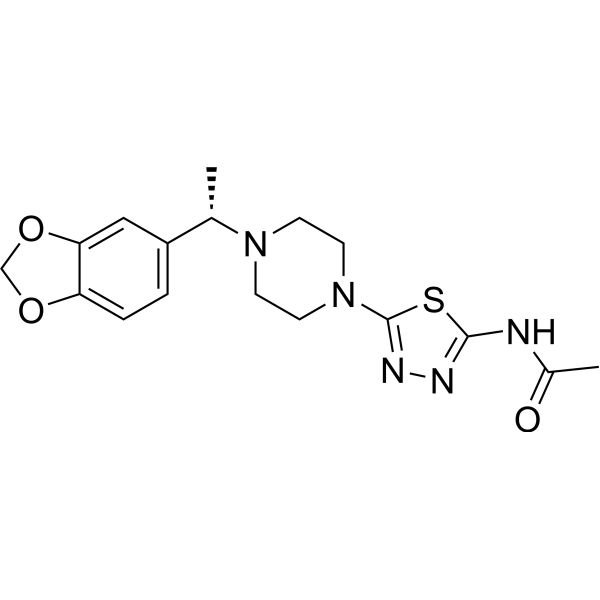
Casein kinase 1δ-IN-1 is an inhibitor of casein kinase 1δ (CK1δ). Casein kinase 1δ-IN-1 can be used for the research of neurodegenerative diseases such as tauopathies .
|
-
-
- HY-151335
-
|
|
HSP
|
Cancer
|
|
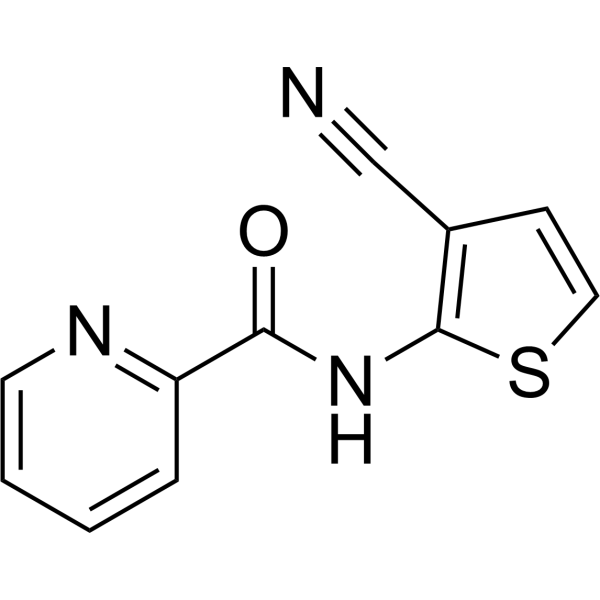
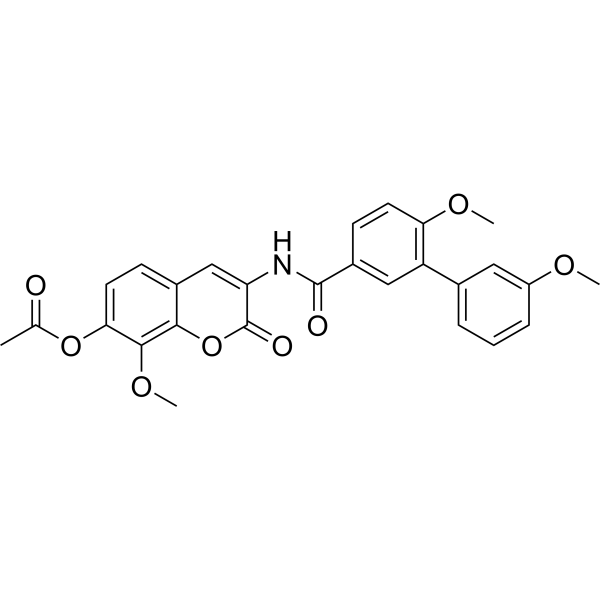
KU-177 is a potent inhibitor of Hsp90 ATPase homologue 1 (Aha1), ablates Aha1-driven enhancement of Hsp90-dependent tau aggregation. KU-177 also disrupts Aha1/Hsp90 interactions (IC50=4.08 μM) without inhibition of Hsp90’s ATPase activity. KU-177 can be used for tauopathies research .
|
-
-
- HY-P4943
-
|
|
Tau Protein
|
Neurological Disease
|
|
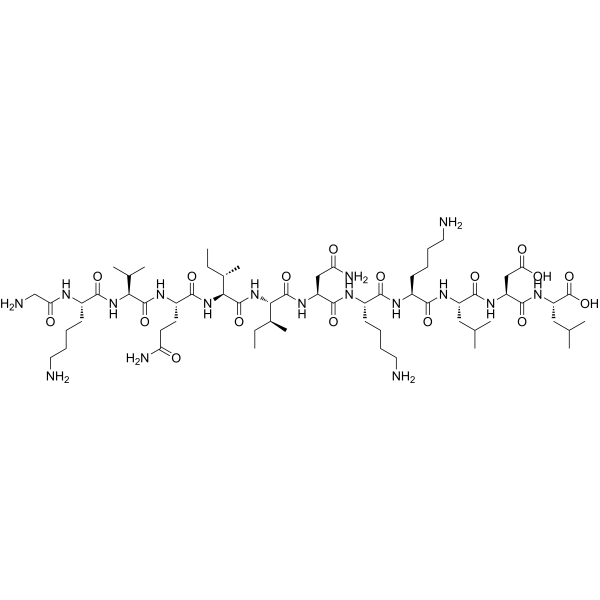
Tau Peptide (273-284) is a Tau fragment. Tau Peptide (273-284) can be used in the research of tauopathies, especially Alzheimer's disease .
|
-
-
- HY-W046071
-
|
|
Drug Intermediate
|
Others
|
|
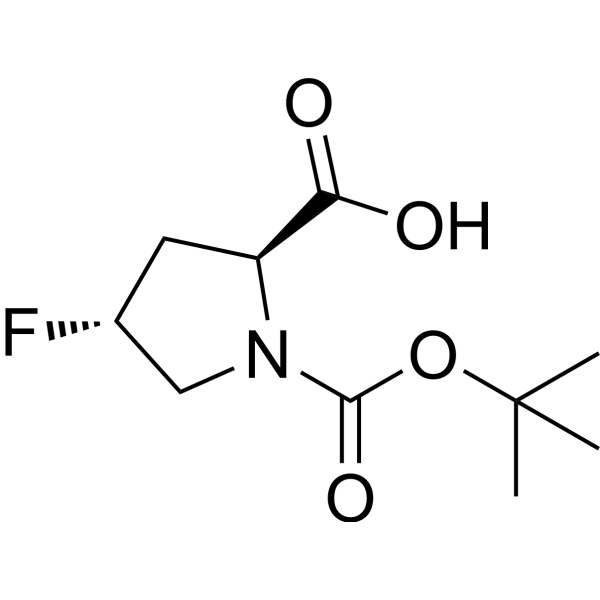
N-Boc-trans-4-fluoro-L-proline is a non-natural amino acid substitute used to construct monoclonal antibodies that specifically target the seed conformation of tau protein .
|
-
-
- HY-176540
-
|
|
Microtubule/Tubulin
|
Neurological Disease
|
|
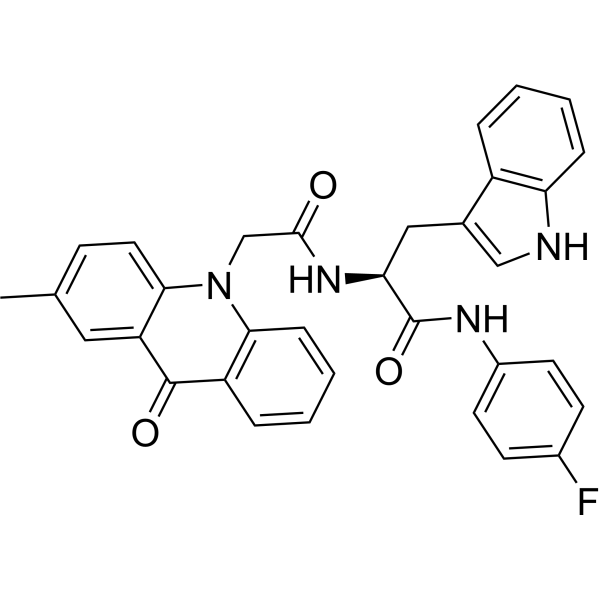
Microtubule stabilizer-1 (compound 69) is a brain-penetrant microtubule (MT) stabilizer. Microtubule stabilizer-1 increases acetylated α-tubulin (AcTub) levels and prevents the characteristic loss of neuronal MTs that is observed after incubation with Okadaic acid (HY-N6785). Microtubule stabilizer-1 can be used for the study of Alzheimer’s disease (AD) and related neurodegenerative tauopathies .
|
-
-
- HY-154987
-
|
|
MARK
|
Cancer
|
|
MARK4 inhibitor 3 (compound 23b) is an inhibitor of MARK4 with an IC50 value of 1.01 μM. MARK4 inhibitor 3 inhibits cancer cells growth. MARK4 inhibitor 3 can be used for research on cancer and tauopathies .
|
-
-
- HY-162712
-
|
|
Orexin Receptor (OX Receptor)
Tau Protein
|
Neurological Disease
|
|
OX-201 is an orally active, blood-brain barrier-permeable OX2R agonist with an EC50 of 8.0 nM. OX-201 activates OX2R to induce wakefulness and neuronal activation. OX-201 promotes the release of neuron activity-dependent tau protein from neurons into the interstitial fluid of hippocampal tissues. OX-201 is applicable to research related to Alzheimer's disease and tauopathies .
|
-
-
- HY-W835959
-
|
|
Tau Protein
|
Neurological Disease
|
|
ACI-3024 is an an orally active and highly selective Tau protein aggregation inhibitor. ACI-3024 decrease the β-sheet content and seeding properties of pathological Tau from different Tauopathies, leading to a significant rescue of the Tau-induced neurodegeneration and neuroinflammation in a cellular model. ACI-3024 is promising for research of neurodegenerative diseases .
|
-
-
- HY-116279
-
-
-
- HY-179377
-
|
|
HSP
Tau Protein
|
Neurological Disease
|
|
Aha1/Hsp90-IN-2 is a selective inhibitor of the Hsp90/Aha1 interaction, with its IC50 being 1.46 μM. Aha1/Hsp90-IN-2 inhibits the activation of Hsp90 ATPase activity mediated by Aha1 by specifically blocking the binding of Hsp90 to Aha1, thereby reducing tau protein aggregation. Aha1/Hsp90-IN-2 can be used for the study of neurodegenerative diseases, such as Alzheimer's disease .
|
-
-
- HY-147321
-
|
|
Tau Protein
HBV
|
Infection
Neurological Disease
|
|
3'-DMTr-dG(iBu) is a nucleoside for the synthesis of nucleic acid, such as antiviral agents used in the research of viral infection (HBV, HDV), and oligonucleotides against Alzheimer’s disease and other tauopathies .
|
-
-
- HY-P4610
-
|
|
GLP Receptor
|
Metabolic Disease
|
|
H-Trp-Tyr-OH is an orally active tryptophan-tyrosine dipeptide with blood-brain barrier permeability. H-Trp-Tyr-OH exerts physiological regulatory effects by stimulating enteroendocrine cells to secrete glucagon-like peptide GLP-1. In mouse models of tauopathies, H-Trp-Tyr-OH inhibits tau phosphorylation, reduces the level of neurofibrillary tangles, increases dopamine turnover, upregulates synapsin expression, and elevates cecal short-chain fatty acid levels, thereby improving behavioral deficits and extending lifespan. H-Trp-Tyr-OH can be used in research related to impaired glucose tolerance and tauopathies .
|
-
-
- HY-134968A
-
|
|
Tau Protein
|
Neurological Disease
|
|
(R)-TTBK1-IN-1 is a potent, selective and brain-penetrant tau tubulin kinase 1 (TTBK1) inhibitor. (R)-TTBK1-IN-1 is an enantiomer of TTBK1-IN-1 (HY-134968). (R)-TTBK1-IN-1 can be used in the research of alzheimer’s disease and related tauopathies . (R)-TTBK1-IN-1 is a click chemistry reagent, it contains an Alkyne group and can undergo copper-catalyzed azide-alkyne cycloaddition (CuAAc) with molecules containing Azide groups.
|
-
-
- HY-120744
-
|
|
Tau Protein
|
Others
|
|
LDN-193665 is a Tau kinase inhibitor with tauopathy-modifying activity. LDN-193665 inhibits Tau phosphorylation, improves tauopathy in animal models, reduces Sarkosyl-insoluble Tau, and restores memory. It may be necessary to simultaneously target multiple kinases to effectively inhibit tauopathies.
|
-
-
- HY-176936
-
|
|
Tau Protein
|
Neurological Disease
|
|
Tau-aggregation-IN-5 is a Tau-aggregation inhibitor (EC50 = 0.31 μM). Tau-aggregation-IN-5 targets P4HB covalently and activates mild ER stress. Tau-aggregation-IN-4 can be used for the study of neurodegenerative disorders such as Alzheimer’s and Pick’s diseases .
|
-
-
- HY-178927
-
|
|
Tau Protein
|
Neurological Disease
|
|
Tau-aggregation-IN-4 is a Tau-aggregation inhibitor (EC50 = 2.99 μM). Tau-aggregation-IN-4 can be used for the study of neurodegenerative disorders such as Alzheimer’s and Pick’s diseases .
|
-
-
- HY-181619
-
|
|
MAP3K
|
Neurological Disease
Metabolic Disease
Cancer
|
|
TAO Kinase-IN-3 is a potent pan-TAOK (Thousand-And-One Kinase) inhibitor that specifically binds to and inhibits the kinase activities of TAOK1, TAOK2 and TAOK3 with Kd values of <0.17 nM, 0.34 nM, and 0.17 nM, respectively. TAO Kinase-IN-3 can be used to study Alzheimer's disease, primary tauopathies and related syndromes. In addition, TAO Kinase-IN-3 is also widely used in research on the mechanisms of cancer cachexia and the muscle atrophy it induces .
|
-
-
- HY-P992172
-
|
|
Tau Protein
|
Neurological Disease
|
|
ADEL-Y01 is a humanized and parental murine blood-brain barrier-penetrating monoclonal antibody against tau-acK280. ADEL-Y01 specifically recognizes tau-acK280 and its surrounding residues, mediates the neutralization and phagocytosis of acetylated tau aggregates, and interferes with the activity of pathological tau protein. ADEL-Y01 prevents the progression of tauopathies, increases neuronal survival rate, reduces tau-related pathological changes, and improves memory impairment. ADEL-Y01 can be used in research related to Alzheimer's disease and tauopathies .
|
-
-
- HY-181281
-
|
|
Ser/Thr Kinase
|
Neurological Disease
Cancer
|
|
VU6080195 is a blood-brain barrier-permeable pan-TAOK activator. VU6080195 shows the highest potency against TAOK1 (EC50 = 270 nM), followed by TAOK3 (EC50 = 503 nM) and TAOK2 (EC50 = 1,376 nM). VU6080195 can be used for the research of diseases such as neurodevelopmental disorders, tauopathies and breast cancer .
|
-
-
- HY-181280
-
|
|
Ser/Thr Protease
|
Neurological Disease
|
|
VU6083859 is a blood-brain barrier-permeable TAOK1 inhibitor with an IC50 of 158 nM. VU6083859 selectively inhibits TAOK1, exhibits only weak or no activity against TAOK2 and TAOK3, and shows high selectivity for a variety of other kinases. VU6083859 is applicable to research related to neurodevelopmental disorders and tauopathies.
|
-
-
- HY-183584
-
|
|
GSK-3
Src
DYRK
Tau Protein
Microtubule/Tubulin
|
Neurological Disease
|
|
ARN25699 is a kinase inhibitor with an IC50 of 5.5 nM against GSK-3β, 2.2 nM against FYN-α, and 242.3 nM against DYRK1A, and it exhibits oral bioavailability. ARN25699 reduces hyperphosphorylation of tau protein and promotes microtubule bundle formation. ARN25699 has a broader kinome inhibitory profile and targets kinases associated with the pathogenic mechanisms linked to Alzheimer's disease. ARN25699 can be used in the research of Alzheimer's disease and related tauopathies .
|
-
-
- HY-186130
-
|
|
Calpain
|
Neurological Disease
|
|
CAST-calpain-2 stabilizer-1 is a blood-brain barrier permeable stabilizer of CAST-calpain-2 interaction. CAST-calpain-2 stabilizer-1 shows no activity against GSK3. CAST-calpain-2 stabilizer-1 can be used in the research of Huntington's disease and tauopathies .
|
-
-
- HY-137557A
-
|
(E/Z)-APN1607; (E/Z)-PM-PBB3
|
Tau Protein
|
Neurological Disease
|
|
(E/Z)-Florzolotau ((E/Z)-APN1607) is a mixed configuration or unspecified configuration of Florzolotau (HY-137557). Florzolotau (APN1607) is a positron emission tomography (PET) ligand that can be used for the detection of Alzheimer's disease (AD) and other tau proteinopathies. Its binding sites are located in the β-sheet of paired helical filaments (PHFs) and straight filaments (SFs) of tau protein, as well as in the C-shaped cavity of SFs. In addition, APN-1607 binds to intraneuronal inclusions in Alzheimer's disease (AD), primary age-related tauopathy (PART) and posterior cortical atrophy (PCA). Florzolotau shows promise for PET imaging studies of neurological disorders, particularly tau proteinopathies .
|
-
-
- HY-P99648A
-
|
BMS-986168 (powder); IPN007 (powder); BIIB092 (powder)
|
Tau Protein
|
Neurological Disease
|
|
Gosuranemab (BMS-986168; IPN007; BIIB092) (powder) is a humanised IgG4 anti-tau monoclonal antibody. Gosuranemab (powder) neutralizes the extracellular tau protein, inhibiting the spread and aggregation of pathological tau protein. Gosuranemab (powder) can be used for the research of progressive supranuclear palsy and early Alzheimer’s disease .
|
-
| Cat. No. |
Product Name |
Target |
Research Area |
-
- HY-P10861A
-
|
|
Tau Protein
|
Neurological Disease
|
|
RI-AG03 acetate is a proteolytically stable tau aggregation inhibitor that crosses the blood-brain barrier and exhibits oral efficacy. RI-AG03 acetate inhibits tau aggregation and promotes the formation of alternative amorphous aggregates that are non-amyloidogenic. RI-AG03 acetate mediates cellular uptake through direct membrane penetration and macropinocytosis, and its conjugation with cell-penetrating peptide sequences (CPPs) enhances the binding of cells to liposomes. RI-AG03 acetate suppresses aggregation-dependent neurodegenerative and behavioral phenotypes, and extends the lifespan of Drosophila models of tauopathy. RI-AG03 acetate can be used for research on tau-related diseases such as Alzheimer's disease .
|
-
- HY-P10861
-
|
|
Tau Protein
|
Neurological Disease
|
|
RI-AG03 is a proteolytically stable tau aggregation inhibitor that crosses the blood-brain barrier and exhibits oral efficacy. RI-AG03 inhibits tau aggregation and promotes the formation of alternative amorphous aggregates that are non-amyloidogenic. RI-AG03 mediates cellular uptake through direct membrane penetration and macropinocytosis, and its conjugation with cell-penetrating peptide sequences (CPPs) enhances the binding of cells to liposomes. RI-AG03 suppresses aggregation-dependent neurodegenerative and behavioral phenotypes, and extends the lifespan of Drosophila models of tauopathy. RI-AG03 can be used for research on tau-related diseases such as Alzheimer's disease .
|
-
- HY-P4943
-
|
|
Tau Protein
|
Neurological Disease
|
|
Tau Peptide (273-284) is a Tau fragment. Tau Peptide (273-284) can be used in the research of tauopathies, especially Alzheimer's disease .
|
-
- HY-W046071
-
|
|
Drug Intermediate
|
Others
|
|
N-Boc-trans-4-fluoro-L-proline is a non-natural amino acid substitute used to construct monoclonal antibodies that specifically target the seed conformation of tau protein .
|
-
- HY-P4610
-
|
|
GLP Receptor
|
Metabolic Disease
|
|
H-Trp-Tyr-OH is an orally active tryptophan-tyrosine dipeptide with blood-brain barrier permeability. H-Trp-Tyr-OH exerts physiological regulatory effects by stimulating enteroendocrine cells to secrete glucagon-like peptide GLP-1. In mouse models of tauopathies, H-Trp-Tyr-OH inhibits tau phosphorylation, reduces the level of neurofibrillary tangles, increases dopamine turnover, upregulates synapsin expression, and elevates cecal short-chain fatty acid levels, thereby improving behavioral deficits and extending lifespan. H-Trp-Tyr-OH can be used in research related to impaired glucose tolerance and tauopathies .
|
| Cat. No. |
Product Name |
Target |
Research Area |
Image |
-
- HY-P99163
-
|
ABBV-8E12; C2N-8E12
|
Tau Protein
|
Neurological Disease
|
|
Tilavonemab (ABBV-8E12) is a humanized anti-tau monoclonal antibody that binds to amino acids 25-30 near the N-terminus of the tau protein. Tilavonemab can block the ability of human and mouse neurons to uptake tau aggregates. Tilavonemab can be used for research on Alzheimer’s disease and other tauopathies .
|
-
(5)
-
- HY-P992172
-
|
|
Tau Protein
|
Neurological Disease
|
|
ADEL-Y01 is a humanized and parental murine blood-brain barrier-penetrating monoclonal antibody against tau-acK280. ADEL-Y01 specifically recognizes tau-acK280 and its surrounding residues, mediates the neutralization and phagocytosis of acetylated tau aggregates, and interferes with the activity of pathological tau protein. ADEL-Y01 prevents the progression of tauopathies, increases neuronal survival rate, reduces tau-related pathological changes, and improves memory impairment. ADEL-Y01 can be used in research related to Alzheimer's disease and tauopathies .
|
-
(5)
-
- HY-P99648A
-
|
BMS-986168 (powder); IPN007 (powder); BIIB092 (powder)
|
Tau Protein
|
Neurological Disease
|
|
Gosuranemab (BMS-986168; IPN007; BIIB092) (powder) is a humanised IgG4 anti-tau monoclonal antibody. Gosuranemab (powder) neutralizes the extracellular tau protein, inhibiting the spread and aggregation of pathological tau protein. Gosuranemab (powder) can be used for the research of progressive supranuclear palsy and early Alzheimer’s disease .
|
-
(5)
| Cat. No. |
Product Name |
|
Classification |
-
- HY-132582C
-
|
IONIS-MAPTRx sodium; BIIB080 sodium; ISIS 814907 sodium
|
|
Antisense Oligonucleotides
|
|
Diranersen (IONIS-MAPTRx) sodium is an antisense oligonucleotide that targets the human MAPT gene to inhibit the production of tau protein. Diranersen sodium can be used in research related to Alzheimer's disease and tauopathies .
|
-
- HY-132582
-
|
IONIS-MAPTRx; BIIB080; ISIS 814907
|
|
Antisense Oligonucleotides
|
|
Diranersen (IONIS-MAPTRx) is an antisense oligonucleotide that targets the human MAPT gene to inhibit the production of tau protein. Diranersen can be used in research related to Alzheimer's disease and tauopathies .
|
-
- HY-147321
-
|
|
|
Nucleoside Analogs
Guanosine
|
|
3'-DMTr-dG(iBu) is a nucleoside for the synthesis of nucleic acid, such as antiviral agents used in the research of viral infection (HBV, HDV), and oligonucleotides against Alzheimer’s disease and other tauopathies .
|
Your information is safe with us. * Required Fields.
Inquiry Information
- Product Name:
- Cat. No.:
- Quantity:
- MCE Japan Authorized Agent:

