



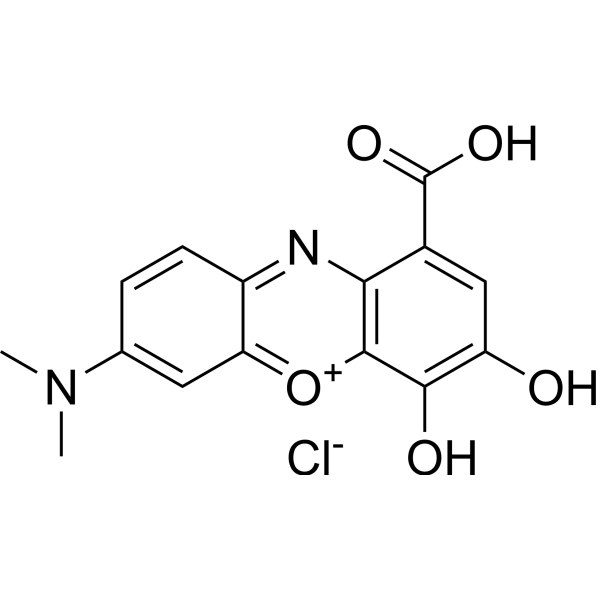
Gallocyanine chloride

Based on 1 Customer Validation
Gallocyanine chloride is a synthetic blue dyestuff that can be used as a potential agent for the research of Alzheimer's disease and related neurodegenerative tauopathies. Gallocyanine chloride inhibits DKK1/LRP6 interaction (IC50=6.38 μM), activates Wnt signaling pathway, and causes β-catenin accumulation. Gallocyanine chloride exhibits anti-metastasis, anti-inflammatory and anti-fibrosis activities. Gallocyanine chloride can be used as a fluorescent probe for detection of superoxide anion radicals.
For research use only. We do not sell to patients.
- Purity : 92.00%
- CAS No.: 1562-85-2
- Formula: C15H13ClN2O5
- Molecular Weight:336.73
-
Storage:
4°C, sealed storage, away from moisture and light
* In solvent : -80°C, 6 months; -20°C, 1 month (sealed storage, away from moisture and light)

To place orders, for customer services and technical support, please contact: MedChemExpress USA
Tel: 609-228-6898 E-mail: [email protected] [email protected]


-
 Biological Activity
-
Chemical Information
-
Solvent & Solubility
- Protocols
- Purity & Documentation
- References
-
 Help & FAQs


-
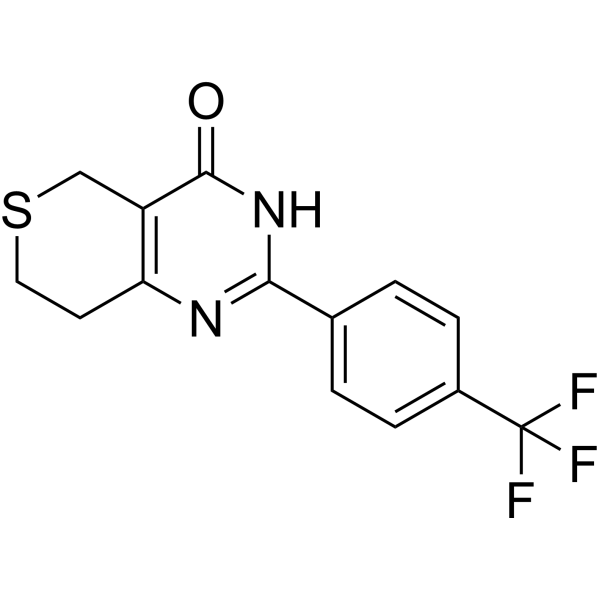
HY-15147
XAV-939Tankyrase Inhibitor -
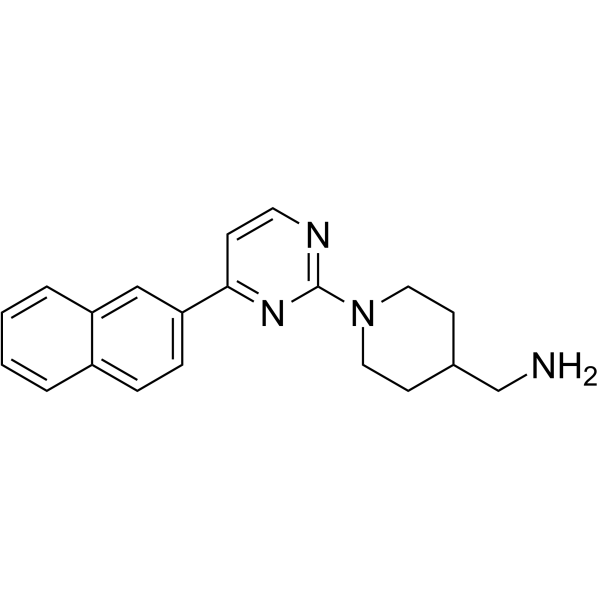
HY-11035
WAY-262611β-Catenin Agonist -
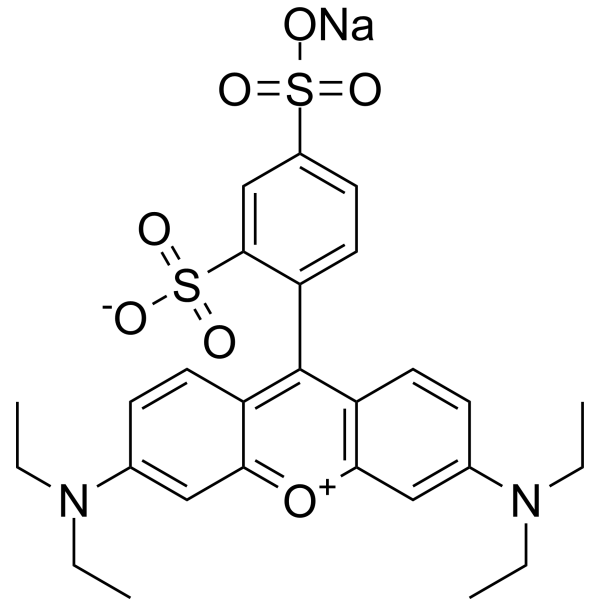
HY-D0974
Sulforhodamine B sodium saltFluorescent Dye -
HY-101090
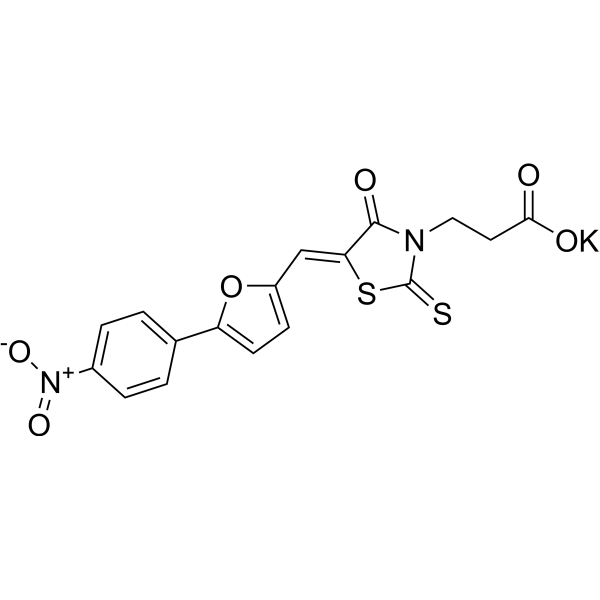
KYA1797KWnt/β-catenin Inhibitor -
HY-D1028
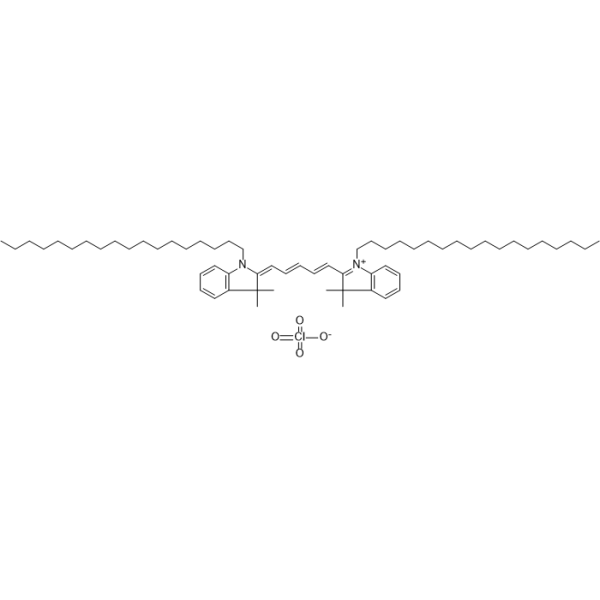
DiD perchlorateDye -
HY-D0947
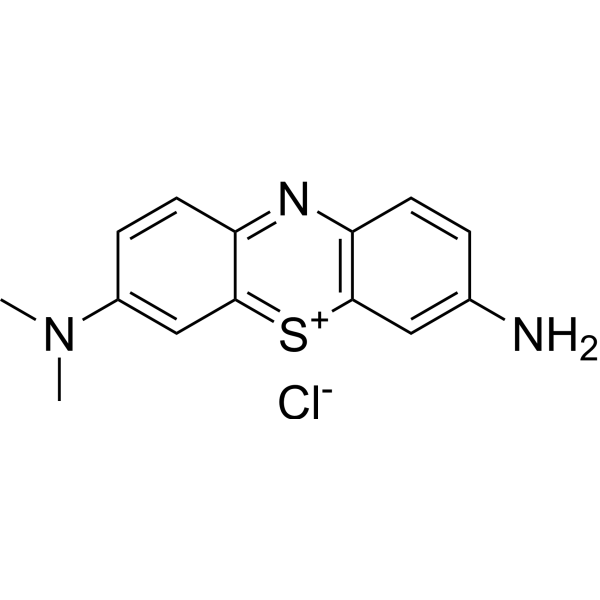
Azure A chlorideDNA Bind Dye -
HY-D0014
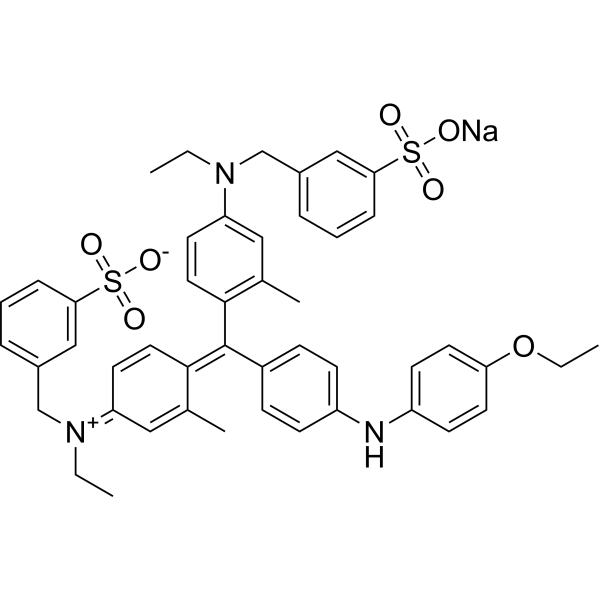
Brilliant blue G-250Dye/P2×7R Antagonist -
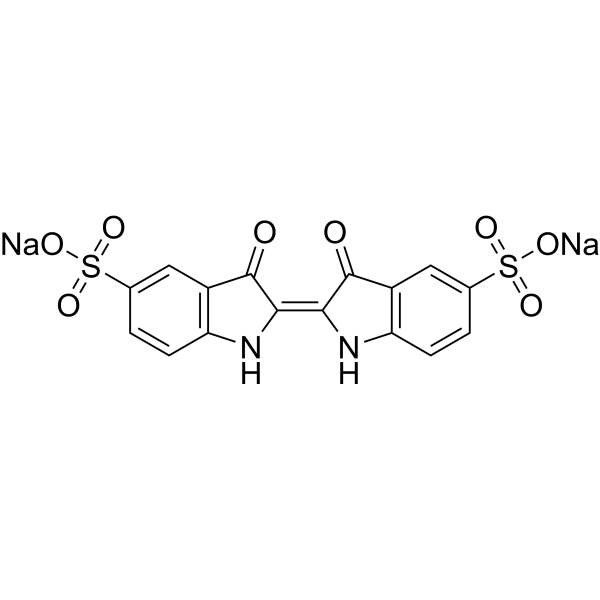
HY-W040226
Indigo carmine -
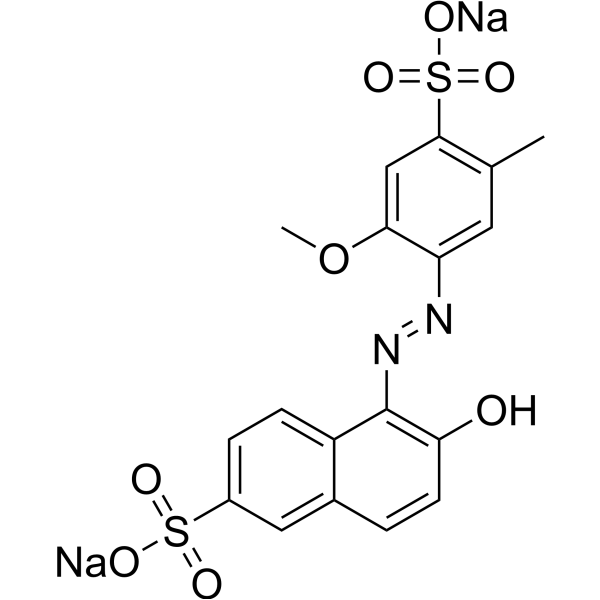
HY-123630
Allura Red ACFood Colourant -
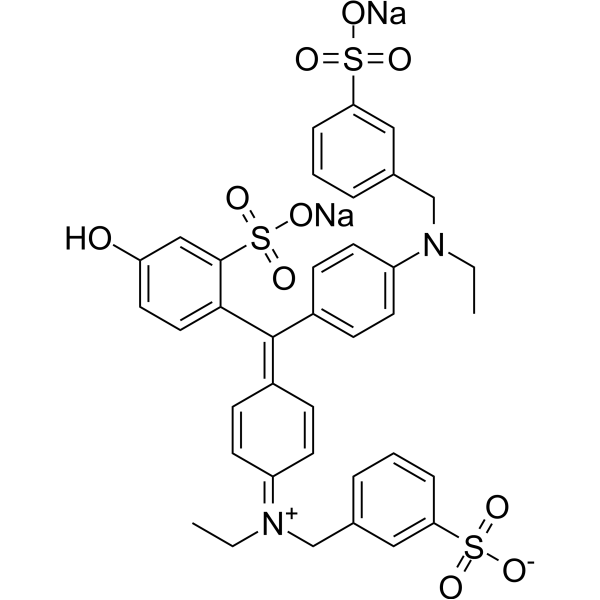
HY-D0914
Fast Green FCFSea Green Triarylmethane Food Dye -
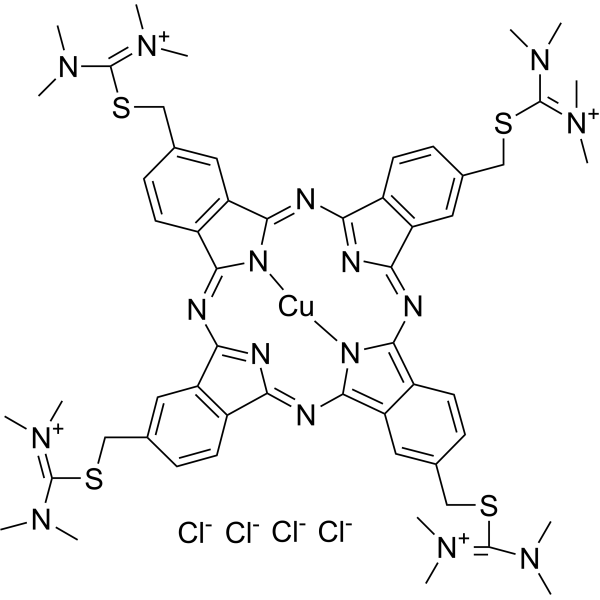
HY-D0001
Alcian Blue 8GXCationic Copper Phthalocyanine Dye -
HY-D1168
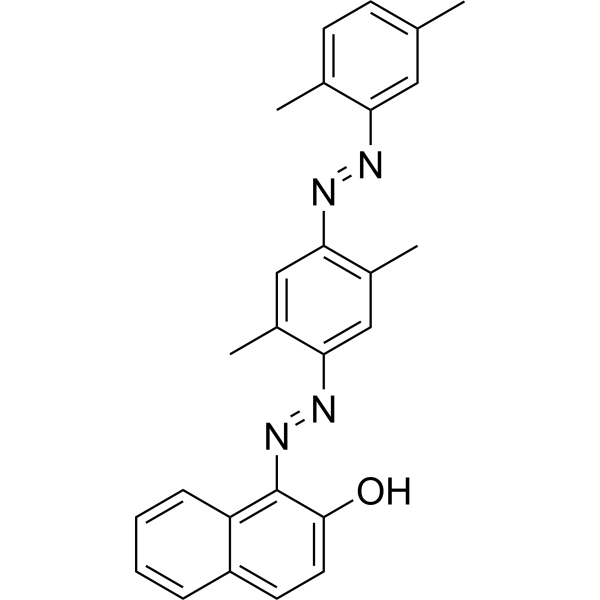
Oil Red ODiazol Dye


Biological Activity
Description
In Vitro
Gallocyanine chloride (0-20 μM, 48 h) promotes the proliferation of breast cancer cells MDA-MB-231 and 4T1, inhibits the lipid peroxidation, improves the levels of GSH and SLC7A11[2].
MedChemExpress (MCE) has not independently confirmed the accuracy of these methods. They are for reference only.
-
Cell Line:MDA-MB-231 and 4T1
-
Concentration:0-20 μM
-
Incubation Time:48 h
-
Result:Increased the cell number.
In Vivo
Gallocyanine chloride (1 mg/kg, intratracheal instillation, once weekly for 4 weeks) reduces PM2.5-induced lung injury and fibrosis in mouse models[3].
MedChemExpress (MCE) has not independently confirmed the accuracy of these methods. They are for reference only.
-
Animal Model:Mouse MDA-MB-231 xenograft models[2]
-
Dosage:10 mg/kg
-
Administration:iv, every 2 days for 3 weeks
-
Result:Reduced the number and size of lung metastases, prolonged the mouse survival time.
-
Animal Model:Mouse PM2.5-induced lung fibrosis models[3]
-
Dosage:1 mg/kg
-
Administration:intratracheal instillation, once weekly for 4 weeks
-
Result:Reduced levels of α-SMA and collagen in lung tissue, reduced levels of IL-1β and TNF-α in bronchoalveolar lavage fluid.


Chemical Information
-
CAS No. 1562-85-2
-
Appearance Solid
-
Molecular Weight 336.73
-
Formula C15H13ClN2O5
-
Color Brown to black
-
SMILES
OC1=C(O)C=C(C(O)=O)C2=C1[O+]=C3C=C(N(C)C)C=CC3=N2.[Cl-]
-
Shipping
Room temperature in continental US; may vary elsewhere.
-
Storage
4°C, sealed storage, away from moisture and light
* In solvent : -80°C, 6 months; -20°C, 1 month (sealed storage, away from moisture and light)


Solvent & Solubility
In Vitro:
DMSO : 11.67 mg/mL (34.66 mM; Need ultrasonic; Hygroscopic DMSO has a significant impact on the solubility of product, please use newly opened DMSO)
Please refer to the solubility information to select the appropriate solvent. Once prepared, please aliquot and store the solution to prevent product inactivation from repeated freeze-thaw cycles.
Storage method and period of stock solution: -80°C, 6 months; -20°C, 1 month (sealed storage, away from moisture and light). When stored at -80°C, please use it within 6 months. When stored at -20°C, please use it within 1 month.
Please refer to the solubility information to select the appropriate solvent. Once prepared, please aliquot and store the solution to prevent product inactivation from repeated freeze-thaw cycles.
Storage method and period of stock solution: -80°C, 6 months; -20°C, 1 month (sealed storage, away from moisture and light). When stored at -80°C, please use it within 6 months. When stored at -20°C, please use it within 1 month.
Concentration (start) × Volume (start) = Concentration (final) × Volume (final)
In Vivo:
Select the appropriate dissolution method based on your experimental animal and administration route.
- For the following dissolution methods, please ensure to first prepare a clear stock solution using an In Vitro approach and then sequentially add co-solvents:
- To ensure reliable experimental results, the clarified stock solution can be appropriately stored based on storage conditions. As for the working solution for In Vivo experiments, it is recommended to prepare freshly and use it on the same day.
- The percentages shown for the solvents indicate their volumetric ratio in the final prepared solution. If precipitation or phase separation occurs during preparation, heat and/or sonication can be used to aid dissolution.
Add each solvent one by one: 10% DMSO 40% PEG300 5% Tween-80 45% Saline
Solubility: ≥ 0.53 mg/mL (1.57 mM); Clear solution
This protocol yields a clear solution of ≥ 0.53 mg/mL (saturation unknown).
Taking 1 mL working solution as an example, add 100 μL DMSO stock solution (5.3 mg/mL) to 400 μL PEG300, and mix evenly; then add 50 μL Tween-80 and mix evenly; then add 450 μL Saline to adjust the volume to 1 mL.
Preparation of Saline: Dissolve 0.9 g sodium chloride in ddH₂O and dilute to 100 mL to obtain a clear Saline solution.
Add each solvent one by one: 10% DMSO 90% (20% SBE-β-CD in Saline)
Solubility: ≥ 0.53 mg/mL (1.57 mM); Clear solution
This protocol yields a clear solution of ≥ 0.53 mg/mL (saturation unknown).
Taking 1 mL working solution as an example, add 100 μL DMSO stock solution (5.3 mg/mL) to 900 μL 20% SBE-β-CD in Saline, and mix evenly.
Preparation of 20% SBE-β-CD in Saline (4°C, storage for one week): 2 g SBE-β-CD powder is dissolved in 10 mL Saline, completely dissolve until clear.
In Vivo Dissolution Calculator
Please enter the basic information of animal experiments:
-
-
-
-
Recommended: Prepare an additional quantity of animals to account for potential losses during experiments.
Please enter your animal formula composition:
-
%DMSO +
Recommended: Keep the proportion of DMSO in working solution below 2% if your animal is weak.
-
%+
-
+%Tween-80 + +
-
%Saline +
The co-solvents required include: DMSO, . All of co-solvents are available by MedChemExpress (MCE). , Tween 80. All of co-solvents are available by MedChemExpress (MCE).
Working solution concentration: 0.22 mg/mL
Method for preparing stock solution: mg drug dissolved in μL DMSO. Stock solution concentration: mg/mL. * In solvent : -80°C, 6 months; -20°C, 1 month (sealed storage, away from moisture and light)
1. Take μL DMSO stock solution;
2. Add μL .
μL , mix evenly;
3. Then add μL Tween 80, mix evenly;
4. Then add μL
Please ensure that the stock solution in the first step is dissolved to a clear state, and add co-solvents in sequence. You can use ultrasonic heating (ultrasonic cleaner, recommended frequency 20-40 kHz), vortexing, etc. to assist dissolution.


Purity & Documentation
-
Data Sheet (278 KB)
-
SDS (393 KB)
- English - EN (393 KB)
- Français - FR (393 KB)
- Deutsch - DE (393 KB)
- Norwegian - NO (393 KB)
- Español - ES (393 KB)
- Swedish - SV (393 KB)
- Italian - IT (393 KB)
- Korean - KR (393 KB)
- Portuguese - PT (393 KB)
-
Handling Instructions (2659 KB)
References
[1]. Thysiadis S, et al., Design and synthesis of gallocyanine inhibitors of DKK1/LRP6 interactions for treatment of Alzheimer's disease. Bioorg Chem. 2018 Oct;80:230-244. [Content Brief]
[2]. Wu M, et al., Cancer stem cell regulated phenotypic plasticity protects metastasized cancer cells from ferroptosis. Nat Commun. 2022 Mar 16;13(1):1371. [Content Brief]
[3]. Yang L, et al., Small GTPase RAB6 deficiency promotes alveolar progenitor cell renewal and attenuates PM2.5-induced lung injury and fibrosis. Cell Death Dis. 2020 Oct 4;11(10):827. [Content Brief]


Complete Stock Solution Preparation Table
Please refer to the solubility information to select the appropriate solvent. Once prepared, please aliquot and store the solution to prevent product inactivation from repeated freeze-thaw cycles.
Storage method and period of stock solution: -80°C, 6 months; -20°C, 1 month (sealed storage, away from moisture and light). When stored at -80°C, please use it within 6 months. When stored at -20°C, please use it within 1 month.
| Optional Solvent | Concentration Solvent Mass | 1 mg | 5 mg | 10 mg | 25 mg |
|---|---|---|---|---|---|
| DMSO | 1 mM | 2.9697 mL | 14.8487 mL | 29.6974 mL | 74.2435 mL |
| 5 mM | 0.5939 mL | 2.9697 mL | 5.9395 mL | 14.8487 mL | |
| 10 mM | 0.2970 mL | 1.4849 mL | 2.9697 mL | 7.4243 mL | |
| 15 mM | 0.1980 mL | 0.9899 mL | 1.9798 mL | 4.9496 mL | |
| 20 mM | 0.1485 mL | 0.7424 mL | 1.4849 mL | 3.7122 mL | |
| 25 mM | 0.1188 mL | 0.5939 mL | 1.1879 mL | 2.9697 mL | |
| 30 mM | 0.0990 mL | 0.4950 mL | 0.9899 mL | 2.4748 mL |


Gallocyanine chloride Related Classifications
HY-D0961 Related Classifications
 Powered by Bioz