


22 Results for "

adherent cells

" in MedChemExpress (MCE) Product Catalog:
Products (22)

22 Results for "adherent cells" in MCE Product Catalog:

5
5 Cited Publications
Cat. No.: HY-K3007

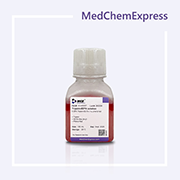
MCE 0.25% Trypsin-EDTA (1x), phenol red consists of dried trypsin powder dissolved in EDTA. MCE Trypsin hydrolyzes intercellular proteins and disperses primary tissues or adherent cells into individual cells, and can be widely used for cell dissociation, cell culture passaging and primary tissue dissociation. The 100 mL is defined as the base specification. All larger sizes correspond to incremental volumes of this base.

loading...
    loading...
1
1 Cited Publications
Cat. No.: HY-124298
CAS No.: 168482-84-6
Purity:  99.00%
Target:  

Fluorescent Dye

Research Areas:  

Others

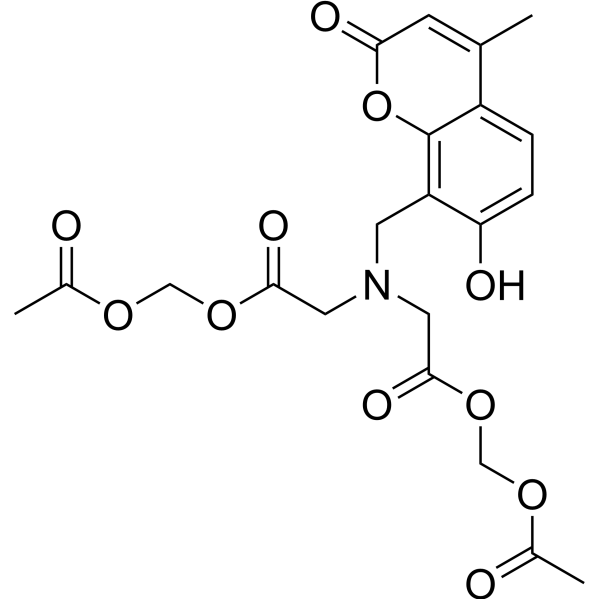
Calcein Blue AM is a cell staining agent. Calcein Blue AM serves as a substrate for intracellular esterases, which hydrolyze its acetoxymethyl (AM) ester group to convert the non-fluorescent reagent into fluorescent Calcein Blue. Calcein Blue AM passively penetrates the plasma membrane of both live and dead cells; it is converted into a polar fluorescent product and retained in the cytoplasm of live cells, whereas dead cells cannot retain the dye. Calcein Blue AM exhibits significant dye leakage, and its fluorescence intensity gradually decreases over time. Calcein Blue AM can be used for endpoint-based cell viability assays and short-term cell tracking experiments with a duration of no more than 4 hours.
loading...
    loading...
1
1 Cited Publications
Cat. No.: HY-148243
CAS No.: 2756014-24-9
Purity:  99.69%
Synonyms: STL5-T-0057
Research Areas:  

Cancer

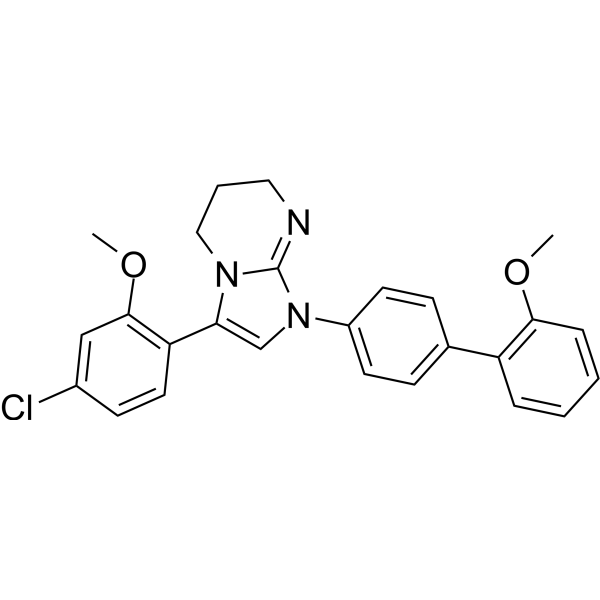
IGUANA-1 free base (STL5-T-0057) is an selective ALDH1 B1 inhibitor with an IC50 value of 30 nM. IGUANA-1 free base inhibits cell growth of SW480 cells in adherent and spheroid conditions with IC50 values of 2.46 and 0.39 μM, respectively. IGUANA-1 free base can be used for the research of cancer .
loading...
    loading...
Cat. No.: HY-129047B
CAS No.: 9002-07-7
Research Areas:  

Others

Recombinant Trypsin Solution is an animal-free trypsin solution used to digest cells or tissues. Recombinant Trypsin Solution has high stability at room temperature and gentle digestion, and can be used to digest weakly adherent cells or stem cells under low serum or serum-free culture conditions. Compared with traditional trypsin digestion solution, Recombinant Trypsin Solution does not contain any animal-derived ingredients, is gentle and effective, and can replace the application of animal-derived trypsin in cell digestion .
loading...
    loading...
Cat. No.: HY-12875
CAS No.: 1637739-82-2
Purity:  99.45%
Target:  

Ras

Research Areas:  

Cancer

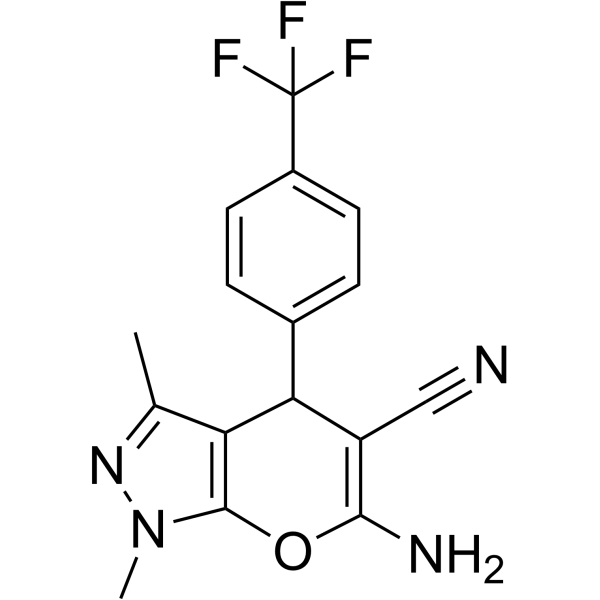
BQU57 is a selective inhibitor of RalA/RalB small GTPases, with a binding potency (Kb) of 7.7 μM for RalB-GDP. BQU57 can block its interaction with effector proteins (such as SEC5 and EXO84), inhibiting tumor cell migration, invasion and non-adherent growth. BQU57 downregulates the NF-κB signaling pathway, reduces the expression of IL-6, IL-8 and MMP-13, and inhibits apoptosis by regulating the Bcl-2/Bax balance. BQU57 also protects the extracellular matrix by inhibiting the Ral/NF-κB pathway and can be used for the study of degenerative diseases. BQU57 exhibits significant antitumor activity in triple-negative breast cancer (TNBC) models, inhibiting orthotopic tumor growth and lung metastasis and enhancing paclitaxel chemotherapy sensitivity .
loading...
    loading...
Cat. No.: HY-174497
Target:  

mRNA

Research Areas:  

Others

eGFP mRNA expresses green fluorescent protein derived from the jellyfish Aequorea victoria. eGFP is a commonly used direct-detection reporter gene in mammalian cell culture, which produces bright green fluorescence. This product is synthesized without modified nucleosides, with a Cap1 version cap analog at the 5' end and a 100nt PolyA tail at the 3' end. It can be used as a positive reference for IVT (in vitro transcription) or LNP delivery systems.
loading...
    loading...
Cat. No.: HY-150287A
Synonyms: ITS-X
Insulin-Transferrin-Selenium-Ethanolamine (ITS-X) is a cell culture supplement as well as a cell growth and adhesion promoter. Insulin-Transferrin-Selenium-Ethanolamine supports adhesion, pseudopodium formation, pseudopodium elongation and proliferation of adherent cancer cells in serum-free culture systems .
loading...
    loading...
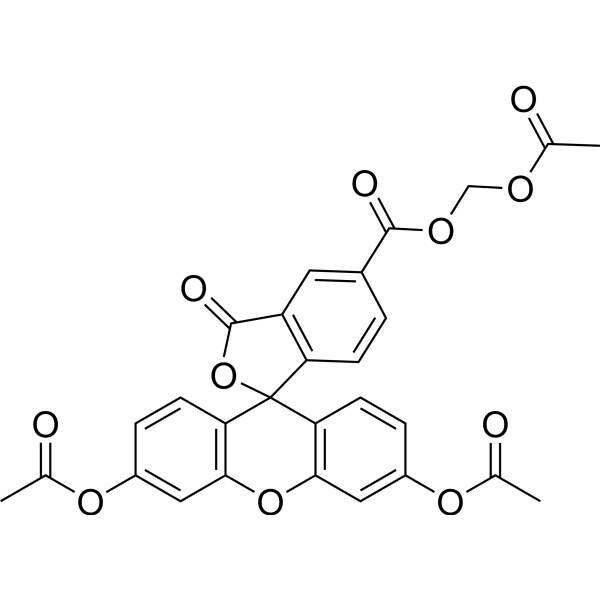
Cat. No.: HY-131131
CAS No.: 124412-00-6
Purity:  99.81%
5-CFDA-AM is a cell-permeable esterase substrate that can be used as an active probe to measure enzyme activity and cell membrane integrity. 5-CFDA-AM is electroneutral and can enter the cell at a lower concentration than CFDA, where it is hydrolysed by intracellular esterases to produce carboxyfluorescein, which contains an additional negative charge and can be better retained in the cell. 5-CFDA-AM can be used to detect cell viability .
loading...
    loading...
Cat. No.: HY-W134423B
CAS No.: 9002-18-0
Agar, meets USP testing specifications is a high-quality selective growth support and substrate for non-adherent cells. Agar, meets USP testing specifications effectively supports the growth, colony formation and metachromatic matrix production of chondrocytes, and also facilitates the isolation and differentiation of pure chondrocyte strains by restricting the proliferation of fibroblast-like cells. Chondrocytes grown in Agar, meets USP testing specifications can be successfully transferred to a liquid suspension culture system, where they continue to proliferate while retaining the characteristics exhibited during growth in agar .
loading...
    loading...
Cat. No.: HY-E70560
CAS No.: 534583-22-7
Research Areas:  

Others

Cellular digestive enzyme is often used as an alternative to trypsin for detaching adherent cells from a culture dish .
loading...
    loading...
Cat. No.: HY-P2633
CAS No.: 400090-20-2
Synonyms: AC-100
Target:  

Peptides

Research Areas:  

Metabolic Disease

Dentonin (AC-100) is a synthetic fragment derived from MEPE. Dentonin enhances osteogenesis by promoting osteoprogenitor adhesion and facilitates immature adherent cells survival. Dentonin has no significant effect to mature osteoblasts. Dentonin can be used for the research of phosphate homeostasis and bone metabolism .
loading...
    loading...
Cat. No.: HY-P2633A
Synonyms: AC-100 TFA
Target:  

Integrin

Research Areas:  

Metabolic Disease

Dentonin TFA (AC-100 TFA) is a synthetic fragment derived from MEPE. Dentonin TFA enhances osteogenesis by promoting osteoprogenitor adhesion and facilitates immature adherent cells survival. Dentonin TFA has no significant effect to mature osteoblasts. Dentonin TFA can be used for the research of phosphate homeostasis and bone metabolism .
loading...
    loading...
Cat. No.: HY-D2984
CAS No.: 1308789-62-9
Synonyms: SNAP-PEG-NH2
Target:  

Fluorescent Dye

Research Areas:  

Others

BG-PEG-NH2 (SNAP-PEG-NH2) is an amino-terminal fluorescent probe building block and a precursor for site-specific labeling of SNAP-tag fusion proteins. BG-PEG-NH2 undergoes one-step coupling with activated carboxyl esters to form customized SNAP-tag substrates, which covalently bind to SNAP tags via a thioether bond formed at the Cys145 site. After coupling with a caged carboxyfluorescein, BG-PEG-NH2 forms a probe with Ex/Em = 500/524 nm following ultraviolet uncaging. Coupling of BG-PEG-NH2 with SeTau-647-NHS enables visualization of GPCR signal transduction. BG-PEG-NH2 is suitable for coupling reactions in aqueous phases or buffers, conjugation of labels, and labeling of intracellular or cell-surface proteins .
loading...
    loading...
Cat. No.: HY-K2027

MCE OptiLNP Gene Editing Kit is a ready-to-use transfection reagent based on LNP technology. It is designed for the efficient co-transfection of Cas9 mRNA and sgRNA during gene editing in common cells (adherent or suspension cells).

loading...
    loading...
Cat. No.: HY-K2004

MCE Trypan Blue Staining Solution (0.4%) is suitable for viability assessment of most adherent and suspension cell lines. It is commonly used for cell culture quality control, evaluation of cellular responses following drug treatment, and viability measurements after cell thawing and recovery.

loading...
    loading...
Cat. No.: HY-K3028

MCE MEM Reduced Serum Medium for Transfection (Phenol Red) is a chemically defined essential medium developed based on classical MEM formulation. Enables at least a 50% reduction in fetal bovine serum (FBS) usage while maintaining normal cell growth rates and cellular morphology, and is suitable for the culture of a wide variety of suspension and adherent mammalian cells.

loading...
    loading...
Cat. No.: HY-K3027

Minimum Essential Medium (MEM), also known as Minimal Essential Medium, was developed by Harry Eagle based on Eagle’s Basal Medium (BME). It is a basic cell culture medium with a simple formulation and broad applicability, and is one of the most commonly used media in animal cell culture. MEM contains only 12 essential amino acids, L-glutamine, and 8 vitamins. It is primarily used for the culture of adherent cells. With appropriate formulation modifications, it can also be used for other types of cell culture.

loading...
    loading...
Cat. No.: HY-D3081
Target:  

Fluorescent Dye

Research Areas:  

Inflammation/Immunology

BTCV-CO is a ratiometric AIE fluorescent probe for the detection and fluorescent imaging of carbon monoxide (CO). BTCV-CO reacts with CO under the mediation of Pd 2+, undergoes allyl cleavage and cyclization to form the highly fluorescent product BTIC, resulting in enhanced fluorescence at 546 nm and weakened fluorescence at 710 nm. Ex/Em = 465/546 nm (λex = 465 nm in spectral experiments; λex = 476 nm in cell imaging) .
loading...
    loading...
Cat. No.: HY-D3367
Target:  

Fluorescent Dye

Research Areas:  

Others

Th-TMR-S-SNAP is a fluorescent probe used for SNAP-tag labeling and wash-free live-cell imaging of intracellular SNAP-tag fusion proteins. The excitation wavelength of Th-TMR-S-SNAP is 561 nm, and its emission wavelength ranges from 570 to 620 nm .
loading...
    loading...
Cat. No.: HY-134096
CAS No.: 78323-98-5
Synonyms: DNS-M
Target:  

Fluorescent Dye

Research Areas:  

Others

Dansyl-morpholine (DNS-M) is a Fluorescent probe for lipid droplet imaging, cancer cell discrimination, and real-time tracking of lipid droplet dynamics. As a solvatochromic probe with a donor-π-acceptor structure, it relies on hydrophobic interaction for its mechanism of action: its good lipophilicity, confirmed by an oil-water partition coefficient LogP = 2.35, allows it to rapidly penetrate cell membranes, and it specifically localizes to the hydrophobic core of lipid droplets; its fluorescence is strongly enhanced in the nonpolar environment of lipid droplets, while it emits very weak fluorescence in polar environments like PBS buffer, and it exhibits a bathochromic shift in emission wavelength with increasing solvent polarity. It has negligible cytotoxicity, with cell viability remaining over 95% after 24-hour incubation with 100 μM of the probe, and it possesses excellent photostability, retaining over 97% of initial fluorescence intensity after 60 continuous laser scans. For cell imaging applications, its excitation/emission wavelengths for lipid droplet labeling are Ex/Em = 405/480−540 nm, and in a simulative lipid environment O/W emulsion, it has an excitation wavelength of ~346 nm and emission wavelength of ~500 nm, giving a Stokes shift of 154 nm[1].
loading...
    loading...

