1. Search Result
Search Result
Results for "

alcohol-preferring

" in MedChemExpress (MCE) Product Catalog:

11

Inhibitors & Agonists

1

Peptides

Cat. No. Product Name Target Research Areas Chemical Structure
  • HY-19801
    CVT-10216
    3 Publications Verification

    Aldehyde Dehydrogenase (ALDH) Neurological Disease
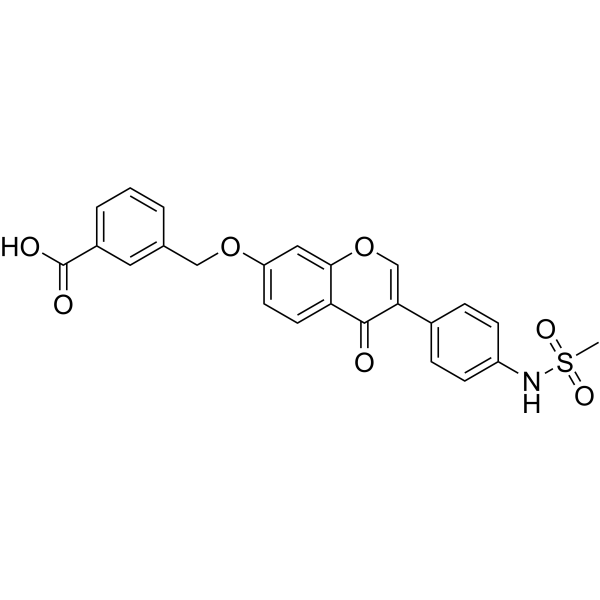
    CVT-10216 is a highly selective, reversible aldehyde dehydrogenase-2 (ALDH-2) inhibitor with an IC50 of 29 nM. CVT-10216 also has inhibitory effect of ALDH-1 with an IC50 of 1.3 μM. CVT-10216 can reduce excessive alcohol drinking in alcohol-preferring rats and exhibit anxiolytic effects .
    CVT-10216
  • HY-124619

    EAAT HIV Neurological Disease
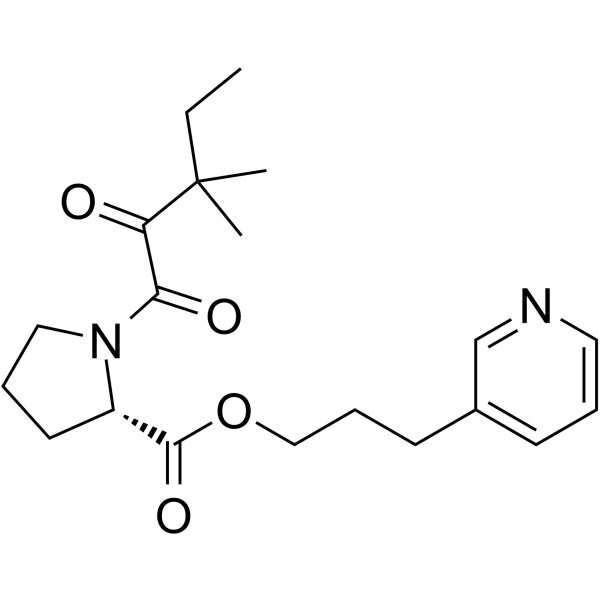
    GPI-1046 is an orally active, antibiotic-free immunophilin ligand that reduces ethanol intake by upregulating glutamate transporter 1 (GLT1) in the prefrontal cortex (PFC) and nucleus accumbens core (NAc-core). GPI-1046 improves human immunodeficiency virus (HIV)-associated sensory neuropathy (HIV-SN) by attenuating store-operated calcium (SOC) entry. GPI-1046 has neuroprotective activity .
    GPI-1046
  • HY-12783A

    GABA Receptor Neurological Disease
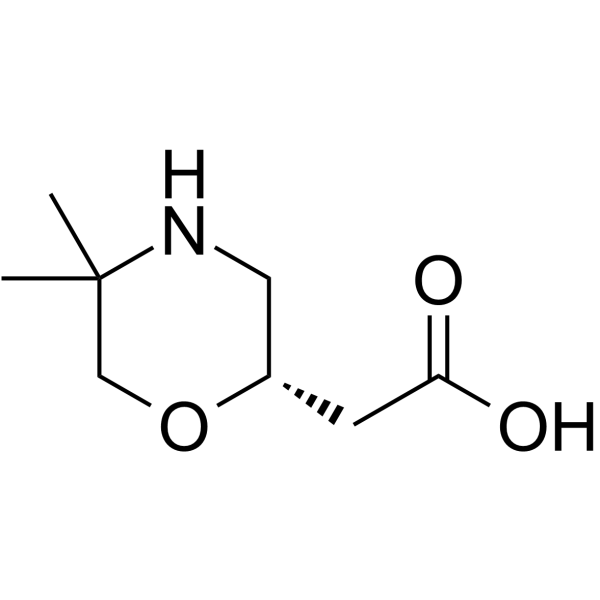
    SCH 50911 is a selective, orally active, blood-brain barrier permeable GABA-B receptor (GABA-B Receptor) antagonist with an IC50 of 1.1 μM in rats. SCH 50911 blocks baclofen-induced antitussive effects, regulates neuronal firing and GABA release. SCH 50911 promotes spontaneous seizures during withdrawal in ethanol-dependent rats, alters reward-related neurotransmission, and reduces or suppresses lever responding and self-administration behaviors of alcohol and sucrose in rats. SCH 50911 is applicable to research related to ethanol withdrawal syndrome, absence epilepsy and alcohol use disorder .
    SCH 50911
  • HY-137231B

    nAChR Neurological Disease
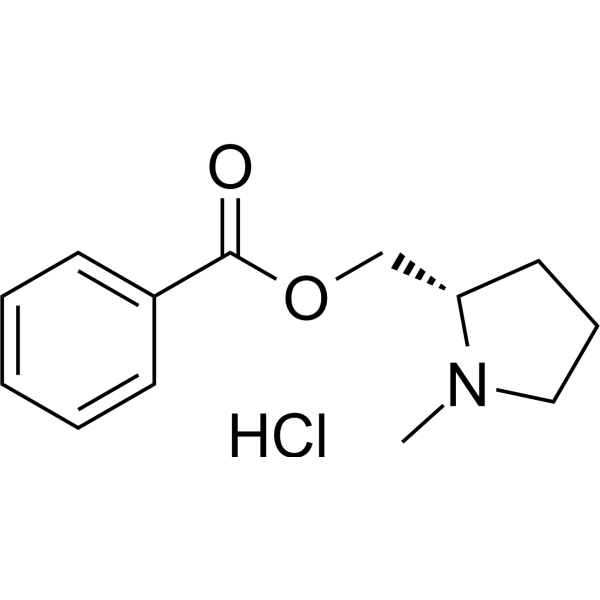
    (S)-UFR2709 (hydrochloride) is a competitive nAChR antagonist?and displays higher affinity for α4β2 nAChRs than for α7 nAChRs. (S)-UFR2709 (hydrochloride) decreases anxiety and reduces ethanol consumption and ethanol preference in alcohol-preferring rats. (S)-UFR2709 (hydrochloride) acts as an anxiolytic agent and can be used for the study of nicotine addiction .
    (S)-UFR2709 hydrochloride
  • HY-103500

    GABA Receptor Neurological Disease
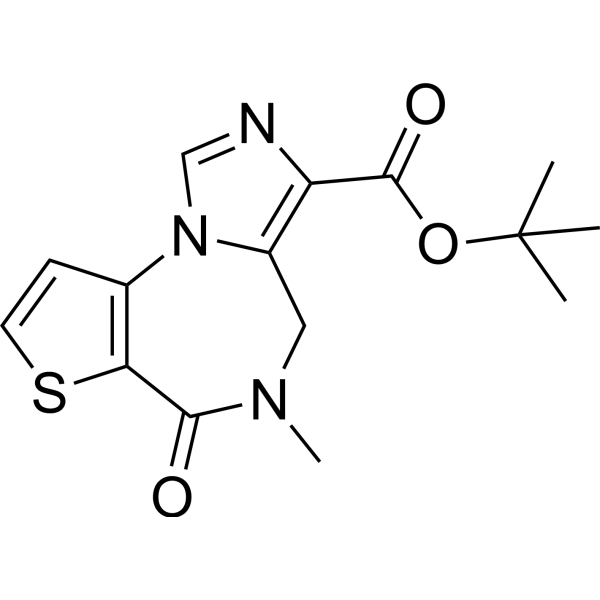
    Ro19-4603 is a benzodiazepine inverse agonist. Ro19-4603 antagonizes ethanol (EtOH) intake in alcohol-preferring rats .
    Ro19-4603
  • HY-19917

    Histamine Receptor Neurological Disease
    JNJ-39220675 is a selective and brain-penetrating histamine H3 receptor antagonist with activity in regulating alcohol stimulation and reward. JNJ-39220675 is effective in reducing alcohol intake and preference in alcohol-preferring rats. JNJ-39220675 does not affect the ataxic effects of alcohol, the rate of alcohol elimination, or alcohol-induced nucleocapsid dopamine release .
    JNJ-39220675
  • HY-137231A

    nAChR Neurological Disease
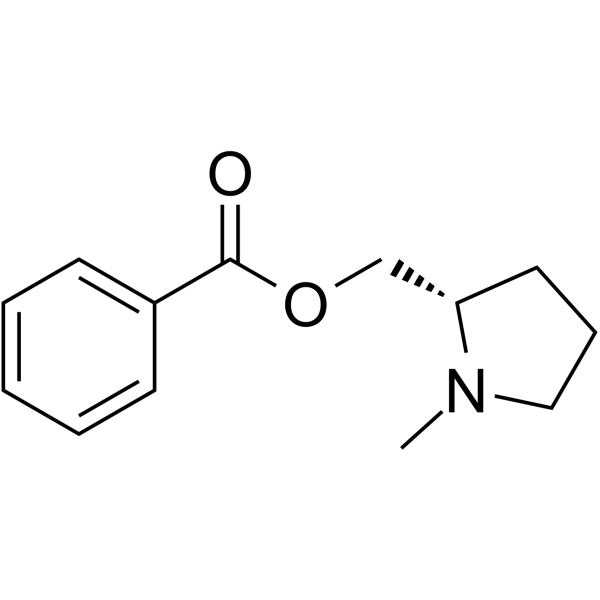
    (S)-UFR2709 is a competitive nAChR antagonist and displays higher affinity for α4β2 nAChRs than for α7 nAChRs. (S)-UFR2709 decreases anxiety and reduces ethanol consumption and ethanol preference in alcohol-preferring rats. (S)-UFR2709 acts as an anxiolytic agent and can be used for the study of nicotine addiction .
    (S)-UFR2709
  • HY-P11429

    Neurokinin Receptor Metabolic Disease
    [Asp5,6,Me-Phe8] Substance P (5-11) is a tachykinin NK-3 receptor agonist. [Asp5,6,Me-Phe8] Substance P (5-11) reduces alcohol intake in genetically selected alcohol-preferring rats .
    [Asp5,6,Me-Phe8] Substance P (5-11)
  • HY-167856A

    GPR88 Neurological Disease
    RTI-122 dihydrochloride is a selective, blood-brain barrier-permeable GPR88 agonist (cAMP EC50=11 nM), with EC50 values of 11.5 nM and 155 nM for human and mouse GPR88, respectively ([ 35S]GTPγS assay). By activating the GPR88 receptor to regulate the cAMP signaling pathway and G protein activity, RTI-122 dihydrochloride significantly attenuates Binge-like drinking, reduces alcohol intake, and decreases alcohol-seeking motivation. RTI-122 dihydrochloride blocks the reinstatement of alcohol-seeking behavior without affecting water or sucrose intake. RTI-122 dihydrochloride exhibits metabolic stability in mice (T1/2=5.8 h) and can be used to investigate alcohol use disorder .
    RTI-122 dihydrochloride
  • HY-182601

    EAAT Interleukin Related Neurological Disease
    MC-100093 is an orally active, blood-brain barrier-permeable GLT-1 expression upregulator . MC-100093 upregulates the expression of GLT-1 and xCT in rats, and alleviates fentanyl-induced GLT-1 downregulation, IL-6 upregulation and motor hyperactivity. MC-100093 upregulates GLT-1 expression and enhances glutamate uptake in astrocyte-neuron co-culture systems. MC-100093 reduces ethanol consumption and preference, and exerts gender-specific antidepressant-like effects . MC-100093 can be used in studies related to fentanyl overdose, mood disorders and alcohol use disorders .
    MC-100093
  • HY-18101

    Sigma Receptor TRP Channel Neurological Disease
    BD-1063 is a selective σ-1 receptor antagonist with inhibitory activity against TRPC5 and TRPM3. BD-1063 exerts anti-hyperalgesic and anti-allodynic effects by inhibiting sustained calcium influx mediated by TRPC5 and TRPM3, and reverses the effects of Carrageenan (HY-125474). BD-1063 also significantly reduces excessive ethanol self-administration behavior. BD-1063 is widely used in studies on the mechanisms underlying neuropathic pain, inflammatory hyperalgesia, and alcohol abuse and dependence .
    BD-1063

Inquiry Online

Your information is safe with us. * Required Fields.

Salutation


Country or Region *

Applicant Name *


Organization Name *

Department *


Email Address *


Product Name *

Cat. No.


Requested quantity *

Phone Number *


Remarks

Inquiry Online

Inquiry Information

Product Name:
Cat. No.:
Quantity:
MCE Japan Authorized Agent:

