18 Results for "

alfalfa

" in MedChemExpress (MCE) Product Catalog:
Products (18)

18 Results for "alfalfa" in MCE Product Catalog:

2
2 Cited Publications
Cat. No.: HY-109589A
CAS No.: 62322-84-3
Purity:  99.95%
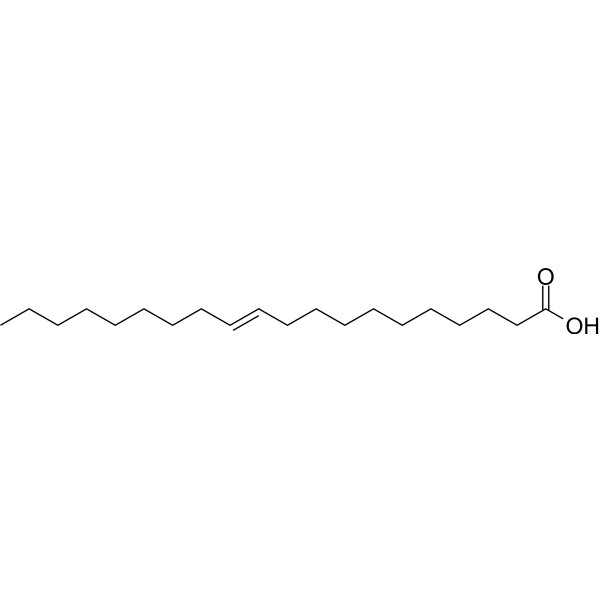
trans-11-Eicosenoic acid is a fatty acid that inhibits the phosphatase activity of PtpA from Mycobacterium tuberculosis, with an IC50 of 27.97 µM. trans-11-Eicosenoic acid is detected in the stems of alfalfa plants inoculated with Sinorhizobium meliloti LL11, but is absent in the stems of uninoculated alfalfa or the strain itself .
loading...
    loading...
Cat. No.: HY-21754
CAS No.: 475-11-6
Synonyms: N-Methyl-L-proline
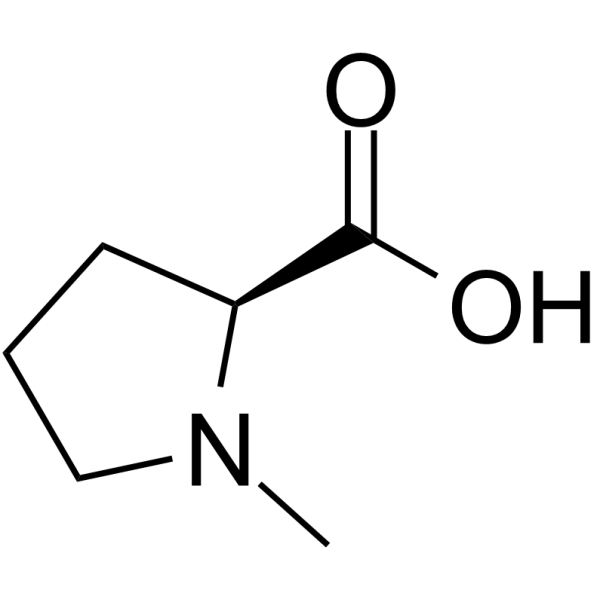
Hygric acid (N-Methyl-L-proline) is a proline analog that is found in bergamot, various citrus juices, and alfalfa seedlings .
loading...
    loading...
Cat. No.: HY-N10373
CAS No.: 3598-26-3
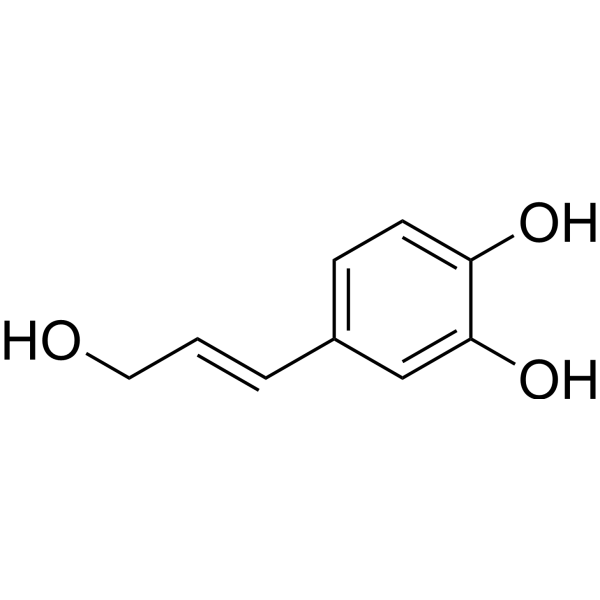
Caffeoyl alcohol is a monomer constituting Catechyl lignin. Catechyl lignin is a linear homopolymer of caffeyl alcohol, a natural source of carbon fiber and high-value chemicals .
loading...
    loading...
Cat. No.: HY-B1849
CAS No.: 51235-04-2
Research Areas:  

Others

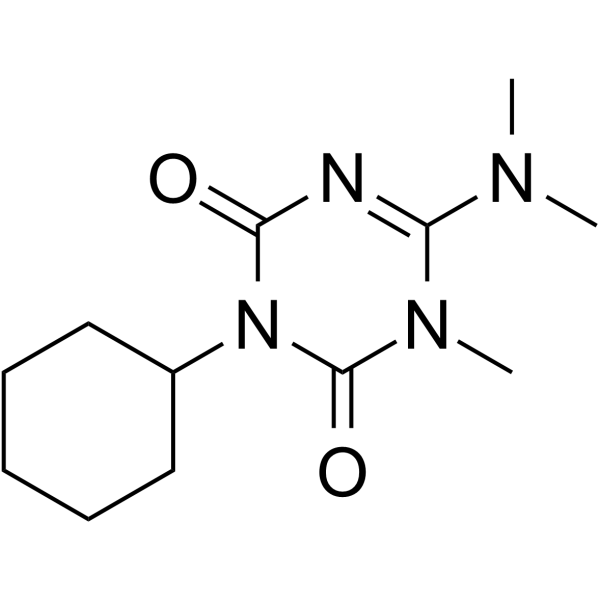
Hexazinone is a triazinone herbicide with high mobility and persistence in soil. Hexazinone is mainly degraded by soil microorganisms, and its degradation and mineralization processes are significantly affected by soil texture (faster in clay loam) and application method (mixed application can improve its bioavailability and mineralization rate). Hexazinone exhibits mild to moderate acute oral toxicity and has significant eye irritation .
loading...
    loading...
Cat. No.: HY-116706
CAS No.: 2164-08-1
Purity:  99.88%
Research Areas:  

Others

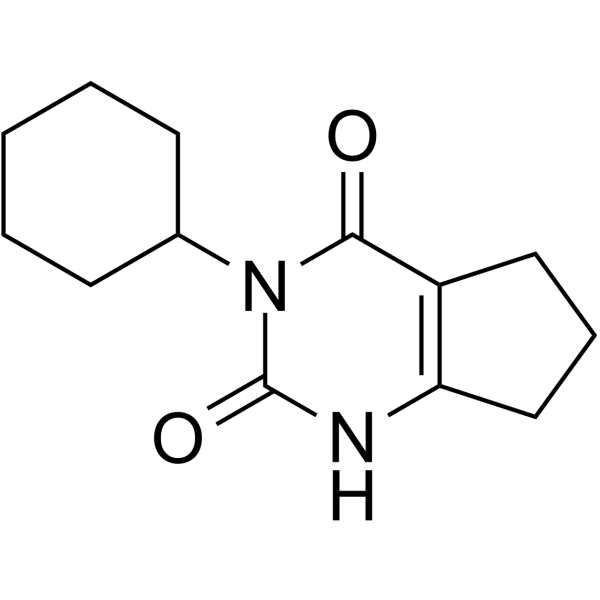
Lenacil is a selective uracil substituted herbicide used for control of both annual grasses, broad leafed weeds and some perennial weeds in sugarcane, apples, alfalfa, peaches, peacans, peppermints (Mentha piperita) and sugar beets. Lenacil can inhibit photosynthesis .
loading...
    loading...
Cat. No.: HY-111812
CAS No.: 32769-02-1
Purity:  99.09%
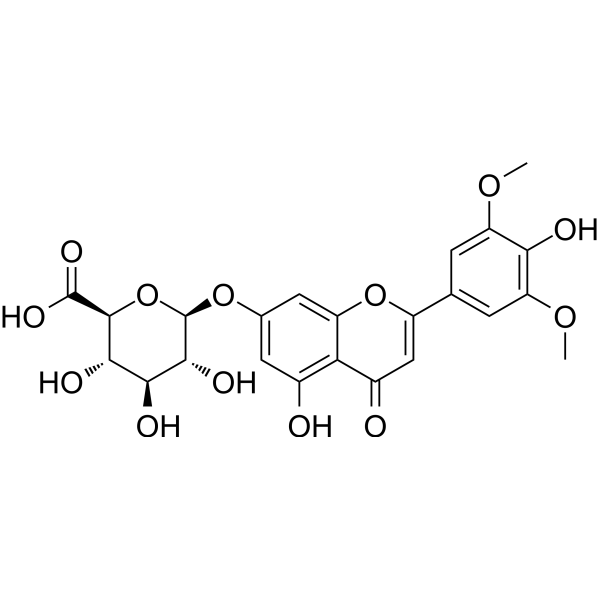
Tricin 7-O-glucuronide is an Alfalfa (Medicago sativa L.) flavonoid that can be obtained from the leaves of M. tenuifollium G. Forster .
loading...
    loading...
Cat. No.: HY-D0843R
CAS No.: 128-53-0
Synonyms: NEM (Standard)
Bayogenin (Standard) is the analytical standard of Bayogenin. This product is intended for research and analytical applications. Bayogenin is an alfalfa saponin, shows moderate potency of glycogen phosphorylase inhibition .
loading...
    loading...
Cat. No.: HY-B2039
CAS No.: 25057-89-0
Research Areas:  

Others

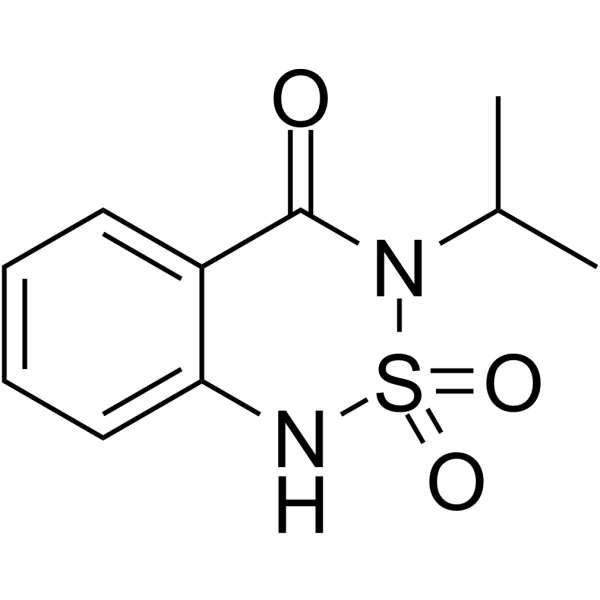
Bentazone is a selective post-emergence herbicide and a Photosystem II inhibitor targeting the quinone B binding site, with activity against broadleaf weeds. Bentazone interferes with photosynthetic electron transport, blocks sunlight-dependent energy production, and acts as a phytotoxin to induce leaf damage, growth inhibition, lipid peroxidation, and reduced chlorophyll content .
loading...
    loading...
Cat. No.: HY-116706R
CAS No.: 2164-08-1
Research Areas:  

Others

Lenacil (Standard) is the analytical standard of Lenacil. This product is intended for research and analytical applications. Lenacil is a selective uracil substituted herbicide used for control of both annual grasses, broad leafed weeds and some perennial weeds in sugarcane, apples, alfalfa, peaches, peacans, peppermints (Mentha piperita) and sugar beets. Lenacil can inhibit photosynthesis .
loading...
    loading...
Cat. No.: HY-W008129R
CAS No.: 2584-71-6
H-D-cis-Hyp-OH (Standard) is the analytical standard of H-D-cis-Hyp-OH. This product is used for research and analytical applications. H-D-cis-Hyp-OH is a proline derivative and also a substrate of the cis-4-hydroxy-D-proline dehydrogenase from the alfalfa rhizobium (Sinorhizobium meliloti). H-D-cis-Hyp-OH can be used as an initial raw material for the synthesis of conformationally restricted pyrrolidine PNA adenine monomers.
loading...
    loading...
Cat. No.: HY-B2039R
CAS No.: 25057-89-0
Research Areas:  

Others

Bentazone (Standard) is the analytical standard of Bentazone (HY-B2039). This product is intended for research and analytical applications. Bentazone is a selective post-emergence herbicide and a Photosystem II inhibitor targeting the quinone B binding site, with activity against broadleaf weeds. Bentazone interferes with photosynthetic electron transport, blocks sunlight-dependent energy production, and acts as a phytotoxin to induce leaf damage, growth inhibition, lipid peroxidation, and reduced chlorophyll content .
loading...
    loading...
Cat. No.: HY-B2039S1
CAS No.: 131842-77-8
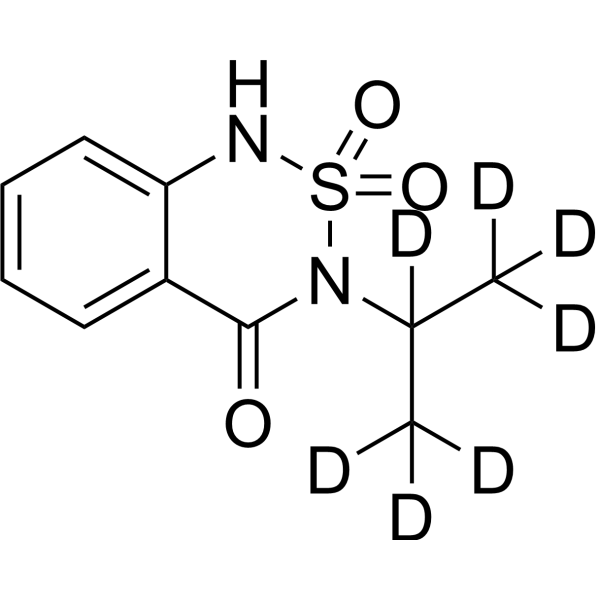
Bentazone-d7 is the deuterated-labeled Bentazone (HY-B2039). Bentazone is a selective post-emergence herbicide and a Photosystem II inhibitor targeting the quinone B binding site, with activity against broadleaf weeds. Bentazone interferes with photosynthetic electron transport, blocks sunlight-dependent energy production, and acts as a phytotoxin to induce leaf damage, growth inhibition, lipid peroxidation, and reduced chlorophyll content .
loading...
    loading...
Cat. No.: HY-N18665
CAS No.: 84082-36-0
Category:  

Extract

Target:  

Others

Medicago sativa extract is a whole-plant extract of alfalfa, a legume, and can be used in research on health supplements.
loading...
    loading...
Cat. No.: HY-114844
CAS No.: 3617-45-6
Synonyms: H-Phe-Glu-OH
Research Areas:  

Infection

L-Phenylalanyl-L-glutamic acid (H-Phe-Glu-OH) is a dipeptide present in the exudates of alfalfa seedlings, which exhibits high affinity for PEPT2. L-Phenylalanyl-L-glutamic acid can serve as the peptide scaffold of a tyrosyl-tRNA synthetase inhibitor against Staphylococcus aureus .
loading...
    loading...
Cat. No.: HY-114844A
Synonyms: H-Phe-Glu-OH TFA
Research Areas:  

Infection

L-Phenylalanyl-L-glutamic acid TFA (H-Phe-Glu-OH TFA) is a dipeptide present in the exudates of alfalfa seedlings, which exhibits high affinity for PEPT2. L-Phenylalanyl-L-glutamic acid TFA can serve as the peptide scaffold of a tyrosyl-tRNA synthetase inhibitor against Staphylococcus aureus .
loading...
    loading...
Cat. No.: HY-N9868
CAS No.: 423170-79-0
(-)-Phaselic acid is a protein protectant that can be isolated from red clover (Trifolium pratense) leaves. (-)-Phaselic acid is synthesized through an acyl transfer reaction between caffeoyl-CoA and malic acid catalyzed by the HCT2 enzyme. As a substrate for endogenous polyphenol oxidase (PPO), its oxidation to o-quinone can inhibit protein degradation during forage storage. (-)-Phaselic acid can be used to improve the protein preservation performance of forage crops such as alfalfa, reducing nutritional losses during storage and environmental nitrogen pollution .
loading...
    loading...
Cat. No.: HY-172151
Research Areas:  

Others

PPO-IN-17 (Compound 6R) is the inhibitor protoporphyrinogen IX oxidase (PPO) that inhibits Nicotiana tobacco PPO (NtPPO) with Ki of 30.34 nM. PPO-IN-17 exhibits herbicidal activity that inhibits barnyardgrass (E. crus-galli), foxtail grass (D. sanguinalis), alfalfa (M. sativa) and Canada cocklebur (C. canadensis) (>95% inhibition rate at a concentration of 37.5 g/hm 2). PPO-IN-17 exhibits no toxicity on rice (at a concentration of 75 g/hm 2) or on honeybees (at a concentration of 6400 mg/kg) .
loading...
    loading...
Cat. No.: HY-N6052A
CAS No.: 607363-34-8
Synonyms: 3-Hydroxy-9-methoxypterocarpan
(Rac)-Medicarpin (3-Hydroxy-9-methoxypterocarpan) is a pterocarpan isoflavonoid phytoalexin with antimicrobial activity and anti-tumor promoting activity. (Rac)-Medicarpin induces apoptosis in human peripheral blood mononuclear cells. (Rac)-Medicarpin is also a defensive secondary metabolite produced in sword bean calli in response to exposure to spore suspensions of the non-pathogenic fungus Pithomyces chartarum or HgCl2 .
loading...
    loading...
  • 1

