1. Search Result
Search Result
Results for "

alkylating derivative

" in MedChemExpress (MCE) Product Catalog:

24

Inhibitors & Agonists

2

Peptides

3

Natural
Products

1

Click Chemistry

Targets Recommended:
Cat. No. Product Name Target Research Areas Chemical Structure
  • HY-W018326

    DNA/RNA Synthesis Cancer
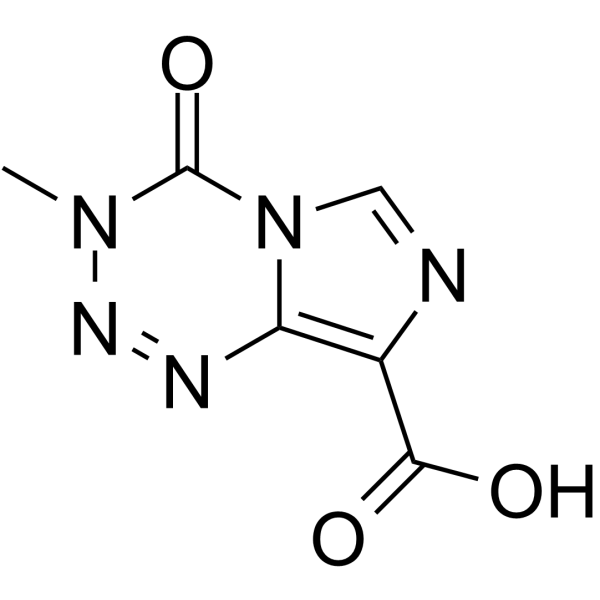
    Temozolomide acid is a carboxylic acid derivative of Temozolomide (HY-17364) with anticancer activity. Temozolomide is a DNA alkylating agent, methylating the guanine and adenine bases of DNA, causing breaks in DNA double strand, cell cycle arrest, and eventually cell death. Temozolomide acid is promising for research of glioblastoma and brain cancer .
    Temozolomide acid
  • HY-W015224

    Endogenous Metabolite Metabolic Disease
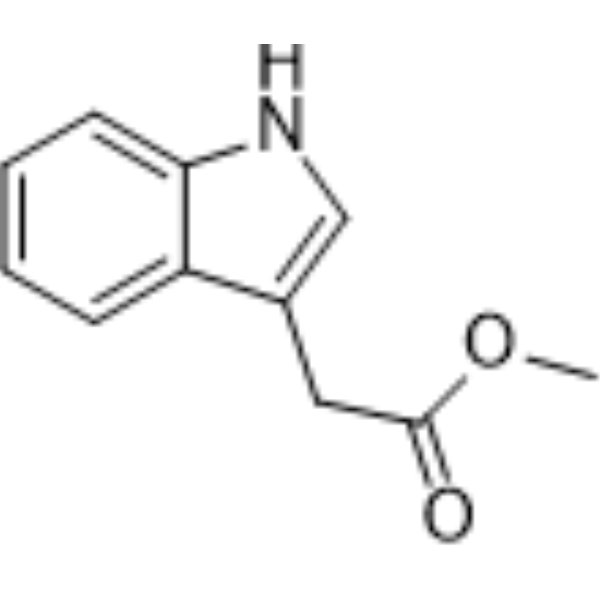
    Methyl 2-(1H-indol-3-yl)acetate is an indole ester.Methyl 2-(1H-indol-3-yl)acetate serves as a precursor for synthesis of S-alkylated/aralkylated 2-(1H-indol-3-ylmethyl)-1,3,4-oxadiazole-5-thiol derivatives .
    Methyl 2-(1H-indol-3-yl)acetate
  • HY-116770
    PFM01
    5 Publications Verification

    Endonuclease Cancer
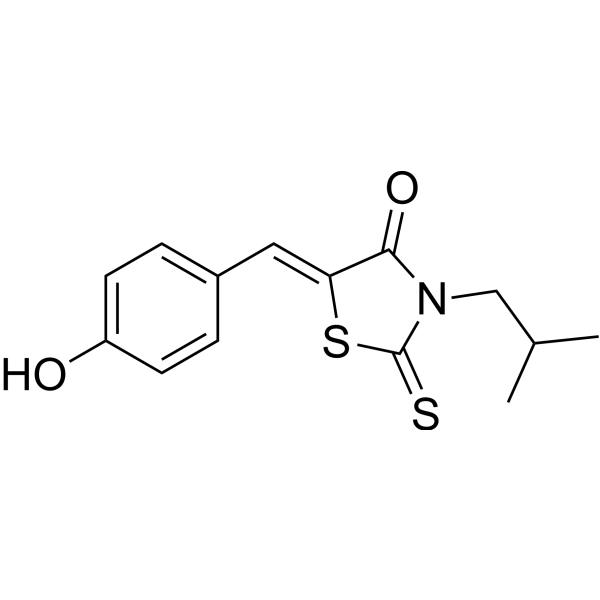
    PFM01, N-alkylated Mirin derivative, is a MRE11 endonuclease inhibitor. PFM01 can regulate double-strand break repair (DSBR) by nonhomologous end-joining (NHEJ) versus homologous recombination (HR) .
    PFM01
  • HY-Y1078

    N-Dimethoxymethyl-N,N-dimethylamine

    Biochemical Assay Reagents Others
    DMF-DMA (N-Dimethoxymethyl-N,N-dimethylamine) is a reagent with both condensation and alkylation functions. DMF-DMA can undergo condensation reactions with active methylene groups or amino groups to generate enamine and imino derivatives, and can also act as an alkylating agent to methylate nitrogen and oxygen atoms in heterocyclic structures. DMF-DMA is widely used in the synthesis of enaminones and dimethylamino imine intermediates, as well as in the construction of heterocyclic backbones such as pyridine, pyrimidine and pyrazole. DMF-DMA can also serve as a polar aprotic co-solvent; although DMF-DMA cannot dissolve cellulose alone, it can form an efficient cellulose dissolution system with diallylimidazolium methoxyacetate .
    DMF-DMA
  • HY-16398

    DNA Alkylator/Crosslinker DNA/RNA Synthesis Cancer
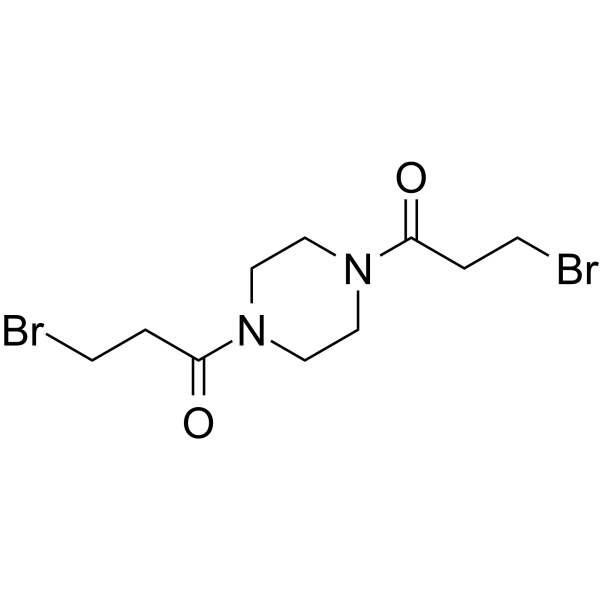
    Pipobroman is a bromide derivative of piperazine and acts as an alkylating agent. Pipobroman plays its role by inhibiting DNA and RNA polymerase or by reducing pyrimidine nucleotide incorporation into DNA. Pipobroman can be used for the cancer research, including polycythemia vera, myeloproliferative neoplasm, and AML et.al .
    Pipobroman
  • HY-16124

    TLK-286; TER286

    DNA-PK Apoptosis Cancer
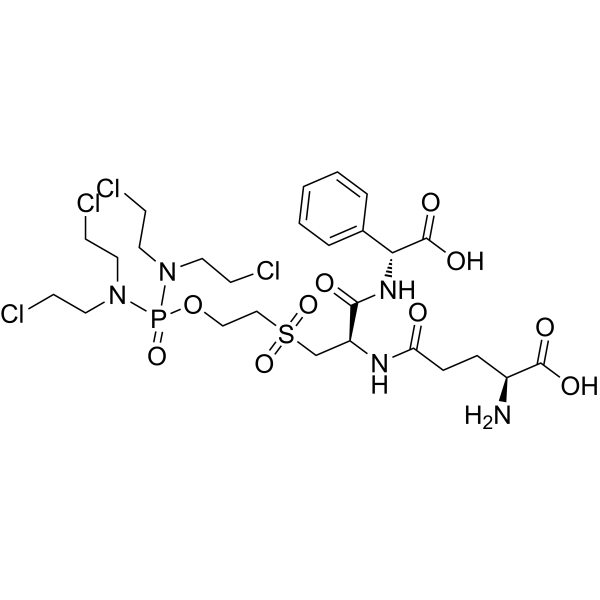
    Canfosfamide (TLK-286, TER286) is a glutathione analogue prodrug that is activated by glutathione S-transferase P1-1 and induces apoptosis. Canfosfamide also inhibits the catalytic kinase activity of DNA-dependent protein kinase (DNA-PK). Canfosfamide produces an anticancer alkylating agent and a glutathione derivative after activation. Canfosfamide can be used to research malignancies .
    Canfosfamide
  • HY-102001

    ADC Payload Cancer
    Tomaymycin DM is a tomaymycin derivative, PBD monomer, and DNA alkylating agent. Tomaymycin DM can serve as a payload in tumor-targeting antibody-conjugated active molecules (ADCs).
    Tomaymycin DM
  • HY-16232

    D 19575; Glucosylifosfamide mustard

    Apoptosis Caspase Bcl-2 Family Cancer
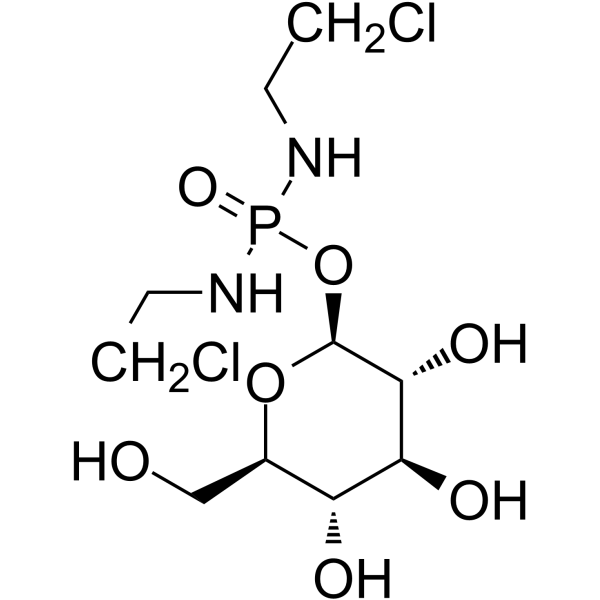
    Glufosfamide is a glucose-conjugated alkylating cytotoxic agent and a derivative of Ifosfamide (HY-17419). Glufosfamide induces apoptosis frequency and increase the expression of caspase-9 and caspase-3 in cancer cells. Glufosfamide shows great anti-tumor activity in MiaPaCa-2-RFP mouse model. Glufosfamide can be used for the study of hepatocellular carcinoma, prostate cancer and pancreatic carcinoma .
    Glufosfamide
  • HY-136522

    Histone Demethylase Apoptosis Cancer
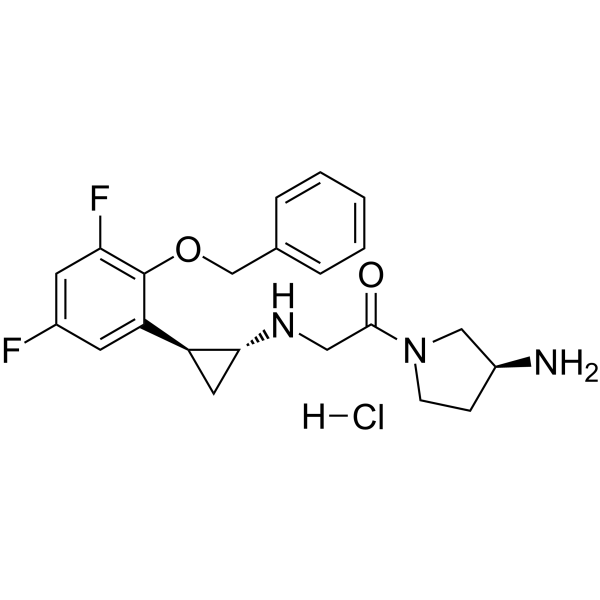
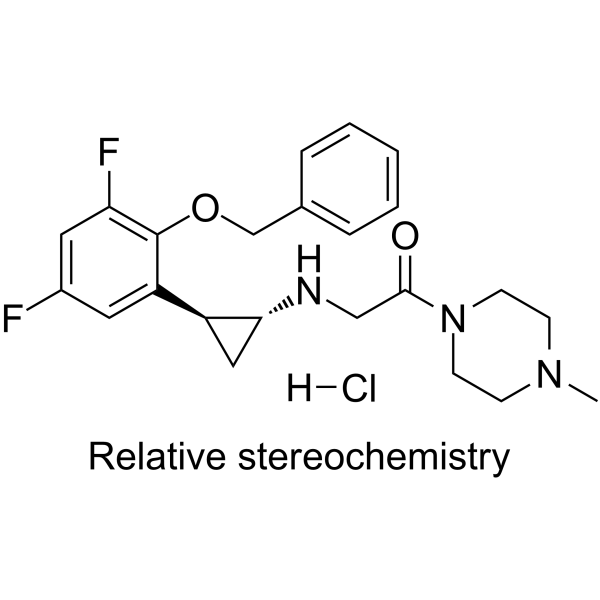
    S2116, a N-alkylated tranylcypromine (TCP) derivative, is a potent lysine-specific demethylase 1 (LSD1) inhibitor. S2116 increases H3K9 methylation and reciprocal H3K27 deacetylation at super-enhancer regions. S2116 induces apoptosis in TCP-resistant T-cell acute lymphoblastic leukemia (T-ALL) cells by repressing transcription of the NOTCH3 and TAL1 genes. S2116 significantly retardes the growth of T-ALL cells in xenotransplanted mice .
    S2116
  • HY-41462

    Drug Derivative Others
    Ethyl 4-(butylamino)benzoate is an N-alkylated ester derivative of aminobenzoic acid .
    Ethyl 4-(butylamino)benzoate
  • HY-122462

    PNU-159548

    DNA/RNA Synthesis Cancer
    Ladirubicin (PNU-159548) is a derivative of Daunorubicin (HY-13062A). Ladirubicin exhibits DNA intercalation and DNA alkylating properties, inhibits DNA replication and transcription, causes DNA damage, and thereby exhibits antitumor efficacy. Ladirubicin exhibits the potential to penetrate the blood-brain barrier (BBB) for its high lipophilicity. Ladirubicin exhibits toxicity through suppression of bone marrow activity .
    Ladirubicin
  • HY-136523

    Histone Demethylase Apoptosis Cancer
    S2157, a N-alkylated tranylcypromine (TCP) derivative, is a potent lysine-specific demethylase 1 (LSD1) inhibitor. S2157 increases H3K9 methylation and reciprocal H3K27 deacetylation at super-enhancer regions. S2157 induces apoptosis in TCP-resistant T-cell acute lymphoblastic leukemia (T-ALL) cells by repressing transcription of the NOTCH3 and TAL1 genes. S2157 efficiently pass through the blood-brain barrier and can almost completely eradicate CNS leukemia in mice transplanted with T-ALL cells .
    S2157
  • HY-151738

    ADC Linker Others
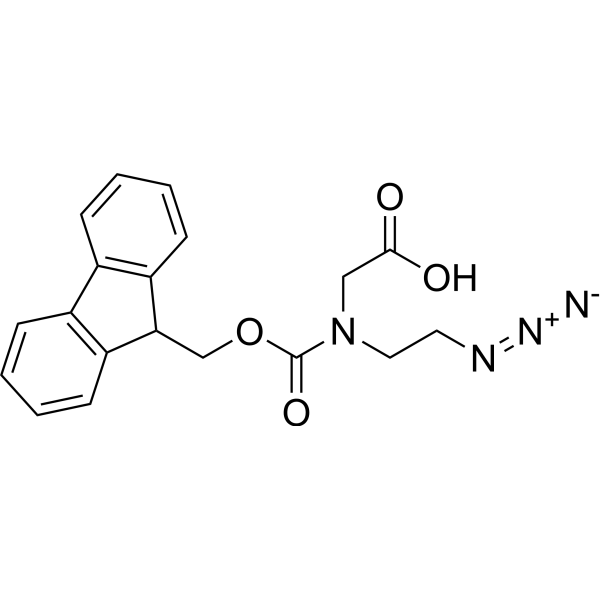
    Fmoc-Aeg(N3)-OH is a click chemistry reagent containing an Azide. Alkylating the Nitrogen of an amide bond results in peptoid structures, which leads to conformational restrains, like N-methylation and allows backbone derivatisation. Altering cytotoxicity, bacterial cell selectivity and receptor pharmacology through formation of peptoid derivatives have been published for Cilengitide, Piscidin 1, and MC3, MC4 and MC5 receptor agonist. This building block enables design of macrocycles through intermolecular crosslinking or backbone stabilization through intermolecular ring-closure. This compound is a potential building block for the construction of (customized) peptide nucleic acids (PNAs) and for peptoid synthesis . Fmoc-Aeg(N3)-OH is a click chemistry reagent, it contains an Azide group and can undergo copper-catalyzed azide-alkyne cycloaddition reaction (CuAAc) with molecules containing Alkyne groups. It can also undergo strain-promoted alkyne-azide cycloaddition (SPAAC) reactions with molecules containing DBCO or BCN groups.
    Fmoc-Aeg(N3)-OH
  • HY-120220

    A-20968; Ancyte

    DNA/RNA Synthesis Cancer
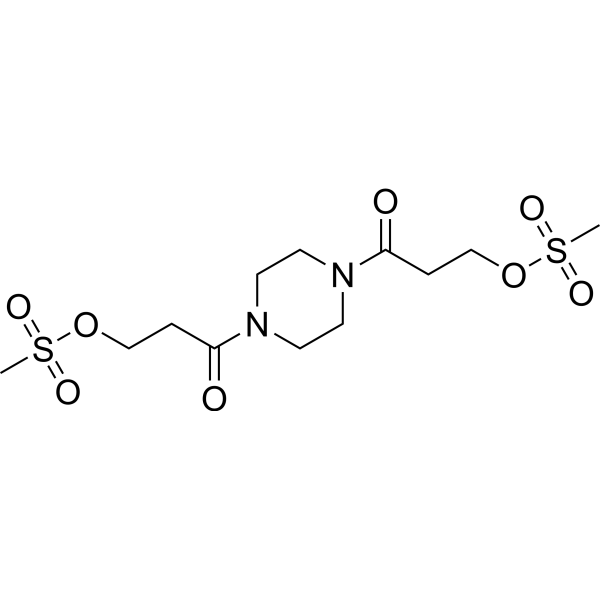
    Piposulfan (Ancyte) is a methanesulfonate, alkylating derivative of piperazine. Piposulfan has potential antineoplastic activity. Piposulfan can be used for the research of cancer .
    Piposulfan
  • HY-105815

    DNA Alkylator/Crosslinker Cancer
    Chlornaphazine, a nitrogen mustard derivative, is a bifunctional alkylating agent. Chlornaphazine is an antineoplastic agent, which can be used for the study of polycythemia vera and Hodgkin’s disease .
    Chlornaphazine
  • HY-16123

    DNA Alkylator/Crosslinker Cancer
    Canfosfamide (hydrochloride) is a prodrug that upon activation by glutathione s-transferase P1-1 (GSTP1-1) yields an anticancer alkylating agent and a glutathione derivative.
    Canfosfamide hydrochloride
  • HY-P3647

    Opioid Receptor Adenylate Cyclase Neurological Disease
    [DPro10] Dynorphin A (1-11), porcine, a N-Alkylated derivative, is a potent κ-opioid receptor agonist with a Ki value of 0.13 nM. [DPro10] Dynorphin A (1-11), porcine has analgesic property .
    [DPro10] Dynorphin A (1-11), porcine
  • HY-P3647A

    Opioid Receptor Adenylate Cyclase Neurological Disease
    [DPro10] Dynorphin A (1-11), porcine hydrochloride, a N-Alkylated derivative, is a potent κ-opioid receptor agonist with a Ki value of 0.13 nM. [DPro10] Dynorphin A (1-11), porcine hydrochloride has analgesic property .
    [DPro10] Dynorphin A (1-11), porcine hydrochloride
  • HY-N10281

    Bacterial Infection
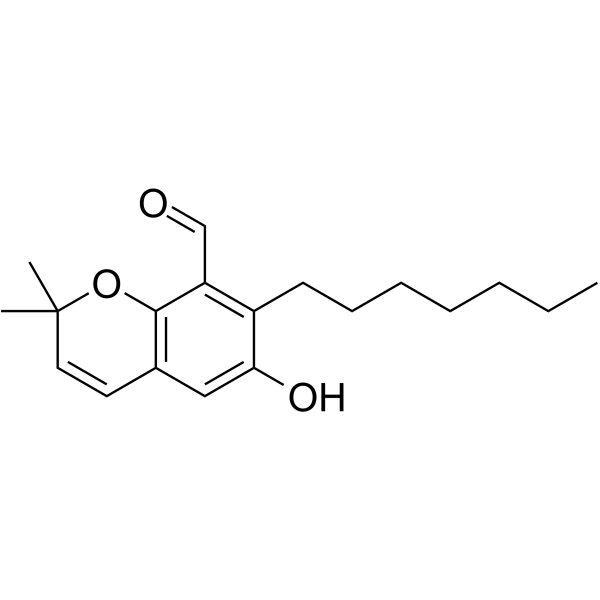
    Asperglaucin B is an alkylated salicylaldehyde derivative from the fungus Aspergillus chevalieri SQ-8, with antibacterial activities. Asperglaucin B displays potent antibacterial activities against two plant pathogens Pseudomonas syringae pv actinidae (Psa) and Bacillus cereus, with an MIC value of 6.25 μM .
    Asperglaucin B
  • HY-16398R

    DNA Alkylator/Crosslinker DNA/RNA Synthesis Reference Standards Cancer
    Pipobroman (Standard) is the analytical standard of Pipobroman. This product is intended for research and analytical applications. Pipobroman is a bromide derivative of piperazine and acts as an alkylating agent. Pipobroman plays its role by inhibiting DNA and RNA polymerase or by reducing pyrimidine nucleotide incorporation into DNA. Pipobroman can be used for the cancer research, including polycythemia vera, myeloproliferative neoplasm, and AML et.al .
    Pipobroman (Standard)
  • HY-17419A

    DNA Alkylator/Crosslinker Cancer
    (R)-Ifosfamide is a chemotherapeutic agent primarily used in the treatment of aggressive tumors such as rhabdomyosarcoma, exhibiting alkylating activity that interferes with DNA replication. (R)-Ifosfamide is an isomeric derivative of the DNA alkylating agent Ifosfamide (HY-17419).
    (R)-Ifosfamide
  • HY-16232R

    D 19575 (Standard); Glucosylifosfamide mustard (Standard)

    Reference Standards Apoptosis Bcl-2 Family Caspase Cancer
    Glufosfamide (Standard) is the analytical standard of Glufosfamide. This product is intended for research and analytical applications. Glufosfamide is a glucose-conjugated alkylating cytotoxic agent and a derivative of Ifosfamide (HY-17419). Glufosfamide induces apoptosis frequency and increase the expression of caspase-9 and caspase-3 in cancer cells. Glufosfamide shows great anti-tumor activity in MiaPaCa-2-RFP mouse model. Glufosfamide can be used for the study of hepatocellular carcinoma, prostate cancer and pancreatic carcinoma .
    Glufosfamide (Standard)
  • HY-176972

    ADC Payload DNA/RNA Synthesis Cancer
    Di(MMY-SJG)-Ph-prop-2-yne-1-sulfonic acid (Compound 5) is a cytotoxic pyrrolobenzodiazepine (PBD) dimer derivative. Di(MMY-SJG)-Ph-prop-2-yne-1-sulfonic acid exhibits moderate DNA alkylating activity. Di(MMY-SJG)-Ph-prop-2-yne-1-sulfonic acid can be used as the payload of ADC, thereby demonstrating strong antigen-dependent cytotoxicity .
    Di(MMY-SJG)-Ph-prop-2-yne-1-sulfonic acid
  • HY-N19311

    Bacterial Cancer
    3,6-Bis(1-methylpropyl)-2(1H)-pyrazinone is an alkylated 2(1H)-pyrazinone derivative and cytotoxic agent found in the tunicate-derived actinomycete Streptomyces sp. Did-27.3,6-Bis(1-methylpropyl)-2(1H)-pyrazinone exhibits cytotoxic activity against cancer cells.3,6-Bis(1-methylpropyl)-2(1H)-pyrazinone can be used for the research of colorectal carcinoma, hepatocellular carcinoma, breast cancer .
    3,6-Bis(1-methylpropyl)-2(1H)-pyrazinone

Inquiry Online

Your information is safe with us. * Required Fields.

Salutation


Country or Region *

Applicant Name *


Organization Name *

Department *


Email Address *


Product Name *

Cat. No.


Requested quantity *

Phone Number *


Remarks

Inquiry Online

Inquiry Information

Product Name:
Cat. No.:
Quantity:
MCE Japan Authorized Agent: