1. Search Result
Search Result
Results for "

anaesthetize

" in MedChemExpress (MCE) Product Catalog:
Cat. No. Product Name Target Research Areas Chemical Structure
  • HY-B0137
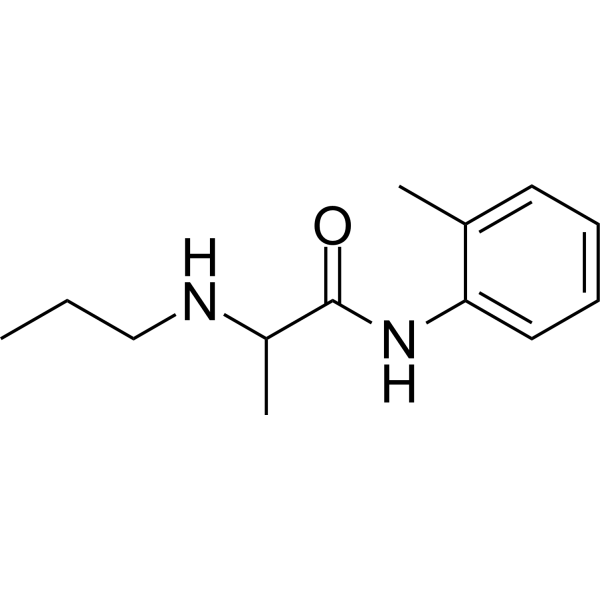
    Prilocaine
    1 Publications Verification

    Na+/K+ ATPase Neurological Disease
    Prilocaine, an amino amide, is a Na/K-ATPase inhibitor. Prilocaine has neurotoxic effects .
    Prilocaine
  • HY-100634

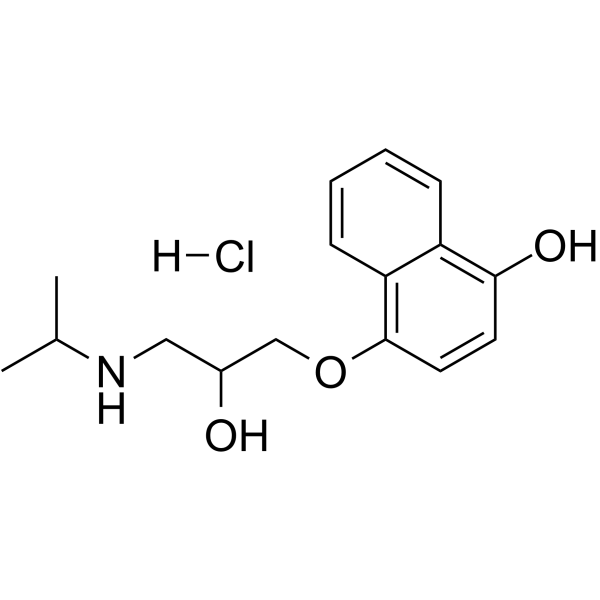
    (±)-4-hydroxy Propranolol hydrochloride

    Adrenergic Receptor Cardiovascular Disease
    4-Hydroxypropranolol hydrochloride is a non-cardiac selective β-adrenergic receptor antagonist and a metabolite produced after oral administration of Propranolol (HY-B0573B). 4-Hydroxypropranolol hydrochloride also acts as a membrane stabilizer and possesses intrinsic sympathomimetic inhibitory activity. 4-Hydroxypropranolol hydrochloride blocks β-adrenergic receptors to antagonize the effects of catecholamines, acts as a partial β-adrenergic receptor agonist, and induces membrane stabilization. 4-Hydroxypropranolol hydrochloride alters heart rate, left ventricular contractility, and atrioventricular conduction time. 4-Hydroxypropranolol hydrochloride can be used in research related to cardiovascular and cerebrovascular diseases .
    4-Hydroxypropranolol hydrochloride
  • HY-14196
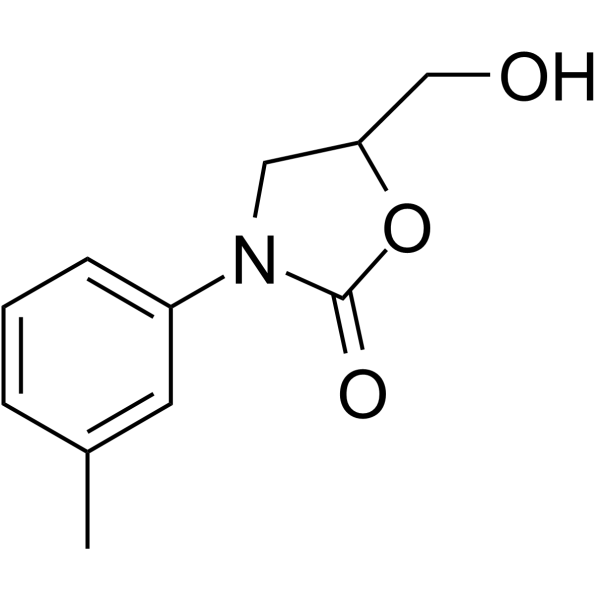
    Toloxatone
    1 Publications Verification

    MD 69276

    Monoamine Oxidase Neurological Disease
    Toloxatone (MD 69276) is a reversible, selective MAO-A inhibitor that can cross the blood-brain barrier. Toloxatone increases the levels of serotonin (5-HT) and norepinephrine in the brain. Toloxatone reduces the immobility time in the forced swimming test in mice, inhibits killing behavior in rats without causing sedation, and shows a correlation between its free plasma concentration and cerebrospinal fluid concentration. Toloxatone is widely used in research related to depression, depressive disorders and Parkinson's disease .
    Toloxatone
  • HY-177506

    Cholecystokinin Receptor Metabolic Disease
    FE100726 (Compound 39) is a Cholecystokinin 2 (CCK2) receptor agonist. FE100726 has a superior binding capacity on CCK2 receptor. FE100726 can induce gastric acid secretion in anaesthetized rat models. FE100726 can be used for diabetes research .
    FE100726
  • HY-B0137A
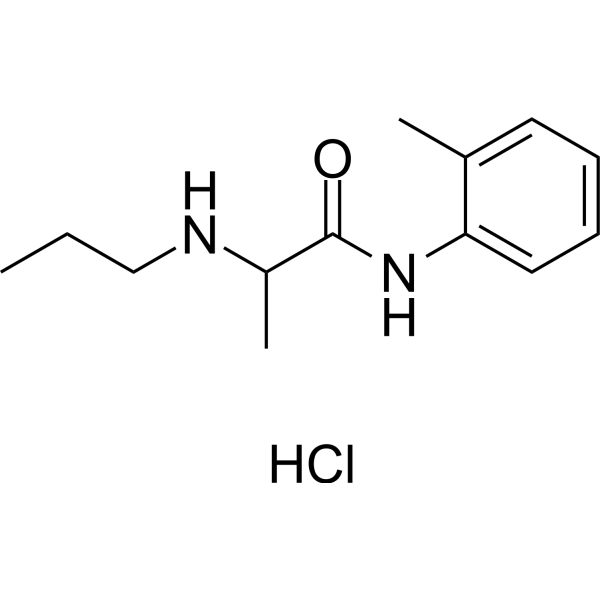
    Prilocaine hydrochloride
    1 Publications Verification

    Na+/K+ ATPase Neurological Disease
    Prilocaine hydrochloride, an amino amide, is a Na/K-ATPase inhibitor. Prilocaine has neurotoxic effects .
    Prilocaine hydrochloride
  • HY-B0137R

    Reference Standards Na+/K+ ATPase Neurological Disease
    Prilocaine (Standard) is the analytical standard of Prilocaine. This product is intended for research and analytical applications. Prilocaine, an amino amide, is a Na/K-ATPase inhibitor. Prilocaine has neurotoxic effects .
    Prilocaine (Standard)
  • HY-B0137B

    Na+/K+ ATPase Neurological Disease
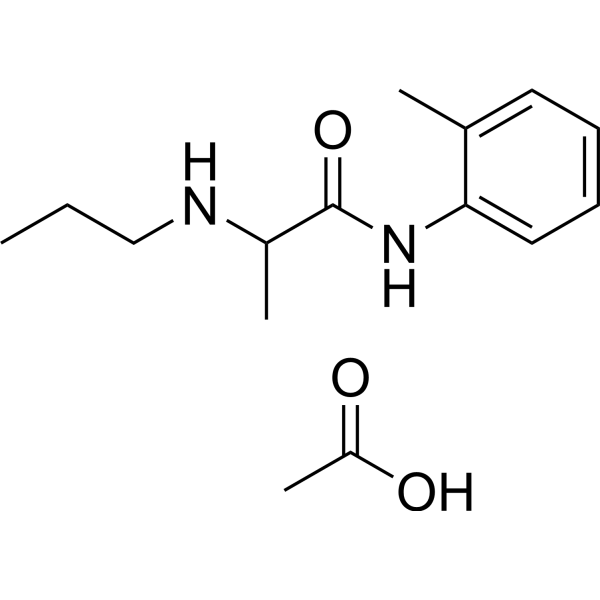
    Prilocaine acetate, an amino amide, is a Na/K-ATPase inhibitor. Prilocaine acetate has neurotoxic effects .
    Prilocaine acetate
  • HY-B0137AR

    Reference Standards Na+/K+ ATPase Neurological Disease
    Prilocaine (hydrochloride) (Standard) is the analytical standard of Prilocaine (hydrochloride). This product is intended for research and analytical applications. Prilocaine hydrochloride, an amino amide, is a Na/K-ATPase inhibitor. Prilocaine has neurotoxic effects .
    Prilocaine hydrochloride (Standard)
  • HY-114833

    (Rac)-Bunolol; dl-Bunolol

    Adrenergic Receptor Cardiovascular Disease Neurological Disease
    Bunolol ((Rac)-Bunolol) is a β-adrenergic receptor blocker. Bunolol antagonizes the β-receptor agonist activity induced by Isoproterenol (HY-B0468) and Dichloroisoproterenol. Bunolol reduces the heart rate and mean blood pressure of anesthetized dogs. Bunolol decreases spontaneous motor activity and Amphetamine-induced hyperactivity in rats, potentiates Pentobarbital-induced hypnosis in mice, and protects rats from extensor tonic convulsions induced by maximal electroshock .
    Bunolol
  • HY-182415

    Phosphodiesterase (PDE) Cardiovascular Disease Cancer
    RX-RA-69 is an orally active platelet phosphodiesterase (PDE) inhibitor with a IC50 of 1 nM. RX-RA-69 elevates cAMP levels in platelets, exerts anti-aggregatory effects, and inhibits the formation of coronary platelet thrombi. RX-RA-69 exhibits anti-metastatic activity in a mouse Lewis lung cancer model. RX-RA-69 can be used in research related to coronary platelet thrombi and Lewis lung cancer .
    RX-RA-69
  • HY-124940

    Calcium Channel Potassium Channel Cardiovascular Disease
    CPU-228 is a complex class III antiarrhythmic agent. CPU-228 concentration-dependently blocks the activities of the rapid component 50 of the delayed rectifier potassium channel (IKr) and the L-type calcium channel (ICa,L), with an IC50 value of 0.909 μM for ICa,L current. CPU-228 produces negative inotropic effects and induces mild, non-frequency-dependent prolongation of the effective refractory period (ERP) in isolated left atria. CPU-228 reduces the incidence of torsades de pointes (TDP) in anesthetized rabbits and inhibits ischemia/reperfusion-induced arrhythmias in rats. CPU-228 can be used in studies related to torsades de pointes .
    CPU-228

Inquiry Online

Your information is safe with us. * Required Fields.

Salutation


Country or Region *

Applicant Name *


Organization Name *

Department *


Email Address *


Product Name *

Cat. No.


Requested quantity *

Phone Number *


Remarks

Inquiry Online

Inquiry Information

Product Name:
Cat. No.:
Quantity:
MCE Japan Authorized Agent:

