
Search Result
Results for "
anaphylaxis
" in MedChemExpress (MCE) Product Catalog:
3
Biochemical Assay Reagents
4
Isotope-Labeled Compounds
| Cat. No. |
Product Name |
Target |
Research Areas |
Chemical Structure |
-
- HY-Y1703
-
|
|
Biochemical Assay Reagents
|
Others
|
|
HATU is a third-generation uronium salt peptide coupling reagent. HATU increases the rate of peptide coupling reactions, activates amino acids, promotes peptide bond formation in both solution-phase and solid-phase synthesis, and also facilitates peptide assembly, fragment coupling, and linear peptide cyclization. HATU can promote the N-acylation of chitosan to generate amide-linked cationic derivatives with a controllable degree of substitution. HATU is commonly used in amine acylation reactions .
|
-
-
- HY-145191
-
-
-
- HY-145192
-
-
-
- HY-145193
-
-
-
- HY-P0009A
-
-
-
- HY-P0171
-
|
BKT140 (4-fluorobenzoyl); BL-8040; TF14016
|
CXCR
|
Endocrinology
Cancer
|
|
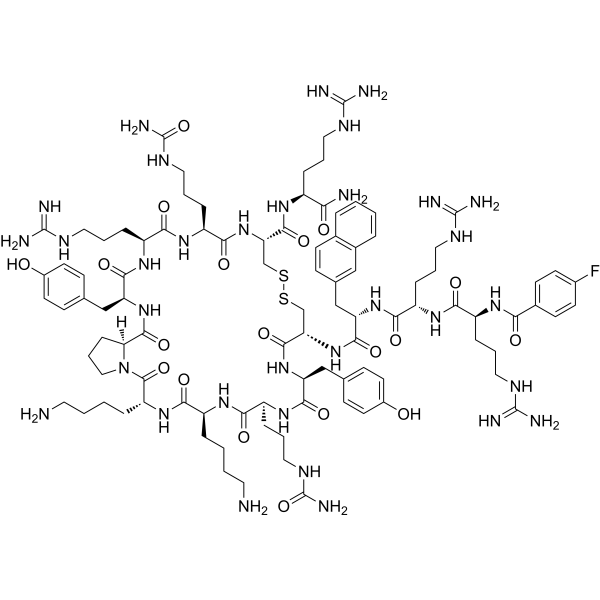
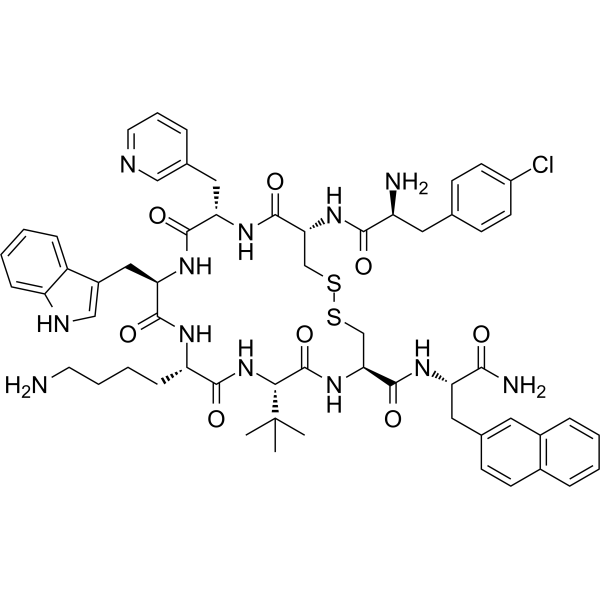
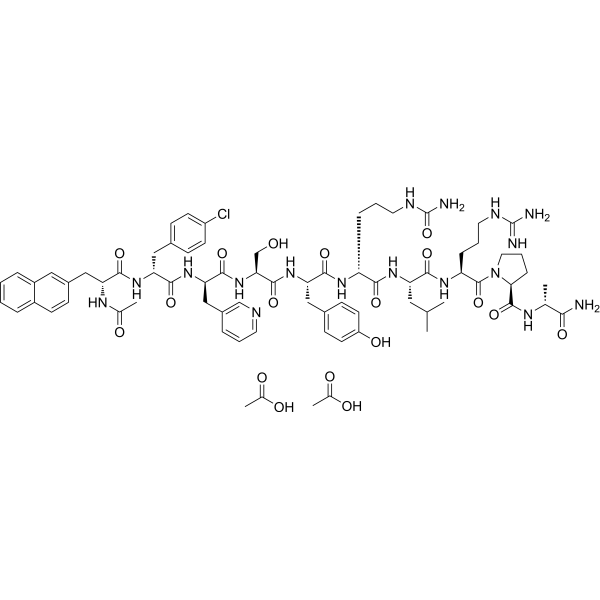
Motixafortide (BKT140 4-fluorobenzoyl) is a novel CXCR4 antagonist with an IC50 vakue of ~1 nM.
|
-
-
- HY-Y0912
-
|
N-HBTU
|
Biochemical Assay Reagents
|
Inflammation/Immunology
|
|
HBTU (N-HBTU) is a guanidinium-based peptide coupling reagent and immunological sensitizer. HBTU can be used in combination with bases such as DIPEA (HY-130142) to complete coupling reactions, with HOBt and TMU as by-products. HBTU is a standard reagent in automated solid-phase peptide synthesis, particularly for the Fmoc/tBu strategy, which effectively promotes coupling steps, but it is not suitable for sterically hindered amino acids or dipeptide derivatives. HBTU can induce rhinitis, dermatitis, bronchial asthma and severe allergic reactions. HBTU can be used to study the pathogenesis of allergic reactions, occupational rhinitis, allergic contact dermatitis and bronchial asthma .
|
-
-
- HY-145195
-
-
-
- HY-145194
-
-
-
- HY-B1148
-
|
Altafur hydrochloride
|
Bacterial
|
Infection
Inflammation/Immunology
|
|
Furaltadone hydrochloride is an orally active antibacterial agent that can be used for the study of intestinal Salmonella infections. Furaltadone has in vitro inhibitory effects on Staphylococcus. In addition, Furaltadone shows inhibitory effects on allergic reactions .
|
-
-
- HY-113331
-
|
|
Prostaglandin Receptor
|
Cardiovascular Disease
Inflammation/Immunology
|
|
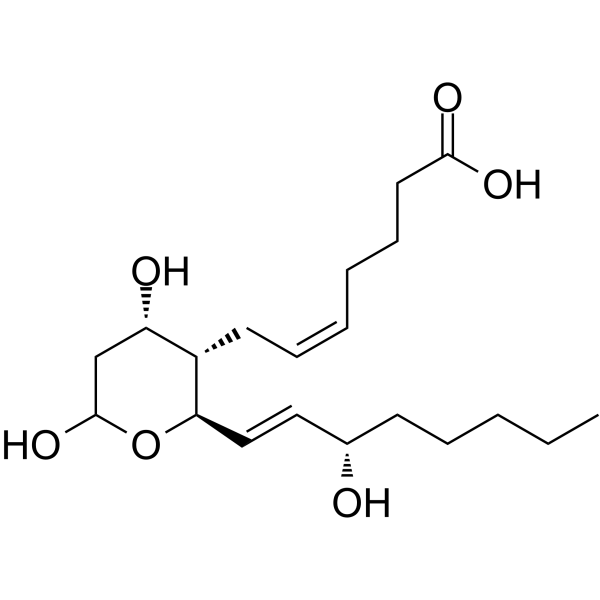
Thromboxane B2 is a prostaglandin derivative that is released during anaphylaxis. Thromboxane B2 induces arterial contraction and platelet aggregation. Thromboxane B2 is a biological inactive product and circulating catabolite of thromboxane A2. Thromboxane B2 levels in peripheral venous blood and coronary sinus blood can be used as a diagnostic marker for angina. Thromboxane B2 level in serum is also associated with inhibition of COX-1 activity inhibition in platelets. Thromboxane B2 is a major product of prostaglandin endoperoxide metabolism. Thromboxane B2 produces dose-related decreases in airflow rate, tidal volume and dynamic lung compliance, whilst simultaneously increasing pulmonary airway resistance in dog model. Thromboxane B2 appears to be a naturally occurring bronchoactive metabolite in the bioconversion of arachidonic acid .
|
-
-
- HY-113465
-
|
LTE4
|
Endogenous Metabolite
|
Inflammation/Immunology
|
|
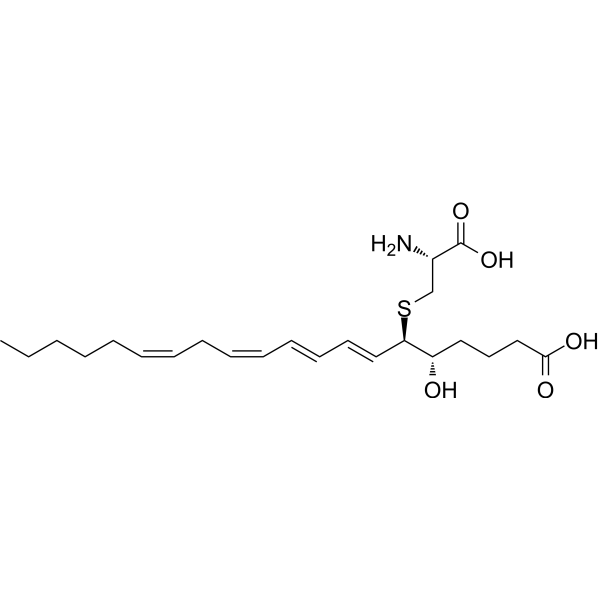
Leukotriene E4 (LTE4) is produced by the action of dipeptidase on LTD4. Leukotriene E4 is one of the constituents of slow-reacting substance of anaphylaxis (SRS-A). Leukotriene E4 accumulates in both plasma and urine and urinary excretion of Leukotriene E4 is most often used as an indicator of asthma.
|
-
-
- HY-B0010B
-
|
(±)Formoterol
|
Adrenergic Receptor
|
Inflammation/Immunology
|
|
Formoterol ((±)Formoterol) is an orally active β2-selective agonist. Formoterol potently relaxes the peripheral airways through stimulating the beta 2-adrenoceptors selectively as is the case in the central airways and that it significantly inhibits IgE-mediated slow reactive substance of anaphylaxis (SRS-A) release through beta-adrenoceptor stimulation .
|
-
-
- HY-W181102
-
|
|
Calcineurin
|
Cardiovascular Disease
Neurological Disease
Inflammation/Immunology
|
|
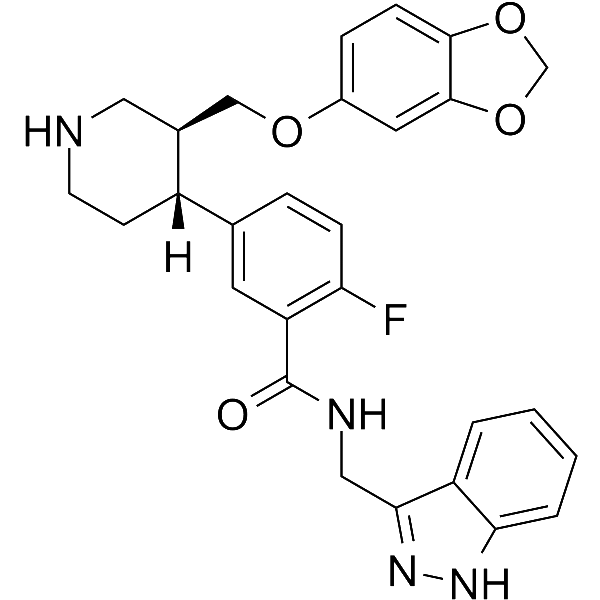
NFAT Inhibitor-2 is a potent inhibitor of calcineurin NFAT signalling. Calcineurin is a serine/threonine protein phosphatase regulated by Ca2+ and calmodulin. NFAT Inhibitor-2 has the potential for the research of inflammatory disease, an autoimmune disorder, a cardiovascular disease, a neurodegenerative disease, a disease occurring with uncontrolled cell proliferation and/or differentiation, an angiogenesis-related disease, an allergy, anaphylaxis and alopecia (extracted from patent WO2016207212A1, compound 17) .
|
-
-
- HY-139690
-
-
-
- HY-P4452
-
-
-
- HY-107607
-
|
|
Leukotriene Receptor
|
Inflammation/Immunology
|
|
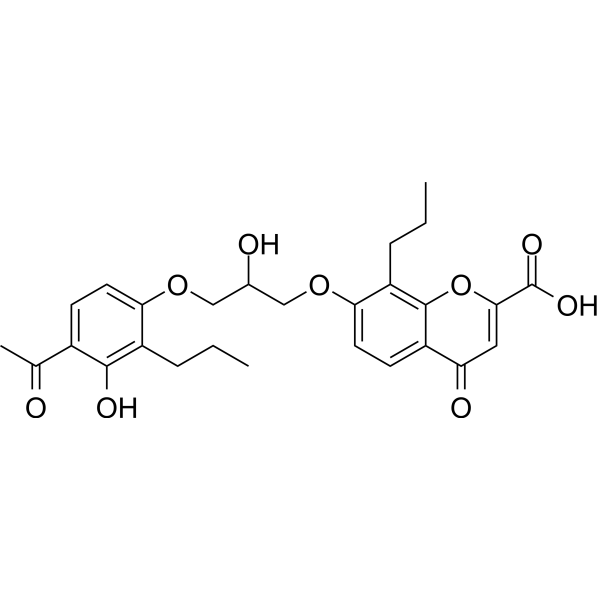
FPL-55712 free base is a leukotriene receptor antagonist. FPL-55712 free base is also an antagonist of slow reacting substance of anaphylaxis (SRS-A). FPL-55712 free base inhibits leukotriene-induced bronchoconstriction .
|
-
-
- HY-N11072
-
|
|
Lipoxygenase
Leukotriene Receptor
Reactive Oxygen Species (ROS)
MMP
|
Inflammation/Immunology
|
|
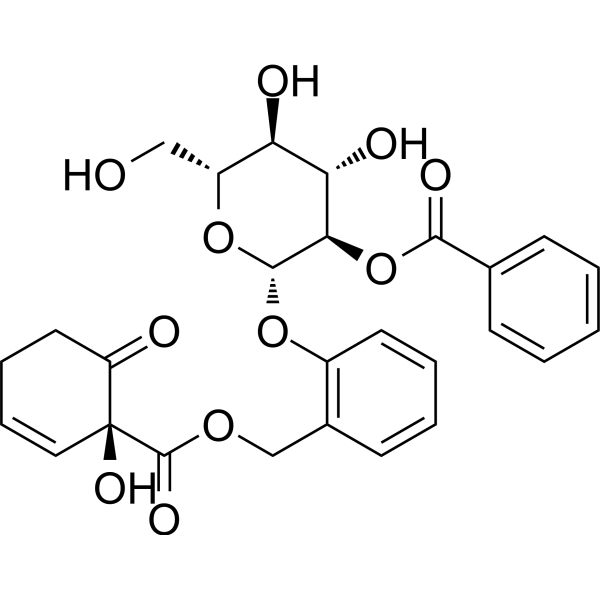
Tremulacin is a 5-LOX inhibitor. Tremulacin reduces the biosynthesis of LTB4 and slow-reacting substances of anaphylaxis. Tremulacin alleviates carrageenan-induced paw edema in rats, croton oil-induced ear edema in mice, and acetic acid-induced writhing response in mice. Tremulacin inhibits TNF-α-stimulated ROS production and MMP-1 expression, and promotes collagen secretion in human dermal fibroblasts. Tremulacin is investigated for studies on inflammation-related diseases .
|
-
-
- HY-106358
-
|
CR 2039 free base; Dizolast free base
|
Phosphodiesterase (PDE)
|
Inflammation/Immunology
|
|
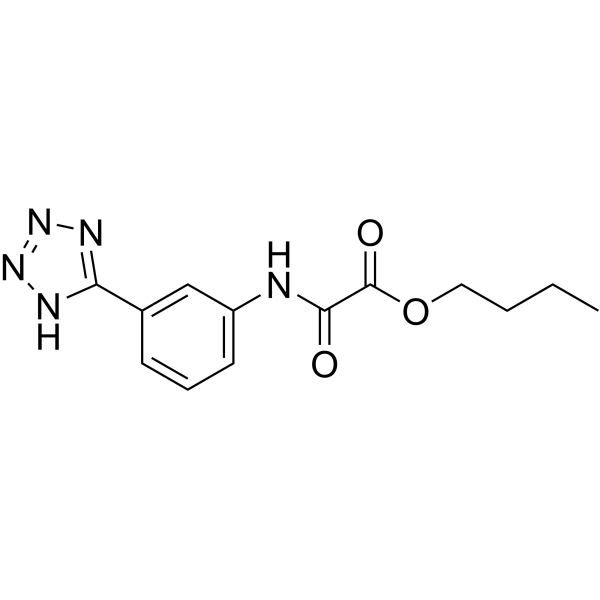
Andolast (CR 2039) (free base) is an anti-allergic agent. Andolast can inhibit cAMP-phosphodiesterase with an IC50 value of 50 μM. Andolast can be used for the research of asthma .
|
-
-
- HY-113465S
-
|
LTE4-d5
|
Endogenous Metabolite
|
Inflammation/Immunology
|
|
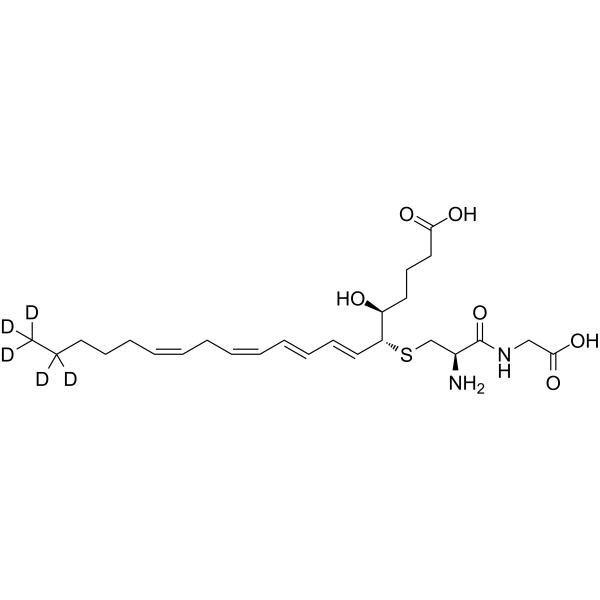
Leukotriene E4-d5 is the deuterium labeled Leukotriene E4. Leukotriene E4 (LTE4) is produced by the action of dipeptidase on LTD4. Leukotriene E4 is one of the constituents of slow-reacting substance of anaphylaxis (SRS-A). Leukotriene E4 accumulates in both plasma and urine and urinary excretion of Leukotriene E4 is most often used as an indicator of asthma.
|
-
-
- HY-107928A
-
|
|
Biochemical Assay Reagents
|
Others
|
|
Iron-Dextran is an injectable complex of iron and dextran, a complex carbohydrate. It is often used to improve iron deficiency anemia, a condition characterized by low levels of iron in the blood due to insufficient dietary intake or malabsorption. Iron-glucan works by providing a source of supplemental iron that the body can use to produce hemoglobin, the protein responsible for carrying oxygen in the blood. However, caution should be exercised when taking iron dextran because it may cause hypersensitivity reactions, including anaphylaxis, and may also increase the risk of infection or other adverse reactions. Therefore, it should only be administered under the supervision of a qualified healthcare provider in a clinical setting.
|
-
-
- HY-N2024B
-
|
|
Endogenous Metabolite
Glycosidase
|
Metabolic Disease
|
|
Maltose solution, 20% in H2O is a 20% aqueous maltose solution. Maltose is a disaccharide composed of two glucose molecules linked together. Maltose is an endogenous metabolic product in plants, yeast, or bacteria, and it participates in carbon source storage and metabolism. Maltose is a key core metabolite and main transport form in the temporary starch degradation, carbon output, and subsequent sucrose synthesis metabolism of the night chloroplast. In X. dendrorhous, maltose can act as a sugar donor and is converted into isomaltulose by α-glucosidase. Maltose can act as a osmotic agent, supporting continuous capillary ultrafiltration and preventing severe metabolic disorders .
|
-
-
- HY-13218
-
|
WP-871
|
Histamine Receptor
|
Inflammation/Immunology
|
|
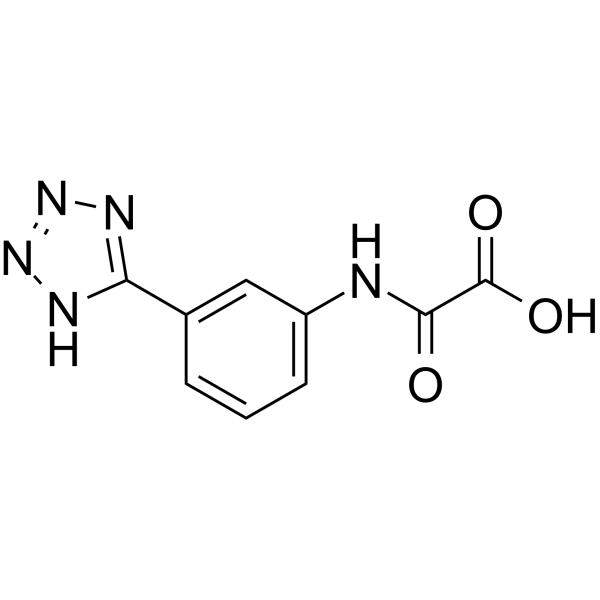
Acitazanolast is an orally active antiallergic agent, can inhibit histamine release. Acitazanolast can be used in study of type I anaphylaxis (immediate) caused by IgE antibodies .
|
-
-
- HY-121007
-
|
Web2170
|
Platelet-activating Factor Receptor (PAFR)
|
Others
|
|
Bepafant (Web2170) is a platelet-activating factor (PAF) antagonist that protects against anaphylactic lethality in active and passive anaphylaxis models in mice and guinea pigs in a dose-dependent manner and attenuates bronchoconstriction and blood pressure changes in anaphylaxis.
|
-
-
- HY-113331S1
-
-
-
- HY-113331S
-
|
|
Isotope-Labeled Compounds
|
Inflammation/Immunology
|
|
Thromboxane B2-D4 is the deuterium labeled Thromboxane B2. Thromboxane B2 is a prostaglandin derivative that is released during anaphylaxis. Thromboxane B2 induces arterial contraction and platelet aggregation .
|
-
-
- HY-106358A
-
|
CR 2039; Dizolast
|
Phosphodiesterase (PDE)
|
Inflammation/Immunology
|
|
Andolast (CR 2039) is an anti-allergic agent. Andolast can inhibit cAMP-phosphodiesterase with an IC50 value of 50 μM. Andolast can be used for the research of asthma .
|
-
-
- HY-113456S
-
|
|
Drug Metabolite
Endogenous Metabolite
|
Cardiovascular Disease
Inflammation/Immunology
|
|
Leukotriene D4-d5 is the deuterium labeled Leukotriene D4. Leukotriene D4 is one of the constituents of slow-reacting substance of anaphylaxis (SRS-A) produced by the metabolism of LTC4 by γ-glutamyl transpeptidase. Leukotriene D4 is the first cysteinyl-leukotriene metabolite of LTC4. Leukotriene D4-induced bronchoconstriction and enhanced vascular permeability contribute to the pathogenesis of asthma and acute hypersensitivity.
|
-
-
- HY-P0009B
-
-
-
- HY-N8276
-
|
9a,12a-Octadecadiynoic acid
|
Lipoxygenase
|
Metabolic Disease
Inflammation/Immunology
|
|
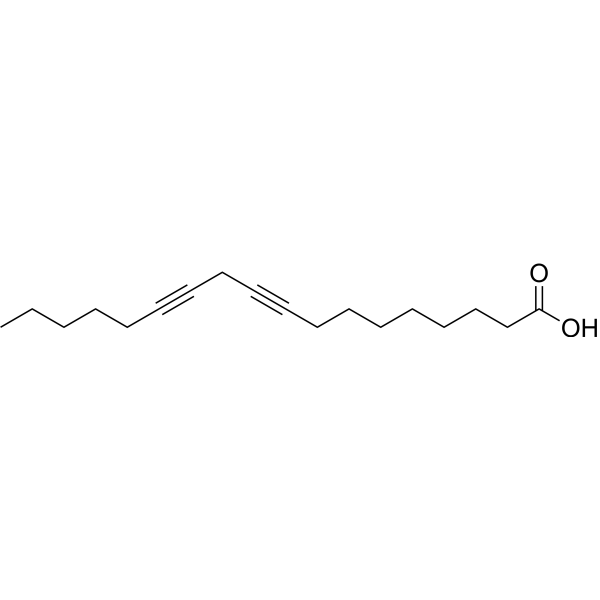
Ro 3-1314 (9a,12a-Octadecadiynoic acid) is a plant lipoxygenase inhibitor. Ro 3-1314 is a linoleic acid metabolism inhibitor. Ro 3-1314 stimulates the antigen-induced contraction of guinea-pig tracheal spirals and the immunological release of slow reacting substance of anaphylaxis (SRS-A) from actively sensitized guinea-pig lung fragments .
|
-
-
- HY-19125
-
-
-
- HY-131374
-
|
|
CXCR
|
Cancer
|
|
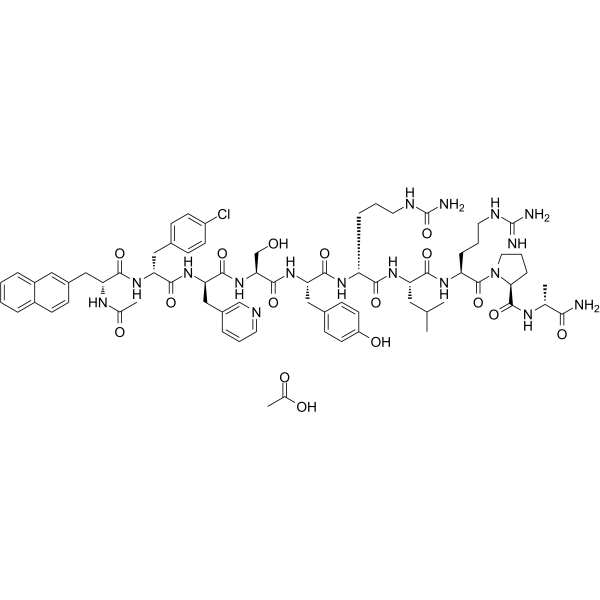
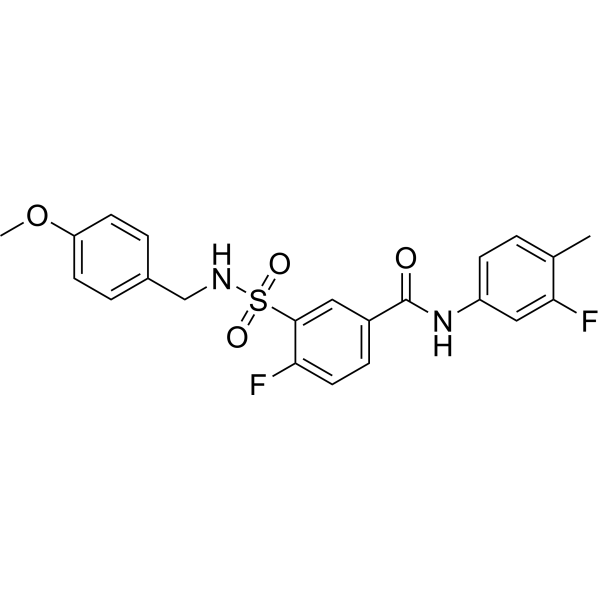
TN14003 is a CXCR4 inhibitor. TN14003 has antitumor activity .
|
-
-
- HY-106645
-
-
-
- HY-158272
-
|
|
Bacterial
|
Inflammation/Immunology
|
|
Penicillin/OVA is a conjugate of penicillin and Ovalbumins, that is utilized as an antigen in immunological research. Penicillin/OVA causes IgE-dependent anaphylactic response to penicillin in mice .
|
-
-
- HY-N5067
-
|
Multifidin
|
Others
|
Inflammation/Immunology
|
|
Rhodiocyanoside A is found to show antiallergic activity in a passive cutaneous anaphylaxis test in rat .
|
-
-
- HY-N10279
-
|
|
Others
|
Infection
|
|
Gymconopin C shows an antiallergic effect on ear passive cutaneous anaphylaxis reactions in mice.
|
-
-
- HY-159926
-
|
RS-7540
|
Histamine Receptor
|
Inflammation/Immunology
|
|
Tixanox sodium (RS-7540), an anti-allergic compound, is a potent inhibitor of mediator release in the IgE-mediated passive cutaneous anaphylaxis (PCA) reaction .
|
-
-
- HY-106806
-
|
|
Leukotriene Receptor
|
Inflammation/Immunology
|
|
NZ-107 is an orally active leukotriene receptor antagonist. NZ-107 can inhibit anaphylaxis reaction. NZ-107 can be used for the researches of inflammation and immunology .
|
-
-
- HY-W754020
-
|
|
Histamine Receptor
|
Others
|
|
Elbanizine inhibits histamine, bradykinin, histamin-release from rat mast cells (IC50 of 0.26 μM) and the IgE-mediated passive cutaneous anaphylaxis (PCA) reaction. Elbanizine exhibits antiallergic and antiasthmatic in guinea pig model .
|
-
-
- HY-145193A
-
-
-
- HY-N4027
-
|
Hydrangenol 8-O-β-D-glucopyranoside
|
Cholinesterase (ChE)
|
Neurological Disease
|
|
Hydrangenol 8-O-glucoside (Hydrangenol 8-O-β-D-glucopyranoside) can be isolated from Hydrangea macrophyllu. Hydrangenol 8-O-glucoside is an AChE inhibitor (IC50: 22.66 μM). Hydrangenol 8-O-glucoside inhibits passive cutaneous anaphylaxis (PCA) reaction .
|
-
-
- HY-106358R
-
|
CR 2039 free base (Standard); Dizolast free base (Standard)
|
Reference Standards
Phosphodiesterase (PDE)
|
Inflammation/Immunology
|
|
Andolast (free base) (Standard) is the analytical standard of Andolast (free base). This product is intended for research and analytical applications. Andolast (CR 2039) (free base) is an anti-allergic agent. Andolast can inhibit cAMP-phosphodiesterase with an IC50 value of 50 μM. Andolast can be used for the research of asthma .
|
-
-
- HY-139247
-
|
|
Drug Derivative
|
Inflammation/Immunology
|
|
pNPS-DHA (Compound 19) is an orally active DHA-ethanolamide (DHEA) derivative that has antiallergic activity. pNPS-DHA inhibits IgE-dependent passive cutaneous anaphylaxis (PCA) reaction in mice. pNPS-DHA has anti-degranulating activity in RBL-2H3 mast cells with an IC50 of 15 μM .
|
-
-
- HY-126127
-
|
|
Histamine Receptor
|
Inflammation/Immunology
|
|
BRL 22321 free base is a stabilizer with similar mast cell stabilizing activity to Cromolyn sodium (HY-B0320A) and also has some smooth muscle relaxant activity. BRL 22321 free base is more potent than Cromolyn sodium (HY-B0320A) in inhibiting rat passive cutaneous and peritoneal anaphylaxis and antigen-induced histamine release from passively sensitized rat peritoneal cells .
|
-
-
- HY-152862
-
-
-
- HY-137312
-
|
SKF 40383-A
|
Adrenergic Receptor
|
Inflammation/Immunology
|
|
Carbuterol (SKF 40383-A) is a selective β2-adrenergic receptor agonist that primarily targets bronchial smooth muscle, exhibiting significant bronchodilatory and anti-allergic activity. Carbuterol can directly inhibit the immunologically induced release of histamine and slow-reacting substance of anaphylaxis (SRS-A), thereby alleviating allergic responses. Carbuterol exerts mild β1-mediated cardiac stimulation and is applicable to studies related to respiratory and immune-related diseases such as asthma and allergic disorders .
|
-
-
- HY-137312A
-
|
SKF 40383-A hydrochloride
|
Adrenergic Receptor
|
Inflammation/Immunology
|
|
Carbuterol (SKF 40383-A) hydrochloride is a selective β2-adrenergic receptor agonist that primarily targets bronchial smooth muscle, exhibiting significant bronchodilatory and anti-allergic activity. Carbuterol hydrochloride can directly inhibit the immunologically induced release of histamine and slow-reacting substance of anaphylaxis (SRS-A), thereby alleviating allergic responses. In addition, it exerts mild β1-mediated cardiac stimulation and is applicable to studies related to respiratory and immune-related diseases such as asthma and allergic disorders .
|
-
-
- HY-N18182
-
|
|
Glycosidase
|
Inflammation/Immunology
|
|
Mudanpioside E is an orally effective paeoniflorin-type monoterpene glycoside antiallergic agent, with an IC50 of 40.34 μM against IgE-mediated β-hexosaminidase release. Mudanpioside E reverses the inhibitory effect of the modified Xiaoqinglong Decoction extract (paeonia root component removed) on passive cutaneous anaphylaxis in mice. Mudanpioside E itself shows no activity against passive cutaneous anaphylaxis. Mudanpioside E can be used in research related to allergic diseases .
|
-
-
- HY-165395
-
|
|
Phosphodiesterase (PDE)
|
Inflammation/Immunology
|
|
AY 25674 is an orally active antiallergic agent and a PDE inhibitor. AY 25674 inhibits the release of allergic histamine from mast cells. AY 25674 suppresses passive anaphylaxis induced by reaginic (IgE) antibodies. AY 25674 does not inhibit the increased vascular permeability caused by non-reaginic antibodies, serotonin or histamine. AY 25674 reaches its peak activity shortly after administration; rapid tolerance occurs at high doses. AY 25674 can be used in research related to passive anaphylaxis .
|
-
-
- HY-N19243
-
|
|
Histamine Receptor
|
Inflammation/Immunology
|
|
6-O-Senesioyl plenolin is a sesquiterpene lactone found in Centipeda minima with antiallergic activity. 6-O-Senesioyl plenolin inhibits histamine release from mast cells (IC50 = 18 μM) and suppresses pigment exudation in passive cutaneous anaphylaxis tests. 6-O-Senesioyl plenolin can be used in research related to allergy .
|
-
- HY-107062
-
|
|
Histamine Receptor
|
Inflammation/Immunology
|
|
AA 344 is an orally active antiallergic agent. AA 344 inhibits the IgE, IgGa, Concanavalin A (HY-P2149), Dextran -mediated release of histamine. AA 344 shows inhibitory effects on the homologous passive cutaneous anaphylaxis and the passive systemic anaphylaxis in guinea pigs. AA 344 selectively suppresses the type I allergic reaction .
|
-
- HY-105594
-
|
BRL 10833 free base
|
Histamine Receptor
|
Inflammation/Immunology
|
|
Nivimedone (BRL 10833 free base) is an orally active antiallergic agent. Nivimedone inhibits IgE-mediated passive cutaneous anaphylaxis in rats. Nivimedone suppresses antigen-induced histamine release from lung tissues passively sensitized with atopic serum. Nivimedone can be used in research related to bronchial asthma .
|
-
- HY-180165
-
|
|
Calcium Channel
Interleukin Related
|
Cardiovascular Disease
Inflammation/Immunology
|
|
Antiallergic agent-5 (Compound 4f) is an antiallergic agent. Antiallergic agent-5 suppresses Ca 2+ influx. Antiallergic agent-5 suppresses IgE/Ag-induced release of both IL-6 and TNF-α. Antiallergic agent-5 inhibits mast cell degranulation. Antiallergic agent-5 attenuates passive cutaneous anaphylaxis in mice and reduces vascular leakage .
|
-
| Cat. No. |
Product Name |
Type |
-
- HY-107928A
-
|
|
Biochemical Assay Reagents
|
|
Iron-Dextran is an injectable complex of iron and dextran, a complex carbohydrate. It is often used to improve iron deficiency anemia, a condition characterized by low levels of iron in the blood due to insufficient dietary intake or malabsorption. Iron-glucan works by providing a source of supplemental iron that the body can use to produce hemoglobin, the protein responsible for carrying oxygen in the blood. However, caution should be exercised when taking iron dextran because it may cause hypersensitivity reactions, including anaphylaxis, and may also increase the risk of infection or other adverse reactions. Therefore, it should only be administered under the supervision of a qualified healthcare provider in a clinical setting.
|
-
- HY-N2024B
-
|
|
Biochemical Assay Reagents
|
|
Maltose solution, 20% in H2O is a 20% aqueous maltose solution. Maltose is a disaccharide composed of two glucose molecules linked together. Maltose is an endogenous metabolic product in plants, yeast, or bacteria, and it participates in carbon source storage and metabolism. Maltose is a key core metabolite and main transport form in the temporary starch degradation, carbon output, and subsequent sucrose synthesis metabolism of the night chloroplast. In X. dendrorhous, maltose can act as a sugar donor and is converted into isomaltulose by α-glucosidase. Maltose can act as a osmotic agent, supporting continuous capillary ultrafiltration and preventing severe metabolic disorders .
|
-
- HY-158272
-
|
|
Biochemical Assay Reagents
|
|
Penicillin/OVA is a conjugate of penicillin and Ovalbumins, that is utilized as an antigen in immunological research. Penicillin/OVA causes IgE-dependent anaphylactic response to penicillin in mice .
|
| Cat. No. |
Product Name |
Target |
Research Area |
| Cat. No. |
Product Name |
Category |
Target |
Chemical Structure |
| Cat. No. |
Product Name |
Chemical Structure |
-
- HY-113465S
-
|
|
|
Leukotriene E4-d5 is the deuterium labeled Leukotriene E4. Leukotriene E4 (LTE4) is produced by the action of dipeptidase on LTD4. Leukotriene E4 is one of the constituents of slow-reacting substance of anaphylaxis (SRS-A). Leukotriene E4 accumulates in both plasma and urine and urinary excretion of Leukotriene E4 is most often used as an indicator of asthma.
|
-
-
- HY-113331S1
-
|
|
|
Thromboxane B2-d9 is deuterium labeled Thromboxane B2. Thromboxane B2 is a prostaglandin derivative that is released during anaphylaxis. Thromboxane B2 induces arterial contraction and platelet aggregation .
|
-
-
- HY-113331S
-
|
|
|
Thromboxane B2-D4 is the deuterium labeled Thromboxane B2. Thromboxane B2 is a prostaglandin derivative that is released during anaphylaxis. Thromboxane B2 induces arterial contraction and platelet aggregation .
|
-
-
- HY-113456S
-
|
|
|
Leukotriene D4-d5 is the deuterium labeled Leukotriene D4. Leukotriene D4 is one of the constituents of slow-reacting substance of anaphylaxis (SRS-A) produced by the metabolism of LTC4 by γ-glutamyl transpeptidase. Leukotriene D4 is the first cysteinyl-leukotriene metabolite of LTC4. Leukotriene D4-induced bronchoconstriction and enhanced vascular permeability contribute to the pathogenesis of asthma and acute hypersensitivity.
|
-
Your information is safe with us. * Required Fields.
Inquiry Information
- Product Name:
- Cat. No.:
- Quantity:
- MCE Japan Authorized Agent:

