


Search Result
Results for "
antigen presentation
" in MedChemExpress (MCE) Product Catalog:
111
Biochemical Assay Reagents
| Cat. No. |
Product Name |
Target |
Research Areas |
Chemical Structure |
-
- HY-161543
-
|
|
Biochemical Assay Reagents
|
Inflammation/Immunology
|
|
DHT/KLH is a conjugate of DHT (dihydrotestosterone) and keyhole limpet hemocyanin (KLH). By conjugating the antigen with a protein adjuvant, the production of antigen-specific antibodies in vaccine models can be enhanced. The conjugate does not affect protein folding or disrupt linear epitopes, and it can enhance cross-presentation and the generation of antigen-specific T cells.
|
-
-
- HY-176778
-
|
|
Aminopeptidase
|
Inflammation/Immunology
Cancer
|
|
BDM88951 (Compound 4 d) is a selective ERAP2 inhibitor with an IC50 of 19 nM. BDM88951 significantly inhibits antigen presentation. BDM88951 can be used for autoimmune diseases and cancers research .
|
-
-
- HY-161553
-
|
|
Biochemical Assay Reagents
|
Inflammation/Immunology
|
|
Biotin/KLH is an antigen-adjuvant conjugate that consists of Biotin and Keyhole Limpet Hemocyanin (KLH). By conjugating the antigen with a protein adjuvant, the production of antigen-specific antibodies in vaccine models can be enhanced. The conjugate does not affect protein folding or disrupt major epitopes, and it can enhance cross-presentation and the generation of antigen-specific T cells.
|
-
-
- HY-161533
-
|
|
Biochemical Assay Reagents
|
Inflammation/Immunology
|
|
Digoxin/BSA is an antigen-adjuvant conjugate of Digoxin (HY-B1049) and Bovine Serum Albumin (BSA). By conjugating the antigen with a protein adjuvant, the production of antigen-specific antibodies in vaccine models can be enhanced. The conjugate does not affect protein folding or disrupt major epitopes, and it can enhance cross-presentation and the generation of antigen-specific T cells.
|
-
-
- HY-161560
-
|
|
Biochemical Assay Reagents
|
Inflammation/Immunology
|
|
Tacrolimus/BSA is the antigen-adjuvant conjugate formed by the conjugation of Tacrolimus (HY-13756) with Bovine Serum Albumin (BSA). By conjugating the antigen with a protein adjuvant, it can enhance the production of antigen-specific antibodies in vaccine models. The conjugate does not affect protein folding or disrupt major epitopes, and it can enhance cross-presentation and the generation of antigen-specific T cells.
|
-
-
- HY-161541
-
|
|
Biochemical Assay Reagents
|
Inflammation/Immunology
|
|
Estradiol/BSA is the antigen-adjuvant conjugate formed by the coupling of Estradiol (HY-B0141) with Bovine Serum Albumin (BSA). By coupling the antigen with a protein adjuvant, the production of antigen-specific antibodies in vaccine models can be enhanced. The conjugate does not affect protein folding or disrupt major epitopes, and it can enhance cross-presentation and the generation of antigen-specific T cells.
|
-
-
- HY-161552
-
|
|
Biochemical Assay Reagents
|
Inflammation/Immunology
|
|
T3/BSA is an antigen-adjuvant conjugate of T3 (thyroid hormone) and bovine serum albumin (BSA). By conjugating the antigen with a protein adjuvant, the production of antigen-specific antibodies in vaccine models can be enhanced. The conjugate does not affect protein folding or disrupt major epitopes, and it can enhance cross-presentation and the generation of antigen-specific T cells.
|
-
-
- HY-161526
-
|
|
Biochemical Assay Reagents
|
Inflammation/Immunology
|
|
T3/KLH is an antigen-adjuvant conjugate formed by the coupling of T3 (thyroid hormone) with keyhole limpet hemocyanin (KLH). By coupling the antigen with the protein adjuvant, the production of antigen-specific antibodies in vaccine models can be enhanced. The conjugate does not affect protein folding or disrupt major epitopes, and it can enhance cross-presentation and the generation of antigen-specific T cells.
|
-
-
- HY-117573
-
-
-
- HY-161566
-
|
|
Biochemical Assay Reagents
|
Inflammation/Immunology
|
|
DHT/BSA is an antigen-adjuvant conjugate formed by the coupling of DHT (dihydrotestosterone) and bovine serum albumin (BSA). By conjugating the antigen with the protein adjuvant, the production of antigen-specific antibodies in vaccine models can be enhanced. The conjugate does not affect protein folding or disrupt major epitopes, and it can enhance cross-presentation and the generation of antigen-specific T cells.
|
-
-
- HY-158279
-
|
|
Antibiotic
Bacterial
|
Inflammation/Immunology
|
|
Gentamicin/OVA is an antigen-adjuvant conjugate conjugate of Gentamicin (HY-A0276A) and ovalbumin (OVA). By conjugating the antigen with a protein adjuvant, the production of antigen-specific antibodies in vaccine models can be enhanced. The conjugate does not affect protein folding or disrupt major epitopes, and can enhance cross-presentation and the production of antigen-specific T cells.
|
-
-
- HY-157171
-
|
|
MHC
|
Inflammation/Immunology
|
|
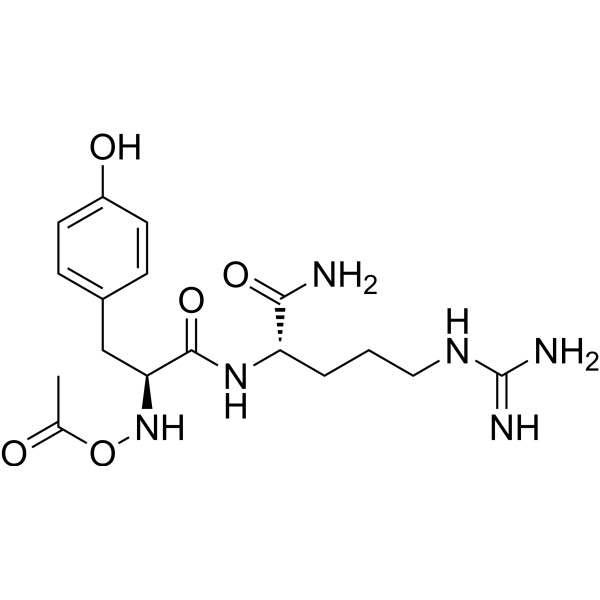
Ac-YR-NH2 is a small molecule modulator of MHC class II antigen presentation. Ac-YR-NH2 can influence peptide binding by MHC II to influence immune response .
|
-
-
- HY-151464
-
|
|
SHP2
Phosphatase
HDAC
|
Inflammation/Immunology
Cancer
|
|
SHP2/HDAC-IN-1 is a dual allosteric SHP2/HDAC inhibitor with IC50 values of 20.4 nM (SHP2) and 25.3 nM (HDAC1) respectively. SHP2/HDAC-IN-1 triggers efficient antitumor immunity by activating T cells, enhancing the antigen presentation function and promoting cytokine secretion. SHP2/HDAC-IN-1 can be used in the research of cancer immunoresearch .
|
-
-
- HY-N15882
-
-
-
- HY-161583
-
|
|
Biochemical Assay Reagents
|
Inflammation/Immunology
|
|
Marijuana/BSA is the antigen-adjuvant conjugate of Marijuana and Bovine Serum Albumin (BSA). By conjugating the antigen with a protein adjuvant, the production of antigen-specific antibodies in vaccine models can be enhanced. The conjugate does not affect protein folding or destroy major epitopes, and it can enhance cross-presentation and the production of antigen-specific T cells.
|
-
-
- HY-161549
-
|
|
Biochemical Assay Reagents
|
Inflammation/Immunology
|
|
Phosphotyrosine/BSA is an antigen-adjuvant conjugate formed by coupling Phosphotyrosine with Bovine Serum Albumin (BSA). By conjugating the antigen with protein adjuvants, the production of antigen-specific antibodies in vaccine models can be enhanced. The conjugate does not affect protein folding or disrupt major epitopes, and it can enhance cross-presentation and the generation of antigen-specific T cells.
|
-
-
- HY-161562
-
|
|
Biochemical Assay Reagents
|
Inflammation/Immunology
|
|
PROMETON/BSA is an antigen-adjuvant conjugate formed by the coupling of PROMETON with bovine serum albumin (BSA). By coupling the antigen to the protein adjuvant, the production of antigen-specific antibodies in vaccine models can be enhanced. The conjugate does not affect protein folding or disrupt major epitopes, and it can enhance cross-presentation and the production of antigen-specific T cells.
|
-
-
- HY-161529
-
|
|
Angiotensin Receptor
|
Inflammation/Immunology
|
|
Angiotensin I/BSA is an antigen-adjuvant conjugate of Angiotensin I and bovine serum albumin (BSA). By conjugating the antigen with a protein adjuvant, the production of antigen-specific antibodies in vaccine models can be enhanced. The conjugate does not affect protein folding or disrupt major epitopes, and it can enhance cross-presentation and the generation of antigen-specific T cells.
|
-
-
- HY-163556
-
|
|
Biochemical Assay Reagents
|
Inflammation/Immunology
|
|
COT/BSA is the antigen-adjuvant conjugate of COT (cyclooctatetraene) and Bovine Serum Albumin (BSA). By conjugating the antigen with a protein adjuvant, the production of antigen-specific antibodies in vaccine models can be enhanced. The conjugate does not affect protein folding or disrupt major epitopes and can enhance cross-presentation and the generation of antigen-specific T cells.
|
-
-
- HY-NP0211
-
|
|
Biochemical Assay Reagents
|
Inflammation/Immunology
|
|
DHT-OVA is a conjugate of DHT (Dihydrotestosterone) and OVA peptide. By conjugating the antigen with a protein adjuvant, the production of antigen-specific antibodies in vaccine models can be enhanced. The conjugate does not affect protein folding or disrupt linear epitopes, and it can enhance cross-presentation and the generation of antigen-specific T cells.
|
-
-
- HY-161542
-
|
|
Biochemical Assay Reagents
|
Inflammation/Immunology
|
|
Isoniazid/BSA is an antigen-adjuvant conjugate of Isoniazid (HY-B0329) and Bovine Serum Albumin (BSA). By conjugating the antigen with a protein adjuvant, the production of antigen-specific antibodies in vaccine models can be enhanced. The conjugate does not affect protein folding or disrupt major epitopes, and it can enhance cross-presentation and the generation of antigen-specific T cells.
|
-
-
- HY-161540
-
|
|
Biochemical Assay Reagents
|
Inflammation/Immunology
|
|
Oxytetracycline/OVA is an antigen-adjuvant conjugate formed by the coupling of Oxytetracycline (HY-B0275) with ovalbumin (OVA). By conjugating the antigen with a protein adjuvant, it enhances the production of antigen-specific antibodies in vaccine models. The conjugate does not affect protein folding or destroy the major epitopes, and it can enhance cross-presentation and the generation of antigen-specific T cells.
|
-
-
- HY-163555
-
|
|
Biochemical Assay Reagents
|
Inflammation/Immunology
|
|
BZO/BSA is an antigen-adjuvant conjugate formed by the coupling of BZO (benzodiazepine) with bovine serum albumin (BSA). By conjugating the antigen with a protein adjuvant, the production of antigen-specific antibodies in vaccine models can be enhanced. The conjugate does not affect protein folding or disrupt major epitopes, and it can enhance cross-presentation and the production of antigen-specific T cells.
|
-
-
- HY-161555
-
|
|
Biochemical Assay Reagents
|
Inflammation/Immunology
|
|
Clenbuterol/KLH is an antigen-adjuvant conjugate of Clenbuterol (HY-B1615) and Keyhole Limpet Hemocyanin (KLH). By conjugating the antigen with a protein adjuvant, the production of antigen-specific antibodies in vaccine models can be enhanced. The conjugate does not affect protein folding or disrupt major epitopes, and it can enhance cross-presentation and the generation of antigen-specific T cells.
|
-
-
- HY-161554
-
|
|
Biochemical Assay Reagents
|
Inflammation/Immunology
|
|
Clenbuterol/BSA is an antigen-adjuvant conjugate of Clenbuterol (HY-B1615) and Bovine Serum Albumin (BSA). By conjugating the antigen with a protein adjuvant, it can enhance the production of antigen-specific antibodies in vaccine models. The conjugate does not affect protein folding or disrupt major epitopes, and it can enhance cross-presentation and the generation of antigen-specific T cells.
|
-
-
- HY-161532
-
|
|
Biochemical Assay Reagents
|
Inflammation/Immunology
|
|
Eugenol/OVA is an antigen-adjuvant conjugate formed by the conjugation of Eugenol (HY-N0337) with Ovalbumin (OVA). By conjugating the antigen with a protein adjuvant, the production of antigen-specific antibodies in vaccine models can be enhanced. The conjugate does not affect protein folding or disrupt key epitopes, and it can enhance cross-presentation and the generation of antigen-specific T cells.
|
-
-
- HY-161591
-
|
|
Biochemical Assay Reagents
|
Inflammation/Immunology
|
|
SEM/BSA is an antigen-adjuvant conjugate formed by the conjugation of SEM (furanesalin) with bovine serum albumin (BSA). By conjugating the antigen with a protein adjuvant, the production of antigen-specific antibodies in vaccine models can be enhanced. The conjugate does not affect protein folding or disrupt major epitopes, and it can enhance cross-presentation and the generation of antigen-specific T cells.
|
-
-
- HY-161594
-
|
|
Biochemical Assay Reagents
|
Inflammation/Immunology
|
|
Furazolidone/BSA is the antigen-adjuvant conjugate of Furazolidone (HY-B1336) and bovine serum albumin (BSA). By conjugating the antigen with the protein adjuvant, the production of antigen-specific antibodies in vaccine models can be enhanced. The conjugate does not affect protein folding or disrupt the major epitopes, and it can enhance cross-presentation and the generation of antigen-specific T cells.
|
-
-
- HY-161530
-
|
|
Angiotensin Receptor
|
Inflammation/Immunology
|
|
Angiotensin II/BSA is an antigen-adjuvant conjugate formed by the coupling of Angiotensin II with bovine serum albumin (BSA). By coupling the antigen with a protein adjuvant, the production of antigen-specific antibodies in vaccine models can be enhanced. The conjugate does not affect protein folding or disrupt major epitopes, and it can enhance cross-presentation and the generation of antigen-specific T cells.
|
-
-
- HY-161558
-
|
|
Biochemical Assay Reagents
|
Inflammation/Immunology
|
|
Ractopamine/KLH is an antigen-adjuvant conjugate of Ractopamine (HY-113781) and Keyhole Limpet Hemocyanin (KLH). By conjugating the antigen with a protein adjuvant, the production of antigen-specific antibodies in vaccine models can be enhanced. The conjugate does not affect protein folding or disrupt major epitopes, and it can enhance cross-presentation and the production of antigen-specific T cells.
|
-
-
- HY-163553
-
|
|
Biochemical Assay Reagents
|
Inflammation/Immunology
|
|
Metronidazole/BSA is an antigen-adjuvant conjugate of Metronidazole (HY-B0318) and Bovine Serum Albumin (BSA). By conjugating the antigen with the protein adjuvant, the production of antigen-specific antibodies in vaccine models can be enhanced. The conjugate does not affect protein folding or disrupt major epitopes, and it can enhance cross-presentation and the production of antigen-specific T cells.
|
-
-
- HY-161544
-
|
|
Biochemical Assay Reagents
|
Inflammation/Immunology
|
|
Cholyglycine/BSA is a conjugate of Cholyglycine and Bovine Serum Albumin (BSA). By conjugating the antigen with a protein adjuvant, the production of antigen-specific antibodies in vaccine models can be enhanced. The conjugate does not affect protein folding or disrupt major epitopes, and it can enhance cross-presentation and the production of antigen-specific T cells.
|
-
-
- HY-NP0250
-
|
|
Biochemical Assay Reagents
|
Inflammation/Immunology
|
|
Kanamycin-BSA is a conjugate of Kanamycin (HY-16566) and BSA. By conjugating the antigen with protein adjuvants, the production of antigen-specific antibodies in vaccine models can be enhanced. The conjugate does not affect protein folding or disrupt the primary epitopes, and it can enhance cross-presentation and the generation of antigen-specific T cells .
|
-
-
- HY-161580
-
|
|
Biochemical Assay Reagents
|
Inflammation/Immunology
|
|
3-Nitrotyrosine/BSA is an antigen-adjuvant conjugate formed by the conjugation of 3-Nitrotyrosine with Bovine Serum Albumin (BSA). By conjugating the antigen with a protein adjuvant, the production of antigen-specific antibodies in vaccine models can be enhanced. The conjugate does not affect protein folding or disrupt major epitopes, and it enhances cross-presentation and the generation of antigen-specific T cells.
|
-
-
- HY-161590
-
|
|
Biochemical Assay Reagents
|
Inflammation/Immunology
|
|
AHD/BSA is the antigen-adjuvant conjugate of AHD (furan-2-carboxylic acid) and Bovine Serum Albumin (BSA). By conjugating the antigen with the protein adjuvant, the production of antigen-specific antibodies in vaccine models can be enhanced. The conjugate does not affect protein folding or destroy the main epitopes, and it can enhance cross-presentation and the generation of antigen-specific T cells.
|
-
-
- HY-161586
-
-
-
- HY-161546
-
|
|
Biochemical Assay Reagents
|
Inflammation/Immunology
|
|
Melamine/KLH is an antigen-adjuvant conjugate formed by coupling Melamine (HY-Y1117) with Keyhole Limpet Hemocyanin (KLH). By conjugating the antigen with a protein adjuvant, the production of antigen-specific antibodies in vaccine models can be enhanced. The conjugate does not affect protein folding or disrupt the primary epitopes, and can enhance cross-presentation and the generation of antigen-specific T cells.
|
-
-
- HY-161535
-
|
|
Biochemical Assay Reagents
|
Inflammation/Immunology
|
|
Oxytetracycline/BSA is an antigen-adjuvant conjugate formed by the coupling of Oxytetracycline (HY-B0275) with Bovine Serum Albumin (BSA). By conjugating the antigen with the protein adjuvant, the production of antigen-specific antibodies in vaccine models can be enhanced. The conjugate does not affect protein folding or disrupt major epitopes, and it can enhance cross-presentation and the production of antigen-specific T cells.
|
-
-
- HY-161528
-
|
|
Biochemical Assay Reagents
|
Inflammation/Immunology
|
|
T3/OVA is an antigen-adjuvant conjugate formed by conjugating T3 (thyroxine) with ovalbumin (OVA). By conjugating the antigen with protein adjuvants, the production of antigen-specific antibodies in vaccine models can be enhanced. The conjugate does not affect protein folding or disrupt major epitopes, and it can enhance cross-presentation and the generation of antigen-specific T cells.
|
-
-
- HY-161557
-
|
|
Biochemical Assay Reagents
|
Inflammation/Immunology
|
|
Ractopamine/BSA is an antigen-adjuvant conjugate formed by the conjugation of Ractopamine (HY-113781) with Bovine Serum Albumin (BSA). By conjugating the antigen with a protein adjuvant, the production of antigen-specific antibodies in vaccine models can be enhanced. The conjugate does not affect protein folding or disrupt major epitopes, and it can enhance cross-presentation and the generation of antigen-specific T cells.
|
-
-
- HY-161589
-
|
|
Biochemical Assay Reagents
|
Inflammation/Immunology
|
|
GABA/KLH is an antigen-adjuvant conjugate formed by the coupling of GABA (γ-aminobutyric acid) with keyhole limpet hemocyanin (KLH). By coupling the antigen with a protein adjuvant, it can enhance the production of antigen-specific antibodies in vaccine models. The conjugate does not affect protein folding or disrupt major epitopes, and it can enhance cross-presentation and the generation of antigen-specific T cells.
|
-
-
- HY-161534
-
|
|
Biochemical Assay Reagents
|
Inflammation/Immunology
|
|
Sulfadiazine/BSA is an antigen-adjuvant conjugate formed by the conjugation of Sulfadiazine (HY-B0273) with Bovine Serum Albumin (BSA). By conjugating the antigen with the protein adjuvant, the production of antigen-specific antibodies in vaccine models can be enhanced. The conjugate does not affect protein folding or disrupt major epitopes, and it can enhance cross-presentation and the generation of antigen-specific T cells.
|
-
-
- HY-161588
-
|
|
Biochemical Assay Reagents
|
Inflammation/Immunology
|
|
GABA/BSA is an antigen-adjuvant conjugate formed by the coupling of GABA (γ-aminobutyric acid) with Bovine Serum Albumin (BSA). By coupling the antigen with a protein adjuvant, the production of antigen-specific antibodies in vaccine models can be enhanced. The conjugate does not affect protein folding or disrupt major epitopes, and it can enhance cross-presentation and the generation of antigen-specific T cells.
|
-
-
- HY-161559
-
|
|
Biochemical Assay Reagents
|
Inflammation/Immunology
|
|
Sudan I/OVA is an antigen-adjuvant conjugate formed by coupling Sudan I (HY-D0024) with Ovalbumin (OVA). By conjugating the antigen with a protein adjuvant, the production of antigen-specific antibodies in vaccine models can be enhanced. The conjugate does not affect protein folding or disrupt the main epitopes, and it can enhance cross-presentation and the generation of antigen-specific T cells.
|
-
-
- HY-161585
-
|
|
Biochemical Assay Reagents
|
Inflammation/Immunology
|
|
Diethylstilbestrol/KLH is an antigen-adjuvant conjugate formed by the coupling of Diethylstilbestrol (HY-14598) with Keyhole Limpet Hemocyanin (KLH). By conjugating the antigen with a protein adjuvant, the production of antigen-specific antibodies in vaccine models can be enhanced. The conjugate does not affect protein folding or disrupt major epitopes, and it can enhance cross-presentation and the generation of antigen-specific T cells.
|
-
-
- HY-161587
-
|
|
Biochemical Assay Reagents
|
Inflammation/Immunology
|
|
Chloramphenicol/OVA is a conjugate of Chloramphenicol (HY-B0239) and Ovalbumin (OVA). By conjugating the antigen with a protein adjuvant, the production of antigen-specific antibodies in vaccine models can be enhanced. The conjugate does not affect protein folding or disrupt major epitopes and can enhance cross-presentation and the production of antigen-specific T cells.
|
-
-
- HY-161581
-
|
|
Biochemical Assay Reagents
|
Inflammation/Immunology
|
|
Metronidazole/OVA is a conjugate of Metronidazole (HY-B0318) and Ovalbumin (OVA). By conjugating the antigen with protein adjuvants, the production of antigen-specific antibodies in vaccine models can be enhanced. The conjugate does not affect protein folding or disrupt the primary epitopes, and it can enhance cross-presentation and the generation of antigen-specific T cells.
|
-
-
- HY-NP0255
-
|
|
Biochemical Assay Reagents
|
Inflammation/Immunology
|
|
Amoxicillin-BSA is a conjugate of Amoxicillin (HY-B0467A) and BSA. By conjugating the antigen with protein adjuvants, the production of antigen-specific antibodies in vaccine models can be enhanced. The conjugate does not affect protein folding or disrupt the primary epitopes, and it can enhance cross-presentation and the generation of antigen-specific T cells .
|
-
-
- HY-NP0248
-
|
|
Biochemical Assay Reagents
|
Inflammation/Immunology
|
|
Ciprofloxacin-BSA is a conjugate of Ciprofloxacin (HY-B0356) and BSA. By conjugating the antigen with protein adjuvants, the production of antigen-specific antibodies in vaccine models can be enhanced. The conjugate does not affect protein folding or disrupt the primary epitopes, and it can enhance cross-presentation and the generation of antigen-specific T cells .
|
-
-
- HY-161545
-
|
|
Biochemical Assay Reagents
|
Inflammation/Immunology
|
|
Sudan I/BSA is the antigen-adjuvant conjugate formed by Sudan I (HY-D0024) and Bovine Serum Albumin (BSA). By conjugating the antigen with a protein adjuvant, the production of antigen-specific antibodies in vaccine models can be enhanced. The conjugate does not affect protein folding or disrupt major epitopes, and it can enhance cross-presentation and the generation of antigen-specific T cells.
|
-
- HY-161556
-
|
|
Biochemical Assay Reagents
|
Inflammation/Immunology
|
|
Alginic acid/KLH is an antigen-adjuvant conjugate formed by the coupling of Alginic acid (HY-W127758) with Keyhole Limpet Hemocyanin (KLH). By conjugating the antigen with the protein adjuvant, the production of antigen-specific antibodies in vaccine models can be enhanced. The conjugate does not affect protein folding or disrupt major epitopes, and it can enhance cross-presentation and the generation of antigen-specific T cells.
|
-
- HY-161584
-
|
|
Biochemical Assay Reagents
|
Inflammation/Immunology
|
|
Sudan I/KLH is an antigen-adjuvant conjugate formed by the coupling of Sudan I (HY-D0024) with Keyhole Limpet Hemocyanin (KLH). By conjugating the antigen with a protein adjuvant, the production of antigen-specific antibodies in vaccine models can be enhanced. The conjugate does not affect protein folding or disrupt major epitopes, and it can enhance cross-presentation and the generation of antigen-specific T cells.
|
-
- HY-NP0246
-
|
|
Biochemical Assay Reagents
|
Inflammation/Immunology
|
|
Sulfamerazine-OVA is a conjugate of Sulfamerazine (HY-B0512) and Ovalbumin (OVA). By conjugating the antigen with protein adjuvants, the production of antigen-specific antibodies in vaccine models can be enhanced. The conjugate does not affect protein folding or disrupt the primary epitopes, and it can enhance cross-presentation and the generation of antigen-specific T cells .
|
-
- HY-161548
-
|
|
Biochemical Assay Reagents
|
Inflammation/Immunology
|
|
Metronidazole/KLH is a conjugate of Metronidazole (HY-B0318) and Keyhole Limpet Hemocyanin (KLH). By conjugating the antigen with the protein adjuvant, the production of antigen-specific antibodies in vaccine models can be enhanced. The conjugate does not affect protein folding or disrupt major epitopes and can enhance cross-presentation and the generation of antigen-specific T cells.
|
-
- HY-NP0247A
-
|
|
Biochemical Assay Reagents
|
Inflammation/Immunology
|
|
Sulfadimidine-OVA is a conjugate of Sulfadimidine (HY-B0035) and Ovalbumin (OVA). By conjugating the antigen with protein adjuvants, the production of antigen-specific antibodies in vaccine models can be enhanced. The conjugate does not affect protein folding or disrupt the primary epitopes, and it can enhance cross-presentation and the generation of antigen-specific T cells .
|
-
- HY-P992314
-
|
|
Integrin
PD-1/PD-L1
|
Cancer
|
|
ASD141 is a mouse IgG1 antibody targeting mouse CD11b and a CD11b antagonist. ASD141 remodels the tumor microenvironment, enhances antigen presentation ability, and induces PD-L1 expression. ASD141 can be used for the research of colon cancer .
|
-
- HY-161561
-
|
|
Biochemical Assay Reagents
|
Inflammation/Immunology
|
|
PROMETON/OVA is an antigen-adjuvant conjugate formed by the coupling of PROMETON and ovalbumin (OVA). By conjugating the antigen with a protein adjuvant, the production of antigen-specific antibodies in vaccine models can be enhanced. The conjugate does not affect protein folding or disrupt major epitopes and enhances cross-presentation and the production of antigen-specific T cells.
|
-
- HY-B1091B
-
|
MPD/BSA
|
Biochemical Assay Reagents
|
Others
|
|
Methylphenidate/BSA (MPD/BSA) is an antigen-adjuvant conjugate conjugate of Methylphenidate and BSA. By conjugating the antigen with a protein adjuvant, the production of antigen-specific antibodies in vaccine models can be enhanced. The conjugate does not affect protein folding or disrupt major epitopes, and can enhance cross-presentation and the production of antigen-specific T cells.
|
-
- HY-B1380A
-
|
CAR/BSA
|
Biochemical Assay Reagents
|
Others
|
|
Carisoprodol/BSA (CAR/BSA) is an antigen-adjuvant conjugate conjugate of Carisoprodol and BSA. By conjugating the antigen with a protein adjuvant, the production of antigen-specific antibodies in vaccine models can be enhanced. The conjugate does not affect protein folding or disrupt major epitopes, and can enhance cross-presentation and the production of antigen-specific T cells.
|
-
- HY-171435A
-
|
PCP/BSA
|
Biochemical Assay Reagents
|
Others
|
|
Phencyclidine/BSA (PCP/BSA) is an antigen-adjuvant conjugate conjugate of Phencyclidine and BSA. By conjugating the antigen with a protein adjuvant, the production of antigen-specific antibodies in vaccine models can be enhanced. The conjugate does not affect protein folding or disrupt major epitopes, and can enhance cross-presentation and the production of antigen-specific T cells.
|
-
- HY-103447A
-
|
|
Biochemical Assay Reagents
|
Others
|
|
Zearalenone/KLH is an antigen-adjuvant conjugate conjugate of Zearalenone (HY-103447) and KLH. By conjugating the antigen with a protein adjuvant, the production of antigen-specific antibodies in vaccine models can be enhanced. The conjugate does not affect protein folding or disrupt major epitopes, and can enhance cross-presentation and the production of antigen-specific T cells.
|
-
- HY-NP217A
-
|
|
Biochemical Assay Reagents
|
Others
|
|
Valine/BSA is an antigen-adjuvant conjugate conjugate of Valine (HY-N0717) and BSA. By conjugating the antigen with a protein adjuvant, the production of antigen-specific antibodies in vaccine models can be enhanced. The conjugate does not affect protein folding or disrupt major epitopes, and can enhance cross-presentation and the production of antigen-specific T cells.
|
-
- HY-NP209B
-
|
|
Biochemical Assay Reagents
|
Others
|
|
Succinic?acid-KLH is an antigen-adjuvant conjugate conjugate of Succinic acid (HY-N0420) and KLH. By conjugating the antigen with a protein adjuvant, the production of antigen-specific antibodies in vaccine models can be enhanced. The conjugate does not affect protein folding or disrupt major epitopes, and can enhance cross-presentation and the production of antigen-specific T cells.
|
-
- HY-NP209
-
|
|
Biochemical Assay Reagents
|
Others
|
|
Succinic?acid-BSA is an antigen-adjuvant conjugate conjugate of Succinic acid (HY-N0420) and BSA. By conjugating the antigen with a protein adjuvant, the production of antigen-specific antibodies in vaccine models can be enhanced. The conjugate does not affect protein folding or disrupt major epitopes, and can enhance cross-presentation and the production of antigen-specific T cells.
|
-
- HY-183207
-
|
|
Biochemical Assay Reagents
|
Others
|
|
CD56 peptide/BSA is an antigen-adjuvant conjugate conjugate of CD56 peptide and BSA. By conjugating the antigen with a protein adjuvant, the production of antigen-specific antibodies in vaccine models can be enhanced. The conjugate does not affect protein folding or disrupt major epitopes, and can enhance cross-presentation and the production of antigen-specific T cells.
|
-
- HY-183209A
-
|
|
Biochemical Assay Reagents
|
Others
|
|
Puromycin-KLH is an antigen-adjuvant conjugate conjugate of Puromycin (HY-B1743) and KLH. By conjugating the antigen with a protein adjuvant, the production of antigen-specific antibodies in vaccine models can be enhanced. The conjugate does not affect protein folding or disrupt major epitopes, and can enhance cross-presentation and the production of antigen-specific T cells.
|
-
- HY-NP217B
-
|
|
Biochemical Assay Reagents
|
Others
|
|
Valine/KLH is an antigen-adjuvant conjugate conjugate of Valine (HY-N0717) and KLH. By conjugating the antigen with a protein adjuvant, the production of antigen-specific antibodies in vaccine models can be enhanced. The conjugate does not affect protein folding or disrupt major epitopes, and can enhance cross-presentation and the production of antigen-specific T cells.
|
-
- HY-B0015B
-
|
|
Biochemical Assay Reagents
|
Others
|
|
Paclitaxel-BSA is an antigen-adjuvant conjugate conjugate of Paclitaxel (HY-B0015) and BSA. By conjugating the antigen with a protein adjuvant, the production of antigen-specific antibodies in vaccine models can be enhanced. The conjugate does not affect protein folding or disrupt major epitopes, and can enhance cross-presentation and the production of antigen-specific T cells.
|
-
- HY-B0015C
-
|
|
Biochemical Assay Reagents
|
Others
|
|
Paclitaxel-KLH is an antigen-adjuvant conjugate conjugate of Paclitaxel (HY-B0015) and KLH. By conjugating the antigen with a protein adjuvant, the production of antigen-specific antibodies in vaccine models can be enhanced. The conjugate does not affect protein folding or disrupt major epitopes, and can enhance cross-presentation and the production of antigen-specific T cells.
|
-
- HY-NP0207A
-
|
|
Biochemical Assay Reagents
|
Others
|
|
Vomitoxin/KLH is an antigen-adjuvant conjugate conjugate of Vomitoxin (HY-N6684) and KLH. By conjugating the antigen with a protein adjuvant, the production of antigen-specific antibodies in vaccine models can be enhanced. The conjugate does not affect protein folding or disrupt major epitopes, and can enhance cross-presentation and the production of antigen-specific T cells.
|
-
- HY-183209
-
|
|
Biochemical Assay Reagents
|
Others
|
|
Puromycin-BSA is an antigen-adjuvant conjugate conjugate of Puromycin (HY-B1743) and BSA. By conjugating the antigen with a protein adjuvant, the production of antigen-specific antibodies in vaccine models can be enhanced. The conjugate does not affect protein folding or disrupt major epitopes, and can enhance cross-presentation and the production of antigen-specific T cells.
|
-
- HY-183211B
-
|
|
Biochemical Assay Reagents
|
Others
|
|
Glycyrrhizic acid/KLH is an antigen-adjuvant conjugate conjugate of Glycyrrhizic acid (HY-N0184) and KLH. By conjugating the antigen with a protein adjuvant, the production of antigen-specific antibodies in vaccine models can be enhanced. The conjugate does not affect protein folding or disrupt major epitopes, and can enhance cross-presentation and the production of antigen-specific T cells.
|
-
- HY-183208
-
|
|
Biochemical Assay Reagents
|
Others
|
|
Ki-67 peptide/BSA is an antigen-adjuvant conjugate conjugate of Ki-67 peptide and BSA. By conjugating the antigen with a protein adjuvant, the production of antigen-specific antibodies in vaccine models can be enhanced. The conjugate does not affect protein folding or disrupt major epitopes, and can enhance cross-presentation and the production of antigen-specific T cells.
|
-
- HY-183211A
-
|
|
Biochemical Assay Reagents
|
Inflammation/Immunology
|
|
Glycyrrhizic acid/OVA is an antigen-adjuvant conjugate conjugate of Glycyrrhizic acid (HY-N0184) and ovalbumin (OVA). By conjugating the antigen with a protein adjuvant, the production of antigen-specific antibodies in vaccine models can be enhanced. The conjugate does not affect protein folding or disrupt major epitopes, and can enhance cross-presentation and the production of antigen-specific T cells.
|
-
- HY-183209B
-
|
|
Biochemical Assay Reagents
|
Others
|
|
Puromycin-OVA is an antigen-adjuvant conjugate conjugate of Puromycin (HY-B1743) and ovalbumin (OVA). By conjugating the antigen with a protein adjuvant, the production of antigen-specific antibodies in vaccine models can be enhanced. The conjugate does not affect protein folding or disrupt major epitopes, and can enhance cross-presentation and the production of antigen-specific T cells.
|
-
- HY-B1277C
-
|
THP/BSA
|
Biochemical Assay Reagents
|
Others
|
|
Trihexyphenidyl/BSA (THP/BSA) is an antigen-adjuvant conjugate conjugate of Trihexyphenidyl (HY-B1277A) and BSA. By conjugating the antigen with a protein adjuvant, the production of antigen-specific antibodies in vaccine models can be enhanced. The conjugate does not affect protein folding or disrupt major epitopes, and can enhance cross-presentation and the production of antigen-specific T cells.
|
-
- HY-183210
-
|
|
Biochemical Assay Reagents
|
Others
|
|
Ochratoxin A/BSA is an antigen-adjuvant conjugate conjugate of Ochratoxin A (HY-N6788) and BSA. By conjugating the antigen with a protein adjuvant, the production of antigen-specific antibodies in vaccine models can be enhanced. The conjugate does not affect protein folding or disrupt major epitopes, and can enhance cross-presentation and the production of antigen-specific T cells.
|
-
- HY-NP209A
-
|
|
Biochemical Assay Reagents
|
Others
|
|
Succinic acid-OVA is an antigen-adjuvant conjugate conjugate of Succinic acid (HY-N0420) and ovalbumin (OVA). By conjugating the antigen with a protein adjuvant, the production of antigen-specific antibodies in vaccine models can be enhanced. The conjugate does not affect protein folding or disrupt major epitopes, and can enhance cross-presentation and the production of antigen-specific T cells.
|
-
- HY-B0015A
-
|
|
Biochemical Assay Reagents
|
Others
|
|
Paclitaxel-OVA is an antigen-adjuvant conjugate conjugate of Paclitaxel (HY-B0015) and ovalbumin (OVA). By conjugating the antigen with a protein adjuvant, the production of antigen-specific antibodies in vaccine models can be enhanced. The conjugate does not affect protein folding or disrupt major epitopes, and can enhance cross-presentation and the production of antigen-specific T cells.
|
-
- HY-NP217
-
|
|
Biochemical Assay Reagents
|
Inflammation/Immunology
|
|
Valine/OVA is an antigen-adjuvant conjugate conjugate of Valine (HY-N0717) and ovalbumin (OVA). By conjugating the antigen with a protein adjuvant, the production of antigen-specific antibodies in vaccine models can be enhanced. The conjugate does not affect protein folding or disrupt major epitopes, and can enhance cross-presentation and the production of antigen-specific T cells.
|
-
- HY-NP0254A
-
|
|
Biochemical Assay Reagents
|
Inflammation/Immunology
|
|
Thyroxin-BSA is a conjugate of Thyroxin (HY-101406) and BSA. By conjugating the antigen with protein adjuvants, the production of antigen-specific antibodies in vaccine models can be enhanced. The conjugate does not affect protein folding or disrupt the primary epitopes, and it can enhance cross-presentation and the generation of antigen-specific T cells .
|
-
- HY-NP0249A
-
|
|
Biochemical Assay Reagents
|
Inflammation/Immunology
|
|
Neomycin-BSA is a conjugate of Neomycin (HY-150520) and BSA. By conjugating the antigen with protein adjuvants, the production of antigen-specific antibodies in vaccine models can be enhanced. The conjugate does not affect protein folding or disrupt the primary epitopes, and it can enhance cross-presentation and the generation of antigen-specific T cells .
|
-
- HY-158268B
-
|
|
Biochemical Assay Reagents
|
Others
|
|
4-Hydroxynonenal/KLH is an antigen-adjuvant conjugate conjugate of 4-Hydroxynonenal (HY-113466) and KLH. By conjugating the antigen with a protein adjuvant, the production of antigen-specific antibodies in vaccine models can be enhanced. The conjugate does not affect protein folding or disrupt major epitopes, and can enhance cross-presentation and the production of antigen-specific T cells.
|
-
- HY-158268A
-
|
|
Biochemical Assay Reagents
|
Inflammation/Immunology
|
|
4-Hydroxynonenal/OVA is an antigen-adjuvant conjugate conjugate of 4-Hydroxynonenal (HY-113466) and ovalbumin (OVA). By conjugating the antigen with a protein adjuvant, the production of antigen-specific antibodies in vaccine models can be enhanced. The conjugate does not affect protein folding or disrupt major epitopes, and can enhance cross-presentation and the production of antigen-specific T cells.
|
-
- HY-NP0247
-
|
|
Biochemical Assay Reagents
|
Inflammation/Immunology
|
|
Sulfadimidine-BSA is a conjugate of Sulfadimidine (HY-B0035) and BSA. By conjugating the antigen with protein adjuvants, the production of antigen-specific antibodies in vaccine models can be enhanced. The conjugate does not affect protein folding or disrupt the primary epitopes, and it can enhance cross-presentation and the generation of antigen-specific T cells .
|
-
- HY-NP0250A
-
|
|
Biochemical Assay Reagents
|
Inflammation/Immunology
|
|
Kanamycin-OVA is a conjugate of Kanamycin (HY-16566) and Ovalbumin (OVA). By conjugating the antigen with protein adjuvants, the production of antigen-specific antibodies in vaccine models can be enhanced. The conjugate does not affect protein folding or disrupt the primary epitopes, and it can enhance cross-presentation and the generation of antigen-specific T cells .
|
-
- HY-161557A
-
|
|
Biochemical Assay Reagents
|
Inflammation/Immunology
|
|
Ractopamine-OVA is a conjugate of Ractopamine (HY-113781) and Ovalbumin (OVA). By conjugating the antigen with protein adjuvants, the production of antigen-specific antibodies in vaccine models can be enhanced. The conjugate does not affect protein folding or disrupt the primary epitopes, and it can enhance cross-presentation and the generation of antigen-specific T cells .
|
-
- HY-NP0249
-
|
|
Biochemical Assay Reagents
|
Inflammation/Immunology
|
|
Neomycin-OVA is a conjugate of Neomycin (HY-150520) and Ovalbumin (OVA). By conjugating the antigen with protein adjuvants, the production of antigen-specific antibodies in vaccine models can be enhanced. The conjugate does not affect protein folding or disrupt the primary epitopes, and it can enhance cross-presentation and the generation of antigen-specific T cells .
|
-
- HY-NP0251
-
|
|
Biochemical Assay Reagents
|
Inflammation/Immunology
|
|
Ofloxacin-BSA is a conjugate of Ofloxacin (HY-B0125) and BS. By conjugating the antigen with protein adjuvants, the production of antigen-specific antibodies in vaccine models can be enhanced. The conjugate does not affect protein folding or disrupt the primary epitopes, and it can enhance cross-presentation and the generation of antigen-specific T cells .
|
-
- HY-161554A
-
|
|
Biochemical Assay Reagents
|
Inflammation/Immunology
|
|
Clenbuterol-OVA is a conjugate of Clenbuterol (HY-101406) and Ovalbumin (OVA). By conjugating the antigen with protein adjuvants, the production of antigen-specific antibodies in vaccine models can be enhanced. The conjugate does not affect protein folding or disrupt the primary epitopes, and it can enhance cross-presentation and the generation of antigen-specific T cells .
|
-
- HY-NP0252
-
|
|
Biochemical Assay Reagents
|
Inflammation/Immunology
|
|
Sulfamonomethoxine-BSA is a conjugate of Sulfamonomethoxine (HY-B0946) and BSA. By conjugating the antigen with protein adjuvants, the production of antigen-specific antibodies in vaccine models can be enhanced. The conjugate does not affect protein folding or disrupt the primary epitopes, and it can enhance cross-presentation and the generation of antigen-specific T cells .
|
-
- HY-NP0253A
-
|
|
Biochemical Assay Reagents
|
Inflammation/Immunology
|
|
Salbutamol-BSA is a conjugate of Salbutamol (HY-B1037) and BSA. By conjugating the antigen with protein adjuvants, the production of antigen-specific antibodies in vaccine models can be enhanced. The conjugate does not affect protein folding or disrupt the primary epitopes, and it can enhance cross-presentation and the generation of antigen-specific T cells .
|
-
- HY-NP0254
-
|
|
Biochemical Assay Reagents
|
Inflammation/Immunology
|
|
Thyroxin-OVA is a conjugate of Thyroxin (HY-101406) and Ovalbumin (OVA). By conjugating the antigen with protein adjuvants, the production of antigen-specific antibodies in vaccine models can be enhanced. The conjugate does not affect protein folding or disrupt the primary epitopes, and it can enhance cross-presentation and the generation of antigen-specific T cells .
|
-
- HY-N0045C
-
|
|
Biochemical Assay Reagents
|
Others
|
|
Ginsenoside Rg1/KLH is an antigen-adjuvant conjugate conjugate of Ginsenoside Rg1 (HY-N0045) and KLH. By conjugating the antigen with a protein adjuvant, the production of antigen-specific antibodies in vaccine models can be enhanced. The conjugate does not affect protein folding or disrupt major epitopes, and can enhance cross-presentation and the production of antigen-specific T cells.
|
-
- HY-N0045A
-
|
|
Biochemical Assay Reagents
|
Others
|
|
Ginsenoside Rg1/BSA is an antigen-adjuvant conjugate conjugate of Ginsenoside Rg1 (HY-N0045) and BSA. By conjugating the antigen with a protein adjuvant, the production of antigen-specific antibodies in vaccine models can be enhanced. The conjugate does not affect protein folding or disrupt major epitopes, and can enhance cross-presentation and the production of antigen-specific T cells.
|
-
- HY-NP0253
-
|
|
Biochemical Assay Reagents
|
Inflammation/Immunology
|
|
Salbutamol-OVA is a conjugate of Salbutamol (HY-B1037) and Ovalbumin (OVA). By conjugating the antigen with protein adjuvants, the production of antigen-specific antibodies in vaccine models can be enhanced. The conjugate does not affect protein folding or disrupt the primary epitopes, and it can enhance cross-presentation and the generation of antigen-specific T cells .
|
-
- HY-161534A
-
|
|
Biochemical Assay Reagents
|
Inflammation/Immunology
|
|
Sulfadiazine-OVA is a conjugate of Sulfadiazinen (HY-B0273) and Ovalbumin (OVA). By conjugating the antigen with protein adjuvants, the production of antigen-specific antibodies in vaccine models can be enhanced. The conjugate does not affect protein folding or disrupt the primary epitopes, and it can enhance cross-presentation and the generation of antigen-specific T cells .
|
-
- HY-NP0255A
-
|
|
Biochemical Assay Reagents
|
Inflammation/Immunology
|
|
Amoxicillin-OVA is a conjugate of Amoxicillin (HY-B0467A) and Ovalbumin (OVA). By conjugating the antigen with protein adjuvants, the production of antigen-specific antibodies in vaccine models can be enhanced. The conjugate does not affect protein folding or disrupt the primary epitopes, and it can enhance cross-presentation and the generation of antigen-specific T cells .
|
-
- HY-NP0252A
-
|
|
Biochemical Assay Reagents
|
Inflammation/Immunology
|
|
Sulfamonomethoxine-OVA is a conjugate of Sulfamonomethoxine (HY-B0946) and Ovalbumin (OVA). By conjugating the antigen with protein adjuvants, the production of antigen-specific antibodies in vaccine models can be enhanced. The conjugate does not affect protein folding or disrupt the primary epitopes, and it can enhance cross-presentation and the generation of antigen-specific T cells .
|
-
- HY-NP0248A
-
|
|
Biochemical Assay Reagents
|
Inflammation/Immunology
|
|
Ciprofloxacin-OVA is a conjugate of Ciprofloxacin (HY-B0356) and Ovalbumin (OVA). By conjugating the antigen with protein adjuvants, the production of antigen-specific antibodies in vaccine models can be enhanced. The conjugate does not affect protein folding or disrupt the primary epitopes, and it can enhance cross-presentation and the generation of antigen-specific T cells .
|
-
- HY-NP0251A
-
|
|
Biochemical Assay Reagents
|
Inflammation/Immunology
|
|
Ofloxacin-OVA is a conjugate of Ofloxacin (HY-B0125) and Ovalbumin (OVA). By conjugating the antigen with protein adjuvants, the production of antigen-specific antibodies in vaccine models can be enhanced. The conjugate does not affect protein folding or disrupt the primary epitopes, and it can enhance cross-presentation and the generation of antigen-specific T cells .
|
-
- HY-161531
-
|
|
Biochemical Assay Reagents
|
Inflammation/Immunology
|
|
Diethylstilbestrol/BSA is a conjugate of Diethylstilbestrol (HY-14598) and Bovine Serum Albumin (BSA). By conjugating the antigen with a protein adjuvant, the production of antigen-specific antibodies in vaccine models can be enhanced. The conjugate does not affect protein folding or disrupt major epitopes, and it can enhance cross-presentation and the production of antigen-specific T cells.
|
-
- HY-168137
-
-
- HY-N0045B
-
|
|
Biochemical Assay Reagents
|
Inflammation/Immunology
|
|
Ginsenoside Rg1/OVA is an antigen-adjuvant conjugate conjugate of Ginsenoside Rg1 (HY-N0045) and ovalbumin (OVA). By conjugating the antigen with a protein adjuvant, the production of antigen-specific antibodies in vaccine models can be enhanced. The conjugate does not affect protein folding or disrupt major epitopes, and can enhance cross-presentation and the production of antigen-specific T cells.
|
-
- HY-161565
-
|
|
Biochemical Assay Reagents
|
Inflammation/Immunology
|
|
Gastrin(1-17)/BSA is an antigen-adjuvant conjugate formed by the coupling of Gastrin(1-17) and Bovine Serum Albumin (BSA). By conjugating the antigen with a protein adjuvant, the production of antigen-specific antibodies in vaccine models can be enhanced. The conjugate does not affect protein folding or destroy major epitopes, and it can enhance cross-presentation and the production of antigen-specific T cells.
|
-
- HY-183211
-
|
|
Biochemical Assay Reagents
|
Others
|
|
Ginsenoside Rg1/OVA is an antigen-adjuvant conjugate conjugate of Ginsenoside Rg1 (HY-N0045) and ovalbumin (OVA). By conjugating the antigen with a protein adjuvant, the production of antigen-specific antibodies in vaccine models can be enhanced. The conjugate does not affect protein folding or disrupt major epitopes, and can enhance cross-presentation and the production of antigen-specific T cells.
|
-
- HY-163552
-
|
|
Prostaglandin Receptor
|
Inflammation/Immunology
|
|
Prostaglandin F2a/BSA is an antigen-adjuvant conjugate formed by the conjugation of Prostaglandin F2a with Bovine Serum Albumin (BSA). By conjugating the antigen with a protein adjuvant, the production of antigen-specific antibodies in vaccine models can be enhanced. The conjugate does not affect protein folding or disrupt major epitopes and can enhance cross-presentation as well as the generation of antigen-specific T cells.
|
-
- HY-158278A
-
|
|
Biochemical Assay Reagents
|
Inflammation/Immunology
|
|
Aflatoxin B1/OVA is an antigen-adjuvant conjugate conjugate of Aflatoxin B1 (HY-N6615) and ovalbumin (OVA). By conjugating the antigen with a protein adjuvant, the production of antigen-specific antibodies in vaccine models can be enhanced. The conjugate does not affect protein folding or disrupt major epitopes, and can enhance cross-presentation and the production of antigen-specific T cells.
|
-
- HY-161563
-
|
|
Biochemical Assay Reagents
|
Inflammation/Immunology
|
|
4,4'-Sulfonyldiphenol/BSA is the antigen-adjuvant conjugate of 4,4'-Sulfonyldiphenol (HY-W011927) and Bovine Serum Albumin (BSA). By conjugating the antigen with a protein adjuvant, the production of antigen-specific antibodies in vaccine models can be enhanced. The conjugate does not affect protein folding or disrupt major epitopes, and it can enhance cross-presentation and the production of antigen-specific T cells.
|
-
- HY-NP0245
-
|
|
Biochemical Assay Reagents
|
Inflammation/Immunology
|
|
Retinoic acid-HSA is a conjugate of Retinoic acid (HY-14649) and Human serum albumin (HSA). By conjugating the antigen with protein adjuvants, the production of antigen-specific antibodies in vaccine models can be enhanced. The conjugate does not affect protein folding or disrupt the primary epitopes, and it can enhance cross-presentation and the generation of antigen-specific T cells .
|
-
- HY-163550
-
|
|
Biochemical Assay Reagents
|
Inflammation/Immunology
|
|
5-MethylCytosine/BSA is a conjugate of 5-MethylCytosine (HY-W008091) and Bovine Serum Albumin (BSA). By conjugating the antigen with the protein adjuvant, the production of antigen-specific antibodies in vaccine models can be enhanced. The conjugate does not affect protein folding or destroy key epitopes, and it can enhance cross-presentation and the generation of antigen-specific T cells.
|
-
- HY-155176
-
|
|
HDAC
|
Cancer
|
|
SP-2-225 is a selective HDAC6 inhibitor. SP-2-225 enhance the production of cancer-associated antigens and macrophage antigen cross-presentation to T cells. SP-2-225 reduces the tumor volume in a syngeneic SM1 melanoma model .
|
-
- HY-161551
-
|
|
Biochemical Assay Reagents
|
Inflammation/Immunology
|
|
25-OH Vitamin D3/KLH is an antigen-adjuvant conjugate of 25-OH Vitamin D3 (HY-158285) and Keyhole Limpet Hemocyanin (KLH). By conjugating the antigen with the protein adjuvant, the production of antigen-specific antibodies in vaccine models can be enhanced. The conjugate does not affect protein folding or disrupt major epitopes, and it can enhance cross-presentation and the generation of antigen-specific T cells.
|
-
- HY-156087G
-
|
|
Apoptosis
Necroptosis
|
Cancer
|
|
Cholicamideβ (GMP) is a GMP grade of Cholicamideβ. Cholicamideβ (compound 6) is a self-assembling, small molecule, cancer vaccine adjuvant. Cholicamideβ can form virus-like particles with low cytotoxicity. Cholicamideβ, upon binding to peptide antigens, enhances antigen presentation by dendritic cells and induces antigen-specific T cells. Cholicamideβ can induce apoptosis and necrosis .
|
-
- HY-156087
-
|
|
Apoptosis
Necroptosis
|
Cancer
|
|
Cholicamideβ (GMP) is a GMP grade of Cholicamideβ. Cholicamideβ (compound 6) is a self-assembling, small molecule, cancer vaccine adjuvant. Cholicamideβ can form virus-like particles with low cytotoxicity. Cholicamideβ, upon binding to peptide antigens, enhances antigen presentation by dendritic cells and induces antigen-specific T cells. Cholicamideβ can induce apoptosis and necrosis .
|
-
- HY-P5623
-
RVG
1 Publications Verification
RVG29; RDP; Rabies Virus Glycoprotein-29
|
nAChR
Interleukin Related
|
Neurological Disease
Inflammation/Immunology
|
|
RVG (RVG29) is a blood-brain barrier-permeable peptide derived from rabies virus glycoprotein, which binds to the α-7 subunit of neuronal nicotinic acetylcholine receptor (AchR). RVG efficiently delivers drugs to nerve cells and antigen-presenting cells in a targeted manner, and enhances the efficiency of antigen presentation and drug delivery .
|
-
- HY-144655
-
|
|
Phosphatase
|
Cancer
|
|
IP2 is an immunomodulatory agent. IP2 increases PTP (Pioneer Translation Product)-derived antigen presentation in cancer cells. IP2 shows non-cytotoxic for cancer cells. IP2 induces tumor growth defects in mouse .
|
-
- HY-P2674
-
|
|
MHC
|
Inflammation/Immunology
Cancer
|
|
KDEL is a tetrapeptide serving as an endoplasmic reticulum (ER) retrieval/retention signal. KDEL can target and deliver exogenous antigen peptides to the ER, significantly enhance and prolong MHC class I molecule presentation, and effectively boost anti-tumor immune responses .
|
-
- HY-161525
-
|
|
Biochemical Assay Reagents
|
Inflammation/Immunology
|
|
1-(2-Aminoethyl)-1H-pyrazol-4-ylphosphonic acid linker/BSA is the conjugate of 1-(2-Aminoethyl)-1H-pyrazol-4-ylphosphonic acid linker and bovine serum albumin (BSA). By conjugating the antigen with a protein adjuvant, it enhances the production of antigen-specific antibodies in vaccine models. The conjugate does not affect protein folding or disrupt key epitopes, and it can enhance cross-presentation and the generation of antigen-specific T cells.
|
-
- HY-P991804
-
|
|
Transmembrane Glycoprotein
|
Inflammation/Immunology
|
|
Anti-Mouse CD79b Antibody (HM79b) reacts with the mouse CD79b. CD79b participates in the signal transduction cascade activated by the B cell antigen receptor complex (BCR), ultimately leading to complex internalization, transport to late endosomes, and antigen presentation. Recommend Isotype Controls: Mouse IgG2a kappa, Isotype Control (HY-P99978) .
|
-
- HY-176778A
-
|
|
Aminopeptidase
|
Inflammation/Immunology
Cancer
|
|
(rac)-BDM88951 is the racemate of BDM88951 (HY-176778). BDM88951 (Compound 4 d) is a selective ERAP2 inhibitor with an IC50 of 19 nM. BDM88951 significantly inhibits antigen presentation in HEK cells. BDM88951 can be used for research on autoimmune diseases and cancer .
|
-
- HY-119505
-
|
|
HDAC
|
Others
|
|
Curcuphenol is a compound with histone deacetylase enhancing activity and has the activity of reversing immune escape. Curcuphenol can reverse the immune escape of tumors by restoring the expression of antigen presentation machinery. Its two synthetic analogs have histone deacetylase enhancing activity and play an important role in the immune recognition of metastatic tumors.
|
-
- HY-155807
-
|
|
STAT
JAK
Apoptosis
|
Cancer
|
|
DPP is a Platinum(IV) complex, bearing pterostilbene-derived axial ligand. DPP inhibit the JAK2-STAT3 pathway in breast cancer (BC) cells with antiproliferative activity, and activates caspase-3 and cleaved poly ADP-ribose polymerase to induces apoptosis. DPP promotes the maturation and antigen presentation of dendritic cells, and exhibits in vivo safety .
|
-
- HY-163768
-
|
|
β-catenin
|
Inflammation/Immunology
Cancer
|
|
Antitumor agent-172 (Compound 28) is an inhibitor for β-catenin/BCL9 interaction with IC50 of 3.92 μM. Antitumor agent-172 exhibits high affinity to β-catenin with Kd of 82 nM. Antitumor agent-172 activates T cells, promotes antigen presentation, and exhibits antitumor efficacy and good pharmacokinetic characteristics in mouse models .
|
-
- HY-W145657
-
|
Cord Factor
|
Biochemical Assay Reagents
|
Infection
|
|
Trehalose 6,6'-dimycolate (Cord Factor) is trehalose 6,6'-dimycolate, a cell wall glycolipid of Mycobacterium tuberculosis, which can be used to simulate inflammation and granuloma induced by Mycobacterium tuberculosis (MTB) form. Trehalose 6,6′-dimycolate also protects Mycobacterium tuberculosis from macrophage-mediated killing, inhibits efficient antigen presentation, and reduces the development of protective T cell responses .
|
-
- HY-109520
-
|
|
MHC
|
Inflammation/Immunology
Cancer
|
|
Glatiramer acetate, a synthetic analogue of myelin basic protein and an immunomodulating agent, inhibits Experimental autoimmune encephalomyelitis (EAE), and can be used for the research of multiple sclerosis. Glatiramer acetate exhibits strong and promiscuous binding to MHC molecules and consequent competition with various myelin antigens for their presentation to T cells. A further aspect of its action is potent induction of specific suppressor cells of the T helper 2 (Th2) type that migrate to the brain and lead to in situ bystander suppression .
|
-
- HY-P99236
-
|
FP-1305
|
Transmembrane Glycoprotein
|
Inflammation/Immunology
Cancer
|
|
Bexmarilimab (FP-1305) is a potent humanized anti-CLEVER-1 IgG4 antibody with an IC50 value of 4.51 nM. Bexmarilimab is capable of inducing a phenotypic M2 to M1 immune switch of tumor-associated macrophages. Bexmarilimab can promote antigen presentation and pro-inflammatory cytokine secretion. Bexmarilimab can induce B-cell and T-cell activation. Bexmarilimab can be used in researches of immunology and cancer, such as colorectal carcinoma .
|
-
- HY-P11280A
-
|
|
Melanocortin Receptor
|
Cancer
|
|
PRAME peptide (425-433) acetate is a proteasome-degraded peptide derived from the cancer-testis antigen PRAME (Preferentially Expressed Antigen in Melanoma). PRAME peptide (425-433) acetate is restricted by HLA-A*02:01 and can serve as a target for bispecific T cell engager therapy in the context of major histocompatibility complex I presentation. PRAME peptide (425-433) acetate shows application potential in various malignant tumors and is widely suitable for research related to solid tumors, melanoma, ovarian cancer, endometrial cancer, and lung cancer (including lung adenocarcinoma and lung squamous cell carcinoma). PRAME peptide (425-433) acetate can be used to explore disease of triple-negative breast cancer, diffuse large B-cell lymphoma, and head and neck squamous cell carcinoma .
|
-
- HY-155808
-
|
|
STAT
JAK
Apoptosis
COX
|
Cancer
|
|
STAT3-IN-18 (compound SPP) is a platinum (IV) complex with an axial ligand derived from sandalwood. STAT3-IN-18 inhibits the JAK2-STAT3 pathway in breast cancer (BC) cells, with anti-proliferative activity. STAT3-IN-18 activates caspase-3 and increases cleaved polyADP-ribose polymerase to induce apoptosis. STAT3-IN-18 promotes maturation and antigen presentation of dendritic cells and demonstrates safety in vivo.
|
-
- HY-P10947
-
|
|
Epigenetic Reader Domain
YAP
|
Cancer
|
|
MACTIDE-V is an orally active and selective peptide-drug conjugate targeting CD206. MACTIDE-V delivers Verteporfin (HY-B0146) to CD206 + tumor-associated macrophages (TAM) to inhibit the YAP/TAZ signaling pathway, prompting YAP exclusion from the nucleus, inducing TAM polarization toward an anti-tumoral phenotype with enhanced phagocytosis and antigen presentation, and boosting T cell infiltration and NK cell activity. MACTIDE-V suppresses primary tumor growth and lung metastasis in triple-negative breast cancer (TNBC) mouse models .
|
-
- HY-183267
-
|
|
Aminopeptidase
|
Cancer
|
|
ERAP1-IN-4 is an orally acvtive endoplasmic reticulum aminopeptidase 1 (ERAP1) inhibitor with a pIC50 of 7.9 and an LLE of 5.3. ERAP1-IN-4 inhibits hydrolysis of peptide substrates by ERAP1, with high activity against Allotype1 and Allotype2. ERAP1-IN-4 reduced efficacy against other allotypes, and modulates ERAP1-mediated peptide processing to inhibit antigenic epitope presentation. ERAP1-IN-4 can be used for the research of cancer[1].
|
-
- HY-178327
-
|
|
DGK
Interleukin Related
|
Inflammation/Immunology
Cancer
|
|
DGKα/ζ-IN-2 is a potent, orally active and selective dual DGKα/ζ inhibitor with IC50 values of 23 nM (DGKα) and 1.2 nM (DGKζ). DGKα/ζ-IN-2 exhibits selectivity over other DGK isoforms, such as DGKβ and DGKγ. DGKα/ζ-IN-2 shows robust and dose-dependent immune activation in the presence of antigen presentation in an OT-1 murine model. DGKα/ζ-IN-2 can be used for antitumor immunity .
|
-
- HY-163767
-
|
|
β-catenin
|
Inflammation/Immunology
Cancer
|
|
Antitumor agent-171 (Compound 35) is an inhibitor for β-catenin/BCL9 interaction with IC50 of 1.61 μM. Antitumor agent-171 exhibits high affinity to β-catenin with Kd of 0.63 μM. Antitumor agent-171 inhibits the gene expression of axin2 with IC50 of 0.84 μM. Antitumor agent-171 inhibits cell viability of HCT116 with IC50 of 4.39 μM. Antitumor agent-171 activates T cells, promotes antigen presentation, and exhibits antitumor efficacy and good pharmacokinetic characteristics in mouse models .
|
-
- HY-176755
-
|
|
Toll-like Receptor (TLR)
|
Inflammation/Immunology
|
|
CCL-34 is a Toll-like receptor 4 (TLR4) activator. CCL-34 significantly induced dendritic cell (DC) CD83 expression and IL-12p70 production in a dose-dependent manner, thereby inducing DC maturation. CCL-34 enhanced the allostimulatory activity of DC on naive CD4+CD45+RA+ T cell proliferation and IFN-γ secretion. CCL-34 further induced antigen presentation ability in mice inoculated with doxorubicin-treated colorectal cancer cells. CCL-34 can be used in studies of immune stimulation.
|
-
- HY-NP141
-
|
4-Hydroxy-3-nitrophenylacetyl-bovine serum albumin
|
Biochemical Assay Reagents
|
Inflammation/Immunology
|
|
NP-BSA (4-Hydroxy-3-nitrophenylacetyl-bovine serum albumin) is an antigen-adjuvant conjugate of 4-Hydroxy-3-nitrophenylacetyl (NP) conjugated to bovine serum albumin (BSA), which is an immune complex. NP-BSA is taken up, processed, and presented by antigen-presenting cells to stimulate T-cell proliferation and the production of antigen-specific antibodies. NP-BSA can be used in the research of immunological vaccines .
|
-
- HY-P992062
-
|
|
PD-1/PD-L1
|
Inflammation/Immunology
|
|
Anti-Mouse CD80 Antibody (TKMG48) is an antibody that targets mouse CD80. By specifically binding to and disrupting the CD80:PD-L1 complex to release PD-L1, Anti-Mouse CD80 Antibody (TKMG48) functions as an indirect PD-1 agonist without blocking CD28 co-stimulation or CD80-CTLA4 binding. Anti-Mouse CD80 Antibody (TKMG48) inhibits T cell activation, reduces T cell effector functions and antigen-specific CD8 + T cell populations, and does not interfere with the differentiation, migration, antigen presentation or surface marker expression of dendritic cells. Anti-Mouse CD80 Antibody (TKMG48) significantly attenuates disease severity in mouse models of arthritis, spondyloarthritis, multiple sclerosis and Sjögren's syndrome, and its activity depends on the expression of PD-1 and PD-L1 .
|
-
- HY-P992389
-
|
|
LILRB
|
Cancer
|
|
IO-202 is a high-affinity LILRB4/ILT3 binder and myeloid checkpoint inhibitor. IO-202 blocks APOE binding and LILRB4 activation to reverse T-cell suppression and enhance T-cell cytotoxicity, while eliminating LILRB4-high-expressing leukemic blasts via ADCC and ADCP mechanisms. IO-202 promotes dendritic cell maturation and antigen presentation, reshapes the phenotype of tumor-associated macrophages, and reduces myeloid-derived suppressor cells. IO-202 is widely applicable to research on relapsed/refractory acute myeloid leukemia (AML), chronic myelomonocytic leukemia (CMML), and solid tumors .
|
-
- HY-155801
-
|
|
Toll-like Receptor (TLR)
NF-κB
TNF Receptor
MyD88
Apoptosis
DNA/RNA Synthesis
|
Cardiovascular Disease
Infection
Neurological Disease
Inflammation/Immunology
Cancer
|
|
CRX 527 is a TLR4 agonist. CRX 527 activates the MyD88-dependent, TRIF-dependent, and TRAF6/NF-κB signaling pathways downstream of TLR4, mimics lipid A, and regulates antigen processing and presentation by dendritic cells. CRX 527 stimulates innate immune responses and enhances vaccine efficacy. CRX 527 maintains the structural integrity of hematopoietic tissues, spleen and intestine, alleviates radiation-induced damage, preserves intestinal homeostasis, and inhibits apoptosis, inflammatory responses, oxidative stress and DNA damage. CRX 527 can be used in the research of acute radiation syndrome, melanoma, HPV-related tumors and intracerebral hemorrhage .
|
-
- HY-P990716
-
|
AZD7789
|
PD-1/PD-L1
Tim3
|
Inflammation/Immunology
|
|
Sabestomig (AZD7789) is a monovalent bispecific antibody targeting PD-1 and TIM-3. Sabestomig binds to PD-1 and an epitope in the TIM-3 IgV domain outside the phosphatidylserine-binding cleft, thereby precisely regulating immune responses. Sabestomig promotes IL-2 production, efferocytosis and cross-presentation of tumor antigens, and enhances the release of anti-tumor T cell cytokines, cytotoxicity, and secretion of IFN-γ. Sabestomig inhibits the growth of solid tumors, prolongs the duration of tumor suppression, and significantly enhances anti-tumor responses following anti-PD-1 therapy. Sabestomig has been used in studies related to non-small cell lung cancer and classical Hodgkin lymphoma .
|
-
- HY-P992454
-
|
|
Tim3
|
Cancer
|
|
S095018 (Sym023) is a human IgG2-type inhibitor targeting T cell immunoglobulin and TIM-3. S095018 competitively blocks the binding of multiple ligands such as Gal-9 and phosphatidylserine to TIM-3. S095018 stimulates the anti-tumor activity of T cells, dendritic cells and macrophages, and exhibits good safety both as a monotherapy and in combination with the anti-PD-1 antibody Sym021. S095018 also induces an increase in the density of CD8 + T cells in the tumor microenvironment, and upregulates gene signatures associated with IFN-γ signaling, antigen presentation and T cell activation. S095018 can be used for the research of advanced/metastatic recurrent biliary tract cancer .
|
-
- HY-P990115
-
|
|
Orexin Receptor (OX Receptor)
|
Inflammation/Immunology
Cancer
|
|
Anti-Mouse OX40/CD134 Antibody (OX-86) is an anti-mouse OX40/CD134 IgG1 monoclonal antibody. Anti-Mouse OX40/CD134 Antibody (OX-86) can enhance the anti-tumor function of CD8 + T cells. Anti-Mouse OX40/CD134 Antibody (OX-86) can reverse immune suppression, enhance antigen presentation and T cell activation. Anti-Mouse OX40/CD134 Antibody (OX-86) can be used for research on cancer such as papilloma and leukemia .
|
-
- HY-146244
-
|
ODN 2006; PF-3512676; CpG 7909; ODN 7909
|
Toll-like Receptor (TLR)
Bacterial
NO Synthase
Apoptosis
|
Infection
Cancer
|
|
Agatolimod ((ODN 2006; PF-3512676; CpG 7909)) is a TLR9 agonist and immunomodulator with an EC50 of 180 nM against human TLR9. Agatolimod activates and upregulates the expression of both TLR9 and TLR6, and mediates downstream signaling pathways via IRAK4, IRF5, IRF7. Agatolimod induces Th1-type innate and adaptive immune responses, activates various immune cells and promotes antigen presentation, regulates antibody levels and immune cell infiltration, upregulates the secretion of multiple cytokines, induces apoptosis and cell cycle arrest, enhances cytotoxicity, and clears intracellular Salmonella. Agatolimod is applicable to research on COVID-19, breast cancer, lung adenocarcinoma, HPV-related tumors, melanoma, and salmonellosis .
|
-
- HY-P990185
-
|
|
MHC
|
Inflammation/Immunology
Cancer
|
|
Anti-Mouse/Rat MHC Class II (I-Ek/RT1-D) Antibody (14-4-4S) is a mouse-derived IgG2a κ type antibody inhibitor, targeting to mouse/rat MHC Class II. Anti-Mouse/Rat MHC Class II (I-Ek/RT1-D) Antibody (14-4-4S) reacts with mouse MHC Class II alloantigen I-Ek and the rat MHC class II alloantigen RT1D. Anti-Mouse/Rat MHC Class II (I-Ek/RT1-D) Antibody (14-4-4S) blocks antigen presentation. Anti-Mouse/Rat MHC Class II (I-Ek/RT1-D) Antibody (14-4-4S) can be used for the research of immunology and cancer .
|
-
- HY-175459
-
|
|
PROTACs
FAK
|
Inflammation/Immunology
Cancer
|
|
PROTAC FAK degrader 3 is a selective FAK PROTAC degrader (DC50 = 1.08 nM). PROTAC FAK degrader 3 induces FAK degradation dependent on the ubiquitin-proteasome system and its binding to FAK and CRBN. PROTAC FAK degrader 3 upregulates MHC-I gene transcription and tumor cell surface expression by inhibiting the non-catalytic activity of FAK, leading to increased antigen presentation and activation of cytotoxic CD8 T cells. PROTAC FAK degrader 3 enhances in vivo anti-tumor activity by promoting MHC-I expression and enhancing T cell activation. PROTAC FAK degrader 3 can be used in cancer research targeting FAK degradation in ovarian cancer, hepatocellular carcinoma, and other cancers. (Pink: FAK-IN-3:HY-143407, Blue: Thalidomide-4-OH:HY-103596, Blue + Black: FAK ligand-3: HY-W939883, Black: Linker) .
|
-
- HY-P992159
-
|
|
SLC39 (Zinc Transporter)
|
Metabolic Disease
Inflammation/Immunology
|
|
Anti-ZnT8 Antibody (mAb43) is a monoclonal antibody targeting the zinc transporter ZnT8, with islet-specific biodistribution characteristics. Anti-ZnT8 Antibody (mAb43) binds to extracellular ZnT8 on the surface of pancreatic β-cells and masks its insulin-co-localizing sites to block autoimmune recognition. Anti-ZnT8 Antibody (mAb43) also promotes an increase in the proportion of regulatory T cells and inhibits B cell antigen presentation, thereby effectively blocking the T cell-mediated cascade of β-cell destruction. Anti-ZnT8 Antibody (mAb43) eliminates insulitis, preserves β-cell mass and induces seroconversion of autoantibodies, without directly altering the insulin secretion function or content of β-cells. Anti-ZnT8 Antibody (mAb43) can be used for research related to type 1 diabetes .
|
-
- HY-159607
-
|
|
PROTACs
SWI/SNF Complex
|
Cancer
|
|
PRT3789 is a selective SMARCA2 PROTAC degrader (DC50 in HeLa cell: 0.72 nM for SMARCA2, 14 nM for SMARCA4). PRT3789 forms a stable ternary complex with Von Hippel-Lindau (VHL) E3 ligase, induces polyubiquitination at SMARCA2-specific lysine residues, and drives proteasome-dependent SMARCA2 degradation. PRT3789 disrupts SWI/SNF chromatin remodeling complex integrity, induces dissociation of specific subunits, suppresses oncogenic gene expression, reduces chromatin accessibility, and upregulates antigen processing/presentation-related gene expression. PRT3789 induces synthetic lethality, inhibits proliferation and colony formation, and drives tumor growth inhibition and regression in SMARCA4-deficient contexts. PRT3789 can be used for the research of SMARCA4-mutated solid tumors, non-small cell lung cancer, endometrial cancer, colorectal cancer, bladder cancer, esophageal cancer, ovarian cancer, and gastric cancer .
|
-
| Cat. No. |
Product Name |
Type |
-
- HY-156087G
-
|
|
Fluorescent Dyes
|
|
Cholicamideβ (GMP) is a GMP grade of Cholicamideβ. Cholicamideβ (compound 6) is a self-assembling, small molecule, cancer vaccine adjuvant. Cholicamideβ can form virus-like particles with low cytotoxicity. Cholicamideβ, upon binding to peptide antigens, enhances antigen presentation by dendritic cells and induces antigen-specific T cells. Cholicamideβ can induce apoptosis and necrosis .
|
| Cat. No. |
Product Name |
Type |
-
- HY-161543
-
|
|
Biochemical Assay Reagents
|
|
DHT/KLH is a conjugate of DHT (dihydrotestosterone) and keyhole limpet hemocyanin (KLH). By conjugating the antigen with a protein adjuvant, the production of antigen-specific antibodies in vaccine models can be enhanced. The conjugate does not affect protein folding or disrupt linear epitopes, and it can enhance cross-presentation and the generation of antigen-specific T cells.
|
-
- HY-161553
-
|
|
Biochemical Assay Reagents
|
|
Biotin/KLH is an antigen-adjuvant conjugate that consists of Biotin and Keyhole Limpet Hemocyanin (KLH). By conjugating the antigen with a protein adjuvant, the production of antigen-specific antibodies in vaccine models can be enhanced. The conjugate does not affect protein folding or disrupt major epitopes, and it can enhance cross-presentation and the generation of antigen-specific T cells.
|
-
- HY-161533
-
|
|
Biochemical Assay Reagents
|
|
Digoxin/BSA is an antigen-adjuvant conjugate of Digoxin (HY-B1049) and Bovine Serum Albumin (BSA). By conjugating the antigen with a protein adjuvant, the production of antigen-specific antibodies in vaccine models can be enhanced. The conjugate does not affect protein folding or disrupt major epitopes, and it can enhance cross-presentation and the generation of antigen-specific T cells.
|
-
- HY-161560
-
|
|
Biochemical Assay Reagents
|
|
Tacrolimus/BSA is the antigen-adjuvant conjugate formed by the conjugation of Tacrolimus (HY-13756) with Bovine Serum Albumin (BSA). By conjugating the antigen with a protein adjuvant, it can enhance the production of antigen-specific antibodies in vaccine models. The conjugate does not affect protein folding or disrupt major epitopes, and it can enhance cross-presentation and the generation of antigen-specific T cells.
|
-
- HY-161541
-
|
|
Biochemical Assay Reagents
|
|
Estradiol/BSA is the antigen-adjuvant conjugate formed by the coupling of Estradiol (HY-B0141) with Bovine Serum Albumin (BSA). By coupling the antigen with a protein adjuvant, the production of antigen-specific antibodies in vaccine models can be enhanced. The conjugate does not affect protein folding or disrupt major epitopes, and it can enhance cross-presentation and the generation of antigen-specific T cells.
|
-
- HY-161552
-
|
|
Biochemical Assay Reagents
|
|
T3/BSA is an antigen-adjuvant conjugate of T3 (thyroid hormone) and bovine serum albumin (BSA). By conjugating the antigen with a protein adjuvant, the production of antigen-specific antibodies in vaccine models can be enhanced. The conjugate does not affect protein folding or disrupt major epitopes, and it can enhance cross-presentation and the generation of antigen-specific T cells.
|
-
- HY-161526
-
|
|
Biochemical Assay Reagents
|
|
T3/KLH is an antigen-adjuvant conjugate formed by the coupling of T3 (thyroid hormone) with keyhole limpet hemocyanin (KLH). By coupling the antigen with the protein adjuvant, the production of antigen-specific antibodies in vaccine models can be enhanced. The conjugate does not affect protein folding or disrupt major epitopes, and it can enhance cross-presentation and the generation of antigen-specific T cells.
|
-
- HY-161566
-
|
|
Biochemical Assay Reagents
|
|
DHT/BSA is an antigen-adjuvant conjugate formed by the coupling of DHT (dihydrotestosterone) and bovine serum albumin (BSA). By conjugating the antigen with the protein adjuvant, the production of antigen-specific antibodies in vaccine models can be enhanced. The conjugate does not affect protein folding or disrupt major epitopes, and it can enhance cross-presentation and the generation of antigen-specific T cells.
|
-
- HY-158279
-
|
|
Biochemical Assay Reagents
|
|
Gentamicin/OVA is an antigen-adjuvant conjugate conjugate of Gentamicin (HY-A0276A) and ovalbumin (OVA). By conjugating the antigen with a protein adjuvant, the production of antigen-specific antibodies in vaccine models can be enhanced. The conjugate does not affect protein folding or disrupt major epitopes, and can enhance cross-presentation and the production of antigen-specific T cells.
|
-
- HY-161583
-
|
|
Biochemical Assay Reagents
|
|
Marijuana/BSA is the antigen-adjuvant conjugate of Marijuana and Bovine Serum Albumin (BSA). By conjugating the antigen with a protein adjuvant, the production of antigen-specific antibodies in vaccine models can be enhanced. The conjugate does not affect protein folding or destroy major epitopes, and it can enhance cross-presentation and the production of antigen-specific T cells.
|
-
- HY-161549
-
|
|
Biochemical Assay Reagents
|
|
Phosphotyrosine/BSA is an antigen-adjuvant conjugate formed by coupling Phosphotyrosine with Bovine Serum Albumin (BSA). By conjugating the antigen with protein adjuvants, the production of antigen-specific antibodies in vaccine models can be enhanced. The conjugate does not affect protein folding or disrupt major epitopes, and it can enhance cross-presentation and the generation of antigen-specific T cells.
|
-
- HY-161562
-
|
|
Biochemical Assay Reagents
|
|
PROMETON/BSA is an antigen-adjuvant conjugate formed by the coupling of PROMETON with bovine serum albumin (BSA). By coupling the antigen to the protein adjuvant, the production of antigen-specific antibodies in vaccine models can be enhanced. The conjugate does not affect protein folding or disrupt major epitopes, and it can enhance cross-presentation and the production of antigen-specific T cells.
|
-
- HY-161529
-
|
|
Biochemical Assay Reagents
|
|
Angiotensin I/BSA is an antigen-adjuvant conjugate of Angiotensin I and bovine serum albumin (BSA). By conjugating the antigen with a protein adjuvant, the production of antigen-specific antibodies in vaccine models can be enhanced. The conjugate does not affect protein folding or disrupt major epitopes, and it can enhance cross-presentation and the generation of antigen-specific T cells.
|
-
- HY-163556
-
|
|
Biochemical Assay Reagents
|
|
COT/BSA is the antigen-adjuvant conjugate of COT (cyclooctatetraene) and Bovine Serum Albumin (BSA). By conjugating the antigen with a protein adjuvant, the production of antigen-specific antibodies in vaccine models can be enhanced. The conjugate does not affect protein folding or disrupt major epitopes and can enhance cross-presentation and the generation of antigen-specific T cells.
|
-
- HY-NP0211
-
|
|
Biochemical Assay Reagents
|
|
DHT-OVA is a conjugate of DHT (Dihydrotestosterone) and OVA peptide. By conjugating the antigen with a protein adjuvant, the production of antigen-specific antibodies in vaccine models can be enhanced. The conjugate does not affect protein folding or disrupt linear epitopes, and it can enhance cross-presentation and the generation of antigen-specific T cells.
|
-
- HY-161542
-
|
|
Biochemical Assay Reagents
|
|
Isoniazid/BSA is an antigen-adjuvant conjugate of Isoniazid (HY-B0329) and Bovine Serum Albumin (BSA). By conjugating the antigen with a protein adjuvant, the production of antigen-specific antibodies in vaccine models can be enhanced. The conjugate does not affect protein folding or disrupt major epitopes, and it can enhance cross-presentation and the generation of antigen-specific T cells.
|
-
- HY-161540
-
|
|
Biochemical Assay Reagents
|
|
Oxytetracycline/OVA is an antigen-adjuvant conjugate formed by the coupling of Oxytetracycline (HY-B0275) with ovalbumin (OVA). By conjugating the antigen with a protein adjuvant, it enhances the production of antigen-specific antibodies in vaccine models. The conjugate does not affect protein folding or destroy the major epitopes, and it can enhance cross-presentation and the generation of antigen-specific T cells.
|
-
- HY-163555
-
|
|
Biochemical Assay Reagents
|
|
BZO/BSA is an antigen-adjuvant conjugate formed by the coupling of BZO (benzodiazepine) with bovine serum albumin (BSA). By conjugating the antigen with a protein adjuvant, the production of antigen-specific antibodies in vaccine models can be enhanced. The conjugate does not affect protein folding or disrupt major epitopes, and it can enhance cross-presentation and the production of antigen-specific T cells.
|
-
- HY-161555
-
|
|
Biochemical Assay Reagents
|
|
Clenbuterol/KLH is an antigen-adjuvant conjugate of Clenbuterol (HY-B1615) and Keyhole Limpet Hemocyanin (KLH). By conjugating the antigen with a protein adjuvant, the production of antigen-specific antibodies in vaccine models can be enhanced. The conjugate does not affect protein folding or disrupt major epitopes, and it can enhance cross-presentation and the generation of antigen-specific T cells.
|
-
- HY-161554
-
|
|
Biochemical Assay Reagents
|
|
Clenbuterol/BSA is an antigen-adjuvant conjugate of Clenbuterol (HY-B1615) and Bovine Serum Albumin (BSA). By conjugating the antigen with a protein adjuvant, it can enhance the production of antigen-specific antibodies in vaccine models. The conjugate does not affect protein folding or disrupt major epitopes, and it can enhance cross-presentation and the generation of antigen-specific T cells.
|
-
- HY-161532
-
|
|
Biochemical Assay Reagents
|
|
Eugenol/OVA is an antigen-adjuvant conjugate formed by the conjugation of Eugenol (HY-N0337) with Ovalbumin (OVA). By conjugating the antigen with a protein adjuvant, the production of antigen-specific antibodies in vaccine models can be enhanced. The conjugate does not affect protein folding or disrupt key epitopes, and it can enhance cross-presentation and the generation of antigen-specific T cells.
|
-
- HY-161591
-
|
|
Biochemical Assay Reagents
|
|
SEM/BSA is an antigen-adjuvant conjugate formed by the conjugation of SEM (furanesalin) with bovine serum albumin (BSA). By conjugating the antigen with a protein adjuvant, the production of antigen-specific antibodies in vaccine models can be enhanced. The conjugate does not affect protein folding or disrupt major epitopes, and it can enhance cross-presentation and the generation of antigen-specific T cells.
|
-
- HY-161594
-
|
|
Biochemical Assay Reagents
|
|
Furazolidone/BSA is the antigen-adjuvant conjugate of Furazolidone (HY-B1336) and bovine serum albumin (BSA). By conjugating the antigen with the protein adjuvant, the production of antigen-specific antibodies in vaccine models can be enhanced. The conjugate does not affect protein folding or disrupt the major epitopes, and it can enhance cross-presentation and the generation of antigen-specific T cells.
|
-
- HY-161530
-
|
|
Biochemical Assay Reagents
|
|
Angiotensin II/BSA is an antigen-adjuvant conjugate formed by the coupling of Angiotensin II with bovine serum albumin (BSA). By coupling the antigen with a protein adjuvant, the production of antigen-specific antibodies in vaccine models can be enhanced. The conjugate does not affect protein folding or disrupt major epitopes, and it can enhance cross-presentation and the generation of antigen-specific T cells.
|
-
- HY-161558
-
|
|
Biochemical Assay Reagents
|
|
Ractopamine/KLH is an antigen-adjuvant conjugate of Ractopamine (HY-113781) and Keyhole Limpet Hemocyanin (KLH). By conjugating the antigen with a protein adjuvant, the production of antigen-specific antibodies in vaccine models can be enhanced. The conjugate does not affect protein folding or disrupt major epitopes, and it can enhance cross-presentation and the production of antigen-specific T cells.
|
-
- HY-163553
-
|
|
Biochemical Assay Reagents
|
|
Metronidazole/BSA is an antigen-adjuvant conjugate of Metronidazole (HY-B0318) and Bovine Serum Albumin (BSA). By conjugating the antigen with the protein adjuvant, the production of antigen-specific antibodies in vaccine models can be enhanced. The conjugate does not affect protein folding or disrupt major epitopes, and it can enhance cross-presentation and the production of antigen-specific T cells.
|
-
- HY-161544
-
|
|
Biochemical Assay Reagents
|
|
Cholyglycine/BSA is a conjugate of Cholyglycine and Bovine Serum Albumin (BSA). By conjugating the antigen with a protein adjuvant, the production of antigen-specific antibodies in vaccine models can be enhanced. The conjugate does not affect protein folding or disrupt major epitopes, and it can enhance cross-presentation and the production of antigen-specific T cells.
|
-
- HY-NP0250
-
|
|
Biochemical Assay Reagents
|
|
Kanamycin-BSA is a conjugate of Kanamycin (HY-16566) and BSA. By conjugating the antigen with protein adjuvants, the production of antigen-specific antibodies in vaccine models can be enhanced. The conjugate does not affect protein folding or disrupt the primary epitopes, and it can enhance cross-presentation and the generation of antigen-specific T cells .
|
-
- HY-161580
-
|
|
Biochemical Assay Reagents
|
|
3-Nitrotyrosine/BSA is an antigen-adjuvant conjugate formed by the conjugation of 3-Nitrotyrosine with Bovine Serum Albumin (BSA). By conjugating the antigen with a protein adjuvant, the production of antigen-specific antibodies in vaccine models can be enhanced. The conjugate does not affect protein folding or disrupt major epitopes, and it enhances cross-presentation and the generation of antigen-specific T cells.
|
-
- HY-161590
-
|
|
Biochemical Assay Reagents
|
|
AHD/BSA is the antigen-adjuvant conjugate of AHD (furan-2-carboxylic acid) and Bovine Serum Albumin (BSA). By conjugating the antigen with the protein adjuvant, the production of antigen-specific antibodies in vaccine models can be enhanced. The conjugate does not affect protein folding or destroy the main epitopes, and it can enhance cross-presentation and the generation of antigen-specific T cells.
|
-
- HY-161586
-
|
|
Biochemical Assay Reagents
|
|
Chloramphenicol/BSA is the antigen-adjuvant conjugate formed by the coupling of Chloramphenicol (HY-B0239) with Bovine Serum Albumin (BSA). By conjugating the antigen with a protein adjuvant, the production of antigen-specific antibodies in vaccine models can be enhanced. The conjugate does not affect protein folding or disrupt major epitopes, and it can enhance cross-presentation and the generation of antigen-specific T cells.
|
-
- HY-161546
-
|
|
Biochemical Assay Reagents
|
|
Melamine/KLH is an antigen-adjuvant conjugate formed by coupling Melamine (HY-Y1117) with Keyhole Limpet Hemocyanin (KLH). By conjugating the antigen with a protein adjuvant, the production of antigen-specific antibodies in vaccine models can be enhanced. The conjugate does not affect protein folding or disrupt the primary epitopes, and can enhance cross-presentation and the generation of antigen-specific T cells.
|
-
- HY-161535
-
|
|
Biochemical Assay Reagents
|
|
Oxytetracycline/BSA is an antigen-adjuvant conjugate formed by the coupling of Oxytetracycline (HY-B0275) with Bovine Serum Albumin (BSA). By conjugating the antigen with the protein adjuvant, the production of antigen-specific antibodies in vaccine models can be enhanced. The conjugate does not affect protein folding or disrupt major epitopes, and it can enhance cross-presentation and the production of antigen-specific T cells.
|
-
- HY-161528
-
|
|
Biochemical Assay Reagents
|
|
T3/OVA is an antigen-adjuvant conjugate formed by conjugating T3 (thyroxine) with ovalbumin (OVA). By conjugating the antigen with protein adjuvants, the production of antigen-specific antibodies in vaccine models can be enhanced. The conjugate does not affect protein folding or disrupt major epitopes, and it can enhance cross-presentation and the generation of antigen-specific T cells.
|
-
- HY-161557
-
|
|
Biochemical Assay Reagents
|
|
Ractopamine/BSA is an antigen-adjuvant conjugate formed by the conjugation of Ractopamine (HY-113781) with Bovine Serum Albumin (BSA). By conjugating the antigen with a protein adjuvant, the production of antigen-specific antibodies in vaccine models can be enhanced. The conjugate does not affect protein folding or disrupt major epitopes, and it can enhance cross-presentation and the generation of antigen-specific T cells.
|
-
- HY-161589
-
|
|
Biochemical Assay Reagents
|
|
GABA/KLH is an antigen-adjuvant conjugate formed by the coupling of GABA (γ-aminobutyric acid) with keyhole limpet hemocyanin (KLH). By coupling the antigen with a protein adjuvant, it can enhance the production of antigen-specific antibodies in vaccine models. The conjugate does not affect protein folding or disrupt major epitopes, and it can enhance cross-presentation and the generation of antigen-specific T cells.
|
-
- HY-161534
-
|
|
Biochemical Assay Reagents
|
|
Sulfadiazine/BSA is an antigen-adjuvant conjugate formed by the conjugation of Sulfadiazine (HY-B0273) with Bovine Serum Albumin (BSA). By conjugating the antigen with the protein adjuvant, the production of antigen-specific antibodies in vaccine models can be enhanced. The conjugate does not affect protein folding or disrupt major epitopes, and it can enhance cross-presentation and the generation of antigen-specific T cells.
|
-
- HY-161588
-
|
|
Biochemical Assay Reagents
|
|
GABA/BSA is an antigen-adjuvant conjugate formed by the coupling of GABA (γ-aminobutyric acid) with Bovine Serum Albumin (BSA). By coupling the antigen with a protein adjuvant, the production of antigen-specific antibodies in vaccine models can be enhanced. The conjugate does not affect protein folding or disrupt major epitopes, and it can enhance cross-presentation and the generation of antigen-specific T cells.
|
-
- HY-161559
-
|
|
Biochemical Assay Reagents
|
|
Sudan I/OVA is an antigen-adjuvant conjugate formed by coupling Sudan I (HY-D0024) with Ovalbumin (OVA). By conjugating the antigen with a protein adjuvant, the production of antigen-specific antibodies in vaccine models can be enhanced. The conjugate does not affect protein folding or disrupt the main epitopes, and it can enhance cross-presentation and the generation of antigen-specific T cells.
|
-
- HY-161585
-
|
|
Biochemical Assay Reagents
|
|
Diethylstilbestrol/KLH is an antigen-adjuvant conjugate formed by the coupling of Diethylstilbestrol (HY-14598) with Keyhole Limpet Hemocyanin (KLH). By conjugating the antigen with a protein adjuvant, the production of antigen-specific antibodies in vaccine models can be enhanced. The conjugate does not affect protein folding or disrupt major epitopes, and it can enhance cross-presentation and the generation of antigen-specific T cells.
|
-
- HY-161587
-
|
|
Biochemical Assay Reagents
|
|
Chloramphenicol/OVA is a conjugate of Chloramphenicol (HY-B0239) and Ovalbumin (OVA). By conjugating the antigen with a protein adjuvant, the production of antigen-specific antibodies in vaccine models can be enhanced. The conjugate does not affect protein folding or disrupt major epitopes and can enhance cross-presentation and the production of antigen-specific T cells.
|
-
- HY-161581
-
|
|
Biochemical Assay Reagents
|
|
Metronidazole/OVA is a conjugate of Metronidazole (HY-B0318) and Ovalbumin (OVA). By conjugating the antigen with protein adjuvants, the production of antigen-specific antibodies in vaccine models can be enhanced. The conjugate does not affect protein folding or disrupt the primary epitopes, and it can enhance cross-presentation and the generation of antigen-specific T cells.
|
-
- HY-NP0255
-
|
|
Biochemical Assay Reagents
|
|
Amoxicillin-BSA is a conjugate of Amoxicillin (HY-B0467A) and BSA. By conjugating the antigen with protein adjuvants, the production of antigen-specific antibodies in vaccine models can be enhanced. The conjugate does not affect protein folding or disrupt the primary epitopes, and it can enhance cross-presentation and the generation of antigen-specific T cells .
|
-
- HY-NP0248
-
|
|
Biochemical Assay Reagents
|
|
Ciprofloxacin-BSA is a conjugate of Ciprofloxacin (HY-B0356) and BSA. By conjugating the antigen with protein adjuvants, the production of antigen-specific antibodies in vaccine models can be enhanced. The conjugate does not affect protein folding or disrupt the primary epitopes, and it can enhance cross-presentation and the generation of antigen-specific T cells .
|
-
- HY-163551
-
|
|
Biochemical Assay Reagents
|
|
The BNP peptide/KLH is an antigen-adjuvant conjugate formed by linking BNP peptide (human brain natriuretic peptide) with keyhole limpet hemocyanin (KLH). By conjugating the antigen with a protein adjuvant, the production of antigen-specific antibodies in vaccine models can be enhanced. The conjugate does not affect protein folding or damage the major epitopes, and it can enhance cross-presentation and the generation of antigen-specific T cells.
|
-
- HY-161545
-
|
|
Biochemical Assay Reagents
|
|
Sudan I/BSA is the antigen-adjuvant conjugate formed by Sudan I (HY-D0024) and Bovine Serum Albumin (BSA). By conjugating the antigen with a protein adjuvant, the production of antigen-specific antibodies in vaccine models can be enhanced. The conjugate does not affect protein folding or disrupt major epitopes, and it can enhance cross-presentation and the generation of antigen-specific T cells.
|
-
- HY-161556
-
|
|
Biochemical Assay Reagents
|
|
Alginic acid/KLH is an antigen-adjuvant conjugate formed by the coupling of Alginic acid (HY-W127758) with Keyhole Limpet Hemocyanin (KLH). By conjugating the antigen with the protein adjuvant, the production of antigen-specific antibodies in vaccine models can be enhanced. The conjugate does not affect protein folding or disrupt major epitopes, and it can enhance cross-presentation and the generation of antigen-specific T cells.
|
-
- HY-161584
-
|
|
Biochemical Assay Reagents
|
|
Sudan I/KLH is an antigen-adjuvant conjugate formed by the coupling of Sudan I (HY-D0024) with Keyhole Limpet Hemocyanin (KLH). By conjugating the antigen with a protein adjuvant, the production of antigen-specific antibodies in vaccine models can be enhanced. The conjugate does not affect protein folding or disrupt major epitopes, and it can enhance cross-presentation and the generation of antigen-specific T cells.
|
-
- HY-NP0246
-
|
|
Biochemical Assay Reagents
|
|
Sulfamerazine-OVA is a conjugate of Sulfamerazine (HY-B0512) and Ovalbumin (OVA). By conjugating the antigen with protein adjuvants, the production of antigen-specific antibodies in vaccine models can be enhanced. The conjugate does not affect protein folding or disrupt the primary epitopes, and it can enhance cross-presentation and the generation of antigen-specific T cells .
|
-
- HY-161548
-
|
|
Biochemical Assay Reagents
|
|
Metronidazole/KLH is a conjugate of Metronidazole (HY-B0318) and Keyhole Limpet Hemocyanin (KLH). By conjugating the antigen with the protein adjuvant, the production of antigen-specific antibodies in vaccine models can be enhanced. The conjugate does not affect protein folding or disrupt major epitopes and can enhance cross-presentation and the generation of antigen-specific T cells.
|
- HY-NP0247A
-
|
|
Biochemical Assay Reagents
|
|
Sulfadimidine-OVA is a conjugate of Sulfadimidine (HY-B0035) and Ovalbumin (OVA). By conjugating the antigen with protein adjuvants, the production of antigen-specific antibodies in vaccine models can be enhanced. The conjugate does not affect protein folding or disrupt the primary epitopes, and it can enhance cross-presentation and the generation of antigen-specific T cells .
|
- HY-161531
-
|
|
Biochemical Assay Reagents
|
|
Diethylstilbestrol/BSA is a conjugate of Diethylstilbestrol (HY-14598) and Bovine Serum Albumin (BSA). By conjugating the antigen with a protein adjuvant, the production of antigen-specific antibodies in vaccine models can be enhanced. The conjugate does not affect protein folding or disrupt major epitopes, and it can enhance cross-presentation and the production of antigen-specific T cells.
|
- HY-161565
-
|
|
Biochemical Assay Reagents
|
|
Gastrin(1-17)/BSA is an antigen-adjuvant conjugate formed by the coupling of Gastrin(1-17) and Bovine Serum Albumin (BSA). By conjugating the antigen with a protein adjuvant, the production of antigen-specific antibodies in vaccine models can be enhanced. The conjugate does not affect protein folding or destroy major epitopes, and it can enhance cross-presentation and the production of antigen-specific T cells.
|
- HY-161561
-
|
|
Biochemical Assay Reagents
|
|
PROMETON/OVA is an antigen-adjuvant conjugate formed by the coupling of PROMETON and ovalbumin (OVA). By conjugating the antigen with a protein adjuvant, the production of antigen-specific antibodies in vaccine models can be enhanced. The conjugate does not affect protein folding or disrupt major epitopes and enhances cross-presentation and the production of antigen-specific T cells.
|
- HY-B1091B
-
|
MPD/BSA
|
Biochemical Assay Reagents
|
|
Methylphenidate/BSA (MPD/BSA) is an antigen-adjuvant conjugate conjugate of Methylphenidate and BSA. By conjugating the antigen with a protein adjuvant, the production of antigen-specific antibodies in vaccine models can be enhanced. The conjugate does not affect protein folding or disrupt major epitopes, and can enhance cross-presentation and the production of antigen-specific T cells.
|
- HY-B1380A
-
|
CAR/BSA
|
Biochemical Assay Reagents
|
|
Carisoprodol/BSA (CAR/BSA) is an antigen-adjuvant conjugate conjugate of Carisoprodol and BSA. By conjugating the antigen with a protein adjuvant, the production of antigen-specific antibodies in vaccine models can be enhanced. The conjugate does not affect protein folding or disrupt major epitopes, and can enhance cross-presentation and the production of antigen-specific T cells.
|
- HY-171435A
-
|
PCP/BSA
|
Biochemical Assay Reagents
|
|
Phencyclidine/BSA (PCP/BSA) is an antigen-adjuvant conjugate conjugate of Phencyclidine and BSA. By conjugating the antigen with a protein adjuvant, the production of antigen-specific antibodies in vaccine models can be enhanced. The conjugate does not affect protein folding or disrupt major epitopes, and can enhance cross-presentation and the production of antigen-specific T cells.
|
- HY-103447A
-
|
|
Biochemical Assay Reagents
|
|
Zearalenone/KLH is an antigen-adjuvant conjugate conjugate of Zearalenone (HY-103447) and KLH. By conjugating the antigen with a protein adjuvant, the production of antigen-specific antibodies in vaccine models can be enhanced. The conjugate does not affect protein folding or disrupt major epitopes, and can enhance cross-presentation and the production of antigen-specific T cells.
|
- HY-NP217A
-
|
|
Biochemical Assay Reagents
|
|
Valine/BSA is an antigen-adjuvant conjugate conjugate of Valine (HY-N0717) and BSA. By conjugating the antigen with a protein adjuvant, the production of antigen-specific antibodies in vaccine models can be enhanced. The conjugate does not affect protein folding or disrupt major epitopes, and can enhance cross-presentation and the production of antigen-specific T cells.
|
- HY-NP209B
-
|
|
Biochemical Assay Reagents
|
|
Succinic?acid-KLH is an antigen-adjuvant conjugate conjugate of Succinic acid (HY-N0420) and KLH. By conjugating the antigen with a protein adjuvant, the production of antigen-specific antibodies in vaccine models can be enhanced. The conjugate does not affect protein folding or disrupt major epitopes, and can enhance cross-presentation and the production of antigen-specific T cells.
|
- HY-NP209
-
|
|
Biochemical Assay Reagents
|
|
Succinic?acid-BSA is an antigen-adjuvant conjugate conjugate of Succinic acid (HY-N0420) and BSA. By conjugating the antigen with a protein adjuvant, the production of antigen-specific antibodies in vaccine models can be enhanced. The conjugate does not affect protein folding or disrupt major epitopes, and can enhance cross-presentation and the production of antigen-specific T cells.
|
- HY-183207
-
|
|
Biochemical Assay Reagents
|
|
CD56 peptide/BSA is an antigen-adjuvant conjugate conjugate of CD56 peptide and BSA. By conjugating the antigen with a protein adjuvant, the production of antigen-specific antibodies in vaccine models can be enhanced. The conjugate does not affect protein folding or disrupt major epitopes, and can enhance cross-presentation and the production of antigen-specific T cells.
|
- HY-183209A
-
|
|
Biochemical Assay Reagents
|
|
Puromycin-KLH is an antigen-adjuvant conjugate conjugate of Puromycin (HY-B1743) and KLH. By conjugating the antigen with a protein adjuvant, the production of antigen-specific antibodies in vaccine models can be enhanced. The conjugate does not affect protein folding or disrupt major epitopes, and can enhance cross-presentation and the production of antigen-specific T cells.
|
- HY-NP217B
-
|
|
Biochemical Assay Reagents
|
|
Valine/KLH is an antigen-adjuvant conjugate conjugate of Valine (HY-N0717) and KLH. By conjugating the antigen with a protein adjuvant, the production of antigen-specific antibodies in vaccine models can be enhanced. The conjugate does not affect protein folding or disrupt major epitopes, and can enhance cross-presentation and the production of antigen-specific T cells.
|
- HY-B0015B
-
|
|
Biochemical Assay Reagents
|
|
Paclitaxel-BSA is an antigen-adjuvant conjugate conjugate of Paclitaxel (HY-B0015) and BSA. By conjugating the antigen with a protein adjuvant, the production of antigen-specific antibodies in vaccine models can be enhanced. The conjugate does not affect protein folding or disrupt major epitopes, and can enhance cross-presentation and the production of antigen-specific T cells.
|
- HY-B0015C
-
|
|
Biochemical Assay Reagents
|
|
Paclitaxel-KLH is an antigen-adjuvant conjugate conjugate of Paclitaxel (HY-B0015) and KLH. By conjugating the antigen with a protein adjuvant, the production of antigen-specific antibodies in vaccine models can be enhanced. The conjugate does not affect protein folding or disrupt major epitopes, and can enhance cross-presentation and the production of antigen-specific T cells.
|
- HY-NP0207A
-
|
|
Biochemical Assay Reagents
|
|
Vomitoxin/KLH is an antigen-adjuvant conjugate conjugate of Vomitoxin (HY-N6684) and KLH. By conjugating the antigen with a protein adjuvant, the production of antigen-specific antibodies in vaccine models can be enhanced. The conjugate does not affect protein folding or disrupt major epitopes, and can enhance cross-presentation and the production of antigen-specific T cells.
|
- HY-183209
-
|
|
Biochemical Assay Reagents
|
|
Puromycin-BSA is an antigen-adjuvant conjugate conjugate of Puromycin (HY-B1743) and BSA. By conjugating the antigen with a protein adjuvant, the production of antigen-specific antibodies in vaccine models can be enhanced. The conjugate does not affect protein folding or disrupt major epitopes, and can enhance cross-presentation and the production of antigen-specific T cells.
|
- HY-183211B
-
|
|
Biochemical Assay Reagents
|
|
Glycyrrhizic acid/KLH is an antigen-adjuvant conjugate conjugate of Glycyrrhizic acid (HY-N0184) and KLH. By conjugating the antigen with a protein adjuvant, the production of antigen-specific antibodies in vaccine models can be enhanced. The conjugate does not affect protein folding or disrupt major epitopes, and can enhance cross-presentation and the production of antigen-specific T cells.
|
- HY-183208
-
|
|
Biochemical Assay Reagents
|
|
Ki-67 peptide/BSA is an antigen-adjuvant conjugate conjugate of Ki-67 peptide and BSA. By conjugating the antigen with a protein adjuvant, the production of antigen-specific antibodies in vaccine models can be enhanced. The conjugate does not affect protein folding or disrupt major epitopes, and can enhance cross-presentation and the production of antigen-specific T cells.
|
- HY-183211A
-
|
|
Biochemical Assay Reagents
|
|
Glycyrrhizic acid/OVA is an antigen-adjuvant conjugate conjugate of Glycyrrhizic acid (HY-N0184) and ovalbumin (OVA). By conjugating the antigen with a protein adjuvant, the production of antigen-specific antibodies in vaccine models can be enhanced. The conjugate does not affect protein folding or disrupt major epitopes, and can enhance cross-presentation and the production of antigen-specific T cells.
|
- HY-183209B
-
|
|
Biochemical Assay Reagents
|
|
Puromycin-OVA is an antigen-adjuvant conjugate conjugate of Puromycin (HY-B1743) and ovalbumin (OVA). By conjugating the antigen with a protein adjuvant, the production of antigen-specific antibodies in vaccine models can be enhanced. The conjugate does not affect protein folding or disrupt major epitopes, and can enhance cross-presentation and the production of antigen-specific T cells.
|
- HY-B1277C
-
|
THP/BSA
|
Biochemical Assay Reagents
|
|
Trihexyphenidyl/BSA (THP/BSA) is an antigen-adjuvant conjugate conjugate of Trihexyphenidyl (HY-B1277A) and BSA. By conjugating the antigen with a protein adjuvant, the production of antigen-specific antibodies in vaccine models can be enhanced. The conjugate does not affect protein folding or disrupt major epitopes, and can enhance cross-presentation and the production of antigen-specific T cells.
|
- HY-183210
-
|
|
Biochemical Assay Reagents
|
|
Ochratoxin A/BSA is an antigen-adjuvant conjugate conjugate of Ochratoxin A (HY-N6788) and BSA. By conjugating the antigen with a protein adjuvant, the production of antigen-specific antibodies in vaccine models can be enhanced. The conjugate does not affect protein folding or disrupt major epitopes, and can enhance cross-presentation and the production of antigen-specific T cells.
|
- HY-NP209A
-
|
|
Biochemical Assay Reagents
|
|
Succinic acid-OVA is an antigen-adjuvant conjugate conjugate of Succinic acid (HY-N0420) and ovalbumin (OVA). By conjugating the antigen with a protein adjuvant, the production of antigen-specific antibodies in vaccine models can be enhanced. The conjugate does not affect protein folding or disrupt major epitopes, and can enhance cross-presentation and the production of antigen-specific T cells.
|
- HY-B0015A
-
|
|
Biochemical Assay Reagents
|
|
Paclitaxel-OVA is an antigen-adjuvant conjugate conjugate of Paclitaxel (HY-B0015) and ovalbumin (OVA). By conjugating the antigen with a protein adjuvant, the production of antigen-specific antibodies in vaccine models can be enhanced. The conjugate does not affect protein folding or disrupt major epitopes, and can enhance cross-presentation and the production of antigen-specific T cells.
|
- HY-NP217
-
|
|
Biochemical Assay Reagents
|
|
Valine/OVA is an antigen-adjuvant conjugate conjugate of Valine (HY-N0717) and ovalbumin (OVA). By conjugating the antigen with a protein adjuvant, the production of antigen-specific antibodies in vaccine models can be enhanced. The conjugate does not affect protein folding or disrupt major epitopes, and can enhance cross-presentation and the production of antigen-specific T cells.
|
- HY-NP0254A
-
|
|
Biochemical Assay Reagents
|
|
Thyroxin-BSA is a conjugate of Thyroxin (HY-101406) and BSA. By conjugating the antigen with protein adjuvants, the production of antigen-specific antibodies in vaccine models can be enhanced. The conjugate does not affect protein folding or disrupt the primary epitopes, and it can enhance cross-presentation and the generation of antigen-specific T cells .
|
- HY-NP0249A
-
|
|
Biochemical Assay Reagents
|
|
Neomycin-BSA is a conjugate of Neomycin (HY-150520) and BSA. By conjugating the antigen with protein adjuvants, the production of antigen-specific antibodies in vaccine models can be enhanced. The conjugate does not affect protein folding or disrupt the primary epitopes, and it can enhance cross-presentation and the generation of antigen-specific T cells .
|
- HY-158268B
-
|
|
Biochemical Assay Reagents
|
|
4-Hydroxynonenal/KLH is an antigen-adjuvant conjugate conjugate of 4-Hydroxynonenal (HY-113466) and KLH. By conjugating the antigen with a protein adjuvant, the production of antigen-specific antibodies in vaccine models can be enhanced. The conjugate does not affect protein folding or disrupt major epitopes, and can enhance cross-presentation and the production of antigen-specific T cells.
|
- HY-158268A
-
|
|
Biochemical Assay Reagents
|
|
4-Hydroxynonenal/OVA is an antigen-adjuvant conjugate conjugate of 4-Hydroxynonenal (HY-113466) and ovalbumin (OVA). By conjugating the antigen with a protein adjuvant, the production of antigen-specific antibodies in vaccine models can be enhanced. The conjugate does not affect protein folding or disrupt major epitopes, and can enhance cross-presentation and the production of antigen-specific T cells.
|
- HY-NP0247
-
|
|
Biochemical Assay Reagents
|
|
Sulfadimidine-BSA is a conjugate of Sulfadimidine (HY-B0035) and BSA. By conjugating the antigen with protein adjuvants, the production of antigen-specific antibodies in vaccine models can be enhanced. The conjugate does not affect protein folding or disrupt the primary epitopes, and it can enhance cross-presentation and the generation of antigen-specific T cells .
|
- HY-NP0250A
-
|
|
Biochemical Assay Reagents
|
|
Kanamycin-OVA is a conjugate of Kanamycin (HY-16566) and Ovalbumin (OVA). By conjugating the antigen with protein adjuvants, the production of antigen-specific antibodies in vaccine models can be enhanced. The conjugate does not affect protein folding or disrupt the primary epitopes, and it can enhance cross-presentation and the generation of antigen-specific T cells .
|
- HY-161557A
-
|
|
Biochemical Assay Reagents
|
|
Ractopamine-OVA is a conjugate of Ractopamine (HY-113781) and Ovalbumin (OVA). By conjugating the antigen with protein adjuvants, the production of antigen-specific antibodies in vaccine models can be enhanced. The conjugate does not affect protein folding or disrupt the primary epitopes, and it can enhance cross-presentation and the generation of antigen-specific T cells .
|
- HY-NP0249
-
|
|
Biochemical Assay Reagents
|
|
Neomycin-OVA is a conjugate of Neomycin (HY-150520) and Ovalbumin (OVA). By conjugating the antigen with protein adjuvants, the production of antigen-specific antibodies in vaccine models can be enhanced. The conjugate does not affect protein folding or disrupt the primary epitopes, and it can enhance cross-presentation and the generation of antigen-specific T cells .
|
- HY-NP0251
-
|
|
Biochemical Assay Reagents
|
|
Ofloxacin-BSA is a conjugate of Ofloxacin (HY-B0125) and BS. By conjugating the antigen with protein adjuvants, the production of antigen-specific antibodies in vaccine models can be enhanced. The conjugate does not affect protein folding or disrupt the primary epitopes, and it can enhance cross-presentation and the generation of antigen-specific T cells .
|
- HY-161554A
-
|
|
Biochemical Assay Reagents
|
|
Clenbuterol-OVA is a conjugate of Clenbuterol (HY-101406) and Ovalbumin (OVA). By conjugating the antigen with protein adjuvants, the production of antigen-specific antibodies in vaccine models can be enhanced. The conjugate does not affect protein folding or disrupt the primary epitopes, and it can enhance cross-presentation and the generation of antigen-specific T cells .
|
- HY-NP0252
-
|
|
Biochemical Assay Reagents
|
|
Sulfamonomethoxine-BSA is a conjugate of Sulfamonomethoxine (HY-B0946) and BSA. By conjugating the antigen with protein adjuvants, the production of antigen-specific antibodies in vaccine models can be enhanced. The conjugate does not affect protein folding or disrupt the primary epitopes, and it can enhance cross-presentation and the generation of antigen-specific T cells .
|
- HY-NP0253A
-
|
|
Biochemical Assay Reagents
|
|
Salbutamol-BSA is a conjugate of Salbutamol (HY-B1037) and BSA. By conjugating the antigen with protein adjuvants, the production of antigen-specific antibodies in vaccine models can be enhanced. The conjugate does not affect protein folding or disrupt the primary epitopes, and it can enhance cross-presentation and the generation of antigen-specific T cells .
|
- HY-NP0254
-
|
|
Biochemical Assay Reagents
|
|
Thyroxin-OVA is a conjugate of Thyroxin (HY-101406) and Ovalbumin (OVA). By conjugating the antigen with protein adjuvants, the production of antigen-specific antibodies in vaccine models can be enhanced. The conjugate does not affect protein folding or disrupt the primary epitopes, and it can enhance cross-presentation and the generation of antigen-specific T cells .
|
- HY-N0045C
-
|
|
Biochemical Assay Reagents
|
|
Ginsenoside Rg1/KLH is an antigen-adjuvant conjugate conjugate of Ginsenoside Rg1 (HY-N0045) and KLH. By conjugating the antigen with a protein adjuvant, the production of antigen-specific antibodies in vaccine models can be enhanced. The conjugate does not affect protein folding or disrupt major epitopes, and can enhance cross-presentation and the production of antigen-specific T cells.
|
- HY-N0045A
-
|
|
Biochemical Assay Reagents
|
|
Ginsenoside Rg1/BSA is an antigen-adjuvant conjugate conjugate of Ginsenoside Rg1 (HY-N0045) and BSA. By conjugating the antigen with a protein adjuvant, the production of antigen-specific antibodies in vaccine models can be enhanced. The conjugate does not affect protein folding or disrupt major epitopes, and can enhance cross-presentation and the production of antigen-specific T cells.
|
- HY-NP0253
-
|
|
Biochemical Assay Reagents
|
|
Salbutamol-OVA is a conjugate of Salbutamol (HY-B1037) and Ovalbumin (OVA). By conjugating the antigen with protein adjuvants, the production of antigen-specific antibodies in vaccine models can be enhanced. The conjugate does not affect protein folding or disrupt the primary epitopes, and it can enhance cross-presentation and the generation of antigen-specific T cells .
|
- HY-161534A
-
|
|
Biochemical Assay Reagents
|
|
Sulfadiazine-OVA is a conjugate of Sulfadiazinen (HY-B0273) and Ovalbumin (OVA). By conjugating the antigen with protein adjuvants, the production of antigen-specific antibodies in vaccine models can be enhanced. The conjugate does not affect protein folding or disrupt the primary epitopes, and it can enhance cross-presentation and the generation of antigen-specific T cells .
|
- HY-NP0255A
-
|
|
Biochemical Assay Reagents
|
|
Amoxicillin-OVA is a conjugate of Amoxicillin (HY-B0467A) and Ovalbumin (OVA). By conjugating the antigen with protein adjuvants, the production of antigen-specific antibodies in vaccine models can be enhanced. The conjugate does not affect protein folding or disrupt the primary epitopes, and it can enhance cross-presentation and the generation of antigen-specific T cells .
|
- HY-NP0252A
-
|
|
Biochemical Assay Reagents
|
|
Sulfamonomethoxine-OVA is a conjugate of Sulfamonomethoxine (HY-B0946) and Ovalbumin (OVA). By conjugating the antigen with protein adjuvants, the production of antigen-specific antibodies in vaccine models can be enhanced. The conjugate does not affect protein folding or disrupt the primary epitopes, and it can enhance cross-presentation and the generation of antigen-specific T cells .
|
- HY-NP0248A
-
|
|
Biochemical Assay Reagents
|
|
Ciprofloxacin-OVA is a conjugate of Ciprofloxacin (HY-B0356) and Ovalbumin (OVA). By conjugating the antigen with protein adjuvants, the production of antigen-specific antibodies in vaccine models can be enhanced. The conjugate does not affect protein folding or disrupt the primary epitopes, and it can enhance cross-presentation and the generation of antigen-specific T cells .
|
- HY-NP0251A
-
|
|
Biochemical Assay Reagents
|
|
Ofloxacin-OVA is a conjugate of Ofloxacin (HY-B0125) and Ovalbumin (OVA). By conjugating the antigen with protein adjuvants, the production of antigen-specific antibodies in vaccine models can be enhanced. The conjugate does not affect protein folding or disrupt the primary epitopes, and it can enhance cross-presentation and the generation of antigen-specific T cells .
|
- HY-N0045B
-
|
|
Biochemical Assay Reagents
|
|
Ginsenoside Rg1/OVA is an antigen-adjuvant conjugate conjugate of Ginsenoside Rg1 (HY-N0045) and ovalbumin (OVA). By conjugating the antigen with a protein adjuvant, the production of antigen-specific antibodies in vaccine models can be enhanced. The conjugate does not affect protein folding or disrupt major epitopes, and can enhance cross-presentation and the production of antigen-specific T cells.
|
- HY-183211
-
|
|
Biochemical Assay Reagents
|
|
Ginsenoside Rg1/OVA is an antigen-adjuvant conjugate conjugate of Ginsenoside Rg1 (HY-N0045) and ovalbumin (OVA). By conjugating the antigen with a protein adjuvant, the production of antigen-specific antibodies in vaccine models can be enhanced. The conjugate does not affect protein folding or disrupt major epitopes, and can enhance cross-presentation and the production of antigen-specific T cells.
|
- HY-163552
-
|
|
Biochemical Assay Reagents
|
|
Prostaglandin F2a/BSA is an antigen-adjuvant conjugate formed by the conjugation of Prostaglandin F2a with Bovine Serum Albumin (BSA). By conjugating the antigen with a protein adjuvant, the production of antigen-specific antibodies in vaccine models can be enhanced. The conjugate does not affect protein folding or disrupt major epitopes and can enhance cross-presentation as well as the generation of antigen-specific T cells.
|
- HY-158278A
-
|
|
Biochemical Assay Reagents
|
|
Aflatoxin B1/OVA is an antigen-adjuvant conjugate conjugate of Aflatoxin B1 (HY-N6615) and ovalbumin (OVA). By conjugating the antigen with a protein adjuvant, the production of antigen-specific antibodies in vaccine models can be enhanced. The conjugate does not affect protein folding or disrupt major epitopes, and can enhance cross-presentation and the production of antigen-specific T cells.
|
- HY-161563
-
|
|
Biochemical Assay Reagents
|
|
4,4'-Sulfonyldiphenol/BSA is the antigen-adjuvant conjugate of 4,4'-Sulfonyldiphenol (HY-W011927) and Bovine Serum Albumin (BSA). By conjugating the antigen with a protein adjuvant, the production of antigen-specific antibodies in vaccine models can be enhanced. The conjugate does not affect protein folding or disrupt major epitopes, and it can enhance cross-presentation and the production of antigen-specific T cells.
|
- HY-NP0245
-
|
|
Biochemical Assay Reagents
|
|
Retinoic acid-HSA is a conjugate of Retinoic acid (HY-14649) and Human serum albumin (HSA). By conjugating the antigen with protein adjuvants, the production of antigen-specific antibodies in vaccine models can be enhanced. The conjugate does not affect protein folding or disrupt the primary epitopes, and it can enhance cross-presentation and the generation of antigen-specific T cells .
|
- HY-163550
-
|
|
Biochemical Assay Reagents
|
|
5-MethylCytosine/BSA is a conjugate of 5-MethylCytosine (HY-W008091) and Bovine Serum Albumin (BSA). By conjugating the antigen with the protein adjuvant, the production of antigen-specific antibodies in vaccine models can be enhanced. The conjugate does not affect protein folding or destroy key epitopes, and it can enhance cross-presentation and the generation of antigen-specific T cells.
|
- HY-161551
-
|
|
Biochemical Assay Reagents
|
|
25-OH Vitamin D3/KLH is an antigen-adjuvant conjugate of 25-OH Vitamin D3 (HY-158285) and Keyhole Limpet Hemocyanin (KLH). By conjugating the antigen with the protein adjuvant, the production of antigen-specific antibodies in vaccine models can be enhanced. The conjugate does not affect protein folding or disrupt major epitopes, and it can enhance cross-presentation and the generation of antigen-specific T cells.
|
- HY-156087G
-
|
|
Biochemical Assay Reagents
|
|
Cholicamideβ (GMP) is a GMP grade of Cholicamideβ. Cholicamideβ (compound 6) is a self-assembling, small molecule, cancer vaccine adjuvant. Cholicamideβ can form virus-like particles with low cytotoxicity. Cholicamideβ, upon binding to peptide antigens, enhances antigen presentation by dendritic cells and induces antigen-specific T cells. Cholicamideβ can induce apoptosis and necrosis .
|
- HY-161525
-
|
|
Biochemical Assay Reagents
|
|
1-(2-Aminoethyl)-1H-pyrazol-4-ylphosphonic acid linker/BSA is the conjugate of 1-(2-Aminoethyl)-1H-pyrazol-4-ylphosphonic acid linker and bovine serum albumin (BSA). By conjugating the antigen with a protein adjuvant, it enhances the production of antigen-specific antibodies in vaccine models. The conjugate does not affect protein folding or disrupt key epitopes, and it can enhance cross-presentation and the generation of antigen-specific T cells.
|
- HY-161527
-
|
|
Biochemical Assay Reagents
|
|
1-(2-Aminoethyl)-1H-pyrazol-4-ylphosphonic acid-OVA is a conjugate of 1-(2-Aminoethyl)-1H-pyrazol-4-ylphosphonic acid and ovalbumin (OVA). By conjugating the antigen with a protein adjuvant, the production of antigen-specific antibodies in vaccine models can be enhanced. The conjugate does not affect protein folding or disrupt major epitopes, and it can enhance cross-presentation and the production of antigen-specific T cells.
|
- HY-W145657
-
|
Cord Factor
|
Biochemical Assay Reagents
|
|
Trehalose 6,6'-dimycolate (Cord Factor) is trehalose 6,6'-dimycolate, a cell wall glycolipid of Mycobacterium tuberculosis, which can be used to simulate inflammation and granuloma induced by Mycobacterium tuberculosis (MTB) form. Trehalose 6,6′-dimycolate also protects Mycobacterium tuberculosis from macrophage-mediated killing, inhibits efficient antigen presentation, and reduces the development of protective T cell responses .
|
- HY-NP141
-
|
4-Hydroxy-3-nitrophenylacetyl-bovine serum albumin
|
Biochemical Assay Reagents
|
|
NP-BSA (4-Hydroxy-3-nitrophenylacetyl-bovine serum albumin) is an antigen-adjuvant conjugate of 4-Hydroxy-3-nitrophenylacetyl (NP) conjugated to bovine serum albumin (BSA), which is an immune complex. NP-BSA is taken up, processed, and presented by antigen-presenting cells to stimulate T-cell proliferation and the production of antigen-specific antibodies. NP-BSA can be used in the research of immunological vaccines .
|
| Cat. No. |
Product Name |
Target |
Research Area |
-
- HY-P5623
-
RVG
1 Publications Verification
RVG29; RDP; Rabies Virus Glycoprotein-29
|
nAChR
Interleukin Related
|
Neurological Disease
Inflammation/Immunology
|
|
RVG (RVG29) is a blood-brain barrier-permeable peptide derived from rabies virus glycoprotein, which binds to the α-7 subunit of neuronal nicotinic acetylcholine receptor (AchR). RVG efficiently delivers drugs to nerve cells and antigen-presenting cells in a targeted manner, and enhances the efficiency of antigen presentation and drug delivery .
|
-
- HY-P2114
-
|
|
Peptides
|
Cancer
|
|
IT9302 is a synthetic IL-10 agonist with the activity of inducing tolerogenic dendritic cells. IT9302 is able to mimic multiple effects of IL-10, including downregulating the antigen presentation machinery and increasing the sensitivity of tumor cells to natural killer cell-mediated lysis. IT9302 can also hinder the response of human monocytes to differentiation factors and reduce the antigen presentation and co-stimulatory capacity of dendritic cells. Dendritic cells treated with IT9302 showed a weakened ability to stimulate T cell proliferation and interferon-γ production. IT9302 exerts its effects through mechanisms that are partially different from IL-10, involving STAT3 inactivation and regulation of the NF-κB intracellular pathway. IT9302-treated dendritic cells showed enhanced expression of membrane-bound TGF-β, associated with the effective induction of foxp3+ regulatory T cells .
|
-
- HY-P5488
-
|
|
Peptides
|
Others
|
|
BDC2.5 Mimotope 1040-63 is a biological active peptide. (The TCR transgenic model (BDC2.5) mimitope was used in type 1 diabetes (T1D) study. T1D is an autoimmune disease in which T cells mediate damage to pancreatic islet b cells. T1D is caused by autoreactive T cell destruction of insulin-producing cells. BDC2.5 mimotope was utilized to support the study on antigen presentation of antigenic peptides to islet autoantigen-specific T cells.)
|
-
- HY-P10947
-
|
|
Epigenetic Reader Domain
YAP
|
Cancer
|
|
MACTIDE-V is an orally active and selective peptide-drug conjugate targeting CD206. MACTIDE-V delivers Verteporfin (HY-B0146) to CD206 + tumor-associated macrophages (TAM) to inhibit the YAP/TAZ signaling pathway, prompting YAP exclusion from the nucleus, inducing TAM polarization toward an anti-tumoral phenotype with enhanced phagocytosis and antigen presentation, and boosting T cell infiltration and NK cell activity. MACTIDE-V suppresses primary tumor growth and lung metastasis in triple-negative breast cancer (TNBC) mouse models .
|
-
- HY-P2674
-
|
|
MHC
|
Inflammation/Immunology
Cancer
|
|
KDEL is a tetrapeptide serving as an endoplasmic reticulum (ER) retrieval/retention signal. KDEL can target and deliver exogenous antigen peptides to the ER, significantly enhance and prolong MHC class I molecule presentation, and effectively boost anti-tumor immune responses .
|
-
- HY-P11280A
-
|
|
Melanocortin Receptor
|
Cancer
|
|
PRAME peptide (425-433) acetate is a proteasome-degraded peptide derived from the cancer-testis antigen PRAME (Preferentially Expressed Antigen in Melanoma). PRAME peptide (425-433) acetate is restricted by HLA-A*02:01 and can serve as a target for bispecific T cell engager therapy in the context of major histocompatibility complex I presentation. PRAME peptide (425-433) acetate shows application potential in various malignant tumors and is widely suitable for research related to solid tumors, melanoma, ovarian cancer, endometrial cancer, and lung cancer (including lung adenocarcinoma and lung squamous cell carcinoma). PRAME peptide (425-433) acetate can be used to explore disease of triple-negative breast cancer, diffuse large B-cell lymphoma, and head and neck squamous cell carcinoma .
|
| Cat. No. |
Product Name |
Target |
Research Area |
Image |
-
- HY-P99236
-
|
FP-1305
|
Transmembrane Glycoprotein
|
Inflammation/Immunology
Cancer
|
|
Bexmarilimab (FP-1305) is a potent humanized anti-CLEVER-1 IgG4 antibody with an IC50 value of 4.51 nM. Bexmarilimab is capable of inducing a phenotypic M2 to M1 immune switch of tumor-associated macrophages. Bexmarilimab can promote antigen presentation and pro-inflammatory cytokine secretion. Bexmarilimab can induce B-cell and T-cell activation. Bexmarilimab can be used in researches of immunology and cancer, such as colorectal carcinoma .
|
-
(5)
-
- HY-P990115
-
|
|
Orexin Receptor (OX Receptor)
|
Inflammation/Immunology
Cancer
|
|
Anti-Mouse OX40/CD134 Antibody (OX-86) is an anti-mouse OX40/CD134 IgG1 monoclonal antibody. Anti-Mouse OX40/CD134 Antibody (OX-86) can enhance the anti-tumor function of CD8 + T cells. Anti-Mouse OX40/CD134 Antibody (OX-86) can reverse immune suppression, enhance antigen presentation and T cell activation. Anti-Mouse OX40/CD134 Antibody (OX-86) can be used for research on cancer such as papilloma and leukemia .
|
-
(5)
-
- HY-P990185
-
|
|
MHC
|
Inflammation/Immunology
Cancer
|
|
Anti-Mouse/Rat MHC Class II (I-Ek/RT1-D) Antibody (14-4-4S) is a mouse-derived IgG2a κ type antibody inhibitor, targeting to mouse/rat MHC Class II. Anti-Mouse/Rat MHC Class II (I-Ek/RT1-D) Antibody (14-4-4S) reacts with mouse MHC Class II alloantigen I-Ek and the rat MHC class II alloantigen RT1D. Anti-Mouse/Rat MHC Class II (I-Ek/RT1-D) Antibody (14-4-4S) blocks antigen presentation. Anti-Mouse/Rat MHC Class II (I-Ek/RT1-D) Antibody (14-4-4S) can be used for the research of immunology and cancer .
|
-
(5)
-
- HY-P990119
-
|
|
Inhibitory Antibodies
|
Inflammation/Immunology
|
|
Anti-Mouse Kappa Immunoglobulin Light Chain Antibody (HB-58) is an anti-mouse Kappa Immunoglobulin Light Chain IgG1 monoclonal antibody. Anti-Mouse Kappa Immunoglobulin Light Chain Antibody (HB-58) can reduce the phosphorylation levels of Src and Syk in B cells and the antigen presentation ability of B cells. Anti-Mouse Kappa Immunoglobulin Light Chain Antibody (HB-58) can be used for research on immunology .
|
-
(5)
-
- HY-P990716
-
|
AZD7789
|
PD-1/PD-L1
Tim3
|
Inflammation/Immunology
|
|
Sabestomig (AZD7789) is a monovalent bispecific antibody targeting PD-1 and TIM-3. Sabestomig binds to PD-1 and an epitope in the TIM-3 IgV domain outside the phosphatidylserine-binding cleft, thereby precisely regulating immune responses. Sabestomig promotes IL-2 production, efferocytosis and cross-presentation of tumor antigens, and enhances the release of anti-tumor T cell cytokines, cytotoxicity, and secretion of IFN-γ. Sabestomig inhibits the growth of solid tumors, prolongs the duration of tumor suppression, and significantly enhances anti-tumor responses following anti-PD-1 therapy. Sabestomig has been used in studies related to non-small cell lung cancer and classical Hodgkin lymphoma .
|
-
(5)
-
- HY-P992314
-
|
|
Integrin
PD-1/PD-L1
|
Cancer
|
|
ASD141 is a mouse IgG1 antibody targeting mouse CD11b and a CD11b antagonist. ASD141 remodels the tumor microenvironment, enhances antigen presentation ability, and induces PD-L1 expression. ASD141 can be used for the research of colon cancer .
|
-
(5)
-
- HY-P991804
-
|
|
Transmembrane Glycoprotein
|
Inflammation/Immunology
|
|
Anti-Mouse CD79b Antibody (HM79b) reacts with the mouse CD79b. CD79b participates in the signal transduction cascade activated by the B cell antigen receptor complex (BCR), ultimately leading to complex internalization, transport to late endosomes, and antigen presentation. Recommend Isotype Controls: Mouse IgG2a kappa, Isotype Control (HY-P99978) .
|
-
(5)
-
- HY-P992062
-
|
|
PD-1/PD-L1
|
Inflammation/Immunology
|
|
Anti-Mouse CD80 Antibody (TKMG48) is an antibody that targets mouse CD80. By specifically binding to and disrupting the CD80:PD-L1 complex to release PD-L1, Anti-Mouse CD80 Antibody (TKMG48) functions as an indirect PD-1 agonist without blocking CD28 co-stimulation or CD80-CTLA4 binding. Anti-Mouse CD80 Antibody (TKMG48) inhibits T cell activation, reduces T cell effector functions and antigen-specific CD8 + T cell populations, and does not interfere with the differentiation, migration, antigen presentation or surface marker expression of dendritic cells. Anti-Mouse CD80 Antibody (TKMG48) significantly attenuates disease severity in mouse models of arthritis, spondyloarthritis, multiple sclerosis and Sjögren's syndrome, and its activity depends on the expression of PD-1 and PD-L1 .
|
-
(5)
-
- HY-P992389
-
|
|
LILRB
|
Cancer
|
|
IO-202 is a high-affinity LILRB4/ILT3 binder and myeloid checkpoint inhibitor. IO-202 blocks APOE binding and LILRB4 activation to reverse T-cell suppression and enhance T-cell cytotoxicity, while eliminating LILRB4-high-expressing leukemic blasts via ADCC and ADCP mechanisms. IO-202 promotes dendritic cell maturation and antigen presentation, reshapes the phenotype of tumor-associated macrophages, and reduces myeloid-derived suppressor cells. IO-202 is widely applicable to research on relapsed/refractory acute myeloid leukemia (AML), chronic myelomonocytic leukemia (CMML), and solid tumors .
|
-
(5)
-
- HY-P992454
-
|
|
Tim3
|
Cancer
|
|
S095018 (Sym023) is a human IgG2-type inhibitor targeting T cell immunoglobulin and TIM-3. S095018 competitively blocks the binding of multiple ligands such as Gal-9 and phosphatidylserine to TIM-3. S095018 stimulates the anti-tumor activity of T cells, dendritic cells and macrophages, and exhibits good safety both as a monotherapy and in combination with the anti-PD-1 antibody Sym021. S095018 also induces an increase in the density of CD8 + T cells in the tumor microenvironment, and upregulates gene signatures associated with IFN-γ signaling, antigen presentation and T cell activation. S095018 can be used for the research of advanced/metastatic recurrent biliary tract cancer .
|
-
(5)
-
- HY-P992159
-
|
|
SLC39 (Zinc Transporter)
|
Metabolic Disease
Inflammation/Immunology
|
|
Anti-ZnT8 Antibody (mAb43) is a monoclonal antibody targeting the zinc transporter ZnT8, with islet-specific biodistribution characteristics. Anti-ZnT8 Antibody (mAb43) binds to extracellular ZnT8 on the surface of pancreatic β-cells and masks its insulin-co-localizing sites to block autoimmune recognition. Anti-ZnT8 Antibody (mAb43) also promotes an increase in the proportion of regulatory T cells and inhibits B cell antigen presentation, thereby effectively blocking the T cell-mediated cascade of β-cell destruction. Anti-ZnT8 Antibody (mAb43) eliminates insulitis, preserves β-cell mass and induces seroconversion of autoantibodies, without directly altering the insulin secretion function or content of β-cells. Anti-ZnT8 Antibody (mAb43) can be used for research related to type 1 diabetes .
|
-
(5)
| Cat. No. |
Product Name |
Category |
Target |
Chemical Structure |
| Cat. No. |
Product Name |
|
Classification |
-
- HY-146244
-
|
ODN 2006; PF-3512676; CpG 7909; ODN 7909
|
|
CpG ODNs
|
|
Agatolimod ((ODN 2006; PF-3512676; CpG 7909)) is a TLR9 agonist and immunomodulator with an EC50 of 180 nM against human TLR9. Agatolimod activates and upregulates the expression of both TLR9 and TLR6, and mediates downstream signaling pathways via IRAK4, IRF5, IRF7. Agatolimod induces Th1-type innate and adaptive immune responses, activates various immune cells and promotes antigen presentation, regulates antibody levels and immune cell infiltration, upregulates the secretion of multiple cytokines, induces apoptosis and cell cycle arrest, enhances cytotoxicity, and clears intracellular Salmonella. Agatolimod is applicable to research on COVID-19, breast cancer, lung adenocarcinoma, HPV-related tumors, melanoma, and salmonellosis .
|
-
- HY-156087
-
|
|
|
Adjuvant
|
|
Cholicamideβ (GMP) is a GMP grade of Cholicamideβ. Cholicamideβ (compound 6) is a self-assembling, small molecule, cancer vaccine adjuvant. Cholicamideβ can form virus-like particles with low cytotoxicity. Cholicamideβ, upon binding to peptide antigens, enhances antigen presentation by dendritic cells and induces antigen-specific T cells. Cholicamideβ can induce apoptosis and necrosis .
|
-
- HY-159749
-
|
|
|
Adjuvant
|
|
M902 is a new type of mineral oil-based adjuvant, which belongs to oil-in-water (O/W) emulsion. It rapidly stimulates the body to produce an immune response, has a low oil content, high safety, can induce natural immune responses, improve the efficiency of antigen uptake and presentation, induce the production of various cytokines, and increase the level of specific antibodies against antigens in the animal body. It is applicable to various veterinary vaccines, including inactivated vaccines and genetically engineered subunit vaccines, such as vaccine for Porcine Circovirus and Mycoplasma Hyopneumoniae.
|
Your information is safe with us. * Required Fields.
Inquiry Information
- Product Name:
- Cat. No.:
- Quantity:
- MCE Japan Authorized Agent:

