



ARV-393
Based on 2 publication(s) in Google Scholar
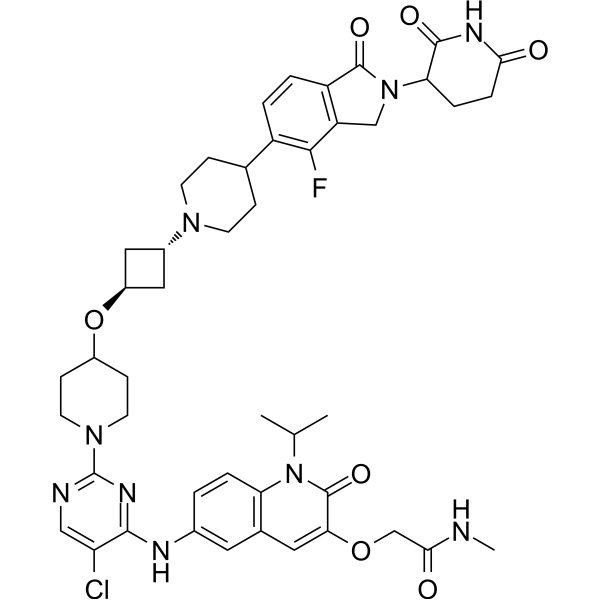
ARV-393 is a BCL6 PROTAC degrader. ARV-393 forms a complex with BCL6 and Cereblon, induces BCL6 ubiquitination, and mediates BCL6 degradation via the ubiquitin-proteasome system. ARV-393 enhances CD20 expression, interferon pathway activity and antigen presentation. ARV-393 induces tumor growth inhibition and regression. ARV-393 can be used in research related to non-Hodgkin's lymphoma, high-grade B-cell lymphoma, diffuse large B-cell lymphoma, Burkitt's lymphoma and follicular lymphoma.
(Pink: Target protein ligand; Blue: Cereblon ligand (HY-W039233); Black: linker).
For research use only. We do not sell to patients.
- Purity : 99.75%
- CAS No.: 2851885-95-3
- Formula: C46H53ClFN9O7
- Molecular Weight:898.42
-
Storage:
4°C, protect from light
* In solvent : -80°C, 6 months; -20°C, 1 month (protect from light)

To place orders, for customer services and technical support, please contact: MedChemExpress USA
Tel: 609-228-6898 E-mail: [email protected] [email protected]


-
 Biological Activity
-
Chemical Information
-
Solvent & Solubility
- Protocols
- Purity & Documentation
- References
-
 Help & FAQs


-

HY-172736
ToviblidegBCL6 Degrader -
HY-108705
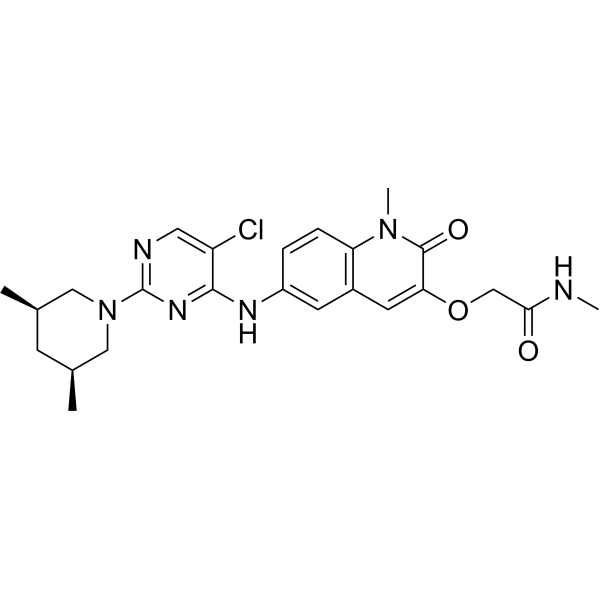
BI-3802BCL6 Degrader -
HY-158101
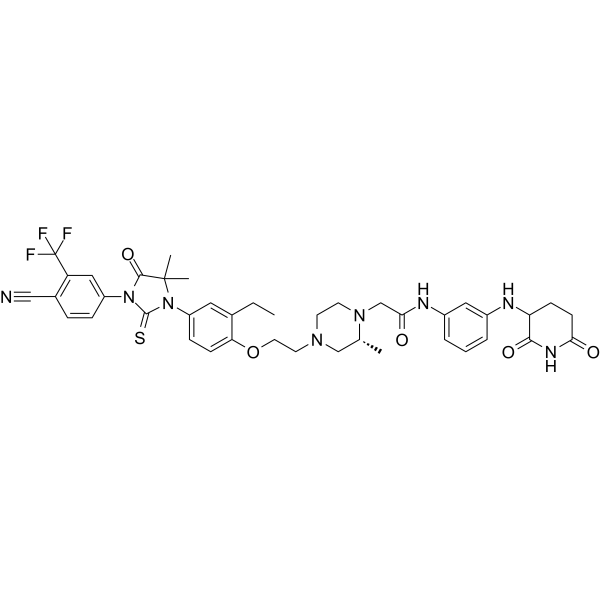
BMS-986365PROTAC AR Degrader -
HY-153321
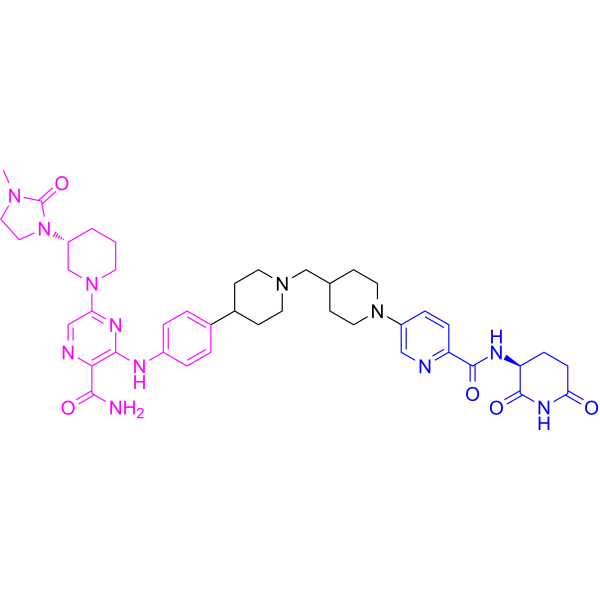
BexobrutidegBTK Degrader -
HY-153521
CCT374705BCL6 Inhibitor -
HY-153367
FHD-609BRD9 PROTAC Degrader -
HY-145483
KT-474PROTAC IRAK4 Degrader -
HY-130604
DT2216PROTAC BCL-XL Degrader -
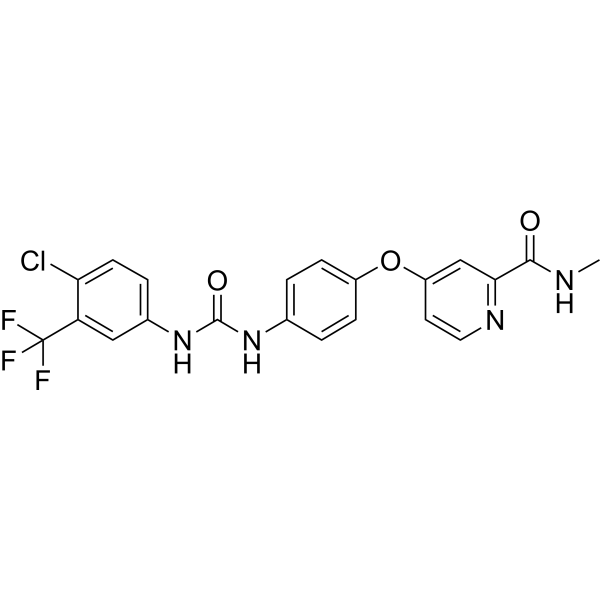
HY-10201
SorafenibMultikinase Inhibitor -
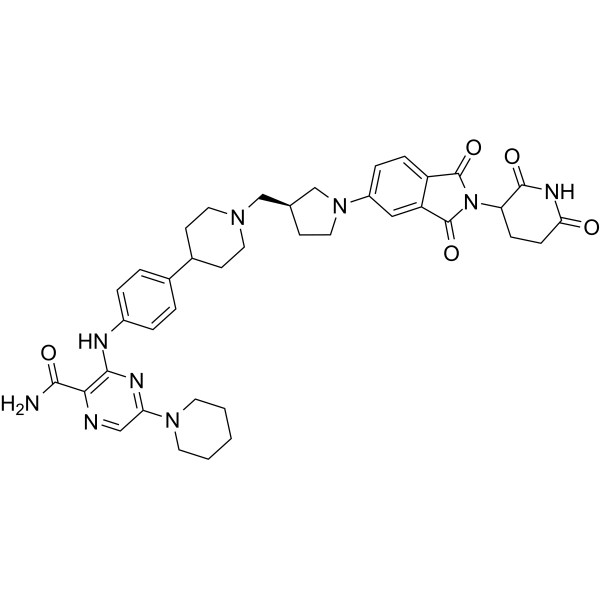
HY-153220
ZelebrudomideBTK PROTAC Degrader -
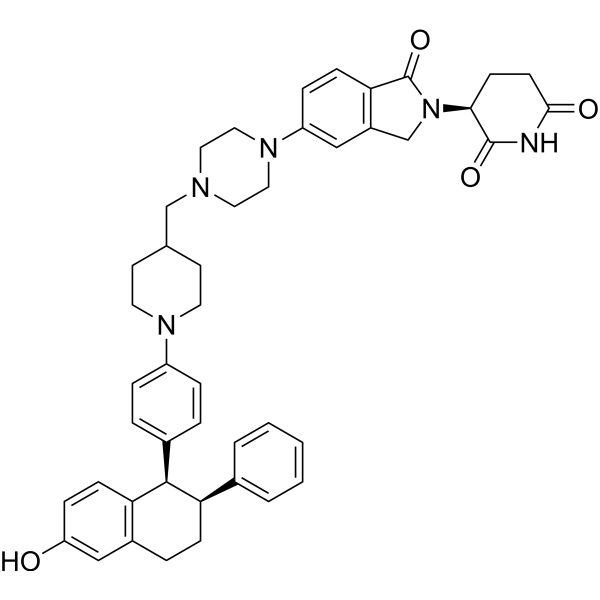
HY-138642
VepdegestrantPROTAC ER Degrader -
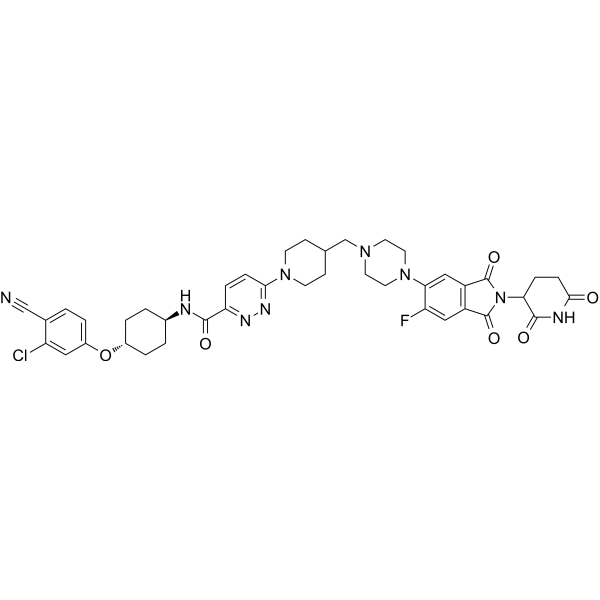
HY-138641
BavdegalutamideAR PROTAC Degrader
Publications Citing Use of MedChemExpress (MCE) ARV-393
MoreAll PROTACs Isoforms
More

Biological Activity
Description
IC50 & Target
[1]|
Cereblon |
In Vitro
ARV-393 induces rapid and potent (>90%) degradation of BCL6 in non-Hodgkin's lymphoma cell lines[4].
MedChemExpress (MCE) has not independently confirmed the accuracy of these methods. They are for reference only.
In Vivo
MedChemExpress (MCE) has not independently confirmed the accuracy of these methods. They are for reference only.
-
Animal Model:Mice (OCI-Ly1 cell line xenograft model)[3]
-
Dosage:3, 10, 30 mg/kg
-
Administration:PO; once daily for 23 days (3 mg/kg; twice daily for 23 days)
-
Result:Ihibited tumor growth and induced BCL6 protein degradation.
Clinical Trial
| NCT Number | Sponsor | Condition | Start Date |
Phase

|
|---|---|---|---|---|
| NCT01329991 | Plexxikon| | 2011-05 | PHASE1 |


Chemical Information
-
CAS No. 2851885-95-3
-
Appearance Solid
-
Molecular Weight 898.42
-
Formula C46H53ClFN9O7
-
Color White to off-white
-
SMILES
ClC1=CN=C(N2CCC(O[C@@H]3C[C@@H](N4CCC(C5=C(F)C(CN(C6CCC(NC6=O)=O)C7=O)=C7C=C5)CC4)C3)CC2)N=C1NC8=CC(C=C(OCC(NC)=O)C(N9C(C)C)=O)=C9C=C8
-
Shipping
Room temperature in continental US; may vary elsewhere.
-
Storage
4°C, protect from light
* In solvent : -80°C, 6 months; -20°C, 1 month (protect from light)


Publications (2)
-
Journal Impact Factor
-
Most Recent
-
Anal Chem
Hydrogen/Deuterium Exchange for Chiral Stability Assessment in Acidic Methine-Containing Compounds. [Abstract]2025 Dec 2;97(47):26097-26107. PMID: 41243541 -


Solvent & Solubility
In Vitro:
DMSO : 20 mg/mL (22.26 mM; Need ultrasonic; Hygroscopic DMSO has a significant impact on the solubility of product, please use newly opened DMSO)
Please refer to the solubility information to select the appropriate solvent. Once prepared, please aliquot and store the solution to prevent product inactivation from repeated freeze-thaw cycles.
Storage method and period of stock solution: -80°C, 6 months; -20°C, 1 month (protect from light). When stored at -80°C, please use it within 6 months. When stored at -20°C, please use it within 1 month.
Please refer to the solubility information to select the appropriate solvent. Once prepared, please aliquot and store the solution to prevent product inactivation from repeated freeze-thaw cycles.
Storage method and period of stock solution: -80°C, 6 months; -20°C, 1 month (protect from light). When stored at -80°C, please use it within 6 months. When stored at -20°C, please use it within 1 month.
Concentration (start) × Volume (start) = Concentration (final) × Volume (final)


Purity & Documentation
-
Data Sheet (288 KB)
-
SDS (252 KB)
- English - EN (252 KB)
- Français - FR (252 KB)
- Deutsch - DE (252 KB)
- Norwegian - NO (252 KB)
- Español - ES (252 KB)
- Swedish - SV (252 KB)
- Italian - IT (252 KB)
- Korean - KR (252 KB)
- Portuguese - PT (252 KB)
-
Handling Instructions (2659 KB)
References


Complete Stock Solution Preparation Table
Please refer to the solubility information to select the appropriate solvent. Once prepared, please aliquot and store the solution to prevent product inactivation from repeated freeze-thaw cycles.
Storage method and period of stock solution: -80°C, 6 months; -20°C, 1 month (protect from light). When stored at -80°C, please use it within 6 months. When stored at -20°C, please use it within 1 month.
| Optional Solvent | Concentration Solvent Mass | 1 mg | 5 mg | 10 mg | 25 mg |
|---|---|---|---|---|---|
| DMSO | 1 mM | 1.1131 mL | 5.5653 mL | 11.1307 mL | 27.8266 mL |
| 5 mM | 0.2226 mL | 1.1131 mL | 2.2261 mL | 5.5653 mL | |
| 10 mM | 0.1113 mL | 0.5565 mL | 1.1131 mL | 2.7827 mL | |
| 15 mM | 0.0742 mL | 0.3710 mL | 0.7420 mL | 1.8551 mL | |
| 20 mM | 0.0557 mL | 0.2783 mL | 0.5565 mL | 1.3913 mL |


ARV-393 Related Classifications
HY-158105 Related Classifications
 Powered by Bioz