










From 11:00 pm to 12:00 pm EST ( 8:00 pm to 9:00 pm PST ) on January 6th, the website will be under maintenance. We are sorry for the inconvenience. Please arrange your schedule properly.
5'-ODMT cEt m5U Phosphoramidite Amidite is a locked nucleic acid (LNA) analog. 5'-ODMT cEt m5U Phosphoramidite Amidite shows excellent safety and antisense activity in mice .
Fomivirsen (ISIS-2922) sodium is an antisense 21 mer phosphorothioate oligonucleotide. Fomivirsen sodium is an antiviral agent that is used cytomegalovirus retinitis (CMV) research, incluiding in AIDs. Fomivirsen sodium binds to and degrades the mRNAs encoding CMV immediate-early 2 protein, thus inhibiting virus proliferation .
DMT-2'fluoro-da(bz) amidite is a key intermediate for synthesizing antisense oligonucleotides with high nuclease resistance, high RNA binding affinity, and maintained base-pair specificity .
Inotersen (ISIS-420915) sodium is a 2′-O-methoxyethyl-modified antisense oligonucleotide. Inotersen sodium inhibits the production of transthyretin (TTR) protein by targeting the TTR RNA transcript and reduces the levels of the TTR transcript. Inotersen sodium can be used for the research of hereditary TTR amyloidosis polyneuropathy .
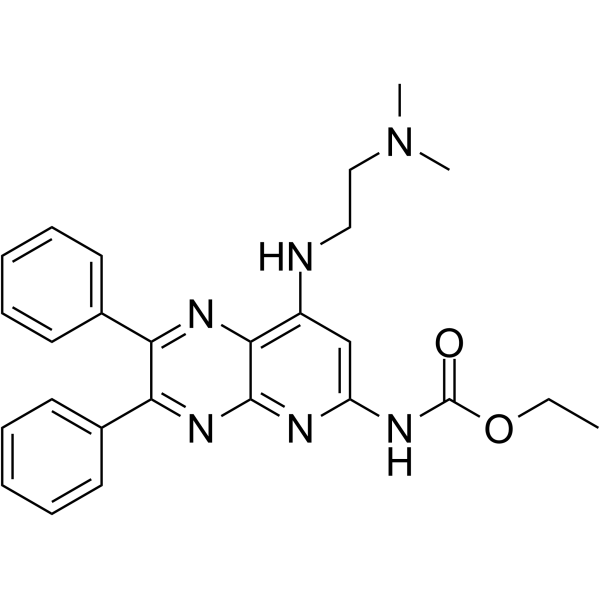
UNC10217938A is a 3-deazapteridine analog with strong oligonucleotide enhancing effects. UNC10217938A enhances oligonucleotides effects by modulating their intracellular trafficking and release from endosomes. UNC10217938A also enhances the effects of antisense and siRNA oligonucleotides .
Viltolarsen (NS-065/NCNP-01) is a phosphorodiamidate morpholino antisense oligonucleotide. Viltolarsen binds to exon 53 of the dystrophin mRNA precursor and restores the amino acid open-reading frame by skipping exon 53, resulting in the production of a shortened dystrophin protein that contains essential functional portions. Viltolarsen has the potential for Duchenne muscular dystrophy (DMD) research .
Tofersen (BIIB067) sodium is an antisense oligonucleotide and SOD1 mRNA inhibitor with an IC50 of 320 pM. Tofersen sodium mediates RNase H-dependent degradation of SOD1 mRNA to reduce SOD1 protein levels in cerebrospinal fluid and serum. Tofersen sodium downregulates cerebrospinal fluid neurofilament light chain, neurofilament heavy chain, amyloid-beta 1-40, amyloid-beta 1-42, neuropeptide Y, ubiquitin C-terminal hydrolase L1, neuropentraxins 1, 2, R, corticotropin-releasing hormone, IL-15, and serum neurofilament light chain, neurofilament heavy chain. Tofersen sodium can be used for the research of superoxide dismutase 1-associated amyotrophic lateral sclerosis .
Eplontersen is a triantennary N-acetyl galactosamine (GalNAc3-7a)-conjugated antisense oligonucleotide targeting transthyretin (TTR) mRNA to inhibit production of both variant and wild-type TTR protein. Misfolded TTR induces amyloid fibrils formation in the heart and peripheral nerves, leads to amyloid TTR (ATTR) amyloidosis diseases .
Mipomersen (ISIS 301012 free base) is an antisense oligonucleotide inhibitor of apolipoprotein B (apoB). Mipomersen has anti-HCV effect and reduces the infectivity of the HCV. Mipomersen can be used for the research of homozygous familial hypercholesterolemia (HoFH) .
AS-Inclisiran sodium is the antisense of Inclisiran (HY-132591). Inclisiran is a double-stranded small interfering RNA (siRNA) molecule. Inclisiran inhibits the transcription of PCSK9. Inclisiran inhibits Pyroptosis, activates PPARγ, and reduces NLRP3, cleaved caspase-1, IL-1β, and IL-18. Inclisiran has anti-inflammatory, lipid-regulating and anti-atherosclerotic activities. Inclisiran can be used in researches of hyperlipidemia and cardiovascular disease (CVD) .
Trabedersen (AP 12009) is an orally active synthetic antisense phosphorothioate oligodeoxynucleotide that selectively targets human TGFβ2 mRNA. Trabedersen blocks TGFβ2 protein production, enters the nucleus without a transfection vector, and exerts dose-dependent antitumor effects. By reversing TGFβ2-induced immunosuppression and enhancing immune cytotoxicity, Trabedersen exhibits significant antiproliferative, antimigratory, and antimetastatic activities, with favorable safety profiles. Trabedersen is widely used in research related to various solid tumors, including anaplastic astrocytoma, glioblastoma, colorectal tumor, and melanoma .
Ulefnersen (ION363) is an Antisense Oligonucleotide (ASO) directed against the 6th intron of the fused-in sarcoma (FUS) transcript to silence FUS in a non-allele-specific manner. Ulefnersen can reduce postnatal levels of FUS protein in the brain and spinal cord in disease-relevant mouse model of ALS-FUS , delaying motor neuron degeneration. Ulefnersen can be used in the research of Amyotrophic Lateral Sclerosis (ALS) .
Fomivirsen (ISIS-2922) is an antisense phosphorothioate oligonucleotide. Fomivirsen is an antiviral reagent used in research on cytomegalovirus (CMV) retinitis. Fomivirsen binds to and degrades the mRNA of CMV immediate-early 2 protein, thereby inhibiting viral proliferation. Fomivirsen can be used in research related to cytomegalovirus retinitis and cytomegalovirus diseases .
Diranersen (IONIS-MAPTRx) is an antisense oligonucleotide that targets the human MAPT gene to inhibit the production of tau protein. Diranersen can be used in research related to Alzheimer's disease and tauopathies .
Tominersen (RG6042) is a second-generation 2′-O-(2-methoxyethyl) antisense oligonucleotide that targets huntingtin protein (HTT) mRNA and potently suppresses HTT production. Tominersen improves survival and reduces brain atrophy in mice. Tominersen can be used for the research of Huntington’s disease (HD) .
Eplontersen sodium the sodium salt form of Eplontersen (HY-148089). Eplontersen sodium is a triantennary N-acetyl galactosamine (GalNAc3-7a)-conjugated antisense oligonucleotide targeting transthyretin (TTR) mRNA to inhibit production of both variant and wild-type TTR protein. Misfolded TTR induces amyloid fibrils formation in the heart and peripheral nerves, leads to amyloid TTR (ATTR) amyloidosis diseases .
Zilganersen (ION373) sodium is a gapmer antisense oligonucleotide targeting glial fibrillary acidic protein (GFAP). Zilganersen sodium reduces excess glial fibrillary acidic protein produced by disease-causing variants in the GFAP gene and inhibits synthesis of GFAP. Zilganersen sodium can be used for the research of Alexander disease .
Tominersen sodium is a second-generation 2′-O-(2-methoxyethyl) antisense oligonucleotide that targets huntingtin protein (HTT) mRNA and potently suppresses HTT production. Tominersen improves survival and reduces brain atrophy in mice. Tominersen sodium can be used for the research of Huntington’s disease (HD) .
Viltolarsen (NS-065/NCNP-01) sodium is a phosphorodiamidate morpholino antisense oligonucleotide. Viltolarsen sodium binds to exon 53 of the dystrophin mRNA precursor and restores the amino acid open-reading frame by skipping exon 53, resulting in the production of a shortened dystrophin protein that contains essential functional portions. Viltolarsen sodium has the potential for Duchenne muscular dystrophy (DMD) research .
Mongersen sodium is a specific and orally active SMAD7 antisense oligonucleotide. Mongersen sodium restores TGF-β1 activity leading to inhibition of inflammatory signals. Mongersen sodium can attenuate Crohn's disease-like experimental colitis in mice .
Mongersen (GED-0301) is a specific and orally active SMAD7 antisense oligonucleotide. Mongersen restores TGF-β1 activity leading to inhibition of inflammatory signals. Mongersen can attenuate Crohn's disease-like experimental colitis in mice .
Ulefnersen sodium (ION363) is an Antisense Oligonucleotide (ASO) directed against the 6th intron of the fused-in sarcoma (FUS) transcript to silence FUS in a non-allele-specific manner. Ulefnersen sodium can reduce postnatal levels of FUS protein in the brain and spinal cord in disease-relevant mouse model of ALS-FUS , delaying motor neuron degeneration. Ulefnersen sodium can be used in the research of Amyotrophic Lateral Sclerosis (ALS) .
Prexigebersen (BP1001) is an antisense oligonucleotide targeting Bcl-2 and Grb2. Prexigebersen exhibits antileukemic activity in cell models. Prexigebersen induces apoptosis (apoptosis), cell cycle arrest and ROS production in leukemia cells. Prexigebersen inhibits Grb2 expression, thereby suppressing tumor growth and survival. Prexigebersen can be used in studies related to acute myeloid leukemia .
Rovanersen (WVE-120101) is an antisense oligonucleotide that specifically targets mutated mRNA copies of the huntington (HTT) gene without affecting healthy mRNA of HTT gene, thereby preventing the production of faulty Huntingtin protein. Rovanersen can be used for huntington’s disease research .
Zorevunensen (STK-001) negative control is the negative control form of Zorevunensen (HY-148410). Zorevunensen is an antisense oligonucleotide that is intended to increase the level of productive SCN1A mRNA and consequently increase the expression of the sodium channel Nav1.1 protein. Zorevunersen is used for the study of Dravet syndrome .
Custirsen (OGX-011) is an antisense oligonucleotide that targets clusterin mRNA. Custirsen induces apoptosis by activating Bax, triggering mitochondrial translocation and cytochrome c release. Custirsen acts as a chemosensitizer, radiosensitizer and hormone sensitizer. Custirsen can be used in research related to prostate cancer, non-small cell lung cancer and metastatic breast cancer .
Custirsen sodium is a highly specific antisense oligonucleotide that inhibits the production of clusterin , an antiapoptotic protein that is upregulated in response to chemotherapy and that confers treatment resistance.
Obudanersen is an antisense oligonucleotide targeted to ubiquitin protein ligase E3A-antisense transcript (UBE3A-ATS). It is used for the study of Angelman syndrome.
Apazunersen sodium is an antisense oligonucleotide (ASO) that targets and inhibits expression of the UBE3A antisense transcript (UBE3A-AS) to prevent silencing of the paternally inherited allele of the UBE3A gene and reactivate expression of the deficient
Apazunersen is an antisense oligonucleotide (ASO) that targets and inhibits expression of the UBE3A antisense transcript (UBE3A-AS) to prevent silencing of the paternally inherited allele of the UBE3A gene and reactivate expression of the deficient protei
Vupanorsen is an N-acetyl galactosamine-conjugated antisense oligonucleotide that inhibits Angiopoietin-like 3 (ANGPTL3) protein synthesis. Vupanorsen lowers triglycerides and atherogenic lipoproteins.
Rovanersen sodium is an antisense oligonucleotide that specifically targets mutated mRNA copies of the huntington (HTT) gene without affecting healthy mRNA of HTT gene, thereby preventing the production of faulty Huntingtin protein. Rovanersen sodium can be used for huntington’s disease research .
IONIS PTP1BRx (ISIS 404173) is an antisense inhibitor of protein tyrosine phosphatase 1B (PTP-1B). IONIS PTP1BRx shows antidiabetic activity, and can be used for the study of insulin resistance and type 2 diabetes mellitus associated with obesity .
Obudanersen sodium is an antisense oligonucleotide targeted to ubiquitin protein ligase E3A-antisense transcript (UBE3A-ATS). It is used for the study of Angelman syndrome.
DOPE-PEG2000-Azide is a liposome to simulate biological phospholipid membrane. Liposomes are the main component of vesicles with concentric phospholipid bilayer membranes, which can be used to construct drug delivery systems for anti-cancer and anti-infection fields. Highly polar water-soluble payloads can be trapped in the internal aqueous space of liposomes, while lipophilic payloads can partition into and become part of the lipid bilayer. Especially for delivering antisense oligonucleotides, it can overcome problems such as inefficient cellular uptake and rapid loss in the body .
Tofersen scrambled control is a scrambled control antisense oligonucleotide of Tofersen (HY-132580) with a scrambled sequence in the target binding region.
Frenlosirsen scrambled control is a scrambled control antisense oligonucleotide of Frenlosirsen (HY-177632) with a scrambled sequence in the target binding region.
Obeversen is an antisense oligonucleotide that inhibits the synthesis of diacylglycerol acyltransferase 2 (DGAT-2). Obeversen can be used in the research of nonalcoholic fatty liver disease .
IONIS-DNM2-2.5Rx (DYM101) is an antisense agent targeting dynamin 2. IONIS-DNM2-2.5Rx has the potential for the research of centronuclear myopathy (CNM) .
AZD8701 (IONIS-1063734) sodium is an antisense oligonucleotide targeting FOXP3 in regulatory T cells (Tregs). AZD8701 sodium can relieve immunosuppression in cancer .
Cy5-Zorevunensen negative control (Cy5-STK-001 negative control) is an antisense oligonucleotide labeled with the fluorescent molecule Cy5, which can be used as a negative control for Zorevunersen (HY-148410) .
ISIS 449884 is a 2'-O-methoxyethyl antisense oligonucleotide that targets GCGR. ISIS 449884 has an ability to reduce hepatic glucose output and lower the blood glucose level. ISIS 449884 can be used for the study of type 2 diabetes mellitus (T2DM) .
ISIS 449884 sodium is a 2'-O-methoxyethyl antisense oligonucleotide that targets GCGR. ISIS 449884 sodium has an ability to reduce hepatic glucose output and lower the blood glucose level. ISIS 449884 sodium can be used for the study of type 2 diabetes mellitus (T2DM) .
IONIS PTP1BRx (ISIS 404173) sodium is an antisense inhibitor of protein tyrosine phosphatase 1B (PTP-1B). IONIS PTP1BRx sodium shows antidiabetic activity, and can be used for the study of insulin resistance and type 2 diabetes mellitus associated with obesity .
17:1 Lyso PC is a liposome to simulate biological phospholipid membrane. Liposomes are the main component of vesicles with concentric phospholipid bilayer membranes, which can be used to construct drug delivery systems for anti-cancer and anti-infection fields. Highly polar water-soluble payloads can be trapped in the internal aqueous space of liposomes, while lipophilic payloads can partition into and become part of the lipid bilayer. Especially for delivering antisense oligonucleotides, it can overcome problems such as inefficient cellular uptake and rapid loss in the body .
Rimigorsen sodium is an antisense oligonucleotide that induces skipping of exon 44 of the pre-mRNA encoding dystrophin in a Duchenne muscular dystrophy (DMD)
FITC-Trecovirsen (sodium) is a FITC labeled Trecovirsen. Trecovirsen is a 25-mer antisense phosphorothioate oligonucleotide targeted at the gag site of the HIV gene .
FAM-Danvatirsen is a FAM-labeled Danvatirsen (HY-145729). Danvatirsen is an antisense oligonucleotide targeting STAT3 that can be used in the study of cancer .
Lufepirsen sodium is an unmodified antisense oligonucleotide targeted to Connexin43 (Cx43). Connexin43 is a specific protein in the eye, which plays a role in wound healing.
5'-O-DMT-N2-Ibu-2'-OMe-G is a crucial intermediate for the synthesis of antisense oligonucleotides. 5'-O-DMT-N2-Ibu-2'-OMe-G is involved in constructing antisense oligonucleotides with specific sequences, which can bind complementarily to the targeted mRNA. 5'-O-DMT-N2-Ibu-2'-OMe-G blocks the translation process of mRNA, thereby inhibiting the expression of specific proteins and playing a role in regulating gene expression. 5'-O-DMT-N2-Ibu-2'-OMe-G is promising for research of genetic diseases and tumors .
Fmoc‑PNA‑U‑OH is a peptide nucleic acid monomer that can be used for the synthesis of peptide nucleic acids (PNAs). Fmoc‑PNA‑U‑OH exhibits specific binding to adenine, resistance to enzymatic degradation, and strong hybridization properties. Fmoc‑PNA‑U‑OH can be applied in research fields such as gene diagnosis, molecular biology, and antisense therapy.
Fmoc-Aeg-OBn is a benzyl-protected N-(2-aminoethyl)-glycine PNA backbone derivative. Fmoc-Aeg-OBn serves as a key intermediate for the synthesis of Fmoc-protected PNA monomers with modified nucleobases. Fmoc-Aeg-OBn can be used to prepare PNA with unique physicochemical properties, which is suitable for antisense and gene diagnostic applications. Fmoc-Aeg-OBn is applicable to cancer-related research .
Obeversen sodium is an antisense oligonucleotide that inhibits the synthesis of Diacylglycerol acyltransferase 2 (DGAT-2). Obeversen sodium can be used in the research of nonalcoholic fatty liver disease .
Lufepirsen is an unmodified antisense oligonucleotide targeted to Connexin43 (Cx43). Connexin43 is a specific protein in the eye, which plays a role in wound healing.
Vupanorsen (sodium) is an N-acetyl galactosamine-conjugated antisense oligonucleotide that inhibits Angiopoietin-like 3 (ANGPTL3) protein synthesis. Vupanorsen (sodium) lowers triglycerides and atherogenic lipoproteins.
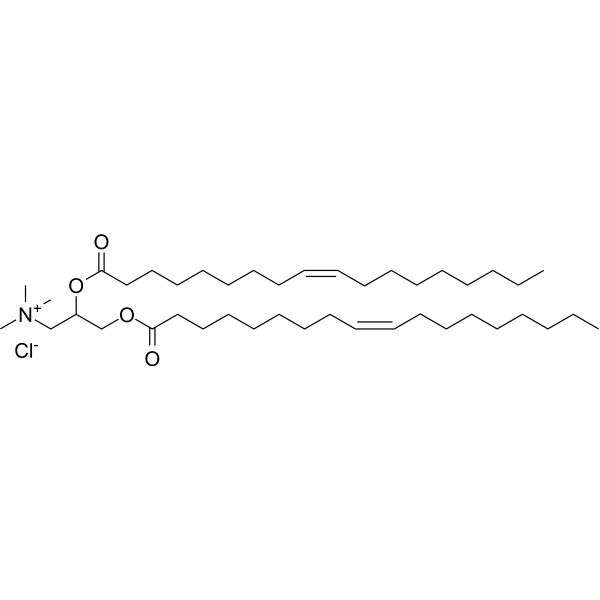
DOTAP chloride is a useful and effective cationic lipid for transient and stable transfection DNA (plasmids, bacmids) and modified nucleic acids (antisense oligonucleotides) with out the use of helper lipid .
EZN-2968 sodium is an antisense oligonucleotide that specifically binds and inhibits the expression of HIF-1α mRNA. EZN-2968 sodium, inhibits tumor cell growth.
SPC4061 an antisense nucleotide, is a potent PCSK9 inhibitor. SPC4061 targets the lock-in nucleic acid (LNA) of PCSK9 for the study of hypercholesterolemia and related diseases .
Diranersen (IONIS-MAPTRx) sodium is an antisense oligonucleotide that targets the human MAPT gene to inhibit the production of tau protein. Diranersen sodium can be used in research related to Alzheimer's disease and tauopathies .
SPC4061 an antisense nucleotide, sodium is a potent PCSK9 inhibitor. SPC4061 targets the lock-in nucleic acid (LNA) of PCSK9 for the study of hypercholesterolemia and related diseases .
IONIS-FGFR4Rx (ISIS 463588) is an antisense inhibitor of fibroblast growth factor receptor 4 (FGFR4), which is promising for research of renal diseases .
IONIS-FGFR4Rx (ISIS 463588) sodium is an antisense inhibitor of fibroblast growth factor receptor 4 (FGFR4), which is promising for research of renal diseases .
Sapablursen sodium, an antisense oligonucleotide, is designed to reduce the production of TMPRSS6 resulting in increased expression of hepcidin, which is the key regulator of iron homeostasis. Sapablursen sodium can be used in the research of blood diseas
Brogidirsen (NS 089; NCNP 02) is a a dual-targeting antisense oligonucleotide. Brogidirsen can induce dystrophin protein experession. Brogidirsen can be used for the research of Duchenne muscular dystrophy .
5'-ODMT cEt G Phosphoramidite Amidite is a potent nucleic acid analog. 5'-ODMT cEt G Phosphoramidite Amidite shows excellent safety and antisense activity .
ISIS 329993 sodium is an antisense oligonucleotide targeting to C-reactive protein (CRP). ISIS-CRPRx sodium has been tested in a rodent model of rheumatoid arthritis (RA) and was shown to improve the clinical signs of arthritis
Sefaxersen sodium is a specific antisense oligonucleotide (ASO) targeting complement factor B (CFB). Sefaxersen sodium effectively reduces circulating levels of CFB, and can be used for geographic atrophy (GA) research .
Brogidirsen (NS 089; NCNP 02) sodium is a a dual-targeting antisense oligonucleotide. Brogidirsen sodium can induce dystrophin protein experession. Brogidirsen sodium can be used for the research of Duchenne muscular dystrophy .
SM51a is a small molecule targeting ligand. SM51a can be linked to the 3' or 5' end of a sense strand or an antisense strand of a DUX4 RNAi agent for promoting it entry into cells .
SM45a is a small molecule targeting ligand. SM45a can be linked to the 3' or 5' end of a sense strand or an antisense strand of a DUX4 RNAi agent for promoting it entry into cells .
Sapablursen, an antisense oligonucleotide, is designed to reduce the production of TMPRSS6 resulting in increased expression of hepcidin, which is the key regulator of iron homeostasis. Sapablursen can be used in the research of blood diseases such as pol
ISIS 329993 (ISIS-CRPRx) is an antisense oligonucleotide targeting to C-reactive protein (CRP). ISIS-CRPRx has been tested in a rodent model of rheumatoid arthritis (RA) and was shown to improve the clinical signs of arthritis
(RFR)4XB is a cationic membrane-penetrating peptide. (RFR)4XB carries its cargo (the antisense oligomer) across the outer membrane of gram-negative bacteria .
Scrambled Tadnersen is the Negative Control of Tadnersen sodium (HY-132581A). Tadnersen sodium, an antisense oligonucleotide (ASO), selectively targets C9ORF72 transcript variants 1 and 3 that carry the expansion .
Scrambled Tadnersen sodium is the Negative Control of Tadnersen sodium (HY-132581A). Tadnersen sodium, an antisense oligonucleotide (ASO), selectively targets C9ORF72 transcript variants 1 and 3 that carry the expansion .
ISIS 1082 is an antisense oligonucleotide targeted to the translation initiation codon of herpes simplex virus (HSV) type 1 and 2 virion capsid protein. It has been shown to inhibit HSV-1 replication in vitro
Mipomersen sodium (ISIS 301012) is an antisense oligonucleotide inhibitor of apolipoprotein B (apoB). Mipomersen has anti-HCV effect and reduces the infectivity of the HCV. Mipomersen sodium can be used for the research of homozygous familial hypercholesterolemia (HoFH) .
ISIS 1082 sodium is an antisense oligonucleotide targeted to the translation initiation codon of herpes simplex virus (HSV) type 1 and 2 virion capsid protein. It has been shown to inhibit HSV-1 replication in vitro
ISIS 14803 is a 20-unit antisense phosphorothioate oligodeoxynucleotide that binds to hepatitis C virus (HCV) RNA at the translation initiation region of the internal ribosome entry site (IRES) and inhibits protein expression in cell culture.
Tau ASO-12 (murine) (sodium) is a Tau-lowering antisense oligonucleotide (ASO) for murine use, and it has the potential for the research of Alzheimer Disease. (Tau ASO-12 sequence – 5′ GCTTTTACTGACCATGCGAG 3′ )
Monarsen sodium is a synthetic 20-base antisense oligodeoxynucleotide directed against the human AChE gene. Monarsen sodium is used in the study of Autoimmune myasthenia gravis (MG), a neuromuscular disorder caused by autoantibodies directed against the acetylcholine receptor (AChR).
Cepadacursen sodium is a liver-targeting antisense oligonucleotide (ASO), inhibits proprotein convertase subtilisin/kexin type 9 (PCSK9) protein synthesis. Cepadacursen sodium can be used for hypercholesterolemia research and the prevention of atherosclerotic cardiovascular disease (ASCVD).
ISIS 14803 sodium is a 20-unit antisense phosphorothioate oligodeoxynucleotide that binds to hepatitis C virus (HCV) RNA at the translation initiation region of the internal ribosome entry site (IRES) and inhibits protein expression in cell culture.
Sefaxersen (IONIS-FB-LRx) is a specific antisense oligonucleotide (ASO) targeting complement factor B (CFB). Sefaxersen effectively reduces circulating levels of CFB. Sefaxersen can be used for geographic atrophy (GA) research .
Nusinersen sodium is an antisense oligonucleotide active molecule. Nusinersen sodium modifies the pre-messenger RNA splicing of the SMN2 gene, thereby promoting the production of full-length SMN protein. Nusinersen sodium improves spinal muscular atrophy .
Nusinersen is an antisense oligonucleotide active molecule. Nusinersen modifies the pre-messenger RNA splicing of the SMN2 gene, thereby promoting the production of full-length SMN protein. Nusinersen improves spinal muscular atrophy .
Monarsen (EN101) is a synthetic 20-base antisense oligodeoxynucleotide directed against the human AChE gene. Monarsen is used in the study of Autoimmune myasthenia gravis (MG), a neuromuscular disorder caused by autoantibodies directed against the acetylcholine receptor (AChR).
(R/S)-Alicaforsen is the racemate of Alicaforsen composed of R and S configurations. Alicaforsen is a 20-base antisense oligonucleotide inhibiting ICAM-1 production, which is an important adhesion molecule involved in leukocyte migration and trafficking to the site of inflammation.
FITC-labeled Drisapersen (sodium) is Drisapersen labeled with FITC. Drisapersen, a antisense oligonucleotide, induces exon 51 skipping during dystrophin pre-mRNA splicing and allows synthesis of partially functional dystrophin in Duchenne muscular dystrophy (DMD) patients with amenable mutations.
Volanesorsen scramble negative control is a negative control for volanesorsen (HY-145727) with the sequence: CAUGUTCUTCUGCATGUCAU. Volanesorsen (ISIS 304801) is an antisense oligonucleotide inhibitor of apolipoprotein CIII (apo-CIII) mRNA that can lower triglyceride levels and improve insulin resistance .
Bepirovirsen is an antisense oligonucleotide targeting all HBV messenger RNAs. Bepirovirsen leads to reductions in HBV-derived RNAs, HBV DNA and viral proteins. Bepirovirsen can be used for the research of chronic HBV infection. Bepirovirsen binding site sequence (GCACTTCGCTTCACCTCTGC) .
DOTAP-d9 chloride is the deuterium labeled DOTAP chloride (HY-112754A). DOTAP chloride is a useful and effective cationic lipid for transient and stable transfection DNA (plasmids, bacmids) and modified nucleic acids (antisense oligonucleotides) with out the use of helper lipid .
UNC2383 is an oligonucleotide enhancer compound. UNC2383 can enhance the efficacy of antisense oligonucleotides (ASOs) and splice-switching oligonucleotides (SSOs). UNC2383 can be used in research of diseases involving impaired oligonucleotide delivery, such as cystic fibrosis .
GPI2A sodium is a 20-mer antisense oligonucleotide sequence that is complementary to a region of the HIV-1 gag gene. GPI2A shows a significant inhibitory effect on p55 and its cleavage product p39/41.
GPI2A is a 20-mer antisense oligonucleotide sequence that is complementary to a region of the HIV-1 gag gene. GPI2A shows a significant inhibitory effect on p55 and its cleavage product p39/41.
Miravirsen sodium is a potent miR-122 inhibitor and inhibits the biogenesis of miR-122. Miravirsen sodium is a 15-nucleotide locked nucleic acid-modified phosphorothioate antisense oligonucleotide. Miravirsen sodium inhibits HCV replication, and can be used in research of HCV infection .
Volanesorsen (ISIS 304801) sodium is an antisense oligonucleotide inhibitor of apolipoprotein CIII (apo-CIII) mRNA that reduces triglyceride levels and improves insulin resistance. Volanesorsen sodium is being studied in the treatment of hypertriglyceridemia, familial chylosiderosis syndrome, and type 2 diabetes .
Volanesorsen (ISIS 304801) is an antisense oligonucleotide inhibitor of apolipoprotein CIII (apo-CIII) mRNA that reduces triglyceride levels and improves insulin resistance. Volanesorsen is being studied in the treatment of hypertriglyceridemia, familial chylosiderosis syndrome, and type 2 diabetes .
Baliforsen (ISIS 5987690) is an antisense oligonucleotide (ASO) that inhibits DMPK mRNA. Baliforsen binds within exon 9 of the human DMPK transcript to promote RNase H1-mediated degradation Baliforsen can be used for the research of myotonic dystrophy type 1 .
SSOe26 sodium is a 15mer antisense oligonucleotide targeting?HER4. SSOe26 sodium induces exon 26 skipping, leading to the generation of a novel mRNA transcript that excludes exon 26 (CYT2 isoform). SSOe26 sodium decreases tumour growth in mouse xenografts.
5'-ODMT cEt N-Bzm5 C Phosphoramidite Amidite is a potent nucleic acid analog. 5'-ODMT cEt N-Bzm5 C Phosphoramidite Amidite blongs to modified antisense oligonucleotide. 5'-ODMT cEt N-Bzm5 C Phosphoramidite Amidite allows the formation of a specific conformation of the furanose ring of the oligonucleotide through the introduction of a cEt modification, enhancing the ability to hybridize to complementary RNA. 5'-ODMT cEt N-Bzm5 C Phosphoramidite Amidite is mainly used in the research of regulation of gene expression related to metabolic diseases, cardiovascular diseases, cancers and the development of antisense compounds .
GEM231 is an 18mer antisense oligonucleotide targeting the mRNA of the PKA-I (RIα regulatory subunit of cAMP dependent protein kinase type I ). GEM231 induces cell growth arrest, apoptosis, and differentiation in a variety of cancer cell lines in vitro and in tumors in vivo.
Bepirovirsen (ISIS 505358) sodium is an antisense oligonucleotide targeting all HBV messenger RNAs. Bepirovirsen sodium leads to reductions in HBV-derived RNAs, HBV DNA and viral proteins. Bepirovirsen sodium can be used for the research of chronic HBV infection. Bepirovirsen sodium binding site sequence (GCACTTCGCTTCACCTCTGC) .
AZD8233 sodium, a liver-targeting antisense oligonucleotide (ASO), inhibits subtilisin/kexin type 9 (PCSK9) protein synthesis. AZD8233 sodium increases the available LDL receptors by reducing PCSK9 levels, thereby clearing LDL from the blood and decreasing LDL-C levels.
SPC5001 sodium is a locked nucleic acid (LNA)-modifed antisense oligonucleotide (ASO) complementary to human PCSK9 (proprotein convertase subtilisin/kexin type 9) mRNA. SPC5001 sodium can be used for the research of hypercholesterolemia. SPC5001 sodium sequence: 5′-TGmCTACAAAACmCmCA-3′ .
SPC5001 is a locked nucleic acid (LNA)-modifed antisense oligonucleotide (ASO) complementary to human PCSK9 (proprotein convertase subtilisin/kexin type 9) mRNA. SPC5001 can be used for the research of hypercholesterolemia. SPC5001 sequence: 5′-TGmCTACAAAACmCmCA-3′ .
GEM231 sodium is an 18mer antisense oligonucleotide targeting the mRNA of the PKA-I (RIα regulatory subunit of cAMP dependent protein kinase type I ). GEM231 sodium induces cell growth arrest, apoptosis, and differentiation in a variety of cancer cell lines in vitro and in tumors in vivo.
2'-O-MOE-5-Me-rU is a dual chemically modified ribonucleoside, which is a key modifying unit in the development of RNA drug preparations (such as antisense oligonucleotides ASO, siRNA). Its core function is to significantly enhance the stability, target affinity and drugability of nucleic acid drugs.
Zilganersen (ION373) is a gapmer antisense oligonucleotide targeting glial fibrillary acidic protein (GFAP). Zilganersen reduces excess glial fibrillary acidic protein produced by disease-causing variants in the GFAP gene and inhibits synthesis of GFAP. Zilganersen can be used for the research of Alexander disease .
AS-Patisiran sodium is an antisense strand of Patisiran. Patisiran is a double-stranded small interfering RNA that targets a sequence within the transthyretin (TTR) messenger RNA. Patisiran specifically inhibits hepatic synthesis of mutant and wild-type TTR. Patisiran can be used for the research of hereditary TTR amyloidosis .
Donidalorsen (ISIS-721744; IONIS-PKK-LRX) sodium is an antisense oligonucleotide targeting prekallikrein (PKK). Donidalorsen sodium inhibits kallikrein activity and reduces the production of Bradykinin (HY-P0206) by specifically binding to and degrading PKK mRNA in the liver. Donidalorsen sodium can be used in the research of hereditary angioedema .
AZD8233, a liver-targeting antisense oligonucleotide (ASO), inhibits proprotein convertase subtilisin/kexin type 9 (PCSK9) protein synthesis. AZD8233 increases the available LDL receptors by reducing PCSK9 levels, thereby clearing LDL from the blood and decreasing LDL-C levels.
Miravirsen (SPC-3649) is a potent miR-122 inhibitor and inhibits the biogenesis of miR-122. Miravirsen is a 15-nucleotide locked nucleic acid-modified phosphorothioate antisense oligonucleotide. Miravirsen inhibits HCV replication. Miravirsen can be used in research of HCV infection .
Rugonersen sodium is a locked-nucleic acid (LNA)- modified antisense oligonucleotides (ASOs), and results in reduction of ubiquitin-protein ligase E3A (UBE3A) silencing. Angelman syndrome (AS) sodium is a severe neurodevelopmental disorder caused by the loss of neuronal E3 ligase UBE3A, Rugonersen has been used for AS reasearch .
Donidalorsen (ISIS-721744; IONIS-PKK-LRX free acid) is an antisense oligonucleotide targeting prekallikrein (PKK). Donidalorsen inhibits kallikrein activity and reduces the production of Bradykinin (HY-P0206) by specifically binding to and degrading PKK mRNA in the liver. Donidalorsen can be used in the research of hereditary angioedema .
Drisapersen (Kyndrisa) is a 2 '-O-methyl phosphorothioate RNA antisense oligonucleotide that induces exon 51 skipping. Drisapersen induces skipping of exon 51 during Dystrophin pre-mRNA splicing, allowing the synthesis of partially functional Dystrophin. Drisapersen can be used in research related to Duchenne muscular dystrophy .
Boc-PNA-U-OH is a protected peptide nucleic acid (PNA) monomer containing a uracil base, designed for solid-phase peptide synthesis (SPPS) using the Boc/Z protection strategy. Boc-PNA-U-OH acts as a building block in creating PNA oligomers that are neutral, stable, and used for antisense/antigene applications.
Aprinocarsen (ISIS 3521) sodium, a specific antisense oligonucleotide inhibitor of protein kinase C-alpha (PKC-α). Aprinocarsen sodium is a 20-mer oligonucleotide, it regulates cell differentiation and proliferation. Aprinocarsen sodium inhibits the growth of human tumor cell lines in nude mice. Aprinocarsen sodium shows the value as a chemotherapeutic compound of human cancers .
Retro-1 is a toxin inhibitor. Retro-1 blocks the retrograde transport of STxB to the trans-Golgi network/Golgi. Retro-1 inhibits the cytotoxic effects of Ricin, bacterial toxins Stx1 and Stx2. Retro-1 can also substantially enhance the effectiveness of antisense and splice switching oligonucleotides .
Rugonersen (RG6091; RO7248824) is a locked-nucleic acid (LNA)- modified antisense oligonucleotides (ASOs), and results in reduction of ubiquitin-protein ligase E3A (UBE3A) silencing. Angelman syndrome (AS) is a severe neurodevelopmental disorder caused by the loss of neuronal E3 ligase UBE3A, Rugonersen has been used for AS reasearch .
Zorevunersen sodium is an antisense oligonucleotide targeting the Scn1a gene based on TANGO technology. Zorevunersen sodium increases Scn1a mRNA transcripts and elevates the expression level of NaV1.1 protein. Zorevunersen sodium restores the excitability of PV interneurons, thereby reducing seizures and prolonging survival in mice. Zorevunersen sodium can be used for research on Dravet syndrome .
Zorevunersen is an antisense oligonucleotide targeting the Scn1a gene based on TANGO technology. Zorevunersen increases Scn1a mRNA transcripts and elevates the expression level of NaV1.1 protein. Zorevunersen restores the excitability of PV interneurons, thereby reducing seizures and prolonging survival in mice. Zorevunersen can be used for research on Dravet syndrome .
Golodirsen (SRP-4053) is an antisense oligonucleotide of the phophorodiamidate morpholino oligomer (PMO). Golodirsen restores the reading frame of the Duchenne muscular dystrophy (DMD) gene by modifying the splicing process of the pre-mRNA, skipping exon 53. Golodirsen can restore the expression of the anti-myostatin protein. Golodirsen can be used for the research of duchenne muscular dystrophy (DMD) .
FITC-labeled Tominersen (sodium) is the Tominersen labeled with FITC. Tominersen (RG6042) is a second-generation 2′-O-(2-methoxyethyl) antisense oligonucleotide that targets huntingtin protein (HTT) mRNA and potently suppresses HTT production. Tominersen improves survival and reduces brain atrophy in mice. Tominersen can be used for the research of Huntington’s disease (HD).
Golodirsen (SRP-4053) sodium is an antisense oligonucleotide of the phophorodiamidate morpholino oligomer (PMO). Golodirsen sodium restores the reading frame of the Duchenne muscular dystrophy (DMD) gene by modifying the splicing process of the pre-mRNA, skipping exon 53. Golodirsen sodium can restore the expression of the anti-myostatin protein. Golodirsen sodium can be used for the research of duchenne muscular dystrophy (DMD) .
AZD8701 (IONIS-1063734) is an antisense oligonucleotide targeting FOXP3 in regulatory T cells (Tregs), with a human IC50 of 65.2 nM. AZD8701 binds to intronic sites of all FOXP3 pre-mRNA isoforms and mediates dose-dependent FOXP3 knockdown via free uptake. AZD8701 can be used in cancer-related research .
2'-F-Bz-dC Phosphoramidite can be used in the synthesis of oligoribonucleotide (such as DNA and RNA). 2'-F-Bz-dC Phosphoramidite also used for synthesis antiviral agent to inhibit the replication of virus. 2'-F-Bz-dC Phosphoramidite contains a phosphorothioate backbone, to synthesise antisense oligonucleotide analogs to induce apoptosis in cancer cells .
SSO111 sodium, a 20mer fully modified antisense oligonucleotide, targets the oncogene?HER2. SSO111 sodium induces exon 15 skipping during splicing, leading to the generation of a novel mRNA transcript that excludes exon 15. SSO111 sodium downregulated HER2 mRNA, which resulted in the inhibition of proliferation and induction of apoptosis in HER2-overexpressing tumor cells.
5'-ODMT cEt N-Bz A Phosphoramidite (Amidite) is a nucleoside phosphoramidite monomer used to synthesize locked nucleic acid (LNA) analog oligonucleotides. It can be used as a building block of antisense oligonucleotides (ASOs) to target complementary RNA sequences. 5'-ODMT cEt N-Bz A Phosphoramidite (Amidite) locks the furanose ring into an N-type conformation through 2',4'-constrained ethyl (cEt) modification, enhancing hybridization affinity and mismatch discrimination with RNA, while significantly improving the resistance of oligonucleotides to exonuclease digestion. 5'-ODMT cEt N-Bz A Phosphoramidite (Amidite) mediates RNase H-dependent mRNA degradation or inhibits translation by forming a stable hybrid with RNA, thereby achieving gene expression regulation. 5'-ODMT cEt N-Bz A Phosphoramidite (Amidite) is mainly used in the development of antisense drugs, gene function research and oligonucleotide synthesis related to disease treatment .
Fmoc-PNA-C(Boc)-OH is a protected peptide nucleic acid (PNA) monomer for solid-phase synthesis. Fmoc-PNA-C(Boc)-OH possesses Fmoc-protected skeletal amino groups and Boc-protected cytosine bases, designed to construct stable synthetic DNA analogs. Fmoc-PNA-C(Boc)-OH can be used to prepare highly specific, enzyme-stable antisense probes and diagnostic probes.
BOC-PNA-thioU(PMB)-OH is a peptide nucleic acid (PNA) monomer characterized by a PMB protecting group on its thiouracil, which enhances its binding affinity to adenine. BOC-PNA-thioU(PMB)-OH exhibits excellent resistance to enzymatic degradation and strong hybridization properties, making it valuable for applications in gene diagnosis, antisense therapy, and other molecular biology fields requiring higher binding strength and greater functionalization.
DOTAP chloride (GMP Like) is the GMP Like class DOTAP chloride (HY-112754A). GMP small molecules works appropriately as an auxiliary reagent for cell therapy manufacture. DOTAP chloride is a cationic lipid with good membrane fusion ability and biocompatibility. DOTAP chloride (GMP Like) can be used as an excipient for transient and stable transfection DNA (plasmids, bacmids) and modified nucleic acids (antisense oligonucleotides) without the use of helper lipid .
Basivarsen linker is a linker used in HY-177452 Zeleciment basivarsen for coupling a TfR1-binding Fab (HY-P990780 Zeleciment) and an antisense oligonucleotide. Zeleciment basivarsen is an antibody-oligonucleotide conjugate (AOC) designed to target mutant nuclear myotonic dystrophy protein kinase (DMPK) RNA for RHase H-mediated degradation to correct splicing. It is used for the study of myotonic dystrophy type 1 (DM1).
Apatorsen is a 2'-methoxyethyl-modified antisense oligonucleotide and also a Hsp27 inhibitor. Apatorsen reduces Hsp27 mRNA and protein levels, impairs stress-induced cytoprotective functions, induces cell apoptosis, inhibits tumor growth and prevents metastasis. Apatorsen is applicable to research related to non-small cell lung cancer, castration-resistant prostate cancer, breast cancer, ovarian cancer and bladder cancer .
Apatorsen (OGX-427) sodium is a 2'-methoxyethyl-modified antisense oligonucleotide and also a Hsp27 inhibitor. Apatorsen sodium reduces Hsp27 mRNA and protein levels, impairs stress-induced cytoprotective functions, induces cell apoptosis, inhibits tumor growth and prevents metastasis. Apatorsen sodium is applicable to research related to non-small cell lung cancer, castration-resistant prostate cancer, breast cancer, ovarian cancer and bladder cancer .
ISIS 104838 sodium is an antisense oligonucleotide targeting TNF-α. ISIS 104838 sodium specifically binds to human TNF-α mRNA via Watson-Crick base pairing to form a DNA:RNA hybrid duplex, thereby recruiting the ubiquitously expressed intracellular enzyme RNase H to degrade the target mRNA and inhibit TNF-α protein synthesis at the transcriptional level. ISIS 104838 sodium induces moderate, self-limiting thrombocytopenia in cynomolgus monkeys. ISIS 104838 sodium can be used for the study of inflammatory diseases .
ISIS 104838 is an antisense oligonucleotide targeting TNF-α. ISIS 104838 specifically binds to human TNF-α mRNA via Watson-Crick base pairing to form a DNA:RNA hybrid duplex, thereby recruiting the ubiquitously expressed intracellular enzyme RNase H to degrade the target mRNA and inhibit TNF-α protein synthesis at the transcriptional level. ISIS 104838 induces moderate, self-limiting thrombocytopenia in cynomolgus monkeys. ISIS 104838 can be used for the study of inflammatory diseases .
Olezarsen (ISIS 678354;IONIS-APOCIII-LRx) is a GalNAc-modified antisense oligonucleotide. Olezarsen binds to APOC3 mRNA and induces its degradation via ribonuclease H1-mediated sense strand cleavage, thereby reducing hepatic apolipoprotein C-III (apoC-III) synthesis. Olezarsen reduces plasma triglyceride, apolipoprotein B and non-high-density lipoprotein cholesterol levels. Olezarsen is applicable to research related to familial chylomicronemia syndrome, hypertriglyceridemia and atherosclerotic cardiovascular disease .
NH2-GG-DSPE is a lipid compound that can be used for liposome preparation. Liposomes are the main component of vesicles with concentric phospholipid bilayer membranes, which can be used to construct drug delivery systems for anti-cancer and anti-infection fields. Highly polar water-soluble loads can be captured in the internal aqueous space of liposomes, while lipophilic loads can be distributed into the lipid bilayer and become part of the lipid bilayer. Especially for the delivery of antisense oligonucleotides, it can overcome the problems of inefficient cellular uptake and rapid loss in the body.
Olezarsen (ISIS 678354;IONIS-APOCIII-LRx) sodium is a GalNAc-modified antisense oligonucleotide. Olezarsen sodium binds to APOC3 mRNA and induces its degradation via ribonuclease H1-mediated sense strand cleavage, thereby reducing hepatic apolipoprotein C-III (apoC-III) synthesis. Olezarsen sodium reduces plasma triglyceride, apolipoprotein B and non-high-density lipoprotein cholesterol levels. Olezarsen sodium is applicable to research related to familial chylomicronemia syndrome, hypertriglyceridemia and atherosclerotic cardiovascular disease .
Boc-Pro-OMe (Boc-L-proline methyl ester) is a lipid compound that can be used for liposome preparation. Liposomes are the main component of vesicles with concentric phospholipid bilayer membranes, which can be used to construct drug delivery systems for anti-cancer and anti-infection fields. Highly polar water-soluble loads can be captured in the internal aqueous space of liposomes, while lipophilic loads can be distributed into the lipid bilayer and become part of the lipid bilayer. Especially for the delivery of antisense oligonucleotides, it can overcome the problems of inefficient cellular uptake and rapid loss in the body.
Inotersen (GSK-2998728; ISIS-420915) is a 2'-O-methoxyethyl-modified antisense oligonucleotide and transthyretin (TTR) inhibitor with low genotoxicity. Inotersen triggers RNase H1-mediated degradation by binding to TTR mRNA, thereby effectively reducing the production of both mutant and wild-type transthyretin in the liver. Inotersen significantly reduces amyloid fiber deposition, yet specific toxicities such as inflammation or tumors are observed at high doses in some animal models. Inotersen is used in studies of hereditary transthyretin amyloidosis and the associated polyneuropathy and cardiomyopathy .
1,2-Dilinoleoyl-sn-glycero-3-phospho-L-serine sodium (18:2 PS sodium) is a lipid compound that can be used for liposome preparation. Liposomes are the main component of vesicles with concentric phospholipid bilayer membranes, which can be used to construct drug delivery systems for anti-cancer and anti-infection fields. Highly polar water-soluble loads can be captured in the internal aqueous space of liposomes, while lipophilic loads can be distributed into the lipid bilayer and become part of the lipid bilayer. Especially for the delivery of antisense oligonucleotides, it can overcome the problems of inefficient cellular uptake and rapid loss in the body.
ISTH0036 sodium is a phosphorothioate LNA-modified antisense oligonucleotide gapmer that selectively targets and downregulates TGF-β2 mRNA. ISTH0036 sodium suppresses TGF-β2 expression, reduces choroidal neovascularization and vascular leakage, inhibits fibrosis, blocks epithelial-to-mesenchymal transition, and inhibits angiogenesis while promoting bleb survival. ISTH0036 sodium exhibits long-lasting, dose-dependent ocular tissue distribution and target engagement in rabbit and non-human primate eyes. ISTH0036 sodium can be used for the study of various ocular disorders, such as glaucoma and neovascular retinal diseases .
ISTH0036 is a phosphorothioate LNA-modified antisense oligonucleotide gapmer that selectively targets and downregulates TGF-β2 mRNA. ISTH0036 suppresses TGF-β2 expression, reduces choroidal neovascularization and vascular leakage, inhibits fibrosis, blocks epithelial-to-mesenchymal transition, and inhibits angiogenesis while promoting bleb survival. ISTH0036 exhibits long-lasting, dose-dependent ocular tissue distribution and target engagement in rabbit and non-human primate eyes. ISTH0036 can be used for the study of various ocular disorders, such as glaucoma and neovascular retinal diseases .
1-Stearoyl-2-docosahexaenoyl-sn-glycero-3-phosphoethanolamine (18:0-22:6 PE) is a lipid compound that can be used for liposome preparation. Liposomes are the main component of vesicles with concentric phospholipid bilayer membranes, which can be used to construct drug delivery systems for anti-cancer and anti-infection fields. Highly polar water-soluble loads can be captured in the internal aqueous space of liposomes, while lipophilic loads can be distributed into the lipid bilayer and become part of the lipid bilayer. Especially for the delivery of antisense oligonucleotides, it can overcome the problems of inefficient cellular uptake and rapid loss in the body.
Danvatirsen (AZD9150) is an antisense oligonucleotide targeting STAT3. Danvatirsen reduces the viability and promotes apoptosis of leukemia cell lines. Danvatirsen inhibits the expression of endogenous STAT3 and its downstream target genes, and reduces the proliferation and tumorigenicity of neuroblastoma and lymphoma cells. Danvatirsen inhibited tumor growth in mouse models of neuroblastoma, lymphoma, and non-small cell lung cancer. Danvatirsen achieves STAT3 mRNA and protein depletion in a mouse model of epidermoid carcinoma. Danvatirsen can be used in research related to lymphoma, myelodysplastic syndrome, acute myeloid leukemia, neuroblastoma and non-small cell lung cancer .
Trabedersen (AP 12009) sodium is an orally active synthetic antisense phosphorothioate oligodeoxynucleotide that selectively targets human TGFβ2 mRNA. Trabedersen sodium blocks TGFβ2 protein production, enters the nucleus without a transfection vector, and exerts dose-dependent antitumor effects. By reversing TGFβ2-induced immunosuppression and enhancing immune cytotoxicity, Trabedersen sodium exhibits significant antiproliferative, antimigratory, and antimetastatic activities, with favorable safety profiles. Trabedersen sodium is widely used in research related to various solid tumors, including anaplastic astrocytoma, glioblastoma, colorectal tumor, and melanoma .
Danvatirsen sodium (AZD9150 sodium) is an antisense oligonucleotide targeting STAT3. Danvatirsen sodium reduces the viability and promotes apoptosis of leukemia cell lines. Danvatirsen sodium inhibits the expression of endogenous STAT3 and its downstream target genes, and reduces the proliferation and tumorigenicity of neuroblastoma and lymphoma cells. Danvatirsen sodium inhibited tumor growth in mouse models of neuroblastoma, lymphoma, and non-small cell lung cancer. Danvatirsen sodium achieves STAT3 mRNA and protein depletion in a mouse model of epidermoid carcinoma. Danvatirsen sodium can be used in research related to lymphoma, myelodysplastic syndrome, acute myeloid leukemia, neuroblastoma and non-small cell lung cancer .
N2-Isobutyryl-2'-O-methylguanosine is a nucleic acid synthesis intermediate (e.g., used in antisense oligonucleotides, mRNA modification), for example, it is a key monomer for the synthesis of 2'-O-methyl oligoribonucleotides. N2-Isobutyryl-2'-O-methylguanosine enables the final product to form stable double strands with complementary RNA and is not easily degraded by nucleases. N2-Isobutyryl-2'-O-methylguanosine is mainly used in molecular biology research, and can be used to prepare RNA hybridization probes or participate in related biochemical research such as pre-mRNA splicing mechanisms .
RNA binder 1 (Compound 4b) is a blood-brain permeable RNA binder. RNA binder 1 can selectively bind to the G-quadruplex structure of the G4C2 repeat sequence RNA of the C9orf72 gene. RNA binder 1 significantly reduces the levels of toxic polypeptides poly(GA) and poly(GP) produced by the G4C2 repeat sequence in amyotrophic lateral sclerosis (ALS) patient-derived cells. RNA binder 1 has no significant effect on the antisense polypeptide poly(PR), showing selectivity for sense RNA. RNA binder 1 can be used in the study of ALS and frontotemporal dementia (FTD) .
(2S)-3-Keto sphinganine (d6:0) ((2S)-3-Keto-C6-dihydrosphingosine) hydrochloride is a lipid compound that can be used for liposome preparation. Liposomes are the main component of vesicles with concentric phospholipid bilayer membranes, which can be used to construct drug delivery systems for anti-cancer and anti-infection fields. Highly polar water-soluble loads can be captured in the internal aqueous space of liposomes, while lipophilic loads can be distributed into the lipid bilayer and become part of the lipid bilayer. Especially for the delivery of antisense oligonucleotides, it can overcome the problems of inefficient cellular uptake and rapid loss in the body.
ISTH0036 sodium scrambled negative control is the sequence scrambled negative control of ISTH0036 sodium (HY-158821A). ISTH0036 sodium is a phosphorothioate LNA-modified antisense oligonucleotide gapmer that selectively targets and downregulates TGF-β2 mRNA. ISTH0036 sodium suppresses TGF-β2 expression, reduces choroidal neovascularization and vascular leakage, inhibits fibrosis, blocks epithelial-to-mesenchymal transition, and inhibits angiogenesis while promoting bleb survival. ISTH0036 sodium exhibits long-lasting, dose-dependent ocular tissue distribution and target engagement in rabbit and non-human primate eyes. ISTH0036 sodium can be used for the study of various ocular disorders, such as glaucoma and neovascular retinal diseases.
Cy3 labled ISTH0036 sodium is a Cy3 labled ISTH0036 sodium (HY-158821A). ISTH0036 sodium is a phosphorothioate LNA-modified antisense oligonucleotide gapmer that selectively targets and downregulates TGF-β2 mRNA. ISTH0036 sodium suppresses TGF-β2 expression, reduces choroidal neovascularization and vascular leakage, inhibits fibrosis, blocks epithelial-to-mesenchymal transition, and inhibits angiogenesis while promoting bleb survival. ISTH0036 sodium exhibits long-lasting, dose-dependent ocular tissue distribution and target engagement in rabbit and non-human primate eyes. ISTH0036 sodium can be used for the study of various ocular disorders, such as glaucoma and neovascular retinal diseases.
FAM labled ISTH0036 sodiumis a FAM labled ISTH0036 sodium (HY-158821A). ISTH0036 sodium is a phosphorothioate LNA-modified antisense oligonucleotide gapmer that selectively targets and downregulates TGF-β2 mRNA. ISTH0036 sodium suppresses TGF-β2 expression, reduces choroidal neovascularization and vascular leakage, inhibits fibrosis, blocks epithelial-to-mesenchymal transition, and inhibits angiogenesis while promoting bleb survival. ISTH0036 sodium exhibits long-lasting, dose-dependent ocular tissue distribution and target engagement in rabbit and non-human primate eyes. ISTH0036 sodium can be used for the study of various ocular disorders, such as glaucoma and neovascular retinal diseases.
Tofersen (BIIB067) is an antisense oligonucleotide and SOD1 mRNA inhibitor with an IC50 of 320 pM. Tofersen mediates RNase H-dependent degradation of SOD1 mRNA to reduce SOD1 protein levels in cerebrospinal fluid and serum. Tofersen downregulates cerebrospinal fluid neurofilament light chain, neurofilament heavy chain, amyloid-beta 1-40, amyloid-beta 1-42, neuropeptide Y, ubiquitin C-terminal hydrolase L1, neuropentraxins 1, 2, R, corticotropin-releasing hormone, IL-15, and serum neurofilament light chain, neurofilament heavy chain. Tofersen can be used for the research of superoxide dismutase 1-associated amyotrophic lateral sclerosis .
Ultevursen (QR-421a) is a splice-modulating antisense oligonucleotide targeting exon 13 of the USH2A gene, which restores the functional expression of Usherin protein by inducing exon skipping. Ultevursen binds to USH2A pre-mRNA and modulates the splicing process to specifically skip exon 13 carrying the pathogenic mutation c.2299delG, generating an in-frame transcript and a truncated yet functionally normal protein. Ultevursen exhibits concentration-dependent exon skipping activity in human cells and retinal organoid models, and restores Usherin expression and retinal function in zebrafish and gene-edited mouse models. Ultevursen can be used for related research on type 2 Usher syndrome and non-syndromic retinitis pigmentosa .
Cy3 labled Ultevursen sodium is a Cy3 labled Ultevursen sodium (HY-147412A). Ultevursen sodium (QR-421a) is a splice-modulating antisense oligonucleotide targeting exon 13 of the USH2A gene, which restores the functional expression of Usherin protein by inducing exon skipping. Ultevursen sodium binds to USH2A pre-mRNA and modulates the splicing process to specifically skip exon 13 carrying the pathogenic mutation c.2299delG, generating an in-frame transcript and a truncated yet functionally normal protein. Ultevursen sodium exhibits concentration-dependent exon skipping activity in human cells and retinal organoid models, and restores Usherin expression and retinal function in zebrafish and gene-edited mouse models. Ultevursen sodium can be used for related research on type 2 Usher syndrome and non-syndromic retinitis pigmentosa .
FAM labled Ultevursen sodiumis a FAM labled Ultevursen sodium (HY-147412A). Ultevursen sodium (QR-421a) is a splice-modulating antisense oligonucleotide targeting exon 13 of the USH2A gene, which restores the functional expression of Usherin protein by inducing exon skipping. Ultevursen sodium binds to USH2A pre-mRNA and modulates the splicing process to specifically skip exon 13 carrying the pathogenic mutation c.2299delG, generating an in-frame transcript and a truncated yet functionally normal protein. Ultevursen sodium exhibits concentration-dependent exon skipping activity in human cells and retinal organoid models, and restores Usherin expression and retinal function in zebrafish and gene-edited mouse models. Ultevursen sodium can be used for related research on type 2 Usher syndrome and non-syndromic retinitis pigmentosa .
Tofersen-d27 (BIIB067-d27) is the deuterium labeled Tofersen (HY-132580). Tofersen (BIIB067) is an antisense oligonucleotide and SOD1 mRNA inhibitor with an IC50 of 320 pM. Tofersen mediates RNase H-dependent degradation of SOD1 mRNA to reduce SOD1 protein levels in cerebrospinal fluid and serum. Tofersen downregulates cerebrospinal fluid neurofilament light chain, neurofilament heavy chain, amyloid-beta 1-40, amyloid-beta 1-42, neuropeptide Y, ubiquitin C-terminal hydrolase L1, neuropentraxins 1, 2, R, corticotropin-releasing hormone, IL-15, and serum neurofilament light chain, neurofilament heavy chain. Tofersen can be used for the research of superoxide dismutase 1-associated amyotrophic lateral sclerosis.
MPG peptides, Pβ is an amphipathic cell-penetrating peptide. MPG peptides, Pβ consists of three components: the hydrophobic fusion sequence (GALFLGFLGAAGSTMGA) of HIV glycoprotein 41, a spacer domain (WSQP), and the nuclear localization signal (KKKRKV) of the large T antigen of Simian virus 40. MPG peptides, Pβ can form stable non-covalent complexes with nucleic acids (including DNA) through electrostatic interactions and improve their intracellular delivery. MPG peptides, Pβ can be used in studies of HIV-1-related immune responses .
7-Deaza-2'-deoxyadenosine is an isosteric dATP analog of 2'-deoxyadenosine. 7-Deaza-2'-deoxyadenosine is recognized by various DNA polymerases and incorporated into DNA strands as a substrate. 7-Deaza-2'-deoxyadenosine undergoes a bioorthogonal inverse electron demand Diels-Alder reaction with tetrazine-modified molecules, enabling site-specific labeling of DNA, surface antibody immobilization and intracellular fluorescent labeling. 7-Deaza-2'-deoxyadenosine reduces the DNA curvature of d(A6)·d(T6) fragments and the stability of DNA/RNA double helices, and leads to decreased antisense activity against SV40 T Antigen. 7-Deaza-2'-deoxyadenosine finds application in the research field of SV40 T Antigen-related cancers .
LP293-p is a lipid with activated ester groups, which can be used for the synthesis of ATXN2 RNAi. LP293-p can be utilized to enhance the targeting of the central nervous system (CNS) .
DSPE-PEG-COOH, MW 2000 is a phospholipid polyPEG which can be used to prepare liposomes or nanoparticles. The terminal carboxylic acid can react with primary amine groups to form a stable amide bond.
DOPE-PEG-Amine (MW 2000) is a polydisperse PEG covalently attached to a phospholipid. The polymer is an amphiphilic molecule with hydrophobic fatty acid chains and hydrophilic PEG head which enables lipid bilayer or micelle formation in water. The phospholipid PEG can be used to prepare liposome or nanoparticles for targeted drug delivery and is reactive with alkyne to form a triazole ring.
2H-Cho-Arg (TFA) is a steroid-based cationic lipid that contains a 2H-cholesterol skeleton coupled to an L-arginine head group and can be used to facilitate gene transfection.
19:0 PC is a saturated phospholipid that has been used as a standard for the quantification of phosphatidylcholines in human synovial fluid. It has also been used to study dynamics of lipid bilayer phase transition.
6-(3-Hydroxypropylamino)hexyl 2-hexyldecanoate is an ionizable lipid which can be used to make ALC-0315. The lipid has an ester bond adjacent to C6 relative to the amine nitrogen. The introduction of ester linkages can improve the clearance of the lipid in the liver.
Cholesterol-PEG2000-methoxy is a PEG derivative which self-assembles in water to form micelle-like structure. The cholesterol tail can be used to encapsulate hydrophobic drugs while the PEG chain ehances the water solubility of the micelles.
1,2-Dimyristoyl-sn-glycero-3-phospho-L-serine sodium is an anionic phospholipid with myristic acid tails (14:0) and contains a carboxylic acid (COOH) and amine (NH2) in their head group. It has been used in the preparation of liposome.
1-Myristoyl-2-palmitoyl-sn-glycero-3-phosphocholine (MPPC) is an asymmetrical phosphatidylcholine containing a myristic acid (14:0) at the sn-1 position and a palmitic acid (16:0) at the sn-2 position. It is commonly used in the generation of micelles, liposomes, and other types of artificial membranes.
Cholesterol-PEG2000-alcohol is a pegylated lipids which can be used for preparation of liposome or nanoparticle. The lipophilic moiety can encapsulate hydrophobic drugs whereas the hydrophilic PEG chain helps the overal water solubility of the micelles. The amine can react with an activated NHS ester to form a stable amide bond.
Cholesterol-PEG2000-Acid is a polydisperse PEG derivative which can be used to create liposome as drug carrier for delivering therapeutic agents into tissues.
1,2-PLPC is a phospholipid containing palmitoyl (16:0) and lauryl (12:0) acyl substituents at the sn-1 and sn-2 positions, respectively. It can be used in the generation of micelles, liposomes, and other types of artificial membranes.
mPEG2000-DMPE is a PEGylated 1,2-Dimyristoyl-sn-glycero-3-phosphoethanolamine (14:0 PE) compound with a methyl group at the other end of the PEG chain. The PEG polymer exhibits amphiphatic behavior and helps to form stable micelles in an aqueous solution. It can be used to prepare nanoparticles or liposomes for targeted drug delivery applications.
mPEG-Cholesterol,MW 2000 is a PEG derivative which self-assembles in water to form micelle-like structure. The cholesterol tail can be used to encapsulate hydrophobic drugs while the PEG chain ehances the water solubility of the micelles.
Cholesterol-PEG2000-Vinylsulfone is a thiol reactive polyPEG via thiol-ene reaction to form a thioether bond. It can self-assemble in water and is used to prepare liposome as drug vehicle for targeted delivery into tissues.
1-Palmitoyl-2-oleoyl-sn-glycero-3-phosphate is a phospholipid containing saturated palmitic acid (16:0) and monounsaturated oleic acid (18:1) inserted at the sn-1 and sn-2 positions, respectively. It can be used in the generation of micelles, liposomes, and other types of artificial membranes.
tert-Butyl 3-(7-((undecan-3-yloxy)carbonyl)heptylamino)propylcarbamate is an aminolipid featuring a Boc-protected primary amine, a propylamine spacer attached to an octanoate chain and a C11 chain.
1-Palmitoyl-2-stearoyl-sn-glycero-3-phosphocholine is an assymetrical phospholipid containing saturated palmitic and stearic acid at the sn-1 and sn-2 position respectively. The phosphate group is attached to choline.
DLPS is an anionic phospholipid with lauric acid tails (12:0) and contains a carboxylic acid (COOH) and amine (NH2) in their head group. It has been used in the preparation of lipid-mixing vesicles, liposome, or artificial membrane. Due to the medium size of fatty acid chain, DLPS is used to form thinner membranes/walls.
DOPE-Mal is a synthetic analog of naturally-occurring PE containing 18:1 fatty acids at the sn-1 and sn-2 positions with a terminal maliemide group. The maleimide group will react with a thiol group to form a covalent bond. The hydrophilic PEG spacer increases solubility in aqueous media.
SPPC is a phospholipid with different length of fatty acid. The sn-1 position contains a stearic acid (18:0) while the sn-2 position is occupied by a palmitic acid (16:0).
Cholesterol-PEG2000-MAL is a PEG derivative and can be used to prepare liposome or nanoparticle due to its ability to self-assemble in water. The maleimide moiety is reactive with thiol molecule to form a covalent thioether bond.
Cholesterol-PEG3400-Thiol is an amphiphatic PEG derivative which forms micelles in water and can be used to prepare liposomes or nanoparticles for drug delivery system. The thiol moiety is reactive with maleimide to form a stable thioether bond.
1,3-Dipalmitoyl-glycero-2-phosphoethanolamine is a phospholipid containing the saturated long-chain (16:0) stearic acid inserted at the sn-1 and sn-3 positions and PE at the sn-2 site. It can be used in the generation of micelles, liposomes, and other types of artificial membranes.
DOPE-PEG2000-Mal is a phospholipid polyPEG which can be used to prepare liposomes or nanoparticles. It is also reactive with thiol at pH 6.5 tp 7.5 to form a stable thioether bond.
Bis(bis(2-carboxyethyl)aminopropyl)methylamine is a symmetrical branched linker featuring three tertiary amines and four carboxylic acids. Each carboxylic acid is open to forming esters or amides. It can be used in developing lipid nanoparticles.
Bis(2-butyloctyl) 10-oxononadecanedioate is an ionizable lipid-like compound containing four hydrophobic tails bound by esters. It can be used to build lipids for mRNA encapsulation and delivery.
2-Arachidonoyl-sn-glycero-3-phosphocholine is a phospholipid molecule that is a major component of the plasma membrane. It is a phospholipid molecule that is involved in the regulation of membrane fluidity, signal transduction, cell-cell communication, and mediator of inflammation.
Cholesterol-PEG2000-amine is a pegylated lipids which can be used for preparation of liposome or nanoparticle. The lipophilic moiety can encapsulate hydrophobic drugs whereas the hydrophilic PEG chain helps the overal water solubility of the micelles.
Thiol-PEG2000-DMG is a phospholipid polyPEG which can be used to prepare liposomes or nanoparticles. The terminal thiol group reacts with maleimide, OPSS, vinylsulfone and transition metal surfaces including gold, silver, etc.
1,2-Dipalmitoyl-sn-glycero-3-phospho-N,N-dimethylethanolamine has been used in the generation of liposomes and monolayers for use in the study of membrane permeability and monolayer viscosity, respectively.
Octadecanedioic Acid Mono-L-carnitine ester is a cationic lipid which may be used in combination with other lipids in the formation of lipid nanoparticles (LNPs). Its terminal carboxylic acid can react with primary amine groups in the presence of activators (e.g. HATU) to form a stable amide bond.
16:0 MPB PE is a maleimide-functionalized thiol-reactive lipid with a phosphoethanolamine linked to two palmitic acid tails and a phenyl maleimide group.
Amino-Gly-Gly-DSPE (hydrochloride) is a specially modified phospholipid that has been used to synthesize liposomes. The terminal amine is reactive with an NHS ester compound or carboxylic acid molecule in the presence of activator, such as HATU or EDC.
DLPG is a phospholipid containing lauric acid (12 chain fatty acid) inserted at the sn-1 and sn-2 positions. Its phosphate group is attached to glycerol. It is used in the generation of micelles, liposomes, and other artificial membranes.
1-Myristoyl-2-hydroxy-sn-glycero-3-PG sodium is a lysophospholipid containing myristic acid (14:0) at the sn-1 position. It has been used in the generation of micelles, liposomes, and other types of artificial membranes, including lipid-based drug carrier systems.
DOTAP chloride (GMP Like) is the GMP Like class DOTAP chloride (HY-112754A). GMP small molecules works appropriately as an auxiliary reagent for cell therapy manufacture. DOTAP chloride is a cationic lipid with good membrane fusion ability and biocompatibility. DOTAP chloride (GMP Like) can be used as an excipient for transient and stable transfection DNA (plasmids, bacmids) and modified nucleic acids (antisense oligonucleotides) without the use of helper lipid .
Cy5-Zorevunensen negative control (Cy5-STK-001 negative control) is an antisense oligonucleotide labeled with the fluorescent molecule Cy5, which can be used as a negative control for Zorevunersen (HY-148410) .
FAM-Danvatirsen is a FAM-labeled Danvatirsen (HY-145729). Danvatirsen is an antisense oligonucleotide targeting STAT3 that can be used in the study of cancer .
FITC-labeled Tominersen (sodium) is the Tominersen labeled with FITC. Tominersen (RG6042) is a second-generation 2′-O-(2-methoxyethyl) antisense oligonucleotide that targets huntingtin protein (HTT) mRNA and potently suppresses HTT production. Tominersen improves survival and reduces brain atrophy in mice. Tominersen can be used for the research of Huntington’s disease (HD).
DOTAP chloride is a useful and effective cationic lipid for transient and stable transfection DNA (plasmids, bacmids) and modified nucleic acids (antisense oligonucleotides) with out the use of helper lipid .
DMT-2'fluoro-da(bz) amidite is a key intermediate for synthesizing antisense oligonucleotides with high nuclease resistance, high RNA binding affinity, and maintained base-pair specificity .
DOTAP chloride (GMP Like) is the GMP Like class DOTAP chloride (HY-112754A). GMP small molecules works appropriately as an auxiliary reagent for cell therapy manufacture. DOTAP chloride is a cationic lipid with good membrane fusion ability and biocompatibility. DOTAP chloride (GMP Like) can be used as an excipient for transient and stable transfection DNA (plasmids, bacmids) and modified nucleic acids (antisense oligonucleotides) without the use of helper lipid .
7-Deaza-2'-deoxyadenosine is an isosteric dATP analog of 2'-deoxyadenosine. 7-Deaza-2'-deoxyadenosine is recognized by various DNA polymerases and incorporated into DNA strands as a substrate. 7-Deaza-2'-deoxyadenosine undergoes a bioorthogonal inverse electron demand Diels-Alder reaction with tetrazine-modified molecules, enabling site-specific labeling of DNA, surface antibody immobilization and intracellular fluorescent labeling. 7-Deaza-2'-deoxyadenosine reduces the DNA curvature of d(A6)·d(T6) fragments and the stability of DNA/RNA double helices, and leads to decreased antisense activity against SV40 T Antigen. 7-Deaza-2'-deoxyadenosine finds application in the research field of SV40 T Antigen-related cancers .
MPG peptides, Pβ is an amphipathic cell-penetrating peptide. MPG peptides, Pβ consists of three components: the hydrophobic fusion sequence (GALFLGFLGAAGSTMGA) of HIV glycoprotein 41, a spacer domain (WSQP), and the nuclear localization signal (KKKRKV) of the large T antigen of Simian virus 40. MPG peptides, Pβ can form stable non-covalent complexes with nucleic acids (including DNA) through electrostatic interactions and improve their intracellular delivery. MPG peptides, Pβ can be used in studies of HIV-1-related immune responses .
Pip6a is an arginine-rich cell-penetrating peptide. Pip6a has the ability to deliver associated cargoes across the plasma and endosomal membranes and is stable to serum proteolysis. Pip6a is composed of a hydrophobic core region flanked on each side by arginine-rich domains containing β-alanine and aminohexanoyl spacers. Pip6a-conjugated morpholino phosphorodiamidate oligomer (PMO) dramatically enhanced antisense oligonucleotide (ASO) delivery into striated muscles of myotonic dystrophy (DM1) mice .
Boc-Pro-OMe (Boc-L-proline methyl ester) is a lipid compound that can be used for liposome preparation. Liposomes are the main component of vesicles with concentric phospholipid bilayer membranes, which can be used to construct drug delivery systems for anti-cancer and anti-infection fields. Highly polar water-soluble loads can be captured in the internal aqueous space of liposomes, while lipophilic loads can be distributed into the lipid bilayer and become part of the lipid bilayer. Especially for the delivery of antisense oligonucleotides, it can overcome the problems of inefficient cellular uptake and rapid loss in the body.
(RFR)4XB is a cationic membrane-penetrating peptide. (RFR)4XB carries its cargo (the antisense oligomer) across the outer membrane of gram-negative bacteria .
Fmoc‑PNA‑U‑OH is a peptide nucleic acid monomer that can be used for the synthesis of peptide nucleic acids (PNAs). Fmoc‑PNA‑U‑OH exhibits specific binding to adenine, resistance to enzymatic degradation, and strong hybridization properties. Fmoc‑PNA‑U‑OH can be applied in research fields such as gene diagnosis, molecular biology, and antisense therapy.
Fmoc-Aeg-OBn is a benzyl-protected N-(2-aminoethyl)-glycine PNA backbone derivative. Fmoc-Aeg-OBn serves as a key intermediate for the synthesis of Fmoc-protected PNA monomers with modified nucleobases. Fmoc-Aeg-OBn can be used to prepare PNA with unique physicochemical properties, which is suitable for antisense and gene diagnostic applications. Fmoc-Aeg-OBn is applicable to cancer-related research .
Boc-PNA-U-OH is a protected peptide nucleic acid (PNA) monomer containing a uracil base, designed for solid-phase peptide synthesis (SPPS) using the Boc/Z protection strategy. Boc-PNA-U-OH acts as a building block in creating PNA oligomers that are neutral, stable, and used for antisense/antigene applications.
Fmoc-PNA-C(Boc)-OH is a protected peptide nucleic acid (PNA) monomer for solid-phase synthesis. Fmoc-PNA-C(Boc)-OH possesses Fmoc-protected skeletal amino groups and Boc-protected cytosine bases, designed to construct stable synthetic DNA analogs. Fmoc-PNA-C(Boc)-OH can be used to prepare highly specific, enzyme-stable antisense probes and diagnostic probes.
BOC-PNA-thioU(PMB)-OH is a peptide nucleic acid (PNA) monomer characterized by a PMB protecting group on its thiouracil, which enhances its binding affinity to adenine. BOC-PNA-thioU(PMB)-OH exhibits excellent resistance to enzymatic degradation and strong hybridization properties, making it valuable for applications in gene diagnosis, antisense therapy, and other molecular biology fields requiring higher binding strength and greater functionalization.
ATG9B Protein, a phospholipid scramblase crucial for autophagy, dynamically cycles between the preautophagosomal structure (PAS) and the cytoplasmic vesicle pool. It plays a critical role in expanding autophagosomal membranes, facilitating lipid distribution with ATG2 and driving membrane expansion. Additionally, ATG9B participates in necrotic cell death. ATG9B Protein, Human (HEK293, FLAG) is the recombinant human-derived ATG9B protein, expressed by HEK293 , with C-Flag labeled tag.
ATG9B Protein, a phospholipid scramblase crucial for autophagy, dynamically cycles between the preautophagosomal structure (PAS) and the cytoplasmic vesicle pool. It plays a critical role in expanding autophagosomal membranes, facilitating lipid distribution with ATG2 and driving membrane expansion. Additionally, ATG9B participates in necrotic cell death. ATG9B Protein, Human (HEK293, His, MBP, FLAG) is the recombinant human-derived ATG9B protein, expressed by HEK293 , with N-MBP, C-Flag, N-8*His labeled tag.
Tofersen-d27 (BIIB067-d27) is the deuterium labeled Tofersen (HY-132580). Tofersen (BIIB067) is an antisense oligonucleotide and SOD1 mRNA inhibitor with an IC50 of 320 pM. Tofersen mediates RNase H-dependent degradation of SOD1 mRNA to reduce SOD1 protein levels in cerebrospinal fluid and serum. Tofersen downregulates cerebrospinal fluid neurofilament light chain, neurofilament heavy chain, amyloid-beta 1-40, amyloid-beta 1-42, neuropeptide Y, ubiquitin C-terminal hydrolase L1, neuropentraxins 1, 2, R, corticotropin-releasing hormone, IL-15, and serum neurofilament light chain, neurofilament heavy chain. Tofersen can be used for the research of superoxide dismutase 1-associated amyotrophic lateral sclerosis.
DOTAP-d9 chloride is the deuterium labeled DOTAP chloride (HY-112754A). DOTAP chloride is a useful and effective cationic lipid for transient and stable transfection DNA (plasmids, bacmids) and modified nucleic acids (antisense oligonucleotides) with out the use of helper lipid .
5'-ODMT cEt m5U Phosphoramidite Amidite is a locked nucleic acid (LNA) analog. 5'-ODMT cEt m5U Phosphoramidite Amidite shows excellent safety and antisense activity in mice .
Fomivirsen (ISIS-2922) sodium is an antisense 21 mer phosphorothioate oligonucleotide. Fomivirsen sodium is an antiviral agent that is used cytomegalovirus retinitis (CMV) research, incluiding in AIDs. Fomivirsen sodium binds to and degrades the mRNAs encoding CMV immediate-early 2 protein, thus inhibiting virus proliferation .
DMT-2'fluoro-da(bz) amidite is a key intermediate for synthesizing antisense oligonucleotides with high nuclease resistance, high RNA binding affinity, and maintained base-pair specificity .
Inotersen (ISIS-420915) sodium is a 2′-O-methoxyethyl-modified antisense oligonucleotide. Inotersen sodium inhibits the production of transthyretin (TTR) protein by targeting the TTR RNA transcript and reduces the levels of the TTR transcript. Inotersen sodium can be used for the research of hereditary TTR amyloidosis polyneuropathy .
Viltolarsen (NS-065/NCNP-01) is a phosphorodiamidate morpholino antisense oligonucleotide. Viltolarsen binds to exon 53 of the dystrophin mRNA precursor and restores the amino acid open-reading frame by skipping exon 53, resulting in the production of a shortened dystrophin protein that contains essential functional portions. Viltolarsen has the potential for Duchenne muscular dystrophy (DMD) research .
Tofersen (BIIB067) sodium is an antisense oligonucleotide and SOD1 mRNA inhibitor with an IC50 of 320 pM. Tofersen sodium mediates RNase H-dependent degradation of SOD1 mRNA to reduce SOD1 protein levels in cerebrospinal fluid and serum. Tofersen sodium downregulates cerebrospinal fluid neurofilament light chain, neurofilament heavy chain, amyloid-beta 1-40, amyloid-beta 1-42, neuropeptide Y, ubiquitin C-terminal hydrolase L1, neuropentraxins 1, 2, R, corticotropin-releasing hormone, IL-15, and serum neurofilament light chain, neurofilament heavy chain. Tofersen sodium can be used for the research of superoxide dismutase 1-associated amyotrophic lateral sclerosis .
Eplontersen is a triantennary N-acetyl galactosamine (GalNAc3-7a)-conjugated antisense oligonucleotide targeting transthyretin (TTR) mRNA to inhibit production of both variant and wild-type TTR protein. Misfolded TTR induces amyloid fibrils formation in the heart and peripheral nerves, leads to amyloid TTR (ATTR) amyloidosis diseases .
Mipomersen (ISIS 301012 free base) is an antisense oligonucleotide inhibitor of apolipoprotein B (apoB). Mipomersen has anti-HCV effect and reduces the infectivity of the HCV. Mipomersen can be used for the research of homozygous familial hypercholesterolemia (HoFH) .
AS-Inclisiran sodium is the antisense of Inclisiran (HY-132591). Inclisiran is a double-stranded small interfering RNA (siRNA) molecule. Inclisiran inhibits the transcription of PCSK9. Inclisiran inhibits Pyroptosis, activates PPARγ, and reduces NLRP3, cleaved caspase-1, IL-1β, and IL-18. Inclisiran has anti-inflammatory, lipid-regulating and anti-atherosclerotic activities. Inclisiran can be used in researches of hyperlipidemia and cardiovascular disease (CVD) .
Trabedersen (AP 12009) is an orally active synthetic antisense phosphorothioate oligodeoxynucleotide that selectively targets human TGFβ2 mRNA. Trabedersen blocks TGFβ2 protein production, enters the nucleus without a transfection vector, and exerts dose-dependent antitumor effects. By reversing TGFβ2-induced immunosuppression and enhancing immune cytotoxicity, Trabedersen exhibits significant antiproliferative, antimigratory, and antimetastatic activities, with favorable safety profiles. Trabedersen is widely used in research related to various solid tumors, including anaplastic astrocytoma, glioblastoma, colorectal tumor, and melanoma .
Ulefnersen (ION363) is an Antisense Oligonucleotide (ASO) directed against the 6th intron of the fused-in sarcoma (FUS) transcript to silence FUS in a non-allele-specific manner. Ulefnersen can reduce postnatal levels of FUS protein in the brain and spinal cord in disease-relevant mouse model of ALS-FUS , delaying motor neuron degeneration. Ulefnersen can be used in the research of Amyotrophic Lateral Sclerosis (ALS) .
Fomivirsen (ISIS-2922) is an antisense phosphorothioate oligonucleotide. Fomivirsen is an antiviral reagent used in research on cytomegalovirus (CMV) retinitis. Fomivirsen binds to and degrades the mRNA of CMV immediate-early 2 protein, thereby inhibiting viral proliferation. Fomivirsen can be used in research related to cytomegalovirus retinitis and cytomegalovirus diseases .
Diranersen (IONIS-MAPTRx) is an antisense oligonucleotide that targets the human MAPT gene to inhibit the production of tau protein. Diranersen can be used in research related to Alzheimer's disease and tauopathies .
Eteplirsen (AVI 4658) sodium is a synthetic antisense oligonucleotide that induces dystrophin production. Eteplirsen (AVI 4658) sodium promotes exon 51 skipping in Duchenne muscular dystrophy patients and can be used in Duchenne muscular dystrophy research .
Tominersen (RG6042) is a second-generation 2′-O-(2-methoxyethyl) antisense oligonucleotide that targets huntingtin protein (HTT) mRNA and potently suppresses HTT production. Tominersen improves survival and reduces brain atrophy in mice. Tominersen can be used for the research of Huntington’s disease (HD) .
Eplontersen sodium the sodium salt form of Eplontersen (HY-148089). Eplontersen sodium is a triantennary N-acetyl galactosamine (GalNAc3-7a)-conjugated antisense oligonucleotide targeting transthyretin (TTR) mRNA to inhibit production of both variant and wild-type TTR protein. Misfolded TTR induces amyloid fibrils formation in the heart and peripheral nerves, leads to amyloid TTR (ATTR) amyloidosis diseases .
Baliforsen (sodium) is an antisense oligonucleotide (16 nucleotides) designed to target myotonic dystrophy protein kinase (DMPK) mRNA and research myotonic dystrophy.
Zilganersen (ION373) sodium is a gapmer antisense oligonucleotide targeting glial fibrillary acidic protein (GFAP). Zilganersen sodium reduces excess glial fibrillary acidic protein produced by disease-causing variants in the GFAP gene and inhibits synthesis of GFAP. Zilganersen sodium can be used for the research of Alexander disease .
Tominersen sodium is a second-generation 2′-O-(2-methoxyethyl) antisense oligonucleotide that targets huntingtin protein (HTT) mRNA and potently suppresses HTT production. Tominersen improves survival and reduces brain atrophy in mice. Tominersen sodium can be used for the research of Huntington’s disease (HD) .
Viltolarsen (NS-065/NCNP-01) sodium is a phosphorodiamidate morpholino antisense oligonucleotide. Viltolarsen sodium binds to exon 53 of the dystrophin mRNA precursor and restores the amino acid open-reading frame by skipping exon 53, resulting in the production of a shortened dystrophin protein that contains essential functional portions. Viltolarsen sodium has the potential for Duchenne muscular dystrophy (DMD) research .
Mongersen sodium is a specific and orally active SMAD7 antisense oligonucleotide. Mongersen sodium restores TGF-β1 activity leading to inhibition of inflammatory signals. Mongersen sodium can attenuate Crohn's disease-like experimental colitis in mice .
Mongersen (GED-0301) is a specific and orally active SMAD7 antisense oligonucleotide. Mongersen restores TGF-β1 activity leading to inhibition of inflammatory signals. Mongersen can attenuate Crohn's disease-like experimental colitis in mice .
Ulefnersen sodium (ION363) is an Antisense Oligonucleotide (ASO) directed against the 6th intron of the fused-in sarcoma (FUS) transcript to silence FUS in a non-allele-specific manner. Ulefnersen sodium can reduce postnatal levels of FUS protein in the brain and spinal cord in disease-relevant mouse model of ALS-FUS , delaying motor neuron degeneration. Ulefnersen sodium can be used in the research of Amyotrophic Lateral Sclerosis (ALS) .
Prexigebersen (BP1001) is an antisense oligonucleotide targeting Bcl-2 and Grb2. Prexigebersen exhibits antileukemic activity in cell models. Prexigebersen induces apoptosis (apoptosis), cell cycle arrest and ROS production in leukemia cells. Prexigebersen inhibits Grb2 expression, thereby suppressing tumor growth and survival. Prexigebersen can be used in studies related to acute myeloid leukemia .
Rovanersen (WVE-120101) is an antisense oligonucleotide that specifically targets mutated mRNA copies of the huntington (HTT) gene without affecting healthy mRNA of HTT gene, thereby preventing the production of faulty Huntingtin protein. Rovanersen can be used for huntington’s disease research .
Zorevunensen (STK-001) negative control is the negative control form of Zorevunensen (HY-148410). Zorevunensen is an antisense oligonucleotide that is intended to increase the level of productive SCN1A mRNA and consequently increase the expression of the sodium channel Nav1.1 protein. Zorevunersen is used for the study of Dravet syndrome .
Custirsen (OGX-011) is an antisense oligonucleotide that targets clusterin mRNA. Custirsen induces apoptosis by activating Bax, triggering mitochondrial translocation and cytochrome c release. Custirsen acts as a chemosensitizer, radiosensitizer and hormone sensitizer. Custirsen can be used in research related to prostate cancer, non-small cell lung cancer and metastatic breast cancer .
Custirsen sodium is a highly specific antisense oligonucleotide that inhibits the production of clusterin , an antiapoptotic protein that is upregulated in response to chemotherapy and that confers treatment resistance.
Obudanersen is an antisense oligonucleotide targeted to ubiquitin protein ligase E3A-antisense transcript (UBE3A-ATS). It is used for the study of Angelman syndrome.
Apazunersen sodium is an antisense oligonucleotide (ASO) that targets and inhibits expression of the UBE3A antisense transcript (UBE3A-AS) to prevent silencing of the paternally inherited allele of the UBE3A gene and reactivate expression of the deficient
Apazunersen is an antisense oligonucleotide (ASO) that targets and inhibits expression of the UBE3A antisense transcript (UBE3A-AS) to prevent silencing of the paternally inherited allele of the UBE3A gene and reactivate expression of the deficient protei
Rovanersen sodium is an antisense oligonucleotide that specifically targets mutated mRNA copies of the huntington (HTT) gene without affecting healthy mRNA of HTT gene, thereby preventing the production of faulty Huntingtin protein. Rovanersen sodium can be used for huntington’s disease research .
IONIS PTP1BRx (ISIS 404173) is an antisense inhibitor of protein tyrosine phosphatase 1B (PTP-1B). IONIS PTP1BRx shows antidiabetic activity, and can be used for the study of insulin resistance and type 2 diabetes mellitus associated with obesity .
Obudanersen sodium is an antisense oligonucleotide targeted to ubiquitin protein ligase E3A-antisense transcript (UBE3A-ATS). It is used for the study of Angelman syndrome.
DOPE-PEG2000-Azide is a liposome to simulate biological phospholipid membrane. Liposomes are the main component of vesicles with concentric phospholipid bilayer membranes, which can be used to construct drug delivery systems for anti-cancer and anti-infection fields. Highly polar water-soluble payloads can be trapped in the internal aqueous space of liposomes, while lipophilic payloads can partition into and become part of the lipid bilayer. Especially for delivering antisense oligonucleotides, it can overcome problems such as inefficient cellular uptake and rapid loss in the body .
Tofersen scrambled control is a scrambled control antisense oligonucleotide of Tofersen (HY-132580) with a scrambled sequence in the target binding region.
Frenlosirsen scrambled control is a scrambled control antisense oligonucleotide of Frenlosirsen (HY-177632) with a scrambled sequence in the target binding region.
IONIS-DNM2-2.5Rx (DYM101) is an antisense agent targeting dynamin 2. IONIS-DNM2-2.5Rx has the potential for the research of centronuclear myopathy (CNM) .
AZD8701 (IONIS-1063734) sodium is an antisense oligonucleotide targeting FOXP3 in regulatory T cells (Tregs). AZD8701 sodium can relieve immunosuppression in cancer .
ISIS 449884 is a 2'-O-methoxyethyl antisense oligonucleotide that targets GCGR. ISIS 449884 has an ability to reduce hepatic glucose output and lower the blood glucose level. ISIS 449884 can be used for the study of type 2 diabetes mellitus (T2DM) .
ISIS 449884 sodium is a 2'-O-methoxyethyl antisense oligonucleotide that targets GCGR. ISIS 449884 sodium has an ability to reduce hepatic glucose output and lower the blood glucose level. ISIS 449884 sodium can be used for the study of type 2 diabetes mellitus (T2DM) .
IONIS PTP1BRx (ISIS 404173) sodium is an antisense inhibitor of protein tyrosine phosphatase 1B (PTP-1B). IONIS PTP1BRx sodium shows antidiabetic activity, and can be used for the study of insulin resistance and type 2 diabetes mellitus associated with obesity .
Rimigorsen sodium is an antisense oligonucleotide that induces skipping of exon 44 of the pre-mRNA encoding dystrophin in a Duchenne muscular dystrophy (DMD)
FITC-Trecovirsen (sodium) is a FITC labeled Trecovirsen. Trecovirsen is a 25-mer antisense phosphorothioate oligonucleotide targeted at the gag site of the HIV gene .
5'-O-DMT-N2-Ibu-2'-OMe-G is a crucial intermediate for the synthesis of antisense oligonucleotides. 5'-O-DMT-N2-Ibu-2'-OMe-G is involved in constructing antisense oligonucleotides with specific sequences, which can bind complementarily to the targeted mRNA. 5'-O-DMT-N2-Ibu-2'-OMe-G blocks the translation process of mRNA, thereby inhibiting the expression of specific proteins and playing a role in regulating gene expression. 5'-O-DMT-N2-Ibu-2'-OMe-G is promising for research of genetic diseases and tumors .
Salanersen sodium is an antisense oligonucleotide targeted to survival motor neuron 2 (SMN2). It is used for the study of spinal muscular atrophy (SMA).
Vupanorsen is an N-acetyl galactosamine-conjugated antisense oligonucleotide that inhibits Angiopoietin-like 3 (ANGPTL3) protein synthesis. Vupanorsen lowers triglycerides and atherogenic lipoproteins.
Lufepirsen sodium is an unmodified antisense oligonucleotide targeted to Connexin43 (Cx43). Connexin43 is a specific protein in the eye, which plays a role in wound healing.
Obeversen is an antisense oligonucleotide that inhibits the synthesis of diacylglycerol acyltransferase 2 (DGAT-2). Obeversen can be used in the research of nonalcoholic fatty liver disease .
GTI-2501, an antisense oligonucleotide targeting R1, the large subunit of human ribonucleotide reductase, shows potent anti-tumor activity against a variety of tumors
Obeversen sodium is an antisense oligonucleotide that inhibits the synthesis of Diacylglycerol acyltransferase 2 (DGAT-2). Obeversen sodium can be used in the research of nonalcoholic fatty liver disease .
GTI-2501 sodium, an antisense oligonucleotide targeting R1, the large subunit of human ribonucleotide reductase, shows potent anti-tumor activity against a variety of tumors
Lufepirsen is an unmodified antisense oligonucleotide targeted to Connexin43 (Cx43). Connexin43 is a specific protein in the eye, which plays a role in wound healing.
Vupanorsen (sodium) is an N-acetyl galactosamine-conjugated antisense oligonucleotide that inhibits Angiopoietin-like 3 (ANGPTL3) protein synthesis. Vupanorsen (sodium) lowers triglycerides and atherogenic lipoproteins.
DOTAP chloride is a useful and effective cationic lipid for transient and stable transfection DNA (plasmids, bacmids) and modified nucleic acids (antisense oligonucleotides) with out the use of helper lipid .
EZN-2968 sodium is an antisense oligonucleotide that specifically binds and inhibits the expression of HIF-1α mRNA. EZN-2968 sodium, inhibits tumor cell growth.
SPC4061 an antisense nucleotide, is a potent PCSK9 inhibitor. SPC4061 targets the lock-in nucleic acid (LNA) of PCSK9 for the study of hypercholesterolemia and related diseases .
Diranersen (IONIS-MAPTRx) sodium is an antisense oligonucleotide that targets the human MAPT gene to inhibit the production of tau protein. Diranersen sodium can be used in research related to Alzheimer's disease and tauopathies .
SPC4061 an antisense nucleotide, sodium is a potent PCSK9 inhibitor. SPC4061 targets the lock-in nucleic acid (LNA) of PCSK9 for the study of hypercholesterolemia and related diseases .
IONIS-FGFR4Rx (ISIS 463588) is an antisense inhibitor of fibroblast growth factor receptor 4 (FGFR4), which is promising for research of renal diseases .
IONIS-FGFR4Rx (ISIS 463588) sodium is an antisense inhibitor of fibroblast growth factor receptor 4 (FGFR4), which is promising for research of renal diseases .
Sapablursen sodium, an antisense oligonucleotide, is designed to reduce the production of TMPRSS6 resulting in increased expression of hepcidin, which is the key regulator of iron homeostasis. Sapablursen sodium can be used in the research of blood diseas
Brogidirsen (NS 089; NCNP 02) is a a dual-targeting antisense oligonucleotide. Brogidirsen can induce dystrophin protein experession. Brogidirsen can be used for the research of Duchenne muscular dystrophy .
5'-ODMT cEt G Phosphoramidite Amidite is a potent nucleic acid analog. 5'-ODMT cEt G Phosphoramidite Amidite shows excellent safety and antisense activity .
ISIS 329993 sodium is an antisense oligonucleotide targeting to C-reactive protein (CRP). ISIS-CRPRx sodium has been tested in a rodent model of rheumatoid arthritis (RA) and was shown to improve the clinical signs of arthritis
Sefaxersen sodium is a specific antisense oligonucleotide (ASO) targeting complement factor B (CFB). Sefaxersen sodium effectively reduces circulating levels of CFB, and can be used for geographic atrophy (GA) research .
Brogidirsen (NS 089; NCNP 02) sodium is a a dual-targeting antisense oligonucleotide. Brogidirsen sodium can induce dystrophin protein experession. Brogidirsen sodium can be used for the research of Duchenne muscular dystrophy .
Drisapersen sodium, a antisense oligonucleotide, induces exon 51 skipping during dystrophin pre-mRNA splicing and allows synthesis of partially functional dystrophin in Duchenne muscular dystrophy (DMD) patients with amenable mutations.
Sapablursen, an antisense oligonucleotide, is designed to reduce the production of TMPRSS6 resulting in increased expression of hepcidin, which is the key regulator of iron homeostasis. Sapablursen can be used in the research of blood diseases such as pol
ISIS 329993 (ISIS-CRPRx) is an antisense oligonucleotide targeting to C-reactive protein (CRP). ISIS-CRPRx has been tested in a rodent model of rheumatoid arthritis (RA) and was shown to improve the clinical signs of arthritis
Scrambled Tadnersen is the Negative Control of Tadnersen sodium (HY-132581A). Tadnersen sodium, an antisense oligonucleotide (ASO), selectively targets C9ORF72 transcript variants 1 and 3 that carry the expansion .
Scrambled Tadnersen sodium is the Negative Control of Tadnersen sodium (HY-132581A). Tadnersen sodium, an antisense oligonucleotide (ASO), selectively targets C9ORF72 transcript variants 1 and 3 that carry the expansion .
Sepofarsen (QR-110) is an RNA antisense oligonucleotide targeting to the p.Cys998X mutation (also known as the c.2991+1655A>G mutation) in the CEP290 gene.
ISIS 1082 is an antisense oligonucleotide targeted to the translation initiation codon of herpes simplex virus (HSV) type 1 and 2 virion capsid protein. It has been shown to inhibit HSV-1 replication in vitro
Mipomersen sodium (ISIS 301012) is an antisense oligonucleotide inhibitor of apolipoprotein B (apoB). Mipomersen has anti-HCV effect and reduces the infectivity of the HCV. Mipomersen sodium can be used for the research of homozygous familial hypercholesterolemia (HoFH) .
Sepofarsen (QR-110) sodium is an RNA antisense oligonucleotide targeting to the p.Cys998X mutation (also known as the c.2991+1655A>G mutation) in the CEP290 gene.
ISIS 1082 sodium is an antisense oligonucleotide targeted to the translation initiation codon of herpes simplex virus (HSV) type 1 and 2 virion capsid protein. It has been shown to inhibit HSV-1 replication in vitro
ISIS 14803 is a 20-unit antisense phosphorothioate oligodeoxynucleotide that binds to hepatitis C virus (HCV) RNA at the translation initiation region of the internal ribosome entry site (IRES) and inhibits protein expression in cell culture.
Tau ASO-12 (murine) (sodium) is a Tau-lowering antisense oligonucleotide (ASO) for murine use, and it has the potential for the research of Alzheimer Disease. (Tau ASO-12 sequence – 5′ GCTTTTACTGACCATGCGAG 3′ )
Monarsen sodium is a synthetic 20-base antisense oligodeoxynucleotide directed against the human AChE gene. Monarsen sodium is used in the study of Autoimmune myasthenia gravis (MG), a neuromuscular disorder caused by autoantibodies directed against the acetylcholine receptor (AChR).
Cepadacursen sodium is a liver-targeting antisense oligonucleotide (ASO), inhibits proprotein convertase subtilisin/kexin type 9 (PCSK9) protein synthesis. Cepadacursen sodium can be used for hypercholesterolemia research and the prevention of atherosclerotic cardiovascular disease (ASCVD).
ISIS 14803 sodium is a 20-unit antisense phosphorothioate oligodeoxynucleotide that binds to hepatitis C virus (HCV) RNA at the translation initiation region of the internal ribosome entry site (IRES) and inhibits protein expression in cell culture.
Sefaxersen (IONIS-FB-LRx) is a specific antisense oligonucleotide (ASO) targeting complement factor B (CFB). Sefaxersen effectively reduces circulating levels of CFB. Sefaxersen can be used for geographic atrophy (GA) research .
Nusinersen sodium is an antisense oligonucleotide active molecule. Nusinersen sodium modifies the pre-messenger RNA splicing of the SMN2 gene, thereby promoting the production of full-length SMN protein. Nusinersen sodium improves spinal muscular atrophy .
Nusinersen is an antisense oligonucleotide active molecule. Nusinersen modifies the pre-messenger RNA splicing of the SMN2 gene, thereby promoting the production of full-length SMN protein. Nusinersen improves spinal muscular atrophy .
Monarsen (EN101) is a synthetic 20-base antisense oligodeoxynucleotide directed against the human AChE gene. Monarsen is used in the study of Autoimmune myasthenia gravis (MG), a neuromuscular disorder caused by autoantibodies directed against the acetylcholine receptor (AChR).
(R/S)-Alicaforsen is the racemate of Alicaforsen composed of R and S configurations. Alicaforsen is a 20-base antisense oligonucleotide inhibiting ICAM-1 production, which is an important adhesion molecule involved in leukocyte migration and trafficking to the site of inflammation.
FITC-labeled Drisapersen (sodium) is Drisapersen labeled with FITC. Drisapersen, a antisense oligonucleotide, induces exon 51 skipping during dystrophin pre-mRNA splicing and allows synthesis of partially functional dystrophin in Duchenne muscular dystrophy (DMD) patients with amenable mutations.
Volanesorsen scramble negative control is a negative control for volanesorsen (HY-145727) with the sequence: CAUGUTCUTCUGCATGUCAU. Volanesorsen (ISIS 304801) is an antisense oligonucleotide inhibitor of apolipoprotein CIII (apo-CIII) mRNA that can lower triglyceride levels and improve insulin resistance .
Bepirovirsen is an antisense oligonucleotide targeting all HBV messenger RNAs. Bepirovirsen leads to reductions in HBV-derived RNAs, HBV DNA and viral proteins. Bepirovirsen can be used for the research of chronic HBV infection. Bepirovirsen binding site sequence (GCACTTCGCTTCACCTCTGC) .
GPI2A sodium is a 20-mer antisense oligonucleotide sequence that is complementary to a region of the HIV-1 gag gene. GPI2A shows a significant inhibitory effect on p55 and its cleavage product p39/41.
GPI2A is a 20-mer antisense oligonucleotide sequence that is complementary to a region of the HIV-1 gag gene. GPI2A shows a significant inhibitory effect on p55 and its cleavage product p39/41.
Miravirsen sodium is a potent miR-122 inhibitor and inhibits the biogenesis of miR-122. Miravirsen sodium is a 15-nucleotide locked nucleic acid-modified phosphorothioate antisense oligonucleotide. Miravirsen sodium inhibits HCV replication, and can be used in research of HCV infection .
Volanesorsen (ISIS 304801) sodium is an antisense oligonucleotide inhibitor of apolipoprotein CIII (apo-CIII) mRNA that reduces triglyceride levels and improves insulin resistance. Volanesorsen sodium is being studied in the treatment of hypertriglyceridemia, familial chylosiderosis syndrome, and type 2 diabetes .
Volanesorsen (ISIS 304801) is an antisense oligonucleotide inhibitor of apolipoprotein CIII (apo-CIII) mRNA that reduces triglyceride levels and improves insulin resistance. Volanesorsen is being studied in the treatment of hypertriglyceridemia, familial chylosiderosis syndrome, and type 2 diabetes .
Elsunersen sodium is an antisense oligonucleotide that selectively decreases expression of the gene for the voltage-gated sodium channel Nav1.2 (SCN2A). It is used for the study of SCN2A developmental and epileptic encephalopathy (SCN2A-DEE). SCN2A-DEE is
Baliforsen (ISIS 5987690) is an antisense oligonucleotide (ASO) that inhibits DMPK mRNA. Baliforsen binds within exon 9 of the human DMPK transcript to promote RNase H1-mediated degradation Baliforsen can be used for the research of myotonic dystrophy type 1 .
Elsunersen is an antisense oligonucleotide that selectively decreases expression of the gene for the voltage-gated sodium channel Nav1.2 (SCN2A). It is used for the study of SCN2A developmental and epileptic encephalopathy (SCN2A-DEE). SCN2A-DEE is a debi
SSOe26 sodium is a 15mer antisense oligonucleotide targeting?HER4. SSOe26 sodium induces exon 26 skipping, leading to the generation of a novel mRNA transcript that excludes exon 26 (CYT2 isoform). SSOe26 sodium decreases tumour growth in mouse xenografts.
5'-ODMT cEt N-Bzm5 C Phosphoramidite Amidite is a potent nucleic acid analog. 5'-ODMT cEt N-Bzm5 C Phosphoramidite Amidite blongs to modified antisense oligonucleotide. 5'-ODMT cEt N-Bzm5 C Phosphoramidite Amidite allows the formation of a specific conformation of the furanose ring of the oligonucleotide through the introduction of a cEt modification, enhancing the ability to hybridize to complementary RNA. 5'-ODMT cEt N-Bzm5 C Phosphoramidite Amidite is mainly used in the research of regulation of gene expression related to metabolic diseases, cardiovascular diseases, cancers and the development of antisense compounds .
GEM231 is an 18mer antisense oligonucleotide targeting the mRNA of the PKA-I (RIα regulatory subunit of cAMP dependent protein kinase type I ). GEM231 induces cell growth arrest, apoptosis, and differentiation in a variety of cancer cell lines in vitro and in tumors in vivo.
Bepirovirsen (ISIS 505358) sodium is an antisense oligonucleotide targeting all HBV messenger RNAs. Bepirovirsen sodium leads to reductions in HBV-derived RNAs, HBV DNA and viral proteins. Bepirovirsen sodium can be used for the research of chronic HBV infection. Bepirovirsen sodium binding site sequence (GCACTTCGCTTCACCTCTGC) .
AZD8233 sodium, a liver-targeting antisense oligonucleotide (ASO), inhibits subtilisin/kexin type 9 (PCSK9) protein synthesis. AZD8233 sodium increases the available LDL receptors by reducing PCSK9 levels, thereby clearing LDL from the blood and decreasing LDL-C levels.
SPC5001 sodium is a locked nucleic acid (LNA)-modifed antisense oligonucleotide (ASO) complementary to human PCSK9 (proprotein convertase subtilisin/kexin type 9) mRNA. SPC5001 sodium can be used for the research of hypercholesterolemia. SPC5001 sodium sequence: 5′-TGmCTACAAAACmCmCA-3′ .
SPC5001 is a locked nucleic acid (LNA)-modifed antisense oligonucleotide (ASO) complementary to human PCSK9 (proprotein convertase subtilisin/kexin type 9) mRNA. SPC5001 can be used for the research of hypercholesterolemia. SPC5001 sequence: 5′-TGmCTACAAAACmCmCA-3′ .
GEM231 sodium is an 18mer antisense oligonucleotide targeting the mRNA of the PKA-I (RIα regulatory subunit of cAMP dependent protein kinase type I ). GEM231 sodium induces cell growth arrest, apoptosis, and differentiation in a variety of cancer cell lines in vitro and in tumors in vivo.
2'-O-MOE-5-Me-rU is a dual chemically modified ribonucleoside, which is a key modifying unit in the development of RNA drug preparations (such as antisense oligonucleotides ASO, siRNA). Its core function is to significantly enhance the stability, target affinity and drugability of nucleic acid drugs.
Zilganersen (ION373) is a gapmer antisense oligonucleotide targeting glial fibrillary acidic protein (GFAP). Zilganersen reduces excess glial fibrillary acidic protein produced by disease-causing variants in the GFAP gene and inhibits synthesis of GFAP. Zilganersen can be used for the research of Alexander disease .
AS-Patisiran sodium is an antisense strand of Patisiran. Patisiran is a double-stranded small interfering RNA that targets a sequence within the transthyretin (TTR) messenger RNA. Patisiran specifically inhibits hepatic synthesis of mutant and wild-type TTR. Patisiran can be used for the research of hereditary TTR amyloidosis .
Donidalorsen (ISIS-721744; IONIS-PKK-LRX) sodium is an antisense oligonucleotide targeting prekallikrein (PKK). Donidalorsen sodium inhibits kallikrein activity and reduces the production of Bradykinin (HY-P0206) by specifically binding to and degrading PKK mRNA in the liver. Donidalorsen sodium can be used in the research of hereditary angioedema .
AZD8233, a liver-targeting antisense oligonucleotide (ASO), inhibits proprotein convertase subtilisin/kexin type 9 (PCSK9) protein synthesis. AZD8233 increases the available LDL receptors by reducing PCSK9 levels, thereby clearing LDL from the blood and decreasing LDL-C levels.
Miravirsen (SPC-3649) is a potent miR-122 inhibitor and inhibits the biogenesis of miR-122. Miravirsen is a 15-nucleotide locked nucleic acid-modified phosphorothioate antisense oligonucleotide. Miravirsen inhibits HCV replication. Miravirsen can be used in research of HCV infection .
Rugonersen sodium is a locked-nucleic acid (LNA)- modified antisense oligonucleotides (ASOs), and results in reduction of ubiquitin-protein ligase E3A (UBE3A) silencing. Angelman syndrome (AS) sodium is a severe neurodevelopmental disorder caused by the loss of neuronal E3 ligase UBE3A, Rugonersen has been used for AS reasearch .
Donidalorsen (ISIS-721744; IONIS-PKK-LRX free acid) is an antisense oligonucleotide targeting prekallikrein (PKK). Donidalorsen inhibits kallikrein activity and reduces the production of Bradykinin (HY-P0206) by specifically binding to and degrading PKK mRNA in the liver. Donidalorsen can be used in the research of hereditary angioedema .
Drisapersen (Kyndrisa) is a 2 '-O-methyl phosphorothioate RNA antisense oligonucleotide that induces exon 51 skipping. Drisapersen induces skipping of exon 51 during Dystrophin pre-mRNA splicing, allowing the synthesis of partially functional Dystrophin. Drisapersen can be used in research related to Duchenne muscular dystrophy .
Aprinocarsen (ISIS 3521) sodium, a specific antisense oligonucleotide inhibitor of protein kinase C-alpha (PKC-α). Aprinocarsen sodium is a 20-mer oligonucleotide, it regulates cell differentiation and proliferation. Aprinocarsen sodium inhibits the growth of human tumor cell lines in nude mice. Aprinocarsen sodium shows the value as a chemotherapeutic compound of human cancers .
Rugonersen (RG6091; RO7248824) is a locked-nucleic acid (LNA)- modified antisense oligonucleotides (ASOs), and results in reduction of ubiquitin-protein ligase E3A (UBE3A) silencing. Angelman syndrome (AS) is a severe neurodevelopmental disorder caused by the loss of neuronal E3 ligase UBE3A, Rugonersen has been used for AS reasearch .
Zorevunersen sodium is an antisense oligonucleotide targeting the Scn1a gene based on TANGO technology. Zorevunersen sodium increases Scn1a mRNA transcripts and elevates the expression level of NaV1.1 protein. Zorevunersen sodium restores the excitability of PV interneurons, thereby reducing seizures and prolonging survival in mice. Zorevunersen sodium can be used for research on Dravet syndrome .
Zorevunersen is an antisense oligonucleotide targeting the Scn1a gene based on TANGO technology. Zorevunersen increases Scn1a mRNA transcripts and elevates the expression level of NaV1.1 protein. Zorevunersen restores the excitability of PV interneurons, thereby reducing seizures and prolonging survival in mice. Zorevunersen can be used for research on Dravet syndrome .
Golodirsen (SRP-4053) is an antisense oligonucleotide of the phophorodiamidate morpholino oligomer (PMO). Golodirsen restores the reading frame of the Duchenne muscular dystrophy (DMD) gene by modifying the splicing process of the pre-mRNA, skipping exon 53. Golodirsen can restore the expression of the anti-myostatin protein. Golodirsen can be used for the research of duchenne muscular dystrophy (DMD) .
FITC-labeled Tominersen (sodium) is the Tominersen labeled with FITC. Tominersen (RG6042) is a second-generation 2′-O-(2-methoxyethyl) antisense oligonucleotide that targets huntingtin protein (HTT) mRNA and potently suppresses HTT production. Tominersen improves survival and reduces brain atrophy in mice. Tominersen can be used for the research of Huntington’s disease (HD).
Golodirsen (SRP-4053) sodium is an antisense oligonucleotide of the phophorodiamidate morpholino oligomer (PMO). Golodirsen sodium restores the reading frame of the Duchenne muscular dystrophy (DMD) gene by modifying the splicing process of the pre-mRNA, skipping exon 53. Golodirsen sodium can restore the expression of the anti-myostatin protein. Golodirsen sodium can be used for the research of duchenne muscular dystrophy (DMD) .
AZD8701 (IONIS-1063734) is an antisense oligonucleotide targeting FOXP3 in regulatory T cells (Tregs), with a human IC50 of 65.2 nM. AZD8701 binds to intronic sites of all FOXP3 pre-mRNA isoforms and mediates dose-dependent FOXP3 knockdown via free uptake. AZD8701 can be used in cancer-related research .
2'-F-Bz-dC Phosphoramidite can be used in the synthesis of oligoribonucleotide (such as DNA and RNA). 2'-F-Bz-dC Phosphoramidite also used for synthesis antiviral agent to inhibit the replication of virus. 2'-F-Bz-dC Phosphoramidite contains a phosphorothioate backbone, to synthesise antisense oligonucleotide analogs to induce apoptosis in cancer cells .
SSO111 sodium, a 20mer fully modified antisense oligonucleotide, targets the oncogene?HER2. SSO111 sodium induces exon 15 skipping during splicing, leading to the generation of a novel mRNA transcript that excludes exon 15. SSO111 sodium downregulated HER2 mRNA, which resulted in the inhibition of proliferation and induction of apoptosis in HER2-overexpressing tumor cells.
5'-ODMT cEt N-Bz A Phosphoramidite (Amidite) is a nucleoside phosphoramidite monomer used to synthesize locked nucleic acid (LNA) analog oligonucleotides. It can be used as a building block of antisense oligonucleotides (ASOs) to target complementary RNA sequences. 5'-ODMT cEt N-Bz A Phosphoramidite (Amidite) locks the furanose ring into an N-type conformation through 2',4'-constrained ethyl (cEt) modification, enhancing hybridization affinity and mismatch discrimination with RNA, while significantly improving the resistance of oligonucleotides to exonuclease digestion. 5'-ODMT cEt N-Bz A Phosphoramidite (Amidite) mediates RNase H-dependent mRNA degradation or inhibits translation by forming a stable hybrid with RNA, thereby achieving gene expression regulation. 5'-ODMT cEt N-Bz A Phosphoramidite (Amidite) is mainly used in the development of antisense drugs, gene function research and oligonucleotide synthesis related to disease treatment .
Inactive ASO (in vivo) sodium is an inactive Antisense Oligonucleotide. ASO is a class of oligonucleotide molecules, usually composed of 20-30 bases, used to interfere with or regulate gene expression. Inactive ASO (in vivo) sodium is not targeted in the rodent genome and can be used as a negative control for Tofersen. Inactive ASO (in vivo) sodium contains thiophosphate skeleton modification and MOE modification. Cytosine in Inactive ASO (in vivo) is 5' methylcytosine. See References for the location of chemical modifications
Apatorsen is a 2'-methoxyethyl-modified antisense oligonucleotide and also a Hsp27 inhibitor. Apatorsen reduces Hsp27 mRNA and protein levels, impairs stress-induced cytoprotective functions, induces cell apoptosis, inhibits tumor growth and prevents metastasis. Apatorsen is applicable to research related to non-small cell lung cancer, castration-resistant prostate cancer, breast cancer, ovarian cancer and bladder cancer .
Apatorsen (OGX-427) sodium is a 2'-methoxyethyl-modified antisense oligonucleotide and also a Hsp27 inhibitor. Apatorsen sodium reduces Hsp27 mRNA and protein levels, impairs stress-induced cytoprotective functions, induces cell apoptosis, inhibits tumor growth and prevents metastasis. Apatorsen sodium is applicable to research related to non-small cell lung cancer, castration-resistant prostate cancer, breast cancer, ovarian cancer and bladder cancer .
ISIS 104838 sodium is an antisense oligonucleotide targeting TNF-α. ISIS 104838 sodium specifically binds to human TNF-α mRNA via Watson-Crick base pairing to form a DNA:RNA hybrid duplex, thereby recruiting the ubiquitously expressed intracellular enzyme RNase H to degrade the target mRNA and inhibit TNF-α protein synthesis at the transcriptional level. ISIS 104838 sodium induces moderate, self-limiting thrombocytopenia in cynomolgus monkeys. ISIS 104838 sodium can be used for the study of inflammatory diseases .
ISIS 104838 is an antisense oligonucleotide targeting TNF-α. ISIS 104838 specifically binds to human TNF-α mRNA via Watson-Crick base pairing to form a DNA:RNA hybrid duplex, thereby recruiting the ubiquitously expressed intracellular enzyme RNase H to degrade the target mRNA and inhibit TNF-α protein synthesis at the transcriptional level. ISIS 104838 induces moderate, self-limiting thrombocytopenia in cynomolgus monkeys. ISIS 104838 can be used for the study of inflammatory diseases .
MDM4-targeting ASO sodium is a 25mer antisense oligonucleotide targeting MDM4. MDM4-targeting ASO sodium induced exon 6 skipping, leading to nonsense-mediated decay of the mRNA transcript that excludes exon-6. In multiple human melanoma cell lines and in melanoma patient-derived xenograft (PDX) mouse models, MDM4-targeting ASO-mediated skipping of exon 6 decreased MDM4 abundance, inhibited melanoma growth, and enhanced sensitivity to MAPK-targeting therapeutics.
Olezarsen (ISIS 678354;IONIS-APOCIII-LRx) is a GalNAc-modified antisense oligonucleotide. Olezarsen binds to APOC3 mRNA and induces its degradation via ribonuclease H1-mediated sense strand cleavage, thereby reducing hepatic apolipoprotein C-III (apoC-III) synthesis. Olezarsen reduces plasma triglyceride, apolipoprotein B and non-high-density lipoprotein cholesterol levels. Olezarsen is applicable to research related to familial chylomicronemia syndrome, hypertriglyceridemia and atherosclerotic cardiovascular disease .
Olezarsen (ISIS 678354;IONIS-APOCIII-LRx) sodium is a GalNAc-modified antisense oligonucleotide. Olezarsen sodium binds to APOC3 mRNA and induces its degradation via ribonuclease H1-mediated sense strand cleavage, thereby reducing hepatic apolipoprotein C-III (apoC-III) synthesis. Olezarsen sodium reduces plasma triglyceride, apolipoprotein B and non-high-density lipoprotein cholesterol levels. Olezarsen sodium is applicable to research related to familial chylomicronemia syndrome, hypertriglyceridemia and atherosclerotic cardiovascular disease .
Inotersen (GSK-2998728; ISIS-420915) is a 2'-O-methoxyethyl-modified antisense oligonucleotide and transthyretin (TTR) inhibitor with low genotoxicity. Inotersen triggers RNase H1-mediated degradation by binding to TTR mRNA, thereby effectively reducing the production of both mutant and wild-type transthyretin in the liver. Inotersen significantly reduces amyloid fiber deposition, yet specific toxicities such as inflammation or tumors are observed at high doses in some animal models. Inotersen is used in studies of hereditary transthyretin amyloidosis and the associated polyneuropathy and cardiomyopathy .
1,2-Dilinoleoyl-sn-glycero-3-phospho-L-serine sodium (18:2 PS sodium) is a lipid compound that can be used for liposome preparation. Liposomes are the main component of vesicles with concentric phospholipid bilayer membranes, which can be used to construct drug delivery systems for anti-cancer and anti-infection fields. Highly polar water-soluble loads can be captured in the internal aqueous space of liposomes, while lipophilic loads can be distributed into the lipid bilayer and become part of the lipid bilayer. Especially for the delivery of antisense oligonucleotides, it can overcome the problems of inefficient cellular uptake and rapid loss in the body.
ISTH0036 sodium is a phosphorothioate LNA-modified antisense oligonucleotide gapmer that selectively targets and downregulates TGF-β2 mRNA. ISTH0036 sodium suppresses TGF-β2 expression, reduces choroidal neovascularization and vascular leakage, inhibits fibrosis, blocks epithelial-to-mesenchymal transition, and inhibits angiogenesis while promoting bleb survival. ISTH0036 sodium exhibits long-lasting, dose-dependent ocular tissue distribution and target engagement in rabbit and non-human primate eyes. ISTH0036 sodium can be used for the study of various ocular disorders, such as glaucoma and neovascular retinal diseases .
ISTH0036 is a phosphorothioate LNA-modified antisense oligonucleotide gapmer that selectively targets and downregulates TGF-β2 mRNA. ISTH0036 suppresses TGF-β2 expression, reduces choroidal neovascularization and vascular leakage, inhibits fibrosis, blocks epithelial-to-mesenchymal transition, and inhibits angiogenesis while promoting bleb survival. ISTH0036 exhibits long-lasting, dose-dependent ocular tissue distribution and target engagement in rabbit and non-human primate eyes. ISTH0036 can be used for the study of various ocular disorders, such as glaucoma and neovascular retinal diseases .
1-Stearoyl-2-docosahexaenoyl-sn-glycero-3-phosphoethanolamine (18:0-22:6 PE) is a lipid compound that can be used for liposome preparation. Liposomes are the main component of vesicles with concentric phospholipid bilayer membranes, which can be used to construct drug delivery systems for anti-cancer and anti-infection fields. Highly polar water-soluble loads can be captured in the internal aqueous space of liposomes, while lipophilic loads can be distributed into the lipid bilayer and become part of the lipid bilayer. Especially for the delivery of antisense oligonucleotides, it can overcome the problems of inefficient cellular uptake and rapid loss in the body.
Danvatirsen (AZD9150) is an antisense oligonucleotide targeting STAT3. Danvatirsen reduces the viability and promotes apoptosis of leukemia cell lines. Danvatirsen inhibits the expression of endogenous STAT3 and its downstream target genes, and reduces the proliferation and tumorigenicity of neuroblastoma and lymphoma cells. Danvatirsen inhibited tumor growth in mouse models of neuroblastoma, lymphoma, and non-small cell lung cancer. Danvatirsen achieves STAT3 mRNA and protein depletion in a mouse model of epidermoid carcinoma. Danvatirsen can be used in research related to lymphoma, myelodysplastic syndrome, acute myeloid leukemia, neuroblastoma and non-small cell lung cancer .
Trabedersen (AP 12009) sodium is an orally active synthetic antisense phosphorothioate oligodeoxynucleotide that selectively targets human TGFβ2 mRNA. Trabedersen sodium blocks TGFβ2 protein production, enters the nucleus without a transfection vector, and exerts dose-dependent antitumor effects. By reversing TGFβ2-induced immunosuppression and enhancing immune cytotoxicity, Trabedersen sodium exhibits significant antiproliferative, antimigratory, and antimetastatic activities, with favorable safety profiles. Trabedersen sodium is widely used in research related to various solid tumors, including anaplastic astrocytoma, glioblastoma, colorectal tumor, and melanoma .
Danvatirsen sodium (AZD9150 sodium) is an antisense oligonucleotide targeting STAT3. Danvatirsen sodium reduces the viability and promotes apoptosis of leukemia cell lines. Danvatirsen sodium inhibits the expression of endogenous STAT3 and its downstream target genes, and reduces the proliferation and tumorigenicity of neuroblastoma and lymphoma cells. Danvatirsen sodium inhibited tumor growth in mouse models of neuroblastoma, lymphoma, and non-small cell lung cancer. Danvatirsen sodium achieves STAT3 mRNA and protein depletion in a mouse model of epidermoid carcinoma. Danvatirsen sodium can be used in research related to lymphoma, myelodysplastic syndrome, acute myeloid leukemia, neuroblastoma and non-small cell lung cancer .
N2-Isobutyryl-2'-O-methylguanosine is a nucleic acid synthesis intermediate (e.g., used in antisense oligonucleotides, mRNA modification), for example, it is a key monomer for the synthesis of 2'-O-methyl oligoribonucleotides. N2-Isobutyryl-2'-O-methylguanosine enables the final product to form stable double strands with complementary RNA and is not easily degraded by nucleases. N2-Isobutyryl-2'-O-methylguanosine is mainly used in molecular biology research, and can be used to prepare RNA hybridization probes or participate in related biochemical research such as pre-mRNA splicing mechanisms .
ISTH0036 sodium scrambled negative control is the sequence scrambled negative control of ISTH0036 sodium (HY-158821A). ISTH0036 sodium is a phosphorothioate LNA-modified antisense oligonucleotide gapmer that selectively targets and downregulates TGF-β2 mRNA. ISTH0036 sodium suppresses TGF-β2 expression, reduces choroidal neovascularization and vascular leakage, inhibits fibrosis, blocks epithelial-to-mesenchymal transition, and inhibits angiogenesis while promoting bleb survival. ISTH0036 sodium exhibits long-lasting, dose-dependent ocular tissue distribution and target engagement in rabbit and non-human primate eyes. ISTH0036 sodium can be used for the study of various ocular disorders, such as glaucoma and neovascular retinal diseases.
Cy3 labled ISTH0036 sodium is a Cy3 labled ISTH0036 sodium (HY-158821A). ISTH0036 sodium is a phosphorothioate LNA-modified antisense oligonucleotide gapmer that selectively targets and downregulates TGF-β2 mRNA. ISTH0036 sodium suppresses TGF-β2 expression, reduces choroidal neovascularization and vascular leakage, inhibits fibrosis, blocks epithelial-to-mesenchymal transition, and inhibits angiogenesis while promoting bleb survival. ISTH0036 sodium exhibits long-lasting, dose-dependent ocular tissue distribution and target engagement in rabbit and non-human primate eyes. ISTH0036 sodium can be used for the study of various ocular disorders, such as glaucoma and neovascular retinal diseases.
FAM labled ISTH0036 sodiumis a FAM labled ISTH0036 sodium (HY-158821A). ISTH0036 sodium is a phosphorothioate LNA-modified antisense oligonucleotide gapmer that selectively targets and downregulates TGF-β2 mRNA. ISTH0036 sodium suppresses TGF-β2 expression, reduces choroidal neovascularization and vascular leakage, inhibits fibrosis, blocks epithelial-to-mesenchymal transition, and inhibits angiogenesis while promoting bleb survival. ISTH0036 sodium exhibits long-lasting, dose-dependent ocular tissue distribution and target engagement in rabbit and non-human primate eyes. ISTH0036 sodium can be used for the study of various ocular disorders, such as glaucoma and neovascular retinal diseases.
Tofersen (BIIB067) is an antisense oligonucleotide and SOD1 mRNA inhibitor with an IC50 of 320 pM. Tofersen mediates RNase H-dependent degradation of SOD1 mRNA to reduce SOD1 protein levels in cerebrospinal fluid and serum. Tofersen downregulates cerebrospinal fluid neurofilament light chain, neurofilament heavy chain, amyloid-beta 1-40, amyloid-beta 1-42, neuropeptide Y, ubiquitin C-terminal hydrolase L1, neuropentraxins 1, 2, R, corticotropin-releasing hormone, IL-15, and serum neurofilament light chain, neurofilament heavy chain. Tofersen can be used for the research of superoxide dismutase 1-associated amyotrophic lateral sclerosis .
Ultevursen sodium (QR-421a) is a splice-modulating antisense oligonucleotide targeting exon 13 of the USH2A gene, which restores the functional expression of Usherin protein by inducing exon skipping. Ultevursen sodium binds to USH2A pre-mRNA and modulates the splicing process to specifically skip exon 13 carrying the pathogenic mutation c.2299delG, generating an in-frame transcript and a truncated yet functionally normal protein. Ultevursen sodium exhibits concentration-dependent exon skipping activity in human cells and retinal organoid models, and restores Usherin expression and retinal function in zebrafish and gene-edited mouse models. Ultevursen sodium can be used for related research on type 2 Usher syndrome and non-syndromic retinitis pigmentosa .
Ultevursen (QR-421a) is a splice-modulating antisense oligonucleotide targeting exon 13 of the USH2A gene, which restores the functional expression of Usherin protein by inducing exon skipping. Ultevursen binds to USH2A pre-mRNA and modulates the splicing process to specifically skip exon 13 carrying the pathogenic mutation c.2299delG, generating an in-frame transcript and a truncated yet functionally normal protein. Ultevursen exhibits concentration-dependent exon skipping activity in human cells and retinal organoid models, and restores Usherin expression and retinal function in zebrafish and gene-edited mouse models. Ultevursen can be used for related research on type 2 Usher syndrome and non-syndromic retinitis pigmentosa .
Cy3 labled Ultevursen sodium is a Cy3 labled Ultevursen sodium (HY-147412A). Ultevursen sodium (QR-421a) is a splice-modulating antisense oligonucleotide targeting exon 13 of the USH2A gene, which restores the functional expression of Usherin protein by inducing exon skipping. Ultevursen sodium binds to USH2A pre-mRNA and modulates the splicing process to specifically skip exon 13 carrying the pathogenic mutation c.2299delG, generating an in-frame transcript and a truncated yet functionally normal protein. Ultevursen sodium exhibits concentration-dependent exon skipping activity in human cells and retinal organoid models, and restores Usherin expression and retinal function in zebrafish and gene-edited mouse models. Ultevursen sodium can be used for related research on type 2 Usher syndrome and non-syndromic retinitis pigmentosa .
FAM labled Ultevursen sodiumis a FAM labled Ultevursen sodium (HY-147412A). Ultevursen sodium (QR-421a) is a splice-modulating antisense oligonucleotide targeting exon 13 of the USH2A gene, which restores the functional expression of Usherin protein by inducing exon skipping. Ultevursen sodium binds to USH2A pre-mRNA and modulates the splicing process to specifically skip exon 13 carrying the pathogenic mutation c.2299delG, generating an in-frame transcript and a truncated yet functionally normal protein. Ultevursen sodium exhibits concentration-dependent exon skipping activity in human cells and retinal organoid models, and restores Usherin expression and retinal function in zebrafish and gene-edited mouse models. Ultevursen sodium can be used for related research on type 2 Usher syndrome and non-syndromic retinitis pigmentosa .
Tofersen-d27 (BIIB067-d27) is the deuterium labeled Tofersen (HY-132580). Tofersen (BIIB067) is an antisense oligonucleotide and SOD1 mRNA inhibitor with an IC50 of 320 pM. Tofersen mediates RNase H-dependent degradation of SOD1 mRNA to reduce SOD1 protein levels in cerebrospinal fluid and serum. Tofersen downregulates cerebrospinal fluid neurofilament light chain, neurofilament heavy chain, amyloid-beta 1-40, amyloid-beta 1-42, neuropeptide Y, ubiquitin C-terminal hydrolase L1, neuropentraxins 1, 2, R, corticotropin-releasing hormone, IL-15, and serum neurofilament light chain, neurofilament heavy chain. Tofersen can be used for the research of superoxide dismutase 1-associated amyotrophic lateral sclerosis.
7-Deaza-2'-deoxyadenosine is an isosteric dATP analog of 2'-deoxyadenosine. 7-Deaza-2'-deoxyadenosine is recognized by various DNA polymerases and incorporated into DNA strands as a substrate. 7-Deaza-2'-deoxyadenosine undergoes a bioorthogonal inverse electron demand Diels-Alder reaction with tetrazine-modified molecules, enabling site-specific labeling of DNA, surface antibody immobilization and intracellular fluorescent labeling. 7-Deaza-2'-deoxyadenosine reduces the DNA curvature of d(A6)·d(T6) fragments and the stability of DNA/RNA double helices, and leads to decreased antisense activity against SV40 T Antigen. 7-Deaza-2'-deoxyadenosine finds application in the research field of SV40 T Antigen-related cancers .
DSPE-PEG-COOH, MW 2000 is a phospholipid polyPEG which can be used to prepare liposomes or nanoparticles. The terminal carboxylic acid can react with primary amine groups to form a stable amide bond.
DOPE-PEG-Amine (MW 2000) is a polydisperse PEG covalently attached to a phospholipid. The polymer is an amphiphilic molecule with hydrophobic fatty acid chains and hydrophilic PEG head which enables lipid bilayer or micelle formation in water. The phospholipid PEG can be used to prepare liposome or nanoparticles for targeted drug delivery and is reactive with alkyne to form a triazole ring.
2H-Cho-Arg (TFA) is a steroid-based cationic lipid that contains a 2H-cholesterol skeleton coupled to an L-arginine head group and can be used to facilitate gene transfection.
19:0 PC is a saturated phospholipid that has been used as a standard for the quantification of phosphatidylcholines in human synovial fluid. It has also been used to study dynamics of lipid bilayer phase transition.
6-(3-Hydroxypropylamino)hexyl 2-hexyldecanoate is an ionizable lipid which can be used to make ALC-0315. The lipid has an ester bond adjacent to C6 relative to the amine nitrogen. The introduction of ester linkages can improve the clearance of the lipid in the liver.
Cholesterol-PEG2000-methoxy is a PEG derivative which self-assembles in water to form micelle-like structure. The cholesterol tail can be used to encapsulate hydrophobic drugs while the PEG chain ehances the water solubility of the micelles.
1,2-Dimyristoyl-sn-glycero-3-phospho-L-serine sodium is an anionic phospholipid with myristic acid tails (14:0) and contains a carboxylic acid (COOH) and amine (NH2) in their head group. It has been used in the preparation of liposome.
1-Myristoyl-2-palmitoyl-sn-glycero-3-phosphocholine (MPPC) is an asymmetrical phosphatidylcholine containing a myristic acid (14:0) at the sn-1 position and a palmitic acid (16:0) at the sn-2 position. It is commonly used in the generation of micelles, liposomes, and other types of artificial membranes.
Cholesterol-PEG2000-alcohol is a pegylated lipids which can be used for preparation of liposome or nanoparticle. The lipophilic moiety can encapsulate hydrophobic drugs whereas the hydrophilic PEG chain helps the overal water solubility of the micelles. The amine can react with an activated NHS ester to form a stable amide bond.
Cholesterol-PEG2000-Acid is a polydisperse PEG derivative which can be used to create liposome as drug carrier for delivering therapeutic agents into tissues.
1,2-PLPC is a phospholipid containing palmitoyl (16:0) and lauryl (12:0) acyl substituents at the sn-1 and sn-2 positions, respectively. It can be used in the generation of micelles, liposomes, and other types of artificial membranes.
mPEG2000-DMPE is a PEGylated 1,2-Dimyristoyl-sn-glycero-3-phosphoethanolamine (14:0 PE) compound with a methyl group at the other end of the PEG chain. The PEG polymer exhibits amphiphatic behavior and helps to form stable micelles in an aqueous solution. It can be used to prepare nanoparticles or liposomes for targeted drug delivery applications.
mPEG-Cholesterol,MW 2000 is a PEG derivative which self-assembles in water to form micelle-like structure. The cholesterol tail can be used to encapsulate hydrophobic drugs while the PEG chain ehances the water solubility of the micelles.
Cholesterol-PEG2000-Vinylsulfone is a thiol reactive polyPEG via thiol-ene reaction to form a thioether bond. It can self-assemble in water and is used to prepare liposome as drug vehicle for targeted delivery into tissues.
1-Palmitoyl-2-oleoyl-sn-glycero-3-phosphate is a phospholipid containing saturated palmitic acid (16:0) and monounsaturated oleic acid (18:1) inserted at the sn-1 and sn-2 positions, respectively. It can be used in the generation of micelles, liposomes, and other types of artificial membranes.
tert-Butyl 3-(7-((undecan-3-yloxy)carbonyl)heptylamino)propylcarbamate is an aminolipid featuring a Boc-protected primary amine, a propylamine spacer attached to an octanoate chain and a C11 chain.
1-Palmitoyl-2-stearoyl-sn-glycero-3-phosphocholine is an assymetrical phospholipid containing saturated palmitic and stearic acid at the sn-1 and sn-2 position respectively. The phosphate group is attached to choline.
DLPS is an anionic phospholipid with lauric acid tails (12:0) and contains a carboxylic acid (COOH) and amine (NH2) in their head group. It has been used in the preparation of lipid-mixing vesicles, liposome, or artificial membrane. Due to the medium size of fatty acid chain, DLPS is used to form thinner membranes/walls.
SPPC is a phospholipid with different length of fatty acid. The sn-1 position contains a stearic acid (18:0) while the sn-2 position is occupied by a palmitic acid (16:0).
Cholesterol-PEG2000-MAL is a PEG derivative and can be used to prepare liposome or nanoparticle due to its ability to self-assemble in water. The maleimide moiety is reactive with thiol molecule to form a covalent thioether bond.
Cholesterol-PEG3400-Thiol is an amphiphatic PEG derivative which forms micelles in water and can be used to prepare liposomes or nanoparticles for drug delivery system. The thiol moiety is reactive with maleimide to form a stable thioether bond.
1,3-Dipalmitoyl-glycero-2-phosphoethanolamine is a phospholipid containing the saturated long-chain (16:0) stearic acid inserted at the sn-1 and sn-3 positions and PE at the sn-2 site. It can be used in the generation of micelles, liposomes, and other types of artificial membranes.
DOPE-PEG2000-Mal is a phospholipid polyPEG which can be used to prepare liposomes or nanoparticles. It is also reactive with thiol at pH 6.5 tp 7.5 to form a stable thioether bond.
Bis(bis(2-carboxyethyl)aminopropyl)methylamine is a symmetrical branched linker featuring three tertiary amines and four carboxylic acids. Each carboxylic acid is open to forming esters or amides. It can be used in developing lipid nanoparticles.
Bis(2-butyloctyl) 10-oxononadecanedioate is an ionizable lipid-like compound containing four hydrophobic tails bound by esters. It can be used to build lipids for mRNA encapsulation and delivery.
2-Arachidonoyl-sn-glycero-3-phosphocholine is a phospholipid molecule that is a major component of the plasma membrane. It is a phospholipid molecule that is involved in the regulation of membrane fluidity, signal transduction, cell-cell communication, and mediator of inflammation.
Cholesterol-PEG2000-amine is a pegylated lipids which can be used for preparation of liposome or nanoparticle. The lipophilic moiety can encapsulate hydrophobic drugs whereas the hydrophilic PEG chain helps the overal water solubility of the micelles.
Thiol-PEG2000-DMG is a phospholipid polyPEG which can be used to prepare liposomes or nanoparticles. The terminal thiol group reacts with maleimide, OPSS, vinylsulfone and transition metal surfaces including gold, silver, etc.
1,2-Dipalmitoyl-sn-glycero-3-phospho-N,N-dimethylethanolamine has been used in the generation of liposomes and monolayers for use in the study of membrane permeability and monolayer viscosity, respectively.
Octadecanedioic Acid Mono-L-carnitine ester is a cationic lipid which may be used in combination with other lipids in the formation of lipid nanoparticles (LNPs). Its terminal carboxylic acid can react with primary amine groups in the presence of activators (e.g. HATU) to form a stable amide bond.
16:0 MPB PE is a maleimide-functionalized thiol-reactive lipid with a phosphoethanolamine linked to two palmitic acid tails and a phenyl maleimide group.
Amino-Gly-Gly-DSPE (hydrochloride) is a specially modified phospholipid that has been used to synthesize liposomes. The terminal amine is reactive with an NHS ester compound or carboxylic acid molecule in the presence of activator, such as HATU or EDC.
DLPG is a phospholipid containing lauric acid (12 chain fatty acid) inserted at the sn-1 and sn-2 positions. Its phosphate group is attached to glycerol. It is used in the generation of micelles, liposomes, and other artificial membranes.
1-Myristoyl-2-hydroxy-sn-glycero-3-PG sodium is a lysophospholipid containing myristic acid (14:0) at the sn-1 position. It has been used in the generation of micelles, liposomes, and other types of artificial membranes, including lipid-based drug carrier systems.
DOTAP chloride (GMP Like) is the GMP Like class DOTAP chloride (HY-112754A). GMP small molecules works appropriately as an auxiliary reagent for cell therapy manufacture. DOTAP chloride is a cationic lipid with good membrane fusion ability and biocompatibility. DOTAP chloride (GMP Like) can be used as an excipient for transient and stable transfection DNA (plasmids, bacmids) and modified nucleic acids (antisense oligonucleotides) without the use of helper lipid .
Inquiry Online
Your information is safe with us. * Required Fields.
Western blot analysis of extracts from THP-1(lane 2(20μg), Jurkat (lane 3(20μg) and NIH3T3(lane 4(20μg) using FOXO1A (HY-P80132) Rabbit mAb. Proteins were transferred
to a PVDF membrane and blocked with 5% non-fat milk in TBST for 2 hour at room temperature. The primary antibody (1/1000) and Loading control antibody (Beta Actin, HY-P80438, 1/10000) was
used in 5% non-fat milk in TBST at 4°C overnight. Goat Anti-Mouse/Rabbit IgG-HRP Secondary Antibody (1/10000) was used for 1 hour at room temperature.
Western blot analysis of extracts from THP-1(lane 2(20μg), Jurkat (lane 3(20μg) and NIH3T3(lane 4(20μg) using FOXO1A (HY-P80132) Rabbit mAb. Proteins were transferred
to a PVDF membrane and blocked with 5% non-fat milk in TBST for 2 hour at room temperature. The primary antibody (1/1000) and Loading control antibody (Beta Actin, HY-P80438, 1/10000) was
used in 5% non-fat milk in TBST at 4°C overnight. Goat Anti-Mouse/Rabbit IgG-HRP Secondary Antibody (1/10000) was used for 1 hour at room temperature.
Western blot analysis of extracts from THP-1(lane 2(20μg), Jurkat (lane 3(20μg) and NIH3T3(lane 4(20μg) using FOXO1A (HY-P80132) Rabbit mAb. Proteins were transferred
to a PVDF membrane and blocked with 5% non-fat milk in TBST for 2 hour at room temperature. The primary antibody (1/1000) and Loading control antibody (Beta Actin, HY-P80438, 1/10000) was
used in 5% non-fat milk in TBST at 4°C overnight. Goat Anti-Mouse/Rabbit IgG-HRP Secondary Antibody (1/10000) was used for 1 hour at room temperature.
Western blot analysis of extracts from THP-1(lane 2(20μg), Jurkat (lane 3(20μg) and NIH3T3(lane 4(20μg) using FOXO1A (HY-P80132) Rabbit mAb. Proteins were transferred
to a PVDF membrane and blocked with 5% non-fat milk in TBST for 2 hour at room temperature. The primary antibody (1/1000) and Loading control antibody (Beta Actin, HY-P80438, 1/10000) was
MedchemExpress Validation 03
Western blot analysis of extracts from THP-1(lane 2(20μg), Jurkat (lane 3(20μg) and NIH3T3(lane 4(20μg) using FOXO1A (HY-P80132) Rabbit mAb. Proteins were transferred
MedchemExpress Validation 04
Western blot analysis of extracts from THP-1(lane 2(20μg), Jurkat (lane 3(20μg) and NIH3T3(lane 4(20μg) using FOXO1A (HY-P80132) Rabbit mAb. Proteins were transferred
to a PVDF membrane and blocked with 5% non-fat milk in TBST for 2 hour at room temperature. The primary antibody (1/1000) and Loading control antibody (Beta Actin, HY-P80438, 1/10000) was
used in 5% non-fat milk in TBST at 4°C overnight. Goat Anti-Mouse/Rabbit IgG-HRP Secondary Antibody (1/10000) was used for 1 hour at room temperature.
MedchemExpress Validation
Western blot analysis of extracts from THP-1(lane 2(20μg), Jurkat (lane 3(20μg) and NIH3T3(lane 4(20μg) using FOXO1A (HY-P80132) Rabbit mAb. Proteins were transferred
to a PVDF membrane and blocked with 5% non-fat milk in TBST for 2 hour at room temperature. The primary antibody (1/1000) and Loading control antibody (Beta Actin, HY-P80438, 1/10000) was
used in 5% non-fat milk in TBST at 4°C overnight. Goat Anti-Mouse/Rabbit IgG-HRP Secondary Antibody (1/10000) was used for 1 hour at room temperature.
Western blot analysis of extracts from THP-1(lane 2(20μg), Jurkat (lane 3(20μg) and NIH3T3(lane 4(20μg) using FOXO1A (HY-P80132) Rabbit mAb. Proteins were transferred
to a PVDF membrane and blocked with 5% non-fat milk in TBST for 2 hour at room temperature. The primary antibody (1/1000) and Loading control antibody (Beta Actin, HY-P80438, 1/10000) was
used in 5% non-fat milk in TBST at 4°C overnight. Goat Anti-Mouse/Rabbit IgG-HRP Secondary Antibody (1/10000) was used for 1 hour at room temperature.
MedchemExpress Validation
Western blot analysis of extracts from THP-1(lane 2(20μg), Jurkat (lane 3(20μg) and NIH3T3(lane 4(20μg) using FOXO1A (HY-P80132) Rabbit mAb. Proteins were transferred
to a PVDF membrane and blocked with 5% non-fat milk in TBST for 2 hour at room temperature. The primary antibody (1/1000) and Loading control antibody (Beta Actin, HY-P80438, 1/10000) was
used in 5% non-fat milk in TBST at 4°C overnight. Goat Anti-Mouse/Rabbit IgG-HRP Secondary Antibody (1/10000) was used for 1 hour at room temperature.
MedchemExpress Validation
Western blot analysis of extracts from THP-1(lane 2(20μg), Jurkat (lane 3(20μg) and NIH3T3(lane 4(20μg) using FOXO1A (HY-P80132) Rabbit mAb. Proteins were transferred
to a PVDF membrane and blocked with 5% non-fat milk in TBST for 2 hour at room temperature. The primary antibody (1/1000) and Loading control antibody (Beta Actin, HY-P80438, 1/10000) was
used in 5% non-fat milk in TBST at 4°C overnight. Goat Anti-Mouse/Rabbit IgG-HRP Secondary Antibody (1/10000) was used for 1 hour at room temperature.
MedchemExpress Validation
Western blot analysis of extracts from THP-1(lane 2(20μg), Jurkat (lane 3(20μg) and NIH3T3(lane 4(20μg) using FOXO1A (HY-P80132) Rabbit mAb. Proteins were transferred
to a PVDF membrane and blocked with 5% non-fat milk in TBST for 2 hour at room temperature. The primary antibody (1/1000) and Loading control antibody (Beta Actin, HY-P80438, 1/10000) was
used in 5% non-fat milk in TBST at 4°C overnight. Goat Anti-Mouse/Rabbit IgG-HRP Secondary Antibody (1/10000) was used for 1 hour at room temperature.
MedchemExpress Validation
Western blot analysis of extracts from THP-1(lane 2(20μg), Jurkat (lane 3(20μg) and NIH3T3(lane 4(20μg) using FOXO1A (HY-P80132) Rabbit mAb. Proteins were transferred
to a PVDF membrane and blocked with 5% non-fat milk in TBST for 2 hour at room temperature. The primary antibody (1/1000) and Loading control antibody (Beta Actin, HY-P80438, 1/10000) was
used in 5% non-fat milk in TBST at 4°C overnight. Goat Anti-Mouse/Rabbit IgG-HRP Secondary Antibody (1/10000) was used for 1 hour at room temperature.
MedchemExpress Validation
Western blot analysis of extracts from THP-1(lane 2(20μg), Jurkat (lane 3(20μg) and NIH3T3(lane 4(20μg) using FOXO1A (HY-P80132) Rabbit mAb. Proteins were transferred
to a PVDF membrane and blocked with 5% non-fat milk in TBST for 2 hour at room temperature. The primary antibody (1/1000) and Loading control antibody (Beta Actin, HY-P80438, 1/10000) was
used in 5% non-fat milk in TBST at 4°C overnight. Goat Anti-Mouse/Rabbit IgG-HRP Secondary Antibody (1/10000) was used for 1 hour at room temperature.
MedchemExpress Validation
Western blot analysis of extracts from THP-1(lane 2(20μg), Jurkat (lane 3(20μg) and NIH3T3(lane 4(20μg) using FOXO1A (HY-P80132) Rabbit mAb. Proteins were transferred
to a PVDF membrane and blocked with 5% non-fat milk in TBST for 2 hour at room temperature. The primary antibody (1/1000) and Loading control antibody (Beta Actin, HY-P80438, 1/10000) was
used in 5% non-fat milk in TBST at 4°C overnight. Goat Anti-Mouse/Rabbit IgG-HRP Secondary Antibody (1/10000) was used for 1 hour at room temperature.
MedChemExpress values your privacy and your trust is important to us. We use cookies to enhance your website experience. Some cookies are necessary to run the website.
Privacy and Cookie Policy

