



Apatorsen
Based on 2 publication(s) in Google Scholar
Apatorsen is a 2'-methoxyethyl-modified antisense oligonucleotide and also a Hsp27 inhibitor. Apatorsen reduces Hsp27 mRNA and protein levels, impairs stress-induced cytoprotective functions, induces cell apoptosis, inhibits tumor growth and prevents metastasis. Apatorsen is applicable to research related to non-small cell lung cancer, castration-resistant prostate cancer, breast cancer, ovarian cancer and bladder cancer.
For research use only. We do not sell to patients.
- Purity : 98.54%
- CAS No.: 1002331-21-6
- Molecular Weight:7157.00
-
Storage:
-20°C, sealed storage, away from moisture
* In solvent : -80°C, 6 months; -20°C, 1 month (sealed storage, away from moisture)


To place orders, for customer services and technical support, please contact: MedChemExpress USA
Tel: 609-228-6898 E-mail: [email protected] [email protected]


-
 Biological Activity
-
Chemical Information
-
Solvent & Solubility
- Protocols
- Purity & Documentation
- References
-
 Help & FAQs


-
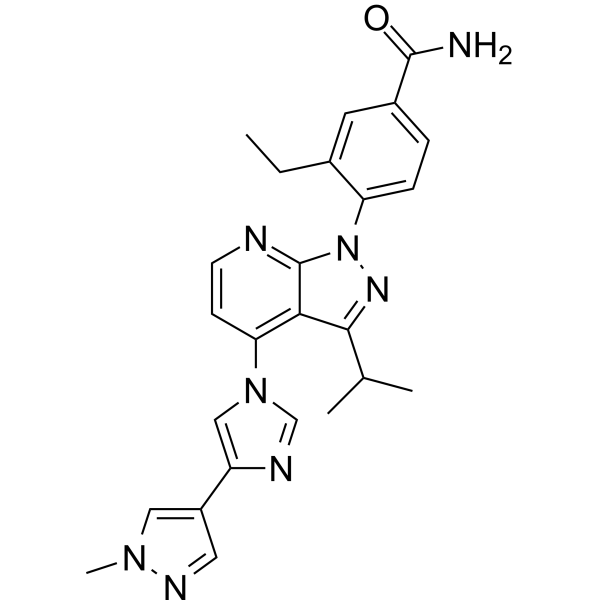
HY-15785
PimitespibHSP90α/HSP90β Inhibitor -
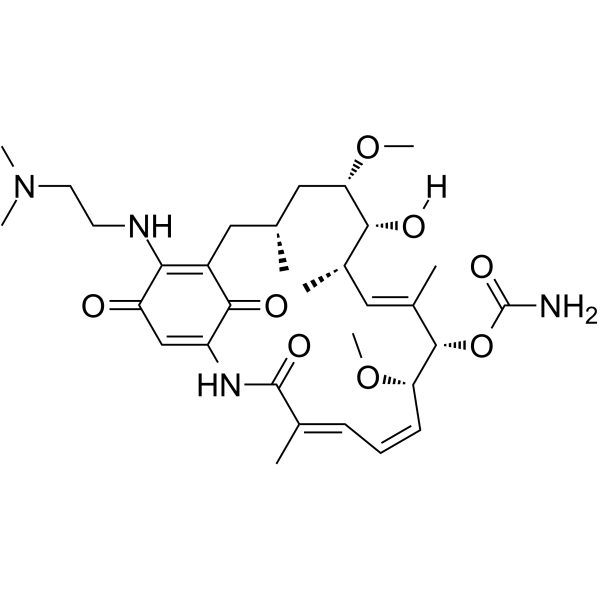
HY-10389
AlvespimycinHsp90 Inhibitor -
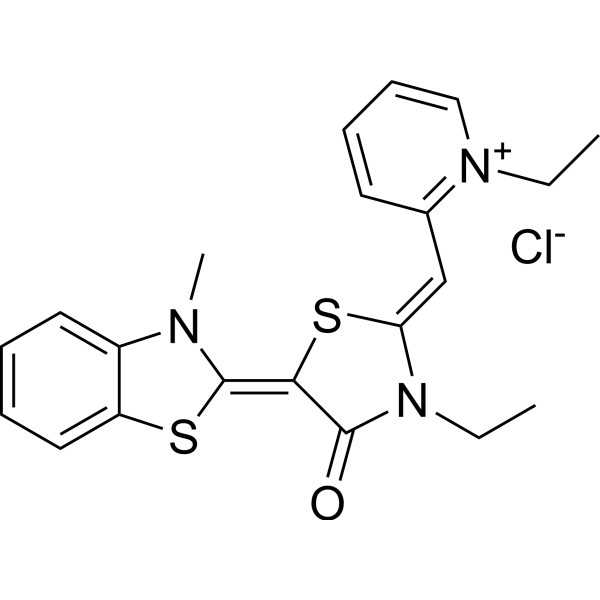
HY-15096
MKT-077Hsp70 Inhibitor -
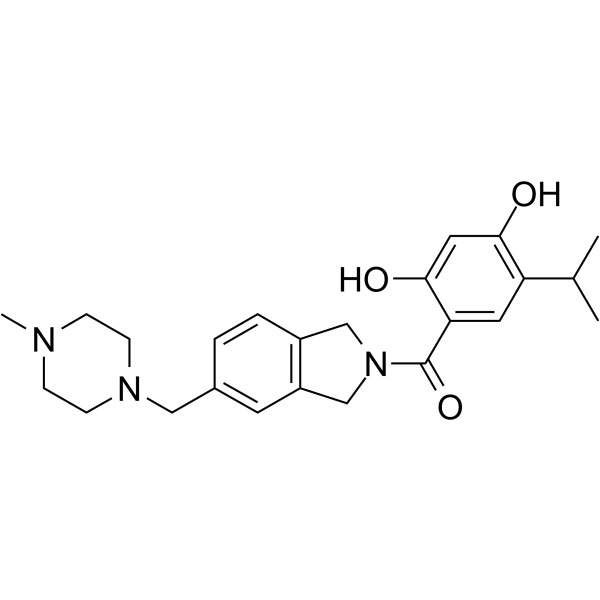
HY-14463
OnalespibHsp90 Inhibitor -
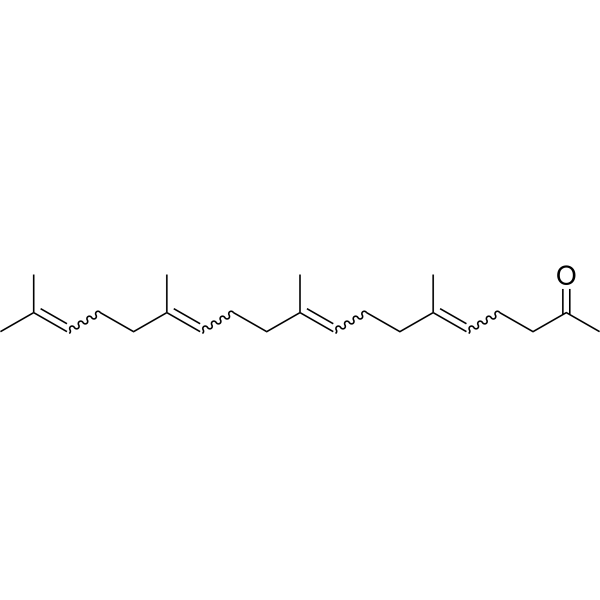
HY-B0779
TeprenoneHSP Inducer -
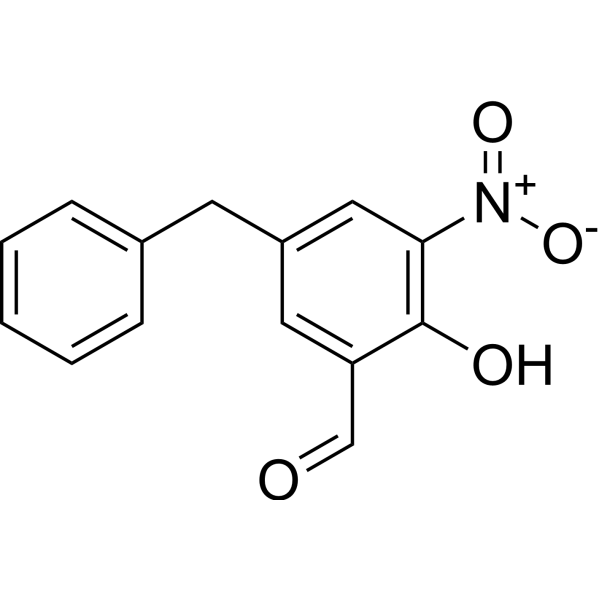
HY-124817
Col003Hsp47 Inhibitor -
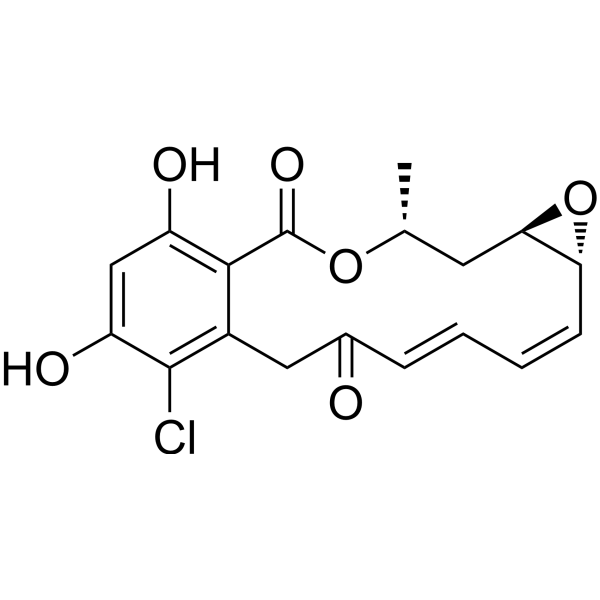
HY-N6769
RadicicolHsp90 Inhibitor -
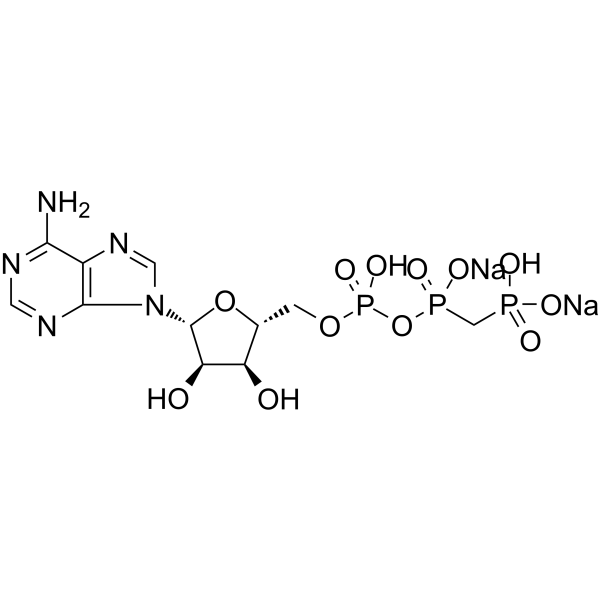
HY-106723A
AMP-PCP disodiumCombined with Hsp90 -
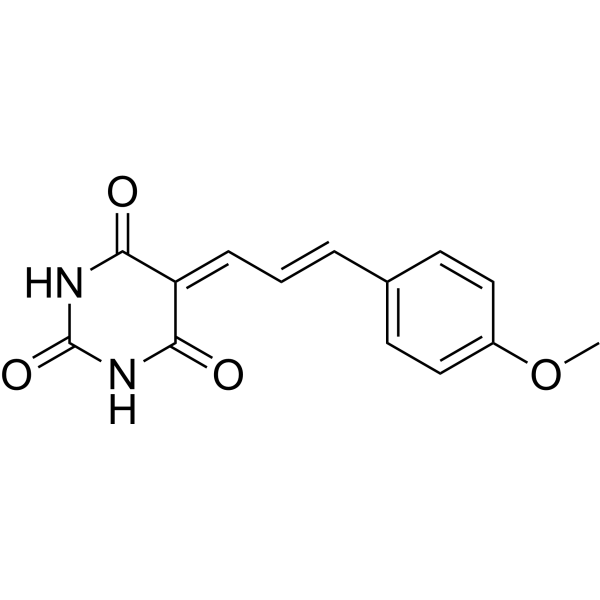
HY-18669
ML346Hsp70 Activator -
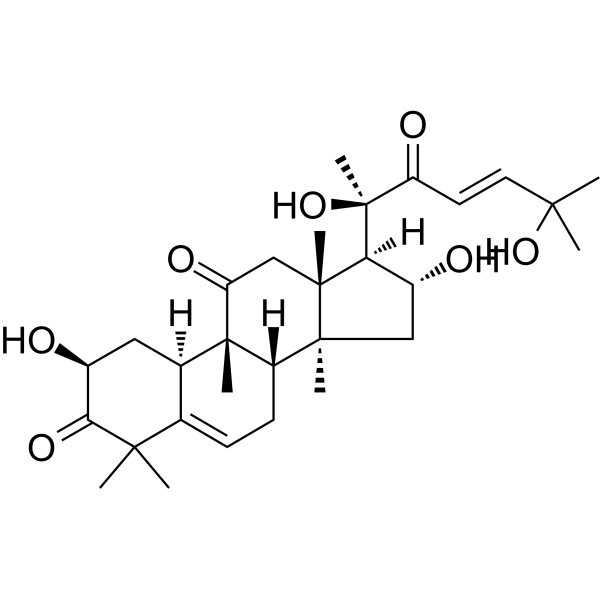
HY-N1986
Cucurbitacin DHSP Inhibitor -
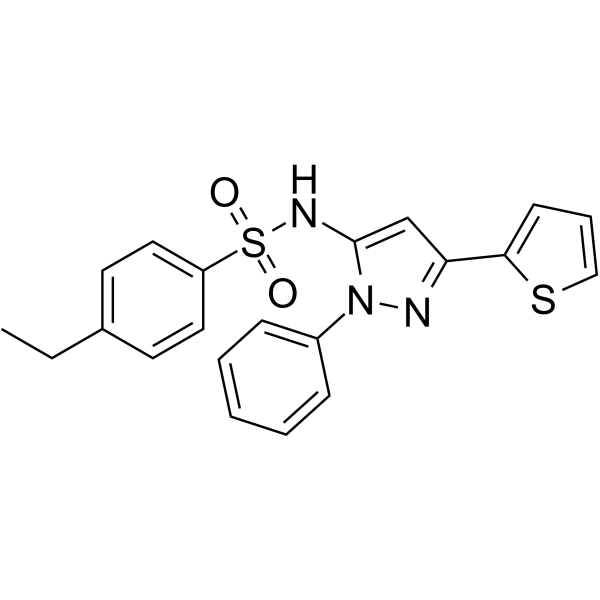
HY-103000
HSF1AHSF1 Activator -
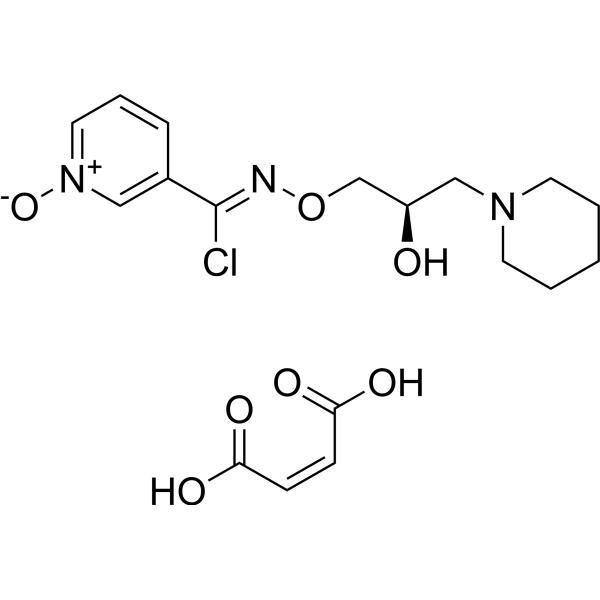
HY-106443A
Arimoclomol maleateHSP Co-Inducer
Publications Citing Use of MedChemExpress (MCE) Apatorsen
More

Biological Activity
Description
In Vitro
Apatorsen (50 nM; 2 days transfection, 48 h erlotinib co-treatment) synergistically enhances erlotinib-induced reduction in cell viability and apoptosis in A549 and HCC827 non-small cell lung cancer cells[1].
Apatorsen (12.5-100 nM (pemetrexed co-treatment); 50 nM (cisplatin, paclitaxel, gemcitabine co-treatment); 2 days treatment, 72 h chemotherapeutic co-incubation) synergistically enhances the cell viability-reducing and pro-apoptotic effects of pemetrexed, cisplatin, paclitaxel, and gemcitabine in A549 non-small cell lung cancer cells[1].
MedChemExpress (MCE) has not independently confirmed the accuracy of these methods. They are for reference only.
-
Cell Line:A549, HCC827 non-small cell lung cancer cells
-
Concentration:50 nM
-
Incubation Time:2 days (transfection); 48 h (erlotinib co-treatment)
-
Result:Reduced Hsp27 protein expression. Caused greater reduction in cell viability than single-agent treatment when combined with erlotinib. Confirmed a synergistic effect with erlotinib at ED50, ED75, and ED90 for both cell lines. Increased levels of cleaved PARP and cleaved caspase-3 when combined with erlotinib. Increased the subG0 apoptotic cell fraction as measured by flow cytometry when combined with erlotinib.
-
Cell Line:A549 non-small cell lung cancer cells
-
Concentration:12.5-100 nM (pemetrexed co-treatment); 50 nM (cisplatin, paclitaxel, gemcitabine co-treatment)
-
Incubation Time:2 days (OGX-427 treatment); 72 h (chemotherapeutic co-incubation)
-
Result:Reduced cell viability more than single-agent treatment when combined with pemetrexed. Confirmed synergistic effects with pemetrexed at ED50, ED75, and ED90. Enhanced the cell viability-reducing effects of cisplatin, paclitaxel, and gemcitabine compared to single-agent treatment. Increased levels of cleaved PARP when combined with pemetrexed, cisplatin, paclitaxel, or gemcitabine.
In Vivo
MedChemExpress (MCE) has not independently confirmed the accuracy of these methods. They are for reference only.
-
Animal Model:athymic nude mice (6-8-week-old male; non-small cell lung cancer xenograft model with A549 cells)[1]
-
Dosage:15 mg/kg
-
Administration:i.p.; once daily for 7 days, then three times per week; 7 weeks
-
Result:Reduced tumor Hsp27 protein levels.
Significantly reduced A549 xenograft growth rates when combined with erlotinib compared to scrambled control plus diluent, scrambled control plus erlotinib, and OGX-427 plus diluent.
Increased average number of TUNEL-positive apoptotic cells when combined with erlotinib compared to control groups.
- RNA extraction experimental
- Detection of Apoptosis
- TUNEL staining for apoptotic DNA fragmentation
- Annexin V plus membrane-impermeant dye apoptosis staining
- Patient-Derived Xenograft (PDX)
- Apoptosis Solutions
- Patient-Derived Orthotopic Xenograft (PDOX)
- Subcutaneous Cell-Line-Derived Xenograft
- Breast Cancer Modeling
- Orthotopic Cell-Line Xenograft


Chemical Information
-
CAS No. 1002331-21-6
-
Appearance Solid
-
Molecular Weight 7157.00
-
Color White to off-white
-
SMILES
[Apatorsen]
-
Synonyms
OGX-427
-
Sequence
DNA, d(P-thio)([2′-O-(2-methoxyethyl)]rG-[2′-O-(2-methoxyethyl)]rG-[2′-O-(2-methoxyethyl)]rG-[2′-O-(2-methoxyethyl)]rA-m5C-G-m5C-G-G-m5C-G-m5C-T-m5C-G-G-[2′-O-(2-methoxyethyl)]m5rU-[2′-O-(2-methoxyethyl)]m5rC-[2′-O-(2-methoxyethyl)]rA-[2′-O-(2-methoxyethyl)]m5rU)
-
Shipping
Room temperature in continental US; may vary elsewhere.
-
Storage
-20°C, sealed storage, away from moisture
* In solvent : -80°C, 6 months; -20°C, 1 month (sealed storage, away from moisture)


Publications (2)
-
Journal Impact Factor
-
Most Recent
-
Biomolecules
Phenoxazine Derivative ST61 Displays an Oxidative-Stress-Mediated Cytotoxic Activity Against Human Cancer Cells. [Abstract]2026 May 6;16(5):689. PMID: 42194038 -
Mol Neurobiol
Identification of Axonal Regeneration-Related Genes and a Potential Analgesic Drug for Neuropathic Pain. [Abstract]2025 Nov 22;63(1):138. PMID: 41273615


Solvent & Solubility
In Vitro:
H2O : ≥ 20 mg/mL (2.79 mM)
* "≥" means soluble, but saturation unknown.
Please refer to the solubility information to select the appropriate solvent. Once prepared, please aliquot and store the solution to prevent product inactivation from repeated freeze-thaw cycles.
Storage method and period of stock solution: -80°C, 6 months; -20°C, 1 month (sealed storage, away from moisture). When stored at -80°C, please use it within 6 months. When stored at -20°C, please use it within 1 month.
* Note: If you choose water as the stock solution, please dilute it to the working solution, then filter and sterilize it with a 0.22 μm filter before use.
Please refer to the solubility information to select the appropriate solvent. Once prepared, please aliquot and store the solution to prevent product inactivation from repeated freeze-thaw cycles.
Storage method and period of stock solution: -80°C, 6 months; -20°C, 1 month (sealed storage, away from moisture). When stored at -80°C, please use it within 6 months. When stored at -20°C, please use it within 1 month.
* Note: If you choose water as the stock solution, please dilute it to the working solution, then filter and sterilize it with a 0.22 μm filter before use.
Concentration (start) × Volume (start) = Concentration (final) × Volume (final)


Purity & Documentation
-
Data Sheet (279 KB)
-
SDS (252 KB)
- English - EN (252 KB)
- Français - FR (252 KB)
- Deutsch - DE (252 KB)
- Norwegian - NO (252 KB)
- Español - ES (252 KB)
- Swedish - SV (252 KB)
- Italian - IT (252 KB)
- Korean - KR (252 KB)
- Portuguese - PT (252 KB)
-
Handling Instructions (2242 KB)
References
[1]. Barbara Lelj-Garolla, et al. Hsp27 inhibition with OGX-427 sensitizes non-small cell lung cancer cells to erlotinib and chemotherapy. Mol Cancer Ther. 2015 May;14(5):1107-16. [Content Brief]
[2]. Chi KN, et al. A phase I dose-escalation study of apatorsen (OGX-427), an antisense inhibitor targeting heat shock protein 27 (Hsp27), in patients with castration-resistant prostate cancer and other advanced cancers. Ann Oncol. 2016;27(6):1116-1122. [Content Brief]


Complete Stock Solution Preparation Table
Please refer to the solubility information to select the appropriate solvent. Once prepared, please aliquot and store the solution to prevent product inactivation from repeated freeze-thaw cycles.
Storage method and period of stock solution: -80°C, 6 months; -20°C, 1 month (sealed storage, away from moisture). When stored at -80°C, please use it within 6 months. When stored at -20°C, please use it within 1 month.
| Optional Solvent | Concentration Solvent Mass | 1 mg | 5 mg | 10 mg | 25 mg |
|---|---|---|---|---|---|
| H2O | 1 mM | 0.1397 mL | 0.6986 mL | 1.3972 mL | 3.4931 mL |
* Note: If you choose water as the stock solution, please dilute it to the working solution, then filter and sterilize it with a 0.22 μm filter before use.


Apatorsen Related Classifications
HY-145722A Related Classifications
 Powered by Bioz