
1. Search Result
Search Result
Results for "

autonomic

" in MedChemExpress (MCE) Product Catalog:

20

Inhibitors & Agonists

2

Biochemical Assay Reagents

4

Peptides

1

Natural
Products

3

Antibodies

1

Oligonucleotides

Cat. No. Product Name Target Research Areas Chemical Structure
  • HY-P2847

    CRFR Metabolic Disease Endocrinology
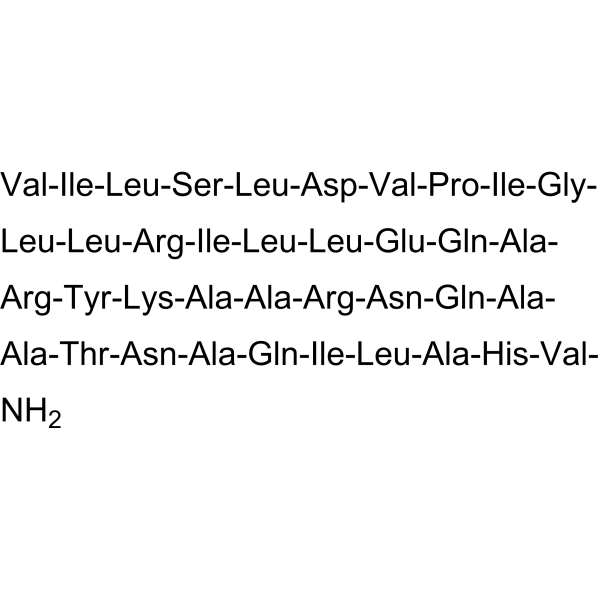
    Urocortin II, mouse is a potent and selective endogenous peptide agonist of type-2 corticotropin-releasing factor (CRF2) receptor with Ki values of 0.66 nM and ﹥100 nM for CRFR2 and CRFR1, respectively. Urocortin II, mouse activates CRF2 receptors in a cAMP/PKA- and Ca 2+/CaMKII-dependent manner.Urocortin II, mouse is expressed in discrete areas of the central nervous system, and activates central neurons involved in the processing of visceral sensory information, and in modulating autonomic outflow .
    Urocortin II, mouse
  • HY-B0283
    Acipimox
    2 Publications Verification

    K-9321

    Carbonic Anhydrase Metabolic Disease
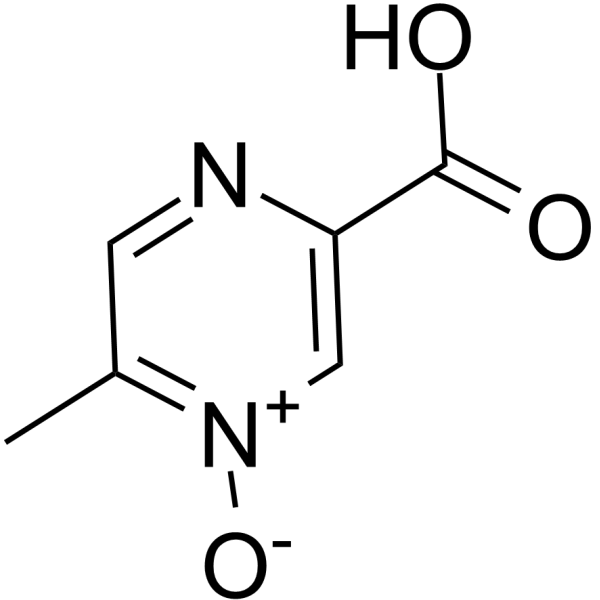
    Acipimox (K-9321), a nicotinic acid analogue, is an antilipolytic compound. Acipimox stimulates leptin releas, inhibits lipolysis and suppresses systemic levels of free fatty acids (FFAs) and improves insulin sensitivity .
    Acipimox
  • HY-P1248

    NPFF

    Neuropeptide FF Receptor Cardiovascular Disease Neurological Disease
    Neuropeptide FF (NPFF), an octapeptide belonging to the RF-amide family of peptides, is a NPFF1 and NPFF2 receptors agonist with Ki values of 2.82 nM and 0.21 nM, respectively. Neuropeptide FF induces abstinence syndrome, exerts antiopioid and analgesic effects, releases via calcium-dependent mechanisms from rat spinal cord, regulates memory, autonomic function, and neuroendocrine function, modulates pain and opioid antinociception, reduces food intake, stimulates water intake, alters cardiovascular parameters, and shows differential activity in hypothalamic paraventricular nucleus neurons. Neuropeptide FF is present in mammalian central nervous system and periphery, with NPFF-immunoreactivity increases in rat cerebrospinal fluid during opiate tolerance, and its NPFF gene and NPFF-R2 gene are up-regulated in rat spinal cord and dorsal root ganglia during peripheral inflammation. Neuropeptide FF can be used for the research of opioid tolerance, morphine-induced analgesia, abstinence syndrome, pain, hypertension, nociception, inflammatory pain, and neuropathic pain .
    Neuropeptide FF
  • HY-16738A
    Eleclazine hydrochloride
    2 Publications Verification

    GS 6615 hydrochloride

    Sodium Channel Potassium Channel Cardiovascular Disease
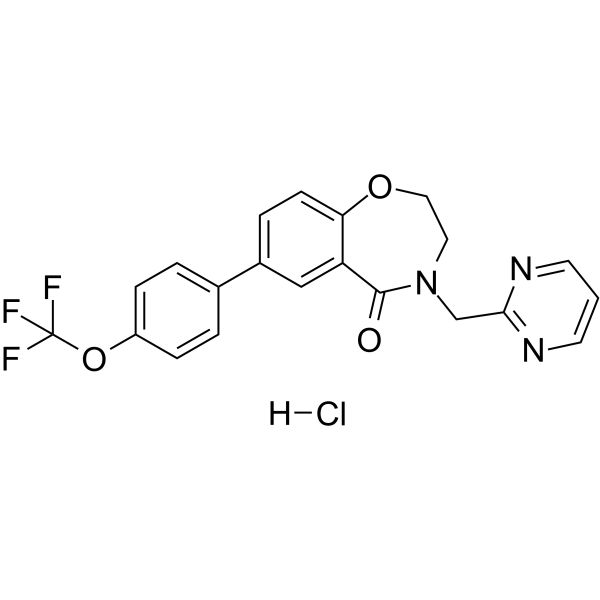
    Eleclazine (GS 6615) hydrochloride is a selective cardiac late sodium current inhibitor and a weak inhibitor of potassium current with IC50 value of <1 μM and approximately 14.2 μM, respectively. Eleclazine hydrochloride shows concurrent protection against autonomically induced atrial premature beats, repolarization alternans and heterogeneity, and atrial fibrillation in porcine model. Eleclazine hydrochloride can be used to research cardiac arrhythmias .
    Eleclazine hydrochloride
  • HY-W127668

    Acyltransferase Neurological Disease
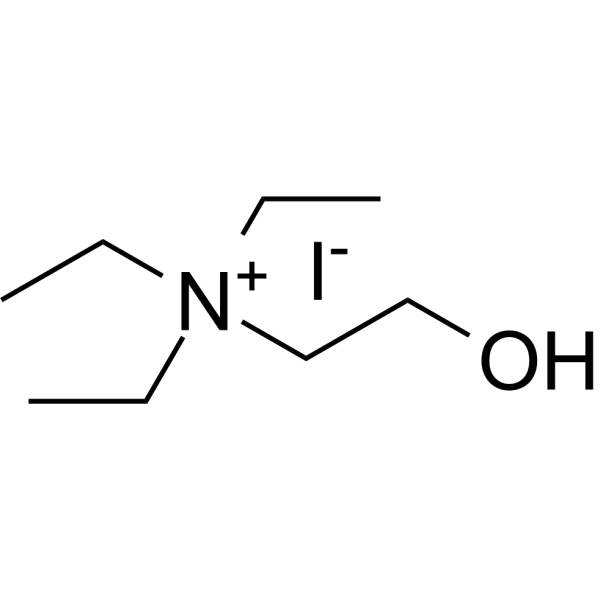
    Triethylcholine iodide is a choline acetyltransferase inhibitor and a regulator of the acetylcholine synthesis pathway. Triethylcholine iodide inhibits acetylcholine synthesis in brain tissues and blocks neuromuscular and autonomic ganglionic transmission. Triethylcholine iodide exerts weak curare-like effects at extremely high concentrations. Triethylcholine iodide elevates the pentylenetetrazol seizure threshold, alters electroencephalogram patterns in Felis catus, but does not affect the maximal electroshock seizure threshold in Oryctolagus cuniculus. Triethylcholine iodide can be used in seizure-related research .
    Triethylcholine iodide
  • HY-P1317A

    Opioid Receptor Neurological Disease
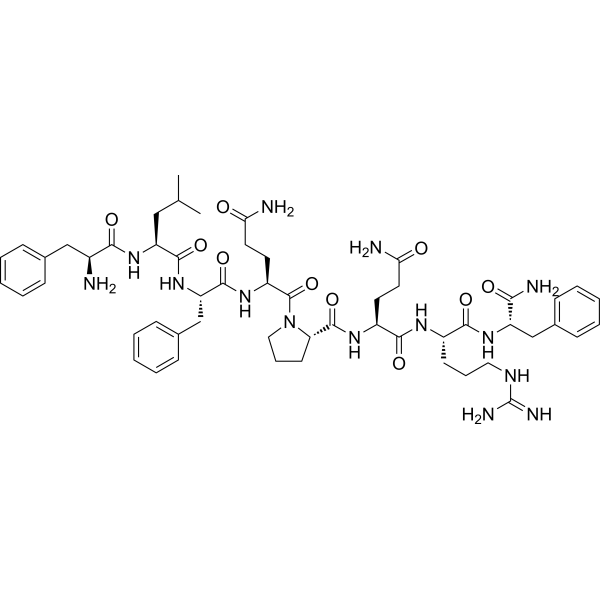
    Nociceptin (1-13), amide TFA is a potent ORL1 receptor (opioid receptor-like 1 receptor, OP4) agonist with a pEC50 of 7.9 for mouse vas deferens and a Ki of 0.75 nM for binding to rat forebrain membranes .
    Nociceptin (1-13), amide TFA
  • HY-N2401

    Others Neurological Disease Inflammation/Immunology
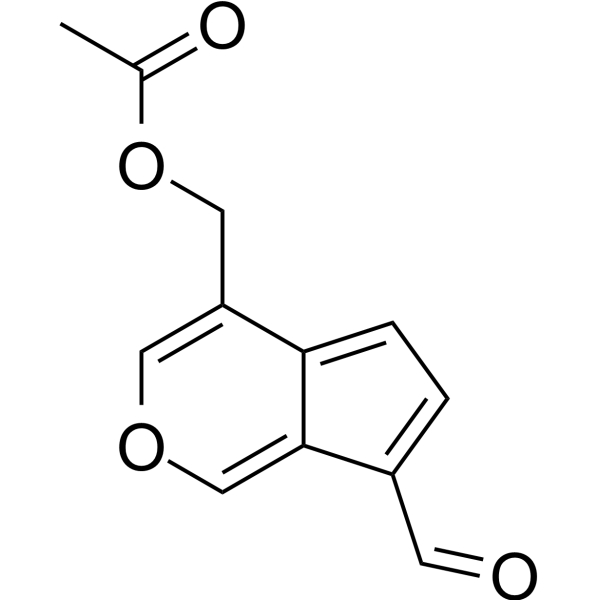
    Baldrinal is derived from the extracts of valerian rhizomes and roots, inhibits autonomic activity, and has anti-inflammatory effects .
    Baldrinal
  • HY-111025

    Others Neurological Disease
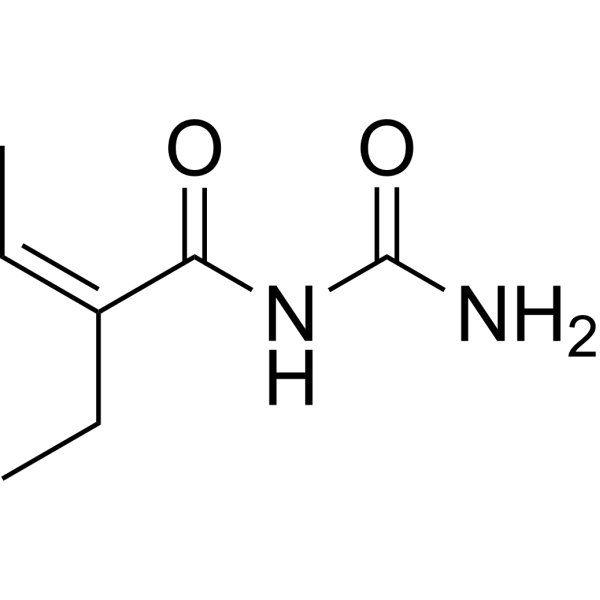
    Ectylurea, a N-acylurea, can be used in studies of tension and anxiety symptoms, has no effect on the autonomic nervous system, and has no convulsive, analgesic or antispasmodic activity in animals .
    Ectylurea
  • HY-16738
    Eleclazine
    2 Publications Verification

    GS-6615

    Sodium Channel Potassium Channel Cardiovascular Disease
    Eleclazine (GS 6615) is a selective cardiac late sodium current inhibitor and a weak inhibitor of potassium current with IC50 of <1 μM and approximately 14.2 μM, respectively. Eleclazine shows concurrent protection against autonomically induced atrial premature beats, repolarization alternans and heterogeneity, and atrial fibrillation in porcine model. Eleclazine can be used to research cardiac arrhythmias .
    Eleclazine
  • HY-106780

    DQ 2511

    Biochemical Assay Reagents Neurological Disease
    Ecabapide (DQ 2511) is an orally active gastroprokinetic agent. Ecabapide can ameliorate gastric emptying of stroke-prone spontaneously hypertensive rat model. Ecabapide can be studied in research on autonomic nervous system disorder .
    Ecabapide
  • HY-B0283A

    K-9321 sodium

    Carbonic Anhydrase Metabolic Disease
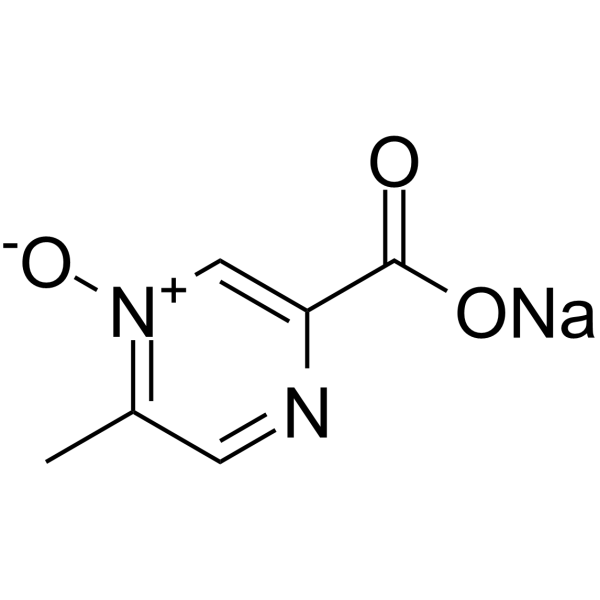
    Acipimox (K-9321) sodium, a nicotinic acid analogue, is an antilipolytic compound. Acipimox sodium stimulates leptin releas, inhibits lipolysis and suppresses systemic levels of free fatty acids (FFAs) and improves insulin sensitivity .
    Acipimox sodium
  • HY-W015160

    Drug Derivative Neurological Disease
    1-(3-Methylbenzyl)piperazine is a derivative of Benzylpiperazine that affects the central and the autonomic nervous systems, the blood pressure, and smooth muscle .
    1-(3-Methylbenzyl)piperazine
  • HY-113444

    PGD3

    Prostaglandin Receptor Cardiovascular Disease
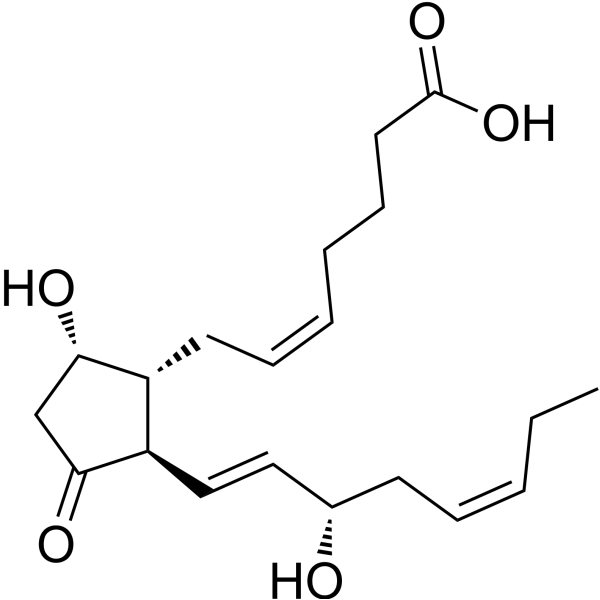
    Prostaglandin D3 (PGD3) is a prostaglandin that acts as an inhibitor of platelet aggregation and a modulator of autonomic neurotransmission in humans .
    Prostaglandin D3
  • HY-B0639C

    WR2721 sodium

    MDM-2/p53 HIF/HIF Prolyl-Hydroxylase Neurological Disease
    Amifostine sodium (WR2721 sodium) is a phosphorus sulfate with radioprotective activity. Amifostine sodium can cause splenic vasodilation and may block autonomic ganglia. Amifostine sodium is clinically used to prevent cisplatin-induced ototoxicity .
    Amifostine sodium
  • HY-174778

    mRNA Neurological Disease
    Human ASCL1 mRNA encodes the human achaete-scute family bHLH transcription factor 1 (ASCL1) protein, a member of the basic helix-loop-helix (BHLH) family. ASCL1 plays a role in the neuronal commitment and differentiation, and in the generation of olfactory and autonomic neurons.
    Human ASCL1 mRNA
  • HY-168571

    Orexin Receptor (OX Receptor) Neurological Disease
    BTF shows a selective binding affinity for OX1R with the Ki values of 2.33 nM and 62.8 nM of OX1R and OX2R, respectively .
    BTF
  • HY-B1661

    Hexone chloride

    Biochemical Assay Reagents Cardiovascular Disease Others
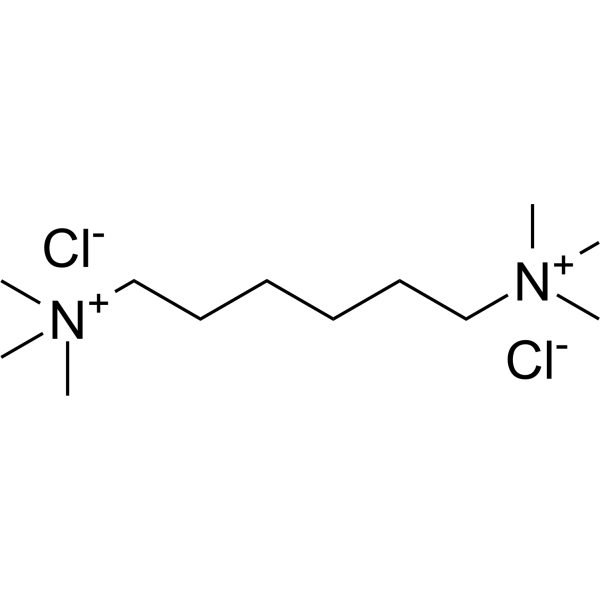
    Hexamethonium Chloride Dihydrate is a synthetic organic compound commonly used as a ganglion blocking agent, which means it blocks the transmission of nerve impulses between ganglion cells in the autonomic nervous system. Hexamethonium Chloride Dihydrate is used in various medical applications such as lowering blood pressure or inhibiting certain types of neuropathic pain. It works by inhibiting the release of acetylcholine, a neurotransmitter that plays a key role in regulating many bodily functions.
    Hexamethonium chloride
  • HY-P1317

    Opioid Receptor Neurological Disease
    Nociceptin (1-13),amide is a potent ORL1 receptor (opioid receptor-like 1 receptor,OP4) agonist with a pEC50 of 7.9 for mouse vas deferens and a Ki of 0.75 nM for binding to rat forebrain membranes .
    Nociceptin (1-13), amide
  • HY-B0283R

    K-9321 (Standard)

    Carbonic Anhydrase Reference Standards Metabolic Disease
    Acipimox (Standard) is the analytical standard of Acipimox. This product is intended for research and analytical applications. Acipimox (K-9321), a nicotinic acid analogue, is an antilipolytic compound. Acipimox stimulates leptin releas, inhibits lipolysis and suppresses systemic levels of free fatty acids (FFAs) and improves insulin sensitivity .
    Acipimox (Standard)
  • HY-16738AR

    GS 6615 hydrochloride (Standard)

    Sodium Channel Potassium Channel Reference Standards Cardiovascular Disease
    Eleclazine (hydrochloride) (Standard) is the analytical standard of Eleclazine (hydrochloride). This product is intended for research and analytical applications. Eleclazine (GS 6615) hydrochloride is a selective cardiac late sodium current inhibitor and a weak inhibitor of potassium current with IC50 value of <1 μM and approximately 14.2 μM, respectively. Eleclazine hydrochloride shows concurrent protection against autonomically induced atrial premature beats, repolarization alternans and heterogeneity, and atrial fibrillation in porcine model. Eleclazine hydrochloride can be used to research cardiac arrhythmias .
    Eleclazine hydrochloride (Standard)

Inquiry Online

Your information is safe with us. * Required Fields.

Salutation


Country or Region *

Applicant Name *


Organization Name *

Department *


Email Address *


Product Name *

Cat. No.


Requested quantity *

Phone Number *


Remarks

Inquiry Online

Inquiry Information

Product Name:
Cat. No.:
Quantity:
MCE Japan Authorized Agent:

