12 Results for "

biochemical marker

" in MedChemExpress (MCE) Product Catalog:
Products (12)

12 Results for "biochemical marker" in MCE Product Catalog:

2
2 Cited Publications
Cat. No.: HY-113303
CAS No.: 5122-36-1
Purity:  99.95%
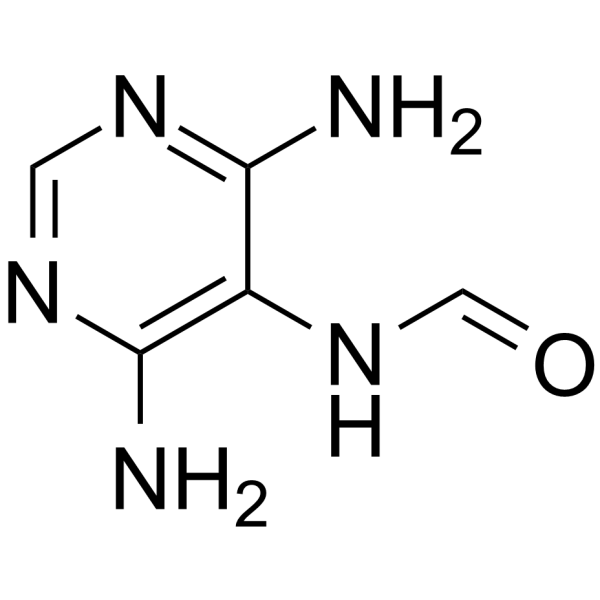
FAPy-adenine is an oxidized DNA base. Fapy-adenine shows an increased trend levels in the Alzheimer's disease brain. Oxidized nucleosides are biochemical markers for tumors, aging, and neurodegenerative diseases .
loading...
    loading...
1
1 Cited Publications
Cat. No.: HY-113284
CAS No.: 4542-23-8
Purity:  99.43%
Synonyms: N6-Succinyl adenosine
Target:  

Endogenous Metabolite

Research Areas:  

Metabolic Disease

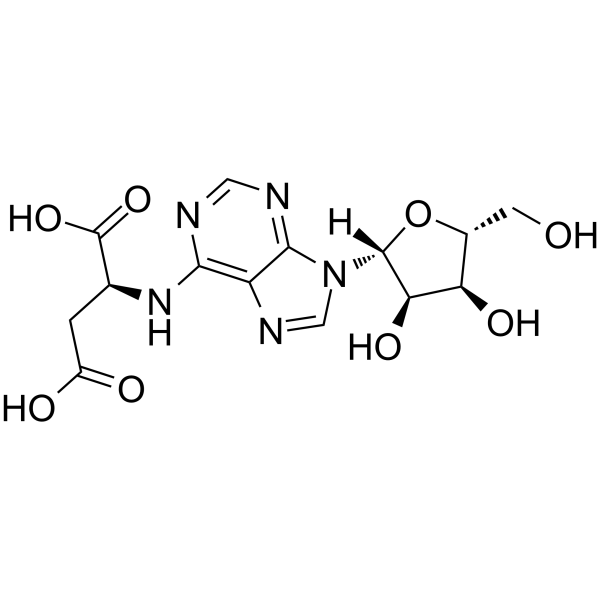
Succinyladenosine, the metabolic product of dephosphorylation of intracellular adenylosuccinic acid (S-AMP) by cytosolic 5-nucleotidase, is a biochemical marker of adenylosuccinase (ASL) deficiency .
loading...
    loading...
Cat. No.: HY-113131
CAS No.: 57-04-5
Purity:  99.90%
Synonyms: DHAP
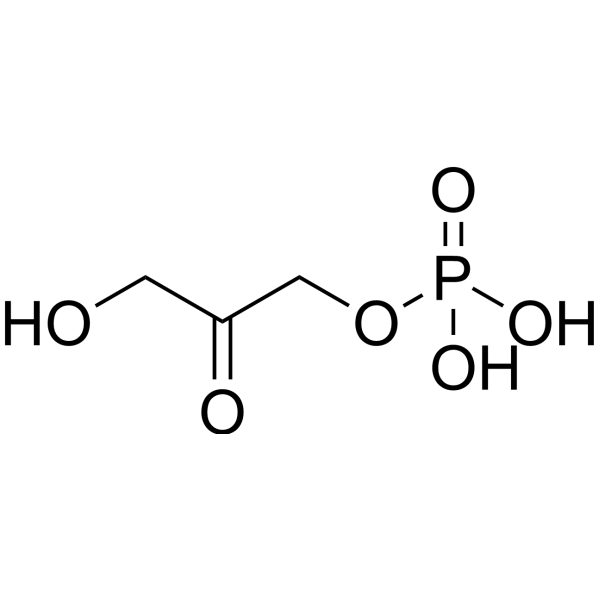
Dihydroxyacetone phosphate (DHPA), a derivative of Dihydroxyacetone (DHA), is an important intermediate that participates in key pathways including glycolysis, lipid biosynthesis, and the plant Calvin cycle. Dihydroxyacetone phosphate can be used as a substrate and metabolic marker in biochemical research .
loading...
    loading...
Cat. No.: HY-113131A
Purity:  99.90%
Synonyms: DHAP hemimagnesium hydrate
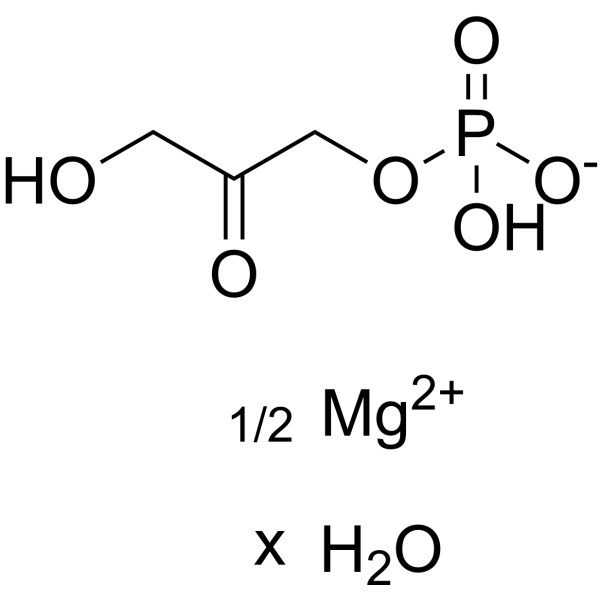
Dihydroxyacetone phosphate (DHPA) hemimagnesium hydrate, a derivative of Dihydroxyacetone (DHA), is an important intermediate that participates in key pathways including glycolysis, lipid biosynthesis, and the plant Calvin cycle. Dihydroxyacetone phosphate hemimagnesium hydrate can be used as a substrate and metabolic marker in biochemical research .
loading...
    loading...
Cat. No.: HY-113131B
CAS No.: 102783-56-2
Synonyms: DHAP dilithium
Dihydroxyacetone phosphate (DHPA) dilithium, a derivative of Dihydroxyacetone (DHA), is an important intermediate that participates in key pathways including glycolysis, lipid biosynthesis, and the plant Calvin cycle. Dihydroxyacetone phosphate dilithium can be used as a substrate and metabolic marker in biochemical research .
loading...
    loading...
Cat. No.: HY-21200
CAS No.: 375-92-8
Synonyms: 1-Perfluoroheptanesulfonic acid; Perfluoroheptanesulphonic acid; PFHpS
Target:  

PPAR

Perfluoroheptanesulfonic acid (1-Perfluoroheptanesulfonic acid; Perfluoroheptanesulphonic acid; PFHpS) is a per- and polyfluoroalkyl substance (PFAS) that penetrates the skin and induces systemic toxicity and immunotoxicity. Perfluoroheptanesulfonic acid reduces the expression of PPARδ in liver tissue; it induces hepatocyte hypertrophy and necrosis in liver tissue and alters serum biochemical markers associated with liver injury. Perfluoroheptanesulfonic acid upregulates genes related to fatty acid metabolism, cell necrosis and inflammation, reduces the relative weights of the spleen and thymus, suppresses humoral immune responses, and alters the composition of immune cell subsets in the spleen and skin. The plasma concentration of Perfluoroheptanesulfonic acid correlates with food intake. Perfluoroheptanesulfonic acid and perfluorooctanesulfonic acid exhibit synchronous pulse events in influent samples from wastewater treatment plants. Perfluoroheptanesulfonic acid can be used in studies related to liver injury and immune system damage .
loading...
    loading...
Cat. No.: HY-W343900
CAS No.: 6912-67-0
Synonyms: DL-Hydroxyproline
Hydroxyproline (DL-Hydroxyproline) is a non-essential amino acid and one of the main components of collagenous tissues. Hydroxyproline acts as a substrate for mitochondrial hydroxyproline oxidase to generate ROS. Hydroxyproline promotes the synthesis of glutathione, DNA, heme and proteins via conversion to Glycine (HY-Y0966). Hydroxyproline promotes the activation of caspase-9 and apoptosis in cancer cells treated with Doxorubicin . Hydroxyproline serves as a biochemical marker. Hydroxyproline is used in research related to various diseases including colon cancer, diabetes and arthritis .
loading...
    loading...
Cat. No.: HY-109083A
CAS No.: 2253764-93-9
Synonyms: GS-9674 tromethamine
Target:  

Autophagy FXR

Research Areas:  

Metabolic Disease

Cilofexor tromethamine (GS-9674 tromethamine) is a nonsteroidal farnesene oxide receptor agonist with activity in improving markers of cholestasis and liver injury. Cilofexor tromethamine was shown to be well tolerated in patients without cirrhosis and resulted in significant improvements in liver biochemical parameters and cholestatic markers. Cilofexor tromethamine offers a potential inhibitory option for the management of primary sclerosing cholangitis .
loading...
    loading...
Cat. No.: HY-113303R
CAS No.: 5122-36-1
FAPy-adenine (Standard) is the analytical standard of FAPy-adenine. This product is intended for research and analytical applications. FAPy-adenine is an oxidized DNA base. Fapy-adenine shows an increased trend levels in the Alzheimer's disease brain. Oxidized nucleosides are biochemical markers for tumors, aging, and neurodegenerative diseases .
loading...
    loading...
Cat. No.: HY-W752476
CAS No.: 1923744-27-7
Synonyms: N6-Succinyl adenosine-13C4
Succinyladenosine- 13C4 (N6-Succinyl adenosine- 13C4) is the 13C-labeled Succinyladenosine (HY-113284). Succinyladenosine, the metabolic product of dephosphorylation of intracellular adenylosuccinic acid (S-AMP) by cytosolic 5-nucleotidase, is a biochemical marker of adenylosuccinase (ASL) deficiency .
loading...
    loading...
Cat. No.: HY-170561
CAS No.: 3105110-19-5
AChE/BuChE-IN-6 (Compound 11f) is an inhibitor of AChE and BuChE, with IC50 values of 1.24 and 1.85 μg/mL, respectively. AChE/BuChE-IN-6 also exhibits strong DPPH free radical scavenging activity (IC50 = 3.15 μg/mL). In vivo toxicity studies indicate that AChE/BuChE-IN-6 is safe, showing no significant differences in blood and biochemical markers compared to the control group after long-term administration, and no abnormalities were observed in liver and kidney tissues. AChE/BuChE-IN-6 holds promise for research into Alzheimer's disease .
loading...
    loading...
Cat. No.: HY-N17654
CAS No.: 1220194-95-5
Neroplomacrol is a sesquiterpenoid and heterocyclic farnesol derivative that occurs in Dalbergia tonkinensis. Neroplomacrol serves as a chemotaxonomic and biochemical marker for Fabaceae .
loading...
    loading...
  • 1

