

1. Search Result
Search Result
Results for "

calcium-calmodulin

" in MedChemExpress (MCE) Product Catalog:

13

Inhibitors & Agonists

8

Peptides

2

Natural
Products

17

Recombinant Proteins

14

Antibodies

Cat. No. Product Name Target Research Areas Chemical Structure
  • HY-P10638

    CaMK Cardiovascular Disease Neurological Disease
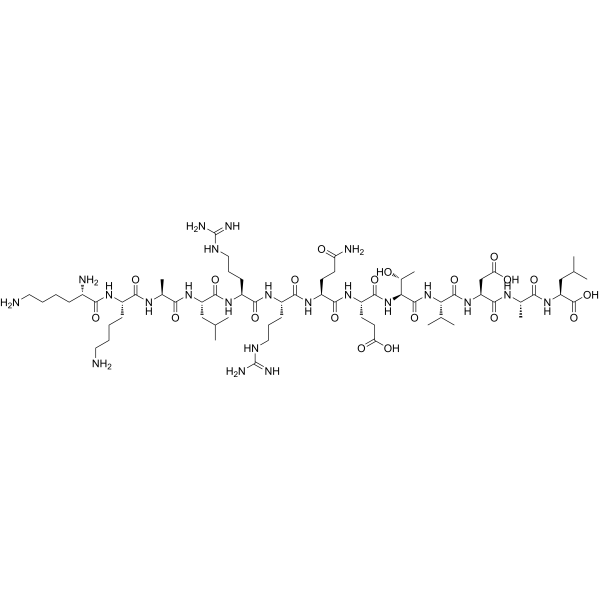
    TAT-CN21 is a potent CaMKII inhibitor with an IC50 of 77.2 nM. TAT-CN21 inhibits both calcium/calmodulin-dependent and autonomously activated CaMKII, blocks glutamate-induced translocation of CaMK IIα, and reverses the enhanced phosphorylation of CaMKII at Thr286 following excitotoxic injury. TAT-CN21 shows application potential in studies related to ischemic stroke by reducing neuronal excitotoxicity and exacerbating pre-existing long-term neuronal death prior to injury. TAT-CN21 improves definitive behaviors in rats with residual nerve injury without altering indicators such as mechanical/thermal hyperalgesia or spatial memory. TAT-CN21 can also be used in studies related to neuropathic pain .
    TAT-CN21
  • HY-P0225

    Autocamtide II

    CaMK Autophagy Neurological Disease
    Autocamtide 2 is a highly selective peptide substrate of calcium/calmodulin-dependent protein kinase II (CaMKII). It can be used in the CaMKII activity assay.
    Autocamtide 2
  • HY-168905

    Calmodulin Cancer
    SGC-CAMKK2-1, a chemical probe, is the selective, inhibitor for calcium/calmodulin-dependent protein kinase kinase 2 (CAMKK2) with an IC50 of 30 nM. SGC-CAMKK2-1 inhibits AMPK phosphorylation in cell C4-2 with an IC50 of 1.6 μM .
    SGC-CAMKK2-1
  • HY-N1989

    Na+/K+ ATPase CaMK Apoptosis Cholinesterase (ChE) NO Synthase NF-κB Neurological Disease Cancer
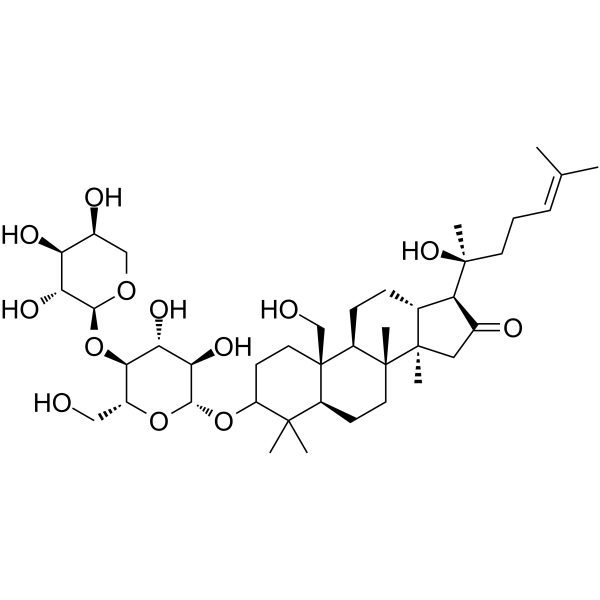
    Bacoside A is an orally active, blood-brain barrier-permeable triterpenoid saponin that modulates the activities of ATPases, AChE, CaMK2A and iNOS. Derived from Bacopa monniera. Bacoside A exerts significant antioxidant, anti-inflammatory and anti-apoptotic effects by maintaining ion balance, scavenging reactive oxygen species, stabilizing cell membranes, and regulating the expression of NF-κB and apoptosis-related proteins. Bacoside A counteracts morphine-induced reductions in Na +/K +-ATPase, Ca 2+-ATPase and Mg 2+-ATPase activities, increases mitochondrial membrane potential, and decreases intracellular reactive oxygen species levels. Bacoside A specifically binds to calcium/calmodulin-dependent protein kinase IIA to trigger endoplasmic reticulum calcium release. Bacoside A exhibits non-apoptotic cytotoxicity against glioblastoma cells while protecting normal nerve cells from stress-induced damage. Bacoside A is applicable to the research of Parkinson's disease and glioblastoma multiforme .
    Bacoside A
  • HY-P2471

    Calmodulin Neurological Disease
    Neurogranin (48-76), mouse is a peptide corresponding to residues 48-76 of Neurogranin. Neurogranin, a calmodulin-binding protein, is exclusively expressed in the post-synapse, and mediates NMDAR driven synaptic plasticity by regulating the calcium-calmodulin (Ca 2+-CaM) pathway .
    Neurogranin (48-76), mouse
  • HY-P10316

    calmodulin-Dependent Protein Kinase I (299-320) Binding Domain

    CaMK Others
    CaMKI (299-320) refers to a peptide consisting of residues 299-320 of Calcium/calmodulin-dependent protein kinase I (CaMKI). CaMKI (299-320), as a protein kinase, has a high affinity interaction with Ca 2+-CAM (Kd≤1 nM≤1 nM), which can phosphorylate specific substrate proteins, thereby regulating their activity. CaMKI (299-320) contains the CAM-binding domain and the self-inhibition domain, and CaMKI (299-320) can be used to study cell physiological processes, including cell proliferation, differentiation, and apoptosis .
    CaMKI(299-320)
  • HY-179016

    Ferroptosis Apoptosis Mitochondrial Metabolism Calcium Channel Cancer
    Ferroptosis/apoptosis inducer-3 (Compound 34) is a Ferroptosis and Apoptosis inducer. Ferroptosis/apoptosis inducer-3 induces both Ferroptosis and Apoptosis by causing G2/M phase cell cycle arrest, disrupting mitochondrial membrane potentials, promoting lipid peroxidation, and increasing the levels of Ca 2+ and Fe 2+ through the activation of calcium/calmodulin signaling. Ferraplasm/apoptosis inducer-3 shows anticancer effects against cervical cancer, adenocarcinoma, breast cancer, colon cancer, and colorectal carcinoma .
    Ferroptosis/apoptosis inducer-3
  • HY-P1874

    Calmodulin Neurological Disease
    Calmodulin-Dependent Protein Kinase II (281-309) is a peptide of calcium/calmodulin-dependent protein kinase II (CaM-kinase II) .
    Calmodulin-Dependent Protein Kinase II (281-309)
  • HY-P1716

    PKC Neurological Disease
    Neuropeptide DF2 is a DRNFLRFamide neuropeptide orignally isolated from crayfish. which enhances transmitter release and stimulates the amplitude of excitatory post-synaptic potentials (EPSP) through the calcium/calmodulin-dependent protein kinase .
    Neuropeptide DF2
  • HY-P10499

    CaMK Others
    [Ala286]-Calmodulin-Dependent Protein Kinase II (281-302) is a modified fragment of calcium/calmodulin-dependent protein kinase II that contains the active domain of CaMKII and has an alanine substitution at position 286. [Ala286]-Calmodulin-Dependent Protein Kinase II (281-302) can be used to develop more potent CaMKII inhibitors .
    [Ala286]-Calmodulin-Dependent Protein Kinase II (281-302)
  • HY-P10367

    MAPKAPK2 (MK2) Checkpoint Kinase (Chk) AMPK Others
    Ziptide is a substrate for MAPK activated protein kinase 2 (MAPKAPK2, Km = 5 μM), MAPKAPK3 (Km = 30 μM), PARK (Km = 40 μM), checkpoint kinase 1 (Chk1, Km = 5 μM), AMP-activated protein kinase (AMPK, Km = 75 μM), and calcium/calmodulin-dependent protein kinase II (CamKII, Km = 300 μM) .
    Ziptide
  • HY-W720917

    CaMK PKC Amyloid-β Apoptosis Neurological Disease
    Junicedric acid is a diterpenoid compound that can be isolated from the resin of the Araucaria araucana tree. Junicedric acid exerts neuroprotective activity by increasing intracellular calcium levels in hippocampal neurons, activating PKC and calcium/calmodulin-dependent protein kinase (CaMKII), and preventing Amyloid-β oligomer-induced synaptic protein loss, apoptosis, and long-term potentiation (LTP) inhibition. Junicedric acid can be used in the study of the pathological mechanisms of neurodegenerative diseases such as Alzheimer's disease .
    Junicedric acid
  • HY-129980A

    Neurological Disease Cancer
    NPC-15437 is a selective PKC inhibitor with an IC50 of 19 µM. NPC-15437 competitively inhibits phorbol ester- (Ki of 5 µM) and phosphatidylserine-induced (Ki of 12 µM) PKC activity. NPC-15437 does not inhibits cAMP-dependent or calcium/calmodulin-dependent protein kinases. NPC-15437 augments TRAIL-induced cell death in non-small cell lung cancer and medulloblastoma cells. NPC-15437 can be used for the research of non-small cell lung cancer, medulloblastoma, and neurological disease .
    NPC-15437

Inquiry Online

Your information is safe with us. * Required Fields.

Salutation


Country or Region *

Applicant Name *


Organization Name *

Department *


Email Address *


Product Name *

Cat. No.


Requested quantity *

Phone Number *


Remarks

Inquiry Online

Inquiry Information

Product Name:
Cat. No.:
Quantity:
MCE Japan Authorized Agent:

