
1. Search Result
Search Result
Pathways Recommended: Stem Cell/Wnt Cell Cycle/DNA Damage
Results for "

cell junction proteins

" in MedChemExpress (MCE) Product Catalog:

10

Inhibitors & Agonists

4

Biochemical Assay Reagents

1

Peptides

1

Inhibitory Antibodies

3

Natural
Products

2

Oligonucleotides

Cat. No. Product Name Target Research Areas Chemical Structure
  • HY-148033

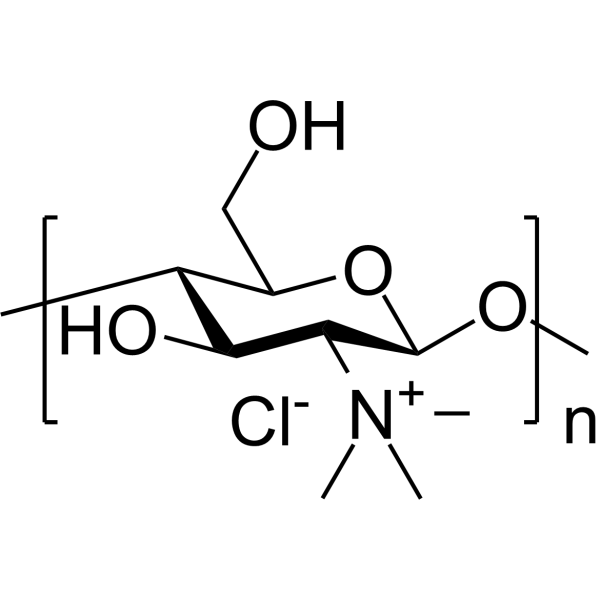
    N,N,N-Trimethylchitosan

    Drug Derivative Others
    Trimethyl chitosan (N,N,N-Trimethylchitosan) is a multifunctional polymer and a derivative of Chitosan (HY-B2144A). Trimethyl chitosan targets the absorption enhancing proteins of tight junctions of intestinal and mucosal epithelial cells, induces tight junction protein rearrangement, and increases intercellular permeability. Trimethyl chitosan can stimulate the activity of promoting transmembrane transport of hydrophilic drugs (such as peptides and proteins) and can be used for drug delivery and synthesis of nanoparticles .
    Trimethyl chitosan
  • HY-W583749
    6:2 Cl-PFAES
    2 Publications Verification

    Biochemical Assay Reagents Endocrinology
    6:2 Cl-PFAES is an orally effective alternative to Perfluorooctane sulfonate. 6:2 Cl-PFAES significantly inhibits the growth of zebrafish and induces reproductive toxicity. 6:2 Cl-PFAES reduces the relative weights of epididymis and testis in male BALB/c mice. 6:2 Cl-PFAES can be used in the chrome plating industry .
    6:2 Cl-PFAES
  • HY-159069

    Toll-like Receptor (TLR) TNF Receptor Connexin Infection Cancer
    Zymosan (ZM), 95% is a yeast cell wall-derived carbohydrate-rich preparation and immunomodulator. Zymosan (ZM), 95% binds to and activates TLR-2, TLR-4, and Dectin-1 receptor to trigger downstream signaling pathways. Zymosan (ZM), 95% upregulates TLR-2, TLR-4, and TNF-α mRNA expression, increases serum TNF-α levels, and stimulates splenocyte number and viability in mice. Zymosan (ZM), 95% attenuates melanoma growth progression, modulates macrophage marker gene expression, and mediates phagocytosis, ROS generation, and cytokine production. Zymosan (ZM), 95% reduces Connexin 43 protein and mRNA levels, inhibits gap junctional intercellular communication, and induces proinflammatory factor production in human corneal cells. Zymosan (ZM), 95% induces peritoneal inflammation in mice, functions as a drug carrier, and supports fibroblast cell attachment in hydrogel formulations. Zymosan (ZM), 95% can be used for the research of melanoma, tumors, fungal keratitis, ocular surface inflammatory disorders, and peritoneal inflammation .
    Zymosan (ZM), 95%
  • HY-P99413

    ASP1650

    HCV Cancer
    IMAB027 (ASP1650) is a specific anti-CLDN6 mAb, while CLDN6 (Claudin 6) is a tight junction membrane protein, aberrantly expressed in various human cancer types, ovarian cancers particularly. IMAB 027 shows anti-tumor activity, and induces apoptosis in CLDN6 + ovarian and testicular cancer cell lines .
    IMAB027
  • HY-P3443
    Peanut agglutinin
    1 Publications Verification

    PNA

    Biochemical Assay Reagents Cancer
    Peanut agglutinin (PNA) is a carbohydrate-recognition protein that binds competitively and irreversibly to cell-surface β-D-Gal (1-3)-GalNAc, and this binding can be inhibited by D-galactose and asialofetuin. Peanut agglutinin recognizes exposed glycoepitopes and reflects the glycosylation status of cells. Peanut agglutinin can label glycoconjugates at neuromuscular junctions to safely visualize synaptic structures. Peanut agglutinin can be used to synthesize dyes to distinguish between normal and tumor tissues. Peanut agglutinin provides support for research on leukemia, Burkitt's tumors, and cutaneous squamous lesions .
    Peanut agglutinin
  • HY-W013636C
    2-Ketoglutaric acid potassium
    5+ Cited Publications

    Alpha-Ketoglutaric acid potassium

    Tyrosinase Endogenous Metabolite TNF Receptor Neurological Disease Metabolic Disease
    2-Ketoglutaric acid (Alpha-Ketoglutaric acid) (potassium) is an intermediate in the production of ATP or GTP in the Krebs cycle. 2-Ketoglutaric acid potassium is a reversible and orally active inhibitor of tyrosinase with an IC50 value of 15 mM. 2-Ketoglutaric acid potassium also acts as the major carbon skeleton for nitrogen-assimilatory reactions. 2-Ketoglutaric acid potassium significantly suppresses abnormal intestinal permeability, delocalization of tight junction proteins from the intestinal cells, expression of TNFα in vitro and in vivo. 2-Ketoglutaric acid potassium directly binds to TAK1, and inhibits the TRAF6-TAK1 interaction. 2-Ketoglutaric acid potassium also alleviates inflammatory bowel disease (IBD) symptoms and gut microbiota dysbiosis, evident by the improvements in the intestine length .
    2-Ketoglutaric acid potassium
  • HY-N4031

    Anaplastic lymphoma kinase (ALK) METTL3 Inflammation/Immunology
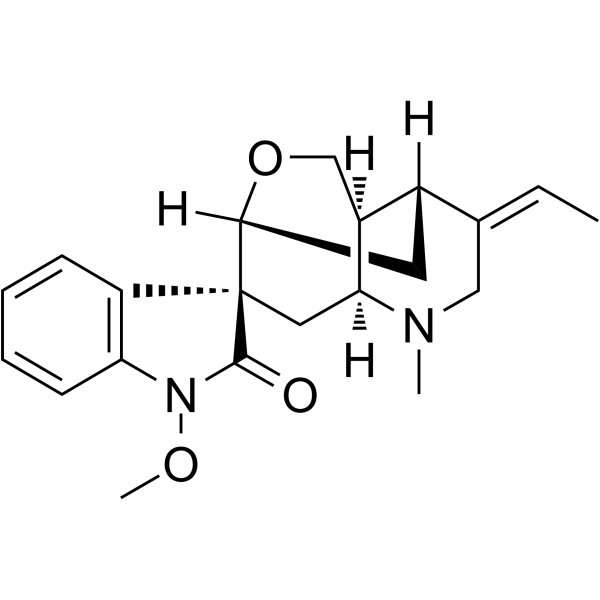
    Humantenine is a highly toxic indole alkaloid from Gelsemium elegans (Gardn. & Champ.) Benth. that binds to RNA m6A modification regulatory proteins (ALKBH5, METTL). Humantenine stably binds via hydrogen bonding and hydrophobic interactions and disrupts the m6A methylation level of target genes, thereby impairing the expression of intestinal epithelial cell tight junction and cytoskeleton-related genes, causing intestinal barrier dysfunction and significant intestinal cytotoxicity. The intraperitoneal injection LD50 values of Humantenine are <1 mg/kg in mice, 1.2 mg/kg in male rats and 1.5 mg/kg in female rats, respectively. Species differences exist in the metabolism of Humantenine in human, porcine, goat and rat liver microsomes, and demethylation, dehydrogenation and oxidation occur in liver microsomes .
    Humantenine
  • HY-P10886

    Gap Junction Protein Claudin Inflammation/Immunology
    Zifogaptide is a gap junction protein channel regulator. Zifogaptide mimics the PDZ-binding motif at the C-terminal of Claudin C and competitively interferes with the interaction between Claudin–TJP1 (ZO-1) scaffold. Zifogaptide can promote epithelial cell migration, reduce scar formation, and accelerate wound healing. Zifogaptide can be used for radiation dermatitis, skin injuries, etc .
    Zifogaptide
  • HY-174735

    mRNA Cancer
    Human CDH5 mRNA encodes the human cadherin 5 (CDH5) protein, a classical cadherin of the cadherin superfamily. CDH5 functioning as a classical cadherin by imparting to cells the ability to adhere in a homophilic manner. It plays a role in endothelial adherens junction assembly and maintenance.
    Human CDH5 mRNA
  • HY-N17783A

    Endogenous Metabolite Inflammation/Immunology
    Sanleng acid is an unsaturated fatty acid compound that can be isolated from the hexane extract of Magnolia sieboldii (MsHE). MsHE can inhibit the expression of inflammatory mediators (such as COX-2) and pro-inflammatory cytokines (such as TNF-α, IL-1β), and increase the expression of tight junction proteins (claudin-4, claudin-5) to protect epithelial cell barrier function, thus exerting anti-inflammatory activity. Related compounds may be used in research related to reflux esophagitis (RE).
    Sanleng acid

Inquiry Online

Your information is safe with us. * Required Fields.

Salutation


Country or Region *

Applicant Name *


Organization Name *

Department *


Email Address *


Product Name *

Cat. No.


Requested quantity *

Phone Number *


Remarks

Inquiry Online

Inquiry Information

Product Name:
Cat. No.:
Quantity:
MCE Japan Authorized Agent:

