

1. Search Result
Search Result
Pathways Recommended: Membrane Transporter/Ion Channel
Results for "

cellular membranes

" in MedChemExpress (MCE) Product Catalog:

168

Inhibitors & Agonists

5

Screening Libraries

13

Fluorescent Dyes

6

Biochemical Assay Reagents

14

Peptides

3

Inhibitory Antibodies

17

Natural
Products

7

Isotope-Labeled Compounds

56

Oligonucleotides

Cat. No. Product Name Target Research Areas Chemical Structure
  • HY-101897
    Fura-2 AM
    5+ Cited Publications

    Fura-2 Acetoxymethyl ester

    Fluorescent Dye Others
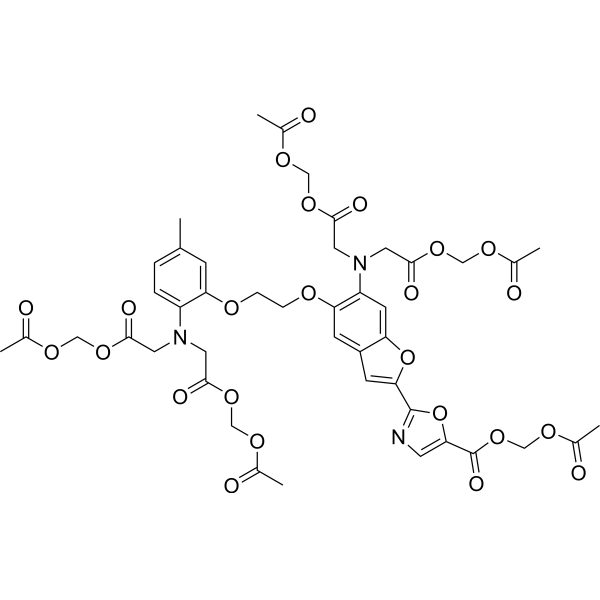
    Fura-2 AM is a membrane permeable, intracellular, UV light-excitable and ratiometric fluorescent Ca 2+ (calcium ion) indicator. Fura-2 AM crosses cell membranes and is converted to Fura-2 (HY-D0110A) via cellular esterases. Fura-2 AM can be used to detect calcium in cells.
    Fura-2 AM
  • HY-W749411

    Biochemical Assay Reagents Endogenous Metabolite Others
    Malondialdehyde tetrabutylammonium is a quaternary ammonium salt formed by the decomposition of polyunsaturated fatty acids in plant cell membranes. Malondialdehyde tetrabutylammonium can be used for the quantification of malondialdehyde, a biomarker of lipid peroxidation .
    Malondialdehyde tetrabutylammonium
  • HY-N8015
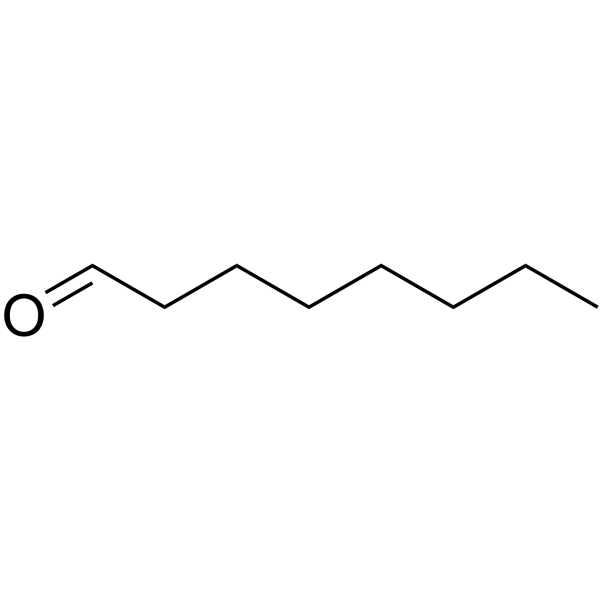
    Octanal
    1 Publications Verification

    Environmental Pollutants Endogenous Metabolite Fungal Bacterial Infection Cancer
    Octanal is a fragrant aldehyde with antioxidant and antibacterial activity. Its antifungal effect against G. citri-aurantii may be related to the disruption of cell membrane integrity and the leakage of cellular components. Additionally, Octanal exhibits cytotoxicity towards HeLa cells, with an IC50 value of 3.5 μg/mL .
    Octanal
  • HY-P99853

    CR6261

    Influenza Virus Infection
    Diridavumab is a monoclonal anti-HA stalk antibody. Diridavumab stabilizes the prefusion HA structure and prevents pH-dependent fusion of cellular and viral membranes in endosomes. Diridavumab can be used in research of H2 influenza virus .
    Diridavumab
  • HY-D1694

    Fluorescent Dye Others
    LysoTracker Yellow HCK 123 is a potent yellow membrane-permeable fluorescent probe. LysoTracker Yellow HCK 123 is a weakly basic amine that selectively accumulates in cellular compartments with low luminal pH .
    LysoTracker Yellow HCK 123
  • HY-139533

    Biochemical Assay Reagents Others
    Phosphatidylinositols, soya, sodium salts is a mixture of phosphatidylinositols. Phosphoinositides are lipids involved in the vesicular transport of proteins and lipids between the different compartments of eukaryotic cells. They act by recruiting and/or activating effector proteins and thus are involved in regulating various cellular functions, such as vesicular budding, membrane fusion and cytoskeleton dynamics .
    Phosphatidylinositols, soya, sodium salts
  • HY-156004

    Bacterial Others
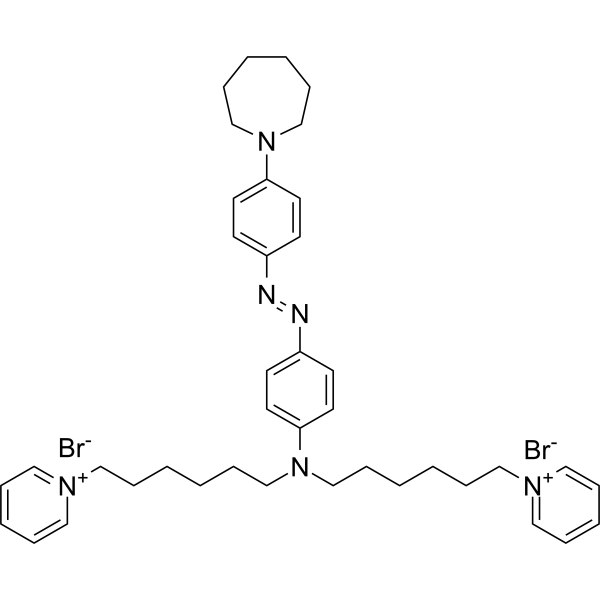
    Ziapin 2 is a membrane potential modulator and an intracellular membrane photoactuator. Ziapin 2 binds to the bacterial plasma membrane, and upon embedding into the lipid bilayer, undergoes trans-cis isomerization under 470 nm light irradiation, which triggers membrane potential hyperpolarization and induces the opening of ion channels on bacterial cell membranes. Through interactions with lipids, Ziapin 2 increases the overall flexibility of the lipid bilayer. Ziapin 2 can form photosensitive transmembrane dimers to trigger cellular signal transduction. Ziapin 2 is applicable to the research and regulation of bacterial electrical signal transduction and the regulation of membrane physical properties .
    Ziapin 2
  • HY-126220

    Fluorescent Dye Others
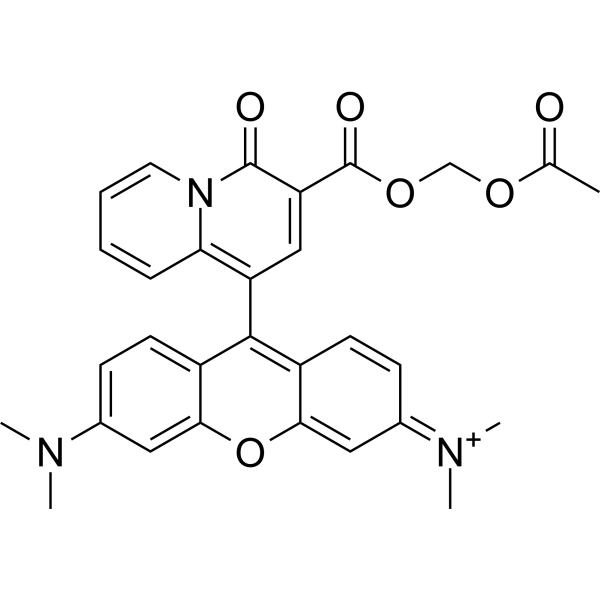
    KMG-301AM is the acetoxy methyl esterified form of KMG-301. KMG-301AM successfully accumulates in mitochondria and then it is hydrolyzed to KMG-301. KMG-301 is an Mg 2+-selective fluorescent probe functional in mitochondria in intact cells. Since the mitochondrial membrane is impermeable to KMG-301, it is not released upon depolarization of the mitochondrial membrane potential. KMG-301 can indicate changes in mitochondrial Mg2+ concentration and shows Mg 2+ transport across the mitochondrial membrane in the early phases of a cellular model .
    KMG-301AM
  • HY-115435

    DMPS-Na; Dimyristoyl phosphatidylserine sodium

    Liposome Cancer
    1,2-Dimyristoyl-sn-glycero-3-phospho-L-serine sodium is an anionic phospholipid with myristic acid tails (14:0) and contains a carboxylic acid (COOH) and amine (NH2) in their head group. It has been used in the preparation of liposome.
    1,2-Dimyristoyl-sn-glycero-3-phospho-L-serine sodium
  • HY-W440719

    Liposome Cancer
    Cholesterol-PEG2000-MAL is a PEG derivative and can be used to prepare liposome or nanoparticle due to its ability to self-assemble in water. The maleimide moiety is reactive with thiol molecule to form a covalent thioether bond.
    Cholesterol-PEG2000-MAL
  • HY-117133

    SF0166

    Integrin Metabolic Disease
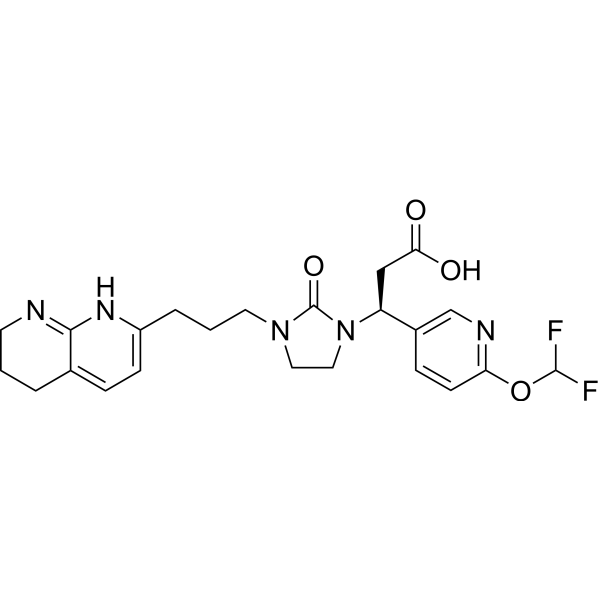
    Nesvategrast (SF0166) is a potent and selective αvβ3 antagonist with IC50 values of 0.6 nM, 8 nM, and 13 nM for αvβ3, αvβ6, and αvβ8, respectively. Nesvategrast inhibits cellular adhesion to vitronectin across human, rat, rabbit, and dog cell lines with IC50 values of 7.6 pM to 76 nM. Nesvategrast decreases neovascularization in the oxygen-induced retinopathy mouse model .
    Nesvategrast
  • HY-148129

    TRPC6-IN-3

    TRP Channel Cardiovascular Disease
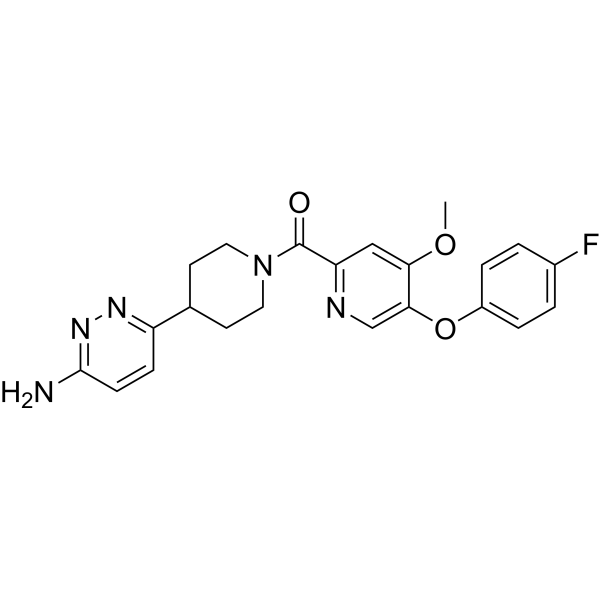
    Apecotrep (TRPC6-IN-3) (compound 17) is a potent, orally active transient receptor potential C6 ion channel (TRPC6) inhibitor. Apecotrep modulates not only intracellular calcium concentration, but also membrane potential by modulating the flux of cations including calcium and sodium ions. Apecotrep can be used in research of respiratory system .
    Apecotrep
  • HY-126220A

    Fluorescent Dye Others
    KMG-301AM TFA is the acetoxy methyl esterified form of KMG-301. KMG-301AM TFA successfully accumulates in mitochondria and then it is hydrolyzed to KMG-301. KMG-301 is an Mg 2+-selective fluorescent probe functional in mitochondria in intact cells. Since the mitochondrial membrane is impermeable to KMG-301, it is not released upon depolarization of the mitochondrial membrane potential. KMG-301 can indicate changes in mitochondrial Mg2+ concentration and shows Mg 2+ transport across the mitochondrial membrane in the early phases of a cellular model .
    KMG-301AM TFA
  • HY-P6825

    LY4181530; PSMA-62

    PSMA Cancer
    PNT2001 (LY4181530) is a potent prostate specific membrane antigen (PSMA) ligand with an IC50 of 3.1 nM. PNT2001 can improve cellular internalization. 177Lu- and 225Ac-labeled PNT2001 can be used in prostate cancer research .
    PNT2001
  • HY-W440690

    Liposome Cancer
    Cholesterol-PEG2000-amine is a pegylated lipids which can be used for preparation of liposome or nanoparticle. The lipophilic moiety can encapsulate hydrophobic drugs whereas the hydrophilic PEG chain helps the overal water solubility of the micelles.
    Cholesterol-PEG2000-amine
  • HY-W591461
    DSPE-PEG-COOH, MW 2000
    1 Publications Verification

    Liposome Cancer
    DSPE-PEG-COOH, MW 2000 is a phospholipid polyPEG which can be used to prepare liposomes or nanoparticles. The terminal carboxylic acid can react with primary amine groups to form a stable amide bond.
    DSPE-PEG-COOH, MW 2000
  • HY-W440711

    Liposome Cancer
    Cholesterol-PEG-Biotin (MW 2000) is a pegylated lipids which has strong binding to avidin or streptavidin.
    Cholesterol-PEG-Biotin (MW 2000)
  • HY-141615

    PDME; 16:0 Dimethyl PE

    Liposome Cancer
    1,2-Dipalmitoyl-sn-glycero-3-phospho-N,N-dimethylethanolamine has been used in the generation of liposomes and monolayers for use in the study of membrane permeability and monolayer viscosity, respectively.
    1,2-Dipalmitoyl-sn-glycero-3-phospho-N,N-dimethylethanolamine
  • HY-W440706

    Liposome Cancer
    Cholesterol-PEG2000-alcohol is a pegylated lipids which can be used for preparation of liposome or nanoparticle. The lipophilic moiety can encapsulate hydrophobic drugs whereas the hydrophilic PEG chain helps the overal water solubility of the micelles. The amine can react with an activated NHS ester to form a stable amide bond.
    Cholesterol-PEG2000-alcohol
  • HY-W800793

    1,2-dipalmitoyl-sn-glycero-3-phosphoethanolamine-N-(succinyl)

    Liposome Cancer
    16:0 Succinyl PE is a carboxylic acid-functionalized lipid with a two carbon linker to a phosphoethanolamine bound to two palmitic acid tails.
    16:0 Succinyl PE
  • HY-W800805

    Liposome Cancer
    DOPE-Mal is a synthetic analog of naturally-occurring PE containing 18:1 fatty acids at the sn-1 and sn-2 positions with a terminal maliemide group. The maleimide group will react with a thiol group to form a covalent bond. The hydrophilic PEG spacer increases solubility in aqueous media.
    DOPE-Mal
  • HY-W800797

    1,2-dipalmitoyl-sn-glycero-3-phosphoethanolamine-N-(biotinyl)

    Liposome Cancer
    16:0 Biotinyl PE is a biotin-functionalized lipid attached to a phosphoethanolamine linked to two palmitic acid groups.
    16:0 Biotinyl PE
  • HY-W440981

    1-Stearoyl-2-palmitoyl-sn-glycero-3-phosphocholine

    Liposome Cancer
    SPPC is a phospholipid with different length of fatty acid. The sn-1 position contains a stearic acid (18:0) while the sn-2 position is occupied by a palmitic acid (16:0).
    SPPC
  • HY-W339838

    14:0 Lyso PG

    Liposome Cancer
    1-Myristoyl-2-hydroxy-sn-glycero-3-PG sodium is a lysophospholipid containing myristic acid (14:0) at the sn-1 position. It has been used in the generation of micelles, liposomes, and other types of artificial membranes, including lipid-based drug carrier systems.
    1-Myristoyl-2-hydroxy-sn-glycero-3-PG sodium
  • HY-W440995

    Liposome Cancer
    DOPE-PEG2000-Mal is a phospholipid polyPEG which can be used to prepare liposomes or nanoparticles. It is also reactive with thiol at pH 6.5 tp 7.5 to form a stable thioether bond.
    DOPE-PEG2000-Mal
  • HY-W440958

    PSPC; PC(16:0-18:0)

    Liposome Cancer
    1-Palmitoyl-2-stearoyl-sn-glycero-3-phosphocholine is an assymetrical phospholipid containing saturated palmitic and stearic acid at the sn-1 and sn-2 position respectively. The phosphate group is attached to choline.
    1-Palmitoyl-2-stearoyl-sn-glycero-3-phosphocholine
  • HY-D1672

    Fluorescent Dye Neurological Disease
    TMR Biocytin is a polar tracer used in the research of cell-cell and cell-liposome fusions, as well as membrane permeability and cellular uptake during pinocytosis. TMR Biocytin can be detected using streptavidin, and is an effective neuronal tracer in live tissue (Ex=544 nm, Em=571 nm) .
    TMR Biocytin
  • HY-157922

    α-D-Glucopyranosyl-α-D-glucopyranoside monododecanoate

    Biochemical Assay Reagents Others
    Trehalose C12 (α-D-Glucopyranosyl-α-D-glucopyranoside monododecanoate) is a nonreducing disaccharide with amphiphilic property, which is used as emulsifier, surfactant, encapsulating materials, and in the biochemical researches of cellular processes and membrane interactions .
    Trehalose C12
  • HY-W343736

    1,3-DPPE; 1,3-Dipalmitoyl-sn-glycero-2-PE

    Liposome Cancer
    1,3-Dipalmitoyl-glycero-2-phosphoethanolamine is a phospholipid containing the saturated long-chain (16:0) stearic acid inserted at the sn-1 and sn-3 positions and PE at the sn-2 site. It can be used in the generation of micelles, liposomes, and other types of artificial membranes.
    1,3-Dipalmitoyl-glycero-2-phosphoethanolamine
  • HY-14764

    SPI 8811

    Chloride Channel Mitochondrial Metabolism Inflammation/Immunology
    Cobiprostone (SPI 8811) is a type-2 chloride channel activator. Cobiprostone protects against Indomethacin (HY-14397)-induced depolarization of mitochondrial membrane potential and reverses the loss of mitochondrial membrane potential. Cobiprostone protects against NSAID-induced cellular damage .
    Cobiprostone
  • HY-145257

    GABA Receptor Neurological Disease
    GABAA receptor agent 5 (compound 018) is a potent γ-GABAAR antagonist with an Ki of 0.020 µM. GABAA receptor agent 5 shows γ-GABAAR antagonist activity with low cellular membrane permeability .
    GABAA receptor agent 5
  • HY-W591449

    Liposome Cancer
    DOPE-PEG2000-Azide is a liposome to simulate biological phospholipid membrane. Liposomes are the main component of vesicles with concentric phospholipid bilayer membranes, which can be used to construct drug delivery systems for anti-cancer and anti-infection fields. Highly polar water-soluble payloads can be trapped in the internal aqueous space of liposomes, while lipophilic payloads can partition into and become part of the lipid bilayer. Especially for delivering antisense oligonucleotides, it can overcome problems such as inefficient cellular uptake and rapid loss in the body .
    DOPE-PEG2000-Azide
  • HY-149182

    Fluorescent Dye Others
    Lucifer yellow iodoacetamide dipotassium is a thiol-reactive fluorescent tracer.
    Lucifer yellow iodoacetamide dipotassium
  • HY-N12158

    Apoptosis Cancer
    Pipermethystine is an alkaloid that can be isolated from the Kava plant. Pipermethystine decreases HepG2 cell cellular ATP levels, mitochondrial membrane potential, and induces apoptosis .
    Pipermethystine
  • HY-136513

    MC-4379

    Environmental Pollutants Reactive Oxygen Species (ROS) Protoporphyrinogen IX oxidase Herbicide Others
    Bifenox (MC-4379) is a nitrophenyl ether herbicide. Bifenox disrupts cellular membrane, inhibits photosynthesis and inhibits the protoporphyrinogen oxidase. Bifenox increases the ROS production in the microalgae Chlamydomonas reinhardtii .
    Bifenox
  • HY-W750694

    Drug Derivative Others
    β-Cryptoxanthin palmitate is a carotenoid, and is abundant in peels. Carotenoids are important biological active, and may regulate cellular differentiation, growth control, photooxidative protection, cell membrane stability, photosynthesis, vision process and nutrition .
    β-Cryptoxanthin palmitate
  • HY-132178

    Endogenous Metabolite Metabolic Disease Cancer
    Cytochrome P450 is a family of monooxygenase enzymes that catalyzes the conversion of fatty acids to terminal alkenes using hydrogen peroxide as a cosubstrate. Cytochrome P450 as membrane-bound hemoproteins, plays important roles in the detoxification of drugs, cellular metabolism, and homeostasis .
    Cytochrome P450
  • HY-W440957

    PC(16:0/14:0); 1-palmitoyl-2-myristoyl-sn-glycero-3-phosphocholine

    Liposome Cancer
    PMPC is a phosphatidylcholine with asymmetrical fatty acid. Palmitic acid occupies sn-1 position while myristic acid is placed at the sn-2 position.
    PMPC
  • HY-W590555

    Liposome Cancer
    Thiol-PEG2000-DMG is a phospholipid polyPEG which can be used to prepare liposomes or nanoparticles. The terminal thiol group reacts with maleimide, OPSS, vinylsulfone and transition metal surfaces including gold, silver, etc.
    Thiol-PEG2000-DMG
  • HY-W800796

    1,2-dioleoyl-sn-glycero-3-phosphoethanolamine-N-(biotinyl)

    Liposome Cancer
    18:1 Biotinyl PE is a biotin-functionalized lipid attached to a phosphoethanolamine linked to two oleic acid groups.
    18:1 Biotinyl PE
  • HY-W800787

    Liposome Cancer
    18:1 PE MCC is a maleimide-functionalized thiol-reactive lipid with a phosphoethanolamine linked to two oleic acid tails and a maleimide group.
    18:1 PE MCC
  • HY-W590536

    1-Palmitoyl-2-Lauroyl-sn-glycero-3-Phosphatidylcholine; 1-Palmitoyl-2-Lauroyl-sn-glycero-3-Phosphocholine

    Liposome Cancer
    1,2-PLPC is a phospholipid containing palmitoyl (16:0) and lauryl (12:0) acyl substituents at the sn-1 and sn-2 positions, respectively. It can be used in the generation of micelles, liposomes, and other types of artificial membranes.
    1,2-PLPC
  • HY-W591332

    Liposome Cancer
    mPEG2000-DMPE is a PEGylated 1,2-Dimyristoyl-sn-glycero-3-phosphoethanolamine (14:0 PE) compound with a methyl group at the other end of the PEG chain. The PEG polymer exhibits amphiphatic behavior and helps to form stable micelles in an aqueous solution. It can be used to prepare nanoparticles or liposomes for targeted drug delivery applications.
    mPEG2000-DMPE
  • HY-W800794

    DPPE-NG; 1,2-dipalmitoyl-sn-glycero-3-phosphoethanolamine-N-(glutaryl)

    Liposome Cancer
    16:0 Glutaryl PE is is a carboxylic acid-functionalized lipid with a three carbon linker to a phosphoethanolamine bound to two palmitic acid tails.
    16:0 Glutaryl PE
  • HY-W440985

    1,2-dilauroyl-sn-glycero-3-phospho-L-serine

    Liposome Cancer
    DLPS is an anionic phospholipid with lauric acid tails (12:0) and contains a carboxylic acid (COOH) and amine (NH2) in their head group. It has been used in the preparation of lipid-mixing vesicles, liposome, or artificial membrane. Due to the medium size of fatty acid chain, DLPS is used to form thinner membranes/walls.
    DLPS
  • HY-W800733

    1,2-Dilauroyl-sn-glycero-3-phosphorylglycerol; PG(12:0/12:0)

    Liposome Cancer
    DLPG is a phospholipid containing lauric acid (12 chain fatty acid) inserted at the sn-1 and sn-2 positions. Its phosphate group is attached to glycerol. It is used in the generation of micelles, liposomes, and other artificial membranes.
    DLPG
  • HY-176204

    TAM Receptor Cancer
    Axl-IN-19 (Compound 68) is a selective AXL (a membrane-bound receptor tyrosine kinase) inhibitor (IC50: 5.3 nM; Cellular KD = 6.8 nM). Axl-IN-19 has favorable rat PK with low clearance and moderate bioavailability. Axl-IN-19 can be used for cancer research .
    Axl-IN-19
  • HY-153725

    Liposome Cancer
    17:1 Lyso PC is a liposome to simulate biological phospholipid membrane. Liposomes are the main component of vesicles with concentric phospholipid bilayer membranes, which can be used to construct drug delivery systems for anti-cancer and anti-infection fields. Highly polar water-soluble payloads can be trapped in the internal aqueous space of liposomes, while lipophilic payloads can partition into and become part of the lipid bilayer. Especially for delivering antisense oligonucleotides, it can overcome problems such as inefficient cellular uptake and rapid loss in the body .
    17:1 Lyso PC
  • HY-114346A

    Fluorescent Dye Others
    ODIPY FL EDA free base is an amine-based, green fluorescent probe. The R-NH2 of ODIPY FL EDA free base can be coupled with aldehydes or ketones to form reversible Schiff base products. Convert to stable amine derivatives using reducing agents such as sodium borohydride or sodium cyanoborohydride. ODIPY FL EDA free base can be used to detect modified or normal deoxynucleotides and demonstrate DNA damage and genomic DNA methylation.
    BODIPY FL EDA free base
  • HY-D2012

    Fluorescent Dye Others
    ATTO 488 iodacetamid is a fluorescent dye suitable for single molecule detection applications and high-resolution microscopy for use in flow cytometry (FACS), fluorescence in situ hybridization (FISH) experiments. ATTO 488 iodacetamid has an effective excitation wavelength of 480-515 nm. When using an argon ion laser, the excitation wavelength is recommended to be 488 nm.
    ATTO 488 iodacetamid

Inquiry Online

Your information is safe with us. * Required Fields.

Salutation


Country or Region *

Applicant Name *


Organization Name *

Department *


Email Address *


Product Name *

Cat. No.


Requested quantity *

Phone Number *


Remarks

Inquiry Online

Inquiry Information

Product Name:
Cat. No.:
Quantity:
MCE Japan Authorized Agent:

