

Search Result
Results for "
cellulose
" in MedChemExpress (MCE) Product Catalog:
42
Biochemical Assay Reagents
9
Isotope-Labeled Compounds
| Cat. No. |
Product Name |
Target |
Research Areas |
Chemical Structure |
-
- HY-Y0703
-
-
-
- HY-125861
-
|
MC(Viscosity:100000mPa.s)
|
Environmental Pollutants
Biochemical Assay Reagents
|
Others
|
|
Methyl cellulose (MC) (Viscosity:100000mPa.s) is a non-ionic cellulose ether with surface activity and thermogelation properties. Methyl cellulose (Viscosity:100000mPa.s) is widely used as drug delivery agents, thickeners, stabilizers, emulsifiers, etc., in industries such as pharmaceuticals, food, cosmetics, and construction .
|
-
-
- HY-Y1889A
-
|
CMC-Na (MW 250000); CMC-Na (Viscosity:1500-3100 mPa.s)
|
Environmental Pollutants
Biochemical Assay Reagents
|
Others
|
|
Sodium carboxymethyl cellulose (CMC-Na) (MW 250000) is a sodium salt of carboxymethyl cellulose. Sodium carboxymethyl cellulose has adsorption and corrosion inhibition on low-carbon steel in an acidic medium. Sodium carboxymethyl cellulose can be used as a thickener, paste and barrier agent .
|
-
-
- HY-B2220
-
|
|
Endogenous Metabolite
|
Others
|
|
Cellulase is an enzyme catalyzing the hydrolysis of certain linkages in cellulose and other carbohydrates.
|
-
-
- HY-A0104
-
-
-
- HY-A0104J
-
|
Hypromellose (Type II,Viscosity:5mPa.s); (Hydroxypropyl)methyl cellulose (Type II,Viscosity:5mPa.s); Celacol HPM 5000 (Type II,Viscosity:5mPa.s)
|
Environmental Pollutants
Biochemical Assay Reagents
|
Others
|
|
HPMC (Hypromellose) (Type II,Viscosity:5mPa.s) is a hydrophilic, non-ionic cellulose ether used to form swellable-soluble matrices. HPMC (Type II,Viscosity:5mPa.s) is widely used in agent formulations due to its biocompatibility, uncharged nature, solubility in water and thermoplastic behavior .
|
-
-
- HY-P2775
-
|
|
Glycosidase
|
Others
|
|
β-Glucosidase, almond is the rate-limiting enzyme in cellulose degradation. β-Glucosidase is a major group among glycoside hydrolases. β-Glucosidase is involved in the degradation of cellulose in soils and has potential for monitoring soil quality .
|
-
-
- HY-N2325
-
|
|
Endogenous Metabolite
|
Others
|
|
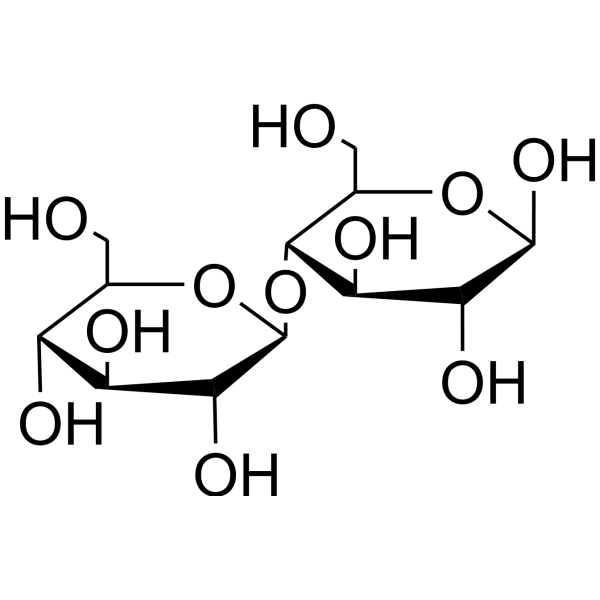
D-(+)-Cellobiose is a water-soluble disaccharide and an important intermediate product in the degradation process of cellulose and hemicellulose. D-(+)-cellobiose is used as a carbon source by microorganisms in fermentation processes, where it is converted into ethanol or other metabolic products. D-(+)-Cellobiose has significant application value in biofuel production, such as bioethanol .
|
-
-
- HY-125861E
-
|
MC(Viscosity:4000mPa.s)
|
Environmental Pollutants
Biochemical Assay Reagents
|
Others
|
|
Methyl cellulose (MC) (Viscosity:4000mPa.s) is a non-ionic cellulose ether with surface activity and thermogelation properties. Methyl cellulose (Viscosity:4000mPa.s) is widely used as drug delivery agents, thickeners, stabilizers, emulsifiers, etc., in industries such as pharmaceuticals, food, cosmetics, and construction .
|
-
-
- HY-Y0703C
-
-
-
- HY-107846
-
Xylan
2 Publications Verification
|
Endogenous Metabolite
|
Others
|
|
Xylan represents the main hemicellulose component in the secondary plant cell walls of flowering plants. Xylan is a polysaccharide made from units of xylose and contains predominantly β-D-xylose units linked as in cellulose .
|
-
-
- HY-B2220A
-
|
|
Endogenous Metabolite
|
Others
|
|
Cellulase R-10 from Trichoderma Vride is an enzyme mixture that includes cellulase, hemicellulase, pectinase and protease, etc. Cellulase R-10 from Trichoderma Vride can act on the 1,4-β-D-glucosidic bonds in cellulose, catalyzing the hydrolysis of cellulose molecules and generating cellulose oligosaccharides, cellulose di-saccharides and glucose. Cellulase R-10 from Trichoderma Vride can be used in combination with lyase R-10 to break down the cell walls of plants, preparing protoplasts. Cellulase R-10 from Trichoderma Vride is widely applied in plant cell hybridization research .
|
-
-
- HY-125861B
-
|
MC(Viscosity:400mPa.s)
|
Environmental Pollutants
Biochemical Assay Reagents
|
Others
|
|
Methyl cellulose (MC) (Viscosity:400mPa.s) is a non-ionic cellulose ether with surface activity and thermogelation properties. Methyl cellulose (Viscosity:400mPa.s) is widely used as drug delivery agents, thickeners, stabilizers, emulsifiers, etc., in industries such as pharmaceuticals, food, cosmetics, and construction .
|
-
-
- HY-W017766
-
|
PHMB
|
Environmental Pollutants
Bacterial
|
Infection
|
|
Poly(hexamethylenebiguanide) hydrochloride (PHMB) is an antimicrobial and antiviral agent. Poly(hexamethylenebiguanide) hydrochloride is active against both Gram-positive and Gram-negative bacteria. Poly(hexamethylenebiguanide) hydrochloride works by adsorbing to the surface of cellulose, which can damage microbial cell membranes and interfere with metabolism. Poly(hexamethylenebiguanide) hydrochloride is widely used in medical, clothing and household textiles, and cosmetic fields .
|
-
-
- HY-D0367
-
|
Calcofluor White M2R
|
Fluorescent Dye
|
Others
|
|
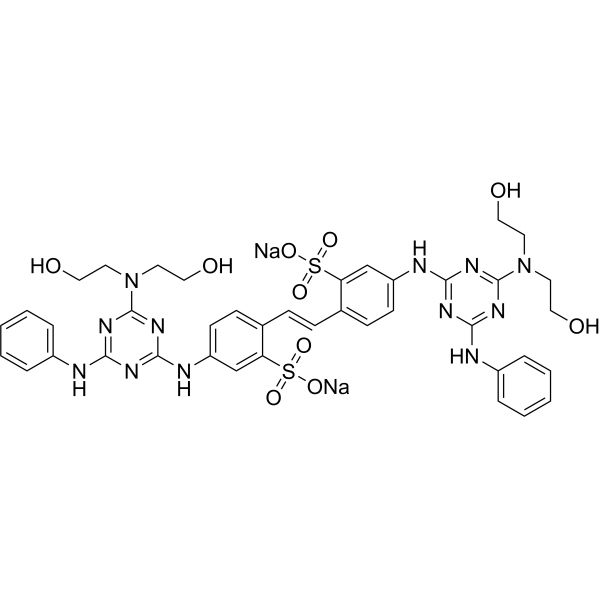
Fluorescent brightener 28 is a fluorescent whitening agent commonly used in the padding process of the textile industry. Fluorescent brightener 28 is capable of staining polysaccharides such as cellulose, and when the plasma membrane ruptures, it also weakly stains the cytoplasm and strongly stains the cell nucleus. Additionally, Fluorescent brightener 28 can be utilized to detect intracellular chitin in living cells. Fluorescent Brightener 28 also is a visible light emitting diode (LED)-light sensitive photoinitiator for free radical photopolymerizations .
|
-
-
- HY-Y0703A
-
-
-
- HY-Y1889
-
-
-
- HY-Y0703D
-
|
CMC-Na (average Mw 90000, DS=0.7, Viscosity:50-200 mPa.s)
|
Environmental Pollutants
Biochemical Assay Reagents
|
Others
|
|
Sodium carboxymethyl cellulose (average Mw 90000, DS=0.7, Viscosity:50-200 mPa.s) is the sodium salt of cellulose arboxymethyl and frequently used as viscous agent, paste and barrier agent .
|
-
-
- HY-100557
-
|
|
Environmental Pollutants
Biochemical Assay Reagents
Interleukin Related
|
Metabolic Disease
Inflammation/Immunology
|
|
Hydroxypropyl Cellulose is an orally active cellulose ether and surfactant. Hydroxypropyl cellulose is divided into high-substituted HPC (HHPC) and low-substituted HPC (LHPC). Hydroxypropyl Cellulose reduces inflammatory mediators (IL-6, IL-1β). Hydroxypropyl Cellulose improves colitis and obesity. Hydroxypropyl Cellulose can be used as a pharmaceutical excipient, such as coating agent, emulsifier, suspension, tablet, thickener, viscosifier .
|
-
-
- HY-B2221
-
|
Pectin glycosidase
|
Environmental Pollutants
Endogenous Metabolite
|
Others
Cancer
|
|
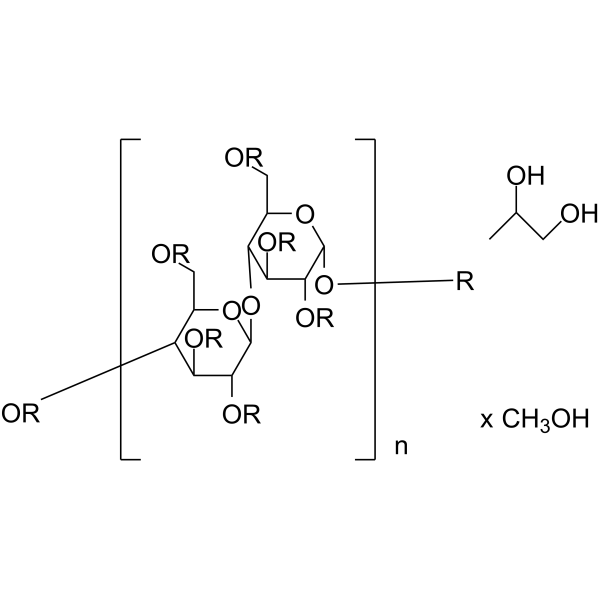
Cellulose (Pectin glycosidase) is a natural high molecular weight polysaccharide found in many plants and organisms. It is widely used in manufacturing industries, such as in paper making, textiles, food and medicine, etc. As a renewable resource, Cellulose is biodegradable and sustainable, and can also be used to manufacture chemicals such as Cellulose Esters, Cellulose Acetate and Cellulose Nitrate. In addition, Cellulose is often used as a food additive to increase the stability and quality of food.
|
-
-
- HY-B2221C
-
|
Carboxymethyl cellulose CM-32; CM-32
|
Environmental Pollutants
Biochemical Assay Reagents
|
Others
|
|
CM Cellulose CM-32 (Carboxymethyl cellulose) is a cellulose derivative. CM Cellulose CM-32 has a wide range of applications in the biomedical field, including tissue engineering, wound dressing, absorbent nonwovens, fabrication of 3D-scaffolds for biocompatible implants, artificial organs or mimics of extracellular polymeric matrix and diagnosis of various diseases. CM Cellulose CM-32 can decrease osteoclasts formation. CM Cellulose CM-32 can be used as a biological material or organic compound for life science related research .
|
-
-
- HY-125861A
-
|
MC(Viscosity:15mPa.s)
|
Environmental Pollutants
Biochemical Assay Reagents
|
Others
|
|
Methyl cellulose (MC) (Viscosity:15mPa.s) is a non-ionic cellulose ether with surface activity and thermogelation properties. Methyl cellulose (Viscosity:15mPa.s) is widely used as drug delivery agents, thickeners, stabilizers, emulsifiers, etc., in industries such as pharmaceuticals, food, cosmetics, and construction .
|
-
-
- HY-N0335
-
Indigo
1 Publications Verification
|
Fluorescent Dye
|
Others
|
|
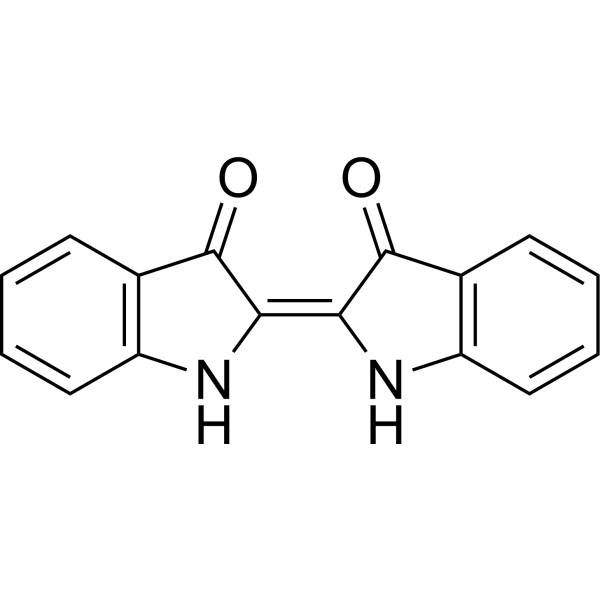
Indigo is a blue dye. Indigo stains cellulose fibers such as cotton. Indigo stains food or biological samples to visualize and quantify the uptake or distribution of substances by organisms .
|
-
-
- HY-W115746
-
|
Ethyl cellulose N-200
|
Environmental Pollutants
Biochemical Assay Reagents
|
Infection
Cancer
|
|
Ethyl cellulose is a derivative of cellulose. Ethyl cellulose is a non-toxic, biodegradable polymer. Ethyl cellulose has unique properties such as oil gel formation, active ingredient delivery and film formation. Ethyl cellulose can be used as a pharmaceutical excipient, such as a coating agent, flavoring agent, tablet filler, etc. Ethyl cellulose can be used to prepare nanoparticles for active compound delivery .
|
-
-
- HY-125861C
-
|
MC(Viscosity:1500mPa.s)
|
Environmental Pollutants
Biochemical Assay Reagents
|
Others
|
|
Methyl cellulose (MC) (Viscosity:1500mPa.s) is a non-ionic cellulose ether with surface activity and thermogelation properties. Methyl cellulose (Viscosity:1500mPa.s) is widely used as drug delivery agents, thickeners, stabilizers, emulsifiers, etc., in industries such as pharmaceuticals, food, cosmetics, and construction .
|
-
-
- HY-152927
-
|
|
Biochemical Assay Reagents
|
Others
|
|
Hydroxypropylmethyl cellulose acetate succinate (Mw: 20-100k Da) is a cosolvent for preparing SDDs of low-solubility agents. Hydroxypropylmethyl cellulose acetate succinate (Mw: 20-100k Da) exhibits no acute/subchronic/chronic toxicity in rats, with oral activity and LD50 >2.5 g/kg .
|
-
-
- HY-A0104B
-
|
Hypromellose (Type I,Viscosity:100mPa.s); (Hydroxypropyl)methyl cellulose (Type I,Viscosity:100mPa.s); Celacol HPM 5000 (Type I,Viscosity:100mPa.s)
|
Environmental Pollutants
Biochemical Assay Reagents
|
Others
|
|
HPMC (Type I, Viscosity: 100 mPa·s) is a nonionic polymer obtained via synthetic modification of cellulose. As a hydrophilic matrix material, HPMC prolongs drug release through non-Fickian diffusion, including the diffusion of drugs within the hydrated matrix and the polymer relaxation process .
|
-
-
- HY-A0104E
-
|
Hypromellose (Type II,Viscosity:100mPa.s); (Hydroxypropyl)methyl cellulose (Type II,Viscosity:100mPa.s); Celacol HPM 5000 (Type II,Viscosity:100mPa.s)
|
Environmental Pollutants
Biochemical Assay Reagents
|
Others
|
|
HPMC (Hypromellose; (Hydroxypropyl)methyl cellulose; Celacol HPM 5000) (Type II,Viscosity:100mPa.s) is a non-ionic polymer obtained via synthetic modification of cellulose. As a hydrophilic matrix material, HPMC prolongs drug release through non-Fickian diffusion, including the diffusion of drugs in the hydrated matrix and the polymer relaxation process .
|
-
-
- HY-A0104K
-
|
Hypromellose (Type II,Viscosity:3mPa.s); (Hydroxypropyl)methyl cellulose (Type II,Viscosity:3mPa.s); Celacol HPM 5000 (Type II,Viscosity:3mPa.s)
|
Environmental Pollutants
Biochemical Assay Reagents
|
Others
|
|
HPMC (Type II, Viscosity: 3 mPa.s) is a nonionic polymer prepared via synthetic modification of cellulose. As a hydrophilic matrix material, HPMC prolongs drug release through non-Fickian diffusion, which includes the diffusion of drugs in the hydrated matrix and the polymer relaxation process .
|
-
-
- HY-A0104G
-
|
Hypromellose (Type II,Viscosity:4000mPa.s); (Hydroxypropyl)methyl cellulose (Type II,Viscosity:4000mPa.s); Celacol HPM 5000 (Type II,Viscosity:4000mPa.s)
|
Environmental Pollutants
Biochemical Assay Reagents
|
Others
|
|
Hypromellose (Hypromellose (Type II,Viscosity:4000mPa.s); (Hydroxypropyl)methyl cellulose (Type II,Viscosity:4000mPa.s); Celacol HPM 5000 (Type II,Viscosity:4000mPa.s)) is a biochemical reagent that can be used as a biological material or organic compound for life science related research.
|
-
-
- HY-Y1078
-
|
N-Dimethoxymethyl-N,N-dimethylamine
|
Biochemical Assay Reagents
|
Others
|
|
DMF-DMA (N-Dimethoxymethyl-N,N-dimethylamine) is a reagent with both condensation and alkylation functions. DMF-DMA can undergo condensation reactions with active methylene groups or amino groups to generate enamine and imino derivatives, and can also act as an alkylating agent to methylate nitrogen and oxygen atoms in heterocyclic structures. DMF-DMA is widely used in the synthesis of enaminones and dimethylamino imine intermediates, as well as in the construction of heterocyclic backbones such as pyridine, pyrimidine and pyrazole. DMF-DMA can also serve as a polar aprotic co-solvent; although DMF-DMA cannot dissolve cellulose alone, it can form an efficient cellulose dissolution system with diallylimidazolium methoxyacetate .
|
-
-
- HY-W046325
-
|
Diethylaminoethyl cellulose
|
Biochemical Assay Reagents
|
Others
|
|
DEAE-Cellulose (Diethylaminoethyl cellulose), a common biopolymer derivative. DEAE-Cellulose is a weakly basic cellulose anion exchanger .
|
-
-
- HY-D0980
-
|
Biotinyl-3,6-dioxaoctanediamine; EZ-Link Amine-PEO2-Biotin
|
Biochemical Assay Reagents
|
Infection
|
|
Biotin-DADOO (Biotinyl-3,6-dioxaoctanediamine; EZ-Link Amine-PEO2-Biotin) is a biotin-containing amine compound and a biotinylation reagent. As an amino component, Biotin-DADOO participates in the nucleophilic ring-opening reaction of epoxidized ω-double bonds during the synthesis of biotinylated inhibitor derivatives. Biotin-DADOO can be conjugated with carboxymethyl cellulose derivatives. Biotin-DADOO is involved in the synthesis of biotin-estradiol conjugates for enzyme immunoassays. Biotin-DADOO can be used in the research of influenza A .
|
-
-
- HY-B2221B1
-
|
|
Biochemical Assay Reagents
|
Others
|
|
Hydroxyethyl cellulose, Viscosity (2%):150mPa.s is a thickening agent. Hydroxyethyl cellulose, Viscosity(2%):150mPa.s is a kind of biological materials or organic compounds that are widely used in life science research .
|
-
-
- HY-125861D
-
|
MC(Viscosity:40000mPa.s)
|
Environmental Pollutants
Biochemical Assay Reagents
|
Others
|
|
Methyl cellulose (MC) (Viscosity:40000mPa.s) is a non-ionic cellulose ether with surface activity and thermogelation properties. Methyl cellulose (Viscosity:40000mPa.s) is widely used as drug delivery agents, thickeners, stabilizers, emulsifiers, etc., in industries such as pharmaceuticals, food, cosmetics, and construction .
|
-
-
- HY-A0104I
-
|
Hypromellose (Type II,Viscosity:100000mPa.s); (Hydroxypropyl)methyl cellulose (Type II,Viscosity:100000mPa.s); Celacol HPM 5000 (Type II,Viscosity:100000mPa.s)
|
Biochemical Assay Reagents
|
Others
|
|
HPMC (Hypromellose; (Hydroxypropyl)methyl cellulose; Celacol HPM 5000) (Type II,Viscosity:100000mPa.s) is a non-ionic polymer obtained via synthetic modification of cellulose. As a hydrophilic matrix material, HPMC prolongs drug release through non-Fickian diffusion, including the diffusion of drugs in the hydrated matrix and the polymer relaxation process .
|
-
-
- HY-19964
-
|
Potassium clavulanate:cellulose (1:1)
|
Beta-lactamase
Bacterial
Antibiotic
|
Infection
|
|
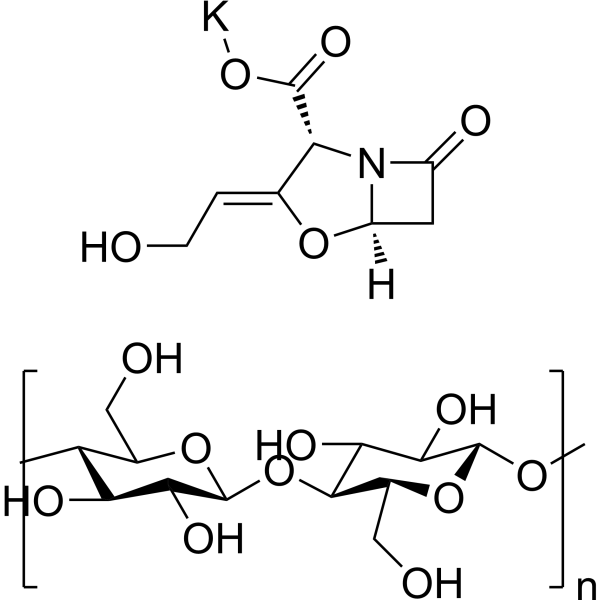
Potassium clavulanate cellulose (Potassium clavulanate:cellulose (1:1)) is a mixture of potassium clavulanate and cellulose, is a bacterial β-lactamase inhibitor. Clavulanate potassium is a form of Clavulanic acid. Clavulanate potassium fights bacteria that resistant to penicillins and other antibiotics. Potassium clavulanate with the combination of amoxicillin can be used for the research of different infections caused by bacteria, such as sinusitis, pneumonia, ear infections, bronchitis, urinary tract infections, and infections of the skin .
|
-
-
- HY-W145498
-
|
Cellotetraose
|
Drug Metabolite
|
Others
|
|
D-(+)-Cellotetraose (Cellotetraose) is a primary hydrolysis product of cellulose .
|
-
-
- HY-N1915
-
|
|
Endogenous Metabolite
|
Metabolic Disease
|
|
Cellohexaose is a glucose polymer with two or more glucose monomers produced from the breakdown of cellulose, consisting of a condensation of beta (1-4) linked D-glucose monomers .
|
-
-
- HY-B2221S4
-
-
-
- HY-W004293
-
|
Tridecyl Alcohol
|
Environmental Pollutants
Biochemical Assay Reagents
|
Others
|
|
1-Tridecanol is an organic compound commonly used as a surfactant, lubricant, and stabilizer, among others. It can be used in some cleaning products, preservatives and plastic additives, and can help enhance their performance and stability. In addition, the compound is used in some industrial fields, for example in the manufacture of products such as cellulose and paints. Although the compound has no direct medical application, it plays an important role in consumer products and industrial production.
|
-
-
- HY-W750459
-
|
|
Fluorescent Dye
|
Others
|
|
Fluorescent brightener 28 (Technical Grade) is a fluorescent whitening agent commonly used in the padding process of the textile industry. Fluorescent brightener 28 is capable of staining polysaccharides such as cellulose, and when the plasma membrane ruptures, it also weakly stains the cytoplasm and strongly stains the cell nucleus. Additionally, Fluorescent brightener 28 can be utilized to detect intracellular chitin in living cells. Fluorescent Brightener 28 also is a visible light emitting diode (LED)-light sensitive photoinitiator for free radical photopolymerizations .
|
-
-
- HY-Y0703E
-
|
|
Biochemical Assay Reagents
|
Others
|
|
Sodium carboxymethyl cellulose (Viscosity:2500-6000mpa.s) is the sodium salt of cellulose arboxymethyl and frequently used as viscous agent, paste and barrier agent .
|
-
-
- HY-125861H
-
|
MC(Viscosity:25mPa.s)
|
Biochemical Assay Reagents
|
Others
|
|
Methyl cellulose (MC) (Viscosity:25mPa.s) is a non-ionic cellulose ether with surface activity and thermogelation properties. Methyl cellulose (Viscosity:25mPa.s) is widely used as drug delivery agents, thickeners, stabilizers, emulsifiers, etc., in industries such as pharmaceuticals, food, cosmetics, and construction .
|
-
-
- HY-W14549
-
|
Cellotriose
|
Drug Intermediate
|
Others
|
|
D-(+)-Cellotriose (Cellotriose) is an oligosaccharide, it is an intermediate in the enzyme hydrolysis of cellulose .
|
-
-
- HY-100557D
-
|
Hydroxypropyl cellulose, Viscosity(5%):75-150mPa.s, MW 100000
|
Biochemical Assay Reagents
|
Others
|
|
HPC, Viscosity (5%):75-150mPa.s (Hydroxypropyl Cellulose, Viscosity (5%):75-150mPa.s, MW 100000) is a thickening agent. HPC, Viscosity(5%):75-150mPa.s is a kind of biological materials or organic compounds that are widely used in life science research .
|
-
-
- HY-B2221B3
-
|
|
Biochemical Assay Reagents
|
Others
|
|
Hydroxyethyl cellulose, Viscosity (2%):6000mPa.s is a thickening agent. Hydroxyethyl cellulose, Viscosity(2%):6000mPa.s is a kind of biological materials or organic compounds that are widely used in life science research .
|
-
-
- HY-B2221B2
-
|
|
Biochemical Assay Reagents
|
Others
|
|
Hydroxyethyl cellulose, Viscosity (2%):40000mPa.s is a thickening agent. Hydroxyethyl cellulose, Viscosity(2%):40000mPa.s is a kind of biological materials or organic compounds that are widely used in life science research .
|
-
-
- HY-W011602R
-
|
|
Biochemical Assay Reagents
Reference Standards
|
Others
|
|
Triethyl citrate (Standard) is the analytical standard of Triethyl citrate. This product is intended for research and analytical applications. Triethyl citrate is an?ester?of?citric acid. Triethyl citrate can be?used as a?plasticizer?for cellulosic plastic-based nanocomposites .
|
-
-
- HY-100557A
-
|
|
Biochemical Assay Reagents
|
Others
|
|
Low-Substituted Hydroxypropyl Cellulose can be used as an excipient, such as Coating agents, emulsifiers, suspensions, tablets, thickeners, thickeners, etc. Pharmaceutical excipients, or pharmaceutical auxiliaries, refer to other chemical substances used in the pharmaceutical process other than pharmaceutical ingredients. Pharmaceutical excipients generally refer to inactive ingredients in pharmaceutical preparations, which can improve the stability, solubility and processability of pharmaceutical preparations. Pharmaceutical excipients also affect the absorption, distribution, metabolism, and elimination (ADME) processes of co-administered drugs .
|
-
- HY-B2220B
-
|
|
Endogenous Metabolite
|
Others
|
|
Thermostable cellulase recombinant is a cellulose hydrolase present in hyperthermophiles, which catalyzes the hydrolysis of β-1,4 glycosidic bonds in cellulose. Thermostable cellulase recombinant targets carboxymethyl cellulose (CMC) as its primary substrate, and retains high residual activity even after incubation at high temperatures. The activity of Thermostable cellulase recombinant is inhibited by ionic and non-ionic detergents, and can be enhanced by cobalt ions. Thermostable cellulase recombinant can be applied in the paper industry .
|
-
- HY-100557B
-
|
Hydroxypropyl cellulose, Viscosity(1%):150-400mPa.s
|
Biochemical Assay Reagents
|
Others
|
|
HPC, Viscosity (1%):150-400mPa.s (Hydroxypropyl Cellulose, Viscosity (1%):150-400mPa.s) is a thickening agent. HPC, Viscosity(1%):150-400mPa.s is a kind of biological materials or organic compounds that are widely used in life science research .
|
-
- HY-100557E
-
|
Hydroxypropyl cellulose, Viscosity(1%):1275-3500mPa.s
|
Biochemical Assay Reagents
|
Others
|
|
HPC, Viscosity (1%):1275-3500mPa.s (Hydroxypropyl Cellulose, Viscosity (1%):1275-3500mPa.s) is a thickening agent. HPC, Viscosity(1%):1275-3500mPa.s is a kind of biological materials or organic compounds that are widely used in life science research .
|
-
- HY-100557C
-
|
Hydroxypropyl cellulose, Viscosity(1%):4000-6500mPa.s
|
Biochemical Assay Reagents
|
Others
|
|
HPC, Viscosity (1%):4000-6500mPa.s (Hydroxypropyl Cellulose, Viscosity (1%):4000-6500mPa.s) is a thickening agent. HPC, Viscosity(1%):4000-6500mPa.s is a kind of biological materials or organic compounds that are widely used in life science research .
|
-
- HY-100557H
-
|
Hydroxypropyl cellulose, Viscosity(2%):95000-105000mPa.s
|
Biochemical Assay Reagents
|
Others
|
|
HPC, Viscosity (2%):95000-105000mPa.s (Hydroxypropyl Cellulose, Viscosity (2%):95000-105000mPa.s) is a thickening agent. HPC, Viscosity(2%):95000-105000mPa.s is a kind of biological materials or organic compounds that are widely used in life science research .
|
-
- HY-W111522
-
|
di-Sodium hydrogen phosphite, 98%
|
Biochemical Assay Reagents
|
Others
|
|
Sodium phosphite dibasic pentahydrate, 98% (di-Sodium hydrogen phosphite, 98%) is an inorganic phosphorus source and an alkali metal salt of phosphorous acid. Sodium phosphite dibasic pentahydrate, 98% acts as a catalyst for the butanetetracarboxylic acid-based crosslinking reaction of cotton cellulose .
|
-
- HY-E70425
-
|
|
Glycosyltransferase
|
Metabolic Disease
|
|
Sucrose synthase belongs to glycosyltransferases and is a reversible catalyst present in plants, which catalyzes the conversion of sucrose into fructose and UDP-G or ADP-G. Sucrose synthase localizes to the cytoplasm, plasma membrane, cell wall, vacuole and mitochondria of plants. Sucrose synthase regulates sugar metabolism, supports the development of taproots, fruits, seeds and vascular tissues, drives the synthesis of starch, cellulose and callose, and enhances nitrogen fixation capacity. Sucrose synthase mediates signal transduction in plant meristems. Sucrose synthase is associated with plant growth, anaerobic stress tolerance, as well as shoot apical meristem and leaf morphology; overexpression of this enzyme promotes plant growth, increases xylem size, and elevates cellulose and starch contents .
|
-
- HY-W133892
-
|
cellulose monoacetate
|
Biochemical Assay Reagents
|
Others
|
|
Acetylcellulose is a biochemical reagent that can be used as a biological material or organic compound for life science related research.
|
-
- HY-B2221S2
-
|
|
Isotope-Labeled Compounds
|
Others
|
|
U-sup>13C Cellulose high DP from wheat is the cellulose (HY-B2221) isolated from wheat, that is consist of abundant glucose and all the carbon atoms are labeled with isotope 13C .
|
-
- HY-E70013A
-
|
EC 3.2.1.73
|
Glycosidase
|
Others
|
|
Licheninase (EC 3.2.1.73) is a glycoside hydrolase is active on the β-glucan cell wall of cereals, fungi, and seaweed. Licheninase specifically hydrolyzes β(1→4) linkages in mixed linkage β(1→3)/β(1→4)-glucans. Licheninase improves cellulose degradation .
|
-
- HY-B2221S1
-
|
|
Isotope-Labeled Compounds
Endogenous Metabolite
|
Others
|
|
U- 13C Cellulose from chicory is the 13C labeled Cellulose (HY-B2221). Cellulose (Pectin glycosidase) is a natural high molecular weight polysaccharide found in many plants and organisms. It is widely used in manufacturing industries, such as in paper making, textiles, food and medicine, etc. As a renewable resource, Cellulose is biodegradable and sustainable, and can also be used to manufacture chemicals such as Cellulose Esters, Cellulose Acetate and Cellulose Nitrate. In addition, Cellulose is often used as a food additive to increase the stability and quality of food .
|
-
- HY-W115746B
-
|
|
Biochemical Assay Reagents
|
Others
|
|
Ethyl cellulose (viscosity 300 cP) serves as a non-toxic and biodegradable polymer, with unique properties such as oleogel formation, delivery of active component, and film-forming ability in the food and pharmaceutical sectors. Ethyl cellulose (viscosity 300 cP) can be used as an excipient, such as coating agent, flavoring agent, tablet filler .
|
-
- HY-W115746A
-
|
|
Biochemical Assay Reagents
|
Others
|
|
Ethyl cellulose (viscosity 10 cP) serves as a non-toxic and biodegradable polymer, with unique properties such as oleogel formation, delivery of active component, and film-forming ability in the food and pharmaceutical sectors. Ethyl cellulose (viscosity 10 cP) can be used as an excipient, such as coating agent, flavoring agent, tablet filler .
|
-
- HY-B2221S
-
|
|
Isotope-Labeled Compounds
Endogenous Metabolite
|
Others
|
|
U- 13C Cellulose high DP from potato is the 13C labeled Cellulose (HY-B2221). Cellulose (Pectin glycosidase) is a natural high molecular weight polysaccharide found in many plants and organisms. It is widely used in manufacturing industries, such as in paper making, textiles, food and medicine, etc. As a renewable resource, Cellulose is biodegradable and sustainable, and can also be used to manufacture chemicals such as Cellulose Esters, Cellulose Acetate and Cellulose Nitrate. In addition, Cellulose is often used as a food additive to increase the stability and quality of food .
|
-
- HY-154704
-
|
|
Biochemical Assay Reagents
|
Others
|
|
Calcium carboxymethyl cellulose can be used as an excipient. Pharmaceutical excipients, or pharmaceutical auxiliaries, refer to other chemical substances used in the pharmaceutical process other than pharmaceutical ingredients. Pharmaceutical excipients generally refer to inactive ingredients in pharmaceutical preparations, which can improve the stability, solubility and processability of pharmaceutical preparations. Pharmaceutical excipients also affect the absorption, distribution, metabolism, and elimination (ADME) processes of co-administered drugs .
|
-
- HY-B2221S5
-
|
|
Isotope-Labeled Compounds
Endogenous Metabolite
|
Others
|
|
U- 13C Cellulose from broccoli is the 13C labeled Cellulose (HY-B2221). Cellulose is a natural high molecular weight polysaccharide found in many plants and organisms. It is widely used in manufacturing industries, such as in paper making, textiles, food and medicine, etc. As a renewable resource, Cellulose is biodegradable and sustainable, and can also be used to manufacture chemicals such as Cellulose Esters, Cellulose Acetate and Cellulose Nitrate. In addition, Cellulose is often used as a food additive to increase the stability and quality of food .
|
-
- HY-W001851
-
|
N-Benzylmaleimide
|
Drug Intermediate
|
Others
|
|
1-Benzylpyrrole-2,5-dione (N-Benzylmaleimide) is a heterocyclic compound containing a maleimide ring and a benzyl group. 1-Benzylpyrrole-2,5-dione can be used as a key reactant for the green chemical modification of cellulose nanocrystals (CNC).
|
-
- HY-124324
-
|
p-Nitopheyl β-D-cellotioside
|
Fluorescent Dye
|
Others
|
|
4-Nitrophenyl β-D-cellotrioside (p-Nitopheyl β-D-cellotioside) is a chromogenic substrate for endoglucanases and cellulose biohydrolases. As a fluorescent dye, nitrophenyl β-D-Cellotrioside can be hydrolyzed by enzymes to release 4-nitrophenol, producing a yellow color. The activity of the enzyme can be quantitatively analyzed by monitoring the change in absorbance at 405 nm .
|
-
- HY-122228
-
|
|
Cellulose Synthase
|
Others
|
|
Cestrin is a cellulose Synthase 1 (CESA1) inhibitor. Cestrin inhibits cell elongation and reduces cellulose content and interferes with the trafficking of cellulose synthase complexes and their associated proteins KORRIGAN1 and POM2/CSI1 .
|
-
- HY-W010875
-
-
- HY-133673S
-
|
MCPP-d4
|
Isotope-Labeled Compounds
Drug Metabolite
|
Others
|
|
Mono(3-carboxypropyl) phthalate-d4 (MCPP-d4) is a deuterium labeled Mono(3-carboxypropyl) phthalate (HY-133673). Mono(3-carboxypropyl) phthalate (MCPP) is a metabolite of Di-n-octyl phthalate. Di-n-octyl phthalate (DnOP) is a plasticizer used in polyvinyl chloride plastics, cellulose esters, and polystyrene resins .
|
-
- HY-B2221S3
-
|
|
Isotope-Labeled Compounds
Endogenous Metabolite
|
Others
|
|
U- 13C Cellulose high DP from maize is the 13C labeled Cellulose (HY-B2221). Cellulose (Pectin glycosidase) is a natural high molecular weight polysaccharide found in many plants and organisms. It is widely used in manufacturing industries, such as in paper making, textiles, food and medicine, etc. As a renewable resource, Cellulose is biodegradable and sustainable, and can also be used to manufacture chemicals such as Cellulose Esters, Cellulose Acetate and Cellulose Nitrate. In addition, Cellulose is often used as a food additive to increase the stability and quality of food .
|
-
- HY-122127
-
|
|
Cellulose Synthase
|
Others
|
|
Acetobixan is a potent cellulose biosynthesis inhibitor. Acetobixan inhibits cellulose biosynthesis .
|
-
- HY-W145579
-
-
- HY-138111
-
|
p-Nitopheyl β-D-cellotetaoside
|
Fluorescent Dye
|
Others
|
|
4-Nitrophenyl β-D-cellotetraoside (p-Nitopheyl β-D-cellotetaoside) is a small molecule cellulose mimetic consisting of a tetramer of D-glucose units linked by β-1-4 glycosidic bonds. The fragmentation pattern of 4-Nitrophenyl β-D-cellotetraoside after enzymatic hydrolysis can be analyzed by TLC or by the release of 4-nitrophenol, which has a strong absorbance at 395 nm in alkaline solutions. 4-Nitrophenyl β-D-cellotetraoside can be used in cellulose degradation studies to determine the specificity of cellulases .
|
-
- HY-W345102
-
-
- HY-P1032S
-
|
|
Isotope-Labeled Compounds
Endogenous Metabolite
|
Others
|
|
Angiotensin I- 13C19, 15N3 (human, mouse, rat) is the 13C and 15N labeled Angiotensin I (human, mouse, rat) (HY-P1032). Cellulose (Pectin glycosidase) is a natural high molecular weight polysaccharide found in many plants and organisms. It is widely used in manufacturing industries, such as in paper making, textiles, food and medicine, etc. As a renewable resource, Cellulose is biodegradable and sustainable, and can also be used to manufacture chemicals such as Cellulose Esters, Cellulose Acetate and Cellulose Nitrate. In addition, Cellulose is often used as a food additive to increase the stability and quality of food .
|
-
- HY-163279
-
|
|
Glycosidase
|
Others
|
|
Fluopipamine is an antagonist for Cellulose Synthase 1 (CESA1) with an IC50 of 0.78 μM. Fluopipamine leads a decrease in glucose uptake into cellulose and hyperaccumulation of CESAs at the PM in etiolated Arabidopsis seedlings .
|
-
- HY-W040094
-
-
- HY-E70107
-
|
Cbh1
|
Others
|
Others
|
|
Cellobiohydrolase I, Trichoderma longibrachiatum (Cbh1) belongs to glycoside hydrolase family 7 (GH7) that catalyzes the processive hydrolysis of cellulose into cellobiose .
|
-
- HY-107771R
-
|
MCW-2 (Standard)
|
Reference Standards
Parasite
|
Cancer
|
|
Propane sultone (Standard) is the analytical standard of Propane sultone. This product is intended for research and analytical applications. Propane sultone is a versatile intermediate. Propane sultone is utilized as an additive in the electrolyte in lithium battery. Propane sultone combines with cellulose and carbohydrate, that can be used in sizing, printing and textile. Propane sultone is utilized in dye manufacture .
|
-
- HY-W709120
-
|
|
Isotope-Labeled Compounds
Drug Metabolite
|
Others
|
|
Mono(7-carboxyheptyl) phthalate-d4 is the deuterium labeled Mono(7-carboxyheptyl) phthalate (HY-133674). Mono(7-carboxyheptyl) phthalate is a oxidative metabolite of Di-n-octyl phthalate. Di-n-octyl phthalate (DnOP) is a plasticizer used in polyvinyl chloride plastics, cellulose esters, and polystyrene resins .
|
-
- HY-W720329
-
|
|
Herbicide
DNA/RNA Synthesis
|
Others
|
|
Indaziflam is an alkyltriazine herbicide. Indaziflam targets the cellulose synthase complex and inhibits cellulose biosynthesis in plant cell walls. Indaziflam induces radial swelling of plants, ectopic lignification, inhibition of root and hypocotyl elongation, abnormal root and cell morphology, and also induces DNA strand breaks and micronucleus formation in HepG2 cells. Indaziflam can be used for research on monocot weed control .
|
-
- HY-E71366
-
|
|
Glycosidase
Endogenous Metabolite
|
Metabolic Disease
|
|
Endo-1,4-β-D-glucanase is a glycoside hydrolase that cleaves internal β-1,4-glycosidic bonds in cellulose and related β-D-glucans (β-D-Glucan) (HY-139413). Endo-1,4-β-D-glucanase randomly cuts long, insoluble cellulose polymer chains into shorter, soluble fragments such as oligosaccharides, thereby paving the way for further digestion into glucose .
|
-
- HY-W725041
-
|
|
Herbicide
|
Others
|
|
Methiozolin is an oxazoline herbicide designed for the selective control of annual bluegrass in turfgrass. Methiozolin strongly inhibits the biosynthesis of cellulose and hemicellulose in corn root cells at low concentrations. Methiozolin inhibits recombinant Arabidopsis thaliana tyrosine aminotransferase, with a IC50 of approximately 200 µM. Methiozolin not only effectively controls vegetative growth but also significantly suppresses inflorescence formation, which helps reduce the seed bank .
|
-
- HY-B2220D
-
|
|
Endogenous Metabolite
|
Others
|
|
Cellulase, Cellvibrio mixtus (EC 3.2.1.4) catalyzes cellulolysis, the decomposition of cellulose and of some related polysaccharides; specifically, the hydrolysis of the 1,4-beta-D-glycosidic linkages in cellulose, hemicellulose, lichenin, and cereal beta-D-glucans.
|
-
- HY-W081226
-
|
3,3,3-Trifluoropropanoyl chloride
|
Biochemical Assay Reagents
|
Others
|
|
3,3,3-Trifluoropropionyl chloride (3,3,3-Trifluoropropanoyl chloride) can be used for surface modification of cellulose fibers .
|
-
- HY-133673
-
|
|
Drug Metabolite
|
Others
|
|
Mono (3-carboxypropyl) phthalate (MCPP) is a metabolite of Di-n-octyl phthalate. Di-n-octyl phthalate (DnOP) is a plasticizer used in polyvinyl chloride plastics, cellulose esters, and polystyrene resins .
|
-
- HY-P2859A
-
|
|
Biochemical Assay Reagents
|
Metabolic Disease
|
|
Chitosanase, Streptomyces griseus (EC 3.2.1.132) catalyzes the endohydrolysis of β (1,4) linkages between N-acetyl-D-glucosamine and D-glucosamine residues in partially deacetylated chitosan. Chitosanase, Streptomyces griseus (EC 3.2.1.132) is capable of hydrolyzing both chitosan and carboxymethyl cellulose.
|
-
- HY-E70928
-
|
|
Biochemical Assay Reagents
|
Metabolic Disease
|
|
Laminarinase,Trichoderma sp. (EC 3.2.1.6) degrades β-1,4-glucans of cellulose, xyloglucan and β-1,4-xylan. β-Glucanase represents a group of carbohydrate enzymes which break down glycosidic bonds within beta-glucan.
|
-
- HY-E71305H
-
|
|
Glycosidase
|
Others
|
|
β-Glucosidase 1A, Saccharophagus degradans (EC 3.2.1.21) is a glucosidase enzyme that acts upon β1->4 bonds linking two glucose or glucose-substituted molecules (i.e., the disaccharide cellobiose) . β-Glucosidase is one of the cellulases, enzymes involved in the decomposition of cellulose and related polysaccharides; more specifically, an exocellulase with specificity for a variety of beta-D-glycoside substrates. It catalyzes the hydrolysis of terminal non-reducing residues in beta-D-glucosides with release of glucose.
|
-
- HY-E71305I
-
|
|
Glycosidase
|
Others
|
|
β-Glucosidase 1A, Thermobifida fusca (EC 3.2.1.21) is a glucosidase enzyme that acts upon β1->4 bonds linking two glucose or glucose-substituted molecules (i.e., the disaccharide cellobiose) . β-Glucosidase is one of the cellulases, enzymes involved in the decomposition of cellulose and related polysaccharides; more specifically, an exocellulase with specificity for a variety of beta-D-glycoside substrates. It catalyzes the hydrolysis of terminal non-reducing residues in beta-D-glucosides with release of glucose.
|
-
- HY-E71305B
-
|
|
Glycosidase
|
Others
|
|
β-Glucosidase 1A, Clostridium cellulovorans (EC 3.2.1.21) is a glucosidase enzyme that acts upon β1->4 bonds linking two glucose or glucose-substituted molecules (i.e., the disaccharide cellobiose) . β-Glucosidase is one of the cellulases, enzymes involved in the decomposition of cellulose and related polysaccharides; more specifically, an exocellulase with specificity for a variety of beta-D-glycoside substrates. It catalyzes the hydrolysis of terminal non-reducing residues in beta-D-glucosides with release of glucose.
|
-
- HY-E71305D
-
|
|
Glycosidase
|
Others
|
|
β-Glucosidase 1A, Bacillus halodurans (EC 3.2.1.21) is a glucosidase enzyme that acts upon β1->4 bonds linking two glucose or glucose-substituted molecules (i.e., the disaccharide cellobiose) . β-Glucosidase is one of the cellulases, enzymes involved in the decomposition of cellulose and related polysaccharides; more specifically, an exocellulase with specificity for a variety of beta-D-glycoside substrates. It catalyzes the hydrolysis of terminal non-reducing residues in beta-D-glucosides with release of glucose.
|
-
- HY-E71305
-
|
|
Glycosidase
|
Others
|
|
β-Glucosidase 1A, Bacillus halodurans (EC 3.2.1.21) is a glucosidase enzyme that acts upon β1->4 bonds linking two glucose or glucose-substituted molecules (i.e., the disaccharide cellobiose) . β-Glucosidase is one of the cellulases, enzymes involved in the decomposition of cellulose and related polysaccharides; more specifically, an exocellulase with specificity for a variety of beta-D-glycoside substrates. It catalyzes the hydrolysis of terminal non-reducing residues in beta-D-glucosides with release of glucose.
|
-
- HY-E71305J
-
|
|
Glycosidase
|
Others
|
|
β-Glucosidase 1A, Thermotoga petrophila (EC 3.2.1.21) is a glucosidase enzyme that acts upon β1->4 bonds linking two glucose or glucose-substituted molecules (i.e., the disaccharide cellobiose) . β-Glucosidase is one of the cellulases, enzymes involved in the decomposition of cellulose and related polysaccharides; more specifically, an exocellulase with specificity for a variety of beta-D-glycoside substrates. It catalyzes the hydrolysis of terminal non-reducing residues in beta-D-glucosides with release of glucose.
|
-
- HY-E71305E
-
|
|
Glycosidase
|
Others
|
|
β-Glucosidase 1A, Pectobacterium carotovorum (EC 3.2.1.21) is a glucosidase enzyme that acts upon β1->4 bonds linking two glucose or glucose-substituted molecules (i.e., the disaccharide cellobiose) . β-Glucosidase is one of the cellulases, enzymes involved in the decomposition of cellulose and related polysaccharides; more specifically, an exocellulase with specificity for a variety of beta-D-glycoside substrates. It catalyzes the hydrolysis of terminal non-reducing residues in beta-D-glucosides with release of glucose.
|
-
- HY-E71305K
-
|
|
Glycosidase
|
Others
|
|
β-Glucosidase 1A, Thermus thermophilus (EC 3.2.1.21) is a glucosidase enzyme that acts upon β1->4 bonds linking two glucose or glucose-substituted molecules (i.e., the disaccharide cellobiose) . β-Glucosidase is one of the cellulases, enzymes involved in the decomposition of cellulose and related polysaccharides; more specifically, an exocellulase with specificity for a variety of beta-D-glycoside substrates. It catalyzes the hydrolysis of terminal non-reducing residues in beta-D-glucosides with release of glucose.
|
-
- HY-E71305A
-
|
|
Glycosidase
|
Others
|
|
β-Glucosidase 1A, Caldicellulosiruptor saccharolyticus (EC 3.2.1.21) is a glucosidase enzyme that acts upon β1->4 bonds linking two glucose or glucose-substituted molecules (i.e., the disaccharide cellobiose) . β-Glucosidase is one of the cellulases, enzymes involved in the decomposition of cellulose and related polysaccharides; more specifically, an exocellulase with specificity for a variety of beta-D-glycoside substrates. It catalyzes the hydrolysis of terminal non-reducing residues in beta-D-glucosides with release of glucose.
|
-
- HY-E71305C
-
|
|
Glycosidase
|
Others
|
|
β-Glucosidase 1A, Paenibacillus polymyxa (EC 3.2.1.21) is a glucosidase enzyme that acts upon β1->4 bonds linking two glucose or glucose-substituted molecules (i.e., the disaccharide cellobiose) . β-Glucosidase is one of the cellulases, enzymes involved in the decomposition of cellulose and related polysaccharides; more specifically, an exocellulase with specificity for a variety of beta-D-glycoside substrates. It catalyzes the hydrolysis of terminal non-reducing residues in beta-D-glucosides with release of glucose.
|
-
- HY-E71306
-
|
|
Glycosidase
|
Others
|
|
β-Glucosidase 3A, Bacteroides ovatus (EC 3.2.1.21) is a glucosidase enzyme that acts upon β1->4 bonds linking two glucose or glucose-substituted molecules (i.e., the disaccharide cellobiose) . β-Glucosidase is one of the cellulases, enzymes involved in the decomposition of cellulose and related polysaccharides; more specifically, an exocellulase with specificity for a variety of beta-D-glycoside substrates. It catalyzes the hydrolysis of terminal non-reducing residues in beta-D-glucosides with release of glucose.
|
-
- HY-134809A
-
|
CADA hydrochloride
|
HIV
|
Infection
|
|
Cyclotriazadisulfonamide (CADA) hydrochloride is a specific CD4-targeted HIV entry inhibitor with activity against HIV-1 replication. Cyclotriazadisulfonamide hydrochloride can specifically downregulate the expression of CD4 receptors on the cell surface, effectively inhibiting HIV transmission. Cyclotriazadisulfonamide hydrochloride can inhibit HIV-1(NL4.3) and SIV(mac251), and has a synergistic effect when used in combination with cellulose acetate (CAP). Cyclotriazadisulfonamide hydrochloride can also be used as a microbial gel formulation to maintain CD4 downregulation and antiviral activity, and is a broad-spectrum anti-HIV agent.
|
-
- HY-A0104D
-
|
Hypromellose (Type I,Viscosity:4000mPa.s); (Hydroxypropyl)methyl cellulose (Type I,Viscosity:4000mPa.s); Celacol HPM 5000 (Type I,Viscosity:4000mPa.s)
|
Environmental Pollutants
Biochemical Assay Reagents
|
Others
|
|
HPMC (Hypromellose) (Type I, Viscosity: 4000mPa.s) is a primary sodium alginate and controlled release hydrophilic polymer with an average viscosity of 4000mPa.s. The viscosity of HPMC may change due to concentration, pH, temperature or the presence of metal ions. When the pH is above 10, the viscosity decreases .
|
-
- HY-A0104C
-
|
Hypromellose (Type I,Viscosity:400mPa.s); (Hydroxypropyl)methyl cellulose (Type I,Viscosity:400mPa.s); Celacol HPM 5000 (Type I,Viscosity:400mPa.s)
|
Environmental Pollutants
Biochemical Assay Reagents
|
Others
|
|
HPMC (Hypromellose) (Type I, Viscosity: 400mPa.s) is a first-grade sodium alginate with an average viscosity of 400 mPa.s. Typically, a 1% w/v HPMC aqueous solution has a viscosity of 20-400mPa.s (20-400cp) at 20°C. The viscosity of HPMC may vary depending on concentration, pH, temperature, or the presence of metal ions. Viscosity decreases at pH values above 10 .
|
-
- HY-A0104A
-
|
Hypromellose (Type I,Viscosity:30mPa.s); (Hydroxypropyl)methyl cellulose (Type I,Viscosity:30mPa.s); Celacol HPM 5000 (Type I,Viscosity:30mPa.s)
|
Biochemical Assay Reagents
|
Others
|
|
Hydroxypropylmethylcellulose (Type I,Viscosity:30mPa.s) is a biochemical reagent that can be used as a biological material or organic compound for life science related research.
|
-
- HY-A0104F
-
|
Hypromellose (Type II,Viscosity:400mPa.s); (Hydroxypropyl)methyl cellulose (Type II,Viscosity:400mPa.s); Celacol HPM 5000 (Type II,Viscosity:400mPa.s)
|
Biochemical Assay Reagents
|
Others
|
|
Hypromellose (Type II,Viscosity:400mPa.s) is a biochemical reagent that can be used as a biological material or organic compound for life science related research.
|
-
- HY-Y1282
-
|
|
Environmental Pollutants
Biochemical Assay Reagents
SOD
|
Cardiovascular Disease
Infection
Neurological Disease
|
|
Sodium tetraborate decahydrate is an orally active biochemical reagent and antibacterial agent. Sodium tetraborate decahydrate leads to an increase in the activity of Catalase, Superoxide dismutase. Sodium tetraborate decahydrate reduces Hydrogen sulfide and the sulfate-reducing bacteria population of swine manure. Sodium tetraborate decahydrate serves as flame suppressant for wood cellulose. Sodium tetraborate decahydrate is a triglyceride transesterification catalyst. Sodium tetraborate decahydrate suppresses the formation of chlorinated by-products in Cl −-containing water. Sodium tetraborate decahydrate has a neuroprotective effect against chromium poisoning. Sodium tetraborate decahydrate can protect the heart from chromium damage at low doses. Sodium tetraborate in a low dose with an isolated application shows an antioxidant effect .
|
-
- HY-W145493
-
|
Tetraglycol; Poly(ethylene glycol) tetrahydrofurfuryl ether
|
Biochemical Assay Reagents
|
Others
|
|
Glycofurol (Tetraglycol) is a hydrophilic, water-miscible cosolvent and absorption enhancer with skin tolerance. Glycofurol can be used as a carrier-based gel for the topical delivery of drugs, including water-insoluble drugs. Glycofurol can form gels with bioadhesiveness, spreadability and suitable viscosity for topical administration .
|
-
- HY-P4126
-
|
|
Elastase
|
Others
|
|
Suc-Ala-Ala-Pro-Val-AMC is a fluorescent substrate for elastase. Suc-Ala-Ala-Pro-Val-AMC can be hydrolyzed by these elastases to release the fluorescent substance 7-amino-4-methylcoumarin. Suc-Ala-Ala-Pro-Val-AMC is used for in vitro elastase activity assays and can also be applied in studies related to chronic wounds .
|
-
| Cat. No. |
Product Name |
Type |
-
- HY-D0367
-
|
Calcofluor White M2R
|
Fluorescent Dyes
|
|
Fluorescent brightener 28 is a fluorescent whitening agent commonly used in the padding process of the textile industry. Fluorescent brightener 28 is capable of staining polysaccharides such as cellulose, and when the plasma membrane ruptures, it also weakly stains the cytoplasm and strongly stains the cell nucleus. Additionally, Fluorescent brightener 28 can be utilized to detect intracellular chitin in living cells. Fluorescent Brightener 28 also is a visible light emitting diode (LED)-light sensitive photoinitiator for free radical photopolymerizations .
|
-
- HY-N0335
-
Indigo
1 Publications Verification
|
Fluorescent Dyes
|
|
Indigo is a blue dye. Indigo stains cellulose fibers such as cotton. Indigo stains food or biological samples to visualize and quantify the uptake or distribution of substances by organisms .
|
-
- HY-124324
-
|
p-Nitopheyl β-D-cellotioside
|
Fluorescent Dyes
|
|
4-Nitrophenyl β-D-cellotrioside (p-Nitopheyl β-D-cellotioside) is a chromogenic substrate for endoglucanases and cellulose biohydrolases. As a fluorescent dye, nitrophenyl β-D-Cellotrioside can be hydrolyzed by enzymes to release 4-nitrophenol, producing a yellow color. The activity of the enzyme can be quantitatively analyzed by monitoring the change in absorbance at 405 nm .
|
-
- HY-138111
-
|
p-Nitopheyl β-D-cellotetaoside
|
Fluorescent Dyes
|
|
4-Nitrophenyl β-D-cellotetraoside (p-Nitopheyl β-D-cellotetaoside) is a small molecule cellulose mimetic consisting of a tetramer of D-glucose units linked by β-1-4 glycosidic bonds. The fragmentation pattern of 4-Nitrophenyl β-D-cellotetraoside after enzymatic hydrolysis can be analyzed by TLC or by the release of 4-nitrophenol, which has a strong absorbance at 395 nm in alkaline solutions. 4-Nitrophenyl β-D-cellotetraoside can be used in cellulose degradation studies to determine the specificity of cellulases .
|
-
- HY-W345102
-
|
|
Fluorescent Dyes
|
|
4-Methylumbelliferyl β-cellotrioside, a chromogenic substrate for β-glycosidases, is a cellulose fluorescent derivative .
|
| Cat. No. |
Product Name |
Type |
-
- HY-Y0703
-
|
CMC-Na (Viscosity:800-1200 mPa.s)
|
Biochemical Assay Reagents
|
|
Sodium carboxymethyl cellulose (Viscosity:800-1200 mPa.s) is the sodium salt of cellulose arboxymethyl and frequently used as viscous agent, paste and barrier agent.
|
-
- HY-125861
-
|
MC(Viscosity:100000mPa.s)
|
Biochemical Assay Reagents
|
|
Methyl cellulose (MC) (Viscosity:100000mPa.s) is a non-ionic cellulose ether with surface activity and thermogelation properties. Methyl cellulose (Viscosity:100000mPa.s) is widely used as drug delivery agents, thickeners, stabilizers, emulsifiers, etc., in industries such as pharmaceuticals, food, cosmetics, and construction .
|
-
- HY-Y1889A
-
|
CMC-Na (MW 250000); CMC-Na (Viscosity:1500-3100 mPa.s)
|
Biochemical Assay Reagents
|
|
Sodium carboxymethyl cellulose (CMC-Na) (MW 250000) is a sodium salt of carboxymethyl cellulose. Sodium carboxymethyl cellulose has adsorption and corrosion inhibition on low-carbon steel in an acidic medium. Sodium carboxymethyl cellulose can be used as a thickener, paste and barrier agent .
|
-
- HY-A0104
-
|
Hypromellose (Viscosity:11250-21000mPa.s); (Hydroxypropyl)methyl cellulose (Viscosity:11250-21000mPa.s); Celacol HPM 5000 (Viscosity:11250-21000mPa.s)
|
Biochemical Assay Reagents
|
|
HPMC (Viscosity:11250-21000mPa.s) is a hydrophilic, non-ionic cellulose ether used to form swellable-soluble matrices.
|
-
- HY-125861E
-
|
MC(Viscosity:4000mPa.s)
|
Biochemical Assay Reagents
|
|
Methyl cellulose (MC) (Viscosity:4000mPa.s) is a non-ionic cellulose ether with surface activity and thermogelation properties. Methyl cellulose (Viscosity:4000mPa.s) is widely used as drug delivery agents, thickeners, stabilizers, emulsifiers, etc., in industries such as pharmaceuticals, food, cosmetics, and construction .
|
-
- HY-Y0703C
-
|
CMC-Na (Viscosity:300-800mpa.s)
|
Biochemical Assay Reagents
|
|
Sodium carboxymethyl cellulose (Viscosity:300-800mpa.s) is the sodium salt of cellulose arboxymethyl and frequently used as viscous agent, paste and barrier agent.
|
-
- HY-125861B
-
|
MC(Viscosity:400mPa.s)
|
Biochemical Assay Reagents
|
|
Methyl cellulose (MC) (Viscosity:400mPa.s) is a non-ionic cellulose ether with surface activity and thermogelation properties. Methyl cellulose (Viscosity:400mPa.s) is widely used as drug delivery agents, thickeners, stabilizers, emulsifiers, etc., in industries such as pharmaceuticals, food, cosmetics, and construction .
|
-
- HY-Y0703A
-
|
CMC-Na (Viscosity:1200-1400 mPa.s)
|
Biochemical Assay Reagents
|
|
Sodium carboxymethyl cellulose (Viscosity:1200-1400 mPa.s) is the sodium salt of cellulose arboxymethyl and frequently used as viscous agent, paste and barrier agent.
|
-
- HY-Y1889
-
|
CMC-Na (Viscosity:5000-15000 mPa.s)
|
Biochemical Assay Reagents
|
|
Sodium carboxymethyl cellulose (Viscosity:5000-15000 mPa.s) is the sodium salt of cellulose arboxymethyl and frequently used as viscous agent, paste and barrier agent.
|
-
- HY-Y0703D
-
|
CMC-Na (average Mw 90000, DS=0.7, Viscosity:50-200 mPa.s)
|
Biochemical Assay Reagents
|
|
Sodium carboxymethyl cellulose (average Mw 90000, DS=0.7, Viscosity:50-200 mPa.s) is the sodium salt of cellulose arboxymethyl and frequently used as viscous agent, paste and barrier agent .
|
-
- HY-B2221C
-
|
Carboxymethyl cellulose CM-32; CM-32
|
Biochemical Assay Reagents
|
|
CM Cellulose CM-32 (Carboxymethyl cellulose) is a cellulose derivative. CM Cellulose CM-32 has a wide range of applications in the biomedical field, including tissue engineering, wound dressing, absorbent nonwovens, fabrication of 3D-scaffolds for biocompatible implants, artificial organs or mimics of extracellular polymeric matrix and diagnosis of various diseases. CM Cellulose CM-32 can decrease osteoclasts formation. CM Cellulose CM-32 can be used as a biological material or organic compound for life science related research .
|
-
- HY-125861A
-
|
MC(Viscosity:15mPa.s)
|
Biochemical Assay Reagents
|
|
Methyl cellulose (MC) (Viscosity:15mPa.s) is a non-ionic cellulose ether with surface activity and thermogelation properties. Methyl cellulose (Viscosity:15mPa.s) is widely used as drug delivery agents, thickeners, stabilizers, emulsifiers, etc., in industries such as pharmaceuticals, food, cosmetics, and construction .
|
-
- HY-A0104D
-
|
Hypromellose (Type I,Viscosity:4000mPa.s); (Hydroxypropyl)methyl cellulose (Type I,Viscosity:4000mPa.s); Celacol HPM 5000 (Type I,Viscosity:4000mPa.s)
|
Biochemical Assay Reagents
|
|
HPMC (Hypromellose) (Type I, Viscosity: 4000mPa.s) is a primary sodium alginate and controlled release hydrophilic polymer with an average viscosity of 4000mPa.s. The viscosity of HPMC may change due to concentration, pH, temperature or the presence of metal ions. When the pH is above 10, the viscosity decreases .
|
-
- HY-125861C
-
|
MC(Viscosity:1500mPa.s)
|
Biochemical Assay Reagents
|
|
Methyl cellulose (MC) (Viscosity:1500mPa.s) is a non-ionic cellulose ether with surface activity and thermogelation properties. Methyl cellulose (Viscosity:1500mPa.s) is widely used as drug delivery agents, thickeners, stabilizers, emulsifiers, etc., in industries such as pharmaceuticals, food, cosmetics, and construction .
|
-
- HY-A0104B
-
|
Hypromellose (Type I,Viscosity:100mPa.s); (Hydroxypropyl)methyl cellulose (Type I,Viscosity:100mPa.s); Celacol HPM 5000 (Type I,Viscosity:100mPa.s)
|
Biochemical Assay Reagents
|
|
HPMC (Type I, Viscosity: 100 mPa·s) is a nonionic polymer obtained via synthetic modification of cellulose. As a hydrophilic matrix material, HPMC prolongs drug release through non-Fickian diffusion, including the diffusion of drugs within the hydrated matrix and the polymer relaxation process .
|
-
- HY-A0104E
-
|
Hypromellose (Type II,Viscosity:100mPa.s); (Hydroxypropyl)methyl cellulose (Type II,Viscosity:100mPa.s); Celacol HPM 5000 (Type II,Viscosity:100mPa.s)
|
Biochemical Assay Reagents
|
|
HPMC (Hypromellose; (Hydroxypropyl)methyl cellulose; Celacol HPM 5000) (Type II,Viscosity:100mPa.s) is a non-ionic polymer obtained via synthetic modification of cellulose. As a hydrophilic matrix material, HPMC prolongs drug release through non-Fickian diffusion, including the diffusion of drugs in the hydrated matrix and the polymer relaxation process .
|
-
- HY-A0104G
-
|
Hypromellose (Type II,Viscosity:4000mPa.s); (Hydroxypropyl)methyl cellulose (Type II,Viscosity:4000mPa.s); Celacol HPM 5000 (Type II,Viscosity:4000mPa.s)
|
Biochemical Assay Reagents
|
|
Hypromellose (Hypromellose (Type II,Viscosity:4000mPa.s); (Hydroxypropyl)methyl cellulose (Type II,Viscosity:4000mPa.s); Celacol HPM 5000 (Type II,Viscosity:4000mPa.s)) is a biochemical reagent that can be used as a biological material or organic compound for life science related research.
|
-
- HY-W046325
-
|
Diethylaminoethyl cellulose
|
Biochemical Assay Reagents
|
|
DEAE-Cellulose (Diethylaminoethyl cellulose), a common biopolymer derivative. DEAE-Cellulose is a weakly basic cellulose anion exchanger .
|
-
- HY-D0980
-
|
Biotinyl-3,6-dioxaoctanediamine; EZ-Link Amine-PEO2-Biotin
|
Biochemical Assay Reagents
|
|
Biotin-DADOO (Biotinyl-3,6-dioxaoctanediamine; EZ-Link Amine-PEO2-Biotin) is a biotin-containing amine compound and a biotinylation reagent. As an amino component, Biotin-DADOO participates in the nucleophilic ring-opening reaction of epoxidized ω-double bonds during the synthesis of biotinylated inhibitor derivatives. Biotin-DADOO can be conjugated with carboxymethyl cellulose derivatives. Biotin-DADOO is involved in the synthesis of biotin-estradiol conjugates for enzyme immunoassays. Biotin-DADOO can be used in the research of influenza A .
|
-
- HY-A0104C
-
|
Hypromellose (Type I,Viscosity:400mPa.s); (Hydroxypropyl)methyl cellulose (Type I,Viscosity:400mPa.s); Celacol HPM 5000 (Type I,Viscosity:400mPa.s)
|
Biochemical Assay Reagents
|
|
HPMC (Hypromellose) (Type I, Viscosity: 400mPa.s) is a first-grade sodium alginate with an average viscosity of 400 mPa.s. Typically, a 1% w/v HPMC aqueous solution has a viscosity of 20-400mPa.s (20-400cp) at 20°C. The viscosity of HPMC may vary depending on concentration, pH, temperature, or the presence of metal ions. Viscosity decreases at pH values above 10 .
|
-
- HY-B2221B1
-
|
|
Biochemical Assay Reagents
|
|
Hydroxyethyl cellulose, Viscosity (2%):150mPa.s is a thickening agent. Hydroxyethyl cellulose, Viscosity(2%):150mPa.s is a kind of biological materials or organic compounds that are widely used in life science research .
|
-
- HY-A0104I
-
|
Hypromellose (Type II,Viscosity:100000mPa.s); (Hydroxypropyl)methyl cellulose (Type II,Viscosity:100000mPa.s); Celacol HPM 5000 (Type II,Viscosity:100000mPa.s)
|
Biochemical Assay Reagents
|
|
HPMC (Hypromellose; (Hydroxypropyl)methyl cellulose; Celacol HPM 5000) (Type II,Viscosity:100000mPa.s) is a non-ionic polymer obtained via synthetic modification of cellulose. As a hydrophilic matrix material, HPMC prolongs drug release through non-Fickian diffusion, including the diffusion of drugs in the hydrated matrix and the polymer relaxation process .
|
-
- HY-A0104A
-
|
Hypromellose (Type I,Viscosity:30mPa.s); (Hydroxypropyl)methyl cellulose (Type I,Viscosity:30mPa.s); Celacol HPM 5000 (Type I,Viscosity:30mPa.s)
|
Biochemical Assay Reagents
|
|
Hydroxypropylmethylcellulose (Type I,Viscosity:30mPa.s) is a biochemical reagent that can be used as a biological material or organic compound for life science related research.
|
-
- HY-W145493
-
|
Tetraglycol; Poly(ethylene glycol) tetrahydrofurfuryl ether
|
Biochemical Assay Reagents
|
|
Glycofurol (Tetraglycol) is a hydrophilic, water-miscible cosolvent and absorption enhancer with skin tolerance. Glycofurol can be used as a carrier-based gel for the topical delivery of drugs, including water-insoluble drugs. Glycofurol can form gels with bioadhesiveness, spreadability and suitable viscosity for topical administration .
|
-
- HY-W004293
-
|
Tridecyl Alcohol
|
Biochemical Assay Reagents
|
|
1-Tridecanol is an organic compound commonly used as a surfactant, lubricant, and stabilizer, among others. It can be used in some cleaning products, preservatives and plastic additives, and can help enhance their performance and stability. In addition, the compound is used in some industrial fields, for example in the manufacture of products such as cellulose and paints. Although the compound has no direct medical application, it plays an important role in consumer products and industrial production.
|
-
- HY-A0104F
-
|
Hypromellose (Type II,Viscosity:400mPa.s); (Hydroxypropyl)methyl cellulose (Type II,Viscosity:400mPa.s); Celacol HPM 5000 (Type II,Viscosity:400mPa.s)
|
Biochemical Assay Reagents
|
|
Hypromellose (Type II,Viscosity:400mPa.s) is a biochemical reagent that can be used as a biological material or organic compound for life science related research.
|
-
- HY-Y0703E
-
|
|
Biochemical Assay Reagents
|
|
Sodium carboxymethyl cellulose (Viscosity:2500-6000mpa.s) is the sodium salt of cellulose arboxymethyl and frequently used as viscous agent, paste and barrier agent .
|
-
- HY-125861H
-
|
MC(Viscosity:25mPa.s)
|
Biochemical Assay Reagents
|
|
Methyl cellulose (MC) (Viscosity:25mPa.s) is a non-ionic cellulose ether with surface activity and thermogelation properties. Methyl cellulose (Viscosity:25mPa.s) is widely used as drug delivery agents, thickeners, stabilizers, emulsifiers, etc., in industries such as pharmaceuticals, food, cosmetics, and construction .
|
-
- HY-100557D
-
|
Hydroxypropyl cellulose, Viscosity(5%):75-150mPa.s, MW 100000
|
Biochemical Assay Reagents
|
|
HPC, Viscosity (5%):75-150mPa.s (Hydroxypropyl Cellulose, Viscosity (5%):75-150mPa.s, MW 100000) is a thickening agent. HPC, Viscosity(5%):75-150mPa.s is a kind of biological materials or organic compounds that are widely used in life science research .
|
-
- HY-B2221B3
-
|
|
Biochemical Assay Reagents
|
|
Hydroxyethyl cellulose, Viscosity (2%):6000mPa.s is a thickening agent. Hydroxyethyl cellulose, Viscosity(2%):6000mPa.s is a kind of biological materials or organic compounds that are widely used in life science research .
|
-
- HY-B2221B2
-
|
|
Biochemical Assay Reagents
|
|
Hydroxyethyl cellulose, Viscosity (2%):40000mPa.s is a thickening agent. Hydroxyethyl cellulose, Viscosity(2%):40000mPa.s is a kind of biological materials or organic compounds that are widely used in life science research .
|
-
- HY-100557B
-
|
Hydroxypropyl cellulose, Viscosity(1%):150-400mPa.s
|
Biochemical Assay Reagents
|
|
HPC, Viscosity (1%):150-400mPa.s (Hydroxypropyl Cellulose, Viscosity (1%):150-400mPa.s) is a thickening agent. HPC, Viscosity(1%):150-400mPa.s is a kind of biological materials or organic compounds that are widely used in life science research .
|
-
- HY-100557E
-
|
Hydroxypropyl cellulose, Viscosity(1%):1275-3500mPa.s
|
Biochemical Assay Reagents
|
|
HPC, Viscosity (1%):1275-3500mPa.s (Hydroxypropyl Cellulose, Viscosity (1%):1275-3500mPa.s) is a thickening agent. HPC, Viscosity(1%):1275-3500mPa.s is a kind of biological materials or organic compounds that are widely used in life science research .
|
-
- HY-100557C
-
|
Hydroxypropyl cellulose, Viscosity(1%):4000-6500mPa.s
|
Biochemical Assay Reagents
|
|
HPC, Viscosity (1%):4000-6500mPa.s (Hydroxypropyl Cellulose, Viscosity (1%):4000-6500mPa.s) is a thickening agent. HPC, Viscosity(1%):4000-6500mPa.s is a kind of biological materials or organic compounds that are widely used in life science research .
|
-
- HY-100557H
-
|
Hydroxypropyl cellulose, Viscosity(2%):95000-105000mPa.s
|
Biochemical Assay Reagents
|
|
HPC, Viscosity (2%):95000-105000mPa.s (Hydroxypropyl Cellulose, Viscosity (2%):95000-105000mPa.s) is a thickening agent. HPC, Viscosity(2%):95000-105000mPa.s is a kind of biological materials or organic compounds that are widely used in life science research .
|
-
- HY-W111522
-
|
di-Sodium hydrogen phosphite, 98%
|
Biochemical Assay Reagents
|
|
Sodium phosphite dibasic pentahydrate, 98% (di-Sodium hydrogen phosphite, 98%) is an inorganic phosphorus source and an alkali metal salt of phosphorous acid. Sodium phosphite dibasic pentahydrate, 98% acts as a catalyst for the butanetetracarboxylic acid-based crosslinking reaction of cotton cellulose .
|
-
- HY-W133892
-
|
cellulose monoacetate
|
Biochemical Assay Reagents
|
|
Acetylcellulose is a biochemical reagent that can be used as a biological material or organic compound for life science related research.
|
-
- HY-W115746B
-
|
|
Biochemical Assay Reagents
|
|
Ethyl cellulose (viscosity 300 cP) serves as a non-toxic and biodegradable polymer, with unique properties such as oleogel formation, delivery of active component, and film-forming ability in the food and pharmaceutical sectors. Ethyl cellulose (viscosity 300 cP) can be used as an excipient, such as coating agent, flavoring agent, tablet filler .
|
-
- HY-W115746A
-
|
|
Biochemical Assay Reagents
|
|
Ethyl cellulose (viscosity 10 cP) serves as a non-toxic and biodegradable polymer, with unique properties such as oleogel formation, delivery of active component, and film-forming ability in the food and pharmaceutical sectors. Ethyl cellulose (viscosity 10 cP) can be used as an excipient, such as coating agent, flavoring agent, tablet filler .
|
-
- HY-W001851
-
|
N-Benzylmaleimide
|
Biochemical Assay Reagents
|
|
1-Benzylpyrrole-2,5-dione (N-Benzylmaleimide) is a heterocyclic compound containing a maleimide ring and a benzyl group. 1-Benzylpyrrole-2,5-dione can be used as a key reactant for the green chemical modification of cellulose nanocrystals (CNC).
|
-
- HY-W010875
-
|
|
Biochemical Assay Reagents
|
|
Didecyl phthalate is the primary plasticizer for vinyl resins and is also compatible with polystyrene and cellulose .
|
-
- HY-W081226
-
|
3,3,3-Trifluoropropanoyl chloride
|
Biochemical Assay Reagents
|
|
3,3,3-Trifluoropropionyl chloride (3,3,3-Trifluoropropanoyl chloride) can be used for surface modification of cellulose fibers .
|
| Cat. No. |
Product Name |
Target |
Research Area |
-
- HY-P4126
-
|
|
Elastase
|
Others
|
|
Suc-Ala-Ala-Pro-Val-AMC is a fluorescent substrate for elastase. Suc-Ala-Ala-Pro-Val-AMC can be hydrolyzed by these elastases to release the fluorescent substance 7-amino-4-methylcoumarin. Suc-Ala-Ala-Pro-Val-AMC is used for in vitro elastase activity assays and can also be applied in studies related to chronic wounds .
|
-
- HY-P1032S
-
|
|
Isotope-Labeled Compounds
Endogenous Metabolite
|
Others
|
|
Angiotensin I- 13C19, 15N3 (human, mouse, rat) is the 13C and 15N labeled Angiotensin I (human, mouse, rat) (HY-P1032). Cellulose (Pectin glycosidase) is a natural high molecular weight polysaccharide found in many plants and organisms. It is widely used in manufacturing industries, such as in paper making, textiles, food and medicine, etc. As a renewable resource, Cellulose is biodegradable and sustainable, and can also be used to manufacture chemicals such as Cellulose Esters, Cellulose Acetate and Cellulose Nitrate. In addition, Cellulose is often used as a food additive to increase the stability and quality of food .
|
-
- HY-K1109
-
1 Publications Verification
|
|
MCE Ponceau S staining solution (ready-to-use, 1×) is a ready-to-use membrane staining solution that can be used for protein detection on PVDF membranes, nitrocellulose membranes, and cellulose acetate membranes.
|
| Cat. No. |
Product Name |
Category |
Target |
Chemical Structure |
| Cat. No. |
Product Name |
Chemical Structure |
-
- HY-B2221S4
-
|
|
|
U-sup>13C Cellulose high DP from maize (high purity) is the 13C labeled Cellulose .
|
-
-
- HY-B2221S2
-
|
|
|
U-sup>13C Cellulose high DP from wheat is the cellulose (HY-B2221) isolated from wheat, that is consist of abundant glucose and all the carbon atoms are labeled with isotope 13C .
|
-
-
- HY-B2221S1
-
|
|
|
U- 13C Cellulose from chicory is the 13C labeled Cellulose (HY-B2221). Cellulose (Pectin glycosidase) is a natural high molecular weight polysaccharide found in many plants and organisms. It is widely used in manufacturing industries, such as in paper making, textiles, food and medicine, etc. As a renewable resource, Cellulose is biodegradable and sustainable, and can also be used to manufacture chemicals such as Cellulose Esters, Cellulose Acetate and Cellulose Nitrate. In addition, Cellulose is often used as a food additive to increase the stability and quality of food .
|
-
-
- HY-B2221S
-
|
|
|
U- 13C Cellulose high DP from potato is the 13C labeled Cellulose (HY-B2221). Cellulose (Pectin glycosidase) is a natural high molecular weight polysaccharide found in many plants and organisms. It is widely used in manufacturing industries, such as in paper making, textiles, food and medicine, etc. As a renewable resource, Cellulose is biodegradable and sustainable, and can also be used to manufacture chemicals such as Cellulose Esters, Cellulose Acetate and Cellulose Nitrate. In addition, Cellulose is often used as a food additive to increase the stability and quality of food .
|
-
-
- HY-B2221S5
-
|
|
|
U- 13C Cellulose from broccoli is the 13C labeled Cellulose (HY-B2221). Cellulose is a natural high molecular weight polysaccharide found in many plants and organisms. It is widely used in manufacturing industries, such as in paper making, textiles, food and medicine, etc. As a renewable resource, Cellulose is biodegradable and sustainable, and can also be used to manufacture chemicals such as Cellulose Esters, Cellulose Acetate and Cellulose Nitrate. In addition, Cellulose is often used as a food additive to increase the stability and quality of food .
|
-
-
- HY-133673S
-
|
|
|
Mono(3-carboxypropyl) phthalate-d4 (MCPP-d4) is a deuterium labeled Mono(3-carboxypropyl) phthalate (HY-133673). Mono(3-carboxypropyl) phthalate (MCPP) is a metabolite of Di-n-octyl phthalate. Di-n-octyl phthalate (DnOP) is a plasticizer used in polyvinyl chloride plastics, cellulose esters, and polystyrene resins .
|
-
-
- HY-B2221S3
-
|
|
|
U- 13C Cellulose high DP from maize is the 13C labeled Cellulose (HY-B2221). Cellulose (Pectin glycosidase) is a natural high molecular weight polysaccharide found in many plants and organisms. It is widely used in manufacturing industries, such as in paper making, textiles, food and medicine, etc. As a renewable resource, Cellulose is biodegradable and sustainable, and can also be used to manufacture chemicals such as Cellulose Esters, Cellulose Acetate and Cellulose Nitrate. In addition, Cellulose is often used as a food additive to increase the stability and quality of food .
|
-
-
- HY-P1032S
-
|
|
|
Angiotensin I- 13C19, 15N3 (human, mouse, rat) is the 13C and 15N labeled Angiotensin I (human, mouse, rat) (HY-P1032). Cellulose (Pectin glycosidase) is a natural high molecular weight polysaccharide found in many plants and organisms. It is widely used in manufacturing industries, such as in paper making, textiles, food and medicine, etc. As a renewable resource, Cellulose is biodegradable and sustainable, and can also be used to manufacture chemicals such as Cellulose Esters, Cellulose Acetate and Cellulose Nitrate. In addition, Cellulose is often used as a food additive to increase the stability and quality of food .
|
-
-
- HY-W709120
-
|
|
|
Mono(7-carboxyheptyl) phthalate-d4 is the deuterium labeled Mono(7-carboxyheptyl) phthalate (HY-133674). Mono(7-carboxyheptyl) phthalate is a oxidative metabolite of Di-n-octyl phthalate. Di-n-octyl phthalate (DnOP) is a plasticizer used in polyvinyl chloride plastics, cellulose esters, and polystyrene resins .
|
-
| Cat. No. |
Product Name |
|
Classification |
-
- HY-Y0703
-
|
CMC-Na (Viscosity:800-1200 mPa.s)
|
|
Binders
Disintegrants
Suspending Agents
|
|
Sodium carboxymethyl cellulose (Viscosity:800-1200 mPa.s) is the sodium salt of cellulose arboxymethyl and frequently used as viscous agent, paste and barrier agent.
|
-
- HY-125861
-
|
MC(Viscosity:100000mPa.s)
|
|
Emulsifiers
Disintegrants
Suspending Agents
|
|
Methyl cellulose (MC) (Viscosity:100000mPa.s) is a non-ionic cellulose ether with surface activity and thermogelation properties. Methyl cellulose (Viscosity:100000mPa.s) is widely used as drug delivery agents, thickeners, stabilizers, emulsifiers, etc., in industries such as pharmaceuticals, food, cosmetics, and construction .
|
-
- HY-A0104
-
|
Hypromellose (Viscosity:11250-21000mPa.s); (Hydroxypropyl)methyl cellulose (Viscosity:11250-21000mPa.s); Celacol HPM 5000 (Viscosity:11250-21000mPa.s)
|
|
Thickeners
Suspending Agents
|
|
HPMC (Viscosity:11250-21000mPa.s) is a hydrophilic, non-ionic cellulose ether used to form swellable-soluble matrices.
|
-
- HY-100557
-
|
|
|
Emulsifiers
Thickeners
|
|
Hydroxypropyl Cellulose is an orally active cellulose ether and surfactant. Hydroxypropyl cellulose is divided into high-substituted HPC (HHPC) and low-substituted HPC (LHPC). Hydroxypropyl Cellulose reduces inflammatory mediators (IL-6, IL-1β). Hydroxypropyl Cellulose improves colitis and obesity. Hydroxypropyl Cellulose can be used as a pharmaceutical excipient, such as coating agent, emulsifier, suspension, tablet, thickener, viscosifier .
|
-
- HY-B2221
-
|
Pectin glycosidase
|
|
Fillers
|
|
Cellulose (Pectin glycosidase) is a natural high molecular weight polysaccharide found in many plants and organisms. It is widely used in manufacturing industries, such as in paper making, textiles, food and medicine, etc. As a renewable resource, Cellulose is biodegradable and sustainable, and can also be used to manufacture chemicals such as Cellulose Esters, Cellulose Acetate and Cellulose Nitrate. In addition, Cellulose is often used as a food additive to increase the stability and quality of food.
|
-
- HY-W115746
-
|
Ethyl cellulose N-200
|
|
Fillers
|
|
Ethyl cellulose is a derivative of cellulose. Ethyl cellulose is a non-toxic, biodegradable polymer. Ethyl cellulose has unique properties such as oil gel formation, active ingredient delivery and film formation. Ethyl cellulose can be used as a pharmaceutical excipient, such as a coating agent, flavoring agent, tablet filler, etc. Ethyl cellulose can be used to prepare nanoparticles for active compound delivery .
|
-
- HY-Y1282
-
|
|
|
Others
|
|
Sodium tetraborate decahydrate is an orally active biochemical reagent and antibacterial agent. Sodium tetraborate decahydrate leads to an increase in the activity of Catalase, Superoxide dismutase. Sodium tetraborate decahydrate reduces Hydrogen sulfide and the sulfate-reducing bacteria population of swine manure. Sodium tetraborate decahydrate serves as flame suppressant for wood cellulose. Sodium tetraborate decahydrate is a triglyceride transesterification catalyst. Sodium tetraborate decahydrate suppresses the formation of chlorinated by-products in Cl −-containing water. Sodium tetraborate decahydrate has a neuroprotective effect against chromium poisoning. Sodium tetraborate decahydrate can protect the heart from chromium damage at low doses. Sodium tetraborate in a low dose with an isolated application shows an antioxidant effect .
|
-
- HY-152927
-
|
|
|
Release-retarding Agents
|
|
Hydroxypropylmethyl cellulose acetate succinate (Mw: 20-100k Da) is a cosolvent for preparing SDDs of low-solubility agents. Hydroxypropylmethyl cellulose acetate succinate (Mw: 20-100k Da) exhibits no acute/subchronic/chronic toxicity in rats, with oral activity and LD50 >2.5 g/kg .
|
-
- HY-100557A
-
|
|
|
Disintegrants
|
|
Low-Substituted Hydroxypropyl Cellulose can be used as an excipient, such as Coating agents, emulsifiers, suspensions, tablets, thickeners, thickeners, etc. Pharmaceutical excipients, or pharmaceutical auxiliaries, refer to other chemical substances used in the pharmaceutical process other than pharmaceutical ingredients. Pharmaceutical excipients generally refer to inactive ingredients in pharmaceutical preparations, which can improve the stability, solubility and processability of pharmaceutical preparations. Pharmaceutical excipients also affect the absorption, distribution, metabolism, and elimination (ADME) processes of co-administered drugs .
|
-
- HY-W133892
-
|
cellulose monoacetate
|
|
Fillers
|
|
Acetylcellulose is a biochemical reagent that can be used as a biological material or organic compound for life science related research.
|
-
- HY-154704
-
|
|
|
Disintegrants
|
|
Calcium carboxymethyl cellulose can be used as an excipient. Pharmaceutical excipients, or pharmaceutical auxiliaries, refer to other chemical substances used in the pharmaceutical process other than pharmaceutical ingredients. Pharmaceutical excipients generally refer to inactive ingredients in pharmaceutical preparations, which can improve the stability, solubility and processability of pharmaceutical preparations. Pharmaceutical excipients also affect the absorption, distribution, metabolism, and elimination (ADME) processes of co-administered drugs .
|
Your information is safe with us. * Required Fields.
Inquiry Information
- Product Name:
- Cat. No.:
- Quantity:
- MCE Japan Authorized Agent:

