Search Result
Results for "
cinnamic acid
" in MedChemExpress (MCE) Product Catalog:
8
Isotope-Labeled Compounds
| Cat. No. |
Product Name |
Target |
Research Areas |
Chemical Structure |
-
- HY-N0610A
-
-
-
- HY-N0351
-
|
trans-4-Hydroxycinnamic acid
|
Endogenous Metabolite
Bacterial
Apoptosis
|
Inflammation/Immunology
Cancer
|
|
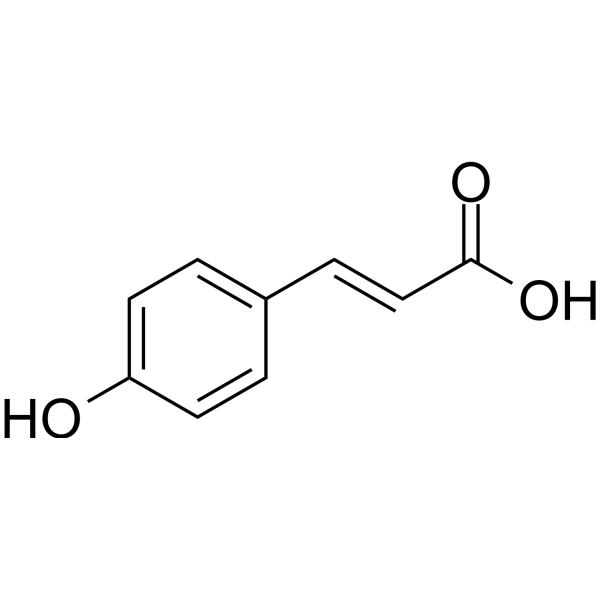
p-Coumaric acid (trans-4-Hydroxycinnamic acid) is an isomer of cinnamic acid with oral activity. p-Coumaric acid inhibits cell proliferation and promotes apoptosis. p-Coumaric acid has antibacterial, anti-inflammatory, antioxidant and anti-tumor activities .
|
-
-
- HY-N0610
-
-
-
- HY-77641
-
|
|
Endogenous Metabolite
|
Metabolic Disease
|
|
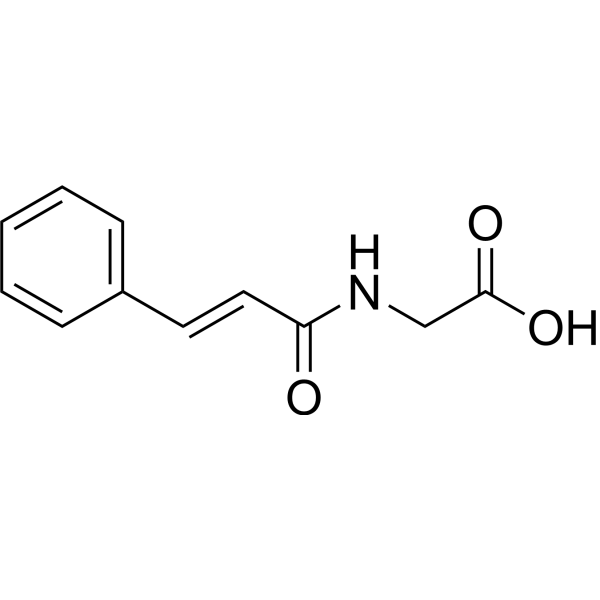
Cinnamoylglycine is a human urinary metabolite and PPG analog. Cinnamoylglycine is a conjugate of cinnamic acid and glycine. Cinnamoylglycine is used as a urine marker. Cinnamoylglycine can be used in adipogenic differentiation studies .
|
-
-
- HY-N0761
-
-
-
- HY-41404
-
|
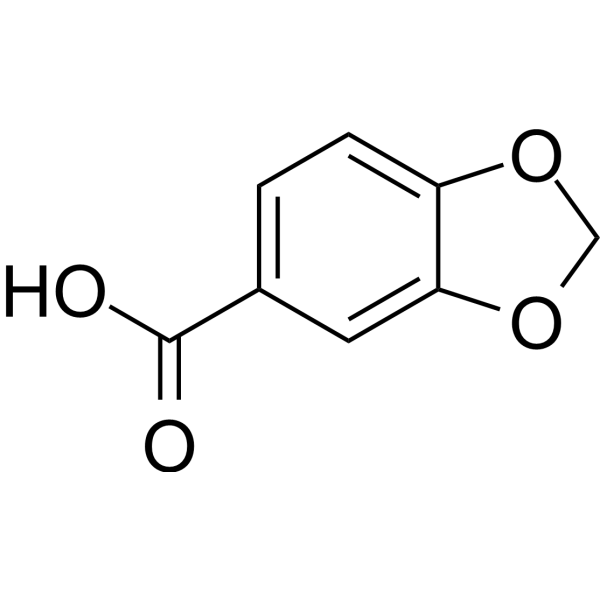
2H-1,3-benzodioxole-5-carboxylic acid
|
Cytochrome P450
Interleukin Related
EGFR
IGF-1R
|
Infection
Others
Cancer
|
|
Piperonylic acid is a natural molecule bearing a methylenedioxy function that closely mimics the structure of trans-cinnamic acid. Piperonylic Acid is a selective, mechanism-based inactivator of the trans-cinnamate 4-Hydroxylase. Piperonylic acid has anticancer, antioxidant and antibacterial activities .
|
-
-
- HY-N0610R
-
|
Trans-3-Phenylacrylic acid (Standard)
|
Reference Standards
Bacterial
Endogenous Metabolite
|
Infection
Cancer
|
|
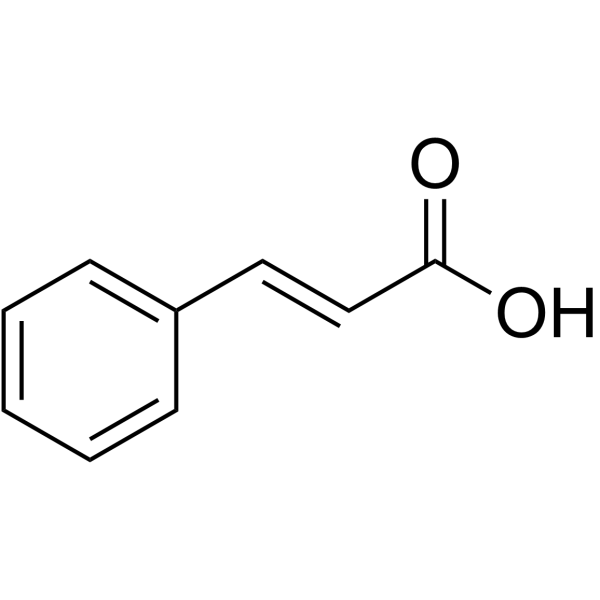
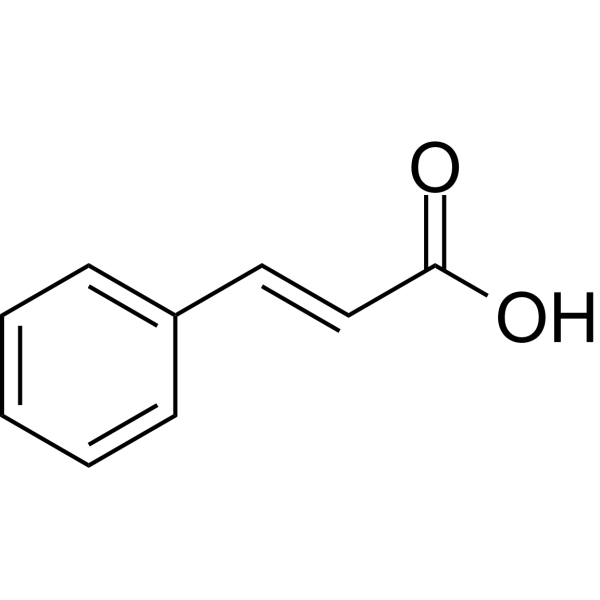
trans-Cinnamic acid (Standard) is the analytical standard of trans-Cinnamic acid. This product is intended for research and analytical applications. trans-Cinnamic acid is a natural antimicrobial, with minimal inhibitory concentration (MIC) of 250 μg/mL against fish pathogen A. sobria, SY-AS1 .
|
-
-
- HY-N0351S1
-
|
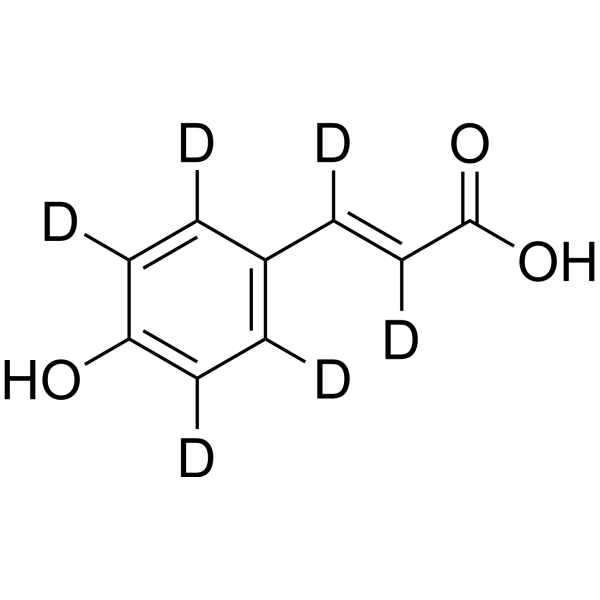
trans-4-Hydroxycinnamic acid-d6
|
Endogenous Metabolite
|
Cancer
|
|
p-Coumaric acid-d6 is the deuterium labeled p-Coumaric acid (HY-N0351). p-Coumaric acid is the abundant isomer of cinnamic acid which has antitumor and anti-mutagenic activities .
|
-
-
- HY-N0351R
-
|
trans-4-Hydroxycinnamic acid (Standard)
|
Reference Standards
Endogenous Metabolite
Bacterial
Apoptosis
|
Inflammation/Immunology
Cancer
|
|
p-Coumaric acid (Standard) is the analytical standard of p-Coumaric acid. This product is intended for research and analytical applications. p-Coumaric acid (trans-4-Hydroxycinnamic acid) is an isomer of cinnamic acid with oral activity. p-Coumaric acid inhibits cell proliferation and promotes apoptosis. p-Coumaric acid has antibacterial, anti-inflammatory, antioxidant and anti-tumor activities .
|
-
-
- HY-W050162
-
|
TMCA
|
GABA Receptor
5-HT Receptor
|
Neurological Disease
|
|
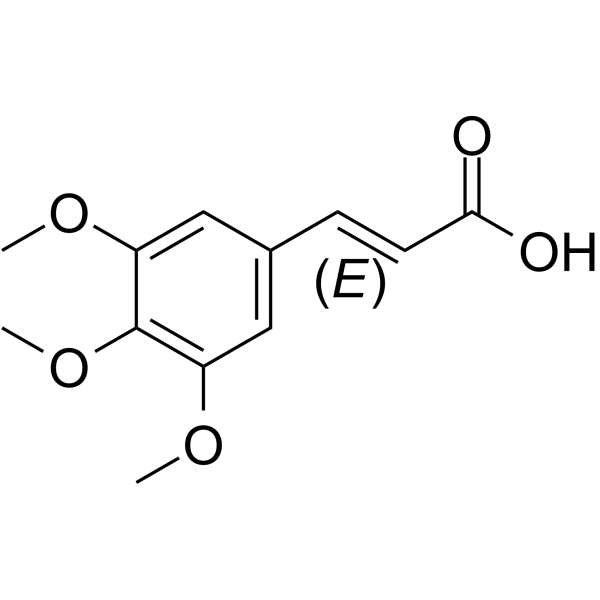
(E)-3,4,5-Trimethoxycinnamic acid (TMCA) is a cinnamic acid substituted by multi-methoxy groups. (E)-3,4,5-Trimethoxycinnamic acid is an orally active and potent GABAA/BZ receptor agonist. (E)-3,4,5-Trimethoxycinnamic exhibits favourable binding affinity to 5-HT2C and 5-HT1A receptor, with IC50 values of 2.5 and 7.6 μM, respectively. (E)-3,4,5-Trimethoxycinnamic acid shows anticonvulsant and sedative activity. (E)-3,4,5-Trimethoxycinnamic acid can be used for the research of insomnia, headache and epilepsy .
|
-
-
- HY-W015399
-
|
|
Fungal
|
Infection
|
|
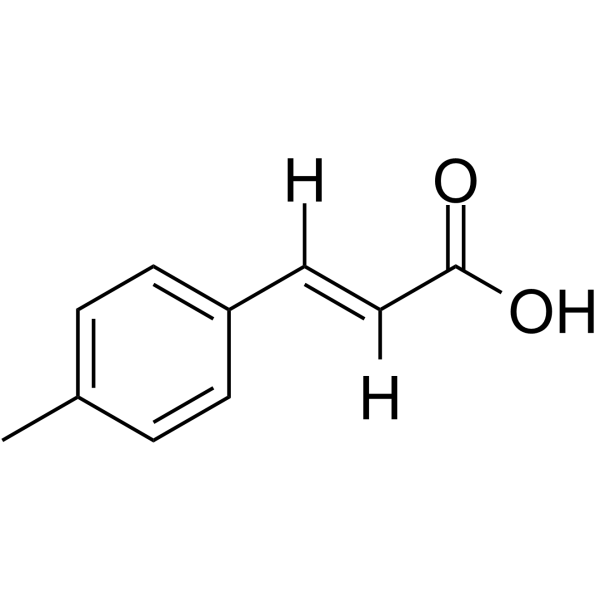
4-Methylcinnamic acid is a cinnamic acid derivative with antifungal activity. 4-Methylcinnamic acid can overcome the tolerance of glutathione reductase mutants to 4-Methoxycinnamic acid (HY-N1387). When 4-Methylcinnamic acid is used in combination with traditional antifungal agents, it can reduce their minimum inhibitory concentrations. 4-Methylcinnamic acid can act as an intervention catalyst to enhance the efficacy of traditional antifungal agents and has application potential in targeting fungal cell wall disruption and controlling drug-resistant fungi .
|
-
-
- HY-I0008
-
-
-
- HY-114771
-
|
|
Drug Intermediate
|
Inflammation/Immunology
|
|
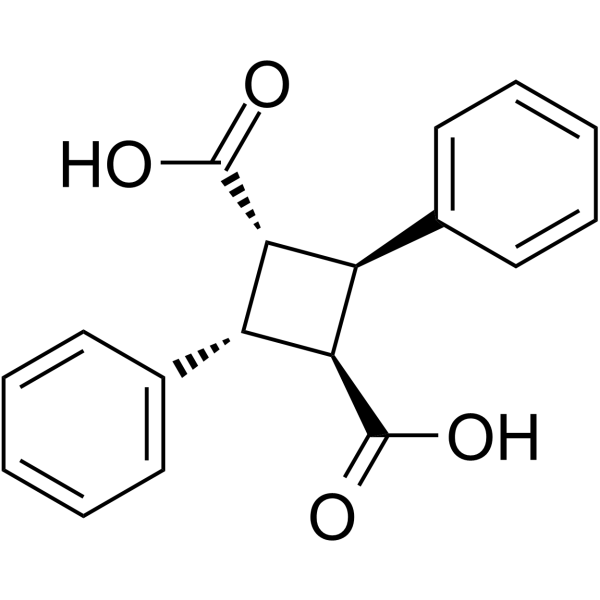
α-Truxillic acid is form by the dimerization of two molecules of α-trans-cinnamic acid, with anti-inflammatory activities. α-Truxillic acid has no analgesic activity, but its derivatives bound to camphor fragments exhibit significant activity in the peripheral analgesic model (writhing test) .
|
-
-
- HY-N0351S
-
|
|
Endogenous Metabolite
|
Cancer
|
|
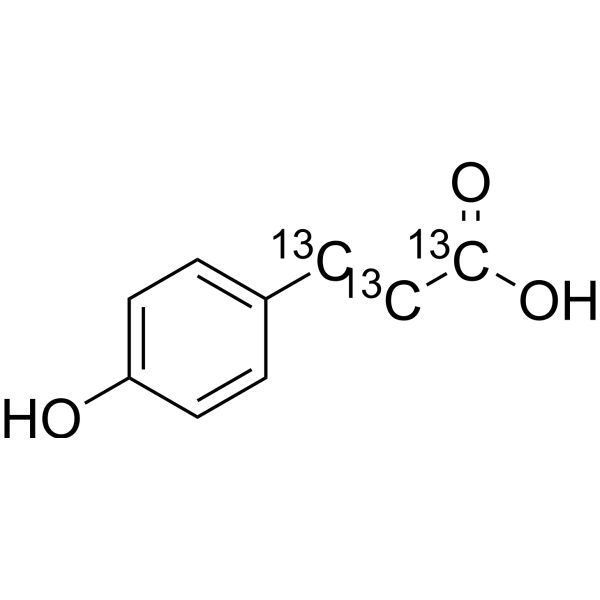
p-Coumaric acid- 13C3 is the 13C-labeled p-Coumaric acid. p-Coumaric acid is the abundant isomer of cinnamic acid which has antitumor and anti-mutagenic activities.
|
-
-
- HY-W102375
-
|
|
Drug Intermediate
|
Inflammation/Immunology
|
|
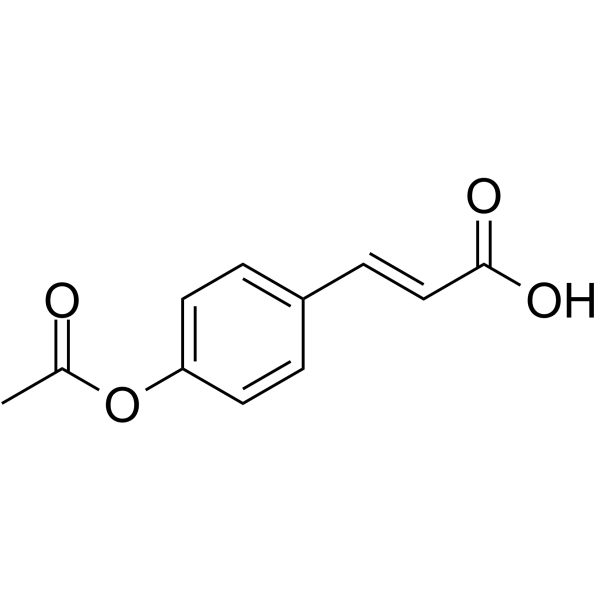
4-Acetoxycinnamic acid is an acetate ester obtained by the formal condensation of the hydroxy group of trans-4-coumaric acid with acetic acid. 4-Acetoxycinnamic acid is a member of cinnamic acids and a member of phenyl acetates. 4-Acetoxycinnamic acid derives from a trans-4-coumaric acid .
|
-
-
- HY-N0610S1
-
|
trans-3-Phenylacrylic acid-d7
|
Bacterial
Endogenous Metabolite
|
Infection
|
|
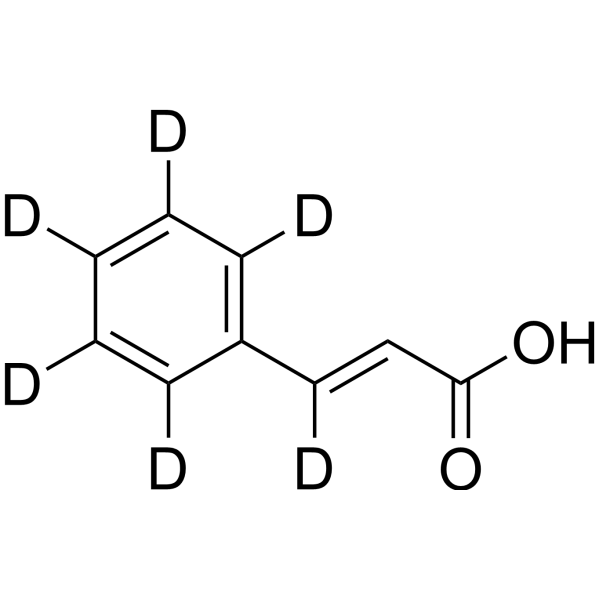
trans-Cinnamic acid-d7 is the deuterium labeled trans-Cinnamic acid . trans-Cinnamic acid is a natural antimicrobial, with minimal inhibitory concentration (MIC) of 250 μg/mL against fish pathogen A. sobria, SY-AS1 .
|
-
-
- HY-N0610AS
-
|
3-Phenylacrylic acid-d6; β-Phenylacrylic acid-d6
|
Endogenous Metabolite
|
Cancer
|
|
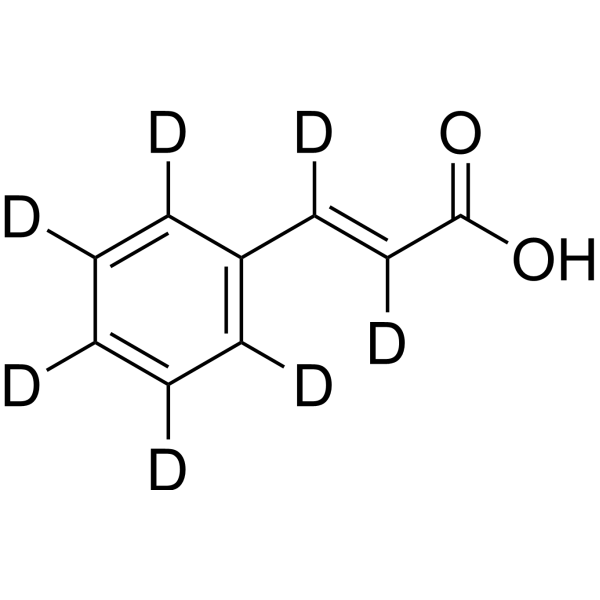
Cinnamic acid-d6 is the deuterium labeled Cinnamic acid. Cinnamic acid has potential use in cancer intervention, with IC50s of 1-4.5 mM in glioblastoma, melanoma, prostate and lung carcinoma cells.
|
-
-
- HY-N0610AS2
-
|
3-Phenylacrylic acid-13C3; β-Phenylacrylic acid-13C3
|
Isotope-Labeled Compounds
Endogenous Metabolite
|
Cancer
|
|
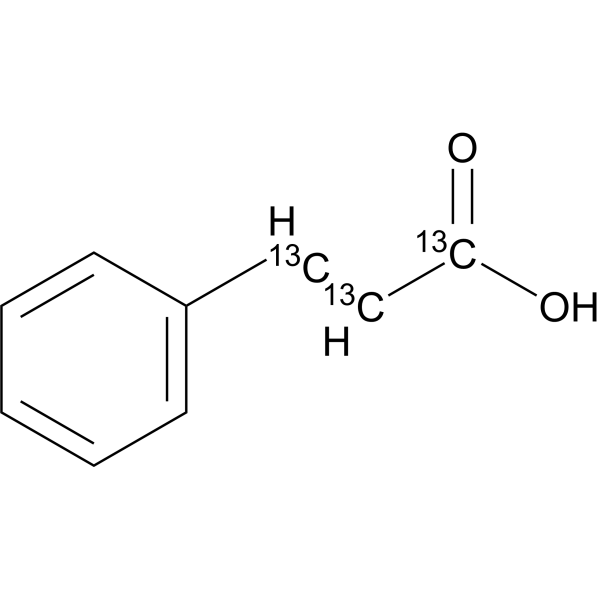
Cinnamic acid- 13C3 (3-Phenylacrylic acid- 13C3) is the 13C labeled Cinnamic acid (HY-N0610A). Cinnamic acid has potential use in cancer intervention, with IC50s of 1-4.5 mM in glioblastoma, melanoma, prostate and lung carcinoma cells .
|
-
-
- HY-N0351A
-
|
cis-4-Hydroxycinnamic acid
|
Apoptosis
|
Metabolic Disease
|
|
cis-p-Coumaric acid (cis-4-Hydroxycinnamic acid) is the cis-form of p-Coumaric acid (HY-N0351), which is higher in viable seeds of groundnuts than in non-viable ones. p-Coumaric acid is an isomer of cinnamic acid with oral activity. p-Coumaric acid inhibits cell proliferation and promotes Apoptosis .
|
-
-
- HY-N2492
-
|
Methyl trans-p-coumarate
|
Apoptosis
Interleukin Related
GSK-3
Parasite
|
Infection
Cancer
|
|
(E)-Methyl 4-coumarate (Methyl 4-hydroxycinnamate) is a phenolic compound and derivative of Cinnamic acid (HY-N0610A). (E)-Methyl 4-coumarate can be found in several plants, such as the leaves of Allium cepa and Morinda citrifolia L. (E)-Methyl 4-coumarate, when combined with Carnosic acid (HY-N0644), induces Apoptosis. (E)-Methyl 4-coumarate inhibits GSK3β activity and modulates inflammatory cytokine levels (increasing IL-10 and decreasing IL-4). (E)-Methyl 4-coumarate combined with Carnosic acid exhibits anticancer effects against acute myeloid leukemia. (E)-Methyl 4-coumarate ameliorates Plasmodium berghei NK65 infection .
|
-
-
- HY-W067479
-
|
|
Insecticide
|
Others
|
|
(E)-Cinnamamide, the less active isomer of Cinnamamide. Cinnamamide, a derivative of the plant secondary compound Cinnamic acid. Cinnamamide is effective as a non-lethal chemical repellent suitable for reducing avian pest damage .
|
-
-
- HY-77641S
-
|
|
Isotope-Labeled Compounds
Endogenous Metabolite
|
Metabolic Disease
|
|
Cinnamoylglycine-d2 is the deuterium labeled Cinnamoylglycine. Cinnamoylglycine is a glycine conjugate of cinnamic acid and a urinary metabolite in human. Cinnamoylglycine is used as a potential urinary biomarker indicating intact or disrupted colonization resistance during and after antibiotic treatment .
|
-
-
- HY-Y0729
-
|
|
Tyrosinase
Bacterial
Fungal
Drug Derivative
|
Infection
Neurological Disease
|
|
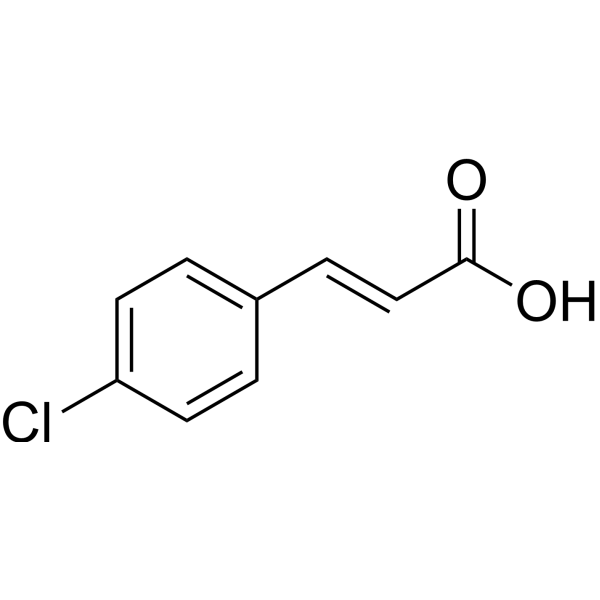
4-Chlorocinnamic acid is a derivative of Cinnamic acid (HY-N0610A). 4-Chlorocinnamic acid inhibits the monophenolase and diphenolase activities of mushroom tyrosinase with IC50 values of 0.477 mM and 0.229 mM, respectively. 4-Chlorocinnamic acid inhibits the mycelial growth of Colletotrichum gloeosporioides. 4-Chlorocinnamic acid exhibits anticonvulsant activity against acute epilepsy induced by pentylenetetrazol .
|
-
-
- HY-75424A
-
|
|
Proton Pump
|
Inflammation/Immunology
|
|
2-(Trifluoromethyl)cinnamic acid is a cinnamic acid derivative that inhibits the proton pump (H +/K +-ATPase), thereby reducing gastric acid secretion. 2-(Trifluoromethyl)cinnamic acid also improves delayed gastric emptying and can be used in research on gastric diseases such as acute gastritis and gastric ulcers .
|
-
-
- HY-W019715
-
|
|
Drug Derivative
|
Others
|
|
trans-4-(Trifluoromethyl)cinnamic acid is a Phenylpropanoids product that can be isolated from the barks of Cinnamomum cassia Presl .
|
-
-
- HY-W015399R
-
|
|
Reference Standards
Fungal
|
Infection
|
|
4-Methylcinnamic acid, a Cinnamic acid analog, can be used as a intervention catalyst for overcoming antifungal tolerance. 4-Methylcinnamic acid can improve the potency of cell wall-disrupting agents .
|
-
-
- HY-P2951
-
|
|
Biochemical Assay Reagents
|
Metabolic Disease
|
|
Phenylalanine ammonia-lyase is a non-mammalian enzyme converting phenylalanine into trans-cinnamic acid and ammonia. Phenylalanine ammonia-lyase can be used in the research of phenylketonuria .
|
-
-
- HY-130762
-
-
-
- HY-N0610AR
-
|
3-Phenylacrylic acid (Standard); β-Phenylacrylic acid (Standard)
|
Reference Standards
Endogenous Metabolite
|
Cancer
|
|
Cinnamic acid (Standard) is the analytical standard of Cinnamic acid. This product is intended for research and analytical applications. Cinnamic acid has potential use in cancer intervention, with IC50s of 1-4.5 mM in glioblastoma, melanoma, prostate and lung carcinoma cells.
|
-
-
- HY-W068783
-
|
(E)-Piperonylprop-2-enoic acid
|
Endogenous Metabolite
|
Others
|
|
(E)-3,4-(Methylenedioxy)cinnamic acid is a cinnamic acid derivative obtained from the stem bark of Brombya platynema .
|
-
-
- HY-N12538
-
|
|
Parasite
|
Infection
|
|
trans-Cinnamic anhydride is a Parasite inhibitor tnat can be isolated from Cinnamomum zeylanicum and exhibits moderate activity against Plasmodium falciparum .
|
-
-
- HY-N0610S
-
|
trans-3-Phenylacrylic acid-d5
|
Bacterial
Endogenous Metabolite
|
Infection
|
|
trans-Cinnamic acid-d5 is the deuterium labeled trans-Cinnamic acid . trans-Cinnamic acid is a natural antimicrobial, with minimal inhibitory concentration (MIC) of 250 μg/mL against fish pathogen A. sobria, SY-AS1 .
|
-
-
- HY-N15722
-
|
|
Reactive Oxygen Species (ROS)
|
Inflammation/Immunology
|
|
9-O-β-D-Glucopyranosyl-3,4-dimethoxy-cinnamic acid is an orally active phenylpropanoid glycoside found in Microlepia pilosissima, acting as an antioxidant. 9-O-β-D-Glucopyranosyl-3,4-dimethoxy-cinnamic acid shows a DPPH radical scavenging activity with an ED50 value of 38.1 μM. 9-O-β-D-Glucopyranosyl-3,4-dimethoxy-cinnamic acid is promising for research of oxidative stress-related diseases such as inflammation and liver injury .
|
-
-
- HY-168058
-
|
|
Glycosidase
|
|
|
WXC-25 is an inhibitor of α-glucosidase with an IC50 value of 2.02 μM .
|
-
-
- HY-163297
-
|
|
Fungal
|
Infection
|
|
Antifungal agent 90 (Compound 7n) is an antifungal agent that inhibits ergosterol biosynthesis. Antifungal agent 90 showed excellent antifungal activity against Valsa mali and Botrytis cinerea with EC50 values respectively. 4.26 and 1.41 μg/mL .
|
-
-
- HY-163188
-
|
|
COX
Lipoxygenase
|
Inflammation/Immunology
|
|
COX-2/LOX-IN-2 (compound 6) is a dual inhibitor of COX-2/LOX with IC50s of 7.0 μM and 27.5 μM, respectively. COX-2/LOX-IN-2 has antioxidant activity and has the potential to be used in the development of nonsteroidal anti-inflammatory drugs (tNSAIDs) .
|
-
-
- HY-77641R
-
|
|
Reference Standards
Endogenous Metabolite
|
Metabolic Disease
|
|
Cinnamoylglycine (Standard) is the analytical standard of Cinnamoylglycine. This product is intended for research and analytical applications. Cinnamoylglycine is a glycine conjugate of cinnamic acid and a urinary metabolite in human. Cinnamoylglycine is used as a potential urinary biomarker indicating intact or disrupted colonization resistance during and after antibiotic treatment .
|
-
-
- HY-41404R
-
|
2H-1,3-benzodioxole-5-carboxylic acid (Standard)
|
Cytochrome P450
Interleukin Related
EGFR
IGF-1R
Reference Standards
|
Infection
Others
Cancer
|
|
Piperonylic acid (Standard) is the analytical standard of Piperonylic acid. This product is intended for research and analytical applications. Piperonylic acid is a natural molecule bearing a methylenedioxy function that closely mimics the structure of trans-cinnamic acid. Piperonylic Acid is a selective, mechanism-based inactivator of the trans-cinnamate 4-Hydroxylase. Piperonylic acid has anticancer, antioxidant and antibacterial activities .
|
-
-
- HY-N0761R
-
|
3-Hydroxy-4-methoxycinnamic acid (Standard)
|
Reference Standards
Adrenergic Receptor
Influenza Virus
|
Infection
Metabolic Disease
Inflammation/Immunology
Endocrinology
|
|
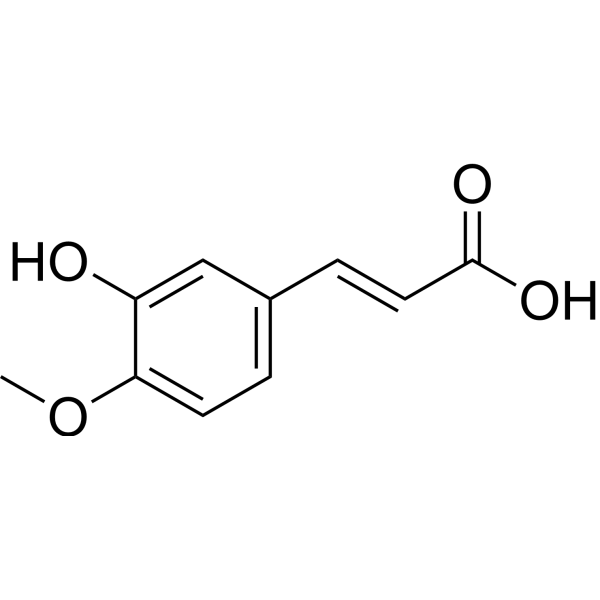
Isoferulic acid (Standard) (3-Hydroxy-4-methoxycinnamic acid (Standard)) is the analytical standard of Isoferulic acid (HY-N0761). This product is intended for research and analytical applications. Isoferulic acid (3-Hydroxy-4-methoxycinnamic acid) is an orally active cinnamic acid derivative. Isoferulic acid exhibits hypoglycemic, antiviral, and antioxidant activities. Isoferulic acid can also inhibit fructose- and glucose-mediated protein glycation. Isoferulic acid can be used in the research of diseases such as diabetes .
|
-
-
- HY-N9251R
-
|
|
Reference Standards
Others
|
Others
|
|
Isoferulic acid (Standard) is the analytical standard of Isoferulic acid. This product is intended for research and analytical applications. Isoferulic acid (3-Hydroxy-4-methoxycinnamic acid) is a cinnamic acid derivative that has antidiabetic activity. Isoferulic acid binds to and activates α1-adrenergic receptors (IC50=1.4 µM) to enhance secretion of β-endorphin (EC50=52.2 nM) and increase glucose use. Isoferulic acid also has anti-influenza virus activities.
|
-
-
- HY-N2492R
-
|
Methyl trans-p-coumarate (Standard)
|
Reference Standards
Apoptosis
Parasite
Interleukin Related
GSK-3
|
Infection
Cancer
|
|
(E)-Methyl 4-coumarate (Standard) is the analytical standard of (E)-Methyl 4-coumarate (HY-N2492). This product is intended for research and analytical applications. (E)-Methyl 4-coumarate (Methyl 4-hydroxycinnamate) is a phenolic compound and derivative of Cinnamic acid (HY-N0610A). (E)-Methyl 4-coumarate can be found in several plants, such as the leaves of Allium cepa and Morinda citrifolia L. (E)-Methyl 4-coumarate, when combined with Carnosic acid (HY-N0644), induces Apoptosis. (E)-Methyl 4-coumarate inhibits GSK3β activity and modulates inflammatory cytokine levels (increasing IL-10 and decreasing IL-4). (E)-Methyl 4-coumarate combined with Carnosic acid exhibits anticancer effects against acute myeloid leukemia. (E)-Methyl 4-coumarate ameliorates Plasmodium berghei NK65 infection .
|
-
-
- HY-W019715R
-
|
|
Others
Reference Standards
|
Others
|
|
trans-4-(Trifluoromethyl)cinnamic acid (Standard) is the analytical standard of trans-4-(Trifluoromethyl)cinnamic acid (HY-W019715). This product is intended for research and analytical applications. trans-4-(Trifluoromethyl)cinnamic acid is a Phenylpropanoids product that can be isolated from the barks of Cinnamomum cassia Presl .
|
-
-
- HY-W739223
-
|
Trans-3-Phenylacrylic acid-d6
|
Isotope-Labeled Compounds
Bacterial
Endogenous Metabolite
|
Infection
Cancer
|
|
Trans-Cinnamic acid-d6 (Trans-3-Phenylacrylic acid-d6) is the deuterium labeled Trans-Cinnamic acid (HY-N0610). trans-Cinnamic acid is a natural antimicrobial, with minimal inhibitory concentration (MIC) of 250 μg/mL against fish pathogen A. sobria, SY-AS1 .
|
-
-
- HY-N17566
-
|
|
Bacterial
Histamine Receptor
|
Infection
Inflammation/Immunology
|
|
Eukovoside is a cinnamic acid derivative found in Euphrasia regelii with anti-inflammatory, antioxidant, antibacterial, antiallergic, and antihistamine activity. Eukovoside can be used for the research of hyperglycemic diseases, eye inflammation, upper respiratory passages inflammation, hay fever, conjunctivitis, colds, influenza, sinusitis .
|
-
-
- HY-N7423A
-
|
(E)-Isoferulic acid methyl ester
|
Drug Derivative
NO Synthase
Endogenous Metabolite
|
Infection
Cancer
|
|
(E)-Methyl isoferulate ((E)-Isoferulic acid methyl ester) (Compound 8) is a derivative of Cinnamic acid (HY-N0610A) and NO inhibitor, with an IC50 > 100 μM against nitric oxide production. (E)-Methyl isoferulate is isolable from the solid cultures of the edible mushroom Neolentinus lepideus. (E)-Methyl isoferulate exerts mild anticancer effects against liver cancer and leukemia .
|
-
-
- HY-N17977
-
|
|
Drug Derivative
|
Others
|
|
Lansiumamide A is a cinnamamide derivative found in the seeds of Clausena lansium .
|
-
-
- HY-W016623
-
|
|
Drug Intermediate
|
Cancer
|
|
3-Methoxycinnamic acid is a key intermediate in the synthesis of phosphatidylcholine containing cinnamic acid (HY-N0610A). 3-Methoxycinnamic acid exhibits anti-proliferative properties against cancer cells .
|
-
-
- HY-N19933
-
|
|
Glycosidase
|
|
|
cis-3-O-Hydroxycinnamoyl-ursolic acid is a cis-cinnamic acid ester derivative. cis-3-O-Hydroxycinnamoyl-ursolic acid exhibits no α-glucosidase inhibitory activity .
|
-
-
- HY-180639
-
-
-
- HY-N18199
-
|
|
Parasite
|
Infection
|
|
rel-Bornyl cinnamate is an anti-schistosomal agent. rel-Bornyl cinnamate induces round, dark morphological changes, followed by degeneration in Schistosoma mansoni schistosomula. rel-Bornyl cinnamate can be used for the research of schistosomiasis .
|
-
- HY-114506
-
|
|
Drug Derivative
Glycosidase
HIV
|
Infection
Metabolic Disease
|
|
trans-2-Methoxycinnamic acid (Compound 6) is a trans-cinnamic acid (HY-N0610) derivative. trans-2-Methoxycinnamic acid inhibits α-glucosidase with an IC50 of 4.34 mM. trans-2-Methoxycinnamic acid can be used in the research of HIV infection and hyperglycemia .
|
-
- HY-W067479R
-
|
|
Insecticide
Reference Standards
|
Others
|
|
(E)-Cinnamamide (Standard) is the analytical standard of (E)-Cinnamamide (HY-W067479). This product is intended for research and analytical applications. (E)-Cinnamamide, the less active isomer of Cinnamamide. Cinnamamide, a derivative of the plant secondary compound Cinnamic acid. Cinnamamide is effective as a non-lethal chemical repellent suitable for reducing avian pest damage .
|
-
- HY-W102375R
-
|
|
Drug Intermediate
Reference Standards
|
Inflammation/Immunology
|
|
4-Acetoxycinnamic acid (Standard) is the analytical standard of 4-Acetoxycinnamic acid (HY-W102375). This product is intended for research and analytical applications. 4-Acetoxycinnamic acid is an acetate ester obtained by the formal condensation of the hydroxy group of trans-4-coumaric acid with acetic acid. 4-Acetoxycinnamic acid is a member of cinnamic acids and a member of phenyl acetates. 4-Acetoxycinnamic acid derives from a trans-4-coumaric acid .
|
-
| Cat. No. |
Product Name |
Category |
Target |
Chemical Structure |
-
- HY-N0610A
-
-
-
- HY-N0351
-
-
-
- HY-N0610
-
-
-
- HY-77641
-
-
-
- HY-N0761
-
-
-
- HY-41404
-
-
-
- HY-N0610R
-
-
-
- HY-N0351R
-
-
-
- HY-W102375
-
-
-
- HY-N0351A
-
-
-
- HY-N2492
-
-
-
- HY-W067479
-
-
-
- HY-W019715
-
-
-
- HY-N0610AR
-
-
-
- HY-W068783
-
-
-
- HY-N12538
-
-
-
- HY-N15722
-
-
-
- HY-77641R
-
-
-
- HY-41404R
-
-
-
- HY-N0761R
-
-
-
- HY-N9251R
-
-
-
- HY-N2492R
-
|
Methyl trans-p-coumarate (Standard)
|
Structural Classification
Monophenols
Morinda citrifolia Linn.
Rubiaceae
Other Phenylpropanoids
Phenols
Phenylpropanoids
Plants
Source Classification
|
Reference Standards
Apoptosis
Parasite
Interleukin Related
GSK-3
|
|
(E)-Methyl 4-coumarate (Standard) is the analytical standard of (E)-Methyl 4-coumarate (HY-N2492). This product is intended for research and analytical applications. (E)-Methyl 4-coumarate (Methyl 4-hydroxycinnamate) is a phenolic compound and derivative of Cinnamic acid (HY-N0610A). (E)-Methyl 4-coumarate can be found in several plants, such as the leaves of Allium cepa and Morinda citrifolia L. (E)-Methyl 4-coumarate, when combined with Carnosic acid (HY-N0644), induces Apoptosis. (E)-Methyl 4-coumarate inhibits GSK3β activity and modulates inflammatory cytokine levels (increasing IL-10 and decreasing IL-4). (E)-Methyl 4-coumarate combined with Carnosic acid exhibits anticancer effects against acute myeloid leukemia. (E)-Methyl 4-coumarate ameliorates Plasmodium berghei NK65 infection .
|
-
-
- HY-W019715R
-
-
-
- HY-N17566
-
|
|
Structural Classification
Polysaccharides
Terpenoids
Sesquiterpenes
Orobanchaceae
Plants
Euphrasia regelii Wettst.
Saccharides
Source Classification
|
Bacterial
Histamine Receptor
|
|
Eukovoside is a cinnamic acid derivative found in Euphrasia regelii with anti-inflammatory, antioxidant, antibacterial, antiallergic, and antihistamine activity. Eukovoside can be used for the research of hyperglycemic diseases, eye inflammation, upper respiratory passages inflammation, hay fever, conjunctivitis, colds, influenza, sinusitis .
|
-
-
- HY-N7423A
-
-
-
- HY-N17977
-
-
-
- HY-N19933
-
-
-
- HY-180639
-
-
-
- HY-N18199
-
-
-
- HY-114506
-
-
-
- HY-W067479R
-
-
-
- HY-W102375R
-
-
| Cat. No. |
Product Name |
Chemical Structure |
-
- HY-N0351S1
-
1 Publications Verification
|
|
p-Coumaric acid-d6 is the deuterium labeled p-Coumaric acid (HY-N0351). p-Coumaric acid is the abundant isomer of cinnamic acid which has antitumor and anti-mutagenic activities .
|
-
-
- HY-N0351S
-
|
|
|
p-Coumaric acid- 13C3 is the 13C-labeled p-Coumaric acid. p-Coumaric acid is the abundant isomer of cinnamic acid which has antitumor and anti-mutagenic activities.
|
-
-
- HY-N0610S1
-
|
|
|
trans-Cinnamic acid-d7 is the deuterium labeled trans-Cinnamic acid . trans-Cinnamic acid is a natural antimicrobial, with minimal inhibitory concentration (MIC) of 250 μg/mL against fish pathogen A. sobria, SY-AS1 .
|
-
-
- HY-N0610AS
-
|
|
|
Cinnamic acid-d6 is the deuterium labeled Cinnamic acid. Cinnamic acid has potential use in cancer intervention, with IC50s of 1-4.5 mM in glioblastoma, melanoma, prostate and lung carcinoma cells.
|
-
-
- HY-N0610AS2
-
|
|
|
Cinnamic acid- 13C3 (3-Phenylacrylic acid- 13C3) is the 13C labeled Cinnamic acid (HY-N0610A). Cinnamic acid has potential use in cancer intervention, with IC50s of 1-4.5 mM in glioblastoma, melanoma, prostate and lung carcinoma cells .
|
-
-
- HY-77641S
-
|
|
|
Cinnamoylglycine-d2 is the deuterium labeled Cinnamoylglycine. Cinnamoylglycine is a glycine conjugate of cinnamic acid and a urinary metabolite in human. Cinnamoylglycine is used as a potential urinary biomarker indicating intact or disrupted colonization resistance during and after antibiotic treatment .
|
-
-
- HY-N0610S
-
|
|
|
trans-Cinnamic acid-d5 is the deuterium labeled trans-Cinnamic acid . trans-Cinnamic acid is a natural antimicrobial, with minimal inhibitory concentration (MIC) of 250 μg/mL against fish pathogen A. sobria, SY-AS1 .
|
-
-
- HY-W739223
-
|
|
|
Trans-Cinnamic acid-d6 (Trans-3-Phenylacrylic acid-d6) is the deuterium labeled Trans-Cinnamic acid (HY-N0610). trans-Cinnamic acid is a natural antimicrobial, with minimal inhibitory concentration (MIC) of 250 μg/mL against fish pathogen A. sobria, SY-AS1 .
|
-
Your information is safe with us. * Required Fields.
Inquiry Information
- Product Name:
- Cat. No.:
- Quantity:
- MCE Japan Authorized Agent:

