18 Results for "

conditioned place preference

" in MedChemExpress (MCE) Product Catalog:
Products (18)

18 Results for "conditioned place preference" in MCE Product Catalog:

2
2 Cited Publications
Cat. No.: HY-P1284
CAS No.: 863987-12-6
Target:  

PKC

Research Areas:  

Neurological Disease Cancer

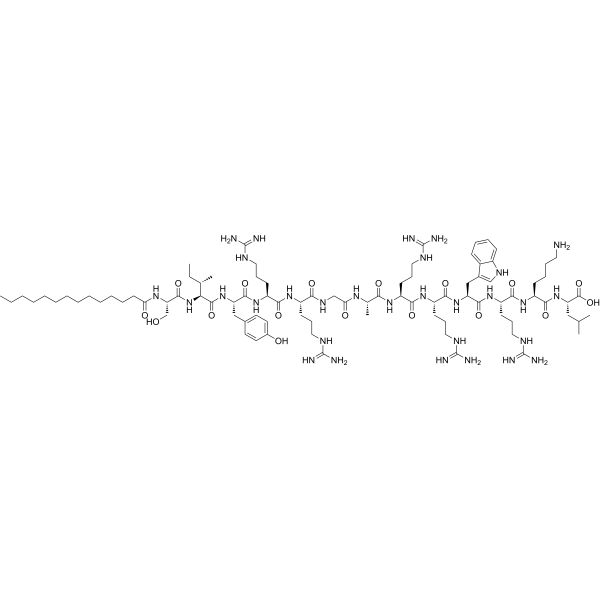
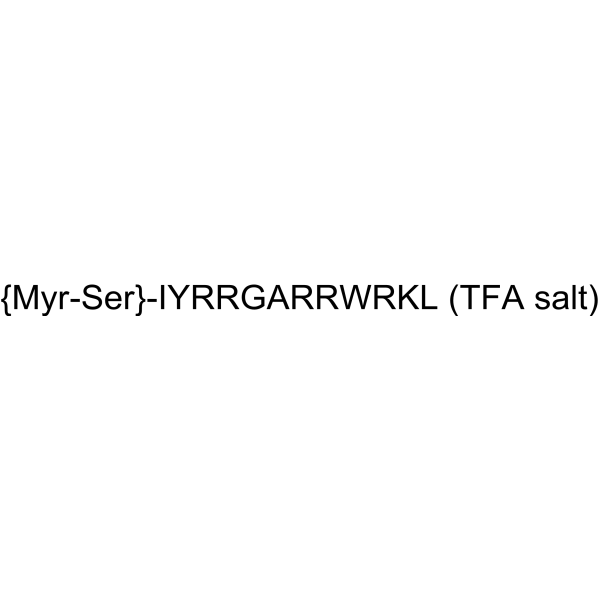
ZIP is a selective peptide inhibitor of PKMζ. ZIP injections can block the impairment in morphine conditioned place preference induced .
loading...
    loading...
1
1 Cited Publications
Cat. No.: HY-18775
CAS No.: 110505-75-4
Synonyms: Para-topolin riboside
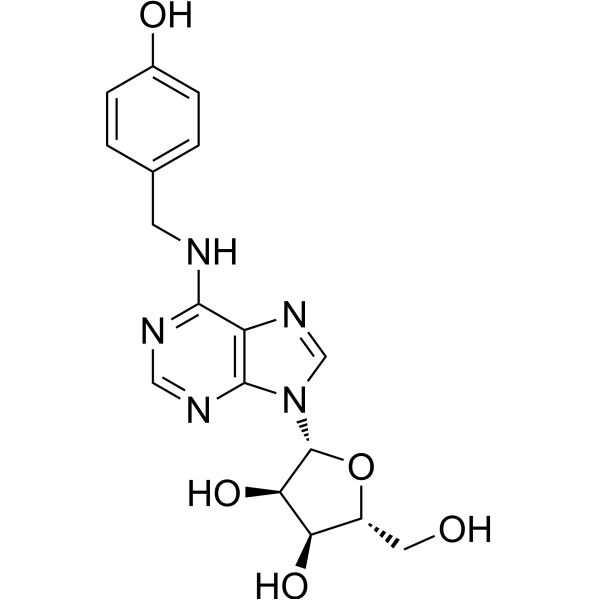
N6-(4-Hydroxybenzyl) adenosine (Para-topolin riboside) is an equilibrative nucleoside transporter 1 (ENT1) inhibitor and a selective agonist of adenosine A2a receptor (A2aR), and also exhibits activity against P2Y12 receptor. N6-(4-Hydroxybenzyl) adenosine reduces ethanol intake and preference, attenuates operant conditioning-induced ethanol place preference, decreases the value of ethanol-related rewards, and inhibits collagen-induced platelet aggregation. N6-(4-Hydroxybenzyl) adenosine can be used in studies related to alcohol use disorder .
loading...
    loading...
Cat. No.: HY-116181
CAS No.: 1221408-42-9
Purity:  98.62%
Target:  

Dopamine Receptor

Research Areas:  

Neurological Disease

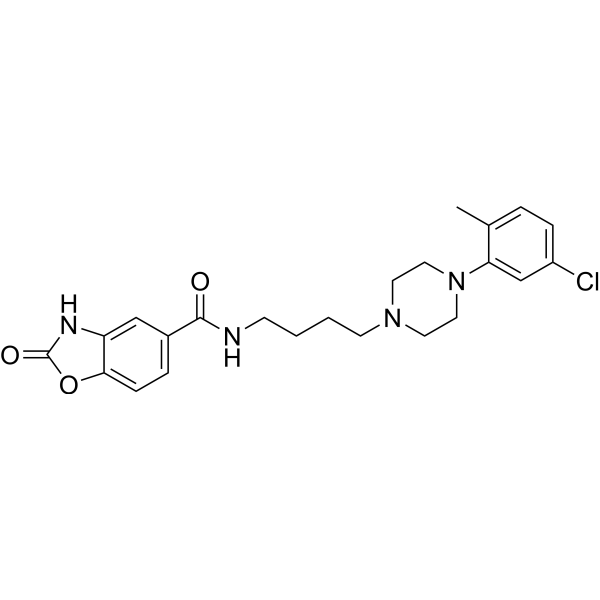
YQA14 is a high affinity dopamine D3 receptor antagonist. YQA14 is anti-opioid addiction agent. YQA14 inhibits Morphine/Cocaine-induced conditioned place preference (CPP) in animals .
loading...
    loading...
Cat. No.: HY-113316A
CAS No.: 79923-51-6
Purity:  98%
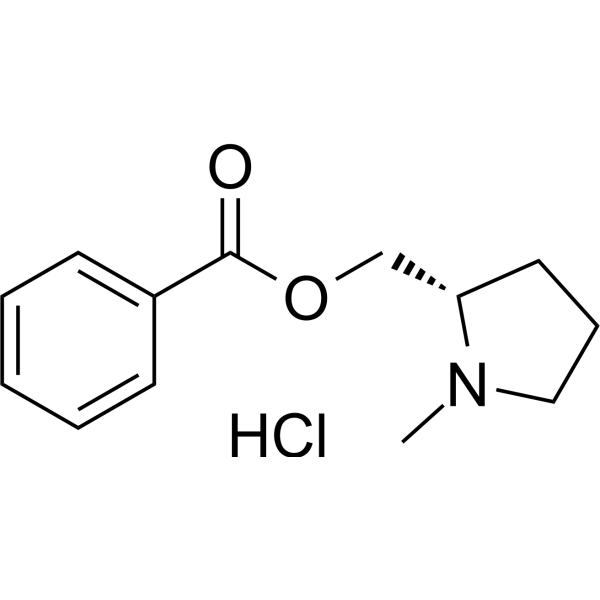
(±)-Salsolinol hydrochloride is the hydrochloride form of (±)-Salsolinol (HY-113316). (±)-Salsolinol hydrochloride is a Dopamine (HY-B0451)-derived endogenous metabolite. (±)-Salsolinol hydrochloride activates μ-opioid receptors (MORs), reduces GABAergic transmission, increases the excitability of dopamine (DA) neurons, and thus accelerates the sustained firing of neurons in the posterior ventral tegmental area (pVTA) .
loading...
    loading...
Cat. No.: HY-N0927
CAS No.: 483-34-1
Synonyms: Tetrahydrocolumbamine; (S)-Tetrahydrocolumbamine
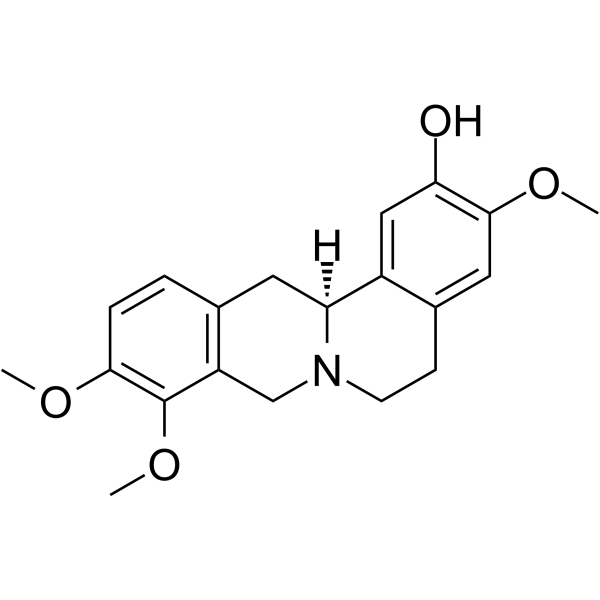
(-)-Isocorypalmine (Tetrahydrocolumbamine; (S)-Tetrahydrocolumbamine) is a dopamine receptor ligand and modulator capable of crossing the blood-brain barrier. (-)-Isocorypalmine exhibits receptor selectivity, acting as a partial agonist of dopamine D1 and D5 receptors (coupled via Gs proteins), as well as an antagonist of D2, D3 and D4 receptors (by blocking Gi protein-mediated signaling). (-)-Isocorypalmine shows no significant binding to various non-dopamine receptors, ion channels and transporters. (-)-Isocorypalmine is metabolically stable in vivo, effectively inhibits spontaneous and cocaine-induced hyperlocomotion, sensitization and conditioned place preference in mice, and does not induce addictive place preference when administered alone. (-)-Isocorypalmine can be used in addiction research .
loading...
    loading...
Cat. No.: HY-137231B
CAS No.: 2934318-93-9
Purity:  98.10%
Target:  

nAChR

Research Areas:  

Neurological Disease

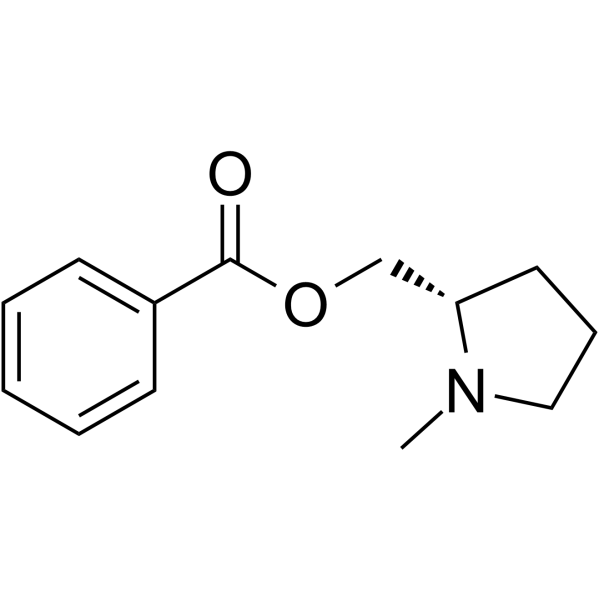
(S)-UFR2709 (hydrochloride) is a competitive nAChR antagonist?and displays higher affinity for α4β2 nAChRs than for α7 nAChRs. (S)-UFR2709 (hydrochloride) decreases anxiety and reduces ethanol consumption and ethanol preference in alcohol-preferring rats. (S)-UFR2709 (hydrochloride) acts as an anxiolytic agent and can be used for the study of nicotine addiction .
loading...
    loading...
Cat. No.: HY-P1284A
Target:  

PKC

Research Areas:  

Neurological Disease Cancer

ZIP TFA is a selective peptide inhibitor of PKMζ. ZIP TFA injections can block the impairment in morphine conditioned place preference induced .
loading...
    loading...
Cat. No.: HY-123889
CAS No.: 1982347-43-2
Target:  

Dopamine Receptor

Research Areas:  

Neurological Disease

VK4-116 (Compound 19) is a selective Dopamine D3 receptor (D3R) antagonist with a Ki of 6.84 nM.VK4-116 significantly inhibits Oxycodone-induced hyperlocomotion and locomotor sensitization in mouse models. VK4-116 with pretreatment also inhibits the acquisition of Oxycodone-induced conditioned place preference (CPP) in rat models .
loading...
    loading...
Cat. No.: HY-W634602
CAS No.: 1357266-80-8
Research Areas:  

Others

(R)-RO5263397 is a TAAR 1 agonist that demonstrates efficacy in reducing cocaine-mediated behaviors, including cocaine-induced behavioral sensitization, cue- and cocaine prime-induced reinstatement of cocaine-seeking behavior, and the expression of conditioned place preference.
loading...
    loading...
Cat. No.: HY-W013353
CAS No.: 59709-57-8
(RS)-Salsolinol hydrobromide is the hydrobromide form of (±)-Salsolinol (HY-113316). (RS)-Salsolinol hydrobromide is a Dopamine (HY-B0451)-derived endogenous metabolite. (RS)-Salsolinol hydrobromide activates μ-opioid receptors (MORs), reduces GABAergic transmission, increases the excitability of dopamine (DA) neurons, and thus accelerates the sustained firing of neurons in the posterior ventral tegmental area (pVTA) .
loading...
    loading...
Cat. No.: HY-137231A
CAS No.: 1431628-22-6
Target:  

nAChR

Research Areas:  

Neurological Disease

(S)-UFR2709 is a competitive nAChR antagonist and displays higher affinity for α4β2 nAChRs than for α7 nAChRs. (S)-UFR2709 decreases anxiety and reduces ethanol consumption and ethanol preference in alcohol-preferring rats. (S)-UFR2709 acts as an anxiolytic agent and can be used for the study of nicotine addiction .
loading...
    loading...
Cat. No.: HY-105034
CAS No.: 87691-91-6
Synonyms: BMY 13859-1 free base
Target:  

5-HT Receptor

Research Areas:  

Neurological Disease

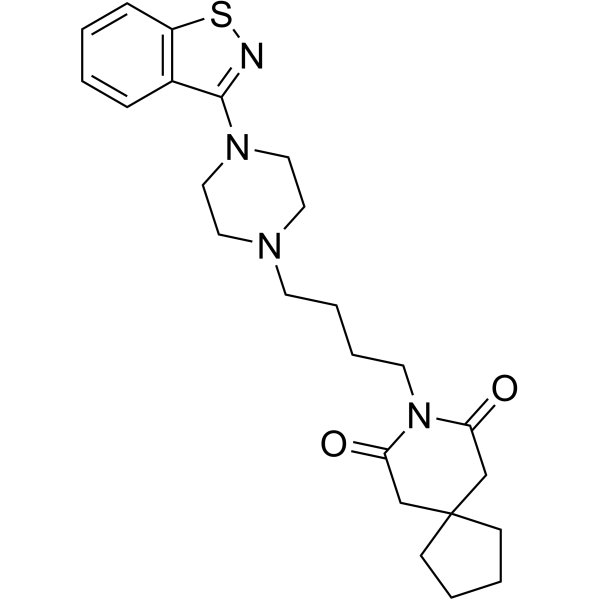
Tiospirone is a 5-HT2 receptor antagonist with affinity for D2, 5-HT1a, and 5-HT7, and sigma receptors. Tiospirone decreases consumption of ethanol while increasing food intake of rats. Tiospirone can also reduce the reinforcing properties of Cocaine exhibited in the conditioned place preference paradigm .
loading...
    loading...
Cat. No.: HY-111280
CAS No.: 854924-64-4
Target:  

Dopamine Receptor

Research Areas:  

Neurological Disease

ST 198 is an orally active D3R antagonist. ST 198 can block the expression of nicotine-induced CPP at doses selective for D3R. ST 198 can be used for the research of neurological disease .
loading...
    loading...
Cat. No.: HY-162872
CAS No.: 268546-19-6
Target:  

CRFR

Research Areas:  

Neurological Disease

NBI-35965 is an antagonist of corticotropin-releasing factor receptor 1 (CRF-R1). NBI-35965 can be used in nervous system related research .
loading...
    loading...
Cat. No.: HY-179324
CAS No.: 1451412-34-2
Research Areas:  

Neurological Disease

Orexin receptor antagonist 6 (Compound 72) is a selective orexin 1 receptor (OX1) antagonist with a Ke of 8.5 nM and > 1180-fold selectivity for OX2. Orexin receptor antagonist 6 does not produce its own conditioned place preference (CPP) or aversive effects, and can inhibit the formation of CPP induced by psychoactive substances. Orexin receptor antagonist 6 can be used for research of neurological disease .
loading...
    loading...
Cat. No.: HY-W1025152
CAS No.: 760947-97-5
CPP-115 hydrochloride is an orally active, selective GABA-AT inhibitor with a Ki value of 9.7 μM. CPP-115 hydrochloride blocks GABA degradation and increases GABA levels in the brain. CPP-115 hydrochloride does not bind to GABA transporters, does not displace GABA from GABAA/GABAB receptors, and does not act as an agonist/antagonist of GABAC receptors. CPP-115 hydrochloride reduces cocaine-induced dopamine release, blocks cocaine-induced conditioned place preference, and suppresses seizure activity in a rat model of infantile spasms. CPP-115 hydrochloride can be used in research related to infantile spasms and epilepsy .
loading...
    loading...
Cat. No.: HY-186170B
CAS No.: 859811-50-0
Target:  

5-HT Receptor

Research Areas:  

Neurological Disease

(R,S)-MDMA acts as a partial agonist of 5-HT2A, 5-HT2B and 5-HT2C receptors. (R,S)-MDMA belongs to psychoactive substances. (R,S)-MDMA exhibits antidepressant activity. (R,S)-MDMA can be used for research on mental disorders such as post-traumatic stress disorder and depression .
loading...
    loading...
Cat. No.: HY-179646
CAS No.: 3122563-80-5
CIAC101 is a potent and brain-penetrant TLR4 antagonist with an IC50 of 17.0 nM in NO assay. CIAC101 blocks Lipopolysaccharides (HY-D1056) (LPS)-induced NF-κB activation and reduces the expression of pro-inflammatory mediators (iNOS, IL-1β, TNF-α, and IL-6). CIAC101 robust antineuroinflammatory activity with efficacy against drug-evoked neurobehavioral adaptations. CIAC101 can be used for the research of addiction and neurological disease .
loading...
    loading...
  • 1

