1. Search Result
Search Result
Results for "

cucumber

" in MedChemExpress (MCE) Product Catalog:

44

Inhibitors & Agonists

1

Peptides

13

Natural
Products

1

Isotope-Labeled Compounds

Cat. No. Product Name Target Research Areas Chemical Structure
  • HY-W753375

    Environmental Pollutants Fungal Succinate Dehydrogenase Infection
    Fluindapyr is a broad-spectrum pyrazolamide chiral fungicide of succinate dehydrogenase inhibitor (SDHIs) with broad bactericidal spectrum and good efficacy. Fluopimomide is effective against M. incognita in vitro and application of fuopimomide shows some growth promotion effect in cucumber .
    Fluindapyr
  • HY-N9599

    Fungal Endogenous Metabolite Parasite Insecticide Infection
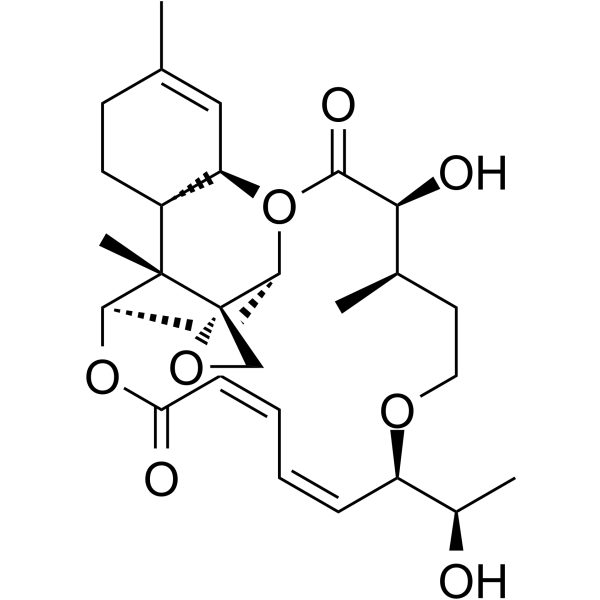
    Roridin A acts as an inhibitor of pollen development in Arabidopsis thaliana and nematicide. Roridin A is isolated from the fungus Cylindrocarpon sp. Roridin A delays the flowering time of Arabidopsis thaliana, inhibits pollen development and stem elongation, and blocks plant growth. Roridin A induces larval death of the southern root-knot nematode (Meloidogyne incognita) .
    Roridin A
  • HY-B0842
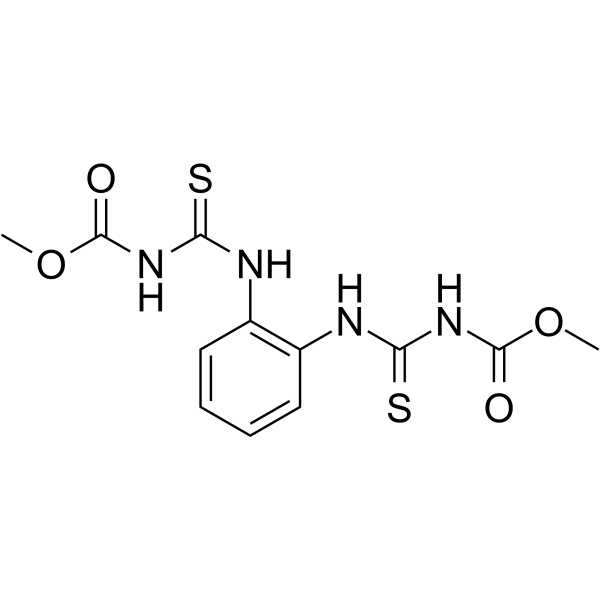
    Thiophanate-Methyl
    3 Publications Verification

    Environmental Pollutants Fungal Apoptosis Bcl-2 Family Caspase TNF Receptor SOD Reactive Oxygen Species (ROS) Infection
    Thiophanate-Methyl is a pesticide residue and fungicide. Thiophanate-Methyl induces hepatotoxicity via caspase-3-mediated apoptosis and oxidative stress, thereby causing metabolic imbalance in the liver of zebrafish. Thiophanate-Methyl impairs the rhizobacteria-mediated defense response of cucumber against fusarium wilt .
    Thiophanate-Methyl
  • HY-17520
    Penthiopyrad
    1 Publications Verification

    MTF-753

    Environmental Pollutants Fungal Infection
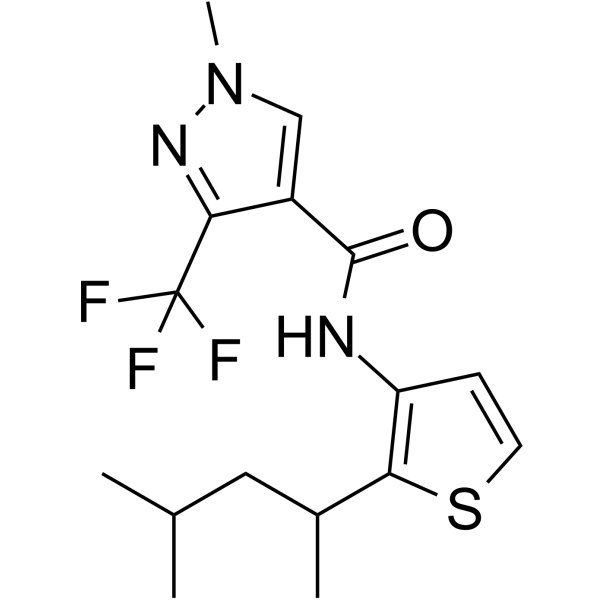
    Penthiopyrad (MTF-753) is a carboxamide Fungicide. Penthiopyrad inhibits SDH. Penthiopyrad exhibits broad-spectrum antifungal activity, being effective not only against Basidiomycetes, but also against Ascomycetes and Deuteromycetes. Penthiopyrad inhibits the mycelial growth of Alternaria mali, Botrytis cinerea, Monilinia mali, Rhizoctonia solani and Sclerotinia sclerotiorum on PDA medium, with EC50 values ranging from <0.4 ppm to 0.34 ppm and MIC values ranging from 6.6 ppm to 47.9 ppm .
    Penthiopyrad
  • HY-W744966

    Environmental Pollutants Antibiotic Infection
    Mandipropamid displays outstanding activity against late blight diseases of potato and tomato, combined with excellent efficacy on downy mildew diseases of grape and cucumber .
    Mandipropamid
  • HY-W016393

    Endogenous Metabolite Others
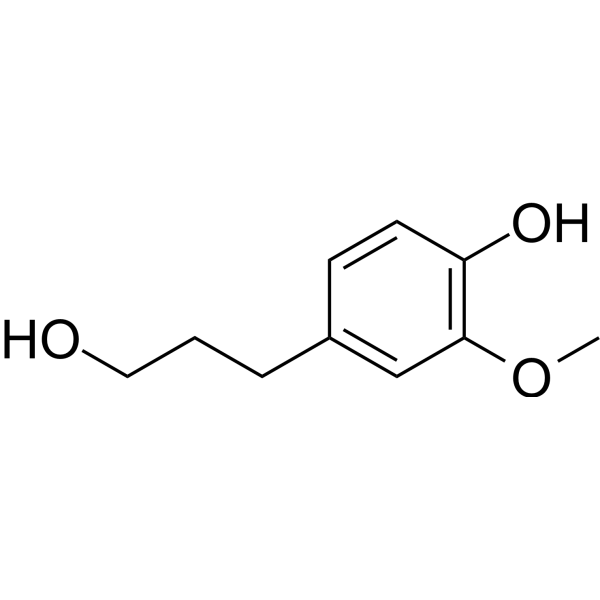
    Dihydroconiferyl alcohol is a cell division factor. Dihydroconiferyl alcohol can be isolated from the American sycamore (Acer pseudoplatanus L.). Dihydroconiferyl alcohol inhibits the degradation of Indole-3-acetic acid (HY-18569). Dihydroconiferyl alcohol can stimulate the growth of soybean and tobacco callus tissue and synergistically enhance Indole-3-acetic acid-induced hypocotyl elongation in cucumber. Dihydroconiferyl alcohol can be used in the research of plant growth regulation .
    Dihydroconiferyl alcohol
  • HY-116992

    Demosan; TERSAN SP(R)

    Environmental Pollutants Bacterial Infection
    Chloroneb (Demosan) is a pesticide with fungicidal and plant-protective activities. Chloroneb can be used to detect organochlorine pesticide residues, showing good selectivity, stability and reproducibility. Chloroneb has been applied to the detection of licorice, cucumber, river water and soil samples with satisfactory results .
    Chloroneb
  • HY-B2026

    Fungal Infection
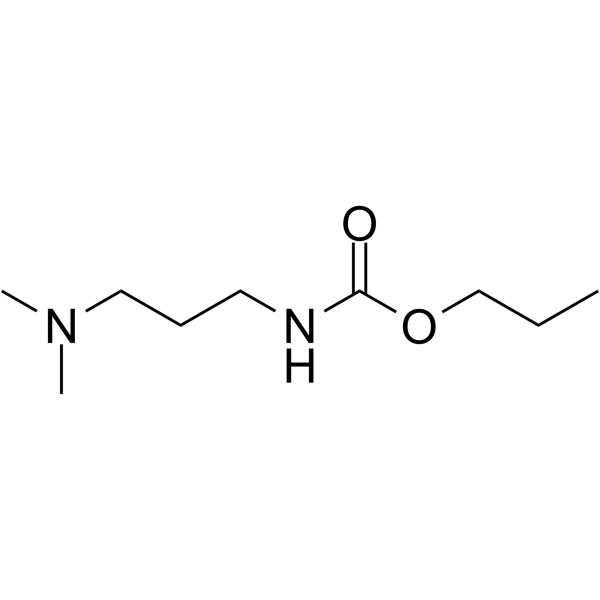
    Propamocarb is a systemic fungicide. Propamocarb is widely used to protect cucumbers, tomatoes and other plants from pathogens .
    Propamocarb
  • HY-P2742A

    Endogenous Metabolite Metabolic Disease
    L-Ascorbate oxidase, Cucumber belongs to the family of oxidoreductases acting on diphenols and related substances as donor with oxygen as acceptor. L-Ascorbate oxidase, Cucumber catalyses the oxidation of L‐Ascorbate (HY-B0166) with oxygen to dehydroascorbate with the generation of water. L-Ascorbate oxidase, Cucumber can be used in baking processes and cereal‐based processes .
    L-Ascorbate oxidase, Cucumber
  • HY-W726127

    Fungal Infection
    Propamocarb hydrochloride is a systemic fungicide. Propamocarb hydrochloride is widely used to protect cucumbers, tomatoes and other plants from pathogens .
    Propamocarb hydrochloride
  • HY-W016393R

    Reference Standards Endogenous Metabolite Others
    Dihydroconiferyl alcohol (Standard) is an analytical standard of Dihydroconiferyl alcohol (HY-W016393). This product is intended for research and analytical applications. Dihydroconiferyl alcohol is a cell division factor. Dihydroconiferyl alcohol can be isolated from the American sycamore (Acer pseudoplatanus L.). Dihydroconiferyl alcohol inhibits the degradation of Indole-3-acetic acid (HY-18569). Dihydroconiferyl alcohol can stimulate the growth of soybean and tobacco callus tissue and synergistically enhance Indole-3-acetic acid-induced hypocotyl elongation in cucumber. Dihydroconiferyl alcohol can be used in the research of plant growth regulation .
    Dihydroconiferyl alcohol (Standard)
  • HY-169987

    Fungal Infection
    bc1 Complex-IN-1 (compound 12g) is a potent bc1 complex inhibitor. bc1 Complex-IN-1 shows fungicidal properties against Cucumber downy mildew (CDM) .
    bc1 Complex-IN-1
  • HY-145324

    TMV Infection
    Antiviral agent 14 is an antiviral agent against the tobacco mosaic virus (TMV) and cucumber mosaic virus (CMV). The EC50 values of Antiviral agent 14 against TMV and CMV with EC50 values of 135.5 μg/mL and 178.6 μg/mL, respectively .
    Antiviral agent 14
  • HY-174390

    Fungal Succinate Dehydrogenase Infection
    SDH-IN-29 (Compound A33) is a SDH inhibitor with an IC50 of 0.0709 μM. SDH-IN-29 has a broad spectrum of antifungal activities (EC50s of 0.356, 0.798 and 0.146 μg/mL for Fusarium graminearum, Sclerotinia sclerotiorum, and Rhizoctonia solani, respectively). SDH-IN-29 has moderate to significant protective effects against rice blast, wheat scab and cucumber powdery mildew .
    SDH-IN-29
  • HY-122118

    CP-17029

    Herbicide Others
    Lambast (CP-17029) is a herbicide. Lambast is more toxic to wheat and sorghum than to cucumber .
    Lambast
  • HY-N7237

    Fungal Infection
    Stichloroside B1 is a class of antifungal triterpenoid oligosaccharide isolated from the sea cucumber Stichopus chloronotus (BRANDT) .
    Stichloroside B1
  • HY-129548

    Antibiotic Infection
    Prumycin is an antifungal antibiotic with activity against cucumber powdery mildew. Prumycin significantly inhibited the disease, whereas other metabolites such as bacillomycin D and surfactin did not. Prumycin did not induce the expression of plant defense genes, indicating that its effects were not through plant defense responses. Observation of cucumber cotyledons treated with prumycin showed that it could inhibit spore germination of P. fusca .
    Prumycin
  • HY-129548A

    Fungal Infection
    Prumycin dihydrochloride is an antifungal antibiotic with activity against cucumber powdery mildew. Prumycin dihydrochloride significantly inhibited the disease, whereas other metabolites such as bacillomycin D and surfactin did not. Prumycin dihydrochloride did not induce the expression of plant defense genes, indicating that its effects were not through plant defense responses. Observation of cucumber cotyledons treated with prumycin showed that it could inhibit spore germination of P. fusca .
    Prumycin dihydrochloride
  • HY-130072

    Fungal Cancer
    Bivittoside B is a non-sulfated hexoside analog derived from Bovine sea cucumber, exhibiting antifungal and potential antitumor activities.
    Bivittoside B
  • HY-B2026S

    Fungal Infection
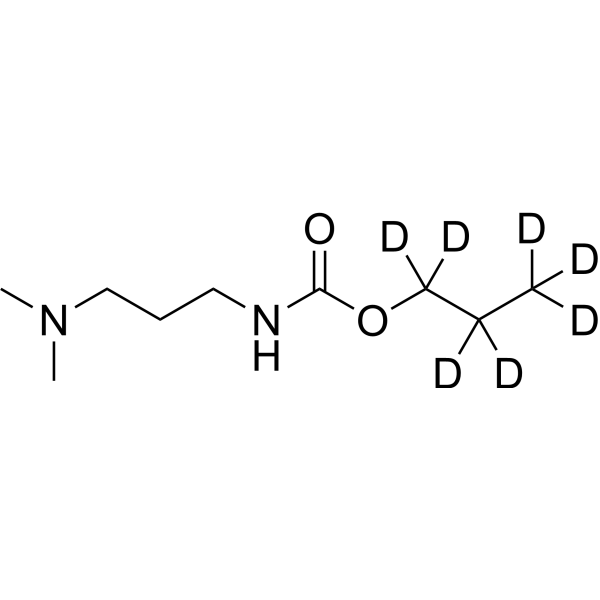
    Propamocarb-d7 is the deuterium labeled Propamocarb . Propamocarb is a systemic fungicide. Propamocarb is widely used to protect cucumbers, tomatoes and other plants from pathogens .
    Propamocarb-d7
  • HY-163891

    Fungal Infection
    Antifungal agent 107 (compound b24) is an OSBP inhibitor with antifungal activity. Antifungal agent 107 can be used to control cucumber downy mildew and potato late blight in greenhouse .
    Antifungal agent 107
  • HY-B2026R

    Reference Standards Fungal Infection
    Propamocarb (Standard) is the analytical standard of Propamocarb. This product is intended for research and analytical applications. Propamocarb is a systemic fungicide. Propamocarb is widely used to protect cucumbers, tomatoes and other plants from pathogens .
    Propamocarb (Standard)
  • HY-W753375R

    Reference Standards Fungal Succinate Dehydrogenase Infection
    Clenbuterol (hydrochloride) (Standard) is the analytical standard of Clenbuterol (hydrochloride). This product is intended for research and analytical applications. Clenbuterol (NAB-365) hydrochloride, a selective β2-adrenergic agonist, enhances skeletal muscle strength and hypertrophy. Clenbuterol hydrochloride induces growth factor mRNA, activates astrocytes, and protects rat brain tissue against ischemic damage .
    Fluindapyr (Standard)
  • HY-W744966R

    Reference Standards Fungal Infection
    Mandipropamid (Standard) is the analytical standard of Mandipropamid. This product is intended for research and analytical applications. Mandipropamid displays outstanding activity against late blight diseases of potato and tomato, combined with excellent efficacy on downy mildew diseases of grape and cucumber .
    Mandipropamid (Standard)
  • HY-165100

    DG(16:1/0:0/16:1); 1,3-Dipalmitolein

    Glycosidase Others
    1,3-Dipalmitoleoyl glycerol (DG(16:1/0:0/16:1)) is a compound isolated from sea cucumber viscera, which has α-glucosidase inhibitory activity and has different degrees of inhibitory effects on α-glucosidase from different sources.
    1,3-Dipalmitoleoyl glycerol
  • HY-N10269

    Fungal Endogenous Metabolite Infection
    Phomalactone, produced by the fungus Nigrospora sphaerica, specifically inhibits the mycelial growth of Phytophthora infestans, with an MIC value of 2.5 mg/L . Phomalactone is phytotoxic to Z. elegans and other plant species by inhibition of seedling growth and by causing electrolyte leakage from photosynthetic tissues of both Z. elegans leaves and cucumber cotyledons .
    Phomalactone
  • HY-137566

    Mitochondrial Metabolism Cancer
    Cucumarioside H is a novel triterpene glycoside isolated from the Far Eastern sea cucumber Eupentacta fraudatrix, including H2, H3 and H4. These glycosides have a branched pentasyl structure with a rare 3-O-methyl-D-xylose as the terminal monosaccharide. H2 contains 23,24,25,26,27-pentanolone sterols and has an 18(16)-lactone, which is not common in sea cucumbers. The glycoside portion of H3 contains an extremely rare ethoxyl radical at the 25 position, which may be an artifact formed during the long ethanol extraction process. Studies have shown that H1-3 are cytotoxic to mouse spleen lymphocytes, hemolytic to mouse erythrocytes, and cytotoxic to Ehrlich carcinoma cells. The presence of a 25-hydroxyl group in the glycoside portion significantly reduces these activities.
    Cucumarioside H
  • HY-116992R

    Demosan (Standard); TERSAN SP(R) (Standard)

    Bacterial Reference Standards Infection
    Chloroneb (Standard) is the analytical standard of Chloroneb. This product is intended for research and analytical applications. Chloroneb (Demosan) is a pesticide with fungicidal and plant-protective activities. Chloroneb can be used to detect organochlorine pesticide residues, showing good selectivity, stability and reproducibility. Chloroneb has been applied to the detection of licorice, cucumber, river water and soil samples with satisfactory results .
    Chloroneb (Standard)
  • HY-N7236

    Parasite Fungal Infection
    Pervicoside B is a glycoside C isolated from Neothyone gibbosa sea cucumber. In vitro studies have shown that Pervicoside B has a potent antiparasitic effect against Leishmania mexicana, inhibiting 100% of promastigotes at 5-10 μg/mL. Pervicoside B also exhibits strong antifungal activity against Aspergillus niger, with MIC values ranging from 4.65 to 16.7 μg/mL. Pervicoside B has potential applications in the inhibition of parasitic infections and fungal diseases .
    Pervicoside B
  • HY-178189

    Fungal Infection
    Laccase-IN-6 is a laccase inhibitor with an IC50 of 0.097 nM. Laccase-IN-6 exhibits broad-spectrum anti-fungal effect and can destroy the normal morphology of the fungi. Laccase-IN-6 can be used for the research of infection .
    Laccase-IN-6
  • HY-135442

    Fungal Infection
    Simeconazole is a demethylation inhibitor-class fungicide. Simeconazole prevents the infection of barley leaves by Blumeria graminis f sp hordei, inhibits the development of powdery mildew on barley and cucumber leaves, and exhibits cuticular membrane permeability in tomato fruits. Simeconazole can be used in research related to barley powdery mildew and cucumber powdery mildew .
    Simeconazole
  • HY-W715370

    Fungal Infection
    Pyrametostrobin is a strobilurin fungicide used to protect crops from fungal infection. Pyrametostrobin can be applied to research related to cucumber powdery mildew, powdery mildew, rust, downy mildew and blight .
    Pyrametostrobin
  • HY-159908

    Biochemical Assay Reagents Others
    16-Hydroxystearic acid is a long-chain hydroxy fatty acids that can be isolated from cucumber and flax leaves .
    16-Hydroxystearic acid
  • HY-129562

    Others Others
    Cucumechinoside D is a potent bioactive compound, which is found in the sea cucumber Cucumaria echinata .
    Cucumechinoside D
  • HY-130047

    Fungal Cancer
    Bivittoside A is a non-sulfated hexoside analog derived from Bovine sea cucumber, exhibiting antifungal properties and potential for antitumor applications.
    Bivittoside A
  • HY-181610

    Succinate Dehydrogenase Fungal Infection
    SDH-IN-45 is a succinate dehydrogenase BcSDH inhibitor and mycelial growth inhibitor targeting Botrytis cinerea, with an IC50 of 5.97 μg/mL against Botrytis cinerea. SDH-IN-45 inhibits succinate dehydrogenase, a component of the mitochondrial electron transport chain, via a unique binding mode, thereby regulating fungal energy metabolism. SDH-IN-45 causes morphological damage to Botrytis cinerea mycelia, leading to collapse and shrinkage of mycelial structures. SDH-IN-45 exhibits in vitro fungicidal activity against Botrytis cinerea. SDH-IN-45 can be used in research related to cucumber gray mold .
    SDH-IN-45
  • HY-129308

    Herbicide Others
    LS 82-556 is a light and oxygen-dependent herbicide, which leads to degradation of fatty acids, deals structural damage at the cellular membrane level, and results in the bleaching, wilting, and desiccation of leaves and stems. LS 82-556 exhibits herbicidal activity with the presence of chloroplastic pigments .
    LS 82-556
  • HY-176923

    Reactive Oxygen Species (ROS) Inflammation/Immunology
    1,3-Bis(isothiocyanatomethyl)benzene is a plant regulator. prevents the invasion of pathogens by inducing stomatal closure. 1,3-Bis(isothiocyanatomethyl)benzene significantly increases the levels of ROS and NO in guard cells. 1,3-Bis(isothiocyanatomethyl)benzene has shown significant control effects on grape downy mildew, cucumber downy mildew, and wheat leaf rust .
    1,3-Bis(isothiocyanatomethyl)benzene
  • HY-P11458

    Nlp24

    Reactive Oxygen Species (ROS) Inflammation/Immunology
    Hanlp24 (Nlp24) is an immunogenic short peptide derived from plant pathogenic microorganisms. Hanlp24 can be recognized by the immune system of the model plant Arabidopsis thaliana and effectively induces the production of reactive oxygen species (ROS) in Arabidopsis thaliana. Hanlp24 is not the key factor that triggers plant defense and leads to the loss of pathogen virulence in the interaction system between cucumber and anthracnose pathogen. Hanlp24 can be used for the study of the plant immune system .
    Hanlp24
  • HY-182471

    Fungal Infection
    Aminopyrifen is a GWT-1 inhibitor. Aminopyrifen inhibits the inositol acylation of phosphatidylinositol, disrupting the maturation process of GPI-anchored proteins and the integrity of fungal cell walls. Aminopyrifen strongly inhibits germ tube elongation of Botrytis cinerea, delays spore germination, prevents appressorium formation, and blocks the infection of plant tissues by pathogenic fungi. Aminopyrifen is effective against field populations of eggplant gray mold and cucumber powdery mildew, and can be used for research on various plant fungal diseases such as gray mold and powdery mildew .
    Aminopyrifen
  • HY-N17442

    Topoisomerase Caspase PARP Fungal DNA/RNA Synthesis Infection Cancer
    Echinoside A is a saponin. Echinoside A can be isolated from sea cucumber. Echinoside A inhibits the catalytic activity of Top2α, reduces the noncovalent binding of Top2α to DNA. Echinoside A activates Caspase-3 and induces PARP cleavage. Echinoside A induces Apoptosis. Echinoside A has anticancer activity against prostate cancer, hepatocellular carcinoma, and S-180 sarcoma. Echinoside A exhibits antifungal activity against a variety of fungi, with a minimum growth inhibitory concentration range of 3.12 to 50.0 μg/mL, including potent activity against Aspergillus and Penicillium species .
    Echinoside A
  • HY-182278

    Fungal Succinate Dehydrogenase Infection
    Flubeneteram is a succinate dehydrogenase inhibitor with an IC50 of 0.0484 μM. Flubeneteram disrupts succinate dehydrogenase activity. Flubeneteram demonstrates protective effects against Rhizoctonia solani and Sphaerotheca fuliginea in preclinical models. Flubeneteram can be used for research related to fungal infections .
    Flubeneteram
  • HY-W099725

    Herbicide Photosystem II Cardiovascular Disease Infection
    Sarmentine is a broad-spectrum contact herbicide and PSII inhibitor, with an IC50 of 3.0 μM and a Ki of 1.5 μM against spinach, an IC50 of 1.72 μM against wild-type Amaranthus retroflexus, and an IC50 of 0.97 μM against triazine-resistant Amaranthus retroflexus. Sarmentine competitively binds to the QB binding site of plastoquinone on PSII, thereby blocking photosynthetic electron transport. Sarmentine inhibits enoyl-ACP reductase in Arabidopsis thaliana by targeting the early fatty acid synthesis process, with an IC50 of 18.3 μM. Sarmentine induces light-independent loss of plasma membrane integrity and electrolyte leakage. Sarmentine also exhibits antiplasmodial, antimycobacterial, antituberculous, and antiplatelet aggregation activities .
    Sarmentine
  • HY-W727209

    Parasite Infection
    Fluazaindolizine is a fluorinated nematicide. Fluazaindolizine induces mortality in second-stage juveniles (J2) of Meloidogyne incognita and Tylenchulus semipenetrans in vitro. Fluazaindolizine impacts plant-parasitic nematode parasitism. Fluazaindolizine can be used for the research of plant-parasitic nematode infestation .
    Fluazaindolizine

Inquiry Online

Your information is safe with us. * Required Fields.

Salutation


Country or Region *

Applicant Name *


Organization Name *

Department *


Email Address *


Product Name *

Cat. No.


Requested quantity *

Phone Number *


Remarks

Inquiry Online

Inquiry Information

Product Name:
Cat. No.:
Quantity:
MCE Japan Authorized Agent:

