1. Search Result
Search Result
Results for "

deactivation

" in MedChemExpress (MCE) Product Catalog:

21

Inhibitors & Agonists

1

Biochemical Assay Reagents

1

Natural
Products

Cat. No. Product Name Target Research Areas Chemical Structure
  • HY-119272
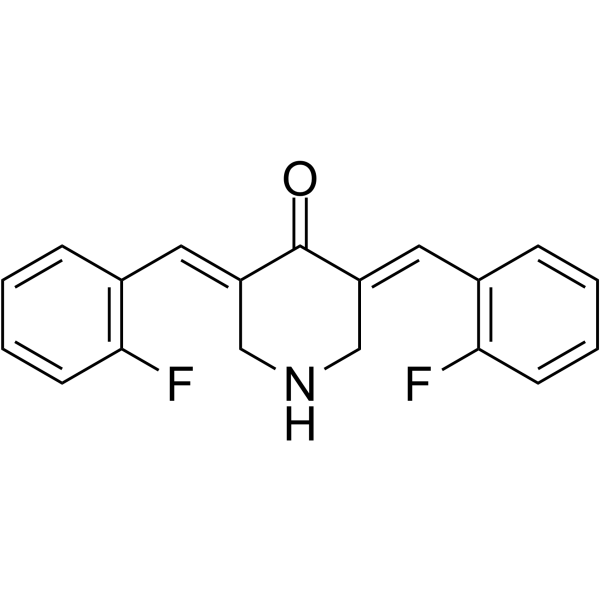
    EF24
    2 Publications Verification

    ERK Caspase NF-κB Apoptosis p38 MAPK Reactive Oxygen Species (ROS) Inflammation/Immunology Cancer
    EF24, a curcumin analogue, is an NF-kB inhibitor with great anti-tumor efficacy and oral bioavailability via deactivation of the MAPK/ERK signaling pathway in oral squamous cell carcinoma (OSCC). EF24 is active against melanoma and breast cancer cell lines with GI50 values of 0.7 μM and 0.8 μM, respectively. EF24 induces cell cycle arrest and apoptosis in MDA-MB-231 human breast cancer cells and DU-145 human prostate cancer cells. EF24 increases the levels of activated caspase 3 and 9, and decreases the phosphorylated forms of MEK1 and ERK .
    EF24
  • HY-W007432

    Biochemical Assay Reagents Others
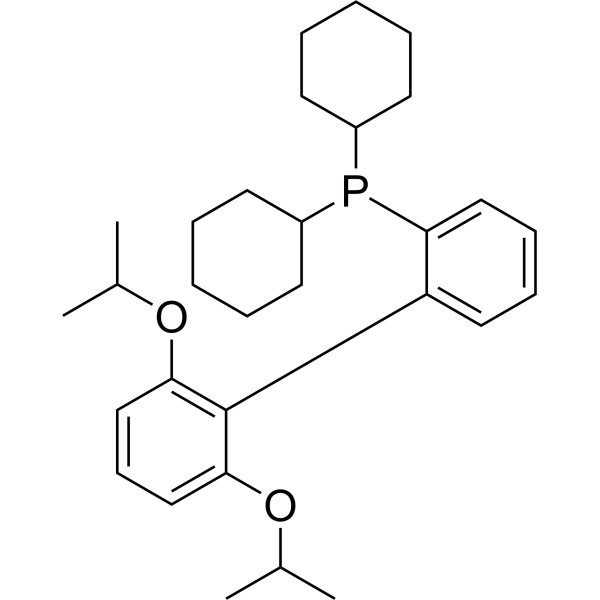
    RuPhos is a Buchwald ligand. In aqueous Suzuki-Miyaura catalytic transfer polymerization, RuPhos forms inactive Pd (RuPhos)2 with palladium and inhibits diffusion to improve polymerization controllability. RuPhos additional addition in anhydrous Kumada polymerization exacerbates catalyst deactivation and chain transfer, significantly impairing polymerization control .
    RuPhos
  • HY-14774
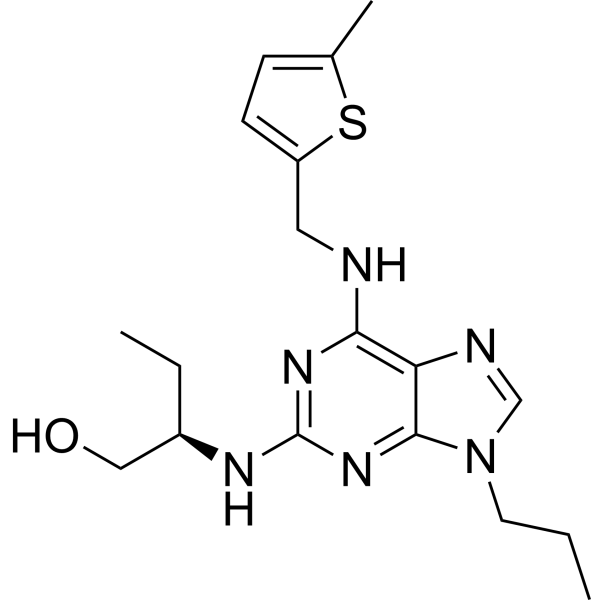
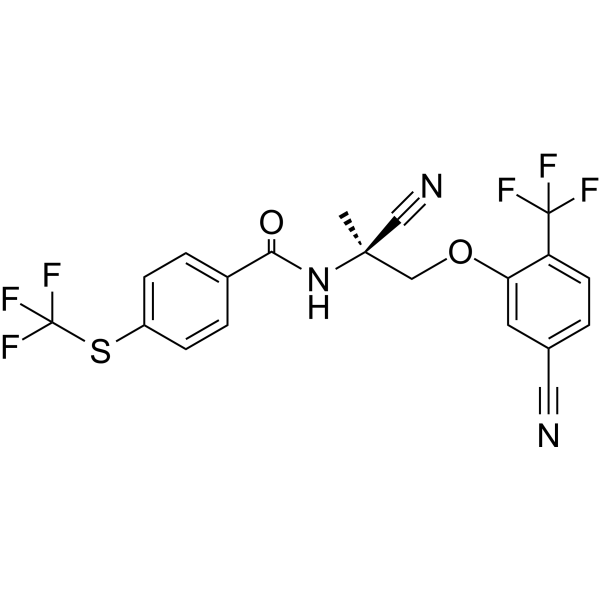
    Monepantel
    1 Publications Verification

    AAD1566; NUZ-001

    mTOR Parasite nAChR Autophagy Infection Neurological Disease Cancer
    Monepantel (AAD1566, NUZ-001), an antiparasitic agent, is an orally active mTOR inhibitor. Monepantel triggers autophagy through the deactivation of mTOR/p70S6K signalling pathway. Monepantel is a positive allosteric modulator of a nematode-specific clade of nAChR subunits. Monepantel can be used for the study of amyotrophic lateral sclerosis (ALS) and ovarian cancer .
    Monepantel
  • HY-12498
    GV-58
    2 Publications Verification

    Calcium Channel Neurological Disease
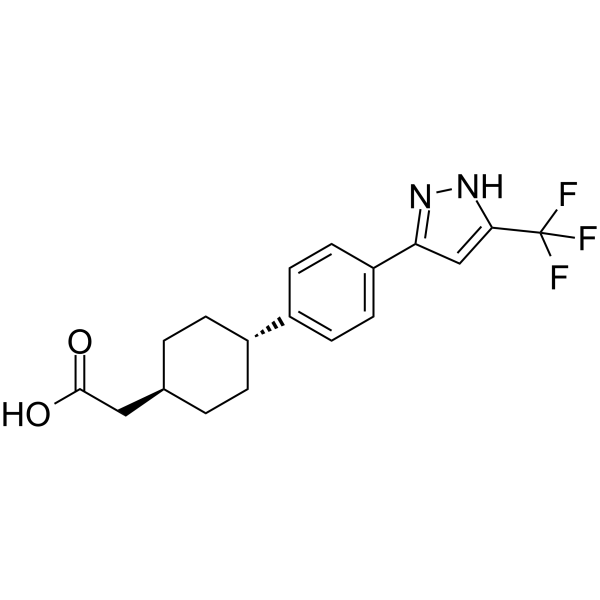
    GV-58 is a novel N- and P/Q-type calcium (Ca 2+) channel agonist with EC50s of 7.21 and 8.81 μM, respectively. GV-58 slows the deactivation of channels, resulting in a large increase in presynaptic Ca 2+ entry during activity. GV-58 can be used in lambert-eaton myasthenic syndrome (LEMS) research .
    GV-58
  • HY-121993
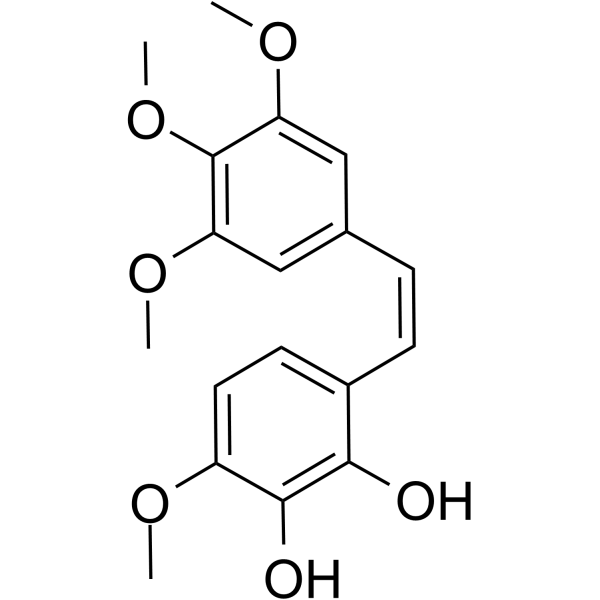
    Combretastatin A-1
    1 Publications Verification

    Wnt Microtubule/Tubulin Cancer
    Combretastatin A-1 is a microtubule polymerization inhibitor that binds to the colchicine-binding site of tubulin. Combretastatin A-1 inhibits the Wnt/β-catenin pathway through tubulin depolymerization mediated AKT deactivation. Combretastatin A-1 exhibits anti-tumor and anti-vascular effects .
    Combretastatin A-1
  • HY-16915
    RPR-260243
    1 Publications Verification

    Potassium Channel Cardiovascular Disease
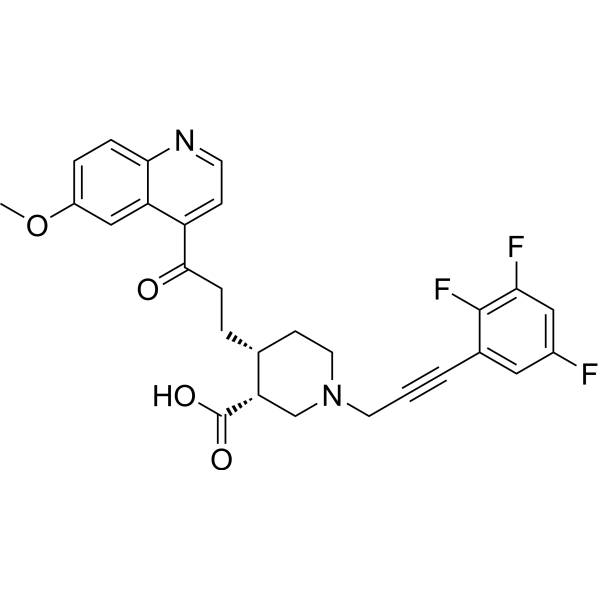
    RPR-260243, a potent activator of human ether-a-go-go-related gene (hERG), slows deactivation and attenuates inactivation of hERG1 channels. RPR260243-modified HERG currents are inhibited by Dofetilide (IC50=58 nM). RPR260243 displays no activator-like effects on other voltage-dependent ion channels, including the closely related ERG3 K+ channel . RPR-260243 is a click chemistry reagent, it contains an Alkyne group and can undergo copper-catalyzed azide-alkyne cycloaddition (CuAAc) with molecules containing Azide groups.
    RPR-260243
  • HY-Y1374

    Biochemical Assay Reagents Others
    Benzoic anhydride is a catalyst that can be used for organic synthesis reactions. Benzoic anhydride is used as a chemical titration reagent for selective quantification and deactivation of phenolic hydroxyl groups on the surface of carbon nanotubes .
    Benzoic anhydride
  • HY-110162

    Potassium Channel Neurological Disease
    QO 58 is a potent modulator of K(v)7 channels. QO-58 increases the current amplitudes, shifts the voltage-dependent activation curve in a more negative direction and slows the deactivation of K(v)7.2/K(v)7.3 currents. QO-58 has the potential for the research of diseases associated with neuronal hyperexcitability .
    QO 58
  • HY-108592

    Potassium Channel Cardiovascular Disease Neurological Disease
    UCL 2077 is a potassium channel and slow afterhyperpolarization (sAHP) inhibitor. UCL 2077 selectively blocks sAHP channels without affecting L-type Ca 2+ currents. UCL 2077 blocks KCNQ1- and KCNQ2-containing K + channels, decreases erg current amplitude, increases erg deactivation rate. UCL 2077 can be used for the research of hippocampus-dependent memory retrieval deficit and cardiac arrhythmias .
    UCL 2077
  • HY-124906

    iGluR Neurological Disease
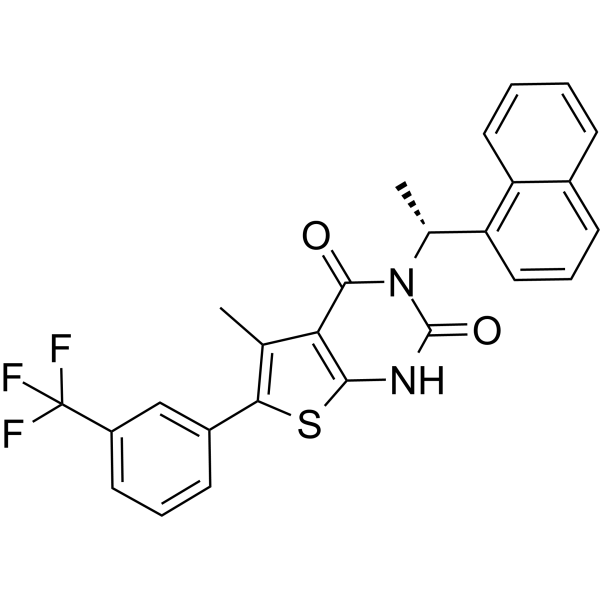
    JAMI1001A is a positive allosteric modulator of AMPA receptor. JAMI1001A efficaciously modulates AMPA receptor deactivation and desensitization of both flip and flop receptor isoforms .
    JAMI1001A
  • HY-113673

    Potassium Channel Cardiovascular Disease
    A-935142 is a human ether-a-go-go-related gene (hERG, Kv 11.1) channel activator. A-935142 enhances hERG current in a complex manner by facilitation of activation, reduction of inactivation, and slowing of deactivation, and abbreviates atrial and ventricular repolarization .
    A-935142
  • HY-Y1374R

    Biochemical Assay Reagents Reference Standards Others
    Benzoic anhydride (Standard) is the analytical standard of Benzoic anhydride. This product is intended for research and analytical applications. Benzoic anhydride is a catalyst that can be used for organic synthesis reactions. Benzoic anhydride is used as a chemical titration reagent for selective quantification and deactivation of phenolic hydroxyl groups on the surface of carbon nanotubes .
    Benzoic anhydride (Standard)
  • HY-115888

    Macrophage migration inhibitory factor (MIF) Cancer
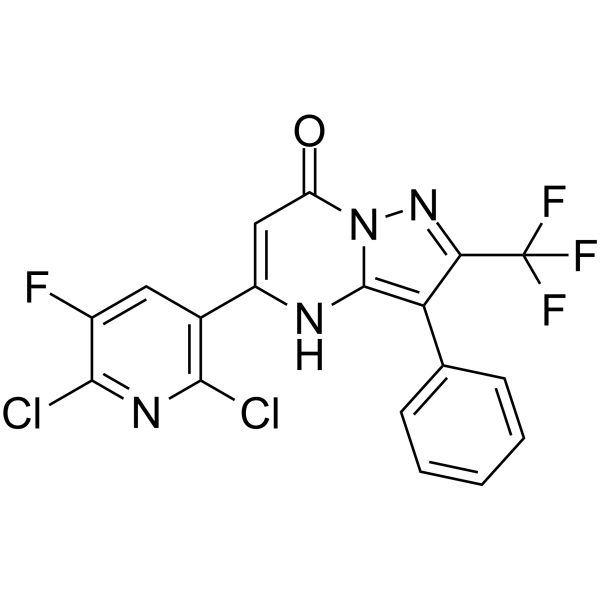
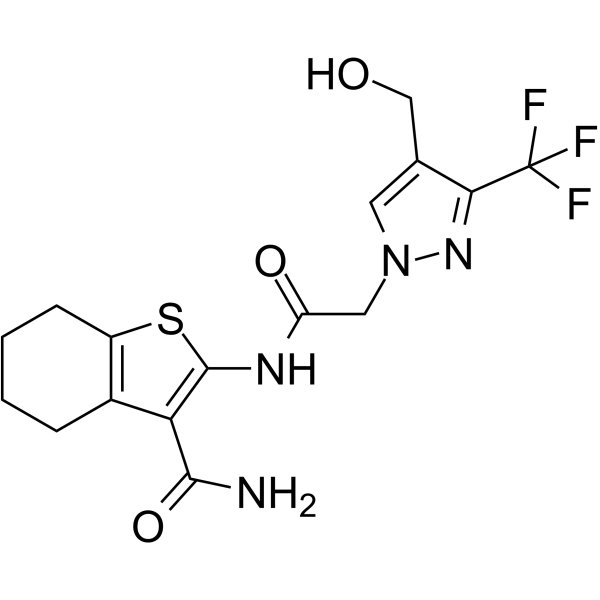
    MIF2-IN-1 (compound 5d) is a potent inhibitor of MIF2 tautomerase with an IC50 of 1.0 μM. MIF2-IN-1 suppresses the proliferation of non-small cell lung cancer cells by the induction of cell cycle arrest via deactivation of the MAPK pathway. MIF2-IN-1 has the potential for the research of cancer diseases .
    MIF2-IN-1
  • HY-16146

    OXi-4503 tetrasodium

    Wnt Microtubule/Tubulin Cancer
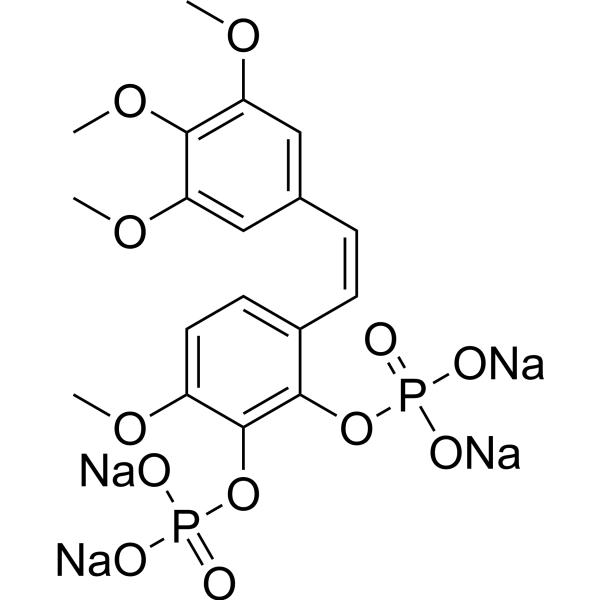
    Combretastatin A-1 phosphate (OXi-4503) tetrasodium, a proagent of Combretastatin A-1, is a microtubule polymerization inhibitor that binds to the colchicine-binding site of tubulin. Combretastatin A-1 phosphate tetrasodium inhibits the Wnt/β-catenin pathway through tubulin depolymerization mediated AKT deactivation. Combretastatin A-1 phosphate tetrasodium exhibits anti-tumor and anti-vascular effects .
    Combretastatin A-1 phosphate tetrasodium
  • HY-121993R

    Wnt Microtubule/Tubulin Reference Standards Cancer
    Combretastatin A-1 (Standard) is the analytical standard of Combretastatin A-1. This product is intended for research and analytical applications. Combretastatin A-1 is a microtubule polymerization inhibitor that binds to the colchicine-binding site of tubulin. Combretastatin A-1 inhibits the Wnt/β-catenin pathway through tubulin depolymerization mediated AKT deactivation. Combretastatin A-1 exhibits anti-tumor and anti-vascular effects .
    Combretastatin A-1 (Standard)
  • HY-N9602

    Others Inflammation/Immunology
    6,7,4'-Trihydroxyflavanone is a compound with multiple pharmacological activities, including anti-rheumatic, anti-ischemic, anti-inflammatory, anti-osteoclastogenic and protective T-cells from METH-induced deactivation. 6,7,4'-Trihydroxyflavanone has shown potential protective effects in neurotoxicity studies and can be used to inhibit patients with neurodegenerative diseases caused by METH. 6,7,4'-Trihydroxyflavanone inhibits METH-induced neurotoxicity by upregulating the Nrf2/HO-1 and PI3K/Akt/mTOR signaling pathways. 6,7,4'-Trihydroxyflavanone can also induce Nrf2 nuclear translocation and HO-1 expression, further enhancing its protective effect on neuronal cells .
    6,7,4'-Trihydroxyflavanone
  • HY-165475

    iGluR Neurological Disease
    TDPAM02 is a positive allosteric modulator of AMPA receptor GluA2. TDPAM02 can specifically bind to the ligand-binding domain (LBD) of GluA2 and shows an IC50 of 1.4 nM for the GluA2 flop subtype. TDPAM02 can stabilize the activated conformation of GluA2 receptors, delay the receptor deactivation or desensitization process, maintaining the rapid excitatory synaptic transmission in the central nervous system .
    TDPAM02
  • HY-165474

    iGluR Neurological Disease
    TDPAM01 is a positive allosteric modulator of AMPA receptor GluA2. TDPAM01 can specifically bind to the ligand-binding domain (LBD) of GluA2 and shows an IC50 of 13.4 nM for the GluA2 flop subtype. TDPAM01 can stabilize the activated conformation of GluA2 receptors, delay the receptor deactivation or desensitization process, maintaining the rapid excitatory synaptic transmission in the central nervous system .
    TDPAM01
  • HY-186062

    Toll-like Receptor (TLR) Potassium Channel Phosphatase Cardiovascular Disease Neurological Disease Inflammation/Immunology
    HCN-IN-1 is a TLR4 inhibitor and HCN channel modulator with activity against HCN2 and HCN4.HCN-IN-1 inhibits TLR4-mediated alkaline phosphatase (SEAP) signal activity.HCN-IN-1 reduces HCN2 current across tested voltages, shifts voltage-dependent activation to more hyperpolarized potentials, slows activation kinetics, and does not affect deactivation process.HCN-IN-1 blocks HCN4 current.HCN-IN-1 exhibits analgesic, anti-inflammatory, and anti-anginal effects.HCN-IN-1 can be used for the research of inflammatory pain, neuropathic pain, heart failure, inflammation .
    HCN-IN-1
  • HY-183324

    iGluR Dopamine Transporter Neurological Disease
    AMPA receptor modulator-12 is an orally acrive AMPA receptor positive allosteric modulator. AMPA receptor modulator-12 also exhibits moderate binding affinity for the human dopamine transporter with a Kd of 1.57 μM. AMPA receptor modulator-12 enhances AMPA receptor-mediated ion currents, delays channel deactivation. AMPA receptor modulator-12 prolongs sleep latency, reduces sleep duration, extends forced swimming time, improves rotarod endurance, and alleviates acute sleep deprivation-related behavioral deficits. AMPA receptor modulator-12 does not increase spontaneous locomotion. AMPA receptor modulator-12 can be used for the research of narcolepsy and fatigue-related conditions .
    AMPA receptor modulator-12
  • HY-182517

    TRP Channel Inflammation/Immunology
    AG1529 is a TRPV1 inhibitor and capsaicinoid-based soft agent with a human TRPV1 IC50 of 0.9-0.93 μM. AG1529 reversibly blocks capsaicin-evoked TRPV1 activation, binds to the TRPV1 capsaicin binding site, moderately affects pH-induced TRPV1 gating, and does not alter voltage- or heat-mediated TRPV1 responses. AG1529 suppresses TRPV1-mediated neuronal excitability, reduces capsaicin- and pH-evoked neuronal firing, abolishes histaminergic and inflammation-mediated TRPV1 sensitization. AG1529 exhibits anti-nociceptive and antipruritic effects, attenuates in vivo hyperalgesia and pruritus, dose-dependently reduces acute histaminergic itch in rodents, and mildly blocks hTRPA1 and hTRPM8 channel activity. AG1529 undergoes hydrolysis and dermal deactivation, minimizes TRPV1-associated side reactions, does not evoke capsaicin-like burning sensation, and does not disrupt physiological thermal regulation. AG1529 can be used for the research of inflammatory cutaneous nociception and acute histaminergic pruritus .
    AG1529

Inquiry Online

Your information is safe with us. * Required Fields.

Salutation


Country or Region *

Applicant Name *


Organization Name *

Department *


Email Address *


Product Name *

Cat. No.


Requested quantity *

Phone Number *


Remarks

Inquiry Online

Inquiry Information

Product Name:
Cat. No.:
Quantity:
MCE Japan Authorized Agent:

