1. Search Result
Search Result
Results for "

dopamine turnover

" in MedChemExpress (MCE) Product Catalog:

13

Inhibitors & Agonists

2

Peptides

3

Isotope-Labeled Compounds

Cat. No. Product Name Target Research Areas Chemical Structure
  • HY-B0590
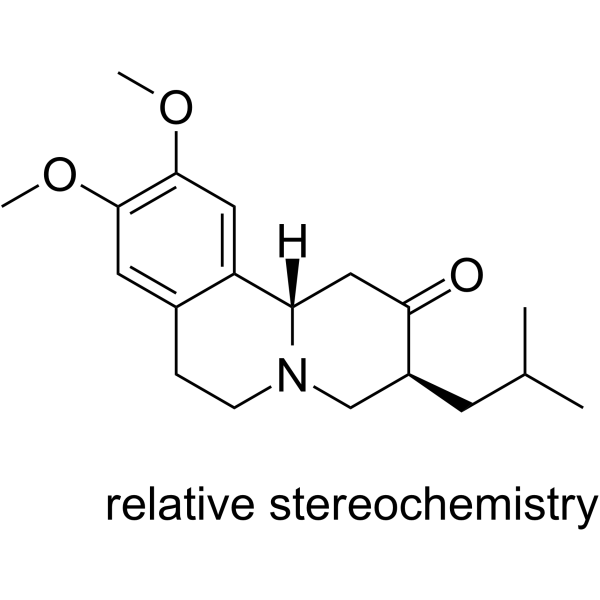
    Tetrabenazine
    1 Publications Verification

    Ro 1-9569

    Monoamine Transporter Dopamine Receptor Neurological Disease
    Tetrabenazine (Ro 1-9569) is a brain-penetrant and orally active VMAT2-selective ligand with human VMAT2 Ki 100 nM. Tetrabenazine binds VMAT2 to block monoamine uptake into synaptic vesicles, potentiates cytoplasmic monoamine degradation. Tetrabenazine weakly blocks dopamine D2 receptors, and increases dopamine turnover via elevated cerebrospinal fluid homovanillic acid. Tetrabenazine can be used for the research of Huntington’s disease, tardive dyskinesia, and Tourette’s syndrome .
    Tetrabenazine
  • HY-B0590S

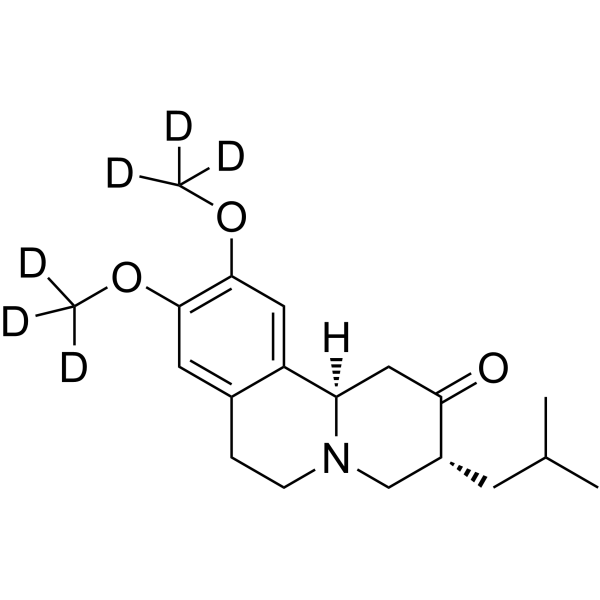
    Ro 1-9569-d6

    Monoamine Transporter Neurological Disease
    Tetrabenazine-d6 (Deutetrabenazine) is a deuterium-labled Tetrabenazine (HY-B0590). Tetrabenazine (Ro 1-9569) is a brain-penetrant and orally active VMAT2-selective ligand with human VMAT2 Ki 100 nM. Tetrabenazine binds VMAT2 to block monoamine uptake into synaptic vesicles, potentiates cytoplasmic monoamine degradation. Tetrabenazine weakly blocks dopamine D2 receptors, and increases dopamine turnover via elevated cerebrospinal fluid homovanillic acid. Tetrabenazine can be used for the research of Huntington’s disease, tardive dyskinesia, and Tourette’s syndrome .
    Tetrabenazine-d6
  • HY-145512

    NLT

    Dopamine Receptor Neurological Disease
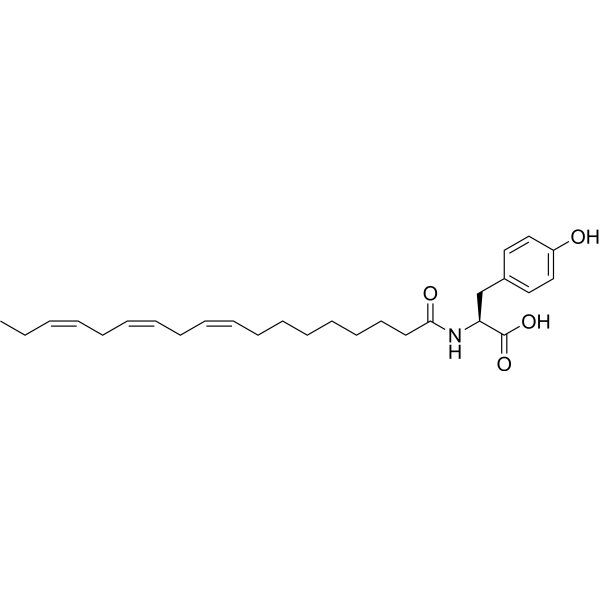
    N-(α-Linolenoyl) tyrosine (NLT) is a dopaminergic agonist capable of crossing the blood-brain barrier. N-(α-Linolenoyl) tyrosine increases the level, turnover rate and release amount of dopamine in the striatum. N-(α-Linolenoyl) tyrosine modulates rotational behavior in a rat model with unilateral striatal injury and alleviates excessive blinking symptoms in models induced by dopamine-depleting agents. N-(α-Linolenoyl) tyrosine can be used for research on Parkinson's disease and idiopathic blepharospasm .
    N-(α-Linolenoyl) tyrosine
  • HY-B0590A

    Ro 1-9569 Racemate

    Monoamine Transporter Dopamine Receptor Neurological Disease
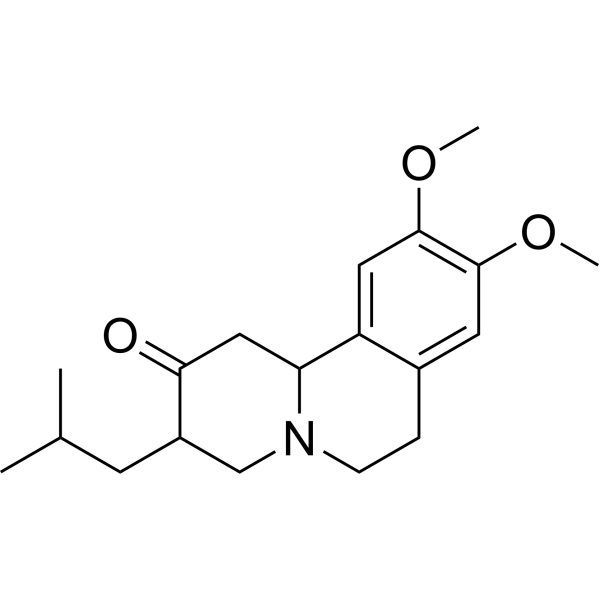
    Tetrabenazine (Ro 1-9569) Racemate is a brain-penetrant and orally active VMAT2-selective ligand with human VMAT2 Ki 100 nM. Tetrabenazine Racemate binds VMAT2 to block monoamine uptake into synaptic vesicles, potentiates cytoplasmic monoamine degradation. Tetrabenazine Racemate weakly blocks dopamine D2 receptors, and increases dopamine turnover via elevated cerebrospinal fluid homovanillic acid. Tetrabenazine Racemate can be used for the research of Huntington’s disease, tardive dyskinesia, and Tourette’s syndrome .
    Tetrabenazine Racemate
  • HY-P4610

    GLP Receptor Metabolic Disease
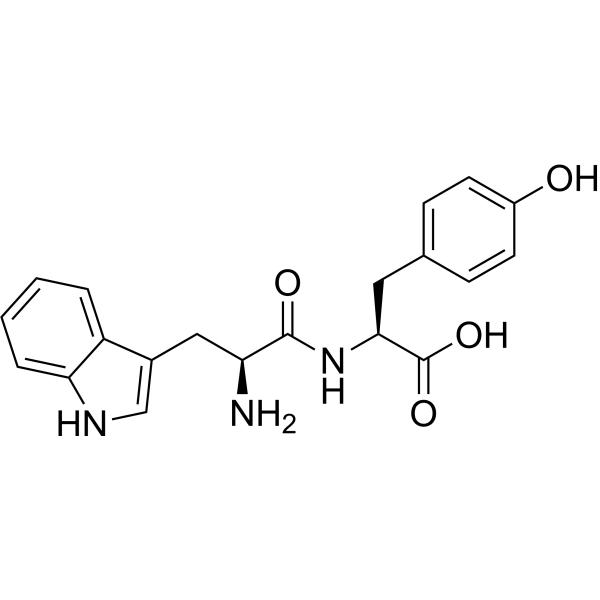
    H-Trp-Tyr-OH is an orally active tryptophan-tyrosine dipeptide with blood-brain barrier permeability. H-Trp-Tyr-OH exerts physiological regulatory effects by stimulating enteroendocrine cells to secrete glucagon-like peptide GLP-1. In mouse models of tauopathies, H-Trp-Tyr-OH inhibits tau phosphorylation, reduces the level of neurofibrillary tangles, increases dopamine turnover, upregulates synapsin expression, and elevates cecal short-chain fatty acid levels, thereby improving behavioral deficits and extending lifespan. H-Trp-Tyr-OH can be used in research related to impaired glucose tolerance and tauopathies .
    H-Trp-Tyr-OH
  • HY-111283

    (+)-AJ 76; (1S,2R)-AJ 76

    Dopamine Receptor Neurological Disease
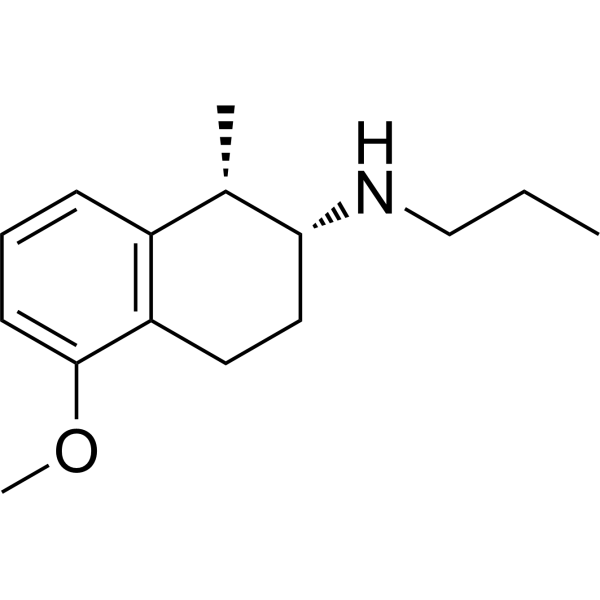
    AJ-76 ((+)-AJ 76; (1S,2R)-AJ 76) is a dopamine autoreceptor antagonist. AJ-76 can increase the synthesis and turnover of dopamine in the rat brain, while having little effect on the synthesis and turnover of serotonin (5-HT) and norepinephrine. AJ-76 can also antagonize the sedative effects of low-dose apomorphine and has a weak antagonistic effect on postsynaptic dopamine receptor .
    AJ-76
  • HY-B0590E

    Ro 1-9569 mesylate

    Monoamine Transporter Dopamine Receptor Neurological Disease
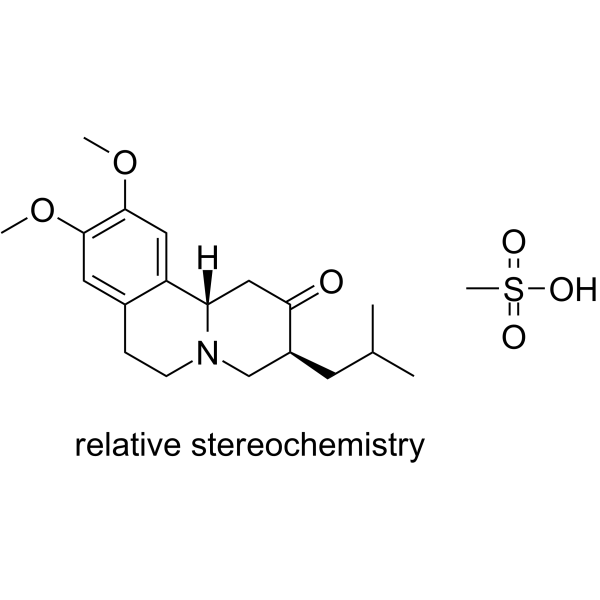
    Tetrabenazine (Ro 1-9569) mesylate is a brain-penetrant and orally active VMAT2-selective ligand with human VMAT2 Ki 100 nM. Tetrabenazine mesylate binds VMAT2 to block monoamine uptake into synaptic vesicles, potentiates cytoplasmic monoamine degradation. Tetrabenazine mesylate weakly blocks dopamine D2 receptors, and increases dopamine turnover via elevated cerebrospinal fluid homovanillic acid. Tetrabenazine mesylate can be used for the research of Huntington’s disease, tardive dyskinesia, and Tourette’s syndrome .
    Tetrabenazine mesylate
  • HY-W704749

    Drug Metabolite Dopamine Receptor Neurological Disease
    7-Hydroxychlorpromazine hydrochloride is the active metabolite of Chlorpromazine (HY-12708). 7-Hydroxychlorpromazine hydrochloride can increase prolactin levels in rats. 7-Hydroxychlorpromazine hydrochloride can increase dopamine turnover and has a sedative effect. In addition, 7-Hydroxychlorpromazine hydrochloride can effectively inhibit amphetamine-induced stereotyped behavior in rats and is used in the study of psychosis .
    7-Hydroxychlorpromazine hydrochloride
  • HY-171328

    Dopamine Receptor Neurological Disease
    RG-15 is the orally active antagonist for dopamine receptor that exhibits goof affinity to human D2 receptor and human D3 receptor with pKi of 8.23 and 10.49. RG-15 inhibits dopamine-stimulated [ 35S]GTPγS binding with IC50 of 21.2 nM (rat striatal membranes), 36.7 nM (mouse A9 cells expressing human D2L receptors) and 7.2 nM (CHO cells expressing human D3 receptors). RG-15 increases the turnover and biosynthesis of dopamine in mouse striatum and olfactory bulb, exhibiting antipsychotic activity .
    RG-15
  • HY-B0590R

    Ro 1-9569 (Standard)

    Reference Standards Monoamine Transporter Dopamine Receptor Neurological Disease
    Tetrabenazine (Standard) is the analytical standard of Tetrabenazine (HY-B0590). This product is intended for research and analytical applications. Tetrabenazine (Ro 1-9569) is a brain-penetrant and orally active VMAT2-selective ligand with human VMAT2 Ki 100 nM. Tetrabenazine binds VMAT2 to block monoamine uptake into synaptic vesicles, potentiates cytoplasmic monoamine degradation. Tetrabenazine weakly blocks dopamine D2 receptors, and increases dopamine turnover via elevated cerebrospinal fluid homovanillic acid. Tetrabenazine can be used for the research of Huntington’s disease, tardive dyskinesia, and Tourette’s syndrome .
    Tetrabenazine (Standard)
  • HY-W704752

    Isotope-Labeled Compounds Dopamine Receptor Drug Metabolite Neurological Disease
    Z-Doxepin-d3 hydrochloride is the deuterium labeled 7-Hydroxychlorpromazine hydrochloride (HY-W704749). 7-Hydroxychlorpromazine hydrochloride is the active metabolite of Chlorpromazine (HY-12708). 7-Hydroxychlorpromazine hydrochloride can increase prolactin levels in rats. 7-Hydroxychlorpromazine hydrochloride can increase dopamine turnover and has a sedative effect. In addition, 7-Hydroxychlorpromazine hydrochloride can effectively inhibit amphetamine-induced stereotyped behavior in rats and is used in the study of psychosis .
    Z-Doxepin-d3 Hydrochloride
  • HY-B0590S3

    TBZ-d7-d7; Ro 1-9569-d7

    Isotope-Labeled Compounds Monoamine Transporter Dopamine Receptor Neurological Disease
    Tetrabenazine-d7 (TBZ-d7-d7) is deuterium labeled Tetrabenazine (HY-B0590). Tetrabenazine (Ro 1-9569) is a brain-penetrant and orally active VMAT2-selective ligand with human VMAT2 Ki 100 nM. Tetrabenazine binds VMAT2 to block monoamine uptake into synaptic vesicles, potentiates cytoplasmic monoamine degradation. Tetrabenazine weakly blocks dopamine D2 receptors, and increases dopamine turnover via elevated cerebrospinal fluid homovanillic acid. Tetrabenazine can be used for the research of Huntington’s disease, tardive dyskinesia, and Tourette’s syndrome .
    Tetrabenazine-d7
  • HY-W097839

    Drug Metabolite Dopamine Transporter Neurological Disease
    2,4,5-Trimethoxycinnamic acid is a metabolite. 2,4,5-Trimethoxycinnamic acid is detectable in plasma and urine after administration of the aqueous extract of P. frutescens. 2,4,5-Trimethoxycinnamic acid induces a stress-like significant increase in basal Dopamine turnover in the hippocampus. 2,4,5-Trimethoxycinnamic acid is applicable to depression research .\n

    2,4,5-Trimethoxycinnamic acid

Inquiry Online

Your information is safe with us. * Required Fields.

Salutation


Country or Region *

Applicant Name *


Organization Name *

Department *


Email Address *


Product Name *

Cat. No.


Requested quantity *

Phone Number *


Remarks

Inquiry Online

Inquiry Information

Product Name:
Cat. No.:
Quantity:
MCE Japan Authorized Agent:

