

26 Results for "

druggability evaluation

" in MedChemExpress (MCE) Product Catalog:
Products (26)

26 Results for "druggability evaluation" in MCE Product Catalog:

15
15 Cited Publications
Cat. No.: HY-D0040
CAS No.: 1461-15-0
Synonyms: Fluorexon
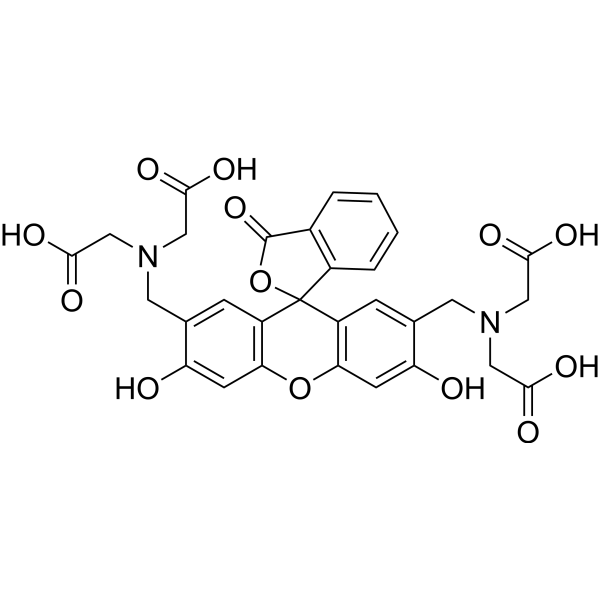
Calcein is a fluorescent dye and self-quenching probe, used as an indicator of lipid vesicle leakage, and also as a complexometric indicator for titration of calcium ions with EDTA, and for fluorometric determination of calcium. Calcein cannot directly cross the intact cell membrane of a living cell, unlike Calcein-AM (HY-D0041) which is cell-permeable. Calcein can also be used as a model drug for evaluating efficiency and bioavailability of drug delivery systems .
loading...
    loading...
Cat. No.: HY-112624B
CAS No.: 9004-54-0
Synonyms: Dextran 70; Dextran D70; Dextran T70(MW 64000-76000)
Dextran 70,000 is a high molecular weight polysaccharide formed by glucose linked by α-(1→6) glycosidic bonds. Dextran 70,000 can expand blood volume through colloidal osmotic pressure effect and inhibit cell adhesion and platelet aggregation through steric hindrance. At the same time, Dextran 70,000 can be used as a drug carrier to achieve targeted delivery through endocytosis. Dextran 70,000 is biologically inert and has low immunogenicity. It can be used for clinical blood volume expansion, anti-thrombotic research, and evaluation of vascular permeability in in vitro experiments. It can also be combined with fluorescent dyes for cell tracking and drug delivery research. The Dextran series of compounds are also natural polysaccharide drug carriers that can be connected to drugs through covalent bonding methods such as ester bonds, amide bonds or click chemistry, or self-assembled to form carriers such as nanoparticles and hydrogels. Dextran is biodegradable and biocompatible, and can achieve targeted delivery and controlled release of drugs. Dextran derivatives can prolong the half-life of drugs, increase local concentrations, and reduce the activity of immune clearance.
loading...
    loading...
Cat. No.: HY-149136
CAS No.: 2412688-16-3
Target:  

Integrin TGF-beta/Smad

Research Areas:  

Inflammation/Immunology

MORF-627 is a highly selective, orally active integrin αvβ6 inhibitor. By blocking TGF-β1 activation and pSMAD2 signaling, MORF-627 significantly reduces collagen deposition, epithelial-mesenchymal transition markers, and structural changes in fibrotic cells. MORF-627 exhibits significant antifibrotic efficacy without genotoxicity in idiopathic pulmonary fibrosis models. However, MORF-627 induces bladder epithelial proliferation and early invasive urothelial carcinoma in cynomolgus monkeys and human cells, and this toxic effect can be reversed by exogenous TGF-β. MORF-627 can be used for studying the pathological mechanisms of pulmonary fibrosis and evaluating drug safety .
loading...
    loading...
Cat. No.: HY-129763
CAS No.: 90134-00-2
Purity:  ≥99.0%
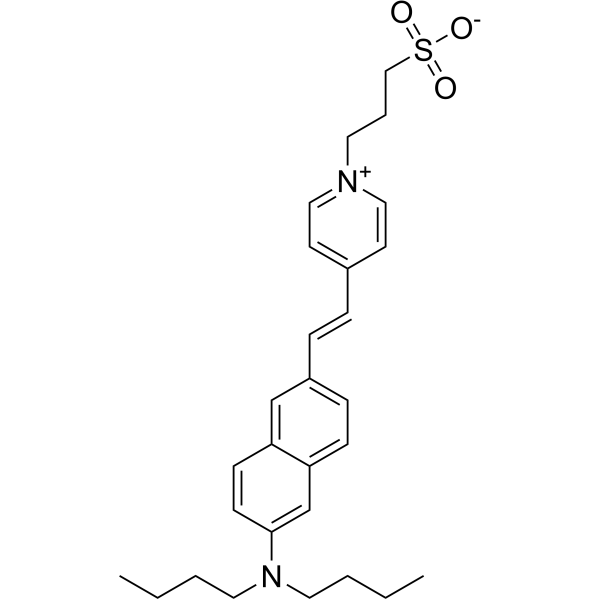
Di-4-ANEPPS is a voltage-sensitive dye that acts on voltage-gated ion channels (such as sodium channels) and inhibits sodium current, significantly reducing sodium current density, although specific values like IC50 remain unclear. It mainly binds to the voltage-sensitive regions on the cell membrane, changing its fluorescence properties to reflect membrane potential changes and thus affecting the function of ion channels to exert its activity. This substance can be used in cardiovascular research, such as the electrophysiology of cardiomyocytes, myocardial ischemia, and the effects of drugs on cardiomyocytes. It is of great value in evaluating drug cardiotoxicity and exploring the mechanisms of arrhythmias .
loading...
    loading...
Cat. No.: HY-113465S
CAS No.: 1240398-14-4
Synonyms: LTE4-d5
Leukotriene E4-d5 (LTE4-d5) is the d-5-labeled Leukotriene E4 (HY-113465). Leukotriene E4 is a stable final metabolite of cysteinyl leukotrienes, produced by immune cells such as mast cells and eosinophils. Leukotriene E4 serves as a key biomarker for evaluating asthma severity, Aspirin (HY-14654) sensitivity, and mast cell activation disorders. Leukotriene E4 is a full functional agonist of CysLT1R, which induces sustained intracellular calcium mobilization and Erk phosphorylation. Leukotriene E4 mediates inflammation in a P2Y12 receptor-dependent manner. Leukotriene E4 can be used in the research of asthma and non-steroidal anti-inflammatory drug-exacerbated respiratory diseases .
loading...
    loading...
Cat. No.: HY-W017512
CAS No.: 17496-14-9
Target:  

Drug Intermediate

Research Areas:  

Others

2-Methylindanone is a cyclic ketone compound. 2-Methylindanone is an important substrate for evaluating the effects of Pd and Ni in asymmetric α-arylation reactions. 2-Methylindanone can also be used as a drug intermediate .
loading...
    loading...
Cat. No.: HY-109014
CAS No.: 911208-73-6
Purity:  99.82%
Synonyms: CMX-157
Research Areas:  

Infection

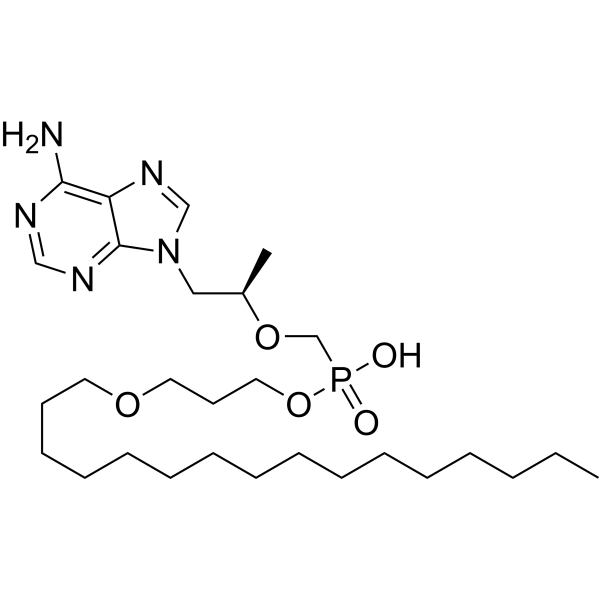
Tenofovir exalidex (CMX157) is a lipid conjugate of the acyclic nucleotide analog Tenofovir with activity against both wild-type and antiretroviral drug-resistant HIV strains, including multidrug nucleoside/nucleotide analog-resistant viruses. Tenofovir exalidex is active against all major subtypes of HIV-1 and HIV-2 in fresh human PBMCs and against all HIV-1 strains evaluated in monocyte-derived macrophages, with EC50s ranging between 0.2 and 7.2 nM. CMX157 is orally available and has no apparent toxicity. Tenofovir exalidex also shows antiviral activity against HBV .
loading...
    loading...
Cat. No.: HY-W010778
CAS No.: 231278-20-9
Target:  

Drug Derivative

Research Areas:  

Others

N-[3-chloro-4-[(3-fluorophenyl)methoxy]phenyl]-6-iodo-quinazolin-4-amine is a quinazoline derivative that has also been used in the design, synthesis and biological evaluation of quinazoline-phosphoramidate mustard conjugates as anticancer drugs.
loading...
    loading...
Cat. No.: HY-155110
CAS No.: 945152-88-5
Research Areas:  

Infection

Antiviral agent 34 is a potent and orally active antiviral agent against influenza A and B subtypes with an EC50 value of 0.8 nM for H1N1 proliferation. Antiviral agent 34 derivatives inhibited influenza virus proliferation by targeting influenza virus RNA-dependent RNA polymerase. Antiviral agent 34 can be used for influenza virus research .
loading...
    loading...
Cat. No.: HY-W329161
CAS No.: 108750-13-6
Target:  

Fluorescent Dye

Research Areas:  

Others

Calcein sodium is a fluorescent dye and self-quenching probe, used as an indicator of lipid vesicle leakage, and also as a complexometric indicator for titration of calcium ions with EDTA, and for fluorometric determination of calcium. Calcein cannot directly cross the intact cell membrane of a living cell, unlike Calcein-AM (HY-D0041) which is cell-permeable. Calcein can also be used as a model drug for evaluating efficiency and bioavailability of drug delivery systems .
loading...
    loading...
Cat. No.: HY-W419044A
CAS No.: 36352-49-5
Target:  

Fluorescent Dye

Research Areas:  

Others

Calcein calcium potassium is a fluorescent dye and self-quenching probe, used as an indicator of lipid vesicle leakage, and also as a complexometric indicator for titration of calcium ions with EDTA, and for fluorometric determination of calcium. Calcein cannot directly cross the intact cell membrane of a living cell, unlike Calcein-AM (HY-D0041) which is cell-permeable. Calcein can also be used as a model drug for evaluating efficiency and bioavailability of drug delivery systems .
loading...
    loading...
Cat. No.: HY-162602
CAS No.: 3051851-55-6
Target:  

EGFR

Research Areas:  

Cancer

EGFR-IN-115 (H-13) is an EGFR inhibitor, with IC50 of 395.2 nM. EGFR-IN-115 can be used in anti-cancer research .
loading...
    loading...
Cat. No.: HY-109014R
CAS No.: 911208-73-6
Synonyms: CMX-157 (Standard)
Tenofovir exalidex (Standard) is the analytical standard of Tenofovir exalidex. This product is intended for research and analytical applications. Tenofovir exalidex (CMX157) is a lipid conjugate of the acyclic nucleotide analog Tenofovir with activity against both wild-type and antiretroviral drug-resistant HIV strains, including multidrug nucleoside/nucleotide analog-resistant viruses. Tenofovir exalidex is active against all major subtypes of HIV-1 and HIV-2 in fresh human PBMCs and against all HIV-1 strains evaluated in monocyte-derived macrophages, with EC50s ranging between 0.2 and 7.2 nM. CMX157 is orally available and has no apparent toxicity. Tenofovir exalidex also shows antiviral activity against HBV .
loading...
    loading...
Cat. No.: HY-K2004

MCE Trypan Blue Staining Solution (0.4%) is suitable for viability assessment of most adherent and suspension cell lines. It is commonly used for cell culture quality control, evaluation of cellular responses following drug treatment, and viability measurements after cell thawing and recovery.

loading...
    loading...
Cat. No.: HY-184758
CAS No.: 10567-22-3
Research Areas:  

Others

3-O-Octadecyl-sn-glycerol is an ether lipid that serves as an enantiopure substrate for evaluating the stereoselectivity of lipases in oleic acid esterification reactions. 3-O-Octadecyl-sn-glycerol can be used for the synthesis of AZT-lipid-PFA antiviral dual drugs. 3-O-Octadecyl-sn-glycerol acts as a biochemical reagent for research in various fields .
loading...
    loading...
Cat. No.: HY-D3485
CAS No.: 216854-76-1
Dexamethasone fluorescein is a fluorescently labeled steroid conjugate that binds to glucocorticoid receptors. Dexamethasone fluorescein binds to glucocorticoid receptors. Dexamethasone fluorescein serves as a marker for evaluating the delivery of drugs via subconjunctival injection and intratympanic administration. Sustained transscleral diffusion is achieved when Dexamethasone fluorescein is delivered via fibrin sealant. Dexamethasone fluorescein can be used to investigate the binding and localization of glucocorticoid receptors .
loading...
    loading...
Cat. No.: HY-L177
1,909 compounds

Antibody inhibitors are compounds with the same activity as the original therapeutic antibodies, which can be used as positive controls for drug efficacy evaluation and other studies. Antibody inhibitors can also assist in verifying the functional activity of the target protein. These antibody inhibitors are active in vivo and can achieve certain physiological functions by blocking or neutralizing target proteins, such as CD20, HER2, EGFR, VEGFR, TNF-α, etc. In drug screening, antibody inhibitor-based screening can be carried out to identify active compounds targeting target proteins and target diseases.

MCE can provide 1,909 antibody inhibitors that can be used for drug development in cancer, immunity, infection and other hot research areas.

Cat. No.: HY-DY1091
CAS No.: 1461-15-0
Synonyms: Fluorexon (solution)
Calcein (solution) (Fluorexon (solution)) is a fluorescent dye and self-quenching probe, used as an indicator of lipid vesicle leakage, and also as a complexometric indicator for titration of calcium ions with EDTA, and for fluorometric determination of calcium. Calcein cannot directly cross the intact cell membrane of a living cell, unlike Calcein-AM (HY-D0041) which is cell-permeable. Calcein can also be used as a model drug for evaluating efficiency and bioavailability of drug delivery systems .
Solvent and concentration: DMSO: 2 mM
The 1 mL volume is defined as the base specification. All larger sizes correspond to incremental volumes of this base.
loading...
    loading...
Cat. No.: HY-L936V0
11412 compounds

Molecular Glue Virtual Library is constructed using generative AI technology, integrating the structural features, activity data of known molecular glues, and interaction information of ternary complexes (target protein-E3-molecular glue). Endowed with structural novelty, drug-likeness, diversity and synthesizability, it is applicable to molecular glue-based AI drug screening and large-scale virtual screening.

MCE builds this library based on high-quality molecular building blocks by virtue of robust computing power, coupled with rigorous reaction rules and optimized compound generation strategies. To ensure library quality, molecules with high synthetic difficulty, poor drug-likeness, PAINS and other undesirable molecules are excluded first. Subsequently, scaffold-based compound analysis is performed to screen drug-like diverse molecules for synthesizability evaluation; those with excessively high synthetic difficulty are removed, ultimately forming a large-scale molecular glue virtual library with structural diversity, synthesizability and drug-likeness.

Compounds in the library can be synthesized in only 1-2 chemical reaction steps. With MCE’s experienced chemical synthesis team, custom synthesis of different scales from milligram to kilogram can be easily achieved to meet diverse customer needs.

Cat. No.: HY-L922
25000 compounds

A diverse compound library with favorable ADMET properties (Absorption, Distribution, Metabolism, Excretion, and Toxicity) is crucial in drug discovery. Early evaluation of ADMET properties allows for the exclusion of molecules with unfavorable profiles at the initial stages, thereby reducing the risk of late-stage development failures, lowering R&D costs, and accelerating optimization of lead compounds. Based on predictions from ADMET-related AI algorithms, the compounds in this library are predicted to exhibit favorable oral bioavailability (F > 30%), reasonable plasma protein binding (PPB < 98%), minimized CYP3A4 inhibition potential (inhibition probability < 50%, CYP3A4 is the most critical drug-metabolizing enzyme in the cytochrome P450 family) , low toxicity profiles, with 140 potentially toxic substructures pre-identified and excluded via substructure searching to eliminate compounds containing hazardous fragments. The diversity library enables broad applicability in high-throughput screening (HTS) and high-content screening (HCS).

