
85 Results for "

dyslipidemia

" in MedChemExpress (MCE) Product Catalog:
Products (85)

85 Results for "dyslipidemia" in MCE Product Catalog:

24
24 Cited Publications
Cat. No.: HY-N0288
CAS No.: 476-28-8
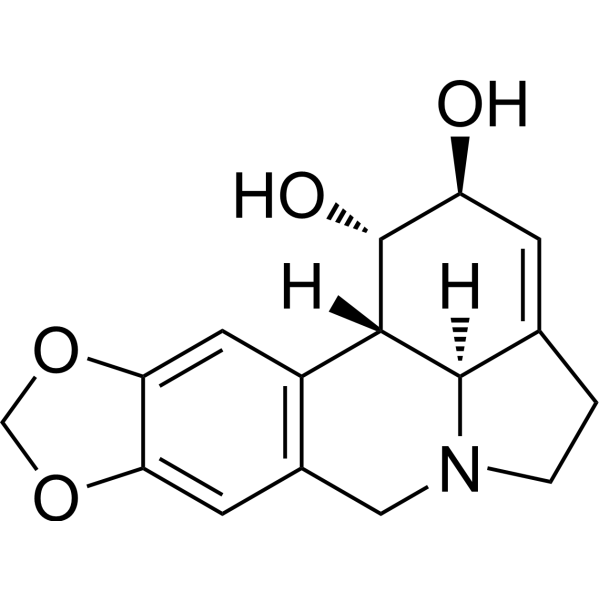
Lycorine is a natural alkaloid extracted from the Amaryllidaceae plant. Lycorine is a potent and orally active SCAP inhibitor with a Kd value 15.24 nM. Lycorine downregulates the SCAP protein level without changing its transcription . Lycorine is also a melanoma vasculogenic inhibitor . Lycorine can be used for the study of prostate cancer and metabolic diseases .
loading...
    loading...
3
3 Cited Publications
Cat. No.: HY-119222
CAS No.: 862892-90-8
Purity:  99.11%
Target:  

GPR109A

Research Areas:  

Metabolic Disease

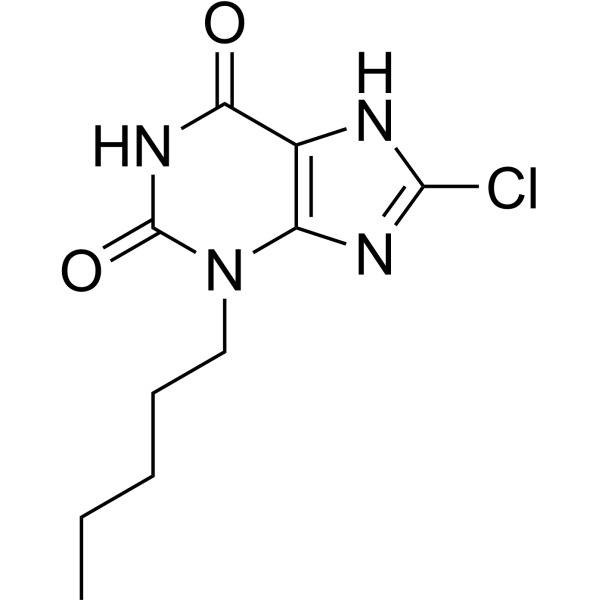
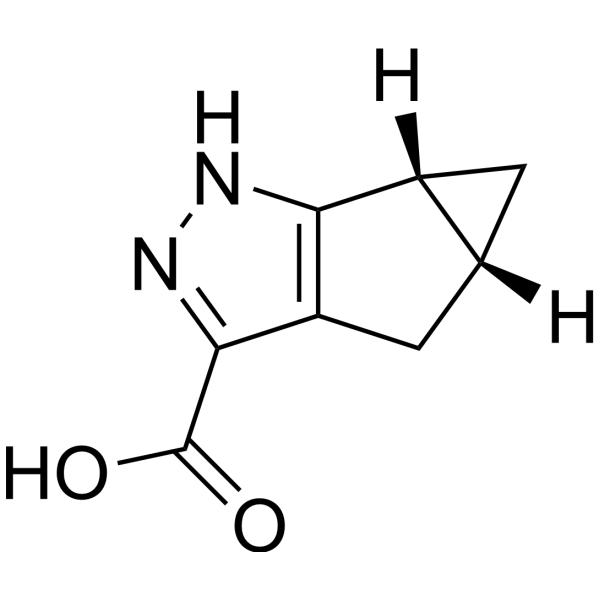
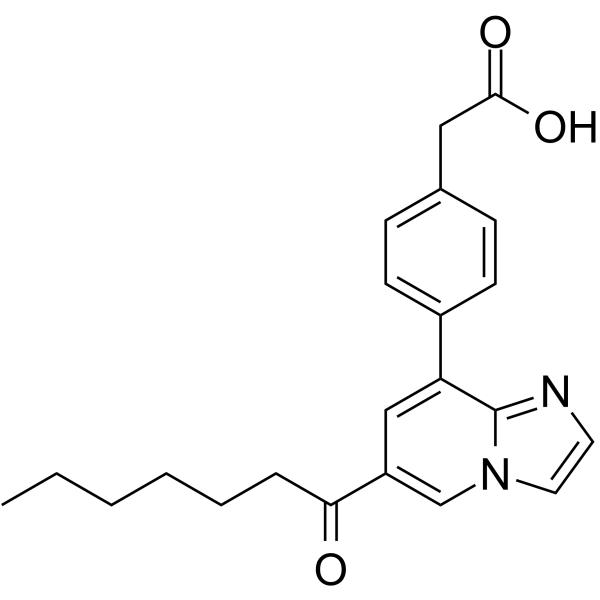
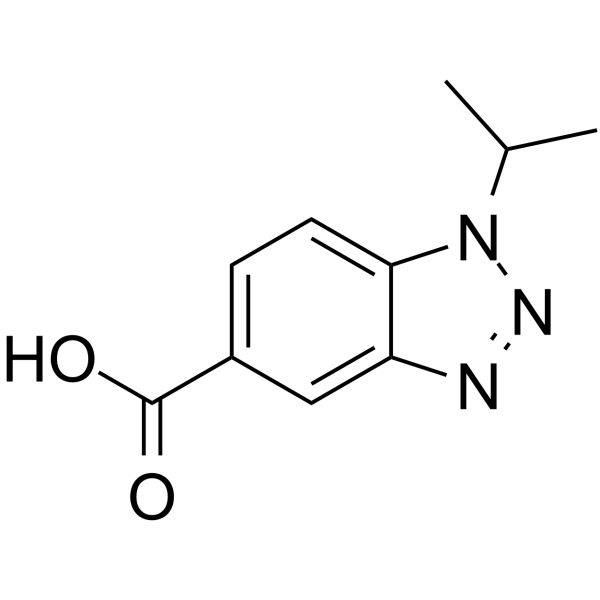
GSK256073 is a potent, selective and orally active GPR109A agonist and a long-lasting and non-flushing HCA2 full agonist with a pEC50 of 7.5 (human HCA2). GSK256073 acutely improves glucose homeostasis via inhibition of lipolysis and has the potential for the study of type 2 diabetes mellitus (T2DM)and dyslipidemia . GPR109A: G-protein coupled receptor 109A; HCA2: hydroxy-carboxylic acid receptor 2
loading...
    loading...
2
2 Cited Publications
Cat. No.: HY-B1268
CAS No.: 577-11-7
Synonyms: Dioctyl sulfosuccinate sodium salt
Research Areas:  

Others

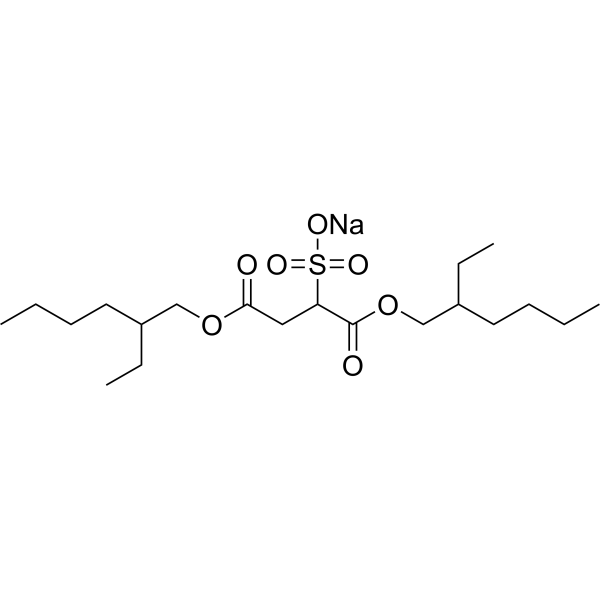
Docusate Sodium (Dioctyl sulfosuccinate sodium salt) is one of the main components in stool softeners. Docusate Sodium is a sulfated surfactant and may inactivate viral pathogens by disrupting viral envelopes and/or denaturing/disassociating proteins. Docusate Sodium is effective in vitro against wild type and drug-resistant strains of HSV type 1 and 2. Docusate Sodium is an obesogen. Docusate Sodium with developmental exposure leads to increased adult adiposity, inflammation, metabolic disorder and dyslipidemia in offspring fed a standard diet in mice .
loading...
    loading...
2
2 Cited Publications
Cat. No.: HY-106278
CAS No.: 343321-96-0
Purity:  99.44%
Target:  

PPAR

Research Areas:  

Metabolic Disease

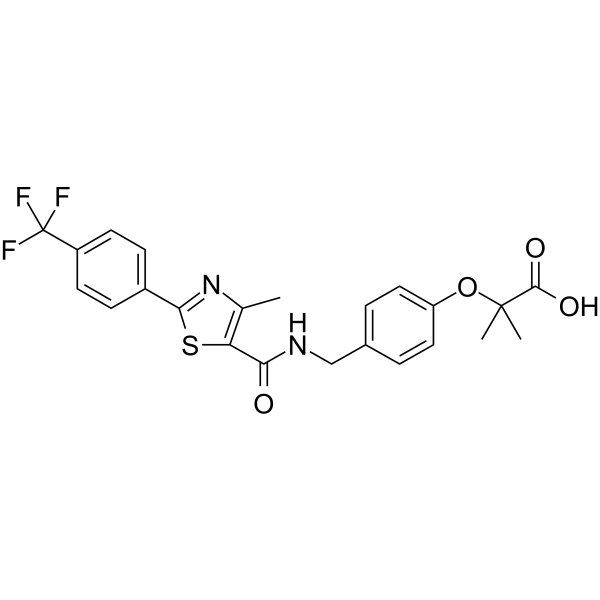
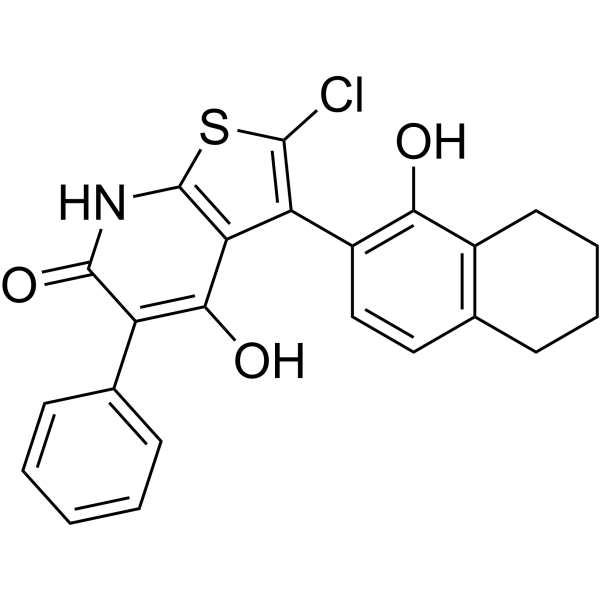
GW 590735 is a potent and selective PPARα agonist. GW 590735 showsEC50=4 nM on PPARα and at least 500-fold selectivity versus PPARδ and PPARγ. GW 590735 can be used for the research of dyslipidemia .
loading...
    loading...
1
1 Cited Publications
Cat. No.: HY-19522
CAS No.: 851528-79-5
Synonyms: MBX-8025; RWJ-800025
Target:  

PPAR

Research Areas:  

Metabolic Disease

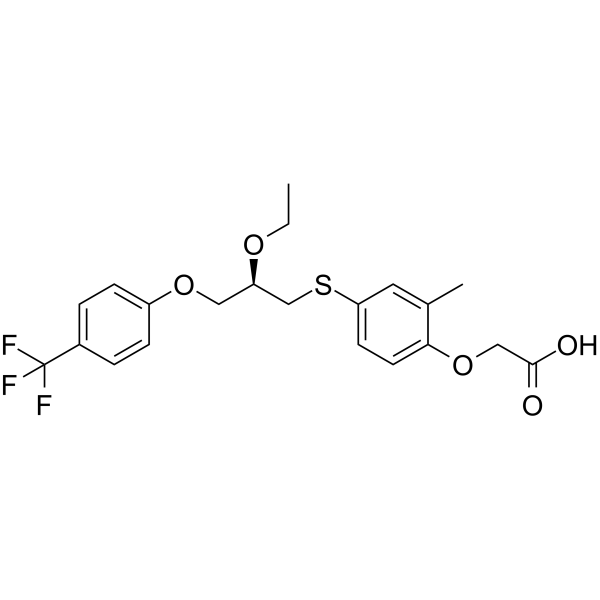
Seladelpar (MBX-8025) is an orally active, potent and specific PPARδ agonist with an EC50 of 2 nM. Seladelpar shows more than 750-fold and 2500-fold selectivity over the PPARα and PPARγ receptors, respectively. Seladelpar can be used for the study of primary biliary cholangitis .
loading...
    loading...
1
1 Cited Publications
Cat. No.: HY-15790
CAS No.: 439087-18-0
Purity:  99.91%
Synonyms: A 3309; AZD 7806
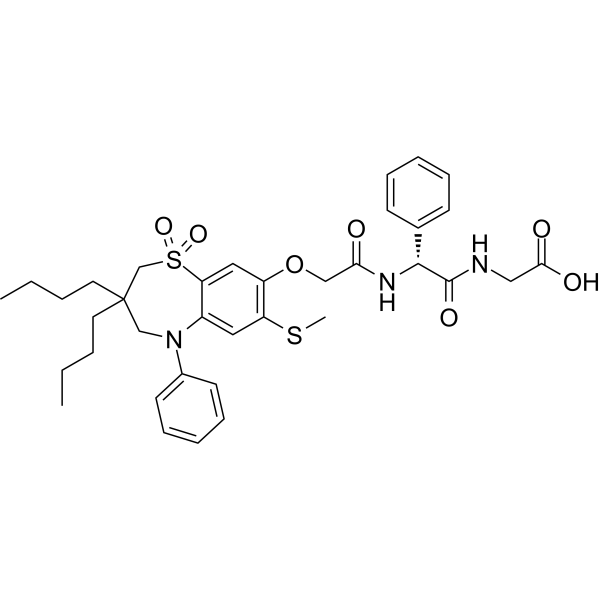
Elobixibat (A 3309; AZD 7806) is an orally active, bile acid transporter (IBAT) inhibitor with IC50 values ??of 0.53 nM (human IBAT), 0.13 nM (mouse IBAT), and 5.8 nM (canine IBAT). Elobixibat can lower LDL cholesterol, increase serum GLP-1, promote colonic motility, and has the potential to study metabolic syndrome. Elobixibat can be used in the study of chronic functional constipation (CIC), dyslipidemia, non-alcoholic hepatitis, and liver tumors in the elderly .
loading...
    loading...
1
1 Cited Publications
Cat. No.: HY-15790A
CAS No.: 1633824-78-8
Purity:  99.44%
Synonyms: A 3309 hydrate; AZD 7806 hydrate
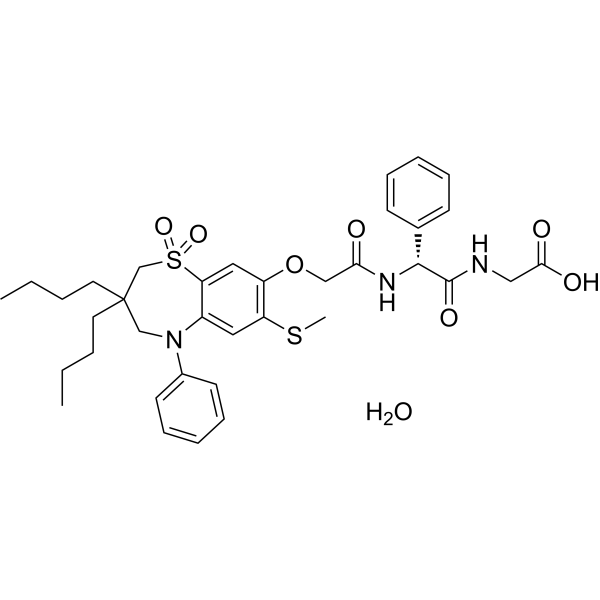
Elobixibat (A 3309; AZD 7806) hydrate is an orally active, bile acid transporter (IBAT) inhibitor with IC50 values ??of 0.53 nM (human IBAT), 0.13 nM (mouse IBAT), and 5.8 nM (canine IBAT). Elobixibat hydrate can lower LDL cholesterol, increase serum GLP-1, promote colonic motility, and has the potential to study metabolic syndrome. Elobixibat hydrate can be used in the study of chronic functional constipation (CIC), dyslipidemia, non-alcoholic hepatitis, and liver tumors in the elderly .
loading...
    loading...
1
1 Cited Publications
Cat. No.: HY-107581
CAS No.: 1268882-43-4
Purity:  99.68%
Target:  

GPR109A MMP

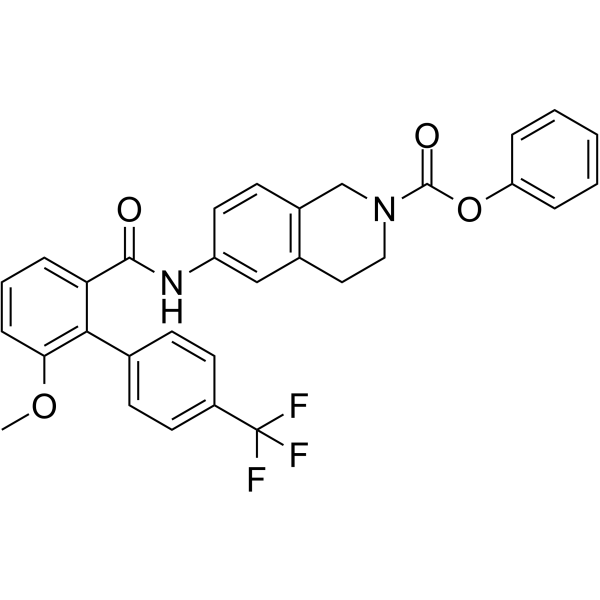
MK-1903 is an orally active full agonist of GPR109a/HCAR2, with an EC50 of 12.9 nM. MK-1903 activates antilipolytic and vasodilatory pathways, reduces plasma free fatty acid levels, and induces skin flushing. MK-1903 stimulates the expression of HCAR2 protein and regulates the inflammatory response of microglia. MK-1903 prevents the enhanced firing activity of spinal nociceptive neurons. MK-1903 triggers the release of MMP-9 and the formation of NET. MK-1903 can be used in the research of dyslipidemia and neuroinflammation-based central nervous system diseases .
loading...
    loading...
1
1 Cited Publications
Cat. No.: HY-W011927S
CAS No.: 2483831-28-1
Synonyms: Bisphenol S (4,4'-Sulfonyldiphenol)-d8
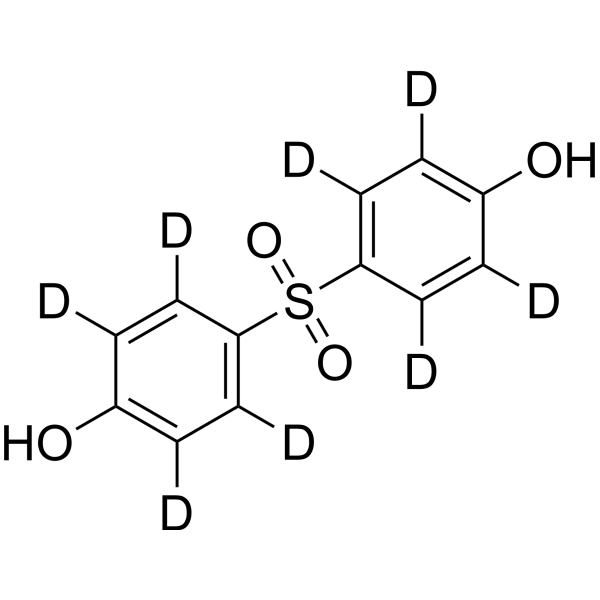
4,4'-Sulfonyldiphenol-d8 (Bisphenol S (4,4'-Sulfonyldiphenol)-d8) is the deuterium labeled 4,4'-Sulfonyldiphenol (HY-W011927).4,4'-Sulfonyldiphenol (Bisphenol S; Bis(4-hydroxyphenyl) sulfone), a substitute for Bisphenol A (HY-18260), is widely used in industrial and consumer products. 4,4'-Sulfonyldiphenol is an estrogen receptor (ER) agonist and can competitively bind to thyroid hormone receptors (TR) with IC50 values for TRα and TRβ are 2650 μM and 2294 μM respectively, thereby affecting breast development and reducing the expression of androgen receptor (AR) in fetal testes. 4,4'-Sulfonyldiphenol promotes the progression of glioblastoma by upregulating the EZH2 mediated PI3K/AKT/mTOR pathway. Under chronic exposure, 4,4'-Sulfonyldiphenol can cause significant lipid deposition and dyslipidemia in the mouse liver by upregulating JunB and Atf3, and has a role in causing obesity at low doses. 4,4'-Sulfonyldiphenol induces intestinal inflammation by altering the intestinal microbiome. 4,4'-Sulfonyldiphenol accelerates the progression of atherosclerosis in zebrafish embryo larvae.
loading...
    loading...
1
1 Cited Publications
Cat. No.: HY-125351
CAS No.: 1933533-18-6
Purity:  99.18%
Target:  

Ceramidase

Research Areas:  

Metabolic Disease

SPT-IN-1 (compound 1) is an orally active and potent SPT (serine palmitoyl transferase) inhibitor, with an IC50 of 5.19 nM for hSPT1. SPT-IN-1 can be used for type 2 diabetes and dyslipidemia research .
loading...
    loading...
1
1 Cited Publications
Cat. No.: HY-19522B
CAS No.: 928821-41-4
Synonyms: MBX-8025 (lysine); RWJ-800025 (lysine)
Target:  

PPAR

Research Areas:  

Metabolic Disease

Seladelpar (MBX-8025) lysine is an orally active, potent and specific PPARδ agonist with an EC50 of 2 nM. Seladelpar lysine shows more than 750-fold and 2500-fold selectivity over the PPARα and PPARγ receptors, respectively. Seladelpar lysine can be used for the study of primary biliary cholangitis .
loading...
    loading...
Cat. No.: HY-17444
CAS No.: 251565-85-2
Target:  

PPAR

Research Areas:  

Metabolic Disease Cancer

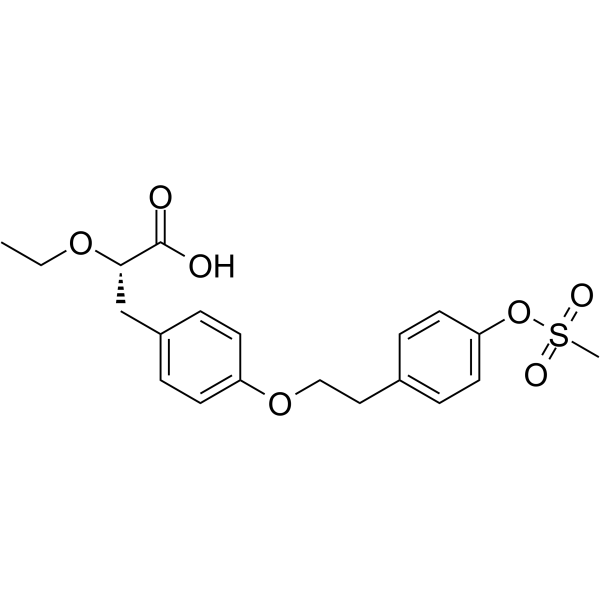
Tesaglitazar is a dual-target PPARα/γ agonist with an EC50 of 13.4 μM for rat PPARα and 3.6 μM for human PPARα. Tesaglitazar affects lipid and glucose metabolism by activating PPARα and PPARγ receptors, and has the potential to improve blood sugar and relieve pain. Tesaglitazar can be used to induce in vivo tumor models and can be used in the study of type 2 diabetes, dyslipidemia, and neuropathic pain .
loading...
    loading...
Cat. No.: HY-18778
CAS No.: 866399-87-3
Synonyms: TA-8995; DEZ-001; AMG-899
Research Areas:  

Cardiovascular Disease

Obicetrapib (TA-8995; DEZ-001) is an orally active cholesteryl ester transfer protein (CETP) inhibitor. Obicetrapib potently reduces atherogenic lipoproteins (such as LDL-C, ApoB, Lp (a)) and increases HDL-C. Obicetrapib can be used for the research of dyslipidemia and atherosclerotic cardiovascular disease (ASCVD) .
loading...
    loading...
Cat. No.: HY-W011927
CAS No.: 80-09-1
Synonyms: Bisphenol S; Bis(4-hydroxyphenyl) sulfone
4,4'-Sulfonyldiphenol (Bisphenol S; Bis(4-hydroxyphenyl) sulfone), a substitute for Bisphenol A (HY-18260), is widely used in industrial and consumer products. 4,4'-Sulfonyldiphenol is an oally ative estrogen receptor (ER) agonist and can competitively bind to thyroid hormone receptors (TR) with IC50 values for TRα and TRβ are 2650 μM and 2294 μM respectively, thereby affecting breast development and reducing the expression of androgen receptor (AR) in fetal testes. 4,4'-Sulfonyldiphenol promotes the progression of glioblastoma by upregulating the EZH2 mediated PI3K/AKT/mTOR pathway. Under chronic exposure, 4,4'-Sulfonyldiphenol can cause significant lipid deposition and dyslipidemia in the mouse liver by upregulating JunB and Atf3, and has a role in causing obesity at low doses. 4,4'-Sulfonyldiphenol induces intestinal inflammation by altering the intestinal microbiome. 4,4'-Sulfonyldiphenol accelerates the progression of atherosclerosis in zebrafish embryo larvae .
loading...
    loading...
Cat. No.: HY-106011
CAS No.: 913541-47-6
Purity:  99.71%
SLX-4090 is an orally active enterocytic-specific microsomal triglyceride transfer protein (MTP) inhibitor with an IC50 of 8.0 nM. SLX-4090 can be used for the research of dyslipidemia .
loading...
    loading...
Cat. No.: HY-10473
CAS No.: 355129-15-6
Purity:  99.77%
Synonyms: KB2115
Research Areas:  

Metabolic Disease Endocrinology

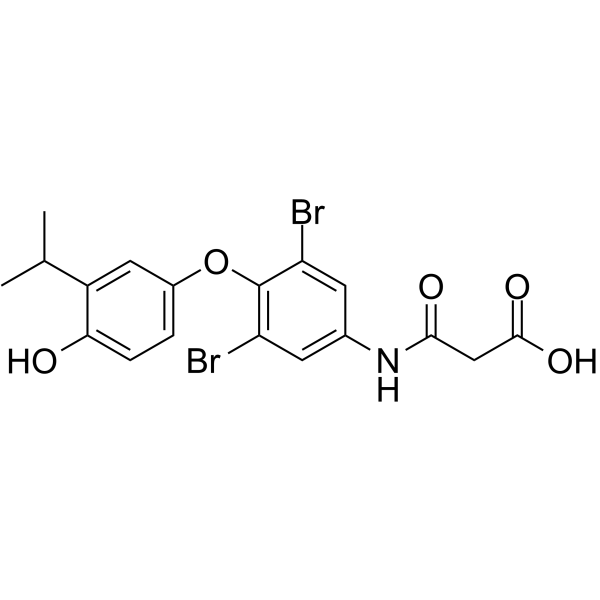
Eprotirome (KB2115) is a liver-selective thyroid hormone receptor (TR) agonist. KB2115 has modestly higher affinity for TRβ than for TRα. Eprotirome reduces low-density lipoprotein (LDL) cholesterol concentrations. Eprotirome can be used for dyslipidemias and obesity research .
loading...
    loading...
Cat. No.: HY-107580
CAS No.: 306935-41-1
Purity:  99.91%
GPR109 receptor agonist-1 is a highly selective agonist of the human orphan G protein-coupled receptor GPR109b, and does not activate the mouse homologous receptor PUMA-G. GPR109 receptor agonist-1 functionally modulates the human GPR109b receptor via the cAMP signaling pathway, with an EC50 of 400 nM. GPR109 receptor agonist-1 inhibits isoproterenol (HY-B0468)-stimulated lipolysis in human subcutaneous adipocytes, with efficacy comparable to that of Niacin (HY-B0143), and does not act on β-adrenergic receptors. GPR109 receptor agonist-1 can be used in studies related to dyslipidemia and atherosclerosis .
loading...
    loading...
Cat. No.: HY-160004
CAS No.: 1523493-53-9
PXL770 is an orally active, direct allosteric AMP-activated protein kinase (AMPK) activator. PXL770 decreases C26:0 levels, improves mitochondrial respiration, reduces expression of proinflammatory genes and induces expression of compensatory transporters (ABCD2/3) in ALD fibroblasts/lymphocytes. PXL770 normalizes plasma VLCFA levels, significantly reduces elevated VLCFA levels in brain and spinal cord in Abcd1 KO mice. PXL770 improves glycemia, dyslipidemia, and insulin resistance in ob/ob and high-fat diet (HFD)-fed mice. PXL770 can be used for the study of X-linked adrenoleukodystrophy (ALD), autosomal dominant polycystic kidney disease and nonalcoholic steatohepatitis (NASH) .
loading...
    loading...
Cat. No.: HY-17445
CAS No.: 331741-94-7
Synonyms: BMS-298585
Target:  

PPAR

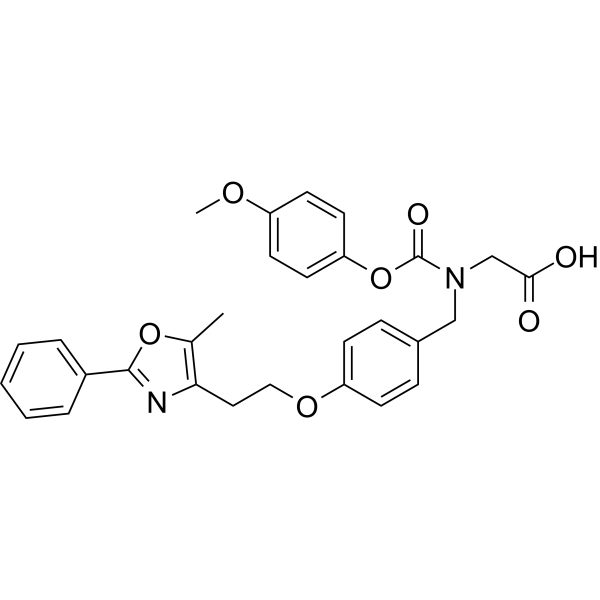
Muraglitazar (BMS-298585) is an orally active non-thiazolidinedione oxybenzylglycine dual-target PPARα/PPARγ agonist, with an IC50 of 0.25 μM and an EC50 of 0.32 μM against human PPARα, and an IC50 of 0.19 μM and an EC50 of 0.11 μM against human PPARγ. Muraglitazar regulates lipid homeostasis, enhances peripheral insulin sensitivity, and improves β-cell function. Muraglitazar reduces levels of blood glucose, insulin, triglycerides and free fatty acids, normalizes adiponectin and corticosterone levels, promotes cholesterol efflux, reduces hepatic lipid content, regulates body weight, prevents hyperglycemia, and improves glucose tolerance. Muraglitazar can be used in research related to type 2 diabetes and dyslipidemia .
loading...
    loading...
Cat. No.: HY-P99822
CAS No.: 2361290-85-7
Synonyms: SHR-1209

Target:  

PCSK9

Research Areas:  

Metabolic Disease

Recaticimab (SHR-1209) is a humanized IgG1 mAb that selectively targets PCSK9. Recaticimab reduces low-density lipoprotein cholesterol (LDL-C), non-high-density lipoprotein cholesterol (non-HDL-C), apolipoprotein B (ApoB), triglyceride (TG), and lipoprotein(a) levels. Recaticimab can be used for hyperlipidemia research .
loading...
    loading...

