19 Results for "

excitatory currents

" in MedChemExpress (MCE) Product Catalog:
Products (19)

19 Results for "excitatory currents" in MCE Product Catalog:

  • Targets Recommended:
32
32 Publications Verification
Cat. No.: HY-B1102
CAS No.: 314-13-6
Synonyms: Direct Blue 53; T-1824; C.I. 23860
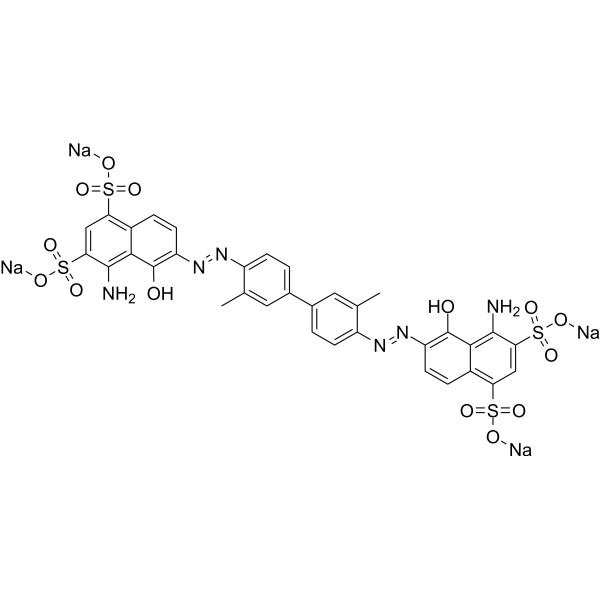
Evans Blue (Direct Blue 53) is a potent inhibitor of L-glutamate uptake via the membrane bound excitatory amino acid transporter (EAAT). Evans Blue is a L-glutamate and kainate receptor-mediated currents inhibitor. Evans Blue has a strong affinity towards serum albumin, making it a high molecular weight protein tracer. Evans Blue is also used to study BBB (blood-brain barrier) permeability .
loading...
    loading...
5
5 Cited Publications
Cat. No.: HY-117771
CAS No.: 1848233-58-8
Purity:  99.30%
Target:  

DAGL

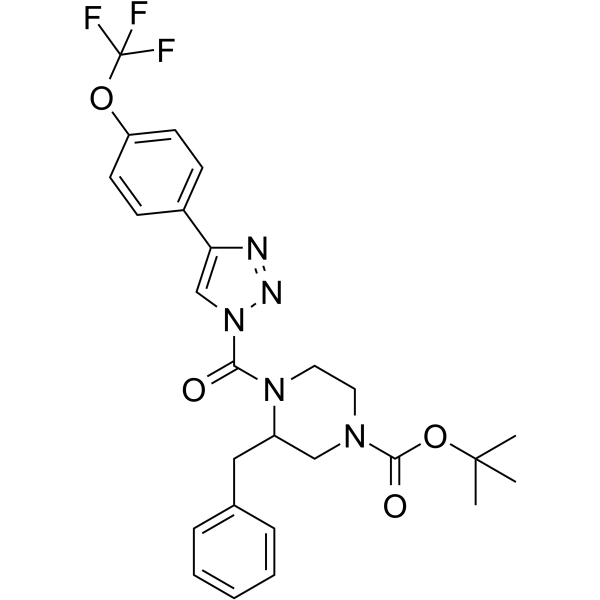
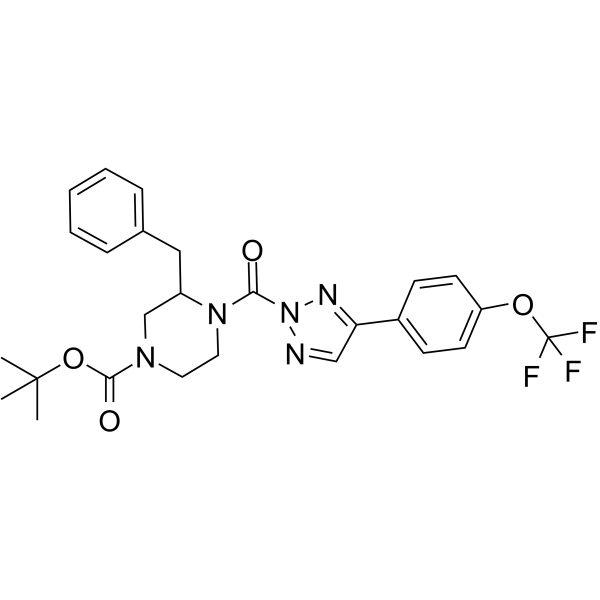
DO34 is a selective DAGL inhibitor, with an IC50 of 6 nM for DAGLα conversion of SAG to 2-AG. DO34 blocks de novo 2-AG synthesis, and suppresses tonic CB1 receptor activation. DO34 blocks depolarization-induced suppression of excitation and inhibition in the cerebellum and hippocampus. DO34 regulates feeding behavior and locomotor activity in mice. DO34 abolishes AM251-mediated enhancement of parallel fiber-evoked excitatory postsynaptic currents in cerebellar slices from MAGL global knockout mice. DO34 can be used for the research of energy balance disorder and neuroinflammation .
loading...
    loading...
1
1 Cited Publications
Cat. No.: HY-110175
CAS No.: 191744-13-5
Purity:  99.94%
Target:  

iGluR

Research Areas:  

Neurological Disease

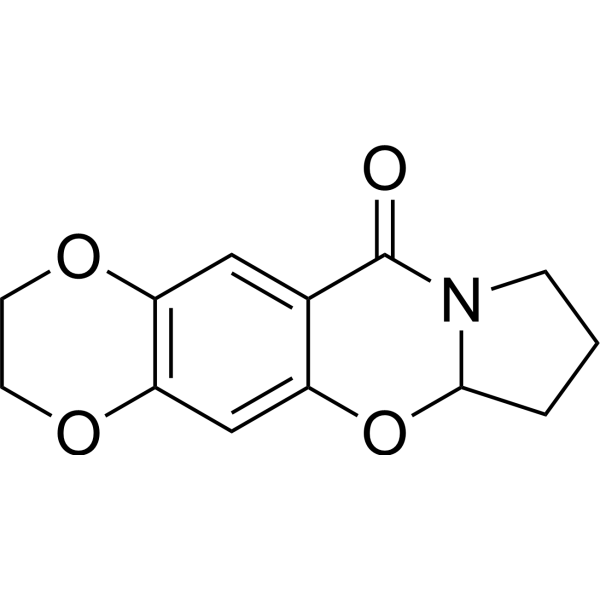
CX614 is a positive variant modulator of AMPA receptors that enhances excitatory postsynaptic potentials (amplitude and duration) by blocking and slowing the inactivation of responses to glutamate and automatically evokes excitatory postsynaptic currents in neuronal cultures. CX614 can be used in the study of psychiatric disorders such as depression .
loading...
    loading...
1
1 Cited Publications
Cat. No.: HY-110122
CAS No.: 1290628-31-7
Purity:  98.73%
Target:  

mGluR

Research Areas:  

Neurological Disease

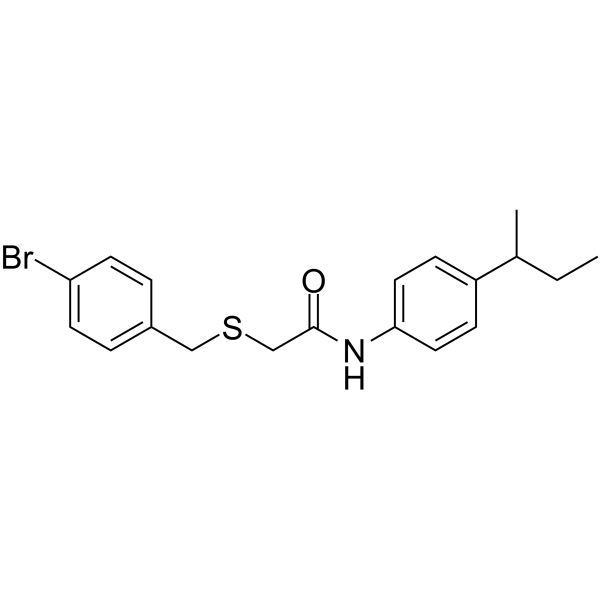
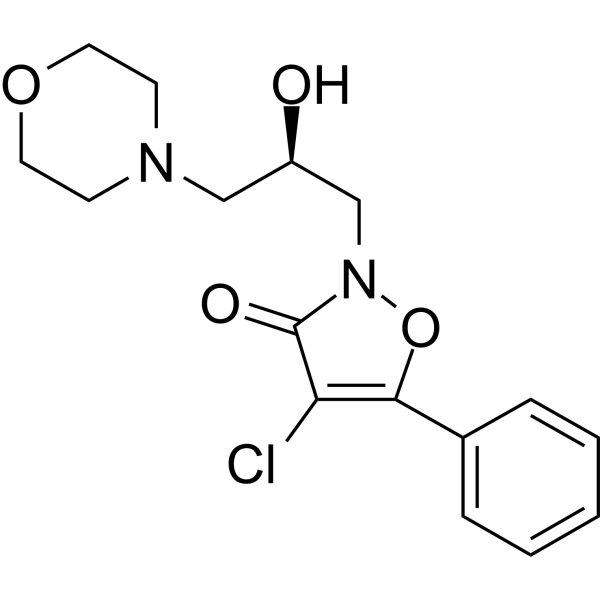
AZ 12216052 is a mGluR8 positive allosteric modulator, and helps mGluR8 modulate signaling inputing to retinal ganglion cells. AZ 12216052 exhibits antianxiety effect .
loading...
    loading...
Cat. No.: HY-171844
CAS No.: 1086377-48-1
Target:  

iGluR

CX1739 is an orally active, blood-brain barrier permeable, low-efficacy AMPA-glutamate receptor (AMPAR) potentiator. CX1739 enhances excitatory neurotransmission by potentiating glutamate-induced excitatory currents and promoting in vivo long-term potentiation. CX1739 eliminates amphetamine-induced locomotor activity, reverses opioid-, pentobarbital- and ethanol-induced respiratory depression, and exerts pro-cognitive effects in animals. CX1739 impairs motor function recovery and increases the risk of post-injury complications. CX1739 can be used in research related to attention-deficit/hyperactivity disorder, dementia, respiratory depression and spinal cord injury .
loading...
    loading...
Cat. No.: HY-117771A
CAS No.: 2098969-71-0
Purity:  98.42%
Target:  

DAGL

DO34 analog is a structural analog of DO34 (HY-117771). DO34 is a selective DAGL inhibitor, with an IC50 of 6 nM for DAGLα conversion of SAG to 2-AG. DO34 blocks de novo 2-AG synthesis, and suppresses tonic CB1 receptor activation. DO34 blocks depolarization-induced suppression of excitation and inhibition in the cerebellum and hippocampus. DO34 regulates feeding behavior and locomotor activity in mice. DO34 abolishes AM251-mediated enhancement of parallel fiber-evoked excitatory postsynaptic currents in cerebellar slices from MAGL global knockout mice. DO34 can be used for the research of energy balance disorder and neuroinflammation .
loading...
    loading...
Cat. No.: HY-176036
CAS No.: 3070323-06-4
MS1262 is a blood-brain barrier-permeable, selective inhibitor of histone methyltransferases G9a (EHMT2) and GLP (EHMT1), with an IC50 of 19 nM and a Kd of 74 nM against G9a, and an IC50 of 6 nM and a Kd of 19 nM against GLP. MS1262 reduces the dimethylation level of histone H3 lysine 9 and decreases the size of plaques. MS1262 restores hippocampal long-term potentiation (LTP) and miniature excitatory postsynaptic current (sEPSC) frequency, ameliorates spatial memory deficits, and reverses anxiety-like and depression-like behaviors in AD model mice. MS1262 reverses the expression/phosphorylation levels of early AD biomarkers, providing support for stage-specific diagnosis of AD. MS1262 reduces the risk of thrombus rupture. MS1262 can be used in research related to Alzheimer's disease, colorectal cancer, and triple-negative breast cancer .
loading...
    loading...
Cat. No.: HY-106888
CAS No.: 749179-13-3
CS-722 Free base is a synthesized centrally acting muscle relaxant, and has a muscle relaxant activity and depressant effectson the spinal reflex . CS-722 Free base inhibits spontaneous inhibitory postsynaptic currents and excitatory postsynaptic currents in hippocampal cultures probably by an inhibition of both sodium and calcium currents .
loading...
    loading...
Cat. No.: HY-103559
CAS No.: 334887-43-3
Purity:  ≥98.0%
Target:  

mGluR

Research Areas:  

Neurological Disease

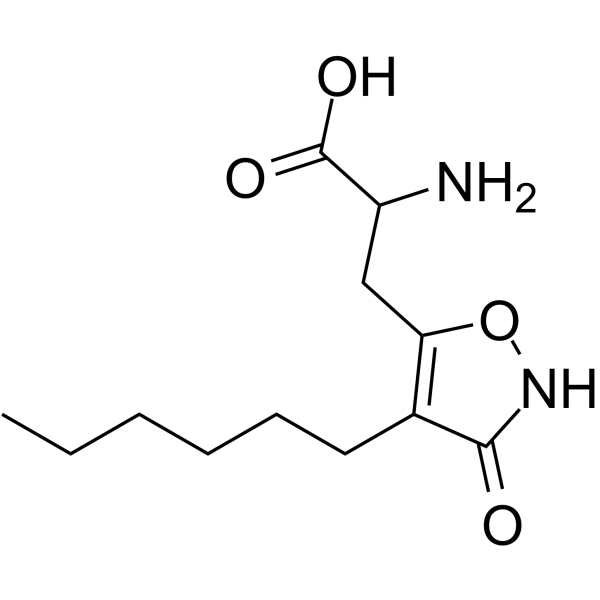
HexylHIBO is a potent group I mGluR antagonist with Kbs of 140 μM and 110 μM at mGlu1a and mGlu5a receptors, respectively. HexylHIBO does not inhibits mGlu2 and mGlu4a. HexylHIBO decreased spontaneous excitatory postsynaptic currents (sEPSCs) in rat .
loading...
    loading...
Cat. No.: HY-113608
CAS No.: 1018830-99-3
Target:  

Adenosine Receptor

Research Areas:  

Neurological Disease

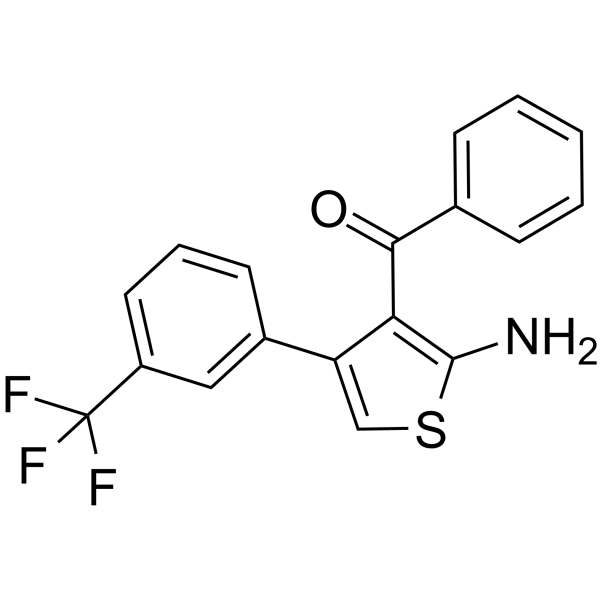
VCP171 is a potent adenosine A1 receptor (A1R) positive allosteric modulator (PAM). VCP171 is effective at decreasing excitatory synaptic currents in Lamina II of neuropathic pain model. VCP171 can be used for researching neuropathic pain .
loading...
    loading...
Cat. No.: HY-P5859
CAS No.: 202075-91-0
Synonyms: α-PMTX
Research Areas:  

Neurological Disease

α-Pompilidotoxin (α-PMTX) is a neurotoxin that can be obtained from the venom of Anoplius safnariensis. α-Pompilidotoxin reversibly and dose-dependently enhances excitatory postsynaptic currents (EPSCs). α-Pompilidotoxin is a useful tool in the field of neuroscience research .
loading...
    loading...
Cat. No.: HY-106888A
CAS No.: 144886-17-9
Target:  

Endogenous Metabolite

Research Areas:  

Neurological Disease

CS-722 is a centrally acting muscle relaxant, and has a muscle relaxant activity and depressant effectson the spinal reflex[1]. CS-722 inhibits spontaneous inhibitory postsynaptic currents and excitatory postsynaptic currents in hippocampal cultures probably by an inhibition of both sodium and calcium currents .
loading...
    loading...
Cat. No.: HY-110175R
CAS No.: 191744-13-5
Research Areas:  

Neurological Disease

CX614 (Standard) is the analytical standard of CX614 (HY-110175). This product is intended for research and analytical applications. CX614 is a positive variant modulator of AMPA receptors that enhances excitatory postsynaptic potentials (amplitude and duration) by blocKing and slowing the inactivation of responses to glutamate and automatically evokes excitatory postsynaptic currents in neuronal cultures. CX614 can be used in the study of psychiatric disorders such as depression .
loading...
    loading...
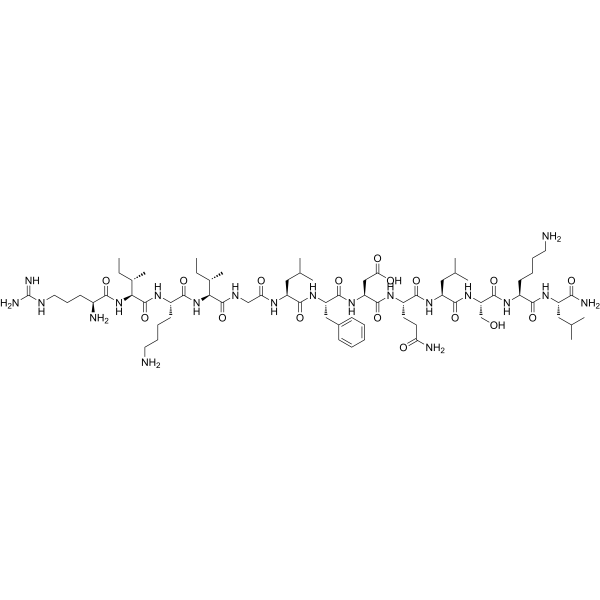
Cat. No.: HY-P2111
CAS No.: 121912-19-4
Target:  

Peptides

Research Areas:  

Neurological Disease

Achatin I is a neuroexcitatory tetrapeptide. Achatin I can be derived from Achatina fulica férussac. Achatin-I induces a voltage-dependent inward current. Achatin-I shows marked excitatory effects on the three Achatina giant neurones, PON, TAN and V-RCDN .
loading...
    loading...
Cat. No.: HY-183101
CAS No.: 2163787-60-6
Target:  

iGluR NADPH Oxidase

Research Areas:  

Neurological Disease

AMPAR modulator-12 is a blood-brain barrier-permeable AMPAR positive allosteric modulator. AMPAR modulator-12 reduces NOX-1 expression, enhances AMPAR-mediated currents, promotes excitatory postsynaptic transmission and restores AMPAR function. AMPAR modulator-12 enhances excitatory and inhibitory synaptic transmission, reduces burst firing in the lateral habenula after withdrawal, and produces rapid and sustained antidepressant-like effects. AMPAR modulator-12 is applicable for the research of depression .
loading...
    loading...
Cat. No.: HY-175100
Target:  

mGluR

Research Areas:  

Neurological Disease

HexylHIBO hydrobromide is a potent group I mGluR antagonist with Kbs of 140 μM and 110 μM at mGlu1a and mGlu5a receptors, respectively. HexylHIBO hydrobromide does not inhibits mGlu2 and mGlu4a. HexylHIBO hydrobromide decreases spontaneous excitatory postsynaptic currents (sEPSCs) in rat .
loading...
    loading...
Cat. No.: HY-P0234A
CAS No.: 64088-62-6
Target:  

Neurotensin Receptor

Research Areas:  

Neurological Disease

(D-Tyr11)-Neurotensin is an agonist of neurotensin receptor (Neurotensin Receptor) and an inhibitor of glutamatergic neurotransmission. Activation of NTR1 in the VTA by (D-Tyr11)-Neurotensin enhances glutamatergic inputs to non-dopaminergic neurons, mediating reward and dopamine efflux; meanwhile, activation of NTR2 reduces glutamatergic excitatory postsynaptic currents (EPSC) in dopaminergic neurons. (D-Tyr11)-Neurotensin can be used in studies related to schizophrenia .
loading...
    loading...
Cat. No.: HY-L118
197 compounds

Sodium channels conduct sodium ions (Na+) through a cell's plasma membrane that are the source of excitatory currents for the nervous system and muscle. Na channels are classified according to the trigger that opens the channel for such ions, i.e. either a voltage-change (Voltage-gated, voltage-sensitive, or voltage-dependent sodium channel also called VGSCs or Nav channel) or a binding of a substance (a ligand) to the channel (ligand-gated sodium channels). Dysfunction in voltage-gated sodium channels correlates with neurological and cardiac diseases, including epilepsy, myopathies, pain and cardiac arrhythmias. Sodium channel blockers are used in the treatment of cardiac arrhythmia, pain and convulsion.

MCE offers a unique collection of 197 sodium channel blocker and antagonists, all of which have the identified inhibitory effect on sodium channels. MCE Sodium Channel Blocker Library can be used for neurological and cardiac diseases drug discovery and sodium channel research.

Cat. No.: HY-176036A
MS1262 TFA is a blood-brain barrier-permeable, selective inhibitor of histone methyltransferases G9a (EHMT2) and GLP (EHMT1), with an IC50 of 19 nM and a Kd of 74 nM against G9a, and an IC50 of 6 nM and a Kd of 19 nM against GLP. MS1262 TFA reduces the dimethylation level of histone H3 lysine 9 and decreases the size of plaques. MS1262 TFA restores hippocampal long-term potentiation (LTP) and miniature excitatory postsynaptic current (sEPSC) frequency, ameliorates spatial memory deficits, and reverses anxiety-like and depression-like behaviors in AD model mice. MS1262 TFA reverses the expression/phosphorylation levels of early AD biomarkers, providing support for stage-specific diagnosis of AD. MS1262 TFA reduces the risk of thrombus rupture. MS1262 TFA can be used in research related to Alzheimer's disease, colorectal cancer, and triple-negative breast cancer .
loading...
    loading...
  • 1

