
1. Search Result
Search Result
Results for "

gastrointestinal tissue

" in MedChemExpress (MCE) Product Catalog:

18

Inhibitors & Agonists

5

Peptides

2

MCE Kits

2

Natural
Products

2

Isotope-Labeled Compounds

Cat. No. Product Name Target Research Areas Chemical Structure
  • HY-W013494
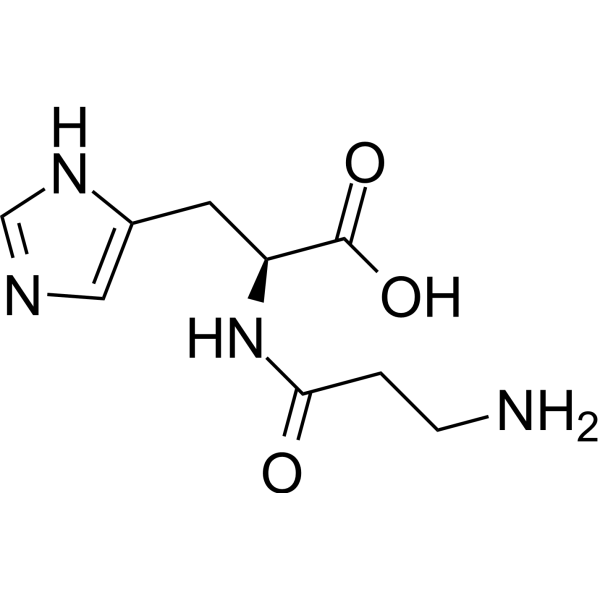
    L-Carnosine
    2 Publications Verification

    Endogenous Metabolite Metabolic Disease Inflammation/Immunology
    L-Carnosine is a dipeptide composed of beta-alanine and histidine. L-Carnosine is an endogenous metabolite found in human brain, muscle and gastrointestinal tissues and is present in all vertebrates. L-Carnosine is a non-enzymatic free radical scavenger and natural antioxidant with anti-inflammatory and neuroprotective properties that can inhibit biochemical changes associated with aging .
    L-Carnosine
  • HY-P0197
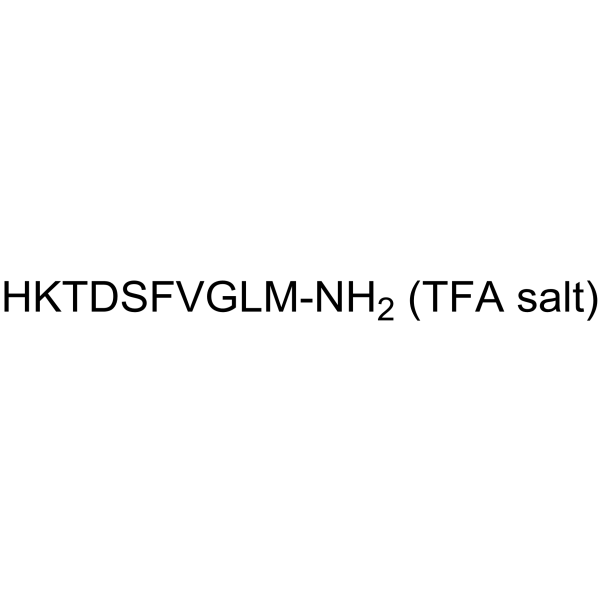
    Neurokinin A
    3 Publications Verification

    Substance K; Neurokinin α; Neuromedin L; NKA

    Neurokinin Receptor Neurological Disease Endocrinology
    Neurokinin A (Substance K), a peptide neurotransmitter of the tachykinin family, acts via the NK-2 receptor. Neurokinin A acts as a major mediator in human airway and gastrointestinal tissues .
    Neurokinin A
  • HY-B1156
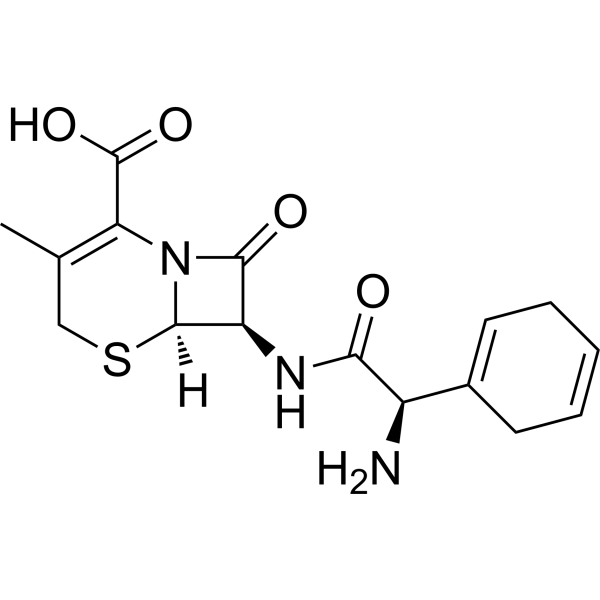
    Cephradine
    5 Publications Verification

    Cefradine; SQ-11436

    Bacterial Antibiotic TOPK Infection Inflammation/Immunology
    Cephradine (Cefradine) is a broad-spectrum and orally active cephalosporin. Cephradine is active against both gram-positive and gram-negative pathogens. Cephradine is effective in eradicating most penicillinase-producing organisms. Cephradine has been used in the research of genitourinary, gastrointestinal and respiratory tract infections, and in infections of the skin and soft tissues. Cephradine blocks solar-ultraviolet induced skin inflammation through direct inhibition of TOPK .
    Cephradine
  • HY-N0340
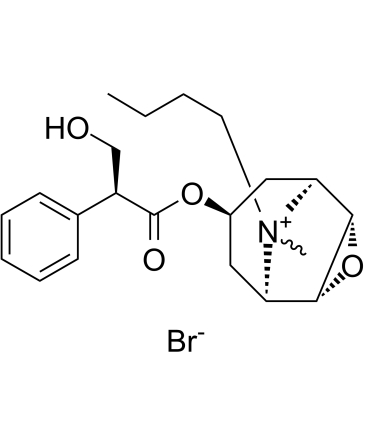
    Scopolamine butylbromide
    1 Publications Verification

    Hyoscine butylbromide; (-)-Scopolamine butylbromide; Butylscopolamine bromide

    mAChR Neurological Disease Inflammation/Immunology
    Scopolamine butylbromide (Hyoscine butylbromide) is an orally active anticholinergic agent and spasmolytic. Scopolamine butylbromide binds with high affinity to rat cardiac M2 (Ki 83 nmol/L), hM2 (Ki 233 nmol/L), rat intestinal M3 (Ki 290 nmol/L) and hM3 (Ki 643 nmol/L) muscarinic receptors. Scopolamine butylbromide exerts a dose-dependent antagonistic effect on Carbachol-induced gastrointestinal smooth muscle spasm. Scopolamine butylbromide can be used for the research of abdominal colic and pain associated with gastrointestinal spasm, functional abdominal pain, chronic gastropathy and gastric ulcer .
    Scopolamine butylbromide
  • HY-P10735

    Gastric inhibitory polypeptide(mouse); GIP(1-42) (mouse)

    Lipase Apoptosis Metabolic Disease
    GIP (Gastric inhibitory polypeptide) (mouse) is a gastrointestinal hormone that is secreted by the intestinal K cells, and also expressed in and secreted from pancreatic islets. GIP (mouse) promotes insulin secretion from pancreatic β cells via the G-protein-coupled GIP receptor (GIPR). GIP (mouse) promotes pancreatic β cell proliferation and inhibits apoptosis. GIP (mouse) also exerts direct lipogenic effects on adipose tissue .
    GIP (mouse)
  • HY-128449
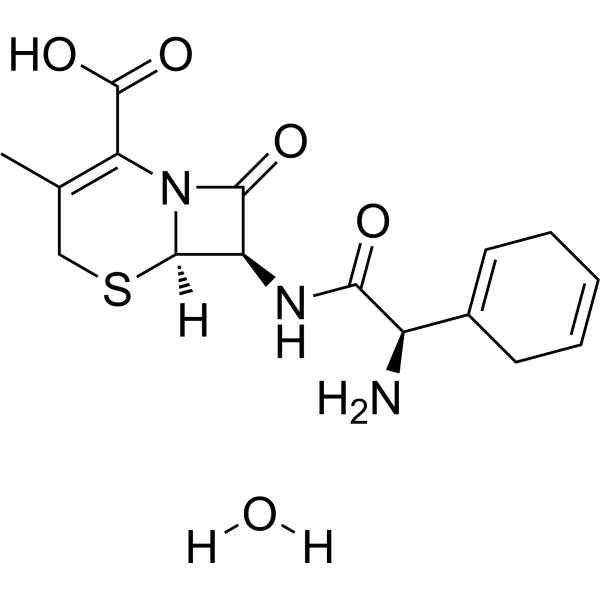
    Cephradine monohydrate
    5 Publications Verification

    Cefradine monohydrate

    Bacterial Antibiotic TOPK Infection Inflammation/Immunology
    Cephradine (Cefradine) monohydrate is a broad-spectrum and orally active cephalosporin. Cephradine monohydrate is active against both grampositive and gram-negative pathogens and effective in eradicating most penicillinase-producing organisms known to be resistant to penicillin G, penicillin V, and ampicillin. Cephradine monohydrate has been used in the research of genitourinary, gastrointestinal and respiratory tract infections, and in infections of the skin and soft tissues. Cephradine monohydrate blocks solar-ultraviolet induced skin inflammation through direct inhibition of TOPK .
    Cephradine monohydrate
  • HY-P0197A
    Neurokinin A TFA
    3 Publications Verification

    Substance K TFA; Neurokinin α TFA; Neuromedin L TFA; NKA TFA

    Neurokinin Receptor Neurological Disease Endocrinology
    Neurokinin A TFA (Substance K TFA), a peptide neurotransmitter of the tachykinin family, acts via the NK-2 receptor. Neurokinin A acts as a major mediator in human airway and gastrointestinal tissues .
    Neurokinin A TFA
  • HY-17509
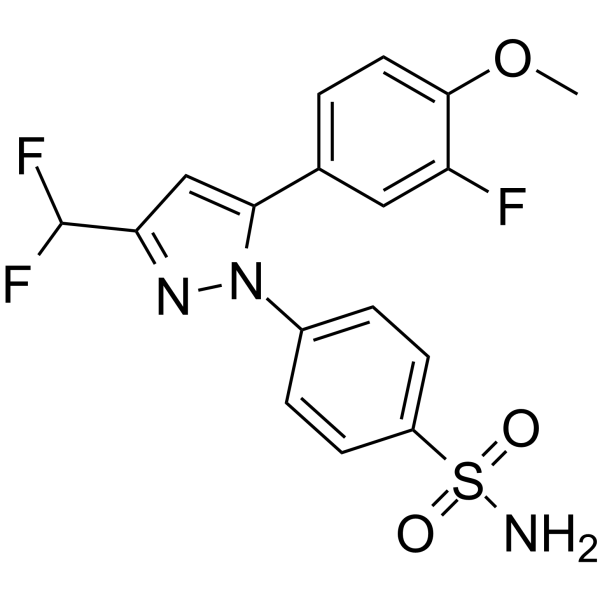
    Deracoxib
    1 Publications Verification

    SC 046; SC 46; SC 59046

    COX Apoptosis Neurological Disease Inflammation/Immunology Cancer
    Deracoxib (SC 046; SC 59046), an orally active COX-2 inhibitor, is a veterinary nonsteroidal anti-inflammatory agent used exclusively in dogs. Deracoxib inhibits the COX-2 enzyme to reduce the production of prostaglandins, effectively controlling pain and inflammation after canine soft tissue surgery. Deracoxib reduces the inhibition of COX-1 and lowers the risk of gastrointestinal side effects. Deracoxib induces tumor cell cycle arrest and apoptosis, and shows anti-tumor activity in canine osteosarcoma, breast tumors and bladder transitional cell carcinomas .
    Deracoxib
  • HY-106327

    Motilin Receptor Metabolic Disease
    EM-523 is a motilin agonist and an erythromycin derivative. EM-523 has pED50 values of 8.19 and 6.08 for promoting contractions in rabbit small intestinal tissue and human duodenal tissue, respectively. EM-523 can be used in the research of gastrointestinal diseases .
    EM-523
  • HY-17509S

    SC 046-d3; SC 46-d3; SC 59046-d3

    Isotope-Labeled Compounds COX Apoptosis Neurological Disease Inflammation/Immunology Cancer
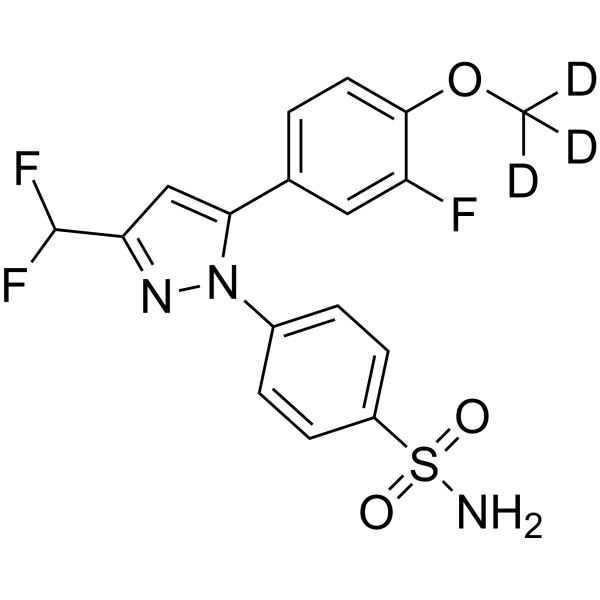
    Deracoxib-d3 (SC 046-d3; SC 59046-d3) is the deuterium labeled Deracoxib (HY-17509). Deracoxib, an orally active COX-2 inhibitor, is a veterinary nonsteroidal anti-inflammatory agent used exclusively in dogs. Deracoxib inhibits the COX-2 enzyme to reduce the production of prostaglandins, effectively controlling pain and inflammation after canine soft tissue surgery. Deracoxib reduces the inhibition of COX-1 and lowers the risk of gastrointestinal side effects. Deracoxib induces tumor cell cycle arrest and apoptosis, and shows anti-tumor activity in canine osteosarcoma, breast tumors and bladder transitional cell carcinomas.
    Deracoxib-d3
  • HY-145686

    Wnt Nuclear Factor of activated T Cells (NFAT) Inflammation/Immunology
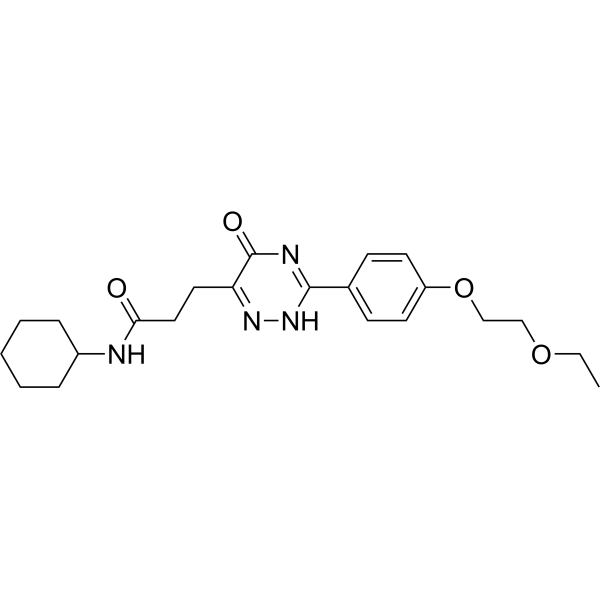
    AV023 is a potent inhibitor of ANKRD22. AV023 promotes the expansion of gastrointestinal mucosal epithelial stem cells and indirectly activates the Wnt classical pathway, which helps the recovery of damaged gastrointestinal mucosal tissues in the body (extracted from patent CN111205231B) .
    AV023
  • HY-N2304A

    Opioid Receptor Inflammation/Immunology
    Methyl-6-alpha-Naltrexol is a metabolite of Methylnaltrexone (MNTX). Methylnaltrexone is a selective mu-opioid receptor antagonist and functions as a peripherally acting receptor antagonist in tissues of the gastrointestinal tract .
    Methyl-6-alpha-Naltrexol
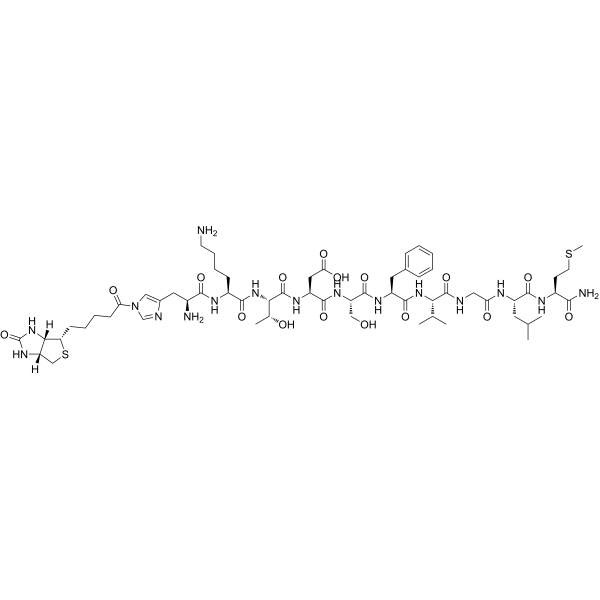
  • HY-P3861

    Neurokinin Receptor Neurological Disease
    Biotin-Neurokinin A is a biotinylated Neurokinin A (HY-P0197). Neurokinin A (Substance K), a peptide neurotransmitter of the tachykinin family, acts via the NK-2 receptor. Neurokinin A acts as a major mediator in human airway and gastrointestinal tissues .
    Biotin-Neurokinin A
  • HY-B1156A

    Cefradine sodium; SQ-11436 sodium

    Bacterial Antibiotic TOPK Infection Inflammation/Immunology
    Cephradine sodium is a broad-spectrum and orally active cephalosporin. Cephradine sodium is active against both gram-positive and gram-negative pathogens. Cephradine sodium is effective in eradicating most penicillinase-producing organisms. Cephradine sodium has been used in the research of genitourinary, gastrointestinal and respiratory tract infections, and in infections of the skin and soft tissues. Cephradine sodium blocks solar-ultraviolet induced skin inflammation through direct inhibition of TOPK .
    Cephradine sodium
  • HY-B1156R

    Cefradine (Standard); SQ-11436 (Standard)

    Reference Standards Bacterial Antibiotic TOPK Infection Inflammation/Immunology
    Cephradine (Standard) is the analytical standard of Cephradine. This product is intended for research and analytical applications. Cephradine (Cefradine) is a broad-spectrum and orally active cephalosporin. Cephradine is active against both gram-positive and gram-negative pathogens. Cephradine is effective in eradicating most penicillinase-producing organisms. Cephradine has been used in the research of genitourinary, gastrointestinal and respiratory tract infections, and in infections of the skin and soft tissues. Cephradine blocks solar-ultraviolet induced skin inflammation through direct inhibition of TOPK .
    Cephradine (Standard)
  • HY-137263

    Antibiotic Infection
    Propionylmaridomycin is a macrolide antibiotic with antibacterial activity. Propionylmaridomycin is rapidly absorbed from the gastrointestinal tract and rapidly distributed to tissues. Propionylmaridomycin radioactivity levels in the liver, kidneys, and lungs were significantly higher than in plasma, while distribution to the brain was less. Propionylmaridomycin is excreted primarily through the feces, and the high fecal recovery rate is due to unabsorbed compounds and biliary excretion of compounds and their metabolites. Propionylmaridomycin exhibits the highest antibacterial activity in the lungs. Propionylmaridomycin is completely converted to several metabolites in rats, of which 4''-depropionyl-9-propionylmaridomycin was identified as the major metabolite .
    Propionylmaridomycin
  • HY-17509R

    SC 046 (Standard); SC 46 (Standard); SC 59046 (Standard)

    Reference Standards COX Apoptosis Neurological Disease Inflammation/Immunology Cancer
    Deracoxib (SC 046; SC 59046) (Standard) is the analytical standard of Deracoxib (HY-17509). This product is intended for research and analytical applications. Deracoxib, an orally active COX-2 inhibitor, is a veterinary nonsteroidal anti-inflammatory agent used exclusively in dogs. Deracoxib inhibits the COX-2 enzyme to reduce the production of prostaglandins, effectively controlling pain and inflammation after canine soft tissue surgery. Deracoxib reduces the inhibition of COX-1 and lowers the risk of gastrointestinal side effects. Deracoxib induces tumor cell cycle arrest and apoptosis, and shows anti-tumor activity in canine osteosarcoma, breast tumors and bladder transitional cell carcinomas
    Deracoxib (Standard)
  • HY-W703540

    SC 046-d4; SC 46-d4; SC 59046-d4

    Isotope-Labeled Compounds Apoptosis COX Neurological Disease Inflammation/Immunology Cancer
    Deracoxib-d4 (SC 046-d4; SC 59046--d4) is deuterium labeled Deracoxib (HY-17509). Deracoxib, an orally active COX-2 inhibitor, is a veterinary nonsteroidal anti-inflammatory agent used exclusively in dogs. Deracoxib inhibits the COX-2 enzyme to reduce the production of prostaglandins, effectively controlling pain and inflammation after canine soft tissue surgery. Deracoxib reduces the inhibition of COX-1 and lowers the risk of gastrointestinal side effects. Deracoxib induces tumor cell cycle arrest and apoptosis, and shows anti-tumor activity in canine osteosarcoma, breast tumors and bladder transitional cell carcinomas.
    Deracoxib-d4

Inquiry Online

Your information is safe with us. * Required Fields.

Salutation


Country or Region *

Applicant Name *


Organization Name *

Department *


Email Address *


Product Name *

Cat. No.


Requested quantity *

Phone Number *


Remarks

Inquiry Online

Inquiry Information

Product Name:
Cat. No.:
Quantity:
MCE Japan Authorized Agent:

