



Cephradine
Based on 5 publication(s) in Google Scholar
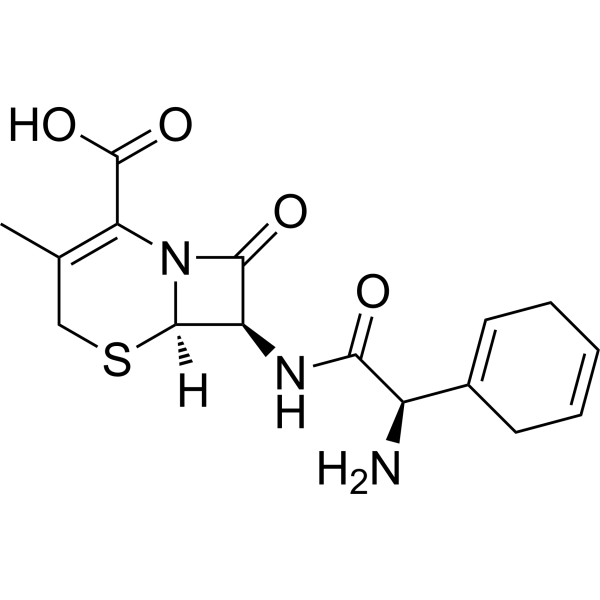
Cephradine (Cefradine) is a broad-spectrum and orally active cephalosporin. Cephradine is active against both gram-positive and gram-negative pathogens. Cephradine is effective in eradicating most penicillinase-producing organisms. Cephradine has been used in the research of genitourinary, gastrointestinal and respiratory tract infections, and in infections of the skin and soft tissues. Cephradine blocks solar-ultraviolet induced skin inflammation through direct inhibition of TOPK.
For research use only. We do not sell to patients.
- Purity : 91.02%
- CAS No.: 38821-53-3
- Formula: C16H19N3O4S
- Molecular Weight:349.40
-
Storage:Powder -20°C, 3 years , 4°C, 2 years ; In solvent -80°C, 2 years , -20°C, 1 year

To place orders, for customer services and technical support, please contact: MedChemExpress USA
Tel: 609-228-6898 E-mail: [email protected] [email protected]


-
 Biological Activity
-
Chemical Information
-
Solvent & Solubility
- Protocols
- Purity & Documentation
- References
-
 Help & FAQs


-
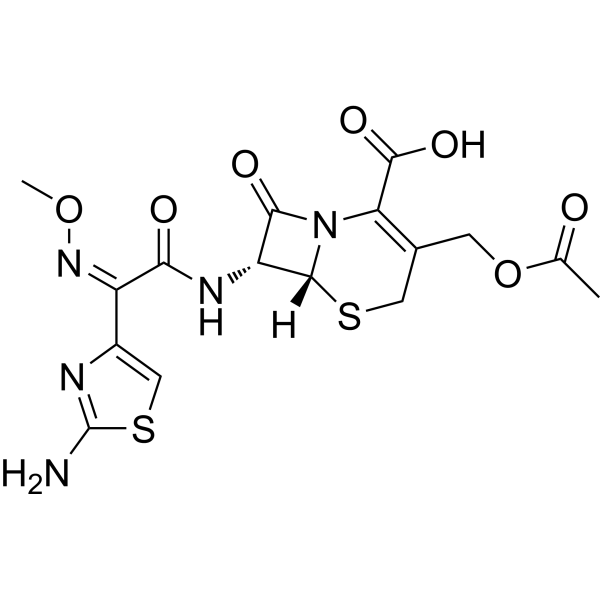
HY-A0088A
CefotaximeBacterial Inhibitor -
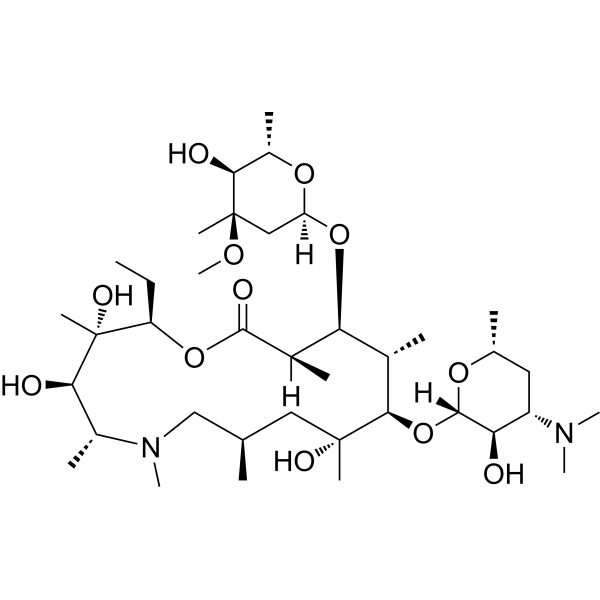
HY-17506
Azithromycin -
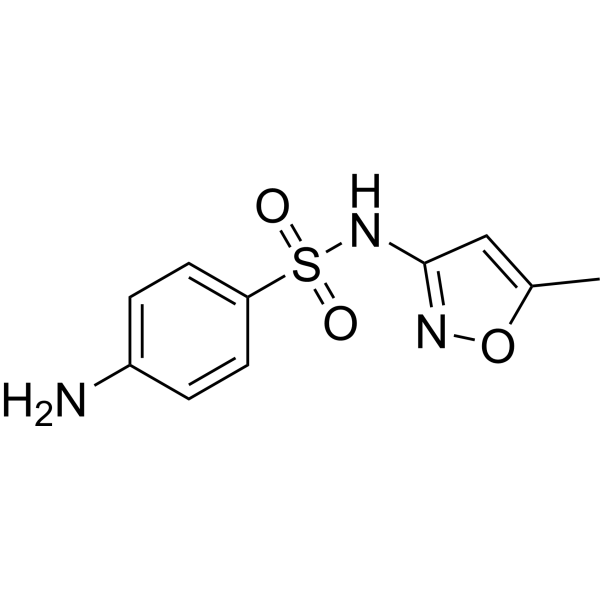
HY-B0322
SulfamethoxazoleSulfonamide Antibiotic -
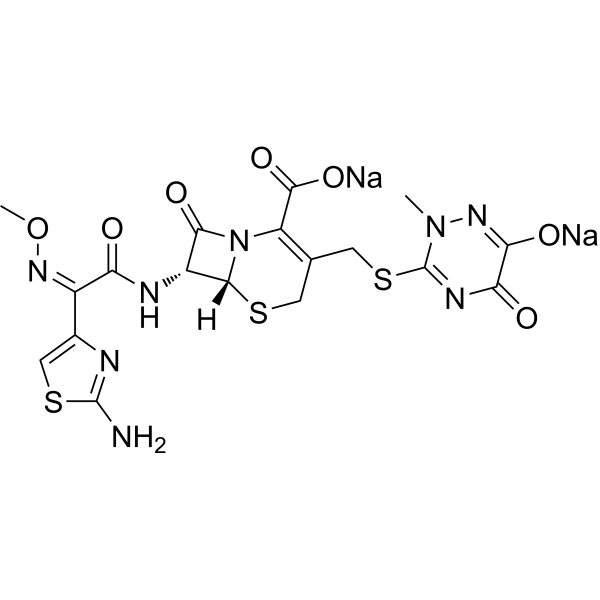
HY-B0712B
Ceftriaxone sodium saltAurora B inhibitor -
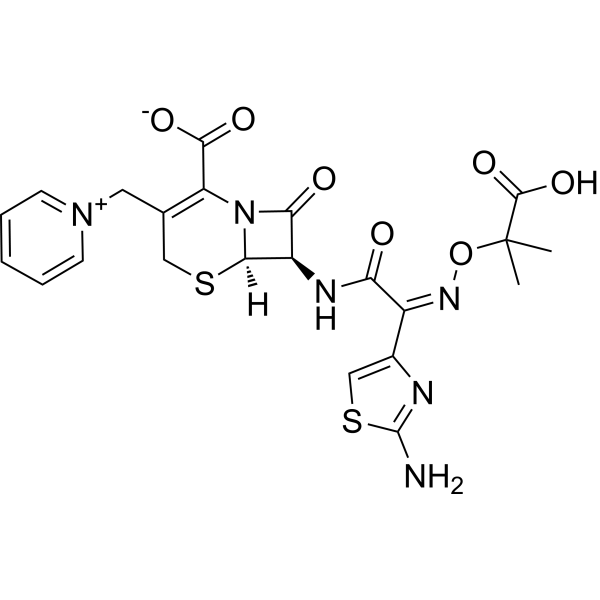
HY-B0593
CeftazidimeAntibiotic -
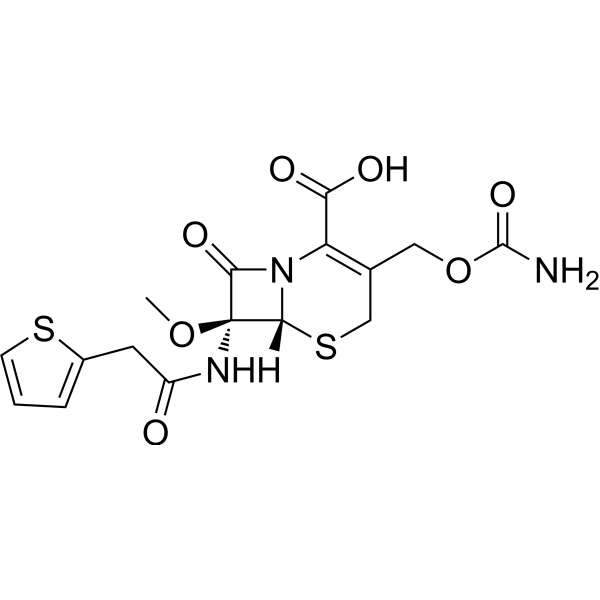
HY-B1825
CefoxitinAntibiotic -
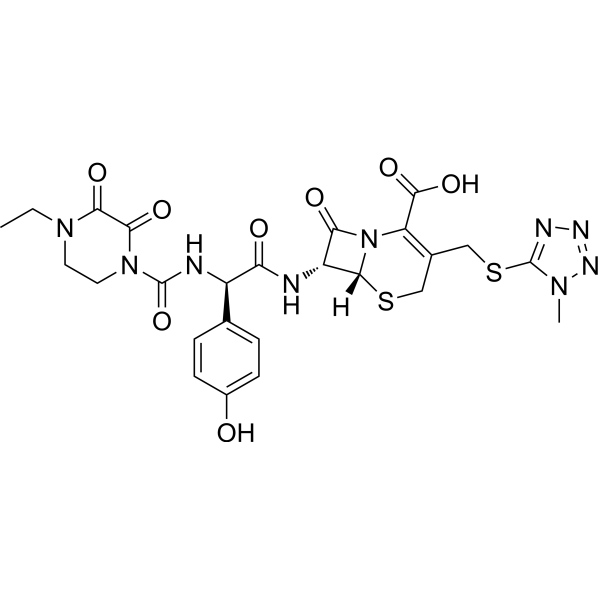
HY-B0210
CefoperazoneBacterial Inhibitor -
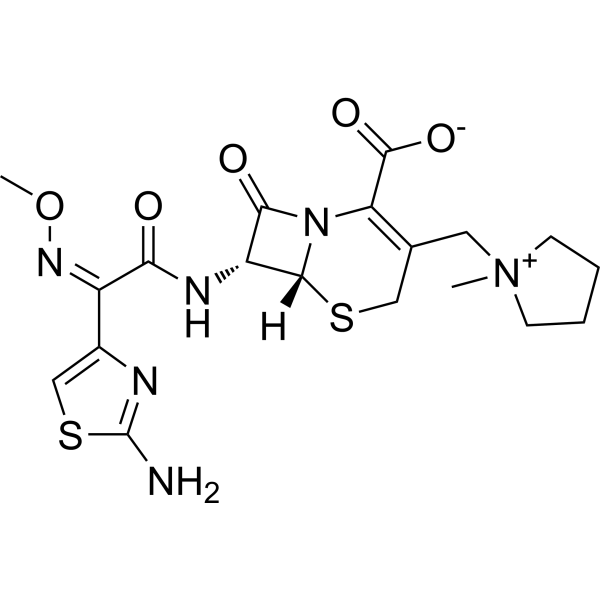
HY-B0692
CefepimeAntibiotic -
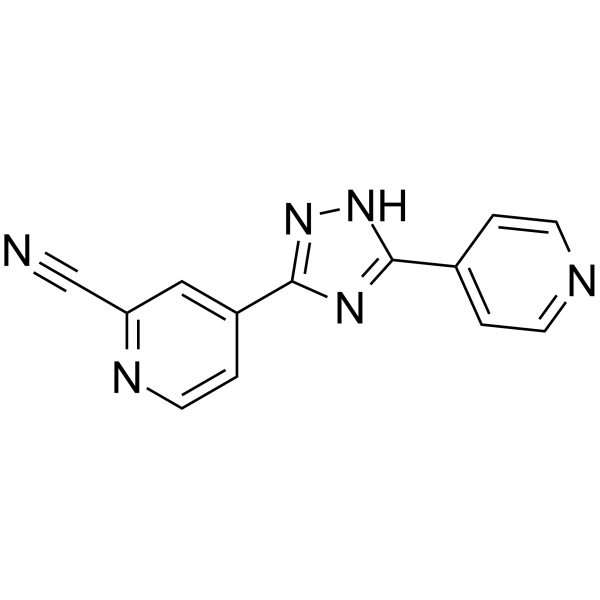
HY-14874
TopiroxostatXOR Inhibitor -
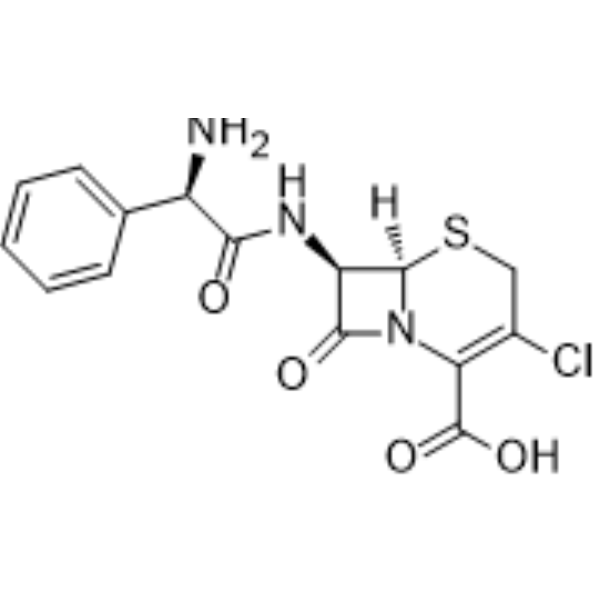
HY-B0198
CefaclorAntibiotic -
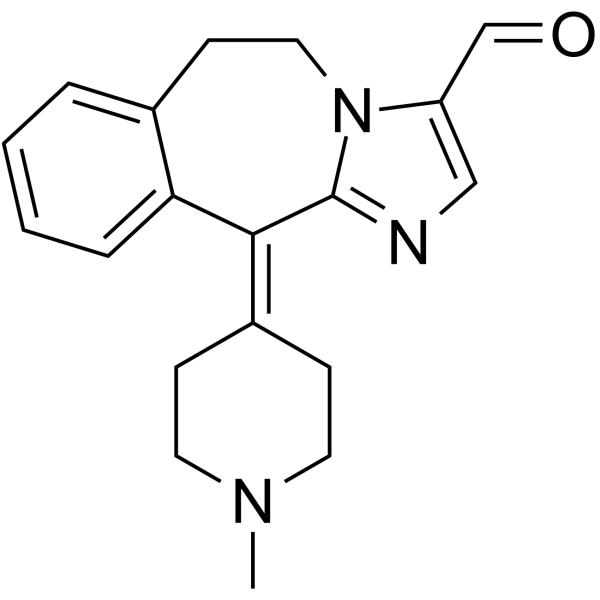
HY-17039
AlcaftadineHistamine Receptor Inhibtior -

HY-B1156R
Cephradine (Standard)Cephalosporin Antibiotic
Publications Citing Use of MedChemExpress (MCE) Cephradine
MoreAll Antibiotic Isoforms
More

Biological Activity
Description
IC50 & Target
|
β-lactam |
Cellular Effect
|
Cell Line

|
Type | Value | Description | References |
|---|---|---|---|---|
| CHO | IC50 |
15300 μM
Compound: Cephradine
|
TP_TRANSPORTER: inhibition of Gly-Sar uptake (Gly-Sar: 20 uM) in PEPT1-expressing CHO cells
TP_TRANSPORTER: inhibition of Gly-Sar uptake (Gly-Sar: 20 uM) in PEPT1-expressing CHO cells
|
[PMID: 10052994] |
| CHO | IC50 |
1600 μM
Compound: Cephradine
|
TP_TRANSPORTER: inhibition of 6-Carboxyfluorescein uptake in OAT1-expressing CHO cells
TP_TRANSPORTER: inhibition of 6-Carboxyfluorescein uptake in OAT1-expressing CHO cells
|
[PMID: 10929807] |
| CHO | IC50 |
15 mM
Compound: Cephradine
|
TP_TRANSPORTER: inhibition of Gly-Sar uptake (Gly-Sar: 20 uM) in PEPT1-expressing CHO cells
TP_TRANSPORTER: inhibition of Gly-Sar uptake (Gly-Sar: 20 uM) in PEPT1-expressing CHO cells
|
[PMID: 9706043] |
In Vitro
Cephradine (0~8 μg/mL; 12 hours) makes bacterial viability rapidly increased at antibiotic concentrations below the MIC (minimum inhibitory concentration) of 0.70 μg/mL at both pH 7.4 and pH 5.5[4].
MedChemExpress (MCE) has not independently confirmed the accuracy of these methods. They are for reference only.
In Vivo
MedChemExpress (MCE) has not independently confirmed the accuracy of these methods. They are for reference only.
-
Animal Model:Nondiabetic mice
-
Dosage:25 mg/kg
-
Administration:S.c.; 11 days
-
Result:Reduced the bacterial density and counts in the abscesses.


Chemical Information
-
CAS No. 38821-53-3
-
Appearance Solid
-
Molecular Weight 349.40
-
Formula C16H19N3O4S
-
Color White to light yellow
-
SMILES
O=C(C(N12)=C(C)CS[C@]2([H])[C@H](NC([C@H](N)C3=CCC=CC3)=O)C1=O)O
-
Synonyms
Cefradine; SQ-11436
-
Shipping
Room temperature in continental US; may vary elsewhere.
-
Storage
Powder -20°C 3 years 4°C 2 years In solvent -80°C 2 years -20°C 1 year


Publications (5)
-
Journal Impact Factor
-
Most Recent
-
ACS Environ Au
Machine Learning-Assisted Recognition of Environmental Sulfur-Containing Chemicals in Nontargeted Mass Spectrometry Analysis of Inadequate Mass Resolution. [Abstract]2025 Aug 5;5(6):573-582. PMID: 41277996 -
Anal Chem
Exposome-Scale Investigation of Cl-/Br-Containing Chemicals Using High-Resolution Mass Spectrometry, Multistage Machine Learning, and Cloud Computing. [Abstract]2025 Jun 3;97(21):11099-11109. PMID: 40401576 -
Molecules
Seeking Correlation Among Porin Permeabilities and Minimum Inhibitory Concentrations Through Machine Learning: A Promising Route to the Essential Molecular Descriptors. [Abstract]2025 Mar 9;30(6):1224. PMID: 40142001 -
Microbiol Spectr
2025 Aug 29:e0059025. PMID: 40879403 -
Chemosphere
Mass-balance-model-based evaluation of sewage treatment plant contribution to residual pharmaceuticals in environmental waters. [Abstract]2019 Jun:225:378-387. PMID: 30884299


Solvent & Solubility
In Vitro:
H2O : 8.33 mg/mL (23.84 mM; Need ultrasonic)
DMSO : ≥ 3.6 mg/mL (10.30 mM; Hygroscopic DMSO has a significant impact on the solubility of product, please use newly opened DMSO)
* "≥" means soluble, but saturation unknown.
Please refer to the solubility information to select the appropriate solvent. Once prepared, please aliquot and store the solution to prevent product inactivation from repeated freeze-thaw cycles.
Storage method and period of stock solution: -80°C, 2 years; -20°C, 1 year. When stored at -80°C, please use it within 2 years. When stored at -20°C, please use it within 1 year.
* Note: If you choose water as the stock solution, please dilute it to the working solution, then filter and sterilize it with a 0.22 μm filter before use.
Please refer to the solubility information to select the appropriate solvent. Once prepared, please aliquot and store the solution to prevent product inactivation from repeated freeze-thaw cycles.
Storage method and period of stock solution: -80°C, 2 years; -20°C, 1 year. When stored at -80°C, please use it within 2 years. When stored at -20°C, please use it within 1 year.
* Note: If you choose water as the stock solution, please dilute it to the working solution, then filter and sterilize it with a 0.22 μm filter before use.
Concentration (start) × Volume (start) = Concentration (final) × Volume (final)
In Vivo:
For the following dissolution methods, please prepare the working solution directly:
It is recommended to prepare fresh solutions and use them promptly within a short period of time.
The percentages shown for the solvents indicate their volumetric ratio in the final prepared solution. If precipitation or phase separation occurs during preparation, heat and/or sonication can be used to aid dissolution.
Add each solvent one by one: PBS
Solubility: 4.55 mg/mL (13.02 mM); Clear solution; Need ultrasonic and warming and heat to 60°C


Purity & Documentation
-
Data Sheet (278 KB)
-
SDS (557 KB)
- English - EN (557 KB)
- Français - FR (557 KB)
- Deutsch - DE (557 KB)
- Norwegian - NO (557 KB)
- Español - ES (557 KB)
- Swedish - SV (557 KB)
- Italian - IT (557 KB)
- Korean - KR (557 KB)
- Portuguese - PT (557 KB)
-
Handling Instructions (2659 KB)
References
[1]. Schwinghammer TL, et al. Pharmacokinetics of cephradine administered intravenously and orally to young and elderly subjects. J Clin Pharmacol. 1990;30(10):893-899 [Content Brief]
[2]. Caloza DL Jr, et al. Intravenous use of cephradine and cefazolin against serious infections. Antimicrob Agents Chemother. 1979;15(1):119-122. [Content Brief]
[3]. Fan X, et al. Cefradine blocks solar-ultraviolet induced skin inflammation through direct inhibition of T-LAK cell-originated protein kinase. Oncotarget. 2016;7(17):24633-24645 [Content Brief]
[4]. Kang S, et al. In Vitro and In Vivo Antimicrobial Activity of Antibiotic-Conjugated Carriers with Rapid pH-Responsive Release Kinetics. Adv Healthc Mater. 2019;8(14):e1900247. [Content Brief]


Complete Stock Solution Preparation Table
Please refer to the solubility information to select the appropriate solvent. Once prepared, please aliquot and store the solution to prevent product inactivation from repeated freeze-thaw cycles.
Storage method and period of stock solution: -80°C, 2 years; -20°C, 1 year. When stored at -80°C, please use it within 2 years. When stored at -20°C, please use it within 1 year.
| Optional Solvent | Concentration Solvent Mass | 1 mg | 5 mg | 10 mg | 25 mg |
|---|---|---|---|---|---|
| DMSO / H2O | 1 mM | 2.8620 mL | 14.3102 mL | 28.6205 mL | 71.5512 mL |
| 5 mM | 0.5724 mL | 2.8620 mL | 5.7241 mL | 14.3102 mL | |
| 10 mM | 0.2862 mL | 1.4310 mL | 2.8620 mL | 7.1551 mL | |
| H2O | 15 mM | 0.1908 mL | 0.9540 mL | 1.9080 mL | 4.7701 mL |
| 20 mM | 0.1431 mL | 0.7155 mL | 1.4310 mL | 3.5776 mL |
* Note: If you choose water as the stock solution, please dilute it to the working solution, then filter and sterilize it with a 0.22 μm filter before use.


Cephradine Related Classifications
HY-B1156 Related Classifications
 Powered by Bioz