
1. Search Result
Search Result
Results for "

honeybee

" in MedChemExpress (MCE) Product Catalog:

23

Inhibitors & Agonists

2

Biochemical Assay Reagents

3

Peptides

3

Natural
Products

2

Isotope-Labeled Compounds

Cat. No. Product Name Target Research Areas Chemical Structure
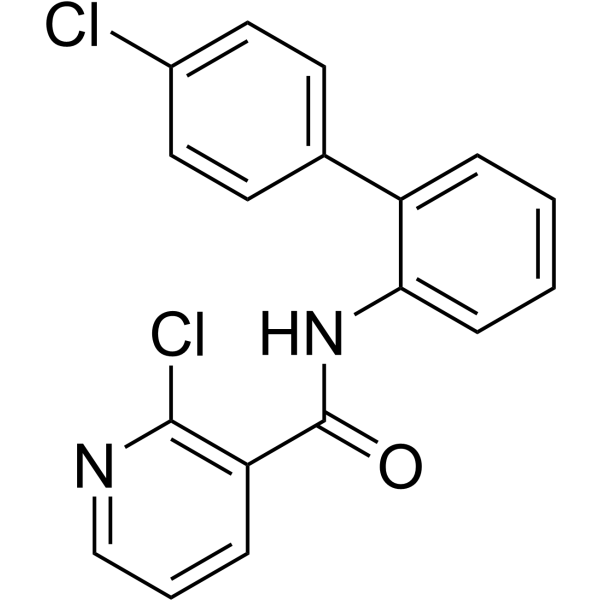
  • HY-119976
    Boscalid
    1 Publications Verification

    Environmental Pollutants Apoptosis Fungal Mitochondrial Metabolism Succinate Dehydrogenase Infection
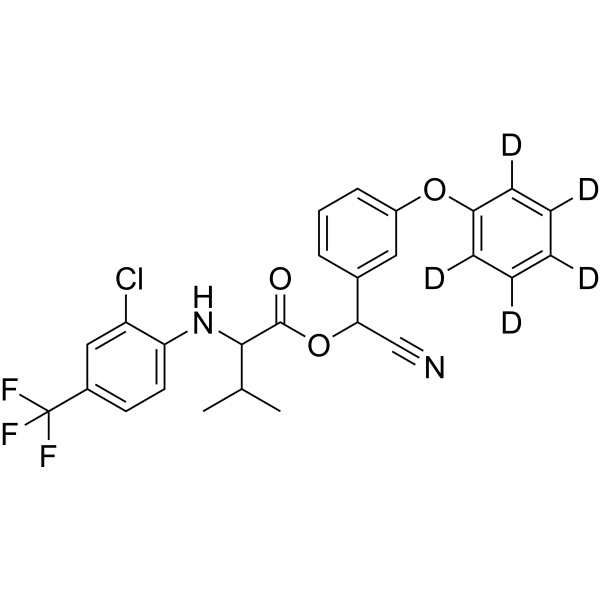
    Boscalid is a succinate dehydrogenase (SDHI) inhibitor with antifungal activity. Boscalid binds to the ubiquinone-binding site of fungal mitochondrial complex II, blocks ATP production and aerobic respiration, exhibits good control efficacy against a variety of plant fungal diseases including gray mold, sclerotinia rot and powdery mildew, and is widely used for disease control in agriculture. Boscalid induces apoptosis, altered lipid metabolism, mitochondrial dysfunction, respiratory impairment, oxidative stress, ROS accumulation and neurodevelopmental disorders in zebrafish. Boscalid reduces foraging ability, shortens median death time and causes chronic toxicity in exposed honeybees. Boscalid also possesses genotoxicity, cytotoxicity, elevated mitochondrial superoxide levels and early-stage apoptosis .
    Boscalid
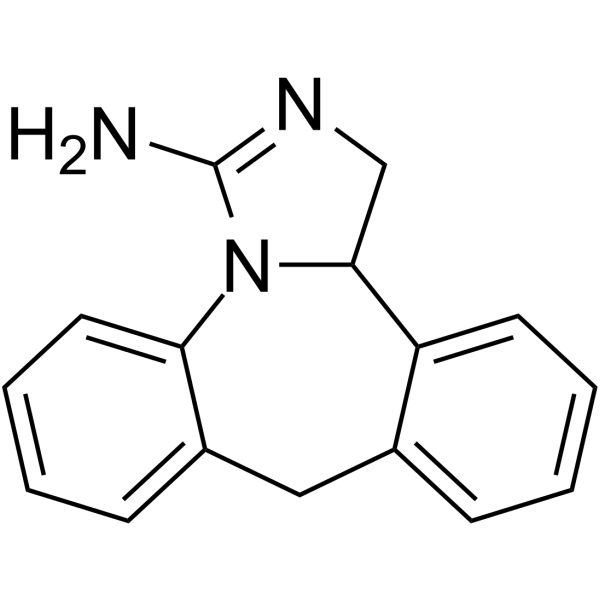
  • HY-B0640

    WAL801

    Histamine Receptor Transmembrane Glycoprotein Interleukin Related Cardiovascular Disease Neurological Disease Inflammation/Immunology Cancer
    Epinastine (WAL801) is a selective and orally active histamine H1 receptor antagonist, CD96/PVR inhibitor and mast cell stabilizer. Epinastine has high affinity for neuronal octopamine receptors in locusts (Ki = 2 nM) and honeybees (Ki = 1.1 nM). Epinastine hydrochloride inhibits TARC, IL-8, and IL-4. Epinastine activates anti-colon cancer immunity and inhibits Substance P (HY-P0201)-induced scratching behavior and increased vascular permeability. Epinastine can be used in the research of allergic diseases .
    Epinastine
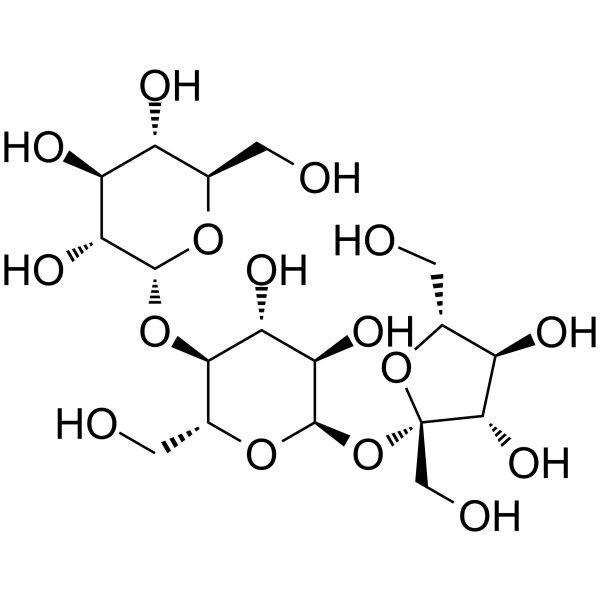
  • HY-139338
    Erlose
    1 Publications Verification

    Glycosidase Others
    Erlose is a trisaccharide sucrose derivative and low-calorie sweetener synthesized from glucose and sucrose via an α-glucosidase-mediated transglycosylation reaction. Erlose is often used as a marker to identify whether honey is adulterated with artificial sucrose. Erlose has approximately half the sweetness of sucrose but a similar taste, and it effectively inhibits crystal formation and browning reactions during food heat treatment .
    Erlose
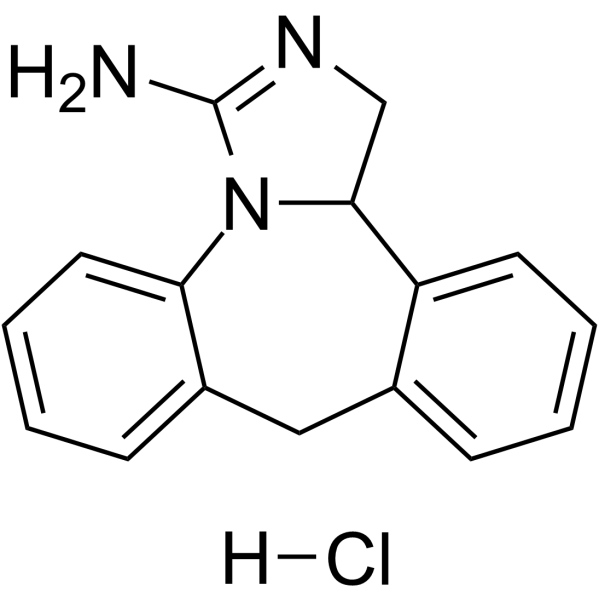
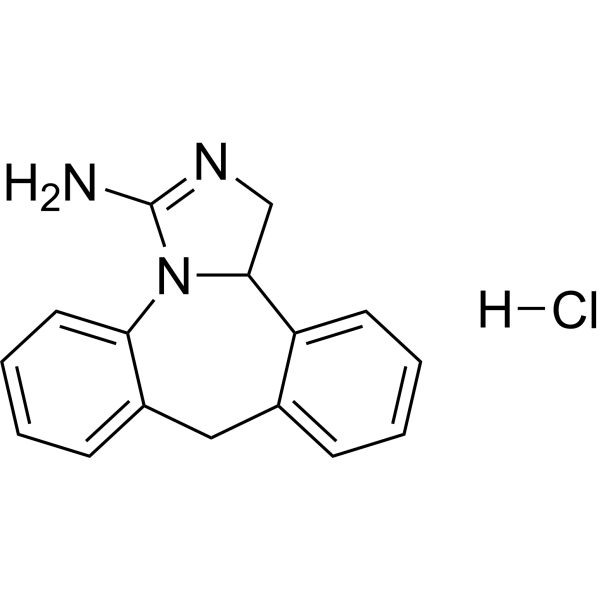
  • HY-B0640A

    WAL801 hydrochloride

    Histamine Receptor Transmembrane Glycoprotein Interleukin Related Cardiovascular Disease Neurological Disease Inflammation/Immunology Cancer
    Epinastine hydrochloride (WAL801 hydrochloride) is a selective and orally active histamine H1 receptor antagonist, CD96/PVR inhibitor and mast cell stabilizer. Epinastine hydrochloride has high affinity for neuronal octopamine receptors in locusts (Ki = 2 nM) and honeybees (Ki = 1.1 nM). Epinastine hydrochloride inhibits TARC, IL-8, and IL-4. Epinastine hydrochloride activates anti-colon cancer immunity and inhibits Substance P (HY-P0201)-induced scratching behavior and increased vascular permeability. Epinastine hydrochloride can be used in the research of allergic diseases .
    Epinastine hydrochloride
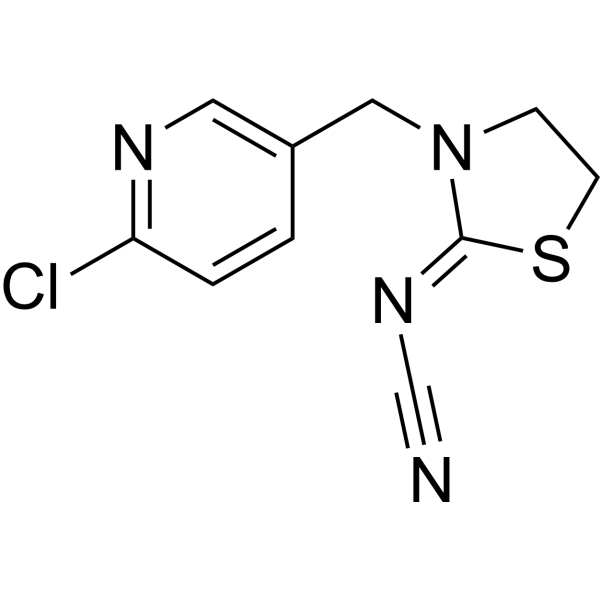
  • HY-B1953
    Thiacloprid
    1 Publications Verification

    Environmental Pollutants Insecticide nAChR Infection
    Thiacloprid is an orally active neurotoxic insecticide and also a nAChR agonist. Thiacloprid reduces the viability of healthy cells, depletes reduced glutathione, and increases MDA levels, thereby inducing cytotoxicity and oxidative stress damage. In practical applications, Thiacloprid has lower acute toxicity to honeybees than other compounds of the same class such as Imidacloprid (HY-B0838), but it still significantly impairs the learning and memory function, immune capacity and survival status of honeybees. Thiacloprid induces intestinal microbial dysbiosis and reduces survival rate in middle-aged honeybees, increases the risk of premature collapse in bumblebee colonies, and significantly decreases the final colony weight and reproductive output. Thiacloprid is used in broad-spectrum agricultural pest control, often alone or in combination with Deltamethrin (HY-B1971), and meets the pest management needs of various crops including potatoes, cabbages, various fruits and vegetables, and nuts .
    Thiacloprid
  • HY-P11142

    Bacterial Fungal Infection
    Jelleine-I is an antimicrobial peptide. Jelleine-I can be purified from royal jelly of honeybees. Jelleine-I exhibits antimicrobial activities against yeast, fungi, Gram-positive and Gram-negative bacteria .
    Jelleine-I
  • HY-B2021

    Insecticide Neurological Disease
    τ-Fluvalinate is an insecticide and in-hive miticide, with its mechanism involving interfering with nervous systems. τ-Fluvalinate binds to the open state of Varroa destructor (VdNaV1) and Apis mellifera (AmNaV1) voltage-dependent sodium channels, with EC50 values of 160 nM and 60 nM respectively. τ-Fluvalinate has higher affinity for AmNaV1, which causes sublethal toxicity to honeybees. τ-Fluvalinate can be applied for research on Varroa destructor infestation in honeybee colonies .
    τ-Fluvalinate
  • HY-162883

    SHMT Others
    SHMT-IN-4 (Compound 9ay) is a herbicide that targets and inhibits serine hydroxymethyltransferase (SHMT1) with an IC50 value of 193.8 g a.i./ha (active ingredient content per hectare). SHMT-IN-4 interferes with amino acid synthesis and metabolism in plants by binding to SHMT1, thereby inhibiting plant growth. Additionally, SHMT-IN-4 shows no significant toxicity to maize and honeybees .
    SHMT-IN-4
  • HY-P3906

    Fungal Apoptosis Phospholipase Reactive Oxygen Species (ROS) Infection
    Melittin free acid is a basic 26-amino-acid polypeptide, the major active ingredient of honeybee venom. Melittin free acid is an activator of phospholipase A2 (PLA2). Melittin free acid has broad-spectrum antifungal activity with MIC values of 0.4-60 μM. Melittin free acid hinders fungal growth by inducing cell apoptosis, repressing (1,3)-β-D-glucan synthase and participating in other pathways .
    Melittin free acid
  • HY-B1953R

    Reference Standards nAChR Insecticide Infection
    Thiacloprid (Standard) is the analytical standard of Thiacloprid. This product is intended for research and analytical applications. Thiacloprid is an orally active neurotoxic insecticide and also a nAChR agonist. Thiacloprid reduces the viability of healthy cells, depletes reduced glutathione, and increases MDA levels, thereby inducing cytotoxicity and oxidative stress damage. In practical applications, Thiacloprid has lower acute toxicity to honeybees than other compounds of the same class such as Imidacloprid (HY-B0838), but it still significantly impairs the learning and memory function, immune capacity and survival status of honeybees. Thiacloprid induces intestinal microbial dysbiosis and reduces survival rate in middle-aged honeybees, increases the risk of premature collapse in bumblebee colonies, and significantly decreases the final colony weight and reproductive output. Thiacloprid is used in broad-spectrum agricultural pest control, often alone or in combination with Deltamethrin (HY-B1971), and meets the pest management needs of various crops including potatoes, cabbages, various fruits and vegetables, and nuts .
    Thiacloprid (Standard)
  • HY-P5721

    Bacterial Infection
    Apidaecin IA is an antibacterial peptide that can be found in honeybees .
    Apidaecin IA
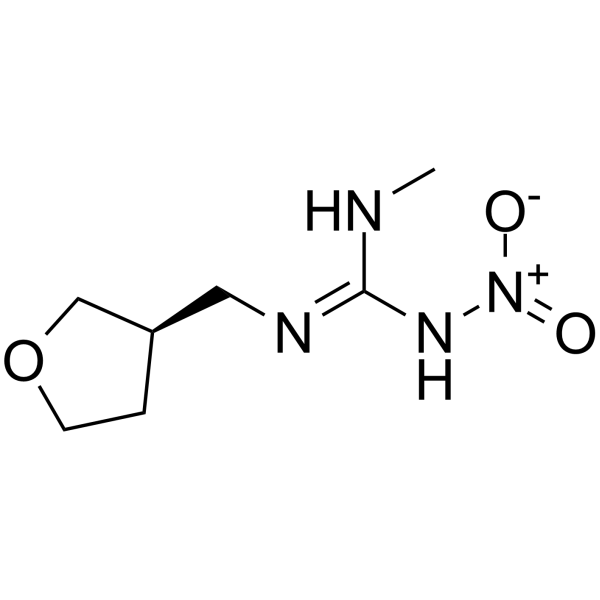
  • HY-B0827B

    (S)-MTI-446

    nAChR Parasite Infection
    (S)-Dinotefuran ((S)-MTI-446), a neonicotinoid pesticide, is toxic by binding to α8 subunit of nAChR of honeybee Apis mellifera (Apis mellifera Linnaeus). (S)-Dinotefuran shows more toxic than R-dinotefuran to honeybee Apis mellifera .
    (S)-Dinotefuran
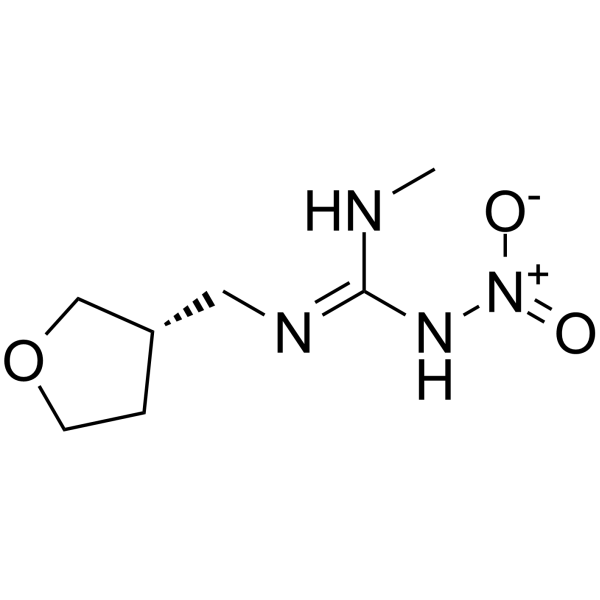
  • HY-B0827A

    (R)-MTI-446

    nAChR Parasite Infection
    (R)-Dinotefuran ((R)-MTI-446), a neonicotinoid pesticide, exhibits comparative insecticidal activities (1.7-2.4 times) to typical sucking pests Aphis gossypii and Apolygus lucorum compared to racemic mixtures by inhibiting nicotinic acetylcholine receptors. (R)-Dinotefuran has a good efficacy in controlling target pests while minimizing hazard to honeybees .
    (R)-Dinotefuran
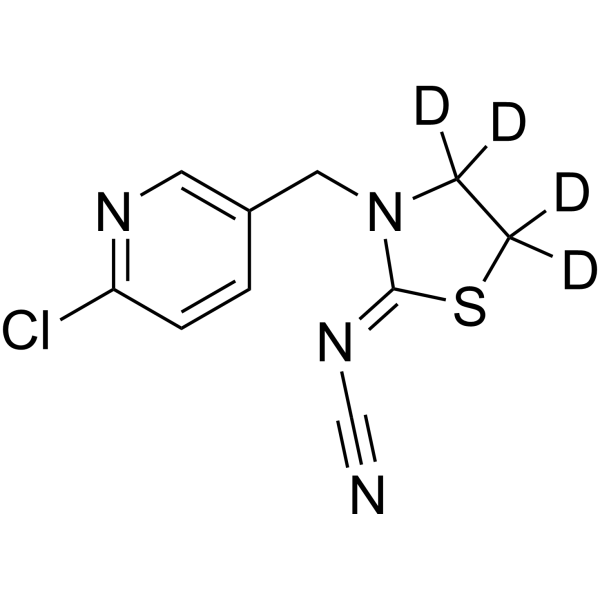
  • HY-B1953S

    nAChR Insecticide Infection
    Thiacloprid-d4 is the deuterium labeled Thiacloprid. Thiacloprid is an orally active neurotoxic insecticide and also a nAChR agonist. Thiacloprid reduces the viability of healthy cells, depletes reduced glutathione, and increases MDA levels, thereby inducing cytotoxicity and oxidative stress damage. In practical applications, Thiacloprid has lower acute toxicity to honeybees than other compounds of the same class such as Imidacloprid (HY-B0838), but it still significantly impairs the learning and memory function, immune capacity and survival status of honeybees. Thiacloprid induces intestinal microbial dysbiosis and reduces survival rate in middle-aged honeybees, increases the risk of premature collapse in bumblebee colonies, and significantly decreases the final colony weight and reproductive output. Thiacloprid is used in broad-spectrum agricultural pest control, often alone or in combination with Deltamethrin (HY-B1971), and meets the pest management needs of various crops including potatoes, cabbages, various fruits and vegetables, and nuts .
    Thiacloprid-d4
  • HY-W710697

    Triclopyr 2-butoxyethylester

    Herbicide Others
    Triclopyr ester (Triclopyr 2-butoxyethylester) is a bioactive substance with activity in controlling harmful woody plants. Triclopyr ester showed toxicity to honeybees (Apis mellifera) in greenhouse trials. Triclopyr ester in combination with other herbicides is effective in removing the canopy of plants such as honey trees and whitebrush. Triclopyr ester can quickly assess its weeding effectiveness when treating trees in greenhouses, providing potential treatment options for field experiments .
    Triclopyr ester
  • HY-156339

    GABA Receptor Others
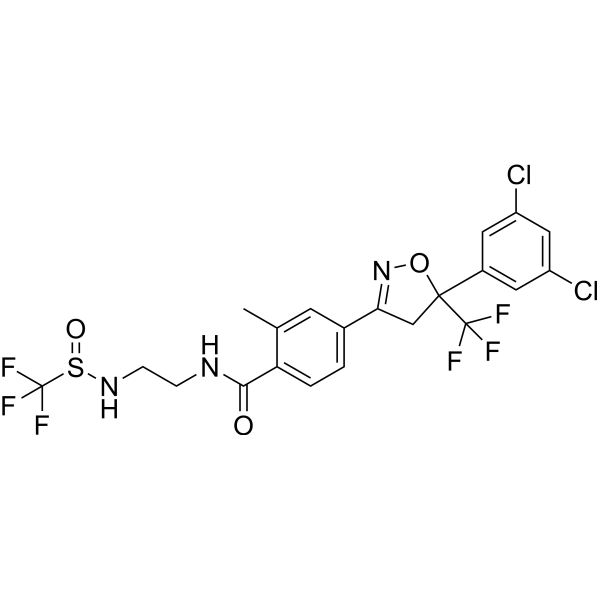
    GABA receptor Antagonist 1 (compound 7w) inhibits Px RDL1 GABAR with an IC50 value of 7.08 nmol/L. GABA receptor Antagonist 1 shows insecticide activity against P. xylostella, S. frugiperda, S. exigua, and S. litura, with LC50 of 0.09, 0.84, 0.87, and 0.68 mg/L respectively. GABA receptor Antagonist 1 shows a medium toxicity to honeybee (48 h, ID50 = 2.22 μg/adult), and low toxicity to zebrafish (LC50: 42.4 mg/L) .
    GABA receptor Antagonist 1
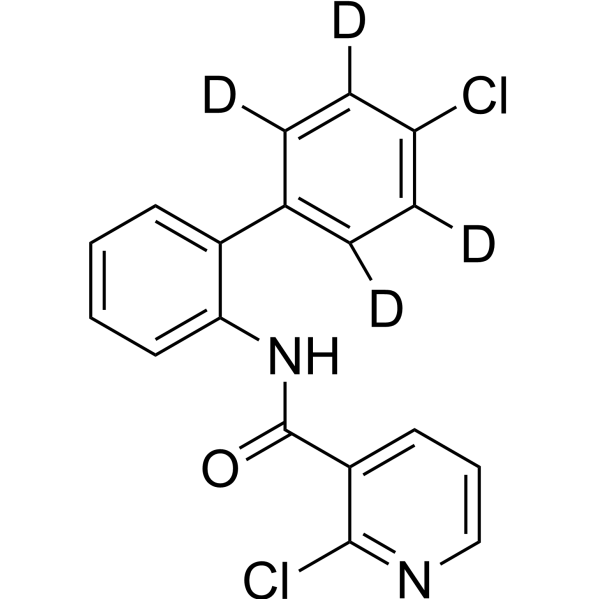
  • HY-119976S

    Isotope-Labeled Compounds Apoptosis Fungal Mitochondrial Metabolism Succinate Dehydrogenase Others
    Boscalid-d4 is the deuterium labeled Boscalid. Boscalid is a succinate dehydrogenase (SDHI) inhibitor with antifungal activity. Boscalid binds to the ubiquinone-binding site of fungal mitochondrial complex II, blocks ATP production and aerobic respiration, exhibits good control efficacy against a variety of plant fungal diseases including gray mold, sclerotinia rot and powdery mildew, and is widely used for disease control in agriculture. Boscalid induces apoptosis, altered lipid metabolism, mitochondrial dysfunction, respiratory impairment, oxidative stress, ROS accumulation and neurodevelopmental disorders in zebrafish. Boscalid reduces foraging ability, shortens median death time and causes chronic toxicity in exposed honeybees. Boscalid also possesses genotoxicity, cytotoxicity, elevated mitochondrial superoxide levels and early-stage apoptosis .
    Boscalid-d4
  • HY-B0640AR

    WAL801 hydrochloride (Standard)

    Reference Standards Histamine Receptor Transmembrane Glycoprotein Interleukin Related Cardiovascular Disease Neurological Disease Inflammation/Immunology Cancer
    Epinastine (hydrochloride) (Standard) is the analytical standard of Epinastine hydrochloride (HY-B0640A). This product is intended for research and analytical applications. Epinastine hydrochloride (WAL801 hydrochloride) is a selective and orally active histamine H1 receptor antagonist, CD96/PVR inhibitor and mast cell stabilizer. Epinastine hydrochloride has high affinity for neuronal octopamine receptors in locusts (Ki = 2 nM) and honeybees (Ki = 1.1 nM). Epinastine hydrochloride inhibits TARC, IL-8, and IL-4. Epinastine hydrochloride activates anti-colon cancer immunity and inhibits Substance P (HY-P0201)-induced scratching behavior and increased vascular permeability. Epinastine hydrochloride can be used in the research of allergic diseases .
    Epinastine hydrochloride (Standard)
  • HY-119976R

    Reference Standards Apoptosis Fungal Mitochondrial Metabolism Succinate Dehydrogenase Infection
    Boscalid (Standard) is the analytical standard of Boscalid. This product is intended for research and analytical applications. Boscalid is a succinate dehydrogenase (SDHI) inhibitor with antifungal activity. Boscalid binds to the ubiquinone-binding site of fungal mitochondrial complex II, blocks ATP production and aerobic respiration, exhibits good control efficacy against a variety of plant fungal diseases including gray mold, sclerotinia rot and powdery mildew, and is widely used for disease control in agriculture. Boscalid induces apoptosis, altered lipid metabolism, mitochondrial dysfunction, respiratory impairment, oxidative stress, ROS accumulation and neurodevelopmental disorders in zebrafish. Boscalid reduces foraging ability, shortens median death time and causes chronic toxicity in exposed honeybees. Boscalid also possesses genotoxicity, cytotoxicity, elevated mitochondrial superoxide levels and early-stage apoptosis .
    Boscalid (Standard)
  • HY-W070884

    nAChR Infection
    nAChR-IN-2 (Compound 2) is an inhibitor of insect nicotinic acetylcholine receptors (nAChR). nAChR-IN-2 inhibits the binding of α-bungarotoxin (HY-P1264) to the ACh site of insect nAChR in honeybee heads, with an IC50 of 360 μM. nAChR-IN-2 also inhibits the binding of Phencyclidine to the NCB/PCP site of insect nAChR in honeybee heads, with an IC50 of 84 μM .
    nAChR-IN-2
  • HY-N18901

    Endogenous Metabolite Metabolic Disease
    3-(2-Hydroxy-1-methyl-2-nitrosohydrazinyl)-N-methyl-1-propanamine is an endogenous metabolite. 3-(2-Hydroxy-1-methyl-2-nitrosohydrazinyl)-N-methyl-1-propanamine is significantly affected by low-dose citrus pectin .
    3-(2-Hydroxy-1-methyl-2-nitrosohydrazinyl)-N-methyl-1-propanamine
  • HY-172151

    Herbicide Protoporphyrinogen IX oxidase Others
    PPO-IN-17 (Compound 6R) is the inhibitor protoporphyrinogen IX oxidase (PPO) that inhibits Nicotiana tobacco PPO (NtPPO) with Ki of 30.34 nM. PPO-IN-17 exhibits herbicidal activity that inhibits barnyardgrass (E. crus-galli), foxtail grass (D. sanguinalis), alfalfa (M. sativa) and Canada cocklebur (C. canadensis) (>95% inhibition rate at a concentration of 37.5 g/hm 2). PPO-IN-17 exhibits no toxicity on rice (at a concentration of 75 g/hm 2) or on honeybees (at a concentration of 6400 mg/kg) .
    PPO-IN-17
  • HY-183705

    Fungal Mitochondrial Metabolism ATP Synthase Infection
    Antimicrobial agent-50 (Compound C2) is an anti-oomycete and Fungicidal agent. Antimicrobial agent-50 inhibits the activity of Mitochondrial respiratory chain complex III with an IC50 of 6.05 mg/L. Antimicrobial agent-50 inhibits ATP synthesis. Antimicrobial agent-50 exhibits protective activity against Phytophthora capsici in vivo. Antimicrobial agent-50 potently inhibits mycelial growth of Gaeumannomyces graminis, Rhizoctonia solani and Phytophthora capsici, with EC50 values of 2.97 mg/L, 1.86 mg/L and 0.74 mg/L, respectively .
    Antimicrobial agent-50

Inquiry Online

Your information is safe with us. * Required Fields.

Salutation


Country or Region *

Applicant Name *


Organization Name *

Department *


Email Address *


Product Name *

Cat. No.


Requested quantity *

Phone Number *


Remarks

Inquiry Online

Inquiry Information

Product Name:
Cat. No.:
Quantity:
MCE Japan Authorized Agent:

