




1. Search Result
Search Result
Results for "

human GLP-1R

" in MedChemExpress (MCE) Product Catalog:

21

Inhibitors & Agonists

1

Fluorescent Dye

8

Peptides

2

Inhibitory Antibodies

1

Natural
Products

4

Recombinant Proteins

1

Antibodies

1

Oligonucleotides

Targets Recommended:
Cat. No. Product Name Target Research Areas Chemical Structure
  • HY-P3506
    Retatrutide
    3 Publications Verification

    LY3437943

    GCGR GLP Receptor Metabolic Disease
    Retatrutide (LY3437943) is a triple agonist peptide of the glucagon receptor (GCGR), glucosedependent insulinotropic polypeptide receptor (GIPR), and glucagon-like peptide-1 receptor (GLP-1R). Retatrutide binds human GCGR, GIPR, and GLP-1R with EC50 values of 5.79, 0.0643 and 0.775 nM, respectively. Retatrutide can be used for the research of obesity .
    Retatrutide
  • HY-P3375

    IBI-362; LY-3305677; OXM-3

    GCGR GLP Receptor Metabolic Disease
    Mazdutide (IBI-362; LY-3305677) is a long-acting synthetic oxyntomodulin analog. Mazdutide is also a co-agonist of glucagon-like peptide (GLP-1R) and glucagon receptor (GCGR). Mazdutide binds human and mouse GCGR (Ki: 17.7 nM and 15.9 nM, respectively) and GLP-1R (Ki: 28.6 nM and 25.1 nM, respectively) and stimulates insulin secretion from mouse islets (EC50: 5.2 nM). Mazdutide is used in studies of obesity and type 2 diabetes (T2D) .
    Mazdutide
  • HY-164535

    AMG 133

    Antibody-Drug Conjugates (ADCs) GLP Receptor Insulin Receptor Metabolic Disease
    Maridebart cafraglutide (AMG 133) is a long-acting peptide-antibody conjugate that combines GLP-1 receptor agonist with glucose-dependent insulinotropic polypeptide (GIP) receptor antagonism. Maridebart cafraglutide shows antagonist activity against human, cynomolgus monkey and rat GIPR with IC50 values of 46.4 nM, 26.5 nM, 822.3 nM, respectively. Maridebart cafraglutide shows agonist activity against human, cynomolgus monkey, rat and mouse GLP-1R with EC50 values of 24.4 pM, 5.7 pM, 2.4 pM and 123 pM, respectively. Maridebart cafraglutide can be used for the study of obesity and type 2 diabetes .
    Maridebart cafraglutide
  • HY-P11274A

    Amycretin sodium; NN 9487 sodium

    Amylin Receptor Insulin Receptor GCGR Metabolic Disease
    Zenagamtide (Amycretin; NN 9487) sodium is an orally active, blood-brain barrier permeable triple agonist that targets GLP-1, amylin (Amylin Receptor) and calcitonin receptor (Calcitonin Receptor). Zenagamtide sodium is a single peptide consisting of 68 amino acids that can target brain regions regulating food intake, significantly suppress appetite and reduce energy intake. Therefore, Zenagamtide sodium improves body weight, waist circumference, glycated hemoglobin and lipid profile, and also alleviates the histological features of metabolic dysfunction-associated steatotic liver disease (MASLD) and enhances insulin sensitivity. Zenagamtide sodium may cause transient increases in heart rate and fluctuations in serum calcium levels, but it is an important compound for the study of overweight, obesity, insulin resistance and related metabolic diseases .
    Zenagamtide sodium
  • HY-P3506A
    Retatrutide TFA
    3 Publications Verification

    LY3437943 TFA

    GLP Receptor GCGR Metabolic Disease
    Retatrutide (LY3437943) TFA is a triple agonist peptide of the glucagon receptor (GCGR), glucosedependent insulinotropic polypeptide receptor (GIPR), and glucagon-like peptide-1 receptor (GLP-1R). Retatrutide TFA binds human GCGR, GIPR, and GLP-1R with EC50 values of 5.79, 0.0643 and 0.775 nM, respectively. Retatrutide TFA can be used for the research of obesity .
    Retatrutide TFA
  • HY-160734

    GSBR-1290

    GLP Receptor Metabolic Disease
    Aleniglipron (GSBR-1290) is an orally active glucagon-like peptide-1 receptor (GLP-1R) agonist, with an EC50 value of less than 0.1 nM in HDB cell lines in cAMP stimulation assays. Aleniglipron selectively activates the Gαs-cAMP signaling pathway of GLP-1R without β-arrestin recruitment. Aleniglipron induces insulin release, promotes glucose clearance, reduces food intake and decreases body weight. Aleniglipron is applicable to research related to type 2 diabetes and obesity .
    Aleniglipron
  • HY-175701

    RO7795081; RG6652

    Arrestin GLP Receptor Metabolic Disease
    CT-996 is an orally active GLP-1RA agonist with an EC50 of 0.49 nM. CT-996 reduces the recruitment of β-arrestin and the internalization of GLP-1R. CT-996 suppresses postprandial blood glucose in mice expressing human GLP-1 receptors and enhances glucose-stimulated insulin secretion (GSIS) in obese monkeys during intravenous glucose challenge. CT-996 can be used for the research of type 2 diabetes (T2D) and obesity .
    CT-996
  • HY-P3375A

    IBI-362 TFA; LY-3305677 TFA; OXM-3 TFA

    GCGR GLP Receptor Metabolic Disease
    Mazdutide (IBI-362; LY-3305677) TFA is a long-acting synthetic oxyntomodulin analog. Mazdutide is also a co-agonist of glucagon-like peptide (GLP-1R) and glucagon receptor (GCGR). Mazdutide TFA binds human and mouse GCGR (Ki: 17.7 nM and 15.9 nM, respectively) and GLP-1R (Ki: 28.6 nM and 25.1 nM, respectively) and stimulates insulin secretion from mouse islets (EC50: 5.2 nM). Mazdutide TFA is used in studies of obesity and type 2 diabetes (T2D) .
    Mazdutide TFA
  • HY-P990013

    Glutazumab; GMA-102; GMA-105

    GCGR Metabolic Disease
    Gulgafafusp alfa is a human IgG2κ antibody targeting the glucagon-like peptide 1 receptor GLP1R .
    Gulgafafusp alfa
  • HY-143312

    GLP Receptor Metabolic Disease Inflammation/Immunology
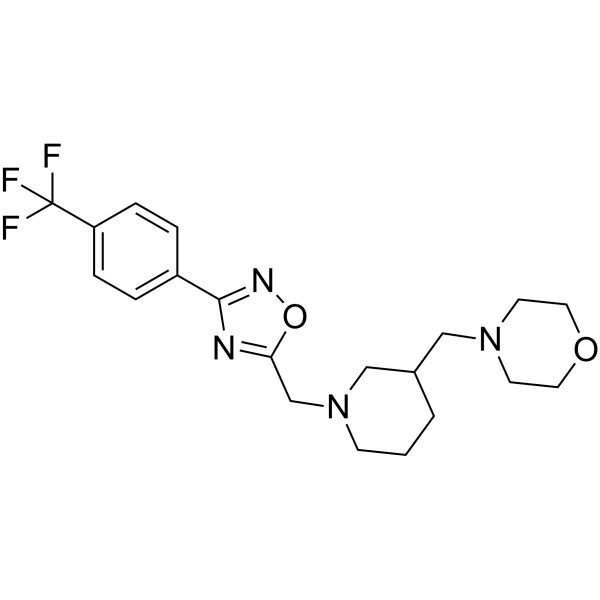
    V-0219 is an orally active glucagon-like peptide-1 receptor (GLP-1R) positive allosteric modulator. V-0219 potentiates GLP-1R stimulation, and enhances GLP-1-induced cAMP production and insulin secretion. V-0219 potentiates glucose-dependent insulin secretion. V-0219 improves glucose handling in normal and diabetic rodents. V-0219 can be used for the research of obesity-associated diabetes .
    V-0219
  • HY-N2452

    GLP Receptor Cardiovascular Disease Infection Metabolic Disease
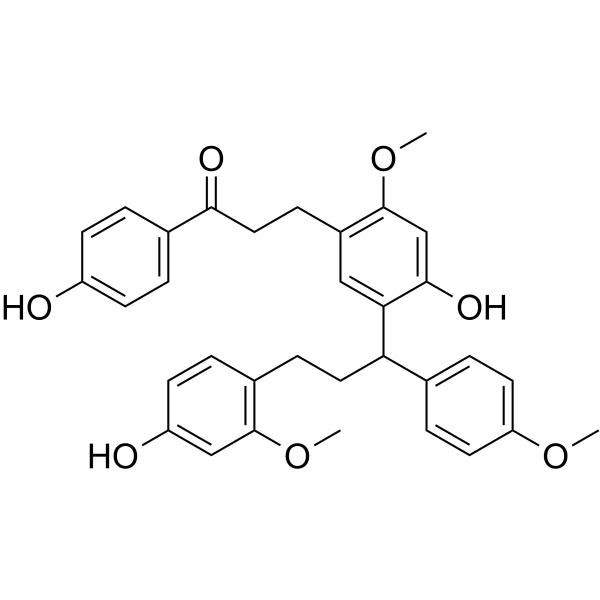
    Cochinchinenin C is a GLP-1R agonist that binds to the extracellular domain of the receptor via hydrophobic interactions and hydrogen bonds, and promotes glucose-dependent insulin secretion from pancreatic β-cells. Cochinchinenin C also increases intracellular cAMP and ATP levels. At low concentrations, Cochinchinenin C binds to human serum albumin, alters its microenvironment, and induces dominant static fluorescence quenching. Cochinchinenin C shows almost no cytotoxicity to pancreatic β-cells, and exerts a synergistic effect with Loureirin A (HY-N1505) when binding to human serum albumin. Cochinchinenin C has been widely used in studies of type 2 diabetes, Helicobacter pylori infection, thrombotic diseases, and other conditions .
    Cochinchinenin C
  • HY-RS05490

    Small Interfering RNA (siRNA) Others

    GLP1R Human Pre-designed siRNA Set A contains three designed siRNAs for GLP1R gene (Human), as well as a negative control, a positive control, and a FAM-labeled negative control.

    GLP1R Human Pre-designed siRNA Set A
    GLP1R Human Pre-designed siRNA Set A
  • HY-P991099

    GCGR Metabolic Disease
    Anti-GLP1R Antibody is a human antibody expressed in CHO cells, targeting GLP1R. Anti-GLP1R Antibody can be referenced as Human IgG1 kappa, Isotype Control (HY-P99001).
    Anti-GLP1R Antibody
  • HY-P3506B

    LY3437943 acetate

    GCGR GLP Receptor Metabolic Disease
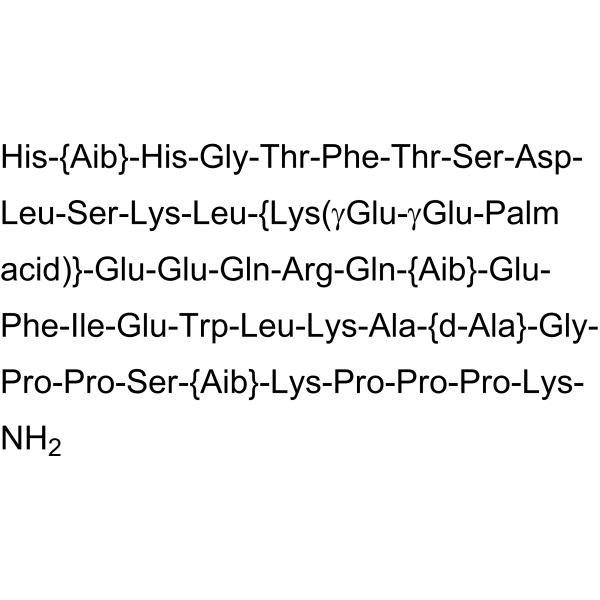
    Retatrutide (LY3437943) acetate is a triple agonist peptide of the glucagon receptor (GCGR), glucosedependent insulinotropic polypeptide receptor (GIPR), and glucagon-like peptide-1 receptor (GLP-1R). Retatrutide acetate inhibits human GCGR, GIPR, and GLP-1R with EC50 values of 5.79, 0.0643 and 0.775 nM, respectively. Retatrutide acetate can be used for the research of obesity .
    Retatrutide acetate
  • HY-143312A

    GLP Receptor Metabolic Disease Inflammation/Immunology
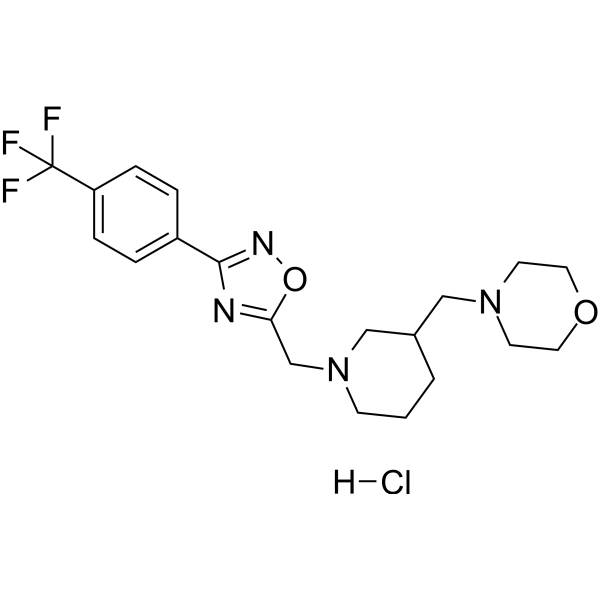
    V-0219 hydrochloride is an orally active glucagon-like peptide-1 receptor (GLP-1R) positive allosteric modulator. V-0219 hydrochloride potentiates GLP-1R stimulation, and enhances GLP-1-induced cAMP production and insulin secretion. V-0219 hydrochloride potentiates glucose-dependent insulin secretion. V-0219 hydrochloride improves glucose handling in normal and diabetic rodents. V-0219 hydrochloride can be used for the research of obesity-associated diabetes .
    V-0219 hydrochloride
  • HY-P11043

    GLP Receptor Neuropeptide Y Receptor Arrestin Metabolic Disease
    GEP44 is a peptide biased triple agonist targeting Glucagon-like peptide 1 receptor (GLP-1R), neuropeptide Y1 Receptor (Y1-R), and neuropeptide Y2 Receptor (Y2-R). GEP44 induces Y1-R antagonist-controlled, GLP-1R-dependent stimulation of insulin secretion in both rat and human pancreatic islets by counteracting effects of Y1-R and GLP-1R agonism. GEP44 promotes insulin-independent Y1-R-mediated glucose uptake in muscle tissue and significantly reduces food intake and body weight in diet-induced obese rat models. GEP44 can be used for obesity and type 2 diabetes mellitus research .
    GEP44
  • HY-144134

    GCGR Metabolic Disease
    GLP-1R agonist 6 is a potent GLP-1R agonist with an EC50 of 0.15 nM for human GLP-1R (WO2021249492A1, compound 005A or 005B) .
    GLP-1R agonist 6
  • HY-172811

    GCGR Metabolic Disease
    DA-302168S is an orally active and selective agonist targeting the GLP-1R, with EC50 value of 1.32 nM. DA-302168S stimulates insulin secretion and shows hypoglycemic effects. DA-302168S decreases food intake. DA-302168S mainly activates GLP-1R of monkeys and humans, and exhibits little excitatory effect on GLP-1R of rats, mice, and dogs. DA-302168S can be used for type 2 diabetes and obesity study .
    DA-302168S
  • HY-P0165B

    ITM077 acetate; R1583 acetate; BIM51077 acetate

    GLP Receptor Metabolic Disease
    Taspoglutide (R1583) acetate is an agonist of the glucagon-like peptide 1 receptor (GLP-1R) with an Ki value of 1.1 nM. Taspoglutide acetate induces cAMP accumulation in CHO-K1 cells expressing human GLP-1R (EC50 = 0.06 nM). Taspoglutide acetate decreases blood levels of glucose and increases blood levels of insulin in a glucose tolerance test in Zucker diabetic obese rats. Taspoglutide acetate reduces blood levels of gastric inhibitory polypeptide (GIP), plasma levels of triglycerides, and body weight in the same model .
    Taspoglutide acetate
  • HY-171302

    GLP Receptor Metabolic Disease
    GLP-1R/GIPR agonist-2 is a GIPR agonist. GLP-1R/GIPR agonist-2 potentiates GIP(1-42)-induced intracellular cAMP production in cells expressing human GIPR. GLP-1R/GIPR agonist-2 can be used for the research of type II diabetes mellitus .
    GLP-1R/GIPR agonist-2
  • HY-182502

    GLP Receptor Metabolic Disease
    GLP-1R-agonist-43 (Compound A) is an orally active GLP-1R agonist with an EC50 of 2.68 nM. GLP-1R-agonist-43 can be used in the research of non-insulin-dependent diabetes mellitus (type 2 diabetes) and obesity .
    GLP-1R-agonist-43

Inquiry Online

Your information is safe with us. * Required Fields.

Salutation


Country or Region *

Applicant Name *


Organization Name *

Department *


Email Address *


Product Name *

Cat. No.


Requested quantity *

Phone Number *


Remarks

Inquiry Online

Inquiry Information

Product Name:
Cat. No.:
Quantity:
MCE Japan Authorized Agent:

