
1. Search Result
Search Result
Pathways Recommended: Stem Cell/Wnt Cell Cycle/DNA Damage
Results for "

intestinal absorptive cells

" in MedChemExpress (MCE) Product Catalog:

25

Inhibitors & Agonists

1

Fluorescent Dyes

1

Biochemical Assay Reagents

1

Natural
Products

8

Isotope-Labeled Compounds

3

Oligonucleotides

Cat. No. Product Name Target Research Areas Chemical Structure
  • HY-B0113
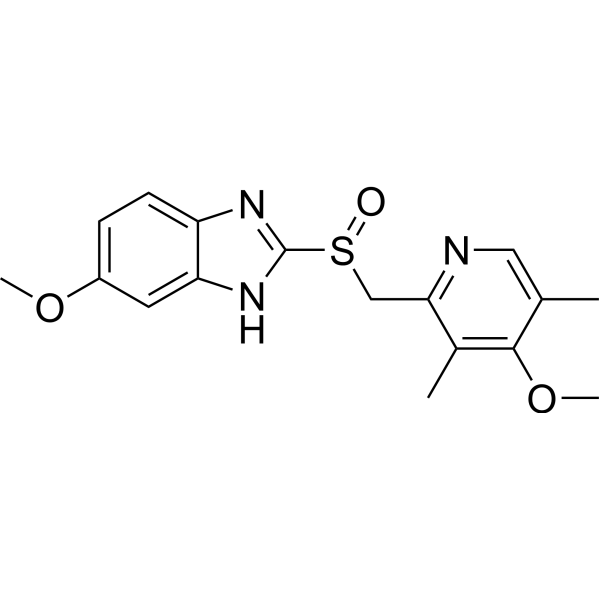
    Omeprazole
    Maximum Cited Publications
    8 Publications Verification

    H 16868

    Na+/K+ ATPase Proton Pump Bacterial Cytochrome P450 Apoptosis Autophagy Atg8/LC3 TNF Receptor Interleukin Related Infection Neurological Disease Inflammation/Immunology Cancer
    Omeprazole (H 16868) is an orally active H +,K +-ATPase inhibitor and a proton pump inhibitor. Omeprazole competitively inhibits CYP2C19, CYP3A4, and CYP2C9 activity. Omeprazole inhibits gastric acid secretion and can be used for acid-related gastrointestinal disorders. Omeprazole inhibits pancreatic cancer cell proliferation, induces apoptosis, autophagosome accumulation (elevated LC3-I and LC3-II levels), oxidative stress, and cytogenetic imbalance, modulates lysosomal transport, reduces inflammatory cytokines. Omeprazole alters small intestinal morphology and magnesium absorption, and induces gastric mucosa morphologic changes. Omeprazole aslo has neuroprotective and antibacterial effects .
    Omeprazole
  • HY-125854
    Phosphatidylcholines, egg
    2 Publications Verification

    Liposome Cholinesterase (ChE) Monoamine Oxidase Apoptosis Neurological Disease Metabolic Disease Inflammation/Immunology
    Phosphatidylcholines, egg are a type of phosphatidylcholine that can be isolated and extracted from eggs, primarily present in egg yolks. As a major phospholipid component of cell membranes, Phosphatidylcholines, egg play a key role in providing nutrition and protection to the body. Phosphatidylcholines, egg can inhibit oxidative stress and neurotoxicity, exerting neuroprotective effects. Additionally, Phosphatidylcholines, egg can suppress the lymphatic absorption of cholesterol in the intestine and are also used in research on intestinal lipid absorption .
    Phosphatidylcholines, egg
  • HY-148033

    N,N,N-Trimethylchitosan

    Drug Derivative Others
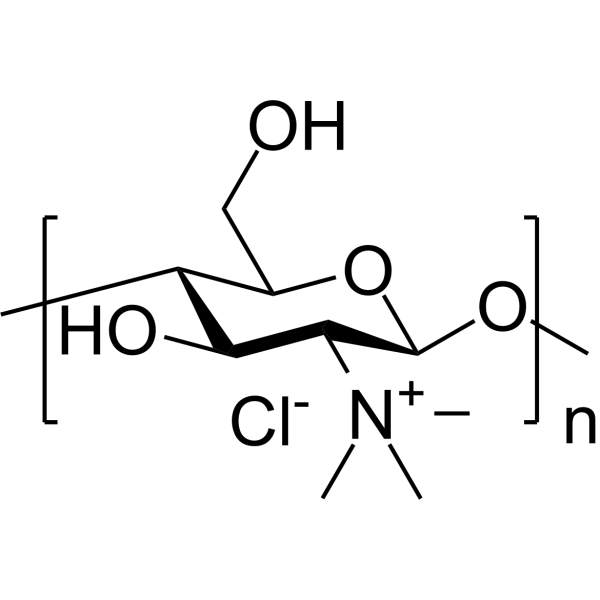
    Trimethyl chitosan (N,N,N-Trimethylchitosan) is a multifunctional polymer and a derivative of Chitosan (HY-B2144A). Trimethyl chitosan targets the absorption enhancing proteins of tight junctions of intestinal and mucosal epithelial cells, induces tight junction protein rearrangement, and increases intercellular permeability. Trimethyl chitosan can stimulate the activity of promoting transmembrane transport of hydrophilic drugs (such as peptides and proteins) and can be used for drug delivery and synthesis of nanoparticles .
    Trimethyl chitosan
  • HY-B1190
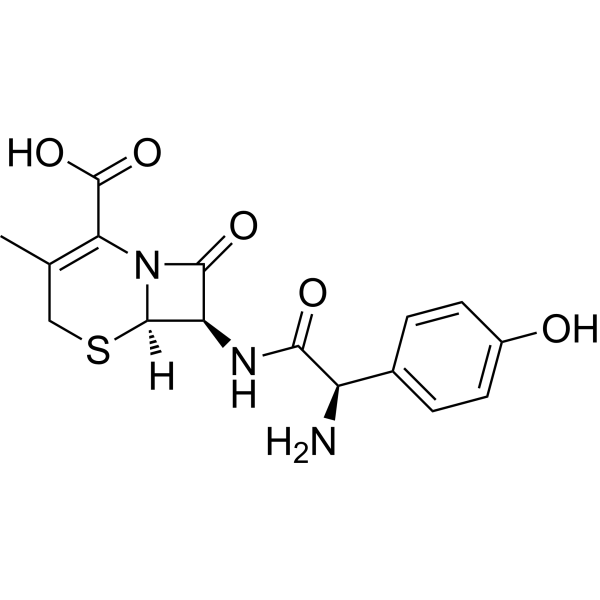
    Cefadroxil
    5 Publications Verification

    BL-S 578

    Bacterial Antibiotic EAAT Infection Neurological Disease
    Cefadroxil is an orally active broad-spectrum cephalosporin antibiotic. Cefadroxil inhibits bacterial cell wall synthesis and enhances the expression of glutamate transporter-1. Cefadroxil is dependent on the intestinal peptide transporter PepT1 for small intestinal absorption. Cefadroxil has inhibitory and bactericidal activity against a variety of Gram-positive and Gram-negative bacteria and has analgesic effects on neuropathic pain .
    Cefadroxil
  • HY-B0113A
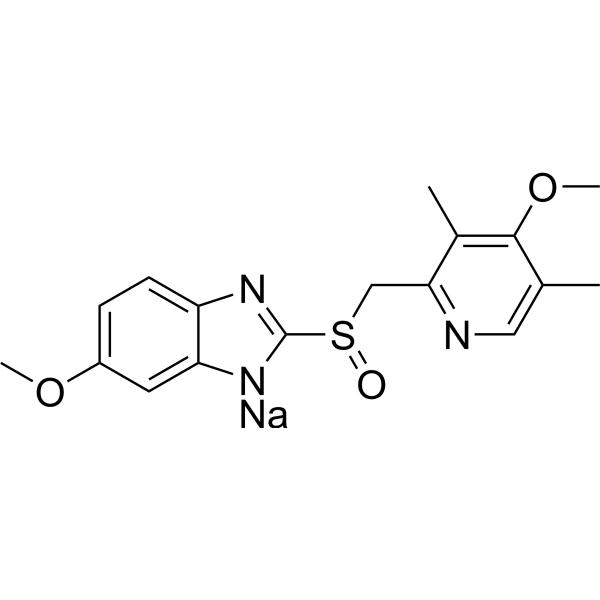
    Omeprazole sodium
    Maximum Cited Publications
    8 Publications Verification

    H 16868 sodium

    Na+/K+ ATPase Interleukin Related Proton Pump Cytochrome P450 Bacterial Apoptosis Autophagy TNF Receptor Atg8/LC3 Infection Inflammation/Immunology
    Omeprazole (H 16868) sodium is an orally active H +,K +-ATPase inhibitor and a proton pump inhibitor. Omeprazole sodium competitively inhibits CYP2C19, CYP3A4, and CYP2C9 activity. Omeprazole sodium inhibits gastric acid secretion and can be used for acid-related gastrointestinal disorders. Omeprazole sodium inhibits pancreatic cancer cell proliferation, induces apoptosis, autophagosome accumulation (elevated LC3-I and LC3-II levels), oxidative stress, and cytogenetic imbalance, modulates lysosomal transport, reduces inflammatory cytokines. Omeprazole sodium alters small intestinal morphology and magnesium absorption, and induces gastric mucosa morphologic changes. Omeprazole sodium aslo has neuroprotective and antibacterial effects .
    Omeprazole sodium
  • HY-P2879

    Endogenous Metabolite Metabolic Disease
    Cholesterol esterase, Pseudomonas is an enzyme that hydrolyzes cholesterol ester to cholesterol and free fatty acid in the intestinal lumen. Cholesterol synthesized in the acinar cells and is stored in zymogen granules. Cholesterol esterase is also known as bile salt-stimulated lipase and carboxy ester lipasea, acts function for acceleration of cholesterol absorption .
    Cholesterol esterase, Pseudomonas
  • HY-N15135

    Interleukin Related Toll-like Receptor (TLR) Fungal Metabolic Disease
    Arabinoxylan Medium viscosity is an orally active Dectin-1 splice variant modulator, glucose absorption inhibitor, and chyme viscosity enhancer. Arabinoxylan Medium viscosity inhibits particulate β-glucan-induced Dectin-1A activation and mildly suppresses Dectin-1B activation. In human dendritic cells stimulated with particulate β-glucan, Arabinoxylan Medium viscosity reduces the production of IL-10 and TNF-α, and increases the production of IL-4 and IL-23. Arabinoxylan Medium viscosity also supports antifungal immune responses without activating TLR2, TLR4 or TLR5, and does not induce cytokine production when used to stimulate human dendritic cells alone. Arabinoxylan Medium viscosity increases small intestinal chyme viscosity, gets degraded in the large intestine to produce short-chain fatty acids, reduces glucose absorption and insulin response, and improves glucose homeostasis. Arabinoxylan Medium viscosity supports microbial fermentation and the growth of beneficial microbiota in the gastrointestinal tract, prevents bile acid reabsorption, and delays starch digestion. Arabinoxylan Medium viscosity can be used in research related to type 2 diabetes, impaired glucose tolerance, and metabolic syndrome .
    Arabinoxylan (Medium viscosity)
  • HY-B1190A
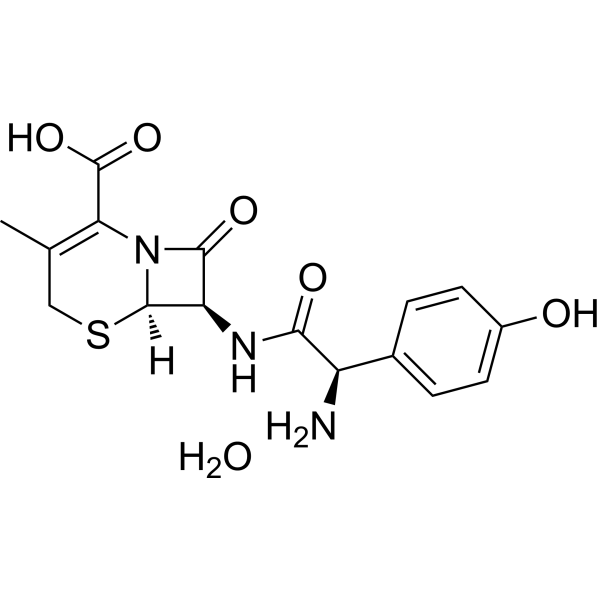
    Cefadroxil hydrate
    5 Publications Verification

    BL-S 578 hydrate

    Bacterial Antibiotic EAAT Infection Neurological Disease
    Cefadroxil hydrate is an orally active broad-spectrum cephalosporin antibiotic. Cefadroxil hydrate inhibits bacterial cell wall synthesis and enhances the expression of glutamate transporter-1. Cefadroxil hydrate is dependent on the intestinal peptide transporter PepT1 for small intestinal absorption. Cefadroxil hydrate has inhibitory and bactericidal activity against a variety of Gram-positive and Gram-negative bacteria and has analgesic effects on neuropathic pain .
    Cefadroxil hydrate
  • HY-126301
    DMT1 blocker 1
    3 Publications Verification

    Ferroportin Metabolic Disease
    DMT1 blocker 1 is an orally active blocker of divalent metal transporter 1 (DMT1) with an IC50 of 0.64 μM. DMT1 blocker 1 inhibits intestinal cell absorption of non-heme iron, thereby alleviating iron overload by blocking the DMT1 transporter. DMT1 blocker 1 demonstrates significant efficacy in rodent models of acute iron hyperabsorption. DMT1 blocker 1 is useful for studying iron overload disorders such as hereditary hemochromatosis and thalassemia .
    DMT1 blocker 1
  • HY-B0113R

    H 16868 (Standard)

    Reference Standards Na+/K+ ATPase Interleukin Related Proton Pump Cytochrome P450 Bacterial Apoptosis Autophagy TNF Receptor Atg8/LC3 Infection Metabolic Disease Cancer
    Omeprazole (Standard) is the analytical standard of Omeprazole. This product is intended for research and analytical applications. Omeprazole (H 16868) is an orally active H +,K +-ATPase inhibitor and a proton pump inhibitor. Omeprazole competitively inhibits CYP2C19, CYP3A4, and CYP2C9 activity. Omeprazole inhibits gastric acid secretion and can be used for acid-related gastrointestinal disorders. Omeprazole inhibits pancreatic cancer cell proliferation, induces apoptosis, autophagosome accumulation (elevated LC3-I and LC3-II levels), oxidative stress, and cytogenetic imbalance, modulates lysosomal transport, reduces inflammatory cytokines. Omeprazole alters small intestinal morphology and magnesium absorption, and induces gastric mucosa morphologic changes. Omeprazole aslo has neuroprotective and antibacterial effects .
    Omeprazole (Standard)
  • HY-B0113S
    Omeprazole-d3
    1 Publications Verification

    H 16868-d3

    Na+/K+ ATPase Interleukin Related Proton Pump Cytochrome P450 Bacterial Apoptosis Autophagy TNF Receptor Atg8/LC3 Infection Metabolic Disease Cancer
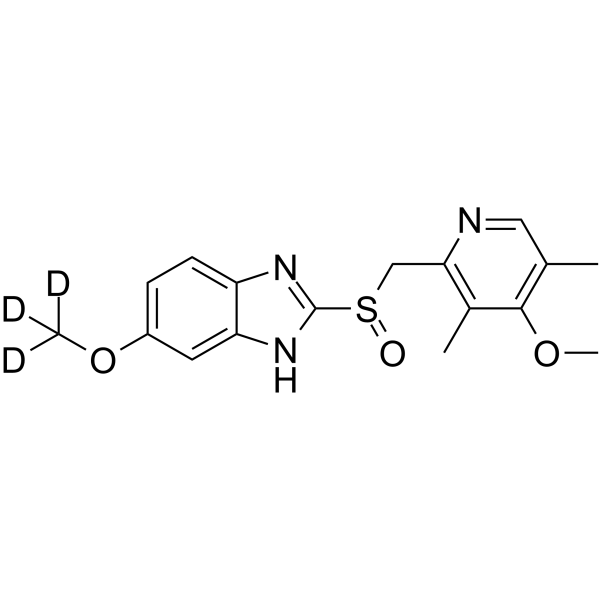
    Omeprazole-d3 (H 16868-d3) is deuterium labeled Omeprazole. Omeprazole (H 16868) is an orally active H +,K +-ATPase inhibitor and a proton pump inhibitor. Omeprazole competitively inhibits CYP2C19, CYP3A4, and CYP2C9 activity. Omeprazole inhibits gastric acid secretion and can be used for acid-related gastrointestinal disorders. Omeprazole inhibits pancreatic cancer cell proliferation, induces apoptosis, autophagosome accumulation (elevated LC3-I and LC3-II levels), oxidative stress, and cytogenetic imbalance, modulates lysosomal transport, reduces inflammatory cytokines. Omeprazole alters small intestinal morphology and magnesium absorption, and induces gastric mucosa morphologic changes. Omeprazole aslo has neuroprotective and antibacterial effects .
    Omeprazole-d3
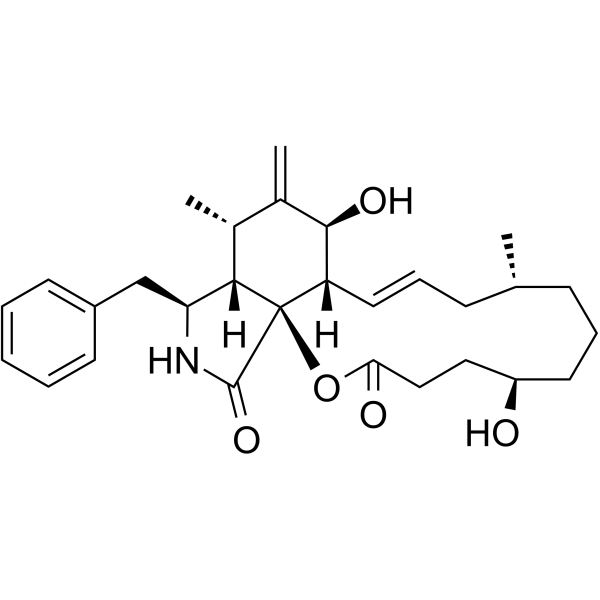
  • HY-N6701

    Arp2/3 Complex DNA/RNA Synthesis Calcium Channel Inflammation/Immunology
    Dihydrocytochalasin B is an Actin disruptor. Dihydrocytochalasin B disrupts actin microfilament bundles, inhibits actin polymerization, and alters intracellular actin cytoskeletal structures. Dihydrocytochalasin B blocks the initiation of DNA synthesis. Dihydrocytochalasin B inhibits Calcium transport. Dihydrocytochalasin B inhibits cytokinesis and alters cell morphology. Dihydrocytochalasin B can be used in studies related to rickets .
    Dihydrocytochalasin B
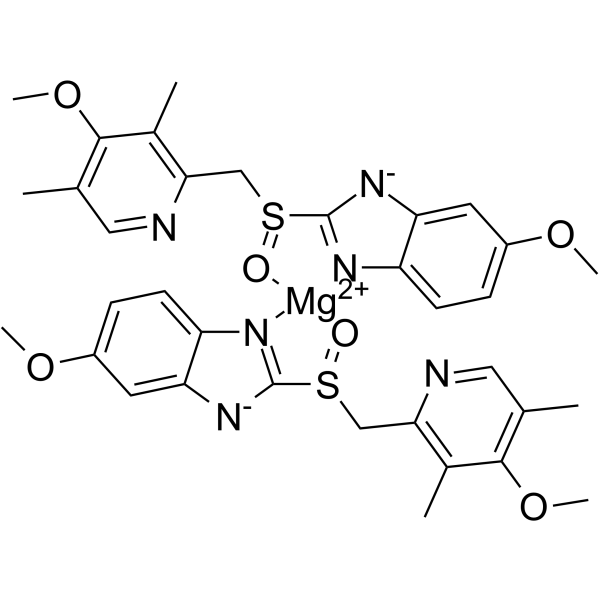
  • HY-109546

    Na+/K+ ATPase Interleukin Related Proton Pump Cytochrome P450 Bacterial Apoptosis Autophagy TNF Receptor Atg8/LC3 Infection Metabolic Disease Cancer
    Omeprazole (H 16868) magnesium is an orally active H +,K +-ATPase inhibitor and a proton pump inhibitor. Omeprazole magnesium competitively inhibits CYP2C19, CYP3A4, and CYP2C9 activity. Omeprazole magnesium inhibits gastric acid secretion and can be used for acid-related gastrointestinal disorders. Omeprazole magnesium inhibits pancreatic cancer cell proliferation, induces apoptosis, autophagosome accumulation (elevated LC3-I and LC3-II levels), oxidative stress, and cytogenetic imbalance, modulates lysosomal transport, reduces inflammatory cytokines. Omeprazole magnesium alters small intestinal morphology and magnesium absorption, and induces gastric mucosa morphologic changes. Omeprazole magnesium aslo has neuroprotective and antibacterial effects .
    Omeprazole magnesium
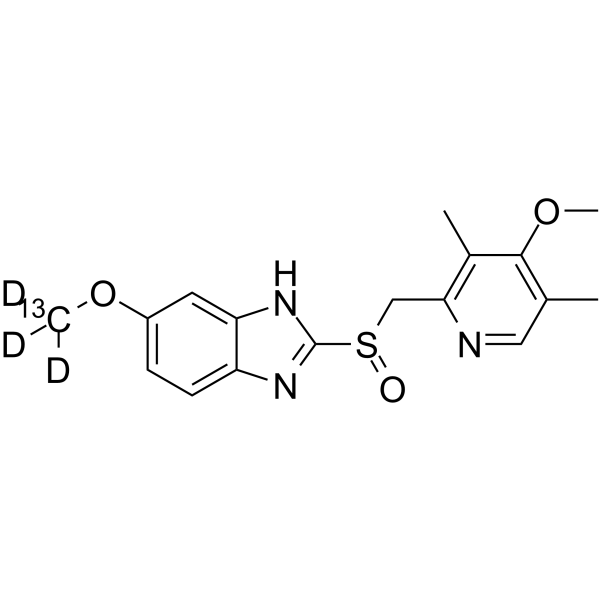
  • HY-B0113S3

    H 16868-13C,d3

    Isotope-Labeled Compounds Na+/K+ ATPase Interleukin Related Proton Pump Cytochrome P450 Bacterial Apoptosis Autophagy TNF Receptor Atg8/LC3 Infection Metabolic Disease Cancer
    Omeprazole- 13C,d3 is a 13C-labeled and deuterium labeled Omeprazole. Omeprazole (H 16868) is an orally active H +,K +-ATPase inhibitor and a proton pump inhibitor. Omeprazole competitively inhibits CYP2C19, CYP3A4, and CYP2C9 activity. Omeprazole inhibits gastric acid secretion and can be used for acid-related gastrointestinal disorders. Omeprazole inhibits pancreatic cancer cell proliferation, induces apoptosis, autophagosome accumulation (elevated LC3-I and LC3-II levels), oxidative stress, and cytogenetic imbalance, modulates lysosomal transport, reduces inflammatory cytokines. Omeprazole alters small intestinal morphology and magnesium absorption, and induces gastric mucosa morphologic changes. Omeprazole aslo has neuroprotective and antibacterial effects .
    Omeprazole-13C,d3
  • HY-B1190R

    BL-S 578 (Standard)

    Reference Standards Bacterial Antibiotic EAAT Infection Neurological Disease
    Cefadroxil (Standard) is the analytical standard of Cefadroxil (HY-B1190). This product is intended for research and analytical applications. Cefadroxil is an orally active broad-spectrum cephalosporin antibiotic. Cefadroxil inhibits bacterial cell wall synthesis and enhances the expression of glutamate transporter-1. Cefadroxil is dependent on the intestinal peptide transporter PepT1 for small intestinal absorption. Cefadroxil has inhibitory and bactericidal activity against a variety of Gram-positive and Gram-negative bacteria and has analgesic effects on neuropathic pain .
    Cefadroxil (Standard)
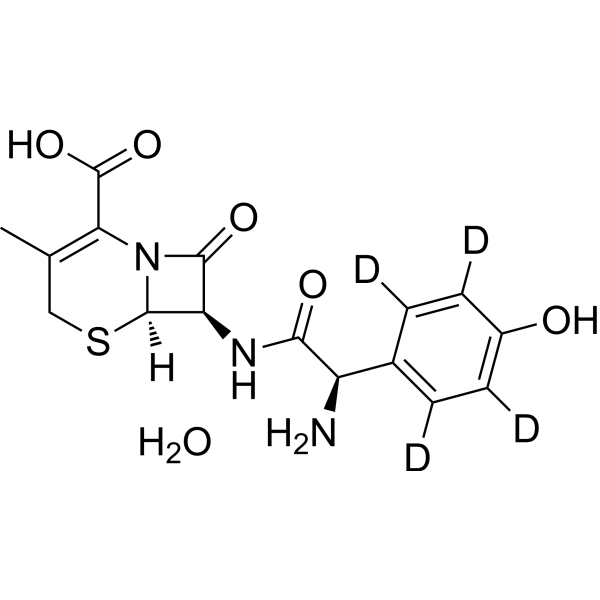
  • HY-B1190S

    BL-S 578-d4 hydrate

    Isotope-Labeled Compounds Bacterial Antibiotic EAAT Infection Neurological Disease
    Cefadroxil-d4 (hydrate) is the deuterium labeled Cefadroxil hydrate (HY-B1190A). Cefadroxil hydrate is an orally active broad-spectrum cephalosporin antibiotic. Cefadroxil hydrate inhibits bacterial cell wall synthesis and enhances the expression of glutamate transporter-1. Cefadroxil hydrate is dependent on the intestinal peptide transporter PepT1 for small intestinal absorption. Cefadroxil hydrate has inhibitory and bactericidal activity against a variety of Gram-positive and Gram-negative bacteria and has analgesic effects on neuropathic pain .
    Cefadroxil-d4 hydrate
  • HY-174542

    mRNA Cancer
    Human PRKCB mRNA encodes the human protein kinase C beta (PRKCB) protein, a member of Protein kinase C (PKC) family. PRKCB has been reported to be involved in many different cellular functions, such as B cell activation, apoptosis induction, endothelial cell proliferation, and intestinal sugar absorption.
    Human PRKCB mRNA
  • HY-B1190S2

    BL-S 578-13C6

    Isotope-Labeled Compounds Bacterial Antibiotic EAAT Infection Neurological Disease
    Cefadroxil- 13C6 (BL-S 578- 13C6) is 13C labeled Cefadroxil (HY-B1190). Cefadroxil is an orally active broad-spectrum cephalosporin antibiotic. Cefadroxil inhibits bacterial cell wall synthesis and enhances the expression of glutamate transporter-1. Cefadroxil is dependent on the intestinal peptide transporter PepT1 for small intestinal absorption. Cefadroxil has inhibitory and bactericidal activity against a variety of Gram-positive and Gram-negative bacteria and has analgesic effects on neuropathic pain .
    Cefadroxil-13C6
  • HY-B0113AR

    H 16868 sodium (Standard)

    Reference Standards Na+/K+ ATPase Interleukin Related Proton Pump Cytochrome P450 Bacterial Apoptosis Autophagy TNF Receptor Atg8/LC3 Infection Metabolic Disease Cancer
    Omeprazole (sodium) (Standard) is the analytical standard of Omeprazole (sodium). This product is intended for research and analytical applications. Omeprazole sodium (H 16868) is an orally active H +,K +-ATPase inhibitor and a proton pump inhibitor. Omeprazole sodium competitively inhibits CYP2C19, CYP3A4, and CYP2C9 activity. Omeprazole sodium inhibits gastric acid secretion and can be used for acid-related gastrointestinal disorders. Omeprazole sodium inhibits pancreatic cancer cell proliferation, induces apoptosis, autophagosome accumulation (elevated LC3-I and LC3-II levels), oxidative stress, and cytogenetic imbalance, modulates lysosomal transport, reduces inflammatory cytokines. Omeprazole sodium alters small intestinal morphology and magnesium absorption, and induces gastric mucosa morphologic changes. Omeprazole sodium aslo has neuroprotective and antibacterial effects .
    Omeprazole sodium (Standard)
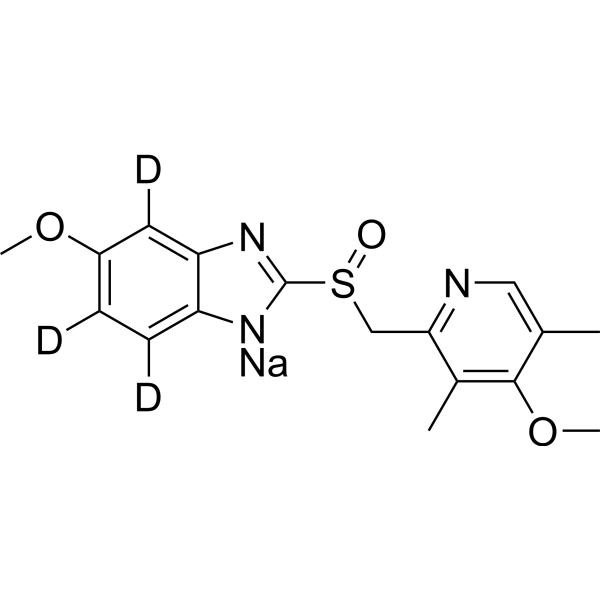
  • HY-B0113S4

    H 16868-d3 sodium

    Isotope-Labeled Compounds Na+/K+ ATPase Interleukin Related Proton Pump Cytochrome P450 Bacterial Apoptosis Autophagy TNF Receptor Atg8/LC3 Infection Metabolic Disease Cancer
    Omeprazole-d3 sodium is deuterated labeled Omeprazole (HY-B0113). Omeprazole sodium (H 16868) is an orally active H +,K +-ATPase inhibitor and a proton pump inhibitor. Omeprazole sodium competitively inhibits CYP2C19, CYP3A4, and CYP2C9 activity. Omeprazole sodium inhibits gastric acid secretion and can be used for acid-related gastrointestinal disorders. Omeprazole sodium inhibits pancreatic cancer cell proliferation, induces apoptosis, autophagosome accumulation (elevated LC3-I and LC3-II levels), oxidative stress, and cytogenetic imbalance, modulates lysosomal transport, reduces inflammatory cytokines. Omeprazole sodium alters small intestinal morphology and magnesium absorption, and induces gastric mucosa morphologic changes. Omeprazole sodium aslo has neuroprotective and antibacterial effects .
    Omeprazole-d3 sodium
  • HY-B0113S2

    Omeprazole sulphone (methoxy-d3)

    Isotope-Labeled Compounds Na+/K+ ATPase Interleukin Related Proton Pump Cytochrome P450 Bacterial Apoptosis Autophagy TNF Receptor Atg8/LC3 Infection Cancer
    Omeprazole sulfone (methoxy-d3) is the deuterium labeled Omeprazole sulfone. Omeprazole sulfone (H 16868) is an orally active H +,K +-ATPase inhibitor and a proton pump inhibitor. Omeprazole sulfone competitively inhibits CYP2C19, CYP3A4, and CYP2C9 activity. Omeprazole sulfone inhibits gastric acid secretion and can be used for acid-related gastrointestinal disorders. Omeprazole sulfone inhibits pancreatic cancer cell proliferation, induces apoptosis, autophagosome accumulation (elevated LC3-I and LC3-II levels), oxidative stress, and cytogenetic imbalance, modulates lysosomal transport, reduces inflammatory cytokines. Omeprazole sulfone alters small intestinal morphology and magnesium absorption, and induces gastric mucosa morphologic changes. Omeprazole sulfone aslo has neuroprotective and antibacterial effects .
    Omeprazole sulfone (methoxy-d3)
  • HY-B0113S5

    H 16868-d6

    Isotope-Labeled Compounds Na+/K+ ATPase Interleukin Related Proton Pump Cytochrome P450 Bacterial Apoptosis Autophagy TNF Receptor Atg8/LC3 Infection Metabolic Disease Cancer
    Omeprazole-d6 (H 16868-d6) is deuterium labeled Omeprazole. Omeprazole (H 16868) is an orally active H +,K +-ATPase inhibitor and a proton pump inhibitor. Omeprazole competitively inhibits CYP2C19, CYP3A4, and CYP2C9 activity. Omeprazole inhibits gastric acid secretion and can be used for acid-related gastrointestinal disorders. Omeprazole inhibits pancreatic cancer cell proliferation, induces apoptosis, autophagosome accumulation (elevated LC3-I and LC3-II levels), oxidative stress, and cytogenetic imbalance, modulates lysosomal transport, reduces inflammatory cytokines. Omeprazole alters small intestinal morphology and magnesium absorption, and induces gastric mucosa morphologic changes. Omeprazole aslo has neuroprotective and antibacterial effects .
    Omeprazole-d6
  • HY-B0113S1

    H 16868-d3-1

    Na+/K+ ATPase Interleukin Related Proton Pump Cytochrome P450 Bacterial Apoptosis Autophagy TNF Receptor Atg8/LC3 Infection Metabolic Disease Cancer
    Omeprazole-d3-1 is the deuterium labeled Omeprazole. Omeprazole-1 (H 16868) is an orally active H +,K +-ATPase inhibitor and a proton pump inhibitor. Omeprazole-1 competitively inhibits CYP2C19, CYP3A4, and CYP2C9 activity. Omeprazole-1 inhibits gastric acid secretion and can be used for acid-related gastrointestinal disorders. Omeprazole-1 inhibits pancreatic cancer cell proliferation, induces apoptosis, autophagosome accumulation (elevated LC3-I and LC3-II levels), oxidative stress, and cytogenetic imbalance, modulates lysosomal transport, reduces inflammatory cytokines. Omeprazole-1 alters small intestinal morphology and magnesium absorption, and induces gastric mucosa morphologic changes. Omeprazole-1 aslo has neuroprotective and antibacterial effects .
    Omeprazole-d3-1
  • HY-162812

    Apoptosis Cholinesterase (ChE) Tau Protein Ferroptosis Histamine Receptor Neurological Disease
    H3R antagonist 4 (compound 11L) was a dual inhibitor of cholinesterase and histamine receptor (H3R), with corresponding IC50 of 7.04 μM (eeAChE), 9.73 μM (hAChE)(reversible) and 1.09 nM (H3R) , respectively. H3R antagonist 4 inhibited the aggregation of Aβ1-42 induced by itself and Cu 2+ (95.48% and 88.63%) , and degraded the Aβ1-42 fibrils induced by itself and Cu 2+ (80.16% and 89.30%) . H3R antagonist 4 chelate biometals such as Cu 2+, Zn 2+, Al 3+, and Fe 2+. H3R antagonist 4 significantly reduced tau protein hyperphosphorylation induced by Aβ1-42 and inhibited RSL-3-induced apoptosis and ferroptosis in PC12 cells. H3R antagonist 4 had the best blood-brain barrier permeability and intestinal absorption in hCMEC/D3 and hPepT1-MDCK cells.H3R antagonist 4 ameliorates learning and memory impairment in a mouse model of Alzheimer's disease induced by scopolamine (HY-N0296) .
    H3R antagonist 4
  • HY-W269270

    Drug Derivative Cancer
    1,3,5-Triphenyl-2-pyrazoline (Compound 12) is a pyrazoline derivative. 1,3,5-Triphenyl-2-pyrazoline exhibits weak cytotoxicity against K562 and Jurkat cells, with an IC50 of greater than 300 μM and 297.7 μM, respectively. 1,3,5-Triphenyl-2-pyrazoline has a predicted human intestinal absorption rate of 100% .
    1,3,5-Triphenyl-2-pyrazoline

Inquiry Online

Your information is safe with us. * Required Fields.

Salutation


Country or Region *

Applicant Name *


Organization Name *

Department *


Email Address *


Product Name *

Cat. No.


Requested quantity *

Phone Number *


Remarks

Inquiry Online

Inquiry Information

Product Name:
Cat. No.:
Quantity:
MCE Japan Authorized Agent:

