7 Results for "

iron uptake activity

" in MedChemExpress (MCE) Product Catalog:
Products (7)

7 Results for "iron uptake activity" in MCE Product Catalog:

877
877 Cited Publications
Cat. No.: HY-15763
CAS No.: 571203-78-6
Purity:  99.62%
Research Areas:  

Cancer

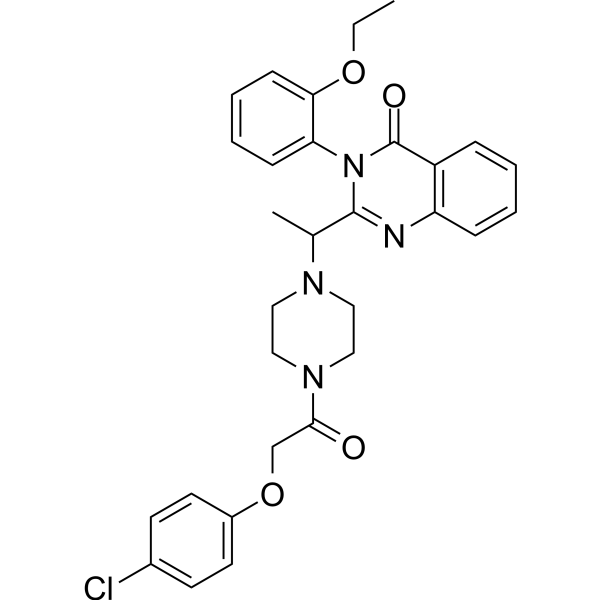
Erastin is a ferroptosis inducer. Erastin exhibits the mechanism of ferroptosis induction related to ROS and iron-dependent signaling. Erastin inhibits voltage-dependent anion channels (VDAC2/VDAC3) and accelerates oxidation, leading to the accumulation of endogenous reactive oxygen species. Erastin also disrupts mitochondrial permeability transition pore (mPTP) with anti-tumor activity. Furthermore, Erastin can block the uptake of cystine mediated by SLC7A11 and also spares UMRC6-EV and -C91A cells from disulfidptosis under glucose starvation .
loading...
    loading...
Cat. No.: HY-128525
CAS No.: 28384-96-5
Purity:  98.82%
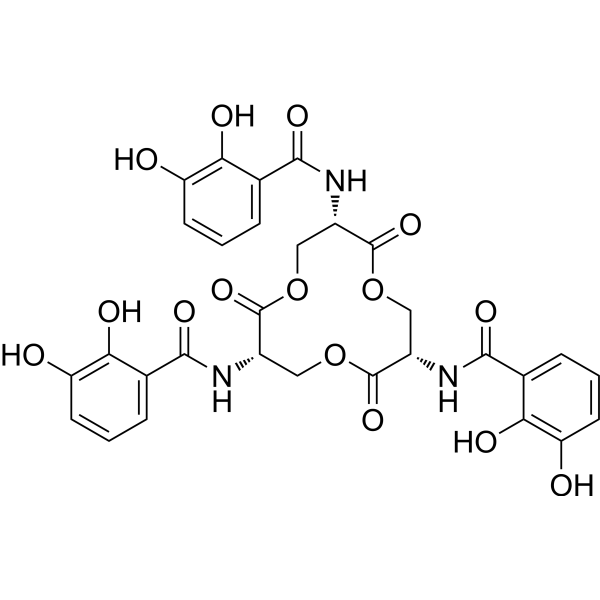
Enterobactin is a siderophore produced by Gram-negative bacteria and has an extremely high affinity for iron. During the process of Salmonella typhimurium infecting macrophages, Enterobactin can not only help bacteria uptake iron but also reduce the antibacterial activity of macrophages. In addition, Enterobactin is also involved in the oxidative stress response of Escherichia coli. Enterobactin can be hydrolyzed by Fes in the cell and exert antioxidant effects by scavenging free radicals .
loading...
    loading...
Cat. No.: HY-124452
CAS No.: 26605-16-3
Purity:  95.00%
Synonyms: Desferrioxamine E; Nocardamin
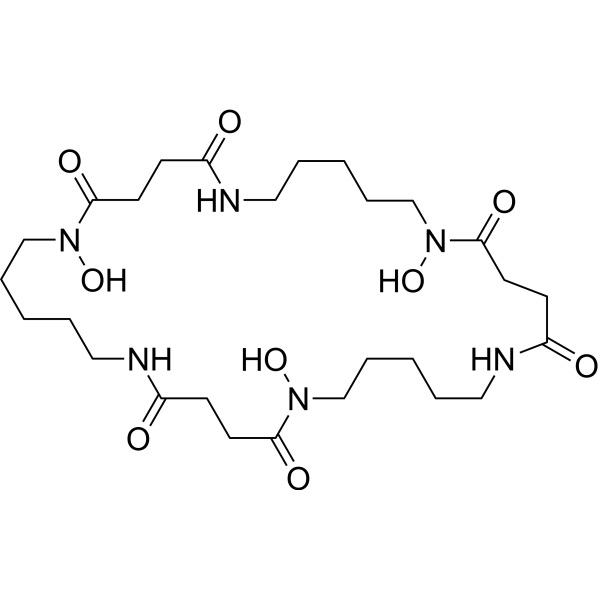
Nocardamine (Desferrioxamine E; Nocardamin) is a cyclic trihydroxamate siderophore with iron ion chelation, antioxidant, antibacterial and other activities. Nocardamine is synthesized by Pseudomonas stutzeri under iron-deficient conditions, and excessive iron ions significantly inhibit its biosynthesis process. Nocardamine increases the level of phosphorylated ERK protein, promotes nuclear translocation of β-catenin, and restores the downregulated expression of SIRT1 protein. Nocardamine alleviates cellular oxidative stress, reduces ROS content, and simultaneously repairs the ability to form mineralized nodules and the expression of osteogenic markers. Nocardamine induces FoxA gene transcription and protein expression to assist Pseudomonas aeruginosa in iron ion uptake; it also selectively inhibits the proliferation of mycobacteria. Nocardamine induces spindle-shaped morphological changes in BM-N4 insect cells, and sufficient iron ions inhibit this cellular morphological change. Nocardamine is suitable for research related to bacterial infections .
loading...
    loading...
Cat. No.: HY-128525R
CAS No.: 28384-96-5
Enterobactin (Standard) is the analytical standard of Enterobactin. This product is intended for research and analytical applications. Enterobactin is a siderophore produced by Gram-negative bacteria and has an extremely high affinity for iron. During the process of Salmonella typhimurium infecting macrophages, Enterobactin can not only help bacteria uptake iron but also reduce the antibacterial activity of macrophages. In addition, Enterobactin is also involved in the oxidative stress response of Escherichia coli. Enterobactin can be hydrolyzed by Fes in the cell and exert antioxidant effects by scavenging free radicals .
loading...
    loading...
Cat. No.: HY-168928
Target:  

Bacterial

Research Areas:  

Infection

Antibiofilm agent prodrug 1 (Compound 5c) exhibits antibacterial activity through inhibition of biofilm formation and iron uptake. Antibiofilm agent prodrug 1 inhibits P. aeruginosa PAO1 with a MIC of 1.07 μM. Antibiofilm agent prodrug 1 exhibits anti-infectious efficacy in C. elegans with improved survival rate .
loading...
    loading...
Cat. No.: HY-181953
CAS No.: 2196106-61-1
STIM1-TFR1-IN-1 is an orally active stromal interaction molecule 1 (STIM1)-transferrin receptor 1 (TFR1) protein complex inhibitor with a Kd of 2.18 μM for STIM1-CD protein. STIM1-TFR1-IN-1 blocks STIM1-TFR1 interaction and reduce TFR1-mediated iron uptake activity. STIM1-TFR1-IN-1 inhibits ferroptosis, lipid peroxidation and ROS production, enhances glutathione peroxidase 4 (GPX4) activity and glutathione/oxidized glutathione ratio, and rescues ferroptosis-associated mitochondrial morphological changes. STIM1-TFR1-IN-1 exhibits neuroprotective
effects and reduces brain injury. STIM1-TFR1-IN-1 can be used for the research of intracerebral hemorrhage .
loading...
    loading...
Cat. No.: HY-P12123
CAS No.: 1715003-63-6
Research Areas:  

Infection

Malleobactin E is a Burkholderia cepacia complex homologue with specific siderophore activity. Malleobactin E forms a complex with Fe 3+ and promotes iron uptake by dissociating CAS-Fe 3+, with a EC50 of 8.4 μM. Malleobactin E helps bacterial acquire essential iron from the environment to maintain their survival during infection .
loading...
    loading...

