



Nocardamine
Based on 1 publication(s) in Google Scholar
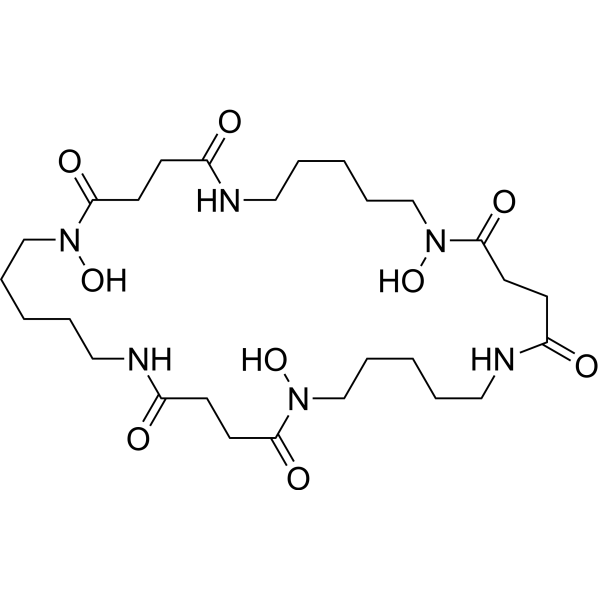
Nocardamine (Desferrioxamine E; Nocardamin) is a cyclic trihydroxamate siderophore with iron ion chelation, antioxidant, antibacterial and other activities. Nocardamine is synthesized by Pseudomonas stutzeri under iron-deficient conditions, and excessive iron ions significantly inhibit its biosynthesis process. Nocardamine increases the level of phosphorylated ERK protein, promotes nuclear translocation of β-catenin, and restores the downregulated expression of SIRT1 protein. Nocardamine alleviates cellular oxidative stress, reduces ROS content, and simultaneously repairs the ability to form mineralized nodules and the expression of osteogenic markers. Nocardamine induces FoxA gene transcription and protein expression to assist Pseudomonas aeruginosa in iron ion uptake; it also selectively inhibits the proliferation of mycobacteria. Nocardamine induces spindle-shaped morphological changes in BM-N4 insect cells, and sufficient iron ions inhibit this cellular morphological change. Nocardamine is suitable for research related to bacterial infections.
For research use only. We do not sell to patients.
- Purity : 99.06%
- CAS No.: 26605-16-3
- Formula: C27H48N6O9
- Molecular Weight:600.70
-
Storage:Powder -20°C, 3 years ; In solvent -80°C, 6 months , -20°C, 1 month

To place orders, for customer services and technical support, please contact: MedChemExpress USA
Tel: 609-228-6898 E-mail: [email protected] [email protected]


-
 Biological Activity
-
Chemical Information
-
Solvent & Solubility
- Protocols
- Purity & Documentation
- References
-
 Help & FAQs


-
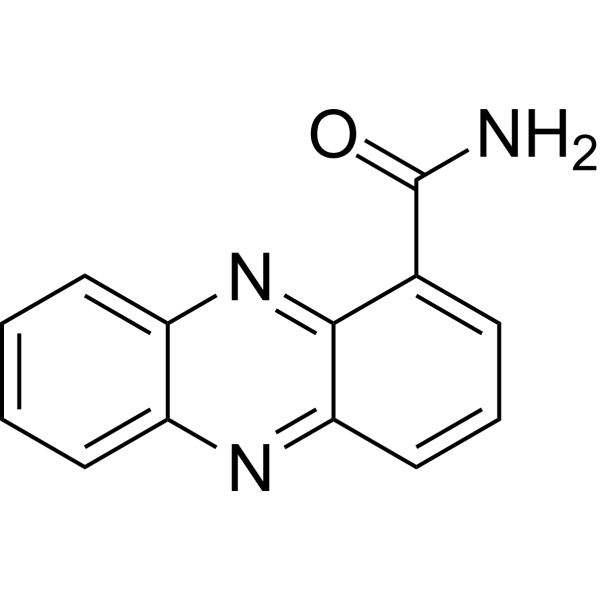
HY-W042191
OxychlororaphineAntifungal Agent -

HY-N7536
VoacangineTRPM8 Antagonist -

HY-113784
ThiocarlideAntibacterial Agent -

HY-119631
Nornidulin -

HY-Z8143
3-Keto fusidic acidFusidic Acid Metabolites -

HY-W344461
N-Butyroyl-D-sphingosineEster Product -

HY-W042191R
Oxychlororaphine (Standard)Antifungal Agent -

HY-N8373
Beauvericin AAntibacterial Agent -

HY-N12232
Carbazomycin DAntimicrobial Agent -
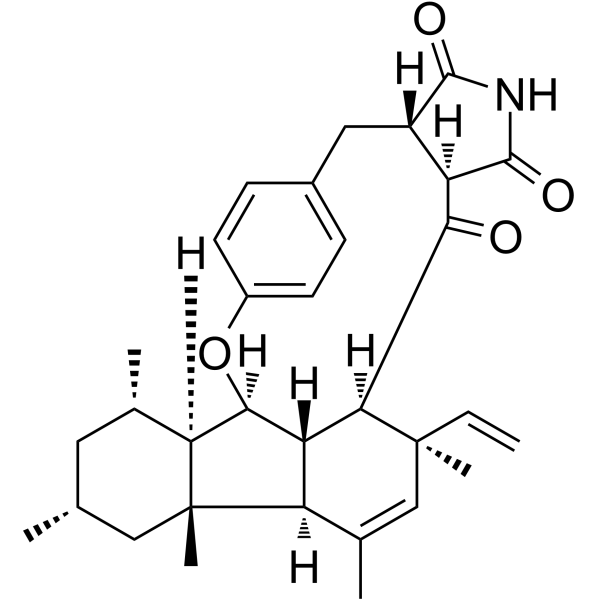
HY-N8498
GKK1032BApoptosis Inducer -
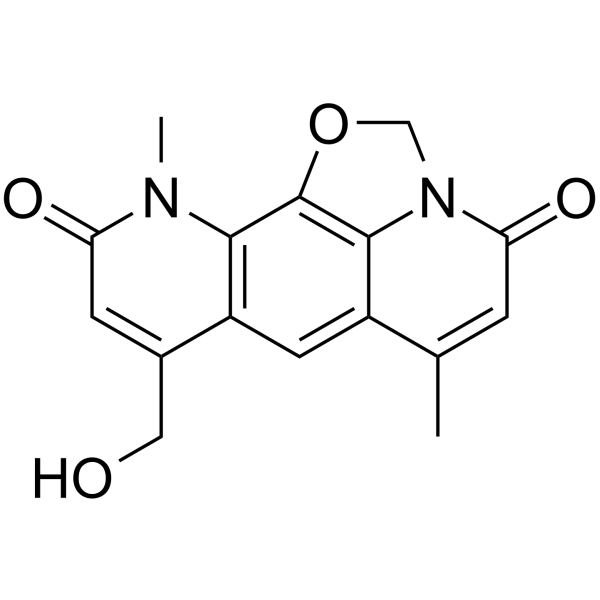
HY-123635
NybomycinAntibiotic -

HY-137936
Terrecyclic AcidSesquiterpene
Publications Citing Use of MedChemExpress (MCE) Nocardamine
MoreAll Endogenous Metabolite Isoforms
More

Biological Activity
Description
IC50 & Target
[1]|
ERK |
SIRT1 |
In Vitro
Nocardamine (NOCA) (0-20 μM; 24 h) shows no obvious cytotoxicity to periodontal ligament stem cells (PDLSCs), human dental pulp stem cells (DPSCs), human gingival fibroblasts (HGFs), and MC3T3-E1 preosteoblasts[1].
Nocardamine (NOCA) (10 μM; 8 h) treatment on Pseudomonas aeruginosa PAO1 induces a log2 4.46-fold elevation in foxA transcription and a log2 6.37-fold increase in FoxA protein expression, with no significant regulatory effects on genes and proteins associated with pyocyanin-, pyocin-, or heme-dependent iron uptake pathways[2].
Nocardamine drives 55Fe uptake at a rate of 335.96 pmol/mL/OD600 nm, and this uptake process fully depends on the outer membrane transporter FoxA. Nocardamine only sustains the growth of Pseudomonas aeruginosa ΔpvdFΔpchA strains in iron-limited CAA medium, which confirms FoxA as the exclusive transporter responsible for iron-nocardamine complex uptake[2].
Nocardamine is produced by Pseudomonas stutzeri (ATCC 17588). Its synthesis is inhibited by excessive Fe3+ (≥300 μg l-1); it exhibits a biphasic response when the Fe3+ concentration is <200 μg l-1, and forms a stable complex with Fe (III)[3].
Nocardamine (1-100 μg/mL; 4 days) induces dose-dependent spindle-shaped morphological changes in BM-N4 insect cells; this activity is completely inhibited when the molar ratio of iron ions to Nocardamine is 2:1, and growth inhibition of P-388 or NB-1 mammalian cells occurs at a concentration of 100 μg/mL[4].
Nocardamine (compound 5) exhibits cytotoxicity against Vero cells with an IC50 of 16.57 µg/mL, while it shows no cytotoxic activity against KB, NCI-H187 or MCF-7 cell lines[5].
Nocardamine (5-10 μM; pre-treatment for 4 hours followed by stimulation with 150 μM H2O2 for 24 hours) alleviates oxidative stress, reduces intracellular ROS accumulation, restores cell viability, restores the activities of SOD and CAT antioxidant enzymes inhibited by H2O2, and upregulates SIRT1 expression in a dose-dependent manner as well as restores p-ERK expression[1].
Nocardamine (5-10 μM; pretreated for 4 hours, followed by stimulation with 150 μM H2O2 for 24 hours, and then osteogenic induction for 7/14 days) rescues the osteogenic differentiation capacity of PDLSCs damaged by oxidative stress, enhances ALP activity, promotes mineralized nodule formation, and upregulates the expression of osteogenic marker genes RUNX2, ALP, COL1A1 and their proteins[1].
Nocardamine (10 μM; pretreated for 4 hours followed by stimulation with 150 μM H2O2 for 24 hours) increases the levels of β-catenin in the cytoplasm and nucleus of oxidative stress-induced PDLSCs[1].
MedChemExpress (MCE) has not independently confirmed the accuracy of these methods. They are for reference only.
-
Cell Line:PDLSCs, human DPSCs, HGFs, MC3T3-E1 pre-osteoblast cells
-
Concentration:0, 1.25, 2.5, 5, 10, 20 μM
-
Incubation Time:24 h
-
Result:Showed no obvious cytotoxicity of Nocardamine to all tested cell lines within this concentration range.
-
Cell Line:PDLSCs
-
Concentration:5, 10 μM
-
Incubation Time:4 h pretreatment followed by 24 h inducer stimulation
-
Result:Upregulated inducer-inhibited SIRT1 mRNA in a dose-dependent manner.
-
Cell Line:PDLSCs
-
Concentration:5, 10 μM
-
Incubation Time:4 h pretreatment, 24 h inducer stimulation, then 7/14 days osteogenic induction
-
Result:Elevated mRNA of oxidative damage-suppressed osteogenic markers RUNX2, ALP, COL1A1.
-
Cell Line:PDLSCs
-
Concentration:10 μM, 10 μM U012 (HY-12031A)
-
Incubation Time:1 h U0126 pre-incubation, 4 h pretreatment, 24 h inducer stimulation, then 7/14 days osteogenic induction
-
Result:Reversed compound-mediated upregulation of RUNX2, ALP, COL1A1 under oxidative damage.
-
Cell Line:PDLSCs
-
Concentration:5 μM, 10 μM
-
Incubation Time:4 h pretreatment followed by 24 h inducer stimulation
-
Result:Reversed inducer-triggered viability drop dose-dependently; 10 μM treatment recovered cell viability close to blank control level.
-
Cell Line:PDLSCs
-
Concentration:5 μM, 10 μM
-
Incubation Time:4 h pretreatment followed by 24 h inducer stimulation
-
Result:Elevated inducer-suppressed SIRT1 protein dose-dependently, exerted no significant change on p-Akt level, restored inducer-reduced p-ERK protein expression.
-
Cell Line:DLSCs
-
Concentration:5 μM, 10 μM
-
Incubation Time:4 h pretreatment, 24 h inducer stimulation, then 7/14 days osteogenic induction
-
Result:Increased protein abundance of oxidative damage-downregulated RUNX2 and COL1A1.
-
Cell Line:Pseudomonas aeruginosa PAO1
-
Concentration:10 μM
-
Incubation Time:8 h
-
Result:Induced a log2 4.46-fold increase in foxA gene transcript levels.
Did not significantly affect transcription of genes encoding transporters for pyoverdine (fpvA), pyochelin (fptA), and heme uptake pathways.
-
Cell Line:Bombyx mori ovarian insect cell line BM-N4
-
Concentration:1 μg/mL, 10 μg/mL, 14 μg/mL, 50 μg/mL, 100 μg/mL; ferric ion at molar ratios of 0.5, 1.0, 2.0 relative to 50 μg/mL nocardamine
-
Incubation Time:4 days
-
Result:Showed no morphological changes and no change in total cell number relative to untreated cells at 1 μg/mL.
Detected spindle-shaped cells with no significant change in total cell number at 10 μg/mL.
Caused more than half the cells to adopt a spindle-like shape with no significant change in total cell number at 14 μg/mL.
Induced spindle-shaped morphology in most cells with no significant change in total cell number at 50 μg/mL; this morphological activity was partially inhibited by a ferric ion:nocardamine molar ratio of 1.0, and fully inhibited at a molar ratio of 2.0.
Induced spindle-shaped morphology in most cells and reduced total cell number to 0.90×10⁵ cells/mL from the untreated control's 1.42×10⁵ cells/mL at 100 μg/mL.


Chemical Information
-
CAS No. 26605-16-3
-
Appearance Solid
-
Molecular Weight 600.70
-
Formula C27H48N6O9
-
Color White to off-white
-
SMILES
O=C(CCC(NCCCCCN(O)C(CCC(NCCCCCN(O)C(CC1)=O)=O)=O)=O)N(O)CCCCCNC1=O
-
Synonyms
Desferrioxamine E; Nocardamin
-
Shipping
Room temperature in continental US; may vary elsewhere.
-
Storage
Powder -20°C 3 years In solvent -80°C 6 months -20°C 1 month


Publications (1)
-
Journal Impact Factor
-
Most Recent


Solvent & Solubility
In Vitro:
DMSO : 25 mg/mL (41.62 mM; Need ultrasonic and warming; Hygroscopic DMSO has a significant impact on the solubility of product, please use newly opened DMSO)
Please refer to the solubility information to select the appropriate solvent. Once prepared, please aliquot and store the solution to prevent product inactivation from repeated freeze-thaw cycles.
Storage method and period of stock solution: -80°C, 6 months; -20°C, 1 month. When stored at -80°C, please use it within 6 months. When stored at -20°C, please use it within 1 month.
Please refer to the solubility information to select the appropriate solvent. Once prepared, please aliquot and store the solution to prevent product inactivation from repeated freeze-thaw cycles.
Storage method and period of stock solution: -80°C, 6 months; -20°C, 1 month. When stored at -80°C, please use it within 6 months. When stored at -20°C, please use it within 1 month.
Concentration (start) × Volume (start) = Concentration (final) × Volume (final)


Purity & Documentation
-
Data Sheet (287 KB)
-
SDS (252 KB)
- English - EN (252 KB)
- Français - FR (252 KB)
- Deutsch - DE (252 KB)
- Norwegian - NO (252 KB)
- Español - ES (252 KB)
- Swedish - SV (252 KB)
- Italian - IT (252 KB)
- Korean - KR (252 KB)
- Portuguese - PT (252 KB)
-
Handling Instructions (2659 KB)
References
[1]. He HP, et al. Nocardamine mitigates cellular dysfunction induced by oxidative stress in periodontal ligament stem cells. Stem cell research & therapy. 2024 Aug 07;15(1):247. [Content Brief]
[4]. Matsubara K, et al. Morphological Changes in Insect BM-N4 Cells Induced by Nocardamine. Bioscience, biotechnology, and biochemistry. 1998;62(10):2049-51. [Content Brief]


Complete Stock Solution Preparation Table
Please refer to the solubility information to select the appropriate solvent. Once prepared, please aliquot and store the solution to prevent product inactivation from repeated freeze-thaw cycles.
Storage method and period of stock solution: -80°C, 6 months; -20°C, 1 month. When stored at -80°C, please use it within 6 months. When stored at -20°C, please use it within 1 month.
| Optional Solvent | Concentration Solvent Mass | 1 mg | 5 mg | 10 mg | 25 mg |
|---|---|---|---|---|---|
| DMSO | 1 mM | 1.6647 mL | 8.3236 mL | 16.6472 mL | 41.6181 mL |
| 5 mM | 0.3329 mL | 1.6647 mL | 3.3294 mL | 8.3236 mL | |
| 10 mM | 0.1665 mL | 0.8324 mL | 1.6647 mL | 4.1618 mL | |
| 15 mM | 0.1110 mL | 0.5549 mL | 1.1098 mL | 2.7745 mL | |
| 20 mM | 0.0832 mL | 0.4162 mL | 0.8324 mL | 2.0809 mL | |
| 25 mM | 0.0666 mL | 0.3329 mL | 0.6659 mL | 1.6647 mL | |
| 30 mM | 0.0555 mL | 0.2775 mL | 0.5549 mL | 1.3873 mL | |
| 40 mM | 0.0416 mL | 0.2081 mL | 0.4162 mL | 1.0405 mL |


Nocardamine Related Classifications
HY-124452 Related Classifications
 Powered by Bioz