27 Results for "

kinome

" in MedChemExpress (MCE) Product Catalog:
Products (27)

27 Results for "kinome" in MCE Product Catalog:

35
35 Publications Verification
Cat. No.: HY-117287
CAS No.: 1609392-27-9
Purity:  99.87%
Synonyms: BMS-986165
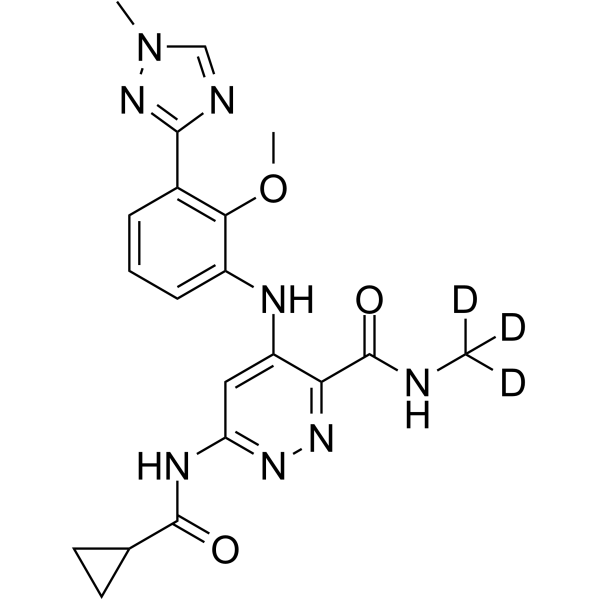
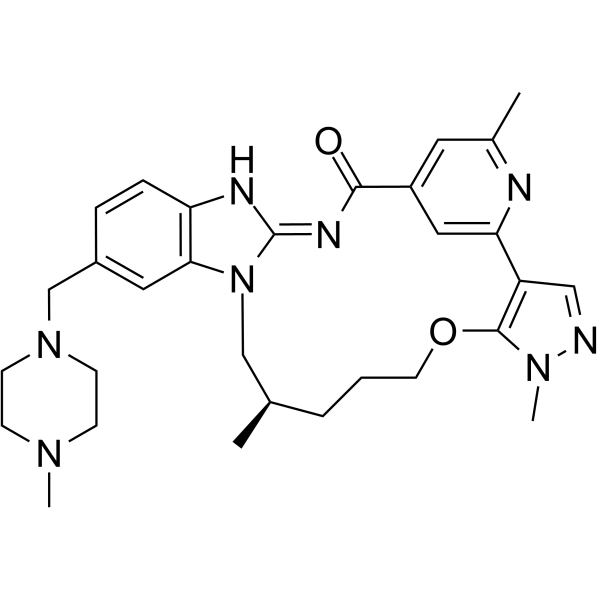
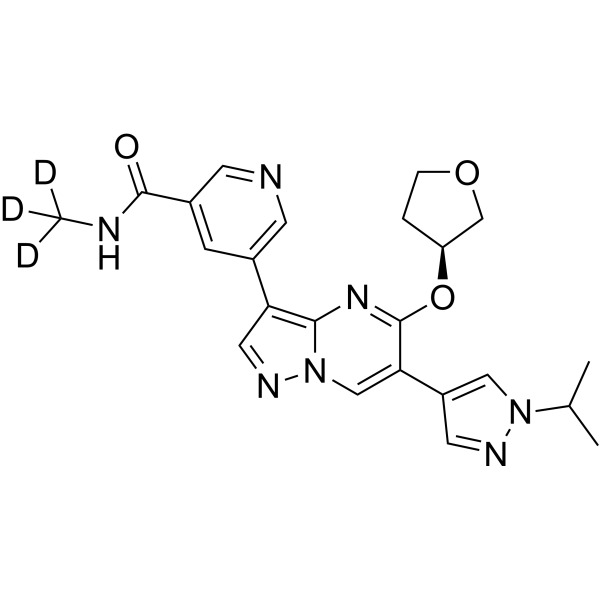
Deucravacitinib (BMS-986165) is an orally active allosteric inhibitor of tyrosine kinase 2 (TYK2), with an IC50 of 0.2 nM and a Ki of 0.02 nM against the JH2 domain of TYK2, and it exhibits selectivity over other JAK subtypes and most of the kinome. Deucravacitinib blocks IL-23, IL-12, p-STAT1/3 and Type I IFN signaling, and inhibits Th17/Th1-mediated psoriasis inflammation . Deucravacitinib can be used in research related to moderate-to-severe plaque psoriasis, inflammatory bowel disease and systemic lupus erythematosus .
loading...
    loading...
3
3 Cited Publications
Cat. No.: HY-15985
CAS No.: 1439934-41-4
Target:  

Akt

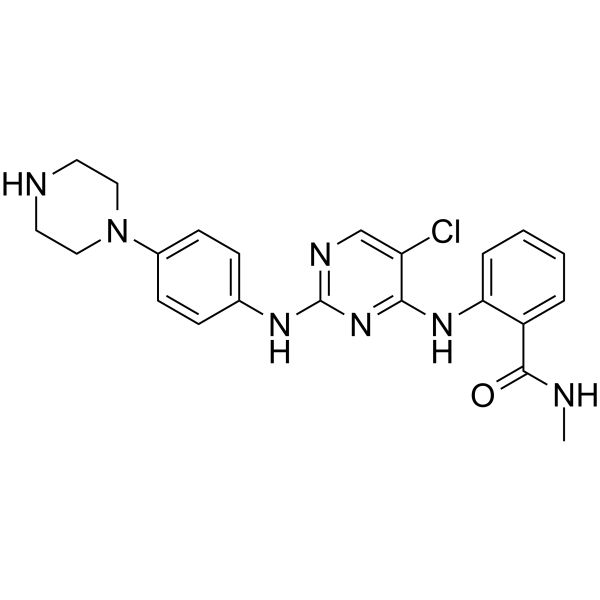
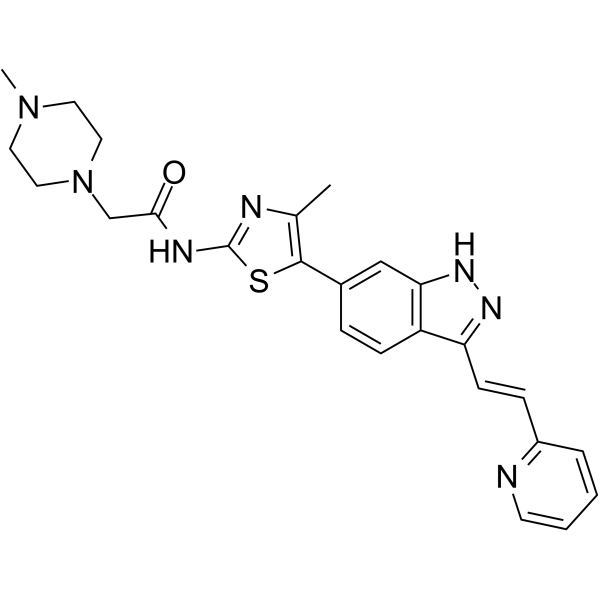
CTX-0294885 is a broad spectrum kinase inhibitor that can capture 235 kinases from MDA-MB-231 cells, and can capture all members of the AKT family. CTX-0294885 is a powerful reagent for analysis of kinome signaling networks that can be used for the research of diseases like inflammation, diabetes, and cancer .
loading...
    loading...
3
3 Cited Publications
Cat. No.: HY-15985A
CAS No.: 2319590-02-6
Target:  

Akt

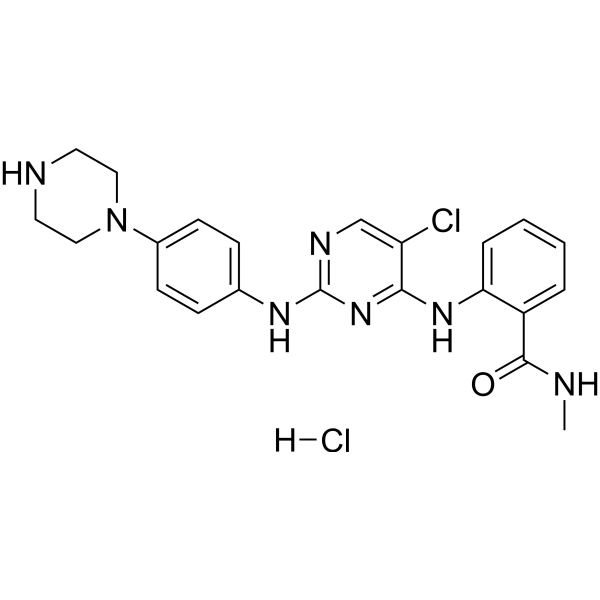
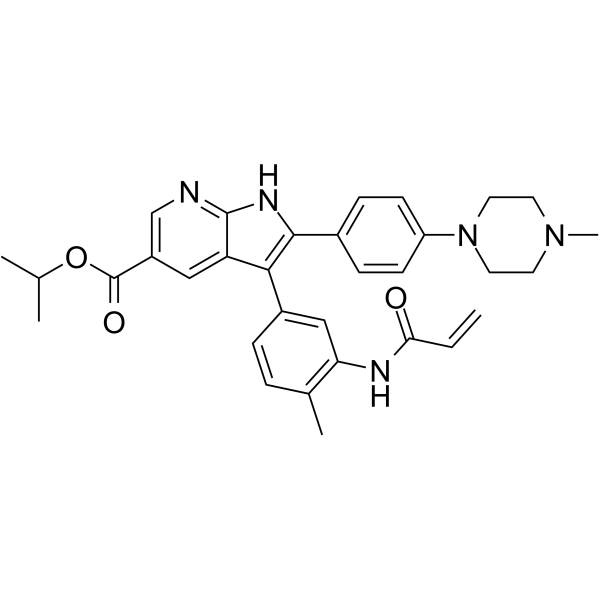
CTX-0294885 hydrochloride is a broad spectrum kinase inhibitor that can capture 235 kinases from MDA-MB-231 cells, and can capture all members of the AKT family. CTX-0294885 hydrochloride is a powerful reagent for analysis of kinome signaling networks that can be used for the research of diseases like inflammation, diabetes, and cancer .
loading...
    loading...
1
1 Cited Publications
Cat. No.: HY-122630
CAS No.: 2244678-29-1
Purity:  98.36%
Target:  

LIM Kinase (LIMK)

Research Areas:  

Cancer

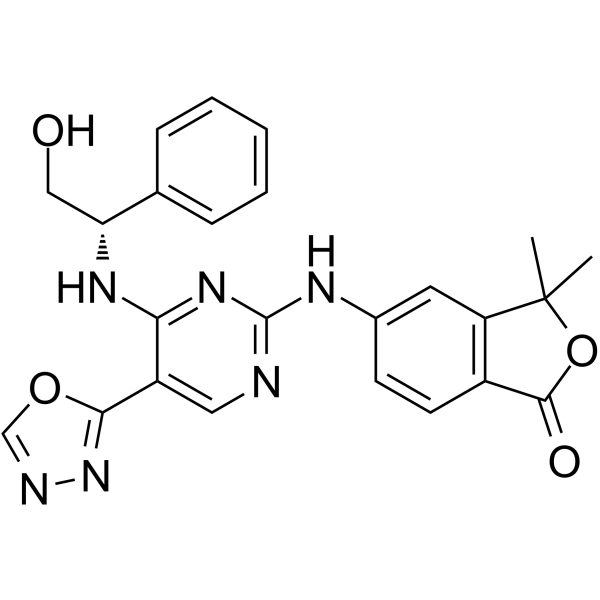
TH-257 is a potent inhibitor of LIMK1 and LIMK2 with IC50 values of 84 nM and 39 nM for LIMK1 and LIMK2, respectively, and it can be used as a chemical probe for LIMK1 and LIMK2. TH-257 is an allosteric inhibitor targeting a binding pocket induced by an αC and DFG-out conformation. TH257 is exquisitely selective and no significant activity against the wider kinome has been observed in the KINOMEscan assay at 1 μM .
loading...
    loading...
Cat. No.: HY-129550
CAS No.: 2664214-60-0
Purity:  99.28%
Target:  

EGFR

Research Areas:  

Cancer

BI-4020 is a fourth-generation, orally active, and non-covalent EGFR tyrosine kinase inhibitor. BI-4020 inhibits not only the triple mutant EGFR del19 T790M C797S variant (IC50=0.2 nM in BaF3 cell lines) but also the double mutant EGFR del19 T790M and primary mutant EGFR del19 (IC50=1 nM). BI-4020 also shows activity against EGFR wt (IC50=190 nM). BI-4020 shows high kinome selectivity and good DMPK properties .
loading...
    loading...
Cat. No.: HY-162426
CAS No.: 3069333-33-8
Target:  

TLK

Research Areas:  

Cancer

UNC-CA2-103 is a TLK2 inhibitor with a human IC50 of 18 nM, and it exhibits high selectivity over TLK1 and the vast majority of other kinases. UNC-CA2-103 can be used in research related to breast cancer, glioblastoma and gastric cancer .
loading...
    loading...
Cat. No.: HY-12443
CAS No.: 1293395-67-1
Purity:  99.56%
Target:  

Casein Kinase

Research Areas:  

Neurological Disease

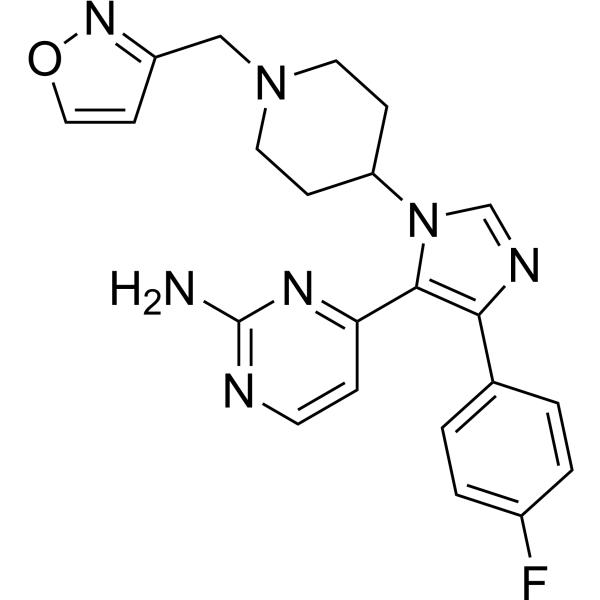
PF-5006739 is a potent and selective inhibitor of CK1δ/ε with IC50s of 3.9 nM and 17.0 nM, respectively. PF-5006739 is a potential therapeutic agent for a range of psychiatric disorders with low nanomolar in vitro potency for CK1δ/ε and high kinome selectivity. PF-5006739 attenuats opioid agent-seeking behavior in a rodent operant reinstatement model in animals in a dose-dependent manner . PF-5006739 improves glucose tolerance in both diet-induced obesity (DIO) and genetic (ob/ob) mice models of obesity .
loading...
    loading...
Cat. No.: HY-172429
CAS No.: 2489185-38-6
Synonyms: ORIC-114
Target:  

EGFR

Research Areas:  

Neurological Disease Cancer

Enozertinib (ORIC-114) is an orally active, CNS-penetrant, highly selective and irreversible dual EGFR/HER2 inhibitor that exhibits potent and targeted inhibition of exon 20 insertion mutations. Enozertinib exhibits high kinome selectivity for the EGFR family of receptors to reduce off-target kinase liabilities. Enozertinib induces tumor regression and demonstrates antitumor activity in central nervous system and non-small cell lung cancer (NSCLC) tumor models. Enozertinib can be used for the research of solid tumors and NSCLC .
loading...
    loading...
Cat. No.: HY-135805
CAS No.: 2060610-53-7
Target:  

EGFR

Research Areas:  

Cancer

JBJ-04-125-02 is a potent, mutant-selective, allosteric and orally active EGFR inhibitor with an IC50 of 0.26 nM for EGFR L858R/T790M. JBJ-04-125-02 can inhibit cancer cell proliferation and EGFR L858R/T790M/C797S signaling. JBJ-04-125-02 has anti-tumor activities .
loading...
    loading...
Cat. No.: HY-138742
CAS No.: 2320462-65-3
Purity:  99.33%
Target:  

MAP4K

Research Areas:  

Cancer

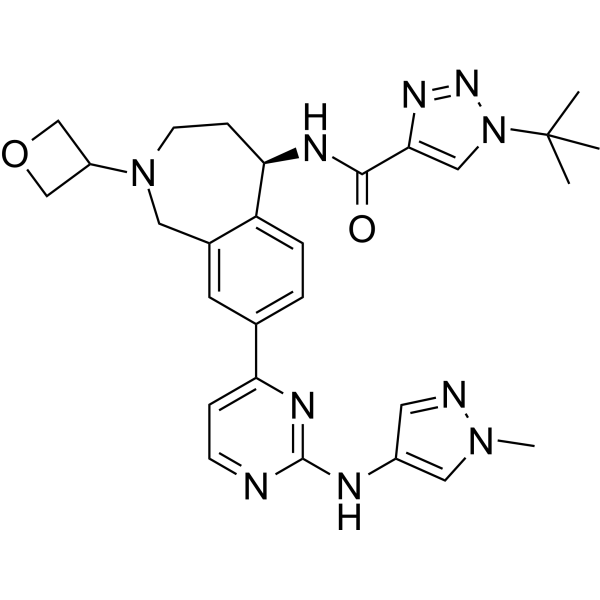
HPK1-IN-7 is a potent, orally active HPK1 (hematopoietic progenitor kinase 1, MAP4K1) inhibitor (IC50=2.6 nM) with excellent family and kinome selectivity. HPK1-IN-7 shows selectivity against IRAK4 (59 nM) and GLK (140 nM). HPK1-IN-7 shows robust efficacy against MC38 syngeneic tumor model in combination with anti-PD1 .
loading...
    loading...
Cat. No.: HY-172429A
Synonyms: ORIC-114 hemihydrate
Target:  

EGFR

Research Areas:  

Neurological Disease Cancer

Enozertinib (ORIC-114) hemihydrate is an orally active, CNS-penetrant, highly selective and irreversible dual EGFR/HER2 inhibitor that exhibits potent and targeted inhibition of exon 20 insertion mutations. Enozertinib hemihydrate exhibits high kinome selectivity for the EGFR family of receptors to reduce off-target kinase liabilities. Enozertinib hemihydrate induces tumor regression and demonstrates antitumor activity in central nervous system and non-small cell lung cancer (NSCLC) tumor models. Enozertinib hemihydrate can be used for the research of solid tumors and NSCLC .
loading...
    loading...
Cat. No.: HY-15268
CAS No.: 1092787-12-6
Research Areas:  

Cancer

PP487 is a selective dual inhibitor of Tyrosine kinase/PI3-K, with IC50 values of 0.017 μM, 0.072 μM, 0.004 μM, 0.01 μM, 0.55 μM, 0.22 μM, and < 0.01 μM against DNA-PK, mTOR, Hck, Src, EGFR, EphB4, and PDGFR, respectively. PP487 can be used in cancer research .
loading...
    loading...
Cat. No.: HY-173191
CAS No.: 2760404-50-8
SK-124 is an orally active salt-inducible kinase (SIK) inhibitor with an IC50 of 230 nM against SIK1, 4.1 nM against SIK2, and 21 nM against SIK3, exhibiting excellent kinome selectivity . SK-124 blocks SIK-mediated CRTC2 phosphorylation, promotes CRTC2 nuclear translocation, and regulates vitamin D metabolism by upregulating renal Cyp27b1 and downregulating Cyp24a1 . SK-124 upregulates the expression of bone-related genes, increases serum Ca 2+, 1,25-vitamin D and intact FGF23 levels, and suppresses endogenous PTH levels . SK-124 can be used in studies related to osteoporosis, male osteoporosis, and chronic kidney disease-mineral and bone disorder .
loading...
    loading...
Cat. No.: HY-151903S
CAS No.: 2640352-86-7
FGFR2/3-IN-1 is a potent and selective FGFR2 and FGFR3 (FGFR) inhibitor with IC50s of 1 nM and 0.5 nM, respectively. FGFR2/3-IN-1 displays >40-fold selectivity over FGFR1/FGFR4 and other kinome. FGFR2/3-IN-1 also inhibits FGFR3 V555L and V555M mutants with IC50s of 2.7 nM and 6.1 nM, respectively .
loading...
    loading...
Cat. No.: HY-146697
CAS No.: 2416844-79-4
Research Areas:  

Cancer

IHMT-TRK-284 (Compound 34) is a potent, orally active type II TRK kinase inhibitor with IC50 values of 10.5, 0.7, and 2.6 nM to TRKA, B, and C respectively. IHMT-TRK-284 displays great selectivity profile in the kinome and good in vivo antitumor efficacies .
loading...
    loading...
Cat. No.: HY-117287A
CAS No.: 1609392-28-0
Synonyms: BMS-986165 (hydrochloride)
Research Areas:  

Inflammation/Immunology

Deucravacitinib (BMS-986165) hydrochloride is an orally active allosteric inhibitor of tyrosine kinase 2 (TYK2), with an IC50 of 0.2 nM and a Ki of 0.02 nM against the JH2 domain of TYK2, and it exhibits selectivity over other JAK subtypes and most of the kinome. Deucravacitinib hydrochloride blocks IL-23, IL-12, p-STAT1/3 and Type I IFN signaling, and inhibits Th17/Th1-mediated psoriasis inflammation . Deucravacitinib hydrochloride can be used in research related to moderate-to-severe plaque psoriasis, inflammatory bowel disease and systemic lupus erythematosus .
loading...
    loading...
Cat. No.: HY-172544
CAS No.: 2857982-34-2
Target:  

Tau Protein

Research Areas:  

Neurological Disease

TTBK1/2-IN-3 (Compound 10) is a potent inhibitor of tau tubulin kinase 1 (TTBK1) and TTBK2, with IC50 values of 579 nM and 258 nM, respectively. TTBK1/2-IN-3 inhibits the phosphorylation of TDP-43. TTBK1/2-IN-3 reduces the expression of primary cilia on the surface of iPSCs .
loading...
    loading...
Cat. No.: HY-146262
CAS No.: 2411874-83-2
Target:  

EGFR

Research Areas:  

Cancer

LDC0496 is a potent and selective EGFR inhibitor. LDC0496 possesses intense inhibitory potency toward EGFR and Her2 exon20 insertion mutations, as well as selectivity over wild type EGFR and within the kinome .
loading...
    loading...
Cat. No.: HY-182043
CAS No.: 2999638-62-7
Target:  

c-Kit PDGFR

Research Areas:  

Cancer

BLU-654 is an orally active antineoplastic agent and KIT inhibitor. BLU-654 is a highly selective inhibitor targeting wild-type KIT, PDGFRβ, and KIT V654A over most other kinases in the kinome. BLU-654 exerts sustained antineoplastic activity in KIT V654A cell-derived xenograft mouse models. BLU-654 can be used in research related to Imatinib (HY-15463)-resistant gastrointestinal stromal tumors .
loading...
    loading...
Cat. No.: HY-183584
ARN25699 is a kinase inhibitor with an IC50 of 5.5 nM against GSK-3β, 2.2 nM against FYN-α, and 242.3 nM against DYRK1A, and it exhibits oral bioavailability. ARN25699 reduces hyperphosphorylation of tau protein and promotes microtubule bundle formation. ARN25699 has a broader kinome inhibitory profile and targets kinases associated with the pathogenic mechanisms linked to Alzheimer's disease. ARN25699 can be used in the research of Alzheimer's disease and related tauopathies .
loading...
    loading...

