1. Search Result
Search Result
Results for "

mercury

" in MedChemExpress (MCE) Product Catalog:

16

Inhibitors & Agonists

3

Fluorescent Dyes

2

Biochemical Assay Reagents

1

Peptides

4

Natural
Products

1

Isotope-Labeled Compounds

Cat. No. Nombre del producto Target Áreas de investigación Chemical Structure
  • HY-B1285
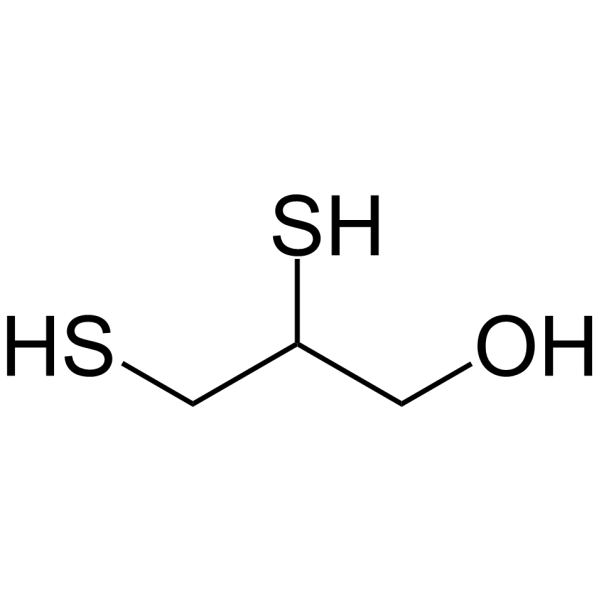
    Dimercaprol
    1 Publications Verification

    2,3-Dimercapto-1-propanol; Dithioglycerol

    HIV Infection
    Dimercaprol (2,3-Dimercapto-1-propanol) is an anti-heavy metal-poisoning agent, which exhibits anti-HIV activity. Dimercaprol can be used for the study for arsenic, mercury, gold, lead, antimony, and other toxic metal poisoning .
    Dimercaprol
  • HY-B1306
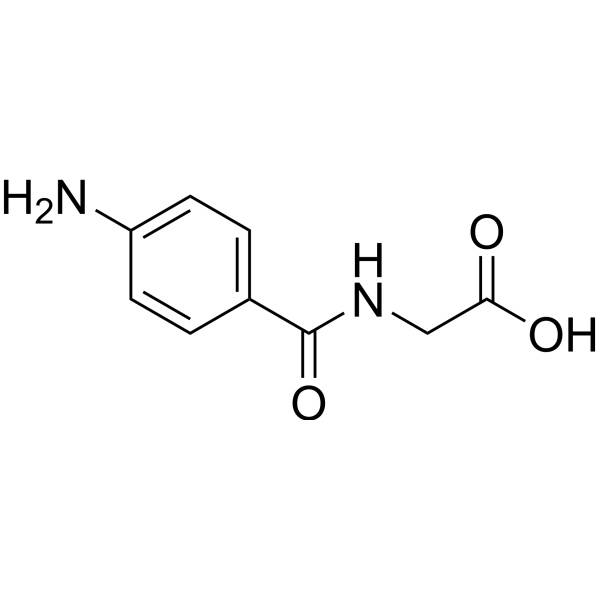
    4-Aminohippuric acid
    4 Publications Verification

    p-Aminohippuric acid

    Others Neurological Disease Metabolic Disease
    4-Aminohippuric acid (p-Aminohippuric acid) is a coordination ligand for metal ions (such as Cu 2+, Fe 3+, Hg 2+) and a functionalization reagent for nanomaterials. 4-Aminohippuric acid can coordinate with metal ions or modify the surface of materials such as carbon nanotubes and gold nanoparticles through amino and carboxyl groups. 4-Aminohippuric acid can form stable complexes with metal ions or participate in the synthesis of nanomaterials as a reducing agent/stabilizer, enriching metal ions or giving nanoparticles peroxidase-mimicking activity. 4-Aminohippuric acid can be used to construct highly sensitive electrochemical sensors or colorimetric sensors to detect and quantitatively analyze heavy metal ions such as copper, iron, and mercury in environmental water samples and biological samples. 4-Aminohippuric acid may also be a biomarker for attention-deficit/hyperactivity disorder (ADHD) .
    4-Aminohippuric acid
  • HY-B0961

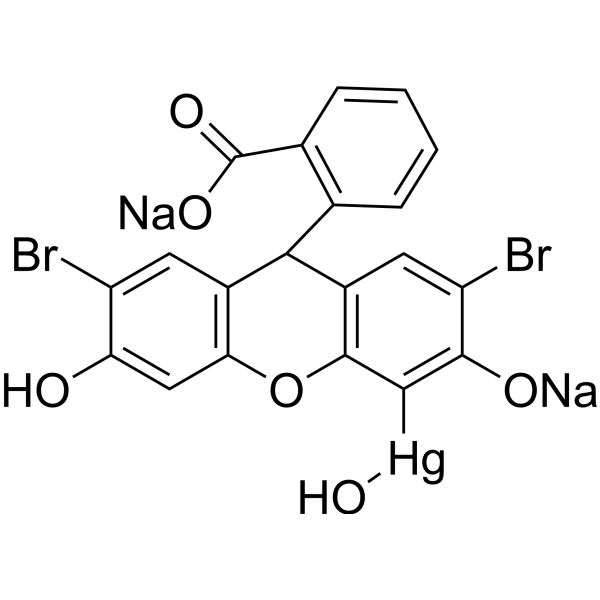
    mercury dibromofluorescein disodium salt; ZP1

    Flavivirus Proteasome Others
    Merbromin is a mixed inhibitor of the 3-chymotrypsin-like protease (3CLpro) of SARS-CoV-2, with an IC50 of 2.7 μM. Merbromin effectively inhibits the replication of the Zika virus (ZIKV) and shows anti-ZIKV activity by inhibiting ZIKVpro. Merbromin can also be used as a topical disinfectant for cuts and scrapes, and it serves as a biological dye .
    Merbromin
  • HY-123645
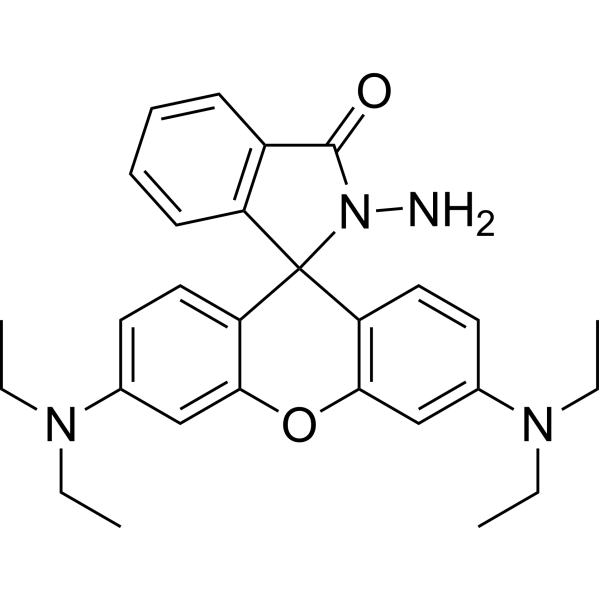
    Rhodamine B hydrazide
    1 Publications Verification

    Fluorescent Dye Others
    Rhodamine B hydrazide is a fluorescent derivative based on rhodamine B, containing the spirocyclic structure of Rhodamine B (HY-Y0016), which can be used to detect copper ions (Cu 2+), mercury ions, peroxynitrite, hydroxyl radicals and nitric oxide (NO) .
    Excitation/emission wavelength:
    Conventional detection: 510/578 nm.
    Sulfite detection: 554 nm absorption, 574 nm emission (due to the formation of Rhodamine B fluorescent product).
    Rhodamine B hydrazide
  • HY-W110793

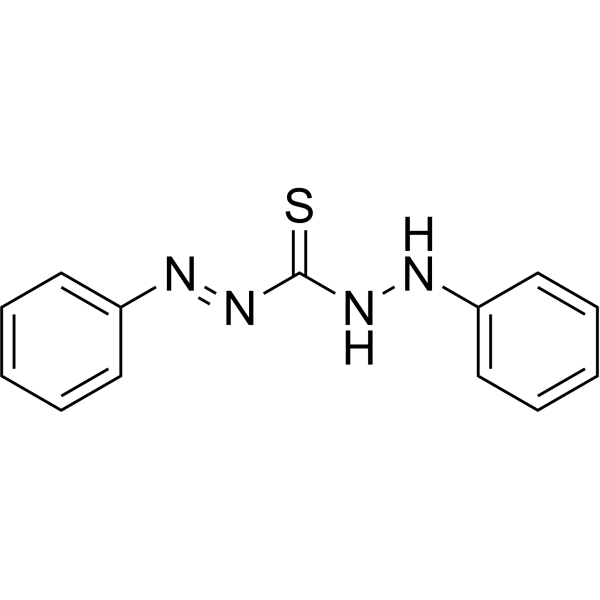
    Diphenylthiocarbazone

    Biochemical Assay Reagents Metabolic Disease
    Dithizone can be toxic to pancreatic islet cells and cause experimental diabetes. Dithizone can be used for in vitro in vivo staining of transplanted islets and cytoplasmic granules of bone marrow cells. Dithizone can be used as a chelating agent and colorimetric indicator for the detection and extraction of various heavy metals, including lead and mercury, in analytical and biochemical applications. Dithizone forms stable colored complexes with metal ions and can be quantitatively analyzed by methods such as spectrophotometry .
    Dithizone
  • HY-D0485

    Fluorescent Dye Others
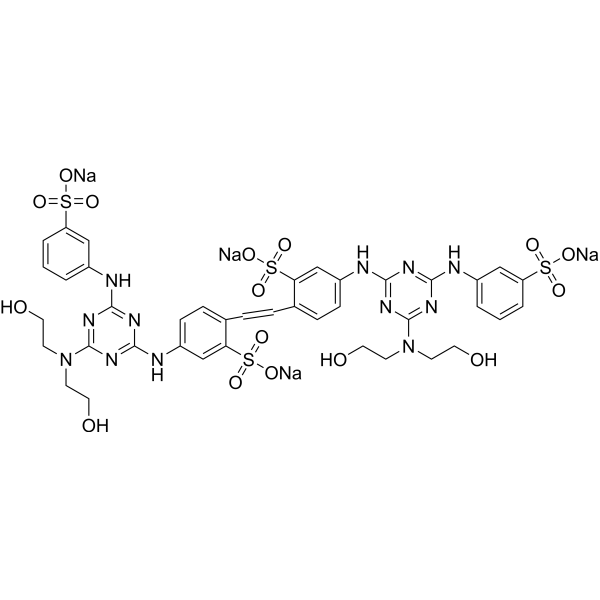
    Fluorescent brightener 24 is a stilbene-type fluorescent brightener and fading regulator .
    Fluorescent brightener 24
  • HY-W392413

    Drug Derivative Reactive Oxygen Species (ROS) Cardiovascular Disease Neurological Disease Metabolic Disease Inflammation/Immunology
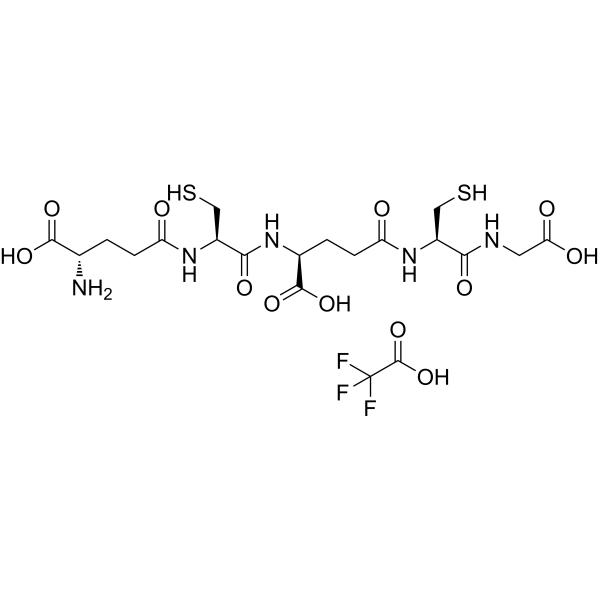
    Glutathione monoethyl ester is a glutathione derivative that can be transported into cells and hydrolyzed into glutathione. Glutathione monoethyl ester downregulates the gene expression of TEN1 and CTC1 while upregulating TERT expression. Glutathione monoethyl ester enhances telomerase activity, promotes proliferation and differentiation in aged bone marrow stromal cells, while elevating glutathione levels and reducing oxidative stress, protein aggregation and cell death in motor neuronal cells. Glutathione monoethyl ester confers broad multi-organ protection against cerebral ischemia, renal injury, liver damage, and pancreatitis. Glutathione monoethyl ester can be used for the research of amyotrophic lateral sclerosis, stroke, acute renal failure, liver injury, and acute pancreatitis .
    Glutathione monoethyl ester
  • HY-B1306R

    p-Aminohippuric acid (Standard)

    Reference Standards Biochemical Assay Reagents Neurological Disease Metabolic Disease
    4-Aminohippuric acid (p-Aminohippuric acid) (Standard) is the analytical standard of 4-Aminohippuric acid (HY-B1306). This product is intended for research and analytical applications. 4-Aminohippuric acid (p-Aminohippuric acid) is a coordination ligand for metal ions (such as Cu 2+, Fe 3+, Hg 2+) and a functionalization reagent for nanomaterials. 4-Aminohippuric acid can coordinate with metal ions or modify the surface of materials such as carbon nanotubes and gold nanoparticles through amino and carboxyl groups. 4-Aminohippuric acid can form stable complexes with metal ions or participate in the synthesis of nanomaterials as a reducing agent/stabilizer, enriching metal ions or giving nanoparticles peroxidase-mimicking activity. 4-Aminohippuric acid can be used to construct highly sensitive electrochemical sensors or colorimetric sensors to detect and quantitatively analyze heavy metal ions such as copper, iron, and mercury in environmental water samples and biological samples. 4-Aminohippuric acid may also be a biomarker for attention-deficit/hyperactivity disorder (ADHD) .
    4-Aminohippuric acid (Standard)
  • HY-W127671

    Biochemical Assay Reagents Others
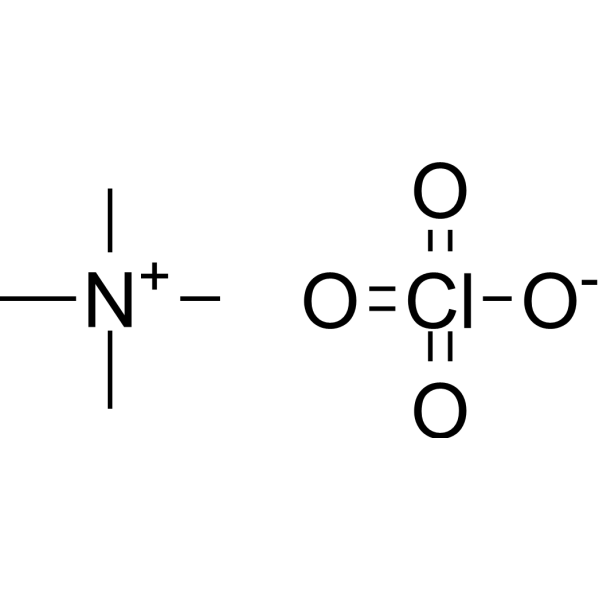
    Tetramethylammonium perchlorate is used as an intermediate in organic and chemical synthesis. It is used as mobile phase in HPLC analysis and quantification of olanzapine, clozapine and N-desmethylclozapine. It acts as a supporting electrolyte in the electrochemical reduction of 1-bromodecane, 1-iodododecane, 2-iodooctane, and 2-bromooctane on a mercury cathode.
    Tetramethylammonium perchlorate
  • HY-B1306S

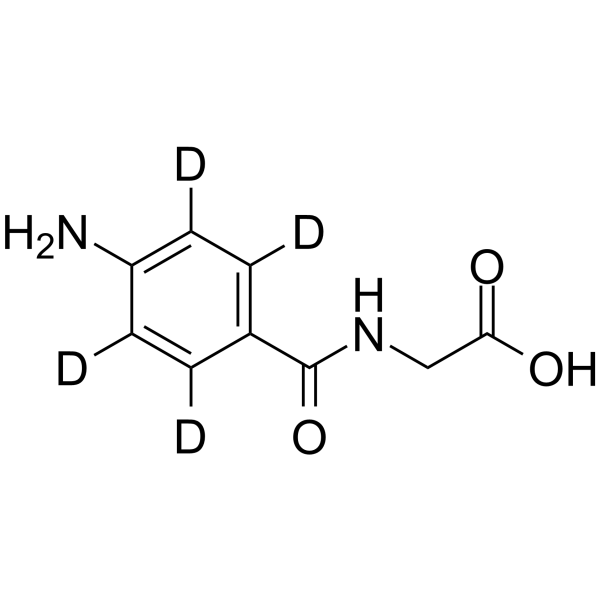
    p-Aminohippuric acid-d4

    Biochemical Assay Reagents Neurological Disease Metabolic Disease
    4-Aminohippuric acid-d4 (p-Aminohippuric acid-d4) is the deuterium labeled 4-Aminohippuric acid (HY-B1306). 4-Aminohippuric acid (p-Aminohippuric acid) is a coordination ligand for metal ions (such as Cu 2+, Fe 3+, Hg 2+) and a functionalization reagent for nanomaterials. 4-Aminohippuric acid can coordinate with metal ions or modify the surface of materials such as carbon nanotubes and gold nanoparticles through amino and carboxyl groups. 4-Aminohippuric acid can form stable complexes with metal ions or participate in the synthesis of nanomaterials as a reducing agent/stabilizer, enriching metal ions or giving nanoparticles peroxidase-mimicking activity. 4-Aminohippuric acid can be used to construct highly sensitive electrochemical sensors or colorimetric sensors to detect and quantitatively analyze heavy metal ions such as copper, iron, and mercury in environmental water samples and biological samples. 4-Aminohippuric acid may also be a biomarker for attention-deficit/hyperactivity disorder (ADHD) .
    4-Aminohippuric acid-d4
  • HY-B1285R

    2,3-Dimercapto-1-propanol (Standard); Dithioglycerol (Standard)

    Reference Standards HIV Infection
    Dimercaprol (Standard) is the analytical standard of Dimercaprol. This product is intended for research and analytical applications. Dimercaprol (2,3-Dimercapto-1-propanol) is an anti-heavy metal-poisoning agent, which exhibits anti-HIV activity. Dimercaprol can be used for the study for arsenic, mercury, gold, lead, antimony, and other toxic metal poisoning .
    Dimercaprol (Standard)
  • HY-N12008

    OAT Metabolic Disease
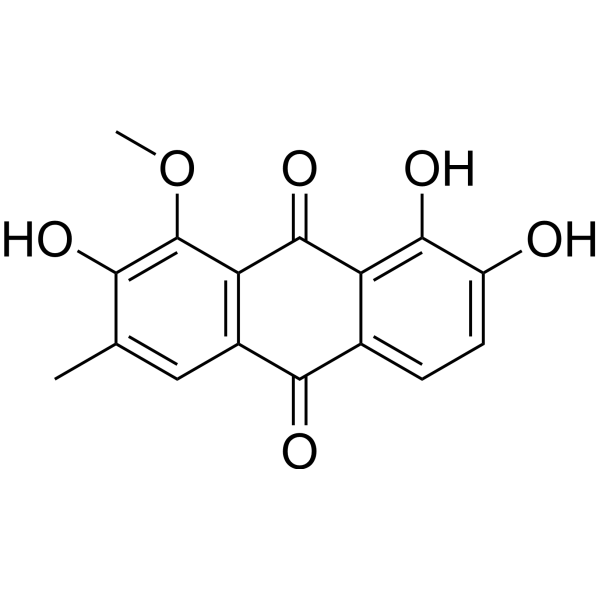
    OAT1/3-IN-2 (compound 8) is a dual inhibitor of OAT1 and OAT3. OAT1/3-IN-2 can reverse the toxicity of Cys-Hg on HEK-OAT1 cells (10 μM) and has a potential protective effect on the kidneys. OAT1/3-IN-2 can be used to study mercury-induced kidney damage .
    OAT1/3-IN-2
  • HY-N12007

    OAT Metabolic Disease
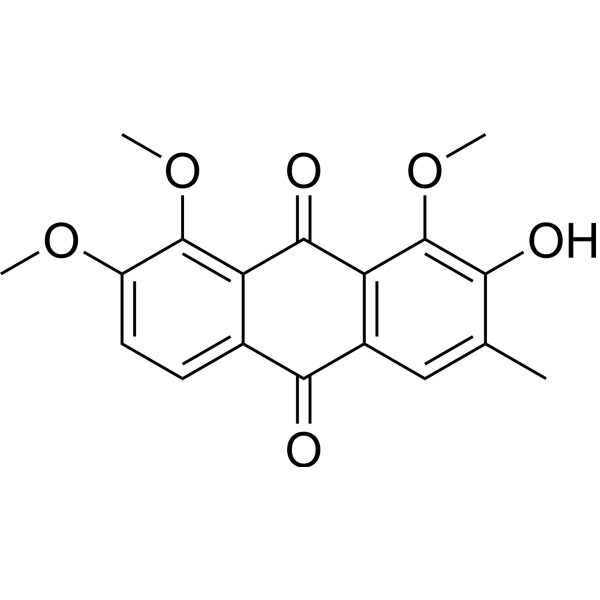
    OAT1/3-IN-1 (compound 7) is a dual inhibitor of OAT1 and OAT3. OAT1/3-IN-1 can reverse the toxicity of Cys-Hg on HEK-OAT1 cells (10 μM) and has a potential protective effect on the kidneys. OAT1/3-IN-1 can be used to study mercury-induced kidney damage .
    OAT1/3-IN-1
  • HY-181434

    Drug Derivative Endocrinology
    Spiroxasone is an orallyactive thioacetyl-containing steroid. Spiroxasone can prevent fatal renal damage and nephrocalcinosis associated with acute mercuric chloride intoxication. Spiroxasone can be used for the research of acute HgCl2 poisoning .
    Spiroxasone
  • HY-D3315

    Fluorescent Dye Others
    Rhodamine B carbohydrazide is a fluorescent derivative based on Rhodamine B (HY-Y0016) that contains the spirocyclic structure of Rhodamine B; it can be used for the detection of copper ions (Cu 2+), mercury ions, peroxynitrite, hydroxyl radicals, and nitric oxide (NO).
    Rhodamine B carbohydrazide
  • HY-W414395

    Herbicide Others
    Cyclosulfamuron is a sulfonylurea herbicide .
    Cyclosulfamuron

Consulta en línea

Your information is safe with us. * Required Fields.

Saludo


Country or Region *

Nombre del solicitante *


Nombre de la Organizaciòn *

Department *


Direcciòn del E-mail *


Nombre del producto *

Cat. No.


Requested quantity *

Número de teléfono *


Observaciones

Consulta en línea

Inquiry Information

Nombre del producto:
Cat. No.:
Cantidad:
MCE Japan Authorized Agent:

