

1. Search Result
Search Result
Pathways Recommended: Stem Cell/Wnt Cell Cycle/DNA Damage
Results for "

monocyte-derived dendritic cells

" in MedChemExpress (MCE) Product Catalog:

13

Inhibitors & Agonists

2

Peptides

4

Inhibitory Antibodies

1

Natural
Products

1

Isotope-Labeled Compounds

Cat. No. Product Name Target Research Areas Chemical Structure
  • HY-P1846
    Jagged-1 (188-204)
    15+ Cited Publications

    Notch Cancer
    Jagged-1 (188-204) is a fragment of the Jagged-1 (JAG-1) protein with Notch agonist activity. JAG-1 is a Notch ligand highly expressed in cultured and primary multiple myeloma (MM) cells. JAG-1 induces maturation of monocyte-derived human dendritic cells .
    Jagged-1 (188-204)
  • HY-P1846A
    Jagged-1 (188-204) TFA
    15+ Cited Publications

    Notch Cancer
    Jagged-1 (188-204) TFA is a fragment of the Jagged-1 (JAG-1) protein with Notch agonist activity. JAG-1 is a Notch ligand highly expressed in cultured and primary multiple myeloma (MM) cells. JAG-1 induces maturation of monocyte-derived human dendritic cells .
    Jagged-1 (188-204) TFA
  • HY-N0699
    Daphnoretin
    3 Publications Verification

    Dephnoretin; Thymelol

    PKC Influenza Virus NOD-like Receptor (NLR) Apoptosis HBV JNK PI3K Akt CDK Caspase Bcl-2 Family Infection Inflammation/Immunology Cancer
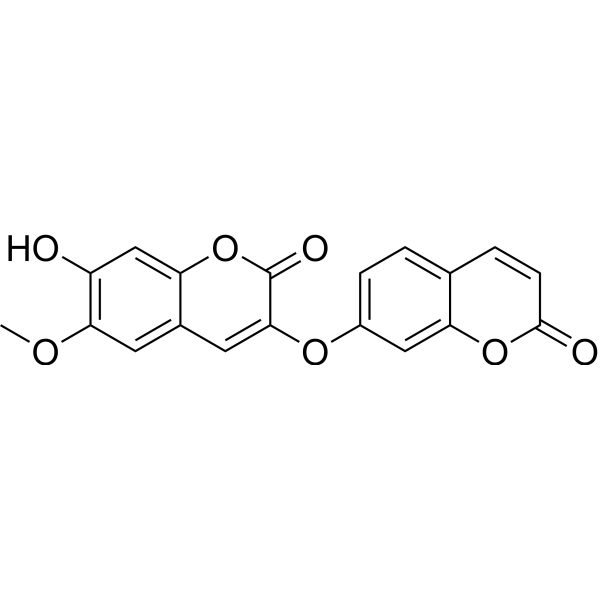
    Daphnoretin (Dephnoretin; Thymelol) is a protein kinase C (PKC) activator that inhibits the expression of hepatitis B virus (HBV) surface antigen (HBsAg) and exhibits antiviral activity. Daphnoretin exerts its antitumor effects by inhibiting the activation of the PI3K/AKT signaling pathway and triggers the mitochondrial apoptosis pathway. Daphnoretin alleviates chondrocyte apoptosis and inflammatory responses by inhibiting endoplasmic reticulum stress and activation of the NLRP3 inflammasome. Daphnoretin regulates the differentiation and maturation of dendritic cells, inhibits their immunostimulatory function by downregulating the phosphorylation level of JNK, and thus exerts a protective effect in skin graft rejection .
    Daphnoretin
  • HY-165613

    Dipalmitoyl-S-glyceryl-cysteine; S-[2,3-Bis(palmitoyloxy)propyl]cysteine

    Toll-like Receptor (TLR) Influenza Virus NF-κB Infection Inflammation/Immunology
    Pam2Cys (Dipalmitoyl-S-glyceryl-cysteine; S-[2,3-Bis(palmitoyloxy)propyl]cysteine) is a TLR2 agonist and immunostimulant. Pam2Cys binds to TLR2 to activate dendritic cells and trigger the TLR2-dependent NF-κB signaling pathway. Pam2Cys also induces dendritic cell maturation by upregulating the expression of cell surface MHC II molecules. Pam2Cys activates innate immune signaling pathways, drives pro-inflammatory and antimicrobial responses, enhances the expression of macrophage activation markers, increases phagocytic activity, induces the release of IL-12 and pro-inflammatory cytokines, and polarizes macrophages into a pro-inflammatory, antimicrobial phenotype without interfering with IL-10-induced macrophage polarization. Pam2Cys also serves as the lipid moiety in synthetic lipopeptide vaccines and possesses self-adjuvant properties. Pam2Cys enhances the immunogenicity of conjugated peptide segments and induces cellular and humoral immune responses. However, it does not activate CD4 T cells in mouse splenocyte cultures when used alone. Pam2Cys activates pulmonary TLR2 signaling pathways, triggers innate immune responses, recruits neutrophils and macrophages, induces the secretion of various cytokines, alleviates symptoms and damages associated with influenza A virus infection in mice without impairing adaptive immunity. Pam2Cys can be used in studies related to tuberculosis and influenza A virus infection .
    Pam2Cys
  • HY-122822

    PROTACs Histone Acetyltransferase Interleukin Related CXCR TNF Receptor CD28 Inflammation/Immunology Cancer
    GSK699 is a KAT2A/B/PCAF/GCN5 PROTAC degrader . GSK699 induces proteasome-dependent degradation of KAT2A, KAT2B, PCAF and GCN5, regulates the histone acetyltransferase activity of the SAGA complex, and reduces the level of histone H3K9ac. GSK699 inhibits the growth of neuroblastoma, acute myeloid leukemia and small cell lung cancer cells. GSK699 reduces the production of inflammatory cytokines and chemokines, and impairs LPS-stimulated immune cell responses. GSK699 is applicable to research related to acute myeloid leukemia, small cell lung cancer, neuroblastoma and inflammatory diseases .
    GSK699
  • HY-P991424

    Interleukin Related STAT Inflammation/Immunology
    GSK2618960 is a human monoclonal antibody (mAb) targeting IL-7Ra/CD127. GSK2618960 inhibits IL-7-induced STAT5 phosphorylation. GSK2618960 enhances CD4 T cell proliferation response and increases CD83, CD86, and CD209 expression in PBMCs. GSK2618960 can be used for the research of autoimmune and allergic inflammatory diseases. Recommended isotype control: Human IgG1 kappa, Isotype Control (HY-P99001) .
    GSK2618960
  • HY-108661A

    P2Y Receptor Inflammation/Immunology
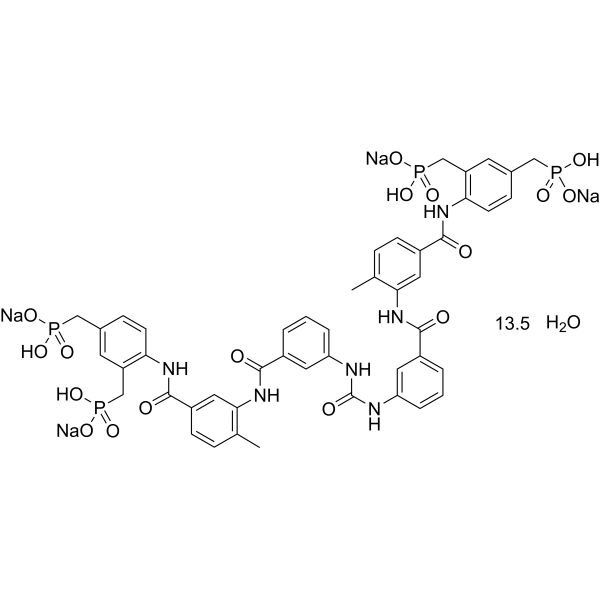
    NF546 (hydrate) is a selective non-nucleotide P2Y11 agonist with a pEC50 of 6.27. NF546 (hydrate) stimulates release of interleukin-8 from human monocyte-derived dendritic cells .
    NF546 hydrate
  • HY-108661

    P2Y Receptor Inflammation/Immunology
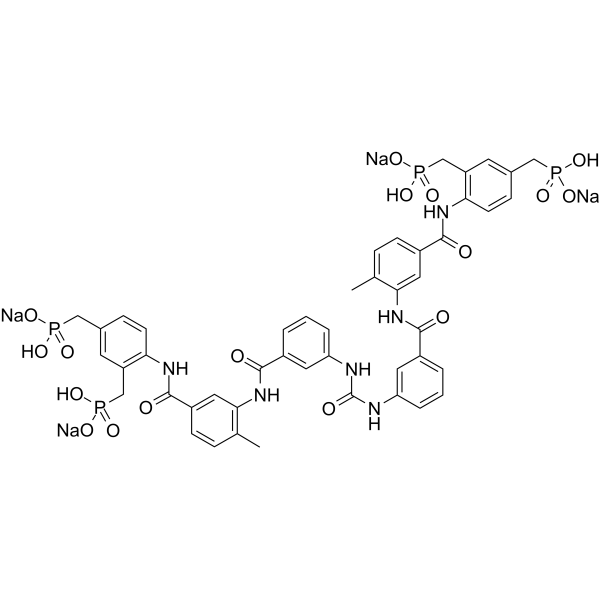
    NF546 is a selective non-nucleotide P2Y11 agonist with a pEC50 of 6.27. NF546 stimulates release of interleukin-8 from human monocyte-derived dendritic cells .
    NF546
  • HY-P991366

    AL008

    CD47 Cancer
    IBI-397 is a human monoclonal antibody (mAb) targeting SIRPα/CD172a . IBI-397 promotes human monocyte-derived dendritic cell-mediated T cell proliferation and increases the expression of CD86 and HLA-DR. IBI-397 has antitumor activity in the mouse MDA-MB-231 tumor model. IBI-397 can be used in Myeloma research .
    IBI-397
  • HY-146841S

    1-Nonadecanoyl-2-hydroxy-sn-glycero-3-phosphocholine-d5; 19:0 Lyso PC-d5

    Isotope-Labeled Compounds Others
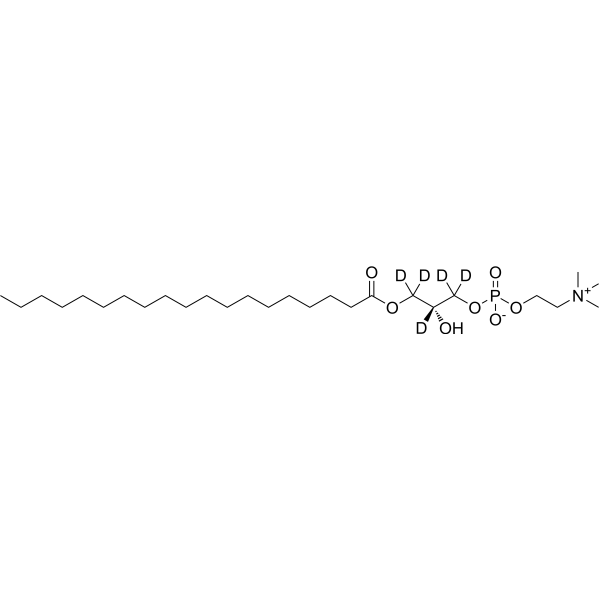
    Lecithin-cholesterol acyltransferase C19:0-d5 (19:0 lecithin-cholesterol acyltransferase-d5) is the deuterated form of lecithin-cholesterol acyltransferase C19:0 (HY-154830). Lecithin-cholesterol acyltransferase C19:0 is a lysophosphatidylcholine with a fully saturated C19 acyl chain. When lecithin-cholesterol acyltransferase C19:0 is combined with LPS (HY-D1056), it can induce the secretion of IL-1β by human monocyte-derived dendritic cells. Lecithin-cholesterol acyltransferase C19:0 can reduce the survival rate of dendritic cells derived from monocytes.
    Lysophosphatidylcholine C19:0-d5
  • HY-181168

    Caspase Pyroptosis Inflammation/Immunology
    Lb54 is a caspase-3 and caspase-7 activator with an EC50 of 660.9 nM for human procaspase-3. Lb54 activates caspase-3/7, which cleaves Gasdermin D (GSDMD) at aspartic acid residue 87 to generate a p10 fragment, preventing formation of the pore-forming p30 fragment of GSDMD. Lb54 suppresses GSDMD-mediated pyroptosis through caspase-3/7 activation, thereby attenuating inflammatory responses and conferring protection against sepsis. Lb54 alleviates acute lung injury, and inhibited systemic inflammation by restraining the maturation of monocyte-derived dendritic cells. Lb54 can be used for the research of sepsis .
    Lb54
  • HY-P990716

    AZD7789

    PD-1/PD-L1 Tim3 Inflammation/Immunology
    Sabestomig (AZD7789) is a monovalent bispecific antibody targeting PD-1 and TIM-3. Sabestomig binds to PD-1 and an epitope in the TIM-3 IgV domain outside the phosphatidylserine-binding cleft, thereby precisely regulating immune responses. Sabestomig promotes IL-2 production, efferocytosis and cross-presentation of tumor antigens, and enhances the release of anti-tumor T cell cytokines, cytotoxicity, and secretion of IFN-γ. Sabestomig inhibits the growth of solid tumors, prolongs the duration of tumor suppression, and significantly enhances anti-tumor responses following anti-PD-1 therapy. Sabestomig has been used in studies related to non-small cell lung cancer and classical Hodgkin lymphoma .
    Sabestomig
  • HY-P992162

    Orexin Receptor (OX Receptor) Interleukin Related Inflammation/Immunology Cancer
    23ME-00610 is a humanized effector-function-null IgG1 antibody targeting CD200R1, with a Kd of <0.1 nM for hCD200R1. 23ME-00610 blocks the binding of CD200 to CD200R1 and inhibits the recruitment of the downstream adaptor protein DOK2 to CD200R1. 23ME-00610 restores IL-2 production suppressed by CD200. 23ME-00610 induces cytokine production in cells. 23ME-00610 enhances cell-mediated tumor cell killing in vitro. 23ME-00610 can be used for melanoma research .
    23ME-00610

Inquiry Online

Your information is safe with us. * Required Fields.

Salutation


Country or Region *

Applicant Name *


Organization Name *

Department *


Email Address *


Product Name *

Cat. No.


Requested quantity *

Phone Number *


Remarks

Inquiry Online

Inquiry Information

Product Name:
Cat. No.:
Quantity:
MCE Japan Authorized Agent:

