

Search Result
Results for "
nanofiber
" in MedChemExpress (MCE) Product Catalog:
2
Biochemical Assay Reagents
| Cat. No. |
Product Name |
Target |
Research Areas |
Chemical Structure |
-
- HY-W250308
-
|
Epsilon-polylysine (MW 3800-4200); ε-Polylysine (MW 3800-4200); ε-PL (MW 3800-4200)
|
Bacterial
|
Others
|
|
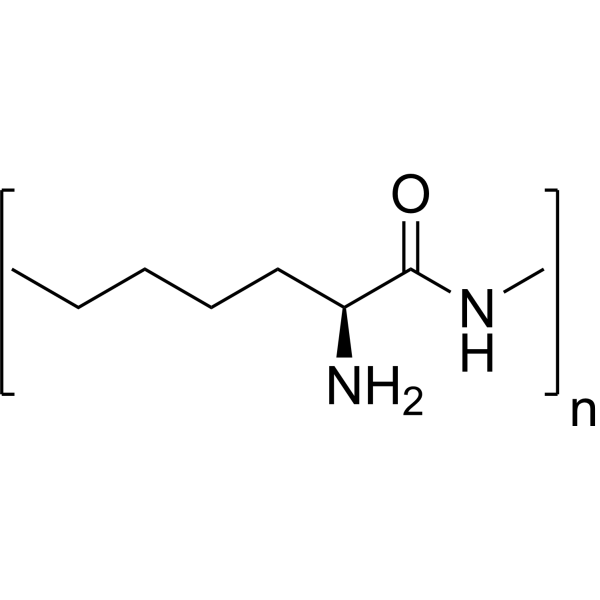
Epsilon-polylysine is an antimicrobial peptide that can be produced by bacteria such as Streptomyces. Epsilon-polylysine inhibits the growth of microorganisms such as bacteria, yeasts and molds and is therefore often used as a green food additive and preservative in various food and beverage products. Epsilon-polylysine has a variety of properties, including thermal stability, resistance to acidic conditions, and broad-spectrum antimicrobial activity. Epsilon-polylysine can be loaded on other materials to form nanoparticles or form nanofiber membranes for targeted delivery to exert sustained antibacterial efficacy. Epsilon-polylysine is also used as a liposome stabilizer .
|
-
-
- HY-Y1353
-
|
|
Biochemical Assay Reagents
|
Others
Metabolic Disease
|
|
Di-tert-butyl dicarbonate (tBOC) is a covalent modification agent for hydroxyl groups (-OH) on the chitosan molecular chain. Di-tert-butyl dicarbonate selectively modifies chitosan and stabilizes the material structure through hydrophobic encapsulation. Di-tert-butyl dicarbonate reacts with the -OH groups of chitosan to form a hydrophobic layer, and in conjunction with triethylamine (TEA), removes trifluoroacetic acid (TFA) salts produced during the electrospinning process, preserving the nanofiber structure and high porosity of the membrane, and improving the material's cytocompatibility and mineralization-promoting ability. Di-tert-butyl dicarbonate can be used in research in the field of guided bone regeneration (GBR) .
|
-
-
- HY-W048825
-
|
|
Amino Acid Derivatives
|
Others
|
|
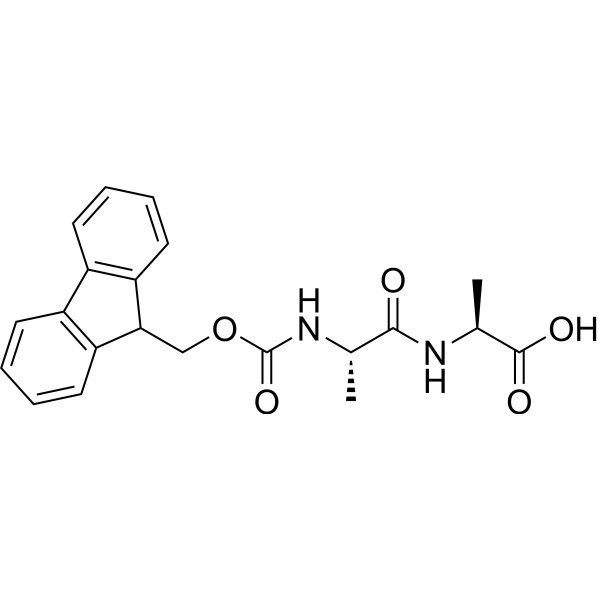
Fmoc-Ala-Ala-OH is a self-assembling fluorenylmethoxycarbonyl dipeptide, a small amphiphilic building block composed of a dipeptide linked to a fluorenylmethoxycarbonyl (Fmoc) group. Under conditions of pH < 4, Fmoc-Ala-Ala-OH spontaneously assembles to form a nanofiber network, constructing a hydrogel scaffold with a water content exceeding 99% (w/w). The fibers have a diameter of approximately 22 nm, matching the size of extracellular matrix (ECM) components. Fmoc-Ala-Ala-OH supports cell adhesion, proliferation, and maintains of cell phenotype. Fmoc-Ala-Ala-OH's function is to mimic the ECM, providing a 3D growth microenvironment for cells, and Fmoc-Ala-Ala-OH is primarily used in tissue engineering and 3D cell culture, particularly suitable for in vitro culture studies of cells such as chondrocytes[1] .
|
-
-
- HY-N6613
-
|
Galacturonic acid polymer
|
Others
|
Infection
Inflammation/Immunology
|
|
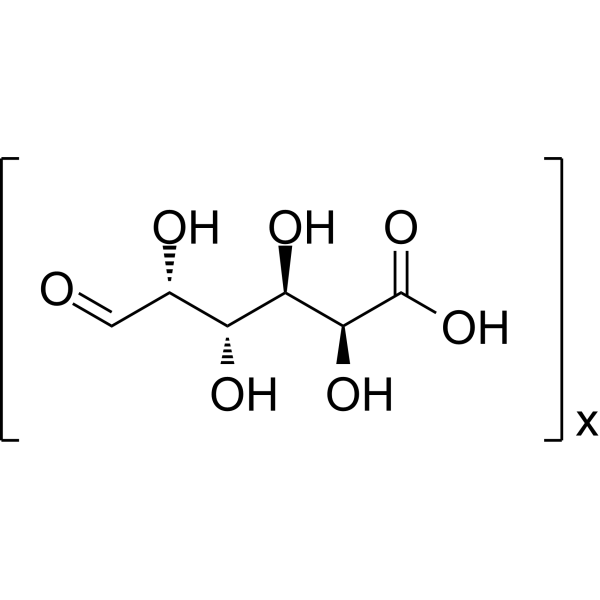
Polygalacturonic acid (Galacturonic acid polymer) is transparent colloid, is a major component of the cell wall. Polygalacturonic acid can be used to prepare silver nanoparticles (AgNPs), as an antioxidant and anti-inflammatory that protect cells from destructive effect of elevated ROS and accelerate wound healing. Polygalacturonic acid nanoparticles also displays anti-bacterial activity .
|
-
-
- HY-Y0850U3
-
|
Polyvinyl alcohol (Mw 125000, 98-99% hydrolyzed, ~2800 polymerization); Poly(Ethenol) (Mw 125000, 98-99% hydrolyzed, ~2800 polymerization)
|
Biochemical Assay Reagents
|
Others
|
|
PVA (Polyvinyl alcohol) (Mw 125000, 98-99% hydrolyzed, ~2800 polymerization) is a water-soluble, biodegradable, biocompatible and non-immunogenic polymer. PVA (Mw 125000, 98-99% hydrolyzed, ~2800 polymerization) causes no irritation to rabbit eyes, no skin sensitization in guinea pigs, promotes the proliferation of human skin keratinocytes, and reduces the loss of corneal endothelial cells. The LD50 of PVA (Mw 125000, 98-99% hydrolyzed, ~2800 polymerization) in rats and dogs is greater than 10 g/kg. PVA (Mw 125000, 98-99% hydrolyzed, ~2800 polymerization) is hardly absorbed by the digestive system, causes no adverse effects upon long-term oral administration, and shows no mutagenicity or carcinogenicity. However, repeated intravenous or portal vein injection of PVA (Mw 125000, 98-99% hydrolyzed, ~2800 polymerization) may induce pathological changes such as glomerular lesions, anemia, hypertension or liver fibrosis in rats or dogs. Crosslinked nanofibers prepared by modifying PVA (Mw 125000, 98-99% hydrolyzed, ~2800 polymerization) can be used in studies related to wound dressings and other applications .
|
-
-
- HY-P2632
-
|
RADA16
|
Biochemical Assay Reagents
|
Neurological Disease
|
|
RAD16-I (RADA16) is a non-directed self-assembling peptide hydrogel. Under physiological conditions, RAD16-I spontaneously forms a three-dimensional nanofiber network that mimics the extracellular matrix, and possesses excellent properties such as high water content, biocompatibility and degradability. RAD16-I serves as an ideal scaffold for three-dimensional cell culture. RAD16-I not only maintains cell viability and induces self-organization, but also supports cell adhesion, proliferation, differentiation and insulin secretion, effectively stabilizes islet clusters and promotes directed differentiation of the cardiac lineage. RAD16-I can construct a cell-friendly nano-microenvironment for research related to diseases such as myocardial infarction and diabetes .
|
-
-
- HY-119309
-
|
|
Environmental Pollutants
Biochemical Assay Reagents
|
Others
|
|
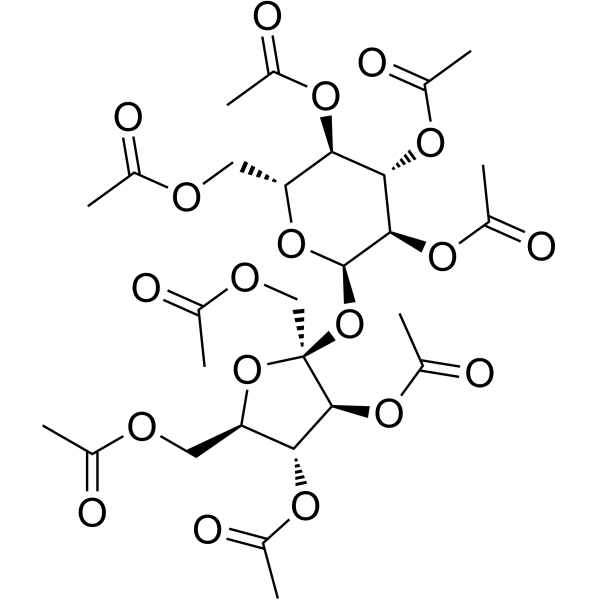
Sucrose octaacetate is an acetylated derivative of sucrose with an intensely bitter tasting and can be used as bitter tasting surrogate. Sucrose octaacetate can be used as food additive and also used as an adhesive and plasticizer. Sucrose octaacetate also used in many pesticides, insecticides, and other toxic products as a deterrent to accidental poisoning. Sucrose octaacetate can also be used as an in situ seed and a soft template to synthesize polyaniline (PANI) nanofibers .
|
-
-
- HY-P10709A
-
|
|
Biochemical Assay Reagents
|
Cardiovascular Disease
Cancer
|
|
CREKA peptide acetate is a short peptide sequence, belonging to self-assembling peptides (SAPs), which can self-assemble into functional nanostructures, typically nanofibers, under physiological conditions. CREKA peptide acetate can be used to target tumor cells and tumor vasculature, exhibiting antitumor activity .
|
-
-
- HY-D1993
-
|
|
Fluorescent Dye
HIV
|
Infection
|
|
ATTO 647 NHS ester is a fluorescent label targeting free amino groups. ATTO 647 NHS ester can undergo a nucleophilic reaction with the free amino groups of EF-C peptide via its activated carboxylic acid group to form a stable covalent conjugate. ATTO 647 NHS ester-labeled nanofibers not only retain retroviral transduction-enhancing activity but also maintain stable fluorescent signals in both buffer and cell culture systems. ATTO 647 NHS ester is suitable for detection applications including fluorescence spectroscopy, microscopy and flow cytometry. ATTO 647 NHS ester has been used in studies related to HIV-1 infection .
|
-
-
- HY-P11309
-
|
|
Biochemical Assay Reagents
|
Neurological Disease
|
|
QL6 peptide is a self-assembling peptide. QL6 peptide can self-assembles into β-sheets bridging the cavity at neutral pH and improves the inhibitory environment by reducing inflammation and tissue scaring. QL6 peptide can be used for synthesis nanofiber scaffolds for spinal cord injuries (SCI) research .
|
-
-
- HY-P10793
-
|
|
EGFR
Apoptosis
|
Cancer
|
|
Cyclic(YCDGFYACYMDV) is a HER2 signaling pathway inhibitor with anti-cancer activity. This compound self-assembles into nanoparticles in aqueous solution and transforms into nanofibers upon specific binding to HER2 on cancer cells. This transformation disrupts HER2 dimerization and subsequent downstream signaling events, leading to cancer cell apoptosis (Apoptosis). The inhibitory effects on HER2 positive breast cancer have been demonstrated to be effective in a murine xenograft model .
|
-
-
- HY-W112090
-
|
PdTFPP; 5,10,15,20-Tetrakis(pentafluorophenyl)-21H,23H-porphine palladium(II)
|
Fluorescent Dye
|
Others
|
|
Palladium meso-tetra(pentafluorophenyl)porphyrin (PdTFPP) derives from palladium(II), acting as a fluorescence-quenched optical probe and high-performance oxygen concentration sensor with outstanding photostability and antioxidant capacity. Palladium meso-tetra(pentafluorophenyl)porphyrin exhibits reduced luminescence intensity as dissolved oxygen concentration rises. Palladium meso-tetra(pentafluorophenyl)porphyrin can be applied for real-time monitoring of live-cell respiration, hypoxic tissue imaging, and nanofibrous organic semiconductors in photodetectors for ambient oxygen detection .
|
-
-
- HY-169198
-
|
|
α-synuclein
|
Neurological Disease
|
|
GSD-16-24 is a lead compound that binds directly to the C-terminal IDR of α-syn monomers and fibrils, thereby preventing fibrils from binding to the receptor. GSD-16-24 can be used in Parkinson's research .
|
-
-
- HY-P10656
-
|
|
Apoptosis
Pyroptosis
|
Cancer
|
|
Ac-DEVDD-TPP is a porphyrin derivative that can be converted into D-TPP by caspase-3 cleavage and laser irradiation. The formed porphyrin nanofibers can effectively induce Apoptosis and Pyroptosis. Ac-DEVDD-TPP has antitumor activity .
|
-
-
- HY-P10705
-
|
|
Biochemical Assay Reagents
|
Cancer
|
|
KGFRWR is a short peptide sequence, belonging to self-assembling peptides (SAPs), which can self-assemble into functional nanostructures, typically nanofibers, under physiological conditions. KGFRWR can be used to target tumor cells and tumor vasculature, exhibiting antitumor activity .
|
-
-
- HY-119309R
-
|
|
Biochemical Assay Reagents
Reference Standards
|
Others
|
|
Sucrose octaacetate (Standard) is the analytical standard of Sucrose octaacetate. This product is intended for research and analytical applications. Sucrose octaacetate is an acetylated derivative of sucrose with an intensely bitter tasting and can be used as bitter tasting surrogate. Sucrose octaacetate can be used as food additive and also used as an adhesive and plasticizer. Sucrose octaacetate also used in many pesticides, insecticides, and other toxic products as a deterrent to accidental poisoning. Sucrose octaacetate can also be used as an in situ seed and a soft template to synthesize polyaniline (PANI) nanofibers .
|
-
-
- HY-179313
-
|
|
Biochemical Assay Reagents
|
Others
|
|
PEG-DPCA conjugate 1 is a PEG-DPCA conjugate that can co-assemble with mPEG-Amide-tri(DPCA) (HY-179320) into a supramolecular polymer hydrogel with nanofiber structures. The supramolecular polymer hydrogel exhibits shear-thinning behavior for injectable delivery, high drug loading, and degrades in vivo to release only DPCA and PEG, induces in vivo earhole regeneration in adult non-healing mice. PEG-DPCA conjugate 1 can be used for tissue regeneration research .
|
-
-
- HY-179320
-
|
|
Biochemical Assay Reagents
|
Others
|
|
mPEG-Amide-tri(DPCA) is a PEG-DPCA conjugate that can self-assemble into a supramolecular polymer hydrogel with nanofiber structures. mPEG-Amide-tri(DPCA) supramolecular polymer hydrogel exhibits shear-thinning behavior for injectable delivery, high drug loading, and degrades in vivo to release only DPCA and PEG. mPEG-Amide-tri(DPCA) supramolecular polymer hydrogel induces in vivo earhole regeneration in adult non-healing mice. mPEG-Amide-tri(DPCA) can be used for tissue regeneration research .
|
-
-
- HY-P11468
-
|
|
Bacterial
Antibiotic
|
Cardiovascular Disease
Infection
|
|
wkwkwNGwkwkw-NH2 is a self-assembling β-hairpin antimicrobial peptide. wkwkwNGwkwkw-NH2 self-assembles into nanofibers. wkwkwNGwkwkw-NH2 interacts with LPS on the surface of the bacterial membrane and then disrupts the bacterial outer membrane, inner membrane, and cytoplasmic membrane to exert its antibacterial effects. wkwkwNGwkwkw-NH2 has high antibacterial activity and low hemolytic activity. wkwkwNGwkwkw-NH2 significantly reduces the S. aureus ATCC 25923 load at the skin wound. wkwkwNGwkwkw-NH2 displays synergistic effects when combined with antibiotics. wkwkwNGwkwkw-NH2 facilitates wound healing .
|
-
-
- HY-P2632C
-
|
|
Biochemical Assay Reagents
|
Neurological Disease
|
|
RAD16-I, free acid TFA is a derivative of RADA16 (HY-P2632), with no Ac and NH2 modifications at both ends, and it has the same function as RADA16. RAD16-I, free acid TFA is a non-directed self-assembling peptide hydrogel. Under physiological conditions, RAD16-I, free acid TFA spontaneously forms a three-dimensional nanofiber network that mimics the extracellular matrix, and possesses excellent properties such as high water content, biocompatibility and degradability. RAD16-I, free acid TFA serves as an ideal scaffold for three-dimensional cell culture. RAD16-I, free acid TFA not only maintains cell viability and induces self-organization, but also supports cell adhesion, proliferation, differentiation and insulin secretion, effectively stabilizes islet clusters and promotes directed differentiation of the cardiac lineage. RAD16-I, free acid TFA can construct a cell-friendly nano-microenvironment for research related to diseases such as myocardial infarction and diabetes .
|
-
| Cat. No. |
Product Name |
Type |
-
- HY-D1993
-
|
|
Fluorescent Dyes
|
|
ATTO 647 NHS ester is a fluorescent label targeting free amino groups. ATTO 647 NHS ester can undergo a nucleophilic reaction with the free amino groups of EF-C peptide via its activated carboxylic acid group to form a stable covalent conjugate. ATTO 647 NHS ester-labeled nanofibers not only retain retroviral transduction-enhancing activity but also maintain stable fluorescent signals in both buffer and cell culture systems. ATTO 647 NHS ester is suitable for detection applications including fluorescence spectroscopy, microscopy and flow cytometry. ATTO 647 NHS ester has been used in studies related to HIV-1 infection .
|
| Cat. No. |
Product Name |
Type |
-
- HY-W250308
-
|
Epsilon-polylysine (MW 3800-4200); ε-Polylysine (MW 3800-4200); ε-PL (MW 3800-4200)
|
Biochemical Assay Reagents
|
|
Epsilon-polylysine is an antimicrobial peptide that can be produced by bacteria such as Streptomyces. Epsilon-polylysine inhibits the growth of microorganisms such as bacteria, yeasts and molds and is therefore often used as a green food additive and preservative in various food and beverage products. Epsilon-polylysine has a variety of properties, including thermal stability, resistance to acidic conditions, and broad-spectrum antimicrobial activity. Epsilon-polylysine can be loaded on other materials to form nanoparticles or form nanofiber membranes for targeted delivery to exert sustained antibacterial efficacy. Epsilon-polylysine is also used as a liposome stabilizer .
|
-
- HY-Y0850U3
-
|
Polyvinyl alcohol (Mw 125000, 98-99% hydrolyzed, ~2800 polymerization); Poly(Ethenol) (Mw 125000, 98-99% hydrolyzed, ~2800 polymerization)
|
Biochemical Assay Reagents
|
|
PVA (Polyvinyl alcohol) (Mw 125000, 98-99% hydrolyzed, ~2800 polymerization) is a water-soluble, biodegradable, biocompatible and non-immunogenic polymer. PVA (Mw 125000, 98-99% hydrolyzed, ~2800 polymerization) causes no irritation to rabbit eyes, no skin sensitization in guinea pigs, promotes the proliferation of human skin keratinocytes, and reduces the loss of corneal endothelial cells. The LD50 of PVA (Mw 125000, 98-99% hydrolyzed, ~2800 polymerization) in rats and dogs is greater than 10 g/kg. PVA (Mw 125000, 98-99% hydrolyzed, ~2800 polymerization) is hardly absorbed by the digestive system, causes no adverse effects upon long-term oral administration, and shows no mutagenicity or carcinogenicity. However, repeated intravenous or portal vein injection of PVA (Mw 125000, 98-99% hydrolyzed, ~2800 polymerization) may induce pathological changes such as glomerular lesions, anemia, hypertension or liver fibrosis in rats or dogs. Crosslinked nanofibers prepared by modifying PVA (Mw 125000, 98-99% hydrolyzed, ~2800 polymerization) can be used in studies related to wound dressings and other applications .
|
| Cat. No. |
Product Name |
Target |
Research Area |
-
- HY-W048825
-
|
|
Amino Acid Derivatives
|
Others
|
|
Fmoc-Ala-Ala-OH is a self-assembling fluorenylmethoxycarbonyl dipeptide, a small amphiphilic building block composed of a dipeptide linked to a fluorenylmethoxycarbonyl (Fmoc) group. Under conditions of pH < 4, Fmoc-Ala-Ala-OH spontaneously assembles to form a nanofiber network, constructing a hydrogel scaffold with a water content exceeding 99% (w/w). The fibers have a diameter of approximately 22 nm, matching the size of extracellular matrix (ECM) components. Fmoc-Ala-Ala-OH supports cell adhesion, proliferation, and maintains of cell phenotype. Fmoc-Ala-Ala-OH's function is to mimic the ECM, providing a 3D growth microenvironment for cells, and Fmoc-Ala-Ala-OH is primarily used in tissue engineering and 3D cell culture, particularly suitable for in vitro culture studies of cells such as chondrocytes[1] .
|
-
- HY-P2632
-
|
RADA16
|
Biochemical Assay Reagents
|
Neurological Disease
|
|
RAD16-I (RADA16) is a non-directed self-assembling peptide hydrogel. Under physiological conditions, RAD16-I spontaneously forms a three-dimensional nanofiber network that mimics the extracellular matrix, and possesses excellent properties such as high water content, biocompatibility and degradability. RAD16-I serves as an ideal scaffold for three-dimensional cell culture. RAD16-I not only maintains cell viability and induces self-organization, but also supports cell adhesion, proliferation, differentiation and insulin secretion, effectively stabilizes islet clusters and promotes directed differentiation of the cardiac lineage. RAD16-I can construct a cell-friendly nano-microenvironment for research related to diseases such as myocardial infarction and diabetes .
|
-
- HY-P10709A
-
|
|
Biochemical Assay Reagents
|
Cardiovascular Disease
Cancer
|
|
CREKA peptide acetate is a short peptide sequence, belonging to self-assembling peptides (SAPs), which can self-assemble into functional nanostructures, typically nanofibers, under physiological conditions. CREKA peptide acetate can be used to target tumor cells and tumor vasculature, exhibiting antitumor activity .
|
-
- HY-P11309
-
|
|
Biochemical Assay Reagents
|
Neurological Disease
|
|
QL6 peptide is a self-assembling peptide. QL6 peptide can self-assembles into β-sheets bridging the cavity at neutral pH and improves the inhibitory environment by reducing inflammation and tissue scaring. QL6 peptide can be used for synthesis nanofiber scaffolds for spinal cord injuries (SCI) research .
|
-
- HY-P10793
-
|
|
EGFR
Apoptosis
|
Cancer
|
|
Cyclic(YCDGFYACYMDV) is a HER2 signaling pathway inhibitor with anti-cancer activity. This compound self-assembles into nanoparticles in aqueous solution and transforms into nanofibers upon specific binding to HER2 on cancer cells. This transformation disrupts HER2 dimerization and subsequent downstream signaling events, leading to cancer cell apoptosis (Apoptosis). The inhibitory effects on HER2 positive breast cancer have been demonstrated to be effective in a murine xenograft model .
|
-
- HY-P11066
-
|
|
Peptides
|
Others
|
|
RAD-FHR peptide is a self-assembling peptide. RAD-FHR peptide significantly enhances migration, proliferation and growth factor-secretion ability in human adipose stem cells (hASCs). RAD-FHR peptide can be used for synthesis of nanofiber hydrogel for stem cell behaviors research in biomimetic 3D systems .
|
-
- HY-P10656
-
|
|
Apoptosis
Pyroptosis
|
Cancer
|
|
Ac-DEVDD-TPP is a porphyrin derivative that can be converted into D-TPP by caspase-3 cleavage and laser irradiation. The formed porphyrin nanofibers can effectively induce Apoptosis and Pyroptosis. Ac-DEVDD-TPP has antitumor activity .
|
-
- HY-P10705
-
|
|
Biochemical Assay Reagents
|
Cancer
|
|
KGFRWR is a short peptide sequence, belonging to self-assembling peptides (SAPs), which can self-assemble into functional nanostructures, typically nanofibers, under physiological conditions. KGFRWR can be used to target tumor cells and tumor vasculature, exhibiting antitumor activity .
|
-
- HY-P11065
-
|
|
Peptides
|
Others
|
|
RAD-SKP peptide is a self-assembling peptide. RAD-SKP peptide with decellularized cartilage matrix (DCM) can be used for synthesis of nanofiber hydrogel. RAD-SKP peptide can be used for cartilage repair research .
|
-
- HY-P11063
-
|
|
Peptides
|
Cancer
|
|
AcfffGk is a short peptide with the ability to self-assemble into helical nanofibers, forming non-covalently cross-linked hydrogels that serve as scaffolds for 3D cell culture .
|
-
- HY-P11468
-
|
|
Bacterial
Antibiotic
|
Cardiovascular Disease
Infection
|
|
wkwkwNGwkwkw-NH2 is a self-assembling β-hairpin antimicrobial peptide. wkwkwNGwkwkw-NH2 self-assembles into nanofibers. wkwkwNGwkwkw-NH2 interacts with LPS on the surface of the bacterial membrane and then disrupts the bacterial outer membrane, inner membrane, and cytoplasmic membrane to exert its antibacterial effects. wkwkwNGwkwkw-NH2 has high antibacterial activity and low hemolytic activity. wkwkwNGwkwkw-NH2 significantly reduces the S. aureus ATCC 25923 load at the skin wound. wkwkwNGwkwkw-NH2 displays synergistic effects when combined with antibiotics. wkwkwNGwkwkw-NH2 facilitates wound healing .
|
-
- HY-P2632C
-
|
|
Biochemical Assay Reagents
|
Neurological Disease
|
|
RAD16-I, free acid TFA is a derivative of RADA16 (HY-P2632), with no Ac and NH2 modifications at both ends, and it has the same function as RADA16. RAD16-I, free acid TFA is a non-directed self-assembling peptide hydrogel. Under physiological conditions, RAD16-I, free acid TFA spontaneously forms a three-dimensional nanofiber network that mimics the extracellular matrix, and possesses excellent properties such as high water content, biocompatibility and degradability. RAD16-I, free acid TFA serves as an ideal scaffold for three-dimensional cell culture. RAD16-I, free acid TFA not only maintains cell viability and induces self-organization, but also supports cell adhesion, proliferation, differentiation and insulin secretion, effectively stabilizes islet clusters and promotes directed differentiation of the cardiac lineage. RAD16-I, free acid TFA can construct a cell-friendly nano-microenvironment for research related to diseases such as myocardial infarction and diabetes .
|
| Cat. No. |
Product Name |
Category |
Target |
Chemical Structure |
Your information is safe with us. * Required Fields.
Inquiry Information
- Product Name:
- Cat. No.:
- Quantity:
- MCE Japan Authorized Agent:

