
1. Search Result
Search Result
Results for "

neurofibrillary tangle

" in MedChemExpress (MCE) Product Catalog:

10

Inhibitors & Agonists

1

Fluorescent Dye

1

Peptides

1

Inhibitory Antibodies

1

Natural
Products

19

Recombinant Proteins

23

Antibodies

Cat. No. Product Name Target Research Areas Chemical Structure
  • HY-101185

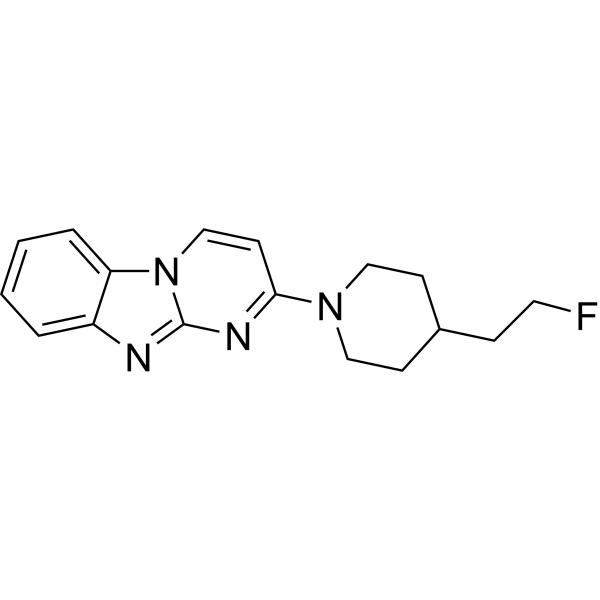
    Tau Protein Neurological Disease
    T808 is a selective tau protein-targeting ligand. T808 can be used to synthesize [ 18F]-T808, a highly selective tau protein positron emission tomography (PET) tracer. T808 can also be used to synthesize [ 3H]-T808, a marker for in vitro experiments. T808 can be used for the research of alzheimer’s disease .
    T808
  • HY-125962

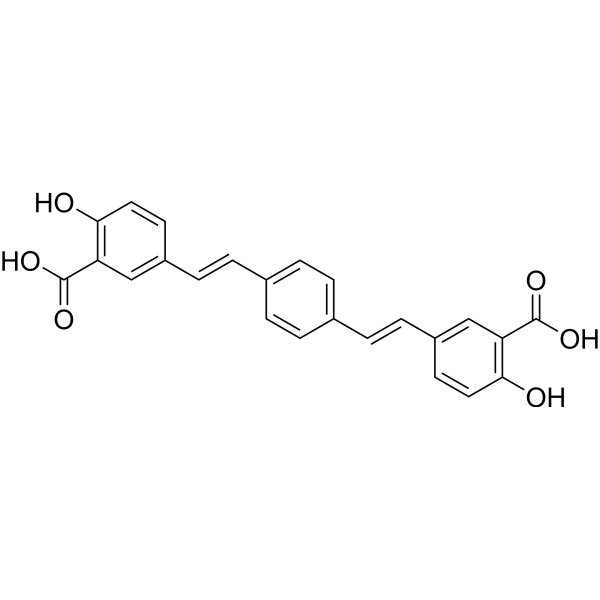
    Fluorescent Dye Amyloid-β Neurological Disease
    X-34 is a lipophilic and bright yellow-green fluorescent derivative of Congo red (HY-D0236). X-34 can be used to stain neuritic and diffuse plaques, neurofibrillary tangles (NFTs), neuropil threads, and cerebrovascular amyloid in the brain. X-34 can be used for research of Alzheimer’s disease .
    X-34
  • HY-P9995

    JNJ-63733657

    Tau Protein Neurological Disease
    Posdinemab (JNJ-63733657) is a humanized IgG1/κ monoclonal antibody that selectively targets phosphorylated tau (pT217). Posdinemab specifically binds to the pT217+tau epitope rich in the proline domain, blocks tau protein aggregation and seed propagation, and promotes the clearance of extracellular tau species. Posdinemab reduces the levels of free and total p217+tau in cerebrospinal fluid, thereby inhibiting the pathological propagation of tau protein and the formation of neurofibrillary tangles. Posdinemab can be used for the study of progressive supranuclear palsy syndrome and Alzheimer's disease (AD), especially for prodromal or mild AD disease .
    Posdinemab
  • HY-116753

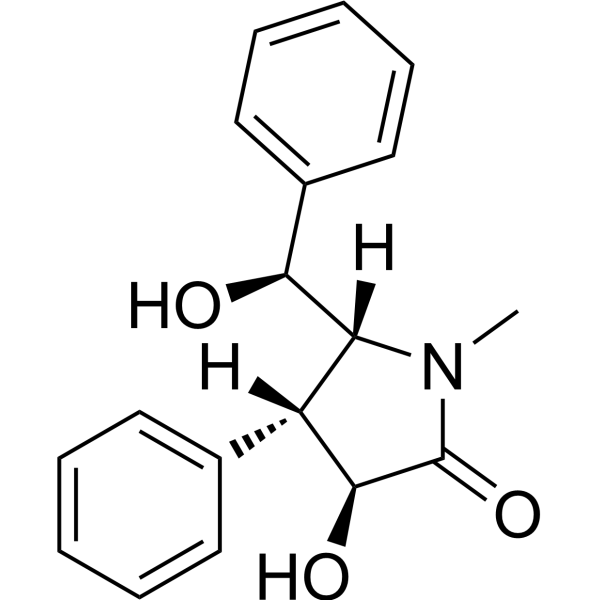
    Amyloid-β Tau Protein Neurological Disease
    (-)Clausenamide is an active alkaloid isolated from the leaves of Clausena lansium (Lour.) Skeels, and improves cognitive function in both normal physiological and pathological conditions. (-)Clausenamide inhibits β-amyloid (Aβ) toxicity, blocking neurofibrillary tangle formation by inhibiting the phosphorylation of tau protein. (-)Clausenamide exerts a significant neuroprotective activity against Aβ25-35. (-)Clausenamide can be used for researching Alzheimer's disease (AD) .
    (-)Clausenamide
  • HY-149054

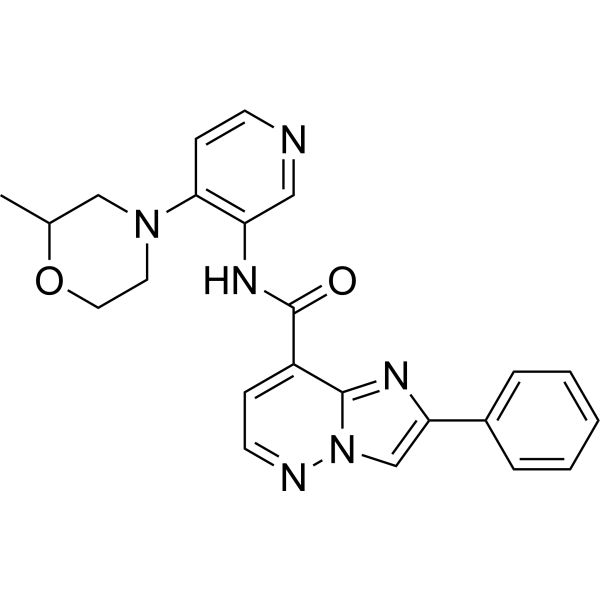
    GSK-3 Tau Protein AAK1 Pim PKC Neurological Disease
    GSK-3β inhibitor 13 (compound 47) is an orally active and potent GSK-3β inhibitor with blood-brain permeability. GSK-3β inhibitor 13 inhibits GSK-3β and GSK-3α with IC50s of 0.73 nM and 0.35 nM, respectively. GSK-3β inhibitor 13 significantly decreases the phosphorylation of tau (IC50=58 nM), which leads the formation of the neurofibrillary tangles associated with Alzheimer's disease .
    GSK-3β inhibitor 13
  • HY-172171

    GSK-3 β-catenin Wnt Neurological Disease
    GSK3β-IN-2 (Compound S01) is the inhibitor for GSK3β with an IC50 of 0.35 nM. GSK3β-IN-2 activates Wnt/β-catenin signaling pathway, promotes neurogenesis and neurite growth. GSK3β-IN-2 inhibits Aβ-induced tau hyperphosphorylation at Ser396, reduces the formation of neurofibrillary tangles. GSK3β-IN-2 ameliorates Alzheimer's Disease in zebrafish model .
    GSK3β-IN-2
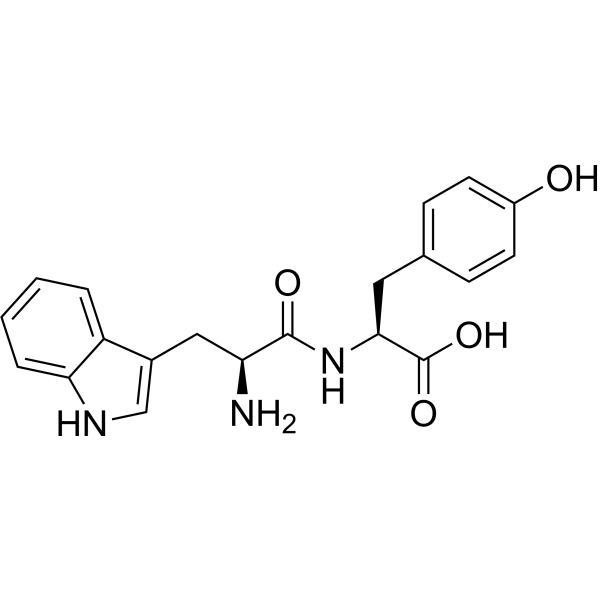
  • HY-P4610

    GLP Receptor Metabolic Disease
    H-Trp-Tyr-OH is an orally active tryptophan-tyrosine dipeptide with blood-brain barrier permeability. H-Trp-Tyr-OH exerts physiological regulatory effects by stimulating enteroendocrine cells to secrete glucagon-like peptide GLP-1. In mouse models of tauopathies, H-Trp-Tyr-OH inhibits tau phosphorylation, reduces the level of neurofibrillary tangles, increases dopamine turnover, upregulates synapsin expression, and elevates cecal short-chain fatty acid levels, thereby improving behavioral deficits and extending lifespan. H-Trp-Tyr-OH can be used in research related to impaired glucose tolerance and tauopathies .
    H-Trp-Tyr-OH
  • HY-155383

    Tau Protein Neurological Disease Cancer
    TNIR7-1A is a fused cycloheptatriene–BODIPY derivative that displays properties favorable for near-infrared (NIR) imaging (Ex/Em = 600/774 nm in PBS) with high affinity and specificity to Neurofibrillary tangles (NFTs) in vitro. TNIR7-1A effectively penetrated the blood–brain barrier .
    TNIR7-1A
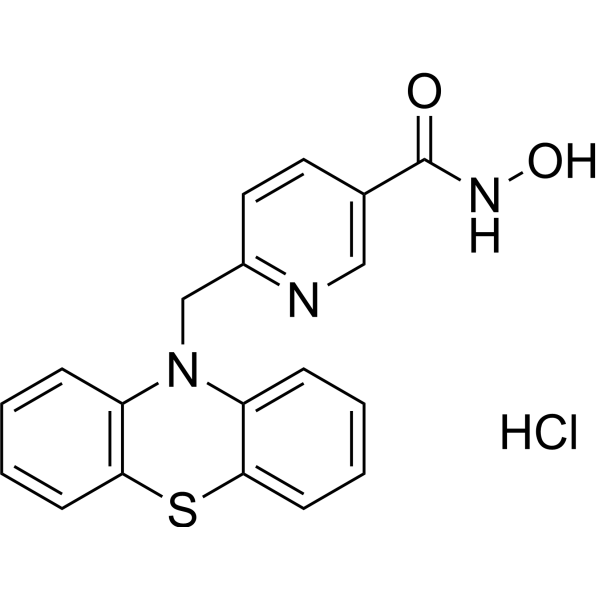
  • HY-158030

    HDAC Neurological Disease
    HDAC6-IN-37 (compound W5) is an inhibitor of HDAC6 and has neuroprotective effects. HDAC6-IN-37 can restore the morphology of hippocampal neurons, reduce the expression of Aβ, Tau, and p-Tau proteins in the hippocampus of AD rats, and inhibit the formation of senile plaques and neurofibrillary tangles. Thus, HDAC6-IN-37 improves the Aβ/Cu 2+-induced AD model in rats, regulates oxidative stress status, and balances neurotransmitter disorders in brain tissue .
    HDAC6-IN-37
  • HY-169197

    Tau Protein Amyloid-β Neurological Disease
    D-688 is an inhibitor of Tau and . D-688 can reverse Aβ1–42-induced toxicity in SH-SH5Y cells and has significant neuroprotective properties. D-688 can improve the survival rate of Drosophila melanogaster expressing the human tau protein isoform (2N4R) .
    D-688

Inquiry Online

Your information is safe with us. * Required Fields.

Salutation


Country or Region *

Applicant Name *


Organization Name *

Department *


Email Address *


Product Name *

Cat. No.


Requested quantity *

Phone Number *


Remarks

Inquiry Online

Inquiry Information

Product Name:
Cat. No.:
Quantity:
MCE Japan Authorized Agent:

