18 Results for "

neuron excitability

" in MedChemExpress (MCE) Product Catalog:
Products (18)

18 Results for "neuron excitability" in MCE Product Catalog:

4
4 Cited Publications
Cat. No.: HY-N6789
CAS No.: 108068-98-0
Target:  

PKA

Research Areas:  

Neurological Disease Cancer

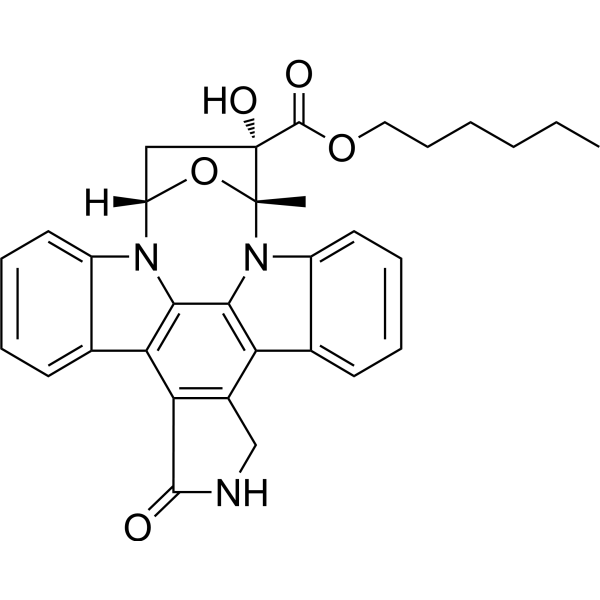
KT5720 is a potent, cell-permeable, specific, reversible and ATP-competitive PKA inhibitor (IC50=3.3 μM). KT5720 is effective in reversing MDR1-mediated multidrug resistance. KT5720 also reduces the excitability of dorsal root ganglion (DRG) neurons by attenuating Hyperpolarization-activated cyclic nucleotide-gated (HCN) channel activity and reducing intracellular Ca2 + concentrations. KT5720 can be used in the study of haematological malignancies as well as HCN and DRG neuron-related diseases .
loading...
    loading...
3
3 Cited Publications
Cat. No.: HY-P10234A
Target:  

Sodium Channel

Research Areas:  

Neurological Disease

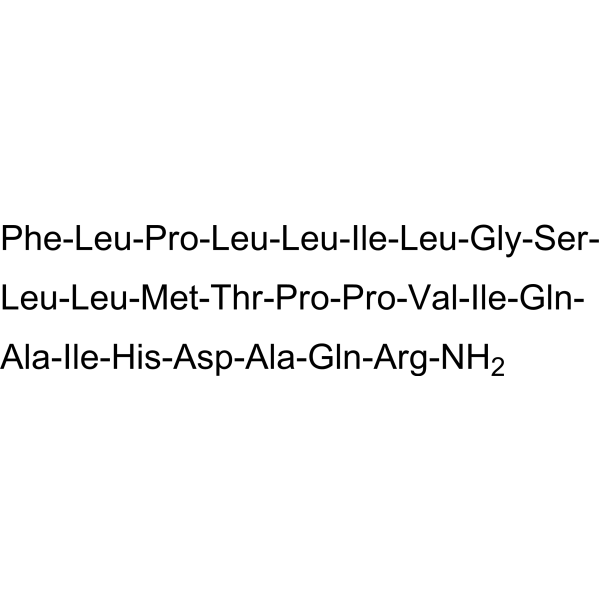
Poneratoxin acetate is the acetate salt form of Poneratoxin (HY-P10234). Poneratoxin acetate is the modulator for voltage-gated sodium channel (NaV, EC50 for NaV1.6 and NaV1.7 is 97 nM and 2.3 µM), that lowers the voltage threshold for activation and inhibits the inactivation of channels, enhances the excitability of neurons, and leads to the transmission of pain signals .
loading...
    loading...
Cat. No.: HY-N5060
CAS No.: 140-67-0
Synonyms: 4-Allylanisole
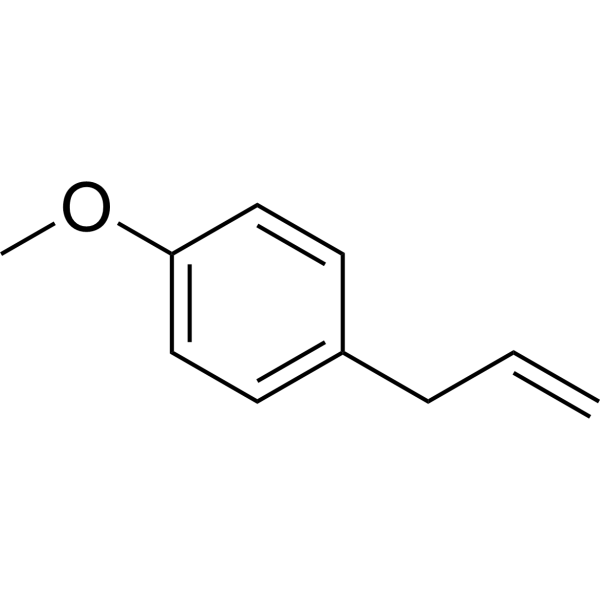
Estragole (4-Allylanisole) is a relatively nontoxic volatile terpenoid ether and major component of the essential oil from many plants. Estragole significantly triggers Apoptosis, suppresses LPS-induced intracellular ROS production. Estragole activats Nrf-2 and regulates NF-κB. Estragole has anti-toxoplasma, anti-inflammatory, anti-edema, antioxidant and immunomodulatory properties. Estragole blocks DRG neuron excitability. Estragole has improves gastric ulcer activity .
loading...
    loading...
Cat. No.: HY-124467
CAS No.: 39080-67-6
Synonyms: Ro 07-4065
Target:  

GABA Receptor

Research Areas:  

Neurological Disease

Difludiazepam (Ro 07-4065), a benzodiazepine derivative, is a GABAA receptor ligand with an IC50 of 4.1 nM. Difludiazepam binds to an allosteric site on the GABAA receptor to potentiate the receptor's response to GABA, reducing neuron excitability. Difludiazepam contains halogenated groups at the ortho position of its phenyl ring .
loading...
    loading...
Cat. No.: HY-W013712
CAS No.: 69563-88-8
Target:  

Potassium Channel

Research Areas:  

Neurological Disease

GI-530159 is a selective opener of TREK1 and TREK2 potassium channels. GI-530159 displays selectivity for TREK1/2 over TRAAK, TASK3 and other potassium channels, with an EC50 of 0.76 μM for TREK1. GI-530159 reduces rat dorsal root ganglion neuron excitability and shows potential analgesic effect .
loading...
    loading...
Cat. No.: HY-N5060S
CAS No.: 1335401-40-5
Synonyms: 4-Allylanisole-d4
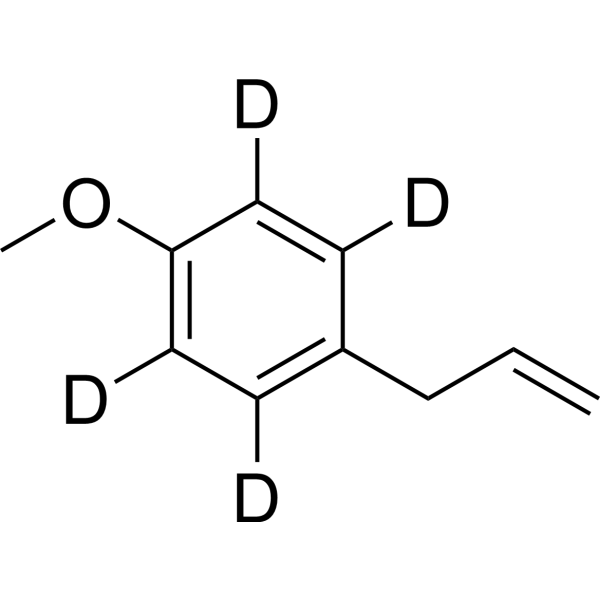
Estragole-d4 is deuterated labeled Estragole (HY-N5060). Estragole (4-Allylanisole) is a relatively nontoxic volatile terpenoid ether and major component of the essential oil from many plants. Estragole significantly triggers Apoptosis, suppresses LPS-induced intracellular ROS production. Estragole activats Nrf-2 and regulates NF-κB. Estragole has anti-toxoplasma, anti-inflammatory, anti-edema, antioxidant and immunomodulatory properties. Estragole blocks DRG neuron excitability. Estragole has improves gastric ulcer activity [10] .
loading...
    loading...
Cat. No.: HY-113316A
CAS No.: 79923-51-6
Purity:  98%
(±)-Salsolinol hydrochloride is the hydrochloride form of (±)-Salsolinol (HY-113316). (±)-Salsolinol hydrochloride is a Dopamine (HY-B0451)-derived endogenous metabolite. (±)-Salsolinol hydrochloride activates μ-opioid receptors (MORs), reduces GABAergic transmission, increases the excitability of dopamine (DA) neurons, and thus accelerates the sustained firing of neurons in the posterior ventral tegmental area (pVTA) .
loading...
    loading...
Cat. No.: HY-P10234
CAS No.: 137084-94-7
Target:  

Sodium Channel

Research Areas:  

Neurological Disease

Poneratoxin is the modulator for voltage-gated sodium channel (NaV, EC50 for NaV1.6 and NaV1.7 is 97 nM and 2.3 µM), that lowers the voltage threshold for activation and inhibits the inactivation of channels, enhances the excitability of neurons, and leads to the transmission of pain signals .
loading...
    loading...
Cat. No.: HY-176248
CAS No.: 14394-26-4
Dimephosphon is an anti-inflammatory agent with antihistamine and antiserotonin activities. Dimephosphon helps maintain the conduction function of the spinal cord and reduces the excitability of spinal motor neurons in the area surrounding the lesion. Dimephosphon directly activates lymphatic vessel movement and improves lymphatic circulation. Dimephosphon can be used for the study of inflammatory edema, acute spinal cord injury and lymphatic circulation disorders .
loading...
    loading...
Cat. No.: HY-171807
CAS No.: 189274-78-0
Target:  

nAChR STAT

TC-2559 free base is a α4β2 nicotinic acetylcholine receptor (nAChR) agonists with an EC50 of 0.18 μM. TC-2559 free base shows much weaker potencies on the group of b4-containing nAChR subtypes, α2β4, α4β4 and α3β4 receptors, with EC50s in the range of 10-30 µM. TC-2559 free base can increase the discharge of dopamine cells in the ventral tegmental area (VTA) of rats in vitro, enhancing the excitability and aggressive behavior of VTA dopamine neurons. TC-2559 free base inhibits STAT3 to exert anti-inflammatory properties and relieves mice mechanical allodynia and improve rats cognitive deficits. TC-2559 free base can be used for the study of nerve pain .
loading...
    loading...
Cat. No.: HY-P1281
CAS No.: 145199-73-1
Target:  

Potassium Channel

Research Areas:  

Neurological Disease

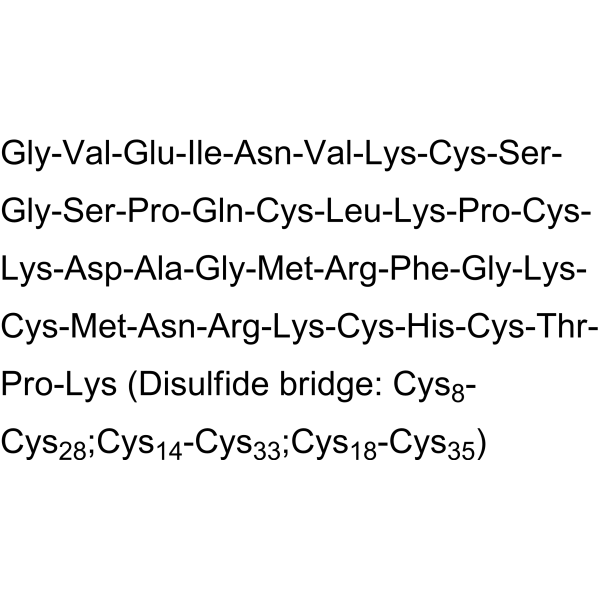
Kaliotoxin is a peptidyl inhibitor of neuronal BK-Type. Kaliotoxin can specific inhibit Kv channels and calcium-activated potassium channels. Kaliotoxin can be used for the research of the regulation of membrane potential and neuron excitability .
loading...
    loading...
Cat. No.: HY-121789
CAS No.: 302-33-0
Target:  

Cytochrome P450

Research Areas:  

Others

Proadifen is a compound that inhibits cytochrome P450 activity, which can change the excitability of catecholamine-secreting neurons in the brain and have different effects on neurons in different brain regions.
loading...
    loading...
Cat. No.: HY-135131
CAS No.: 301-15-5
Target:  

iGluR

Research Areas:  

Neurological Disease

Synthalin hydrochloride is a K+ channel blocker with neuronal excitability modulating activity. Synthalin hydrochloride has an effect on NMDA-mediated depolarization, possibly through receptor-mediated modulation of L-glutamate and serotonin (5-HT). The use of Synthalin hydrochloride can enhance the understanding of changes in membrane potential of different neurons and help study the role of polyamines in neuronal excitability .
loading...
    loading...
Cat. No.: HY-W013353
CAS No.: 59709-57-8
(RS)-Salsolinol hydrobromide is the hydrobromide form of (±)-Salsolinol (HY-113316). (RS)-Salsolinol hydrobromide is a Dopamine (HY-B0451)-derived endogenous metabolite. (RS)-Salsolinol hydrobromide activates μ-opioid receptors (MORs), reduces GABAergic transmission, increases the excitability of dopamine (DA) neurons, and thus accelerates the sustained firing of neurons in the posterior ventral tegmental area (pVTA) .
loading...
    loading...
Cat. No.: HY-168166
CAS No.: 2489231-47-0
Target:  

Endogenous Metabolite

Research Areas:  

Neurological Disease

CHET3 is a sex-selective activator with potent analgesic activity. CHET3 was discovered to be a highly selective omnidirectional modulator of TASK-3-containing K2P channels, including TASK-3 homologues and TASK-3/TASK-1 heterologues. CHET3 exhibited significant analgesic effects in multiple acute and chronic pain models in mice, which could be abolished by pharmacological means or genetic knockout of TASK-3. CHET3 is able to functionally modulate the membrane excitability of specific small sensory neurons, which supports its analgesic effects on thermal hypersensitivity and mechanical hyperalgesia in chronic pain .
loading...
    loading...
Cat. No.: HY-123320S
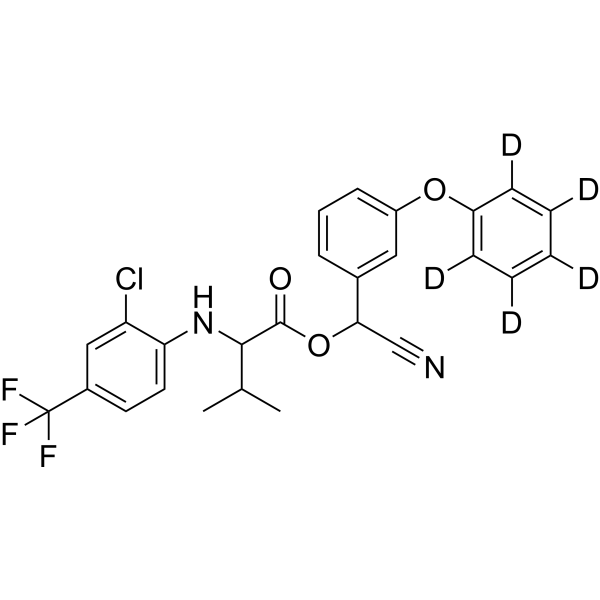
Fluvalinate-d5 is the deuterated-labeled Fluvalinate (HY-123320). Fluvalinate is an orally active acaricide classified as a sodium channel inhibitor. Fluvalinate delays sodium channel closure, prolongs cell membrane depolarization, inhibits the excitability of honeybee brain neurons, and exerts a central nervous system inhibitory effect. Fluvalinate negatively affects the learning ability, memory ability, sucrose responsiveness, and survival of honeybees. Fluvalinate potentiates pentobarbital-induced hypnosis, reduces spontaneous activity in mice, and decreases the total white blood cell count and absolute lymphocyte count in mice. Fluvalinate induces acute toxic symptoms in rats, acts as a cholinergic stimulant, and induces the production of hepatic enzymes in rats. Fluvalinate causes the death of Varroa jacobsoni sensitive to τ-Fluvalinate (HY-B2021). Fluvalinate can be used in studies related to mite pest control .
loading...
    loading...
Cat. No.: HY-174899
CAS No.: 75828-06-7
Target:  

iGluR

Research Areas:  

Neurological Disease

AMPA-IN-2 is an orally active AMPA inhibitor that can cross the blood-brain barrier. AMPA-IN-2 improves epileptic seizures by inhibiting the intrinsic excitability of neurons and inhibiting the excitability of glutamatergic transmission. AMPA-IN-2 exerts anti-epileptic effects in the pentylenetetrazol (PTZ) model and can be used as a promising candidates with high broad-spectrum anti-epileptic potential .
loading...
    loading...
Cat. No.: HY-123320
CAS No.: 69409-94-5
Research Areas:  

Infection Neurological Disease

Fluvalinate is an orally active acaricide classified as a sodium channel inhibitor. Fluvalinate delays sodium channel closure, prolongs cell membrane depolarization, inhibits the excitability of honeybee brain neurons, and exerts a central nervous system inhibitory effect. Fluvalinate negatively affects the learning ability, memory ability, sucrose responsiveness, and survival of honeybees. Fluvalinate potentiates pentobarbital-induced hypnosis, reduces spontaneous activity in mice, and decreases the total white blood cell count and absolute lymphocyte count in mice. Fluvalinate induces acute toxic symptoms in rats, acts as a cholinergic stimulant, and induces the production of hepatic enzymes in rats. Fluvalinate causes the death of Varroa jacobsoni sensitive to τ-Fluvalinate (HY-B2021). Fluvalinate can be used in studies related to mite pest control .
loading...
    loading...
  • 1

