


1. Search Result
Search Result
Pathways Recommended: Neuronal Signaling
Results for "

neuronal plasticity

" in MedChemExpress (MCE) Product Catalog:

7

Inhibitors & Agonists

3

Peptides

3

Natural
Products

Cat. No. Product Name Target Research Areas Chemical Structure
  • HY-P1061
    Colivelin
    90+ Cited Publications

    STAT Amyloid-β Neurological Disease
    Colivelin is a brain penetrant neuroprotective peptide and a potent activator of STAT3, suppresses neuronal death by activating STAT3 in vitro . Colivelin exhibits long-term beneficial effects against neurotoxicity, Aβ deposition, neuronal apoptosis, and synaptic plasticity deficits in neurodegenerative disease . Colivelin has the potential for the treatment of alzheimer's disease and ischemic brain injury
    Colivelin
  • HY-P1061A
    Colivelin TFA
    90+ Cited Publications

    STAT Amyloid-β Apoptosis Neurological Disease
    Colivelin TFA is a brain penetrant neuroprotective peptide and a potent activator of STAT3, suppresses neuronal death by activating STAT3 in vitro . Colivelin TFA exhibits long-term beneficial effects against neurotoxicity, Aβ deposition, neuronal apoptosis, and synaptic plasticity deficits in neurodegenerative disease . Colivelin TFA has the potential for the treatment of alzheimer's disease and ischemic brain injury .
    Colivelin TFA
  • HY-I1070

    (R)-Isoleucine

    ASCT Neurological Disease
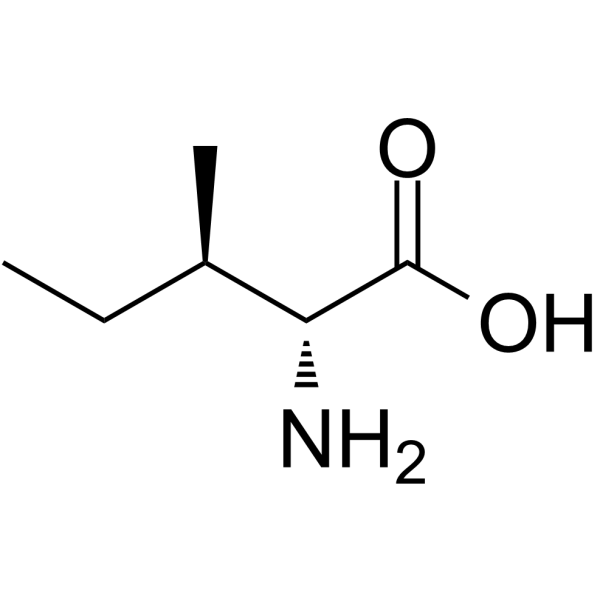
    D-Isoleucine is a selective competitive activator of the Asc-1 antiporter (Ki=0.98 mM). D-Isoleucine promotes the release of D-serine and glycine by binding to the Asc-1 protein on the neuronal cell membrane, and enhances NMDA receptor-dependent synaptic plasticity. D-Isoleucine can be used in the study of neurodegenerative diseases (such as Alzheimer's disease and schizophrenia). D-Isoleucine also acts as a non-classical D-amino acid, interferes with bacterial peptidoglycan synthesis, and inhibits the formation of Staphylococcus aureus biofilm, and has potential antibacterial application value[1][2].
    D-Isoleucine
  • HY-N10889

    Drug Metabolite RET Neurological Disease
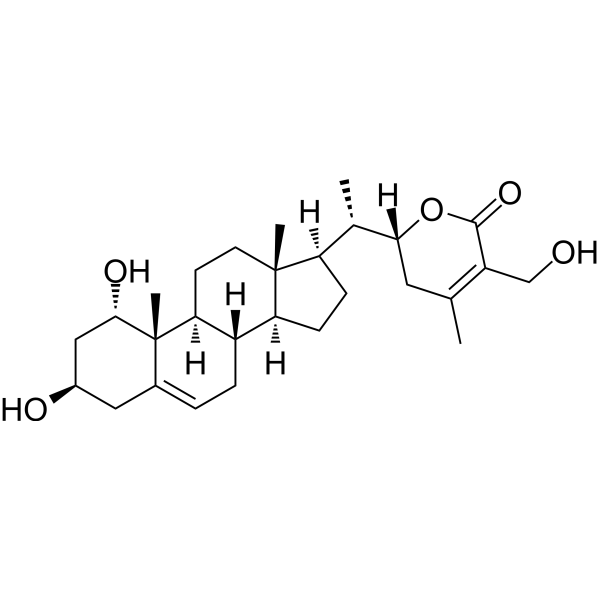
    Sominone is the active metabolite of Withanoside IV (HY-N8693). Sominone enhances neuronal morphological plasticity by activating the RET pathway. Sominone can also induce axon/dendrite regeneration and synaptic reconstruction, thereby improving spatial memory. Sominone can be used in the research of neurodegenerative diseases such as Alzheimer's disease .
    Sominone
  • HY-N10512

    Gg4

    Others Neurological Disease
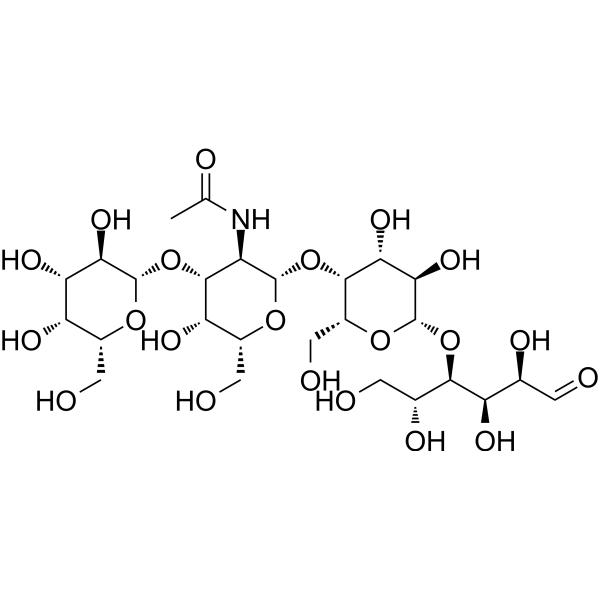
    Gangliotetraose (Gg4) is a tetrasccharide, exhibits major components including GM1 and its sialylated derivatives. GM1 facilitates efflux of nuclear Ca 2+ and reduces the level of nuclear Ca 2+ that characterizes the differentiated neuron. GM1 affects neuronal plasticity and repair mechanisms, as well as neurotrophin release in the brain .
    Gangliotetraose
  • HY-P3340

    iGluR Neurological Disease
    Leptin (116-130) is a bioactive leptin fragment. Leptin (116-130) promotes AMPA receptor trafficking to synapses and facilitate activity-dependent hippocampal synaptic plasticity. Leptin (116-130) prevents hippocampal synaptic disruption and neuronal cell death in models of amyloid toxicity. Leptin (116-130) has the potential for the research of Alzheimer's disease (AD) .
    Leptin (116-130)
  • HY-180584

    5-HT Receptor Neurological Disease
    5-HT2A agonist 9 (Compound I-53) is a 5-HT2A agonist with an EC₅₀ of 34 nM. 5-HT2A agonist 9 can be used for the study of mental disorders and central system disorders .
    5-HT2A agonist 9

Inquiry Online

Your information is safe with us. * Required Fields.

Salutation


Country or Region *

Applicant Name *


Organization Name *

Department *


Email Address *


Product Name *

Cat. No.


Requested quantity *

Phone Number *


Remarks

Inquiry Online

Inquiry Information

Product Name:
Cat. No.:
Quantity:
MCE Japan Authorized Agent:

