1. Search Result
Search Result
Results for "

nitrosourea

" in MedChemExpress (MCE) Product Catalog:

16

Inhibitors & Agonists

7

Peptides

1

Isotope-Labeled Compounds

Cat. No. Product Name Target Research Areas Chemical Structure
  • HY-W019815

    ENU; N-Nitroso-N-ethylurea

    DNA/RNA Synthesis Neurological Disease Cancer
    N-Ethyl-N-nitrosourea (ENU) is a DNA alkylating agent. N-Ethyl-N-nitrosourea induces leukemia by alkylating nucleobases, disrupting DNA, and resulting in bone marrow suppression and the formation of leukemic cells. N-Ethyl-N-nitrosourea is teratogenic in vivo, inducing tumor formation and paw malformations in pregnant rats. N-Ethyl-N-nitrosourea cause central nervous system (CNS) tumors and genetic disorders .
    N-Ethyl-N-nitrosourea
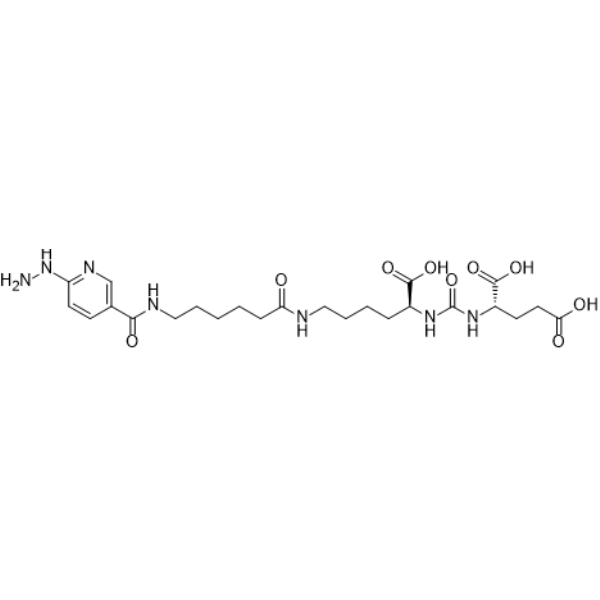
  • HY-P5290

    Radionuclide-Drug Conjugates (RDCs) PSMA Cancer
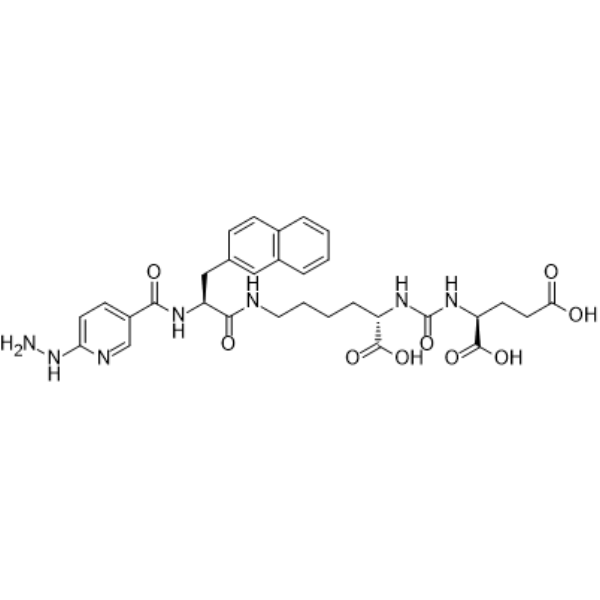
    HYNIC-PSMA is a ligand for molecular imaging of tumors. Hynic-psma consists of two components: HYNIC (6-hydrazinonicotinamide) and PSMA (Prostate-Specific Membrane Antigen). HYNIC is a compound used to attach radioactive isotopes to targeted molecules, such as 188Re-HYNIC-PSMA. PSMA is a membrane antigen that is specifically expressed on the surface of prostate cancer cells. HYNIC-PSMA can be used in prostate cancer research . HYNIC-PSMA can be used for the synthesis/research of Radionuclide-Drug Conjugates (RDCs).
    HYNIC-PSMA
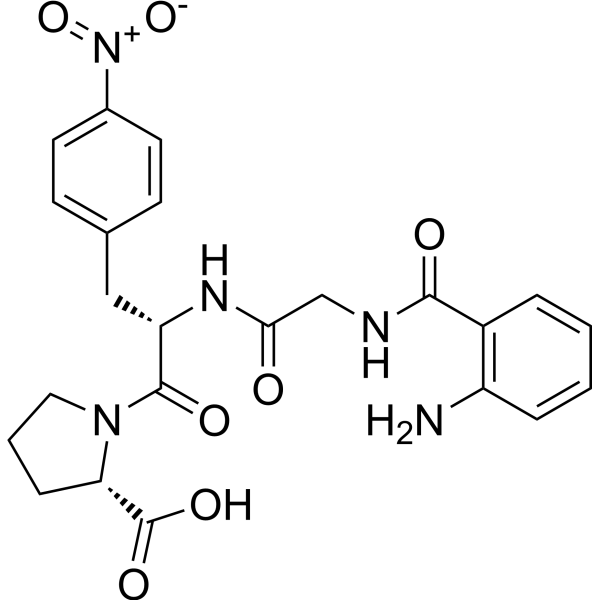
  • HY-P4545

    Angiotensin Receptor Others
    Abz-Gly-p-nitro-Phe-Pro-OH is the fluorescent substrate angiotensin I converting enzyme (ACE-I) with 355 nm excitation and 405 nm emission wavelengths .
    Abz-Gly-p-nitro-Phe-Pro-OH
  • HY-P5292A

    Radionuclide-Drug Conjugates (RDCs) PSMA Cancer
    HYNIC-iPSMA TFA is a ligand for molecular imaging of tumors. Hynic-ipsma consists of two components: HYNIC (6-hydrazinonicotinamide) and iPSMA (Inhibitor of Prostate-Specific Membrane Antigen). HYNIC is a compound used to attach radioactive isotopes to targeted molecules. iPSMA is a specific inhibitor used to inhibit prostate-specific membrane antigen (PSMA). 68GA-labeled iPSMA has been used to detect prostate cancer by PET imaging. The further 99mTc-EDDA/HYNIC-iPSMA TFA has excellent specificity and sensitivity . HYNIC-iPSMA TFA can be used for the synthesis/research of Radionuclide-Drug Conjugates (RDCs).
    HYNIC-iPSMA TFA
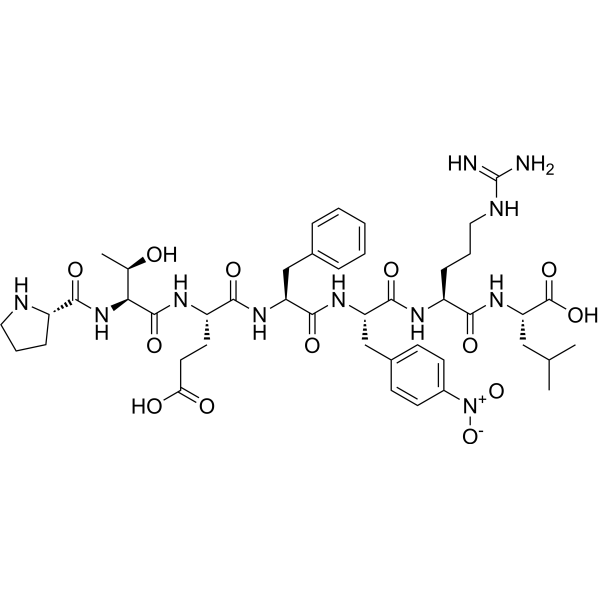
  • HY-P4561

    Cathepsin Others
    H-Pro-Thr-Glu-Phe-p-nitro-Phe-Arg-Leu-OH is a water-soluble polypeptide that can serve as a substrate for cathepsin D, pepsin and pepsinogen. H-Pro-Thr-Glu-Phe-p-nitro-Phe-Arg-Leu-OH has potential applications in biochemical analysis .
    H-Pro-Thr-Glu-Phe-p-nitro-Phe-Arg-Leu-OH
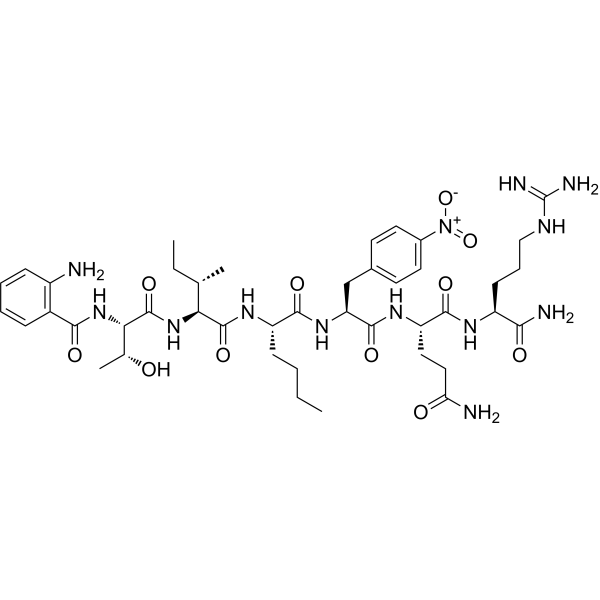
  • HY-P4725

    Fluorescent Dye Others
    Abz-Thr-Ile-Nle-p-nitro-Phe-Gln-Arg-NH2 is a fluorogenic substrate, that can be used for the fluorescence screening assay .
    Abz-Thr-Ile-Nle-p-nitro-Phe-Gln-Arg-NH2
  • HY-13739

    MCNU

    DNA Alkylator/Crosslinker Cancer
    Ranimustine (MCNU) is a nitrosourea alkylating agent, can be used for research of chronic myelogenous leukemia and polycythemia vera .
    Ranimustine
  • HY-P5292

    Radionuclide-Drug Conjugates (RDCs) PSMA Cancer
    HYNIC-iPSMA is a ligand for molecular imaging of tumors. Hynic-ipsma consists of two components: HYNIC (6-hydrazinonicotinamide) and iPSMA (Inhibitor of Prostate-Specific Membrane Antigen). HYNIC is a compound used to attach radioactive isotopes to targeted molecules. iPSMA is a specific inhibitor used to inhibit prostate-specific membrane antigen (PSMA). 68GA-labeled iPSMA has been used to detect prostate cancer by PET imaging. The further 99mTc-EDDA/HYNIC-iPSMA has excellent specificity and sensitivity . HYNIC-iPSMA can be used for the synthesis/research of Radionuclide-Drug Conjugates (RDCs).
    HYNIC-iPSMA
  • HY-119916

    DNA/RNA Synthesis Cancer
    Tauromustine is an orally active nitrosourea anticancer agent. Tauromustine has an alkylation effect and can damage the DNA function. Tauromustine has a high therapeutic index, especially in the study of Walker 256 rat sarcoma. It is also active against melanoma, breast cancer, pleural mesothelioma and ovarian cancer. Tauromustine is mainly metabolized in the liver, but some of its metabolites also have cytotoxicity .
    Tauromustine
  • HY-13703

    Apoptosis DNA Alkylator/Crosslinker DNA/RNA Synthesis p38 MAPK JNK AP-1 Cancer
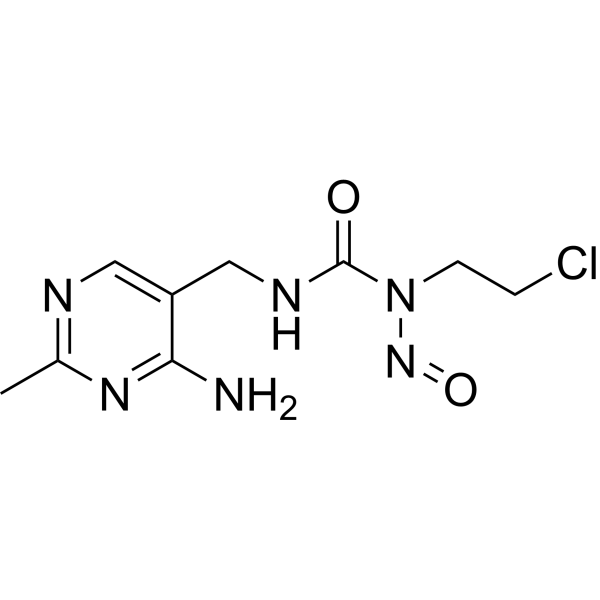
    Nimustine is an alkylating agent, which induces DNA double-strand breaks (DSBs) and inter-strand crosslinks (ICLs), thereby activating the DNA damage response (DDR) signaling pathway. Nimustine activates p38 MAPK/JNK signaling pathway, and exhibits antitumor activity .
    Nimustine
  • HY-19171

    Drug Derivative Cancer
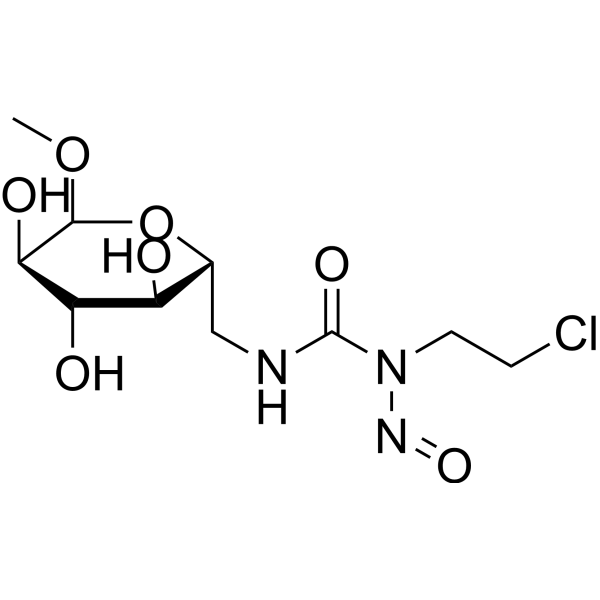
    Aranose is a nitrosourea derivative with antineoplastic activity. Aranose can be used for leukemia, plasmacytoma, and solid tumor research .
    Aranose
  • HY-106052

    ICIG 1105; NSC 279194; RFCNU

    DNA/RNA Synthesis Cancer
    Bofumustine (ICIG 1105) is a nitrosourea compound with antitumor activity. Bofumustine can interfere with the replication and division of tumor cell DNA through alkylation, leading to the death of tumor cells. Bofumustine can be used in the field of cancer research .
    Bofumustine
  • HY-143979S

    Isotope-Labeled Compounds Others
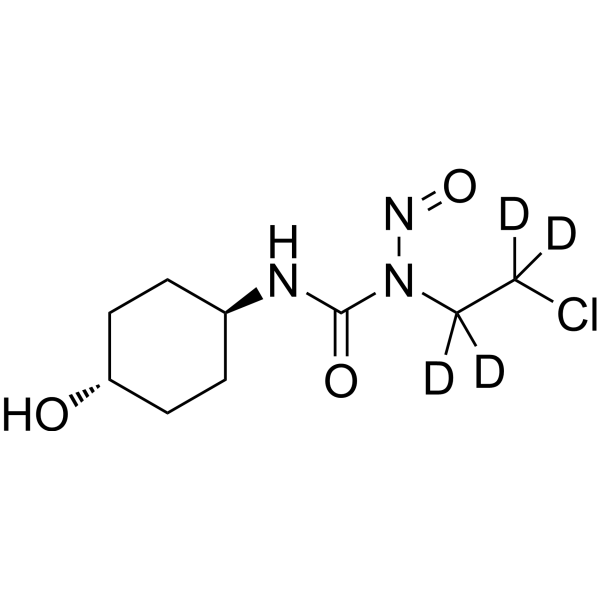
    trans-4’-Hydroxy CCNU Lomustine-d4 is the deuterium labeled trans-4’-Hydroxy CCNU Lomustine .
    1-(2-Chloroethyl)-3-((1R,4R)-4-hydroxycyclohexyl)-1-nitrosourea-d4
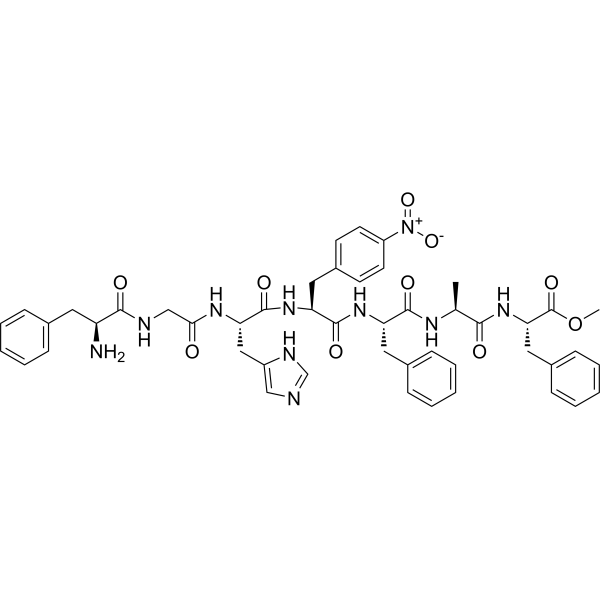
  • HY-P4556

    Biochemical Assay Reagents Others
    H-Phe-Gly-His-p-nitro-Phe-Phe-Ala-Phe-OMe is a polypeptide that can be hydrolyzed by Rennin (HY-P2810). H-Phe-Gly-His-p-nitro-Phe-Phe-Ala-Phe-OMe is commonly used as a biochemical reaction reagent .
    H-Phe-Gly-His-p-nitro-Phe-Phe-Ala-Phe-OMe
  • HY-106435

    DNA/RNA Synthesis DNA Alkylator/Crosslinker Cancer
    Cystemustine is a DNA inhibitor (a chloroethyl nitrosourea, CENU). Cystemustine can cause DNA cross-linking, thereby inhibiting the proliferation of tumor cells. Cystemustine can also exert cytotoxic effects by interfering with the cell cycle, inducing cell re-differentiation, and altering phospholipid metabolism. Cystemustine exhibits high anti-tumor activity and a relatively short plasma half-life in mice. Cystemustine can be used for the study of various malignant tumors, including melanoma, glioma, renal cancer, head and neck cancer, and colorectal cancer, etc .
    Cystemustine
  • HY-105060

    Drug Derivative Cancer
    TA 077 is a nitrosourea derivative with antitumor activity. TA 077 can be used for the research of cancer, such as lung cancer and leukemia .
    TA 077

Inquiry Online

Your information is safe with us. * Required Fields.

Salutation


Country or Region *

Applicant Name *


Organization Name *

Department *


Email Address *


Product Name *

Cat. No.


Requested quantity *

Phone Number *


Remarks

Inquiry Online

Inquiry Information

Product Name:
Cat. No.:
Quantity:
MCE Japan Authorized Agent:

