

7 Results for "

nonimmune cells

" in MedChemExpress (MCE) Product Catalog:
Products (7)

7 Results for "nonimmune cells" in MCE Product Catalog:

1
1 Cited Publications
Cat. No.: HY-125474
CAS No.: 9000-07-1
Carrageenan is an antiviral and anticancer agent. Carrageenan inhibits herpes simplex virus (HSV), HIV, and hepatitis A virus (HAV) by directly binding to the viral capsid to block the attachment of viruses such as HPV to HSPG factors on the cell surface. Carrageenan delays and arrests cell cycle progression, exhibits cytotoxicity against HeLa cancer cells, and can be applied to studies related to cervical cancer, genital warts, hepatitis A, and other conditions. Carrageenan also induces acute non-immune inflammation, triggers a three-phase inflammatory response involving the release of multiple proinflammatory mediators, and causes persistent edema, hyperalgesia, and neutrophil recruitment in mice .
loading...
    loading...
Cat. No.: HY-NP0194A
C1q Protein (mouse) is a complement protein and is a recognition molecule of the classical pathway, performs a diverse range of complement and non-complement functions. C1q Protein (mouse) binds various ligands derived from self, non-self, and altered self and modulate the functions of immune
and non-immune cells. C1q Protein (mouse) can be used for the research of mutiple disease .
loading...
    loading...
Cat. No.: HY-P990087
CAS No.: 2756228-84-7
Synonyms: OR-2805
Zovostotug (OR-2805) is a fully human IgG1 antibody that binds to CD163. Zovostotug binds to CD163 expressed on TAMs and M2-like macrophages. Zovostotug does not bind to other hematopoietic cells nor to a panel of human primary non-immune cells. Zovostotug canbe used for the study of lung cancer .
loading...
    loading...
Cat. No.: HY-NP0194C
C1q Protein (rat) is a complement protein and is a recognition molecule of the classical pathway, performs a diverse range of complement and non-complement functions. C1q Protein (rat) binds various ligands derived from self, non-self, and altered self and modulate the functions of immune
and non-immune cells. C1q Protein (rat) can be used for the research of mutiple disease .
loading...
    loading...
Cat. No.: HY-157032
CAS No.: 1613134-34-1
Target:  

Proteasome

Research Areas:  

Others

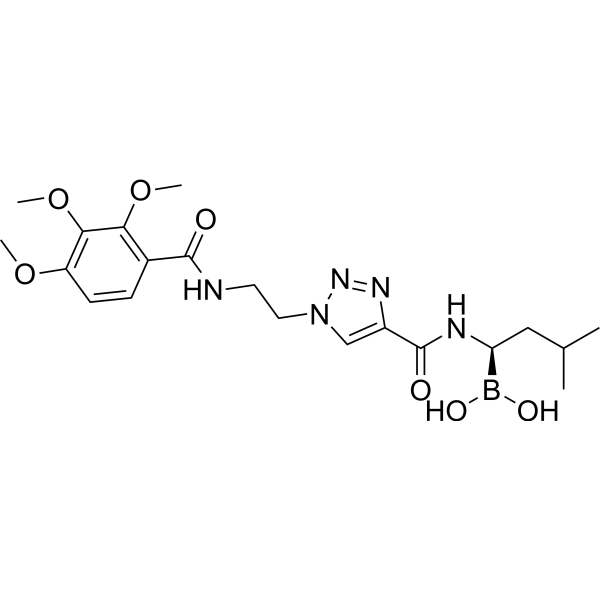
Proteasome-IN-5 (compound 5) is a proteasome inhibitor .
loading...
    loading...
Cat. No.: HY-NP0194B
C1q Protein (rabbit) is a complement protein and is a recognition molecule of the classical pathway, performs a diverse range of complement and non-complement functions. C1q Protein (rabbit) binds various ligands derived from self, non-self, and altered self and modulate the functions of immune
and non-immune cells. C1q Protein (rabbit) can be used for the research of mutiple disease .
loading...
    loading...
Cat. No.: HY-123013
CAS No.: 53944-40-4
Research Areas:  

Inflammation/Immunology

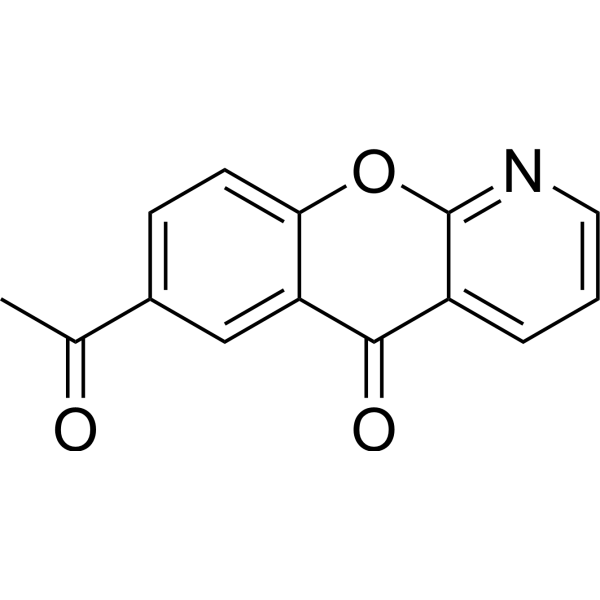
Y 9000 is an orally active antiallergic and anti-inflammatory compound. Y 9000 targets mast cells, inhibits the release of allergic mediators, stimulates the adrenal glands, exhibits glucocorticoid-like activity, and reduces adrenal ascorbic acid content. Y 9000 inhibits IgE-mediated and IgG-mediated allergic reactions as well as active systemic anaphylaxis in mice. Y 9000 inhibits allergic wheezing in passively sensitized guinea pigs and protects against active systemic anaphylactic shock in mice. Y 9000 inhibits non-immune responses in rats, including dextran-induced histamine release, anaphylactoid reactions and paw swelling. Y 9000 can be used in the research of allergic diseases (asthma, allergic rhinitis, urticaria, etc.) .
loading...
    loading...

