Search Result
Results for "
oligonucleotide labeling
" in MedChemExpress (MCE) Product Catalog:
8
Isotope-Labeled Compounds
| Cat. No. |
Product Name |
Target |
Research Areas |
Chemical Structure |
-
- HY-D0819
-
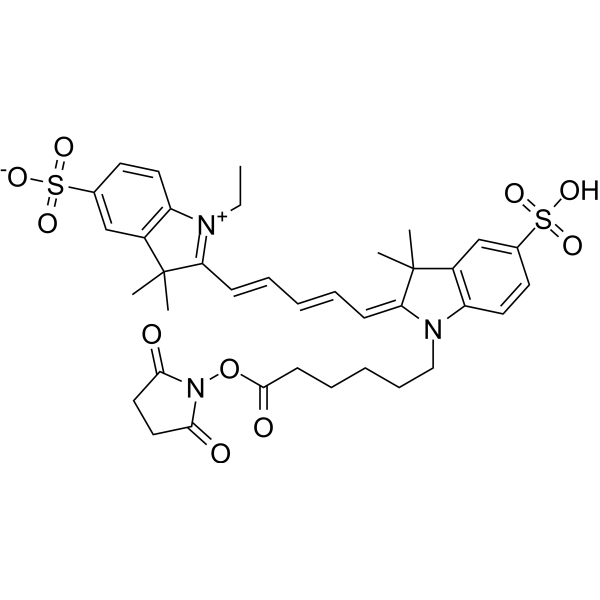
CY5-SE
Maximum Cited Publications
37 Publications Verification
Cy5 NHS Ester; Sulfo-Cyanine5 Succinimidyl Ester
|
Fluorescent Dye
|
Others
|
|
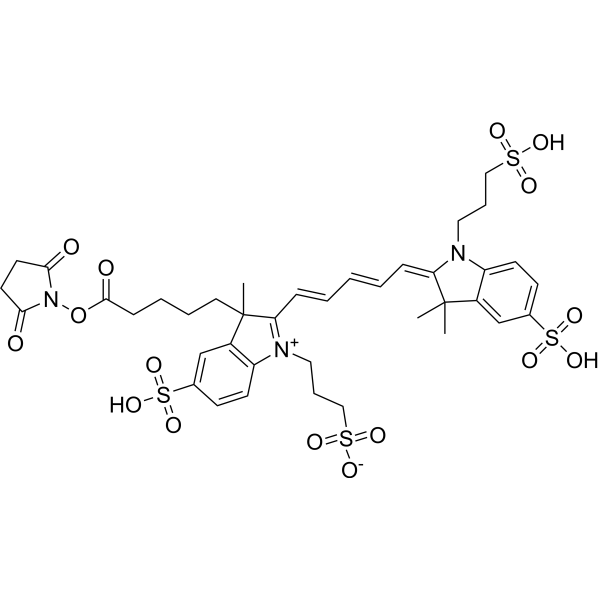
Cy5-SE (Cy5 NHS Ester) is a reactive dye for the labeling of amino-groups in peptides, proteins, and oligonucleotides. This dye requires small amount of organic co-solvent (such as DMF or DMSO) to be used in labeling reaction. This reagent is ideal for very cost-efficient labeling of soluble proteins, as well as all kinds of peptides and oligonucleotides. This reagent also works well in organic solvents for small molecule labeling.
Excitation (nm):649, Emission (nm): 670.
|
-
-
- HY-66021
-
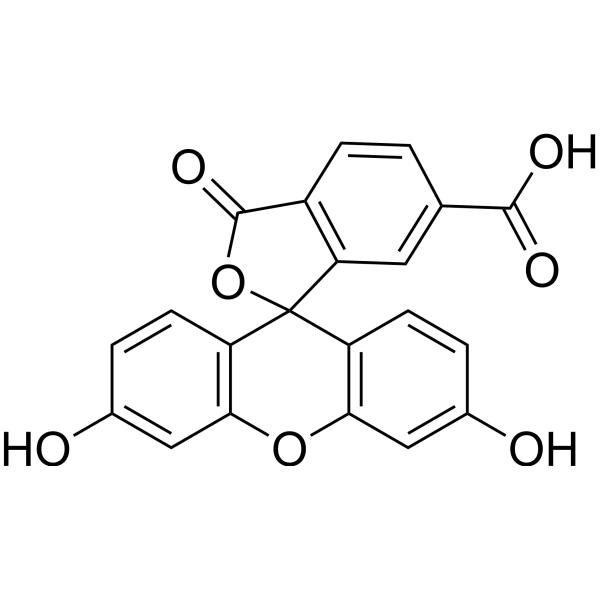
6-FAM
2 Publications Verification
6-Carboxyfluorescein
|
Fluorescent Dye
|
Others
|
|
6-FAM (6-Carboxyfluorescein) is an isomer of carboxyfluorescein and is mainly used for sequencing and labeling of nucleic acids.
|
-
-
- HY-D0819A
-
|
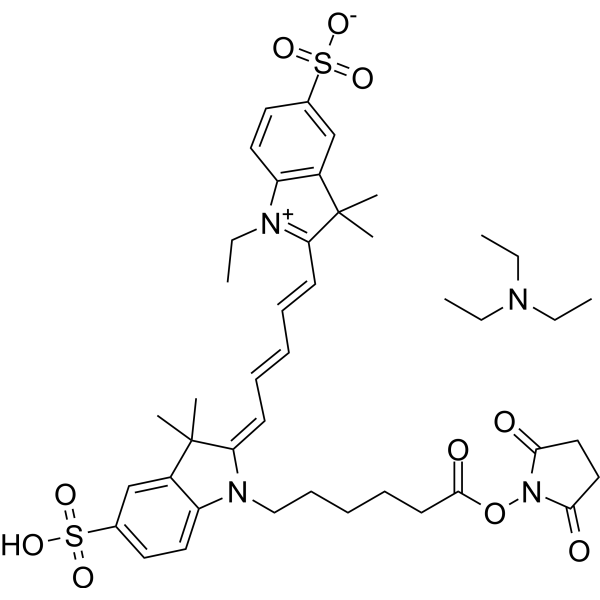
Cy5 NHS Ester triethylamine salt; Sulfo-Cyanine5 Succinimidyl Ester triethylamine salt
|
Fluorescent Dye
|
Others
|
|
Cy5-SE (Cy5 NHS Ester) triethylamine salt is a reactive dye for the labeling of amino-groups in peptides, proteins, and oligonucleotides. Cy5-SE triethylamine salt is ideal for very cost-efficient labeling of soluble proteins, as well as all kinds of peptides and oligonucleotides Ex=649 nm; Em=670 nm) .
|
-
-
- HY-135414
-
|
|
Fluorescent Dye
|
Others
|
|
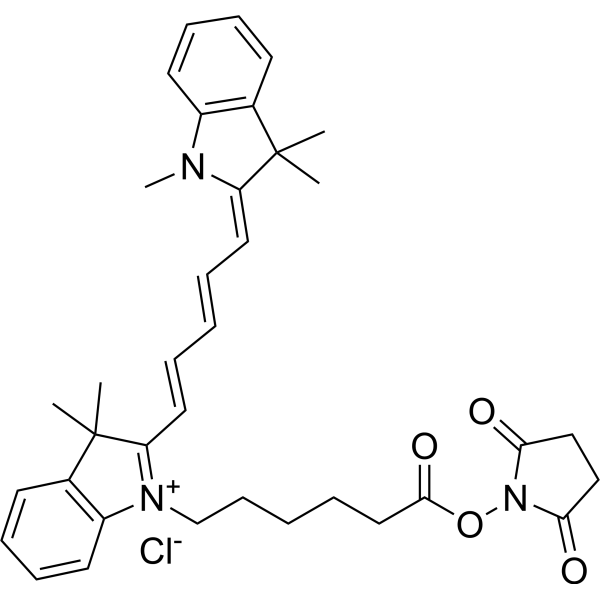
Cyanine5 NHS ester chloride is a red emitting fluorescent dye for labeling of amino-groups in peptides, proteins, and oligonucleotides .
|
-
-
- HY-D2096
-
|
|
Fluorescent Dye
|
Others
|
|
Alexa fluor 647 NHS ester can be used to label Alexa fluor 647 to the primary amines (R-NH2) of proteins, amine-modified oligonucleotides, and other amine-containing molecules .
|
-
-
- HY-131326
-
|
|
Biochemical Assay Reagents
|
Cancer
|
|
DOTA-tris(tBu)ester NHS ester is a bifunctional precursor to a DOTA-based chelating agent. DOTA-tris(tBu)ester NHS ester can be used to label primary amines (R-NH2) of proteins, amine-modified oligonucleotides, and other amine-containing molecules, and upon deprotection forms stable complexes with metal ions for applications in molecular imaging .
|
-
-
- HY-D0049
-
|
6-TAMRA-NHS ester; 6-Carboxytetramethylrhodamine N-succinimidyl ester
|
DNA Stain
|
Others
|
|
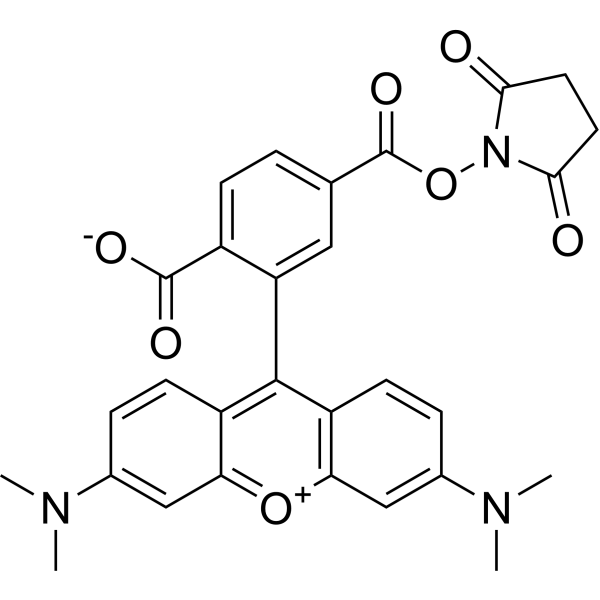
6-TAMRA-SE (6-TAMRA-NHS ester) is a fluorescent dye carrying the amine reactive group. 6-TAMRA-SE is one of the traditional fluorophores used for automated DNA sequencing .
|
-
-
- HY-155500
-
|
|
Fluorescent Dye
|
Others
|
|
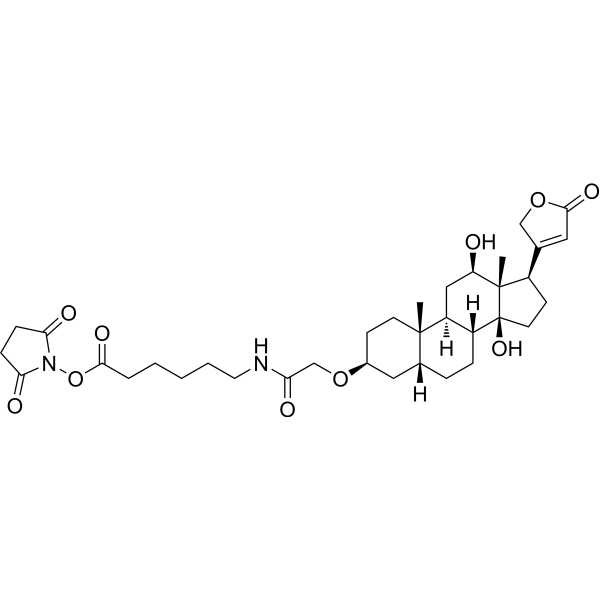
Digoxigenin NHS ester is an activated ester which readily reacts with amino groups under mild conditions, attaching the Digoxigenin (HY-B1025) moiety to proteins or amino-. Digoxigenin NHS ester can be used to label proteins and oligonucleotides .
|
-
-
- HY-D0913
-
|
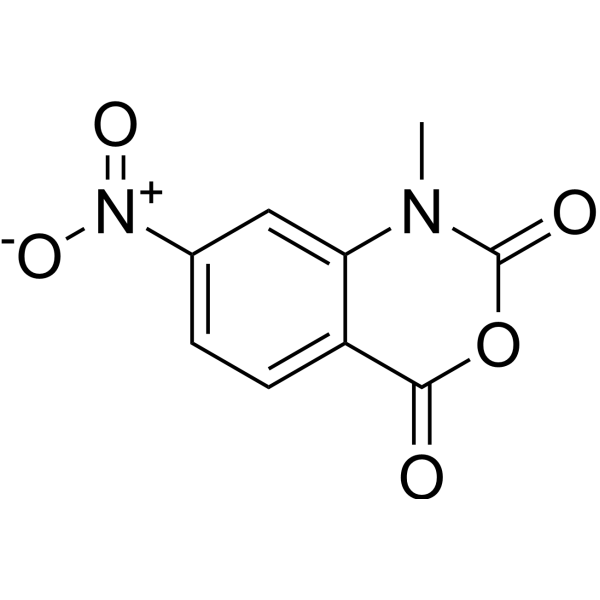
1M7
|
Fluorescent Dye
|
Others
|
|
1-Methyl-7-nitroisatoic anhydride (1M7) is a reagent that detects local nucleotide flexibility, for probing 2'-hydroxyl reactivity, can be used for RNA structure analysis .
|
-
-
- HY-D0723
-
|
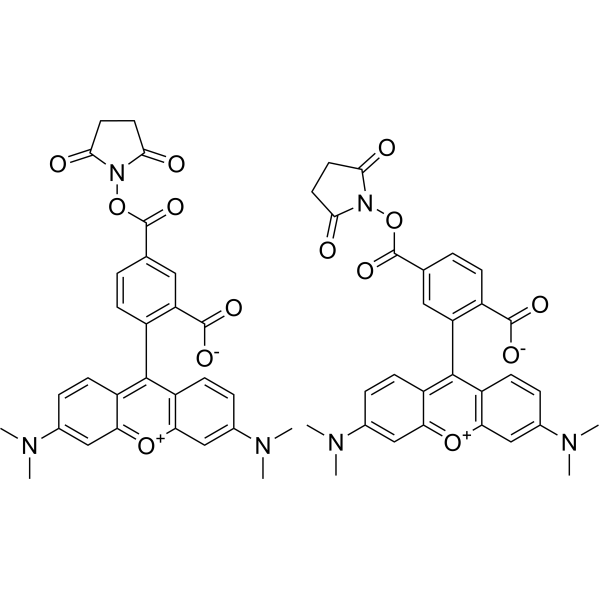
5(6)-Carboxytetramethylrhodamine N-succinimidyl ester
|
Fluorescent Dye
|
Cancer
|
|
5(6)-TAMRA SE is a fluorescent dye that emits red fluorescence. 5(6)-TAMRA SE binds to oligonucleotides and is used in DNA sequencing. 5(6)-TAMRA SE can be used in cancer research (Ex/Em = 565/580 nm) .
|
-
-
- HY-D2096A
-
|
|
Fluorescent Dye
|
Others
|
|
Alexa fluor 647 NHS ester TEA can be used to label Alexa fluor 647 to the primary amines (R-NH2) of proteins, amine-modified oligonucleotides, and other amine-containing molecules .
|
-
-
- HY-W040289
-
|
|
ADC Linker
|
Cancer
|
|
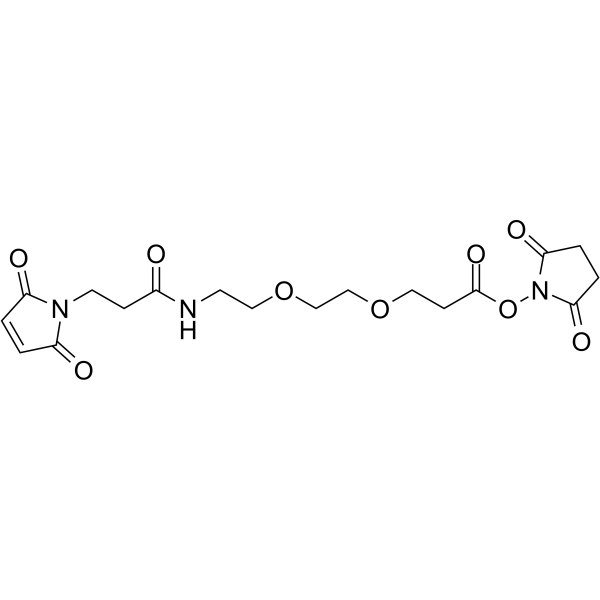
Mal-amido-PEG2-NHS ester is a nonclaevable ADC linker containing a maleimide group and an NHS ester. The NHS ester can be used to label the primary amines (-NH2) of proteins, amine-modified oligonucleotides, and other amine-containing molecules .
|
-
-
- HY-D2171A
-
|
|
Fluorescent Dye
|
Others
|
|
AF488 DBCO ditriethylamineis a fluorescent dye and also a click chemistry reagent that can label azide-containing biomolecules. AF488 DBCO ditriethylaminemediates the coupling reaction with azide-modified 2'-OMe RNA oligonucleotides. DBCO is a bioorthogonal partner of azides and enables covalent coupling without copper (Ex/Em = 470/520 nm) .
|
-
-
- HY-15939
-
|
|
Fluorescent Dye
|
Metabolic Disease
|
|
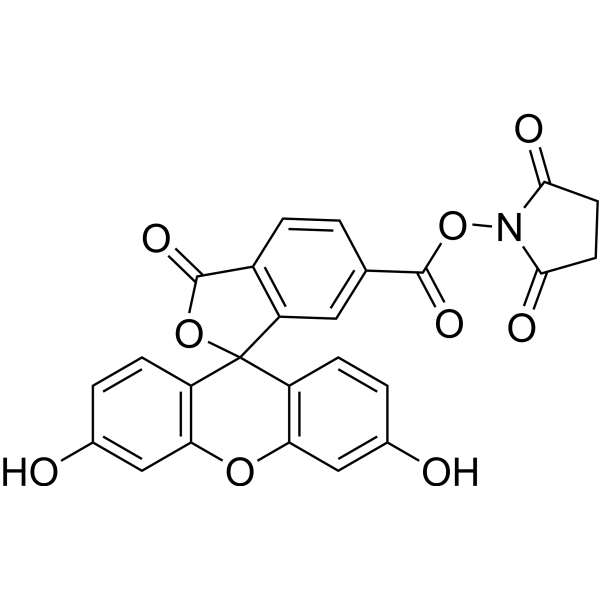
6-FAM SE (6-carboxyfluorescein succinimidyl ester) is a fluorescent labeling reagent. 6-FAM SE is used for oligonucleotide labeling and DNA sequencing .
|
-
-
- HY-D0784
-
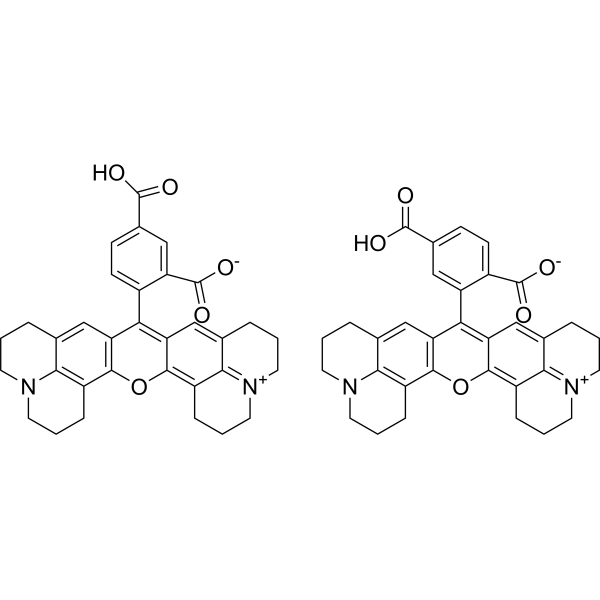
5-ROX
1 Publications Verification
5-Carboxy-X-rhodamine
|
Fluorescent Dye
|
Others
|
|
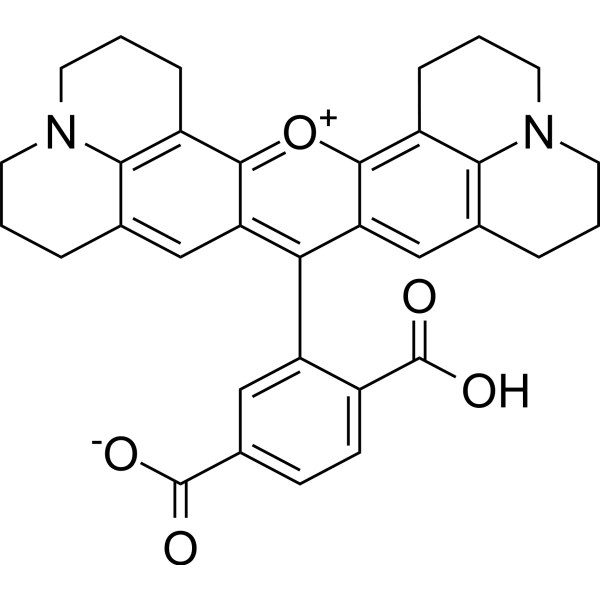
5-ROX (5-Carboxy-X-rhodamine), a rhodamine dye, exhibits strong fluorescence property in aqueous buffer with the λexit of 580 nm (ε=3.6×10 4 M -1 cm -1), and λemit of 604 nm (=0.94) .
|
-
-
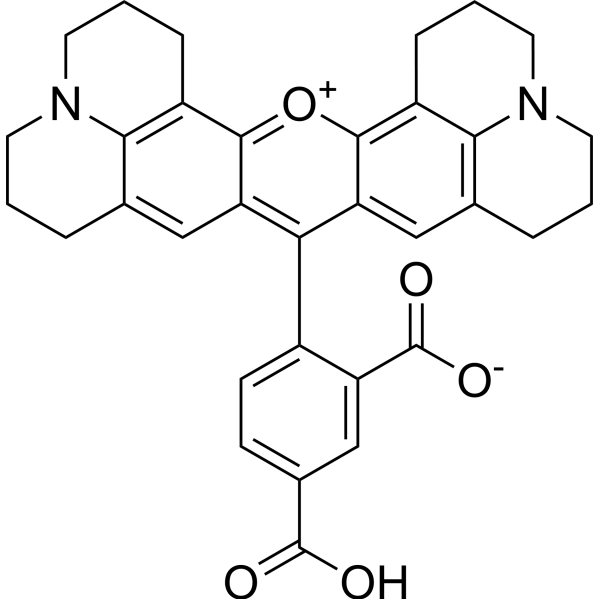
- HY-D0043
-
|
5(6)-Carboxy-X-rhodamine
|
DNA Stain
|
Others
|
|
5(6)-ROX (5(6)-Carboxy-X-rhodamine) is a nucleic acid fluorescent label which can be used as a reference dye for real-time polymerase chain reaction (Em/Ex = 605/585 nm) .
|
-
-
- HY-D0053
-
|
6-Carboxy-X-rhodamine
|
Fluorescent Dye
|
Others
|
|
6-ROX is a selective fluorescent probe and potential inhibitor of COX-2. 6-ROX binds to the active site of COX-2 and inhibits its conversion of arachidonic acid into prostaglandins. 6-ROX is often used in the field of optical imaging related to tumors and inflammation, and helps detect diseased tissues with high expression of COX-2 .
|
-
-
- HY-D1668
-
|
|
DNA Stain
Reverse Transcriptase
|
Infection
Neurological Disease
Cancer
|
|
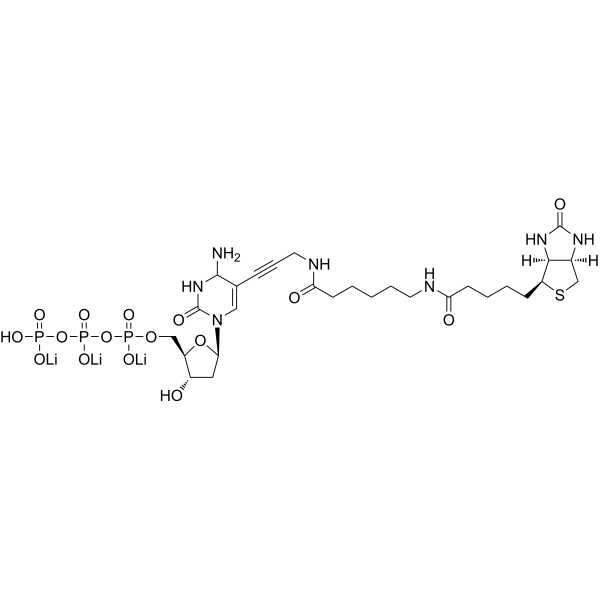
Biotin-11-dCTP is a biotinylated deoxynucleoside triphosphate and an important DNA labeling reagent. In random primer DNA labeling reactions, Biotin-11-dCTP incorporates into newly synthesized DNA strands to generate labeled DNA probes suitable for hybridization applications. In addition, Biotin-11-dCTP can serve as a substrate for terminal deoxynucleotidyl transferase to end-label oligonucleotides for telomere sequence detection, or to label the cut ends of linearized DNA molecules, thereby supporting streptavidin-based electron microscopy analysis. For example, Biotin-11-dCTP can label the cut ends of linearized DNA molecules under the action of dGTP and avian myeloblastosis virus reverse transcriptase .
|
-
-
- HY-D2746
-
|
|
Fluorescent Dye
|
Others
|
|
Cy5.5 bis-NHS ester is a reactive cyanine dye containing NHS ester which can be used to label amine groups in peptides, proteins, and oligonucleotides.
|
-
-
- HY-D1085
-
|
|
Fluorescent Dye
|
Others
|
|
AMCA-X-SE is a coumarin derivative that generates fixed blue fluorescence and an NHS-activated ester that forms stable amide bonds with primary amine groups. It is used as a reactive dye for labeling amino groups of peptides, proteins, and oligonucleotides. Maximum excitation/emission wavelength: 354/442 nm .
|
-
-
- HY-D2328
-
|
Alexa Fluor 680 succinimidyl ester
|
Fluorescent Dye
|
Others
|
|
Alexa Fluor 680 NHS ester (Alexa Fluor 680 succinimidyl ester) is a near-infrared (NIR) fluorescent dye. NHS esters can be used to label to the primary amines (R-NH2) of proteins, amine-modified oligonucleotides, and other amine-containing molecules (Ex/Em = 679/702 nm) .
|
-
-
- HY-D0967
-
|
|
Fluorescent Dye
|
Others
|
|
Cy5-bifunctional dye is a bifunctional dye used for covalent labeling of primary amines on proteins or oligonucleotides (Ex/Em = 649 nm/670 nm). Cy5-bifunctional dye can label recombinant annexin-V to assess phosphatidylserine exposure on the cell surface via flow cytometry. Cy5-bifunctional dye can label anti-human IgG (H + L) secondary antibodies. Cy5-bifunctional dye is applicable to studies of glanders and melioidosis .
|
-
-
- HY-D1070
-
|
|
DNA Stain
|
Others
|
|
DBCO-PEG4-TAMRA is a PEG-based TAMRA dye and contains a DBCO group, which enables Click Chemistry. The TAMRA dye is a dye widely used in oligonucleotide labeling and automated DNA sequencing applications. DBCO-PEG4-TAMRA is a click chemistry reagent, it contains a DBCO group that can undergo strain-promoted alkyne-azide cycloaddition (SPAAC) with molecules containing Azide groups.
|
-
-
- HY-126509
-
|
|
ADC Linker
|
Cancer
|
|
Mal-amido-PEG10-C2-NHS ester is a nonclaevable ADC linker containing a maleimide group and an NHS ester. The NHS ester can be used to label the primary amines (-NH2) of proteins, amine-modified oligonucleotides, and other amine-containing molecules .
|
-
-
- HY-D2171
-
|
|
Fluorescent Dye
|
Others
|
|
AF488 DBCO is a fluorescent dye and also a click chemistry reagent that can label azide-containing biomolecules. AF488 DBCO mediates the coupling reaction with azide-modified 2'-OMe RNA oligonucleotides. DBCO is a bioorthogonal partner of azides and enables covalent coupling without copper (Ex/Em = 470/520 nm) .
|
-
-
- HY-DY1063
-
|
|
Fluorescent Dye
|
Others
|
Cy5-SE (Cy5 NHS Ester) (solution) is a reactive dye for the labeling of amino-groups in peptides, proteins, and oligonucleotides. This dye requires small amount of organic co-solvent (such as DMF or DMSO) to be used in labeling reaction. This reagent is ideal for very cost-efficient labeling of soluble proteins, as well as all kinds of peptides and oligonucleotides. This reagent also works well in organic solvents for small molecule labeling.
Excitation (nm) :649, Emission (nm) : 670. Solvent and concentration: DMSO: 10 mM
|
-
-
- HY-D1899
-
|
|
Fluorescent Dye
|
Others
|
|
VIC phosphoramidite, 6-isomer is a VIC derivative that can be used for conjugating VIC to other molecules. VIC can be used for labeling oligonucleotides at the 5’-end .
|
-
-
- HY-D2175
-
|
|
Fluorescent Dye
|
Others
|
|
AF 555 NHS ester is a bright, orange-red fluorescence probe. AF 555 NHS ester can be used to label primary amines (R-NH2) of proteins, amine-modified oligonucleotides, and other amine-containing molecules (Ex/Em = 552/566 nm) .
|
-
-
- HY-D2170
-
|
|
Fluorescent Dye
|
Others
|
|
AF488 streptavidin is a fluorescently labeled streptavidin. AF488 streptavidin is a streptavidin conjugated to Alexa Fluor 488, with 4 fluorophores per protein molecule, enabling stoichiometric fluorescent labeling of cell surface targets. AF488 streptavidin can form a complex with biotinylated E07 aptamer to stain cells expressing EGFR, and the staining is reversible after treatment with mA9 detoxifying oligonucleotides (Ex/Em = 470/520 nm) .
|
-
-
- HY-D0818
-
|
Sulfo-Cyanine3-alkyne
|
Fluorescent Dye
|
Others
|
|
CY3-YNE (Sulfo-Cyanine3-alkyne) is a dye for the labeling of soluble proteins, peptides, and oligonucleotides/DNA. CY3-YNE is a click chemistry reagent, it contains an Alkyne group and can undergo copper-catalyzed azide-alkyne cycloaddition (CuAAc) with molecules containing Azide groups.
|
-
-
- HY-D1790
-
|
VF 640 SE
|
Fluorescent Dye
|
Others
|
|
Vari Fluor 640 SE (VF 640 SE) is a dye marker of the Vari Fluor SE series (Ex/Em=648 nm/664 nm). The Vari Fluor SE series of dyes are a class of fluorescent dyes containing NHS ester groups used to label free amines (-NHX) on antibodies, proteins, peptides, amine-modified oligonucleotides and other biomolecules.
|
-
-
- HY-D1086
-
|
6-ROX, SE
|
DNA Stain
|
Others
|
|
6-Carboxy-X-rhodamine, succinimidyl ester (6-ROX, SE) is a fluorescent dye for oligonucleotide labeling and automated DNA sequencing .
|
-
-
- HY-D2245
-
|
|
Fluorescent Dye
|
Others
|
|
Cy5.5 phosphoramidite, a cyanine derivative, is a fluorescent labeling reagent for preparing fluorescence-labeled oligonucleotides .
|
-
-
- HY-135414B
-
|
|
Fluorescent Dye
|
Others
|
|
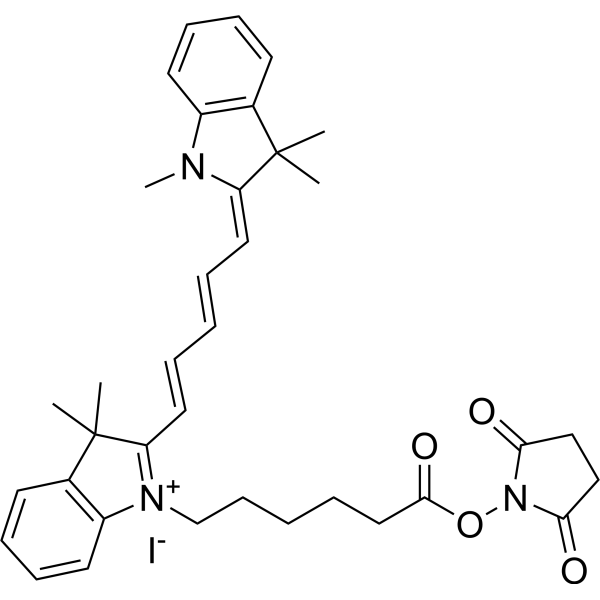
Cyanine5 NHS ester iodide is a red emitting fluorescent dye for labeling of amino-groups in peptides, proteins, and oligonucleotides .
|
-
-
- HY-D1221
-
|
|
Fluorescent Dye
|
Others
|
|
6-Fluorescein phosphoramidite is a potent fluorescent dye. 6-Fluorescein phosphoramidite can be used to label oligonucleotides .
|
-
-
- HY-W190937
-
|
|
Biochemical Assay Reagents
|
Others
|
|
PC Azido-PEG3-NHS carbonate ester is a photocleavable linker. It can be used to label the primary amines (-NH2) of proteins, amine-modified oligonucleotides, and other amine-containing molecules.
|
-
-
- HY-D1692
-
|
|
Fluorescent Dye
|
Others
|
|
BODIPY 650/665 NHS ester is bright, far-red fluorescent dye that can be used to label the primary amines (R-NH2) of proteins, amine-modified oligonucleotides, and other amine-containing molecules . Ex / Em = 646 / 660 nm
|
-
-
- HY-D2328A
-
|
Alexa Fluor 680 succinimidyl ester diTEA
|
Fluorescent Dye
|
Others
|
|
Alexa Fluor 680 NHS ester (Alexa Fluor 680 succinimidyl ester) diTEA is a near-infrared (NIR) fluorescent dye. NHS esters can be used to label to the primary amines (R-NH2) of proteins, amine-modified oligonucleotides, and other amine-containing molecules (Ex/Em = 679/702 nm) .
|
-
-
- HY-D1791
-
|
VF 750 SE
|
Fluorescent Dye
|
Others
|
|
Vari Fluor 750 SE (VF 750 SE) is a dye marker of the Vari Fluor SE series (Ex/Em=747 nm/770 nm). The Vari Fluor SE series of dyes are a class of fluorescent dyes containing NHS ester groups used to label free amines (-NHX) on antibodies, proteins, peptides, amine-modified oligonucleotides and other biomolecules.
|
-
-
- HY-D2244
-
-
-
- HY-D2502
-
|
|
Fluorescent Dye
|
Others
|
|
Cy7 hydrazide is a Cy7 (HY-D0825) dye derivative with hydrazine functionality. The hydrazide group of Cy7 hydrazide can form hydrazinone coupling with molecules containing aldehydes or ketones to form covalent bonds .
|
-
-
- HY-D1409
-
|
DMTr-4'-F-uridine-CED-TBDMS phosphoramidite
|
DNA Stain
Phosphoramidites
|
Cardiovascular Disease
|
|
DMTr-4'-F-U-CED-TBDMS phosphoramidite (DMTr-4'-F-uridine-CED-TBDMS phosphoramidite), a dye reagent for oligonucleotide labeling, can be used for the research of applications in RNA therapeutics, RNA aptamers, and ribozymes for elucidating RNA structure. DMTr-4'-F-U-CED-TBDMS phosphoramidite represents a probe with wide utility for elucidation of RNA structure .
|
-
-
- HY-D1089
-
|
|
Fluorescent Dye
|
Others
|
|
6-JOE, SE is an amine-reactive fluorescent probe and is suitable for postsynthetic labeling of amino-modified oligonucleotides .
|
-
-
- HY-D1596A
-
|
Cy3.5 NHS ester bromide; Cy 3.5 bromide
|
Fluorescent Dye
|
Others
|
|
Cyanine 3.5 bromide (Cy3.5 NHS ester bromide) is an analog of the Cy3.5 fluorophore. Cyanine 3.5 bromide is a red reactive fluorescent dye. Cyanine 3.5 bromide is used to label amino groups in peptides, proteins, and oligonucleotides. (λex=591 nm, λem=604 nm) .
|
-
-
- HY-D1410
-
|
DMTr-4'-F-5-Methyluridine-CED phosphoramidite
|
Fluorescent Dye
Phosphoramidites
|
Others
|
|
DMTr-4'-F-5-Me-U-CED phosphoramidite (DMTr-4'-F-5-Methyluridine-CED phosphoramidite), a dye reagent for oligonucleotide labeling, acts as efficient as the incorporation of native deoxyribonucleoside phosphoramidites. DMTr-4'-F-5-Me-U-CED phosphoramidite is a building block .
|
-
-
- HY-157221
-
-
-
- HY-D1408
-
|
DMTr-4'-Methyluridine-CED-TBDMS phosphoramidite
|
DNA Stain
Phosphoramidites
|
Cardiovascular Disease
|
|
DMTr-4'-Me-U-CED-TBDMS phosphoramidite (DMTr-4'-Methyluridine-CED-TBDMS phosphoramidite), a dye reagent for oligonucleotide labeling, can be used for the research of applications in RNA therapeutics, RNA aptamers, and ribozymes for elucidating RNA structure. DMTr-4'-Me-U-CED-TBDMS phosphoramidite represents a probe with wide utility for elucidation of RNA structure .
|
-
-
- HY-D1900
-
|
|
Fluorescent Dye
|
Others
|
|
VIC azide, 6-isomer is a VIC derivative that can be used for conjugating VIC to other molecules. VIC can be used for labeling oligonucleotides at the 5’-end .
|
-
-
- HY-126507
-
|
|
ADC Linker
|
Cancer
|
|
Mal-amido-PEG1-C2-NHS ester is a nonclaevable ADC linker containing a maleimide group and an NHS ester. The NHS ester can be used to label the primary amines (-NH2) of proteins, amine-modified oligonucleotides, and other amine-containing molecules
|
-
-
- HY-D1596
-
|
Cy3.5 NHS ester chloride; Cy 3.5 chloride
|
Fluorescent Dye
|
Others
|
|
Cyanine 3.5 (Cy3.5 NHS ester) chloride is an analog of Cy3.5 fluorophore. Cyanine 3.5 chloride is a reactive, red fluorescent dye. Cyanine 3.5 chloride is used for labeling of amino-groups in peptides, proteins, and oligonucleotides. (λex=591 nm, λem=604 nm) .
|
-
- HY-D2291
-
|
|
Fluorescent Dye
|
Others
|
|
BODIPY TMR NHS ester is bright, orange fluorescent dye with Ex/Em of 544/570 nm. The NHS ester (or succinimidyl ester) of BODIPY TMR NHS ester is a popular tool for conjugating the dye to a protein or antibody. NHS esters can be used to label the primary amines (R-NH2) of proteins, amine-modified oligonucleotides, and other amine-containing molecules .
|
-
- HY-D2459
-
|
|
Fluorescent Dye
|
Cancer
|
|
Alexa Fluor 430 NHS ester is a compound that couples green fluorescent dye Alexa Fluor 430 to a protein or antibody. Alexa Fluor 430 is used for the generation of stable signals in imaging and flow cytometry. NHS ester can be used to label proteins, amine-modified oligonucleotides and other primary amines (R-NH2) containing amine molecules .
|
-
- HY-D1411
-
|
DMTr-4'-CF3-5-Methyluridine-CED phosphoramidite
|
DNA Stain
Phosphoramidites
|
Others
|
|
DMTr-4'-CF3-5-Me-U-CED phosphoramidite (DMTr-4'-CF3-5-Methyluridine-CED phosphoramidite), the modified oligodeoxynucleotide (ODN), is a dye reagent for oligonucleotide labeling, can be used for the research of applications in RNA research .
|
-
- HY-P0030
-
-
- HY-D1756
-
|
|
Fluorescent Dye
|
Others
|
|
ROX NHS ester, 6-isomer is a highly fluorescent, and photostable rhodamine dye for various applications. ROX labeled oligonucleotide probes are often used in qPCR, and qPCR instruments have ROX channel. This is reactive dye for the labeling of amino-groups in peptides, proteins, and amino-oligonucleotides. Pure single isomer.
|
-
- HY-D1892
-
|
|
Fluorescent Dye
|
Others
|
|
6-Hexachloro-fluorescein phosphoramidite is a fluorescent probe that can be used for oligonucleotide labeling .
|
-
- HY-D2495
-
|
|
Fluorescent Dye
|
Others
|
|
Cy7 SE (nosulfo) is a fluorescent dye for the labeling of amino-groups in peptides, proteins, and oligonucleotides.
|
-
- HY-D1901
-
|
|
Fluorescent Dye
|
Others
|
|
FAM-dT phosphoramidite (Compound 21) is a fully protected labelled nucleoside phosphoramidite that can be incorporated into oligonucleotides .
|
-
- HY-D1893
-
|
|
Fluorescent Dye
|
Others
|
|
HEX azide, 6-isomer, a derivate of fluorescent dye hexachlorofluorescein (HEX), can be used for labeling oligonucleotides .
|
-
- HY-D1897
-
|
5′-Tetrachlorofluorescein phosphoramidite
|
Fluorescent Dye
|
Others
|
|
6-TET phosphoramidite (5′-Tetrachlorofluorescein phosphoramidite) is a fluorescent dye that can be used for labeling an oligonucleotide with fluorescein .
|
-
- HY-149906A
-
|
FITC-GEM91 sodium
|
HIV
|
Infection
|
|
FITC-Trecovirsen (sodium) is a FITC labeled Trecovirsen. Trecovirsen is a 25-mer antisense phosphorothioate oligonucleotide targeted at the gag site of the HIV gene .
|
-
- HY-D145729F
-
|
|
Fluorescent Dye
STAT
|
Cancer
|
|
FAM-Danvatirsen is a FAM-labeled Danvatirsen (HY-145729). Danvatirsen is an antisense oligonucleotide targeting STAT3 that can be used in the study of cancer .
|
-
- HY-172398
-
|
|
Fluorescent Dye
|
Others
|
|
FAM phosphoramidite, 5-isomer is a standard fluorescein (FAM) phosphoramidite for 5'-terminal oligonucleotide labeling, high isomeric purity single isomer.
|
-
- HY-135414A
-
|
|
Fluorescent Dye
|
Others
|
|
Cyanine5 NHS ester bromide is a active compound, can be used to label amino groups in peptides, proteins, and oligonucleotides. Cyanine5 NHS ester bromide is a cyanine dye, fluorescence-labeling neurotensin (8-13) via arginine residues .
|
-
- HY-150237
-
|
|
DNA/RNA Synthesis
Dystrophin
|
Others
|
|
FITC-labeled Drisapersen (sodium) is Drisapersen labeled with FITC. Drisapersen, a antisense oligonucleotide, induces exon 51 skipping during dystrophin pre-mRNA splicing and allows synthesis of partially functional dystrophin in Duchenne muscular dystrophy (DMD) patients with amenable mutations.
|
-
- HY-150751A
-
|
|
Toll-like Receptor (TLR)
|
Inflammation/Immunology
|
|
Biotin-labeled ODN TTAGGG (sodium), a inhibitory oligonucleotide (ODN), is a TLR9, AIM2 and cGAS antagonist. Biotin-labeled ODN TTAGGG (sodium) can be used to evaluate CpG ODN cellular uptake and localization using a biotin detection system and light microscopy.
|
-
- HY-W744780
-
|
|
Biochemical Assay Reagents
|
Others
|
|
Docosahexaenoic Acid N-Succinimide is the succinimide analog of Docosahexaenoic Acid. The NHS ester can be used to label the primary amines (-NH2) of proteins, amine-modified oligonucleotides, and other amine-containing molecules.
|
-
- HY-150751B
-
|
|
Toll-like Receptor (TLR)
|
Inflammation/Immunology
|
|
FITC-labeled ODN TTAGGG (sodium), a inhibitory oligonucleotide (ODN), is a TLR9, AIM2 and cGAS antagonist. FITC-labeled ODN TTAGGG (sodium) can be used to evaluate CpG ODN cellular uptake and localization by confocal laser-scanning microscopy (excitation 495 nm, emission 520 nm) or flow cytometry.
|
-
- HY-W800819
-
|
|
Biochemical Assay Reagents
|
Others
|
|
Arachidic Acid N-Hydroxysuccinimide Ester is a lipid comprised of a saturated fatty acid with a 20-carbon chain with a terminal NHS ester. The NHS ester can be used to label the primary amines (-NH2) of proteins, amine-modified oligonucleotides, and other amine-containing molecules.
|
-
- HY-172284
-
|
|
Fluorescent Dye
|
Others
|
|
6-TAMRA cadaverine has achieved prominence as a dye for oligonucleotide labeling and automated DNA sequencing applications. The amino group (NH2) is reactive with carboxylic acids, activated NHS esters, carbonyls (ketone, aldehyde), etc.
|
-
- HY-149117
-
|
|
Fluorescent Dye
|
Others
|
|
AF430 NHS ester is an AF 430 maleimide is a derivative of the yellow fluorescent dye AF 430. AF430 has an excitation wavelength of 425 nm and an emission wavelength of 542 nm. AF430 NHS ester can be uesd for the labeling of amino-groups in peptides, proteins, and oligonucleotides. To achieve specific coupling of dye labels and biomolecules .
|
-
- HY-W048482S4
-
|
DMT-2'O-TBDMS-rU phosphoramidite-15N
|
Isotope-Labeled Compounds
DNA/RNA Synthesis
|
Others
|
|
rU Phosphoramidite- 15N (DMT-2'O-TBDMS-rU phosphoramidite- 15N) is 15N labeled rU Phosphoramidite (HY-W048482). rU Phosphoramidite is a phosphorite monomer that can be used in the synthesis of oligonucleotides.
|
-
- HY-150236
-
|
|
Huntingtin
|
Neurological Disease
|
|
FITC-labeled Tominersen (sodium) is the Tominersen labeled with FITC. Tominersen (RG6042) is a second-generation 2′-O-(2-methoxyethyl) antisense oligonucleotide that targets huntingtin protein (HTT) mRNA and potently suppresses HTT production. Tominersen improves survival and reduces brain atrophy in mice. Tominersen can be used for the research of Huntington’s disease (HD).
|
-
- HY-W749072
-
|
|
Fluorescent Dye
|
Others
|
|
BP Fluor 568 NHS ester is an amine-reactive, orange fluorescent dye routinely used to label proteins or antibodies through the primary amines (Lys), amine-modified oligonucleotides, and other amine-containing biomolecules (Ex/Em: 578 nm/602 nm) .
|
-
- HY-172508
-
|
|
Fluorescent Dye
Phosphoramidites
|
Others
|
|
Perylene dU phosphoramidite is a bright and extremely photostable fluorescent polycyclic aromatic hydrocarbon (PAH) label with a quantum yield approaching quantitative. Due to the low lifetime of fluorescence, this probe does not form excimers.With this phosphoramidite, perylene can be introduced into DNA by automated oligonucleotide synthesis.
|
-
- HY-D148410F
-
|
Cy5-STK-001 negative control
|
Fluorescent Dye
|
Neurological Disease
|
|
Cy5-Zorevunensen negative control (Cy5-STK-001 negative control) is an antisense oligonucleotide labeled with the fluorescent molecule Cy5, which can be used as a negative control for Zorevunersen (HY-148410) .
|
-
- HY-W048482S3
-
|
DMT-2'O-TBDMS-rU phosphoramidite-15N2
|
Isotope-Labeled Compounds
DNA/RNA Synthesis
|
Others
|
|
rU Phosphoramidite- 15N2 (DMT-2'O-TBDMS-rU phosphoramidite- 15N2) is 15N labeled rU Phosphoramidite (HY-W048482). rU Phosphoramidite is a phosphorite monomer that can be used in the synthesis of oligonucleotides.
|
-
- HY-W998643
-
|
|
Fluorescent Dye
|
Others
|
|
6,8-Difluoro-7-hydroxy-4-methylcoumarin NHS Ester is a molecule with an excitation at 365 nm and emission at 460 nm. The NHS ester can be applied to label the primary amines (-NH2) of proteins, amine-modified oligonucleotides, and other amine-containing molecules.
|
-
- HY-W048482S2
-
|
DMT-2'O-TBDMS-rU phosphoramidite-13C9
|
Isotope-Labeled Compounds
DNA/RNA Synthesis
|
Others
|
|
rU Phosphoramidite- 13C9 (DMT-2'O-TBDMS-rU phosphoramidite- 13C9) is 13C-labeled rU Phosphoramidite (HY-W048482). rU Phosphoramidite is a phosphorite monomer that can be used in the synthesis of oligonucleotides.
|
-
- HY-W250735
-
|
|
Biochemical Assay Reagents
|
Others
|
|
NHS-PEG4-biotinidase resistant biotin is a biotinylation reagent with a terminal NHS ester. The hydrophilic PEG spacer increases solubility in aqueous media. The NHS ester can be used to label the primary amines (-NH2) of proteins, amine-modified oligonucleotides, and other amine-containing molecules.
|
-
- HY-126508
-
|
|
ADC Linker
|
Cancer
|
|
Mal-amido-PEG10-C2-NHS ester is a nonclaevable ADC linker containing a maleimide group and an NHS ester. The NHS ester can be used to label the primary amines (-NH2) of proteins, amine-modified oligonucleotides, and other amine-containing molecules
|
-
- HY-D2737
-
|
BHQ-2 DMT amidite
|
Fluorescent Dye
|
Others
|
|
DMT-BH2 amidite (BHQ-2 DMT amidite) is a black quencher dye for the synthesis of dual-labeled oligonucleotide probes for qPCR bearing 5'-quencher. This quencher is ideal for HEX, JOE, ROX, Cyanine5, and other dyes with emissions in the orange and red parts of the spectrum.
|
-
- HY-D2494
-
|
|
Fluorescent Dye
|
Others
|
|
Sulfo Cy7 bis-NHS ester is a derivative of Cy7 (HY-D0825) dye containing sulfonate ions. Sulfo Cy7 bis-NHS ester can be used to label the primary amines (R-NH2) of proteins, amine-modified oligonucleotides, and other amine-containing molecules.
|
-
- HY-D2741
-
|
|
Fluorescent Dye
|
Others
|
|
MB 488 NHS ester is a fluroescent agent with a terminal NHS ester group. MB 488 NHS ester is a green fluorescent, very hydrophilic dye molecule that has a maximal absorption of 501 nm and emission at 524 nm. The NHS ester can be applied to label the primary amines (-NH2) of proteins, amine-modified oligonucleotides, and other amine-containing molecules.
|
-
- HY-D2767
-
|
|
Fluorescent Dye
|
Others
|
|
MB 660R NHS Ester is a fluroescent agent with a terminal NHS ester group.MB 660R NHS Ester is a far-red fluorescent dye that has a maximal absorption of 665 nm and emission at 690 nm. The NHS ester can be applied to label the primary amines (-NH2) of proteins, amine-modified oligonucleotides, and other amine-containing molecules.
|
-
- HY-D2742
-
|
BHQ-1 DMT amidite
|
Fluorescent Dye
|
Others
|
|
DMT-BH1 amidite (BHQ-1 DMT amidite) is a true dark quencher with broad absorption curve which covers the visible spectrum with maximum in green to yellow region. It is used for the synthesis of dual labeled oligonucleotide probes for qPCR bearing 5'-quencher DusQ 1 and other FRET applications for multiplexing assays.
|
-
- HY-W048482S1
-
|
DMT-2'O-TBDMS-rU phosphoramidite-13C9,15N2
|
Isotope-Labeled Compounds
DNA/RNA Synthesis
|
Others
|
|
rU Phosphoramidite- 13C9, 15N2 (DMT-2'O-TBDMS-rU phosphoramidite- 13C9, 15N2) is 13C and 15N-labeled rU Phosphoramidite (HY-W048482). rU Phosphoramidite is a phosphorite monomer that can be used in the synthesis of oligonucleotides.
|
-
- HY-W591977
-
|
|
Biochemical Assay Reagents
|
Others
|
|
Boc-5-aminopentanoic NHS ester is a linker containing an NHS ester and a t-Boc protected amine group. The t-Boc group can be deprotected under mild acidic conditions to form a free amine. The NHS ester can be used to label the primary amines (-NH2) of proteins, amine-modified oligonucleotides, and other amine-containing molecules.
|
-
- HY-D1794
-
|
VF 405 SE
|
Fluorescent Dye
|
Others
|
|
Vari Fluor 405 SE (VF 405 SE) is a dye marker of the Vari Fluor SE series (Ex/Em=399 nm/421 nm). The Vari Fluor SE series of dyes are a class of fluorescent dyes containing NHS ester groups used to label free amines (-NHX) on antibodies, proteins, peptides, amine-modified oligonucleotides and other biomolecules.
|
-
- HY-D1792
-
|
VF 555 SE
|
Fluorescent Dye
|
Others
|
|
Vari Fluor 555 SE (VF 555 SE) is a dye marker of the Vari Fluor SE series (Ex/Em=550 nm/561 nm). The Vari Fluor SE series of dyes are a class of fluorescent dyes containing NHS ester groups used to label free amines (-NHX) on antibodies, proteins, peptides, amine-modified oligonucleotides and other biomolecules.
|
-
- HY-D1803
-
|
VF 565 SE
|
Fluorescent Dye
|
Others
|
|
Vari Fluor 565 SE (VF 565 SE) is a dye marker of the Vari Fluor SE series (Ex/Em=563 nm/594 nm). The Vari Fluor SE series of dyes are a class of fluorescent dyes containing NHS ester groups used to label free amines (-NHX) on antibodies, proteins, peptides, amine-modified oligonucleotides and other biomolecules.
|
-
- HY-130510
-
|
|
Fluorescent Dye
|
Others
|
|
6-HEX dipivaloate is an amino-bindable fluorescent probe that can be used to label peptides and oligonucleotides. 6-HEX dipivaloate is widely used in nucleic acid sequencing and related research .
|
-
- HY-W190907
-
|
|
Biochemical Assay Reagents
|
Others
|
|
Trifluoroacetamidoethyl-SS-propionic NHS ester is a cleavable linker containing an NHS ester. The NHS ester can be used to label the primary amines (-NH2) of proteins, amine-modified oligonucleotides, and other amine-containing molecules. The disulfide bond can be cleaved under reduction conditions.
|
-
- HY-112754AS
-
|
|
Isotope-Labeled Compounds
Liposome
|
Cancer
|
|
DOTAP-d9 chloride is the deuterium labeled DOTAP chloride (HY-112754A). DOTAP chloride is a useful and effective cationic lipid for transient and stable transfection DNA (plasmids, bacmids) and modified nucleic acids (antisense oligonucleotides) with out the use of helper lipid .
|
-
- HY-D3263
-
|
|
Fluorescent Dye
|
Others
|
|
IR 650 NHS ester is a far-red-fluorescent probe with NHS ester. NHS ester is the most popular amine-reactive group for labeling with the primary amines of proteins (Lys), amine-modified oligonucleotides, and other amine-containing molecules. (Ex=651nm, Em=668 nm)
|
-
- HY-D3346
-
|
|
Fluorescent Dye
|
Others
|
|
Dusquench1 NHS ester is an amino-reactive fluorescent quencher (it does not emit light and has no emission wavelength, Ex = 480-580 nM), specially designed for labeling proteins, oligonucleotides and other biopolymers containing primary amines. It is a core reagent in the fields of qPCR probes, FRET detection and molecular beacons.
|
-
- HY-138586S
-
-
- HY-D2486
-
|
|
Fluorescent Dye
|
Others
|
|
Sulfo Cy3 bis NHS ester is a derivative of Cy3 (HY-D0822) dye containing sulfonate ions. Sulfo Cy3 bis NHS ester can be used to label the primary amines (R-NH2) of proteins, amine-modified oligonucleotides, and other amine-containing molecules.
|
-
- HY-W800753
-
|
|
Biochemical Assay Reagents
|
Others
|
|
2,5-Dioxopyrrolidin-1-yl 6-bromohexanoate is an alkane linker with a terminal bromide and an NHS ester. The bromide is a very good leaving group for nucleophilic substitution reactions. The NHS ester can be used to label the primary amines (-NH2) of proteins, amine-modified oligonucleotides, and other amine-containing molecules.
|
-
- HY-W800754
-
|
|
Biochemical Assay Reagents
|
Others
|
|
8-Bromo-octanoic acid 2,5-dioxo-pyrrolidin-1-yl ester is an alkane linker with a terminal bromide and an NHS ester. The bromide is a very good leaving group for nucleophilic substitution reactions. The NHS ester can be used to label the primary amines (-NH2) of proteins, amine-modified oligonucleotides, and other amine-containing molecules.
|
-
- HY-D1607
-
|
|
Fluorescent Dye
|
Others
|
|
BODIPY FL SSE is a potent fluorescent dye. BODIPY FL SSE is used to label the primary amines (R-NH2) of proteins, amine-modified oligonucleotides, and other amine-containing molecules. BODIPY FL SSE can reactive with primary amines on biomolecules to emit green fluorescence. (λex=502 nm, λem=511 nm) .
|
-
- HY-D1798
-
|
VF 350 SE
|
Fluorescent Dye
|
Others
|
|
Vari Fluor 350 SE (VF 350 SE) is a dye marker of the Vari Fluor SE series (Ex/Em=350 nm/448 nm). The Vari Fluor SE series of dyes are a class of fluorescent dyes containing NHS ester groups used to label free amines (-NHX) on antibodies, proteins, peptides, amine-modified oligonucleotides and other biomolecules.
|
-
- HY-W190926
-
|
|
Biochemical Assay Reagents
|
Others
|
|
2,5 -Dioxo-1-pyrrolidinyl 11-azidoundecanoate is a linker containing an azide group and an NHS ester. The azide group can react with alkyne, BCN, DBCO via Click Chemistry to yield a stable triazole linkage. The NHS ester can be used to label the primary amines (-NH2) of proteins, amine-modified oligonucleotides, and other amine-containing molecules.
|
-
- HY-D1796
-
|
VF 594 SE
|
Fluorescent Dye
|
Others
|
|
Vari Fluor 594 SE (VF 594 SE) is a dye marker of the Vari Fluor SE series (Ex/Em=585 nm/609 nm). The Vari Fluor SE series of dyes are a class of fluorescent dyes containing NHS ester groups used to label free amines (-NHX) on antibodies, proteins, peptides, amine-modified oligonucleotides and other biomolecules.
|
-
- HY-D1801
-
|
VF 488 SE
|
Fluorescent Dye
|
Others
|
|
Vari Fluor 488 SE (VF 488 SE) is a dye marker of the Vari Fluor SE series (Ex/Em=488 nm/513 nm). The Vari Fluor SE series of dyes are a class of fluorescent dyes containing NHS ester groups used to label free amines (-NHX) on antibodies, proteins, peptides, amine-modified oligonucleotides and other biomolecules.
|
-
- HY-D1797
-
|
VF 660 SE
|
Fluorescent Dye
|
Others
|
|
Vari Fluor 660 SE (VF 660 SE) is a dye marker of the Vari Fluor SE series (Ex/Em=660 nm/679 nm). The Vari Fluor SE series of dyes are a class of fluorescent dyes containing NHS ester groups used to label free amines (-NHX) on antibodies, proteins, peptides, amine-modified oligonucleotides and other biomolecules.
|
-
- HY-D1802
-
|
VF 425 SE
|
Fluorescent Dye
|
Others
|
|
Vari Fluor 425 SE (VF 425 SE) is a dye marker of the Vari Fluor SE series (Ex/Em=430 nm/475 nm). The Vari Fluor SE series of dyes are a class of fluorescent dyes containing NHS ester groups used to label free amines (-NHX) on antibodies, proteins, peptides, amine-modified oligonucleotides and other biomolecules.
|
-
- HY-D1800
-
|
VF 680 SE
|
Fluorescent Dye
|
Others
|
|
Vari Fluor 680 SE (VF 680 SE) is a dye marker of the Vari Fluor SE series (Ex/Em=680 nm/700 nm). The Vari Fluor SE series of dyes are a class of fluorescent dyes containing NHS ester groups used to label free amines (-NHX) on antibodies, proteins, peptides, amine-modified oligonucleotides and other biomolecules.
|
-
- HY-D1795
-
|
VF 532 SE
|
Fluorescent Dye
|
Others
|
|
Vari Fluor 532 SE (VF 532 SE) is a dye marker of the Vari Fluor SE series (Ex/Em=532 nm/545 nm). The Vari Fluor SE series of dyes are a class of fluorescent dyes containing NHS ester groups used to label free amines (-NHX) on antibodies, proteins, peptides, amine-modified oligonucleotides and other biomolecules.
|
-
- HY-D1799
-
|
VF 568 SE
|
Fluorescent Dye
|
Others
|
|
Vari Fluor 568 SE (VF 568 SE) is a dye marker of the Vari Fluor SE series (Ex/Em=573 nm/595 nm). The Vari Fluor SE series of dyes are a class of fluorescent dyes containing NHS ester groups used to label free amines (-NHX) on antibodies, proteins, peptides, amine-modified oligonucleotides and other biomolecules.
|
-
- HY-D3325
-
|
|
Fluorescent Dye
|
Others
|
|
AF 700 NHS ester is a fluorescent dye AF 700 derivative exhibits high fluorescence quantum yield and high photostability. AF 700 NHS ester can form an ester bond with ammonia via the NHS group, and can be used to label proteins, amine-modified oligonucleotides, and other primary amines (R-NH2) containing amine molecules (Ex/Em = 702/723 nm).
|
-
- HY-D0820
-
|
Sulfo-Cyanine5-alkyne
|
Fluorescent Dye
|
Others
|
|
CY5-YNE (Sulfo-Cyanine5-alkyne) is a reactive dye for the labeling of amino-groups in peptides, proteins, and oligonucleotides (Ex: 650 nM; Em: 680 nm). CY5-YNE is a click chemistry reagent, it contains an Alkyne group and can undergo copper-catalyzed azide-alkyne cycloaddition (CuAAc) with molecules containing Azide groups.
|
-
- HY-D3257
-
|
|
Fluorescent Dye
|
Others
|
|
AF 546 NHS ester is a fluorescent dye AF 546 derivative exhibits high fluorescence quantum yield and high photostability. AF 546 NHS ester can form an ester bond with ammonia via the NHS group, and can be used to label proteins, amine-modified oligonucleotides, and other primary amines (R-NH2) containing amine molecules (Ex/Em = 554/570 nm).
|
-
- HY-W048482S
-
|
DMT-2'O-TBDMS-rU phosphoramidite-13C2,d1
|
Isotope-Labeled Compounds
DNA/RNA Synthesis
|
Others
|
|
rU Phosphoramidite- 13C2,d1 (DMT-2'O-TBDMS-rU phosphoramidite- 13C2,d1) is deuterium and 13C-labeled rU Phosphoramidite (HY-W048482). rU Phosphoramidite is a phosphorite monomer that can be used in the synthesis of oligonucleotides.
|
-
- HY-D3259
-
|
|
Fluorescent Dye
|
Others
|
|
AF 680 NHS ester is a fluorescent dye AF 680 derivative exhibits high fluorescence quantum yield and high photostability. AF 680 NHS ester can form an ester bond with ammonia via the NHS group, and can be used to label proteins, amine-modified oligonucleotides, and other primary amines (R-NH2) containing amine molecules (Ex/Em = 684/707 nm).
|
-
- HY-110211
-
|
|
Fluorescent Dye
|
Others
|
|
BODIPY TMR-X SE is a potent fluorescent dye. BODIPY TMR-X SE can be used to label the primary amines (R-NH2) of proteins, amine-modified oligonucleotides, and other amine-containing molecules. BODIPY TR-X binds to protein or antibody and has bright, orange fluorescent light. (λex=544 nm, λem=570 nm) .
|
-
- HY-D3326
-
|
|
Fluorescent Dye
|
Others
|
|
AF 750 NHS ester is a fluorescent dye AF 750 derivative exhibits high fluorescence quantum yield and high photostability. AF 750 NHS ester can form an ester bond with ammonia via the NHS group, and can be used to label proteins, amine-modified oligonucleotides, and other primary amines (R-NH2) containing amine molecules (Ex/Em = 753/782 nm).
|
-
- HY-D3323
-
|
|
Fluorescent Dye
|
Others
|
|
AF 350 NHS ester is a fluorescent dye AF 350 derivative exhibits high fluorescence quantum yield and high photostability. AF 350 NHS ester can form an ester bond with ammonia via the NHS group, and can be used to label proteins, amine-modified oligonucleotides, and other primary amines (R-NH2) containing amine molecules (Ex/Em = 346/445 nm) .
|
-
- HY-D3258
-
|
|
Fluorescent Dye
|
Others
|
|
AF 660 NHS ester is a fluorescent dye AF 660 derivative exhibits high fluorescence quantum yield and high photostability. AF 660 NHS ester can form an ester bond with ammonia via the NHS group, and can be used to label proteins, amine-modified oligonucleotides, and other primary amines (R-NH2) containing amine molecules (Ex/Em = 668/698 nm).
|
-
- HY-D3256
-
|
|
Fluorescent Dye
|
Others
|
|
AF 532 NHS ester is a fluorescent dye AF 532 derivative exhibits high fluorescence quantum yield and high photostability. AF 532 NHS ester can form an ester bond with ammonia via the NHS group, and can be used to label proteins, amine-modified oligonucleotides, and other primary amines (R-NH2) containing amine molecules (Ex/Em = 530/555 nm).
|
-
- HY-D0820A
-
|
Sulfo-Cyanine5-alkyne triethylamine
|
Fluorescent Dye
|
Others
|
|
CY5-YNE (Sulfo-Cyanine5-alkyne) triethylamine is a reactive dye for the labeling of amino-groups in peptides, proteins, and oligonucleotides (Ex: 650 nM; Em: 680 nm). CY5-YNE triethylamine is a click chemistry reagent, it contains an Alkyne group and can undergo copper-catalyzed azide-alkyne cycloaddition (CuAAc) with molecules containing Azide groups.
|
-
- HY-147206
-
|
|
Fluorescent Dye
|
Others
|
|
Biotin-PEG600-Alk is a Biotin-labeled Alkyne functionalized polyethylene glycol. Biotin-PEG600-Alk can be used to modify proteins, peptides, and oligonucleotides . Biotin-PEG600-Alk is a click chemistry reagent, it contains an Alkyne group and can undergo copper-catalyzed azide-alkyne cycloaddition (CuAAc) with molecules containing Azide groups.
|
-
- HY-D2353
-
|
|
DNA/RNA Synthesis
|
Cancer
|
|
Biotin-PEG3-benzophenone is biotin-labeled Benzophenone (HY-Y0546). Benzophenone is an endogenous metabolite and a photosensitizer that has been implicated in photosensitive damage to DNA. Benzophenone causes nucleobase oxidation, formation of cyclobutane-pyrimidine dimers, single-strand breaks, DNA-protein cross-links or abasic sites, different pathologies that may occur in nucleosides, oligonucleotides or DNA .
|
-
- HY-110212
-
|
BODIPY TR-X NHS Ester
|
Fluorescent Dye
|
Others
|
|
BODIPY TR-X (BODIPY TR-X NHS Ester) is a potent fluorescent dye. BODIPY TR-X can be used to label the primary amines (R-NH2) of proteins, amine-modified oligonucleotides, and other amine-containing molecules. BODIPY TR-X binds to protein or antibody and has bright, red fluorescent light. (λex=545 nm, λem=560 nm) .
|
-
- HY-W1052510
-
|
|
Biochemical Assay Reagents
|
Others
|
|
N3-PEG2-CH2CO2-NHS is a PEG derivative containing an azide group and an NHS ester. The azide group can react with alkyne, BCN, DBCO via Click Chemistry to yield a stable triazole linkage. The NHS ester can be used to label the primary amines (-NH2) of proteins, amine-modified oligonucleotides, and other amine-containing molecules.
|
-
- HY-D1314
-
|
6-FAM azide
|
Fluorescent Dye
|
Others
|
|
FAM azide, 6-isomer (6-FAM azide) is a 6-carboxyfluorescein derivative with an azide functional group and coupling partner in copper-catalyzed azide-alkyne cycloaddition. FAM azide, 6-isomer participates in synthesis of fluorescently tagged disparlure enantiomers for pheromone-binding protein binding assays. FAM azide, 6-isomer is widely used for labeling oligonucleotides (Ex/Em = 493/517 nm) .
|
-
- HY-D2906
-
|
|
Fluorescent Dye
|
Others
|
|
Alexa fluor 647 maleimide is a bright, far-red-emitting fluorescent dye for labeling of protein SH groups (Ex/Em = 656/670 nm). Alexa fluor 647 maleimide can be used to attach AF 647 fluorophore to proteins and peptides containing cysteine residues, as well as to other thiolated molecules (such as thiol-containing oligonucleotides). Alexa Fluor 647 maleimide is promising for research of cell biology, neuroscience, and disease diagnostics .
|
-
- HY-RI04602C
-
|
|
MicroRNA
|
Others
|
|
FAM-MicroRNA Inhibitor Negative Control is a FAM labeled FAM-MicroRNA Inhibitor Negative Control (HY-RI04602). MicroRNA Inhibitor Negative Control is a full-length nucleotide 2'-methoxy modified oligonucleotide, and can be used as a negative control. The sequence of MicroRNA Inhibitor Negative Control is derived from cel-mir-239b. It has minimal sequence identity with miRNAs in human, mouse, and rat.
|
-
FAM-MicroRNA Inhibitor Negative Control
- HY-D2735
-
|
|
Fluorescent Dye
|
Others
|
|
QSY-9-succinimidyl ester is a nonfluorescent acceptor molecule with a terminal NHS ester group. QSY-9-succinimidyl ester has a wide and intense quenching range from 500-600 nm that makes it useful as an acceptor in fluorescence resonance energy transfer (FRET) applications in conjunction with fluorescent dyes at 500 nm to 600 nm. The NHS ester can be applied to label the primary amines (-NH2) of proteins, amine-modified oligonucleotides, and other amine-containing molecules.
|
-
- HY-W190753
-
|
|
Biochemical Assay Reagents
|
Others
|
|
BocNH-PEG8-CH2CH2COONHS is a PEG linker containing an NHS ester and a Boc-protected amino group. The hydrophilic PEG spacer increases the water solubility of a compound in aqueous media. The Boc group can be deprotected under mild acidic conditions to form a free amine. The NHS ester can be used to label the primary amines (-NH2) of proteins, amine-modified oligonucleotides, and other amine-containing molecules.
|
-
- HY-135835
-
|
|
Fluorescent Dye
|
Others
|
|
6-FAM-PEG3-Azide is a fluorescent dye that can be used to label oligonucleotide . 6-FAM-PEG3-Azide is a click chemistry reagent, it contains an Azide group and can undergo copper-catalyzed azide-alkyne cycloaddition reaction (CuAAc) with molecules containing Alkyne groups. It can also undergo strain-promoted alkyne-azide cycloaddition (SPAAC) reactions with molecules containing DBCO or BCN groups.
|
-
- HY-W190842
-
|
|
Biochemical Assay Reagents
|
Others
|
|
m-PEG2-NHS ester is a PEG linker containing an NHS ester. The NHS ester of m-PEG2-NHS ester is used to label primary amines (-NH2) of proteins, amine-modified oligonucleotides and other amine-containing molecules. The hydrophilic PEG spacer effectively improves solubility in aqueous media. m-PEG2-NHS ester can be used in studies related to bioconjugation with ADC, proteins, peptides and other molecules .
|
-
- HY-42984
-
|
|
Biochemical Assay Reagents
|
Others
|
|
BHQ-2 NHS is a dark quencher with no native emission due to the polyaromatic-azo backbone and a terminal NHS ester. UBHQ-2 NHS has a wide and intense quenching range from 560-670 nm, which makes it useful as an acceptor in fluorescence resonance energy transfer (FRET) applications in conjunction with orange to far-red emitting dyes. The NHS ester can be applied to label the primary amines (-NH2) of proteins, amine-modified oligonucleotides, and other amine-containing molecules.
|
-
- HY-130736
-
|
JF549, SE; JF549, NHS
|
Fluorescent Dye
|
Others
|
|
Janelia Fluor® 549, SE (JF549, SE) is a cell-permeable fluorescent dye with an NHS ester (succinimidyl ester (SE)) reactive group. NHS esters react with primary amines and are commonly used to conjugate dyes to proteins, antibodies, amine-modified oligonucleotides, and other molecules. Janelia Fluor® 549, SE also acts as a ligand for self-labeling tags such as HaloTag and SNAP-tag, and can be used in live-cell imaging studies (Ex/Em = 549 nm/571 nm) .\n
|
-
- HY-D2738
-
|
|
Fluorescent Dye
|
Others
|
|
BP Fluor 532 NHS ester is an amine reactive, yellow-emitting dye routinely used to label proteins or antibodies through primary amines (Lys), amine-modified oligonucleotides, and other amine-containing biomolecules. The labeling occurs most efficiently at pH 7-9 and forms a stable, covalent amide bond.
BP Fluor 532 is a bright yellow-fluorescent dye with pH insensitive emission from pH 4 to pH 10. The excitation of BP Fluor 532 is ideally suited for the frequency-doubled Nd:YAG laser line. BP Fluor 532 can be conjugated to a variety of antibodies, peptides, proteins, tracers, and amplification substrates, and is often used for the generation of stable signals in imaging and flow cytometry.
|
-
- HY-D2768
-
|
|
Fluorescent Dye
|
Others
|
|
BP Fluor 430 NHS Ester is a water-soluble, green-fluorescent dye that is often used in multi-color applications, including flow cytometry and super-resolution microscopy using STORM. Its excitation is ideally suited for the 407 nm spectral line of the krypton laser or the 408 nm violet laser diode. BP Fluor 405 conjugates are pH-insensitive from pH 4 to pH 10.
The NHS ester (or succinimidyl ester) is the most popular amine reactive group for labeling the primary amines of proteins (Lys), amine-modified oligonucleotides, and other amine-containing molecules. Proteins can be labeled with BP Fluor 430 NHS Ester at high molar ratios without significant self-quenching, leading to brighter conjugates and more sensitive detection.
|
-
- HY-151711
-
|
|
Fluorescent Dye
|
Others
|
|
Sulfo-Cy5.5 Azide is a click chemistry reagent containing an azide group. Sulfo-Cy5.5 Azide is also a water-soluble dye (Ex=673 nm, Em=707 nm), which designed to label sensitive molecules such as peptides, proteins and oligonucleotides. It contains an azide group and can undergo copper-catalyzed azide-alkyne cycloaddition (CuAAc) with molecules containing alkyne groups. It can also undergo ring strain-promoted alkyne-azide cycloaddition (SPAAC) with molecules containing DBCO or BCN groups.
|
-
- HY-172309
-
|
|
Fluorescent Dye
|
Others
|
|
UBQ-3 NHS Ester is a fluroescent agent with a terminal NHS ester group. UBQ-3 NHS Ester has a wide quenching range from 620-730 nm, which makes the compound useful as an acceptor in fluorescence resonance energy transfer (FRET) applications in conjunction with far-red to near-IR emitting dyes such as Cy5, Cy5.5, Alexa Fluor 633, 647, 700. The NHS ester can be applied to label the primary amines (-NH2) of proteins, amine-modified oligonucleotides, and other amine-containing molecules.
|
-
- HY-D2745
-
|
|
Fluorescent Dye
|
Others
|
|
BP Fluor 594 NHS ester is the most popular tool for modifying proteins or antibodies through the primary amines (Lys), amine-modified oligonucleotides, and other amine-containing biomolecules with BP Fluor 594 label. The labeling occurs most efficiently at pH 7-9 and forms a stable, covalent amide bond. BP Fluor 594 dye can be used for proteins labeling at high molar ratios without significant self-quenching, enabling brighter conjugates and more sensitive detection.
BP Fluor 594 is bright, water-soluble, and pH-insensitive from pH 4 to pH 10 red-fluorescent dye with absorption and emission maxima at 590 and 617 nm, respectively. It can be used with the 561 nm and 594 nm laser lines. BP Fluor 594 dye conjugated to a variety of antibodies, peptides, proteins, tracers, and amplification substrates often used for generation of stable signal in imaging and flow cytometry.
|
-
- HY-D2771
-
|
|
Fluorescent Dye
|
Others
|
|
BP Fluor 405 NHS Ester is a water-soluble, blue-fluorescent dye that is often used in multi-color applications, including flow cytometry and super-resolution microscopy using STORM. Its excitation is ideally suited for the 407 nm spectral line of the krypton laser or the 408 nm violet laser diode. BP Fluor 405 conjugates are pH-insensitive from pH 4 to pH 10.
The NHS ester (or succinimidyl ester) is the most popular amine reactive group for labeling with the primary amines of proteins (Lys), amine-modified oligonucleotides, and other amine-containing molecules. Proteins can be labeled with BP Fluor 405 NHS Ester at high molar ratios without significant self-quenching, leading to brighter conjugates and more sensitive detection. BP Fluor 405 conjugates can also be used for the detection of abundance targets.
|
-
- HY-D2365
-
|
|
Fluorescent Dye
|
Others
|
|
QSY 21 NHS is a dark quencher and an efficient energy transfer acceptor for far-red and near-infrared fluorescent probes. QSY 21 NHS operates at a wavelength range of 540-750 nm and is commonly used in FRET applications. QSY 21 NHS does not fluoresce under normal conditions. The NHS ester can be used to label primary amines (R-NH2) of proteins, amine-modified oligonucleotides and other amine-containing molecules. QSY 21 NHS can be conjugated with dendritic poly-L-lysine to achieve intramolecular quenching of Cy5 fluorescence .
|
-
- HY-D1090
-
|
|
DNA Stain
Fluorescent Dye
|
Others
|
|
JOE is a xanthene fluorophore (i.e., 4′,5′-dichloro-2′,7′-dimethoxy-5 (6)-carboxyfluorescein; 2',7'-dimethoxy-4',5'-dichloro-6-carboxyfluorescein) with an absorption wavelength of approximately 525 nm and an emission wavelength of approximately 550 nm. The fluorescence quantum yield of JOE correlates with the rigidity of the linker arm and the distance to dG nucleoside. JOE is commonly used as a fluorescent label for oligonucleotides and molecular beacon probes, and also serves as the acceptor fluorophore in fluorescence energy transfer primers for DNA sequencing .
|
-
- HY-132580S
-
|
BIIB067-d27; ISIS-SOD1Rx-d27; ISIS 333611-d27
|
Isotope-Labeled Compounds
SOD
|
Neurological Disease
|
|
Tofersen-d27 (BIIB067-d27) is the deuterium labeled Tofersen (HY-132580). Tofersen (BIIB067) is an antisense oligonucleotide and SOD1 mRNA inhibitor with an IC50 of 320 pM. Tofersen mediates RNase H-dependent degradation of SOD1 mRNA to reduce SOD1 protein levels in cerebrospinal fluid and serum. Tofersen downregulates cerebrospinal fluid neurofilament light chain, neurofilament heavy chain, amyloid-beta 1-40, amyloid-beta 1-42, neuropeptide Y, ubiquitin C-terminal hydrolase L1, neuropentraxins 1, 2, R, corticotropin-releasing hormone, IL-15, and serum neurofilament light chain, neurofilament heavy chain. Tofersen can be used for the research of superoxide dismutase 1-associated amyotrophic lateral sclerosis.
|
-
| Cat. No. |
Product Name |
Type |
-
- HY-D0819
-
CY5-SE
Maximum Cited Publications
37 Publications Verification
Cy5 NHS Ester; Sulfo-Cyanine5 Succinimidyl Ester
|
Fluorescent Dyes
|
|
Cy5-SE (Cy5 NHS Ester) is a reactive dye for the labeling of amino-groups in peptides, proteins, and oligonucleotides. This dye requires small amount of organic co-solvent (such as DMF or DMSO) to be used in labeling reaction. This reagent is ideal for very cost-efficient labeling of soluble proteins, as well as all kinds of peptides and oligonucleotides. This reagent also works well in organic solvents for small molecule labeling.
Excitation (nm):649, Emission (nm): 670.
|
-
- HY-66021
-
6-FAM
2 Publications Verification
6-Carboxyfluorescein
|
Fluorescent Dyes
|
|
6-FAM (6-Carboxyfluorescein) is an isomer of carboxyfluorescein and is mainly used for sequencing and labeling of nucleic acids.
|
-
- HY-D0819A
-
|
Cy5 NHS Ester triethylamine salt; Sulfo-Cyanine5 Succinimidyl Ester triethylamine salt
|
Fluorescent Dyes
|
|
Cy5-SE (Cy5 NHS Ester) triethylamine salt is a reactive dye for the labeling of amino-groups in peptides, proteins, and oligonucleotides. Cy5-SE triethylamine salt is ideal for very cost-efficient labeling of soluble proteins, as well as all kinds of peptides and oligonucleotides Ex=649 nm; Em=670 nm) .
|
-
- HY-135414
-
|
|
Fluorescent Dyes
|
|
Cyanine5 NHS ester chloride is a red emitting fluorescent dye for labeling of amino-groups in peptides, proteins, and oligonucleotides .
|
-
- HY-D2096
-
|
|
Fluorescent Dyes
|
|
Alexa fluor 647 NHS ester can be used to label Alexa fluor 647 to the primary amines (R-NH2) of proteins, amine-modified oligonucleotides, and other amine-containing molecules .
|
-
- HY-D0049
-
|
6-TAMRA-NHS ester; 6-Carboxytetramethylrhodamine N-succinimidyl ester
|
Fluorescent Dyes
|
|
6-TAMRA-SE (6-TAMRA-NHS ester) is a fluorescent dye carrying the amine reactive group. 6-TAMRA-SE is one of the traditional fluorophores used for automated DNA sequencing .
|
-
- HY-D1314
-
|
6-FAM azide
|
Fluorescent Dyes
|
|
FAM azide, 6-isomer (6-FAM azide) is a 6-carboxyfluorescein derivative with an azide functional group and coupling partner in copper-catalyzed azide-alkyne cycloaddition. FAM azide, 6-isomer participates in synthesis of fluorescently tagged disparlure enantiomers for pheromone-binding protein binding assays. FAM azide, 6-isomer is widely used for labeling oligonucleotides (Ex/Em = 493/517 nm) .
|
-
- HY-D2906
-
|
|
Fluorescent Dyes
|
|
Alexa fluor 647 maleimide is a bright, far-red-emitting fluorescent dye for labeling of protein SH groups (Ex/Em = 656/670 nm). Alexa fluor 647 maleimide can be used to attach AF 647 fluorophore to proteins and peptides containing cysteine residues, as well as to other thiolated molecules (such as thiol-containing oligonucleotides). Alexa Fluor 647 maleimide is promising for research of cell biology, neuroscience, and disease diagnostics .
|
-
- HY-D0913
-
|
1M7
|
Fluorescent Dyes
|
|
1-Methyl-7-nitroisatoic anhydride (1M7) is a reagent that detects local nucleotide flexibility, for probing 2'-hydroxyl reactivity, can be used for RNA structure analysis .
|
-
- HY-D0723
-
|
5(6)-Carboxytetramethylrhodamine N-succinimidyl ester
|
Fluorescent Dyes
|
|
5(6)-TAMRA SE is a fluorescent dye that emits red fluorescence. 5(6)-TAMRA SE binds to oligonucleotides and is used in DNA sequencing. 5(6)-TAMRA SE can be used in cancer research (Ex/Em = 565/580 nm) .
|
-
- HY-D2171A
-
|
|
Fluorescent Dyes
|
|
AF488 DBCO ditriethylamineis a fluorescent dye and also a click chemistry reagent that can label azide-containing biomolecules. AF488 DBCO ditriethylaminemediates the coupling reaction with azide-modified 2'-OMe RNA oligonucleotides. DBCO is a bioorthogonal partner of azides and enables covalent coupling without copper (Ex/Em = 470/520 nm) .
|
-
- HY-15939
-
|
|
Fluorescent Dyes
|
|
6-FAM SE (6-carboxyfluorescein succinimidyl ester) is a fluorescent labeling reagent. 6-FAM SE is used for oligonucleotide labeling and DNA sequencing .
|
-
- HY-D0784
-
5-ROX
1 Publications Verification
5-Carboxy-X-rhodamine
|
Fluorescent Dyes
|
|
5-ROX (5-Carboxy-X-rhodamine), a rhodamine dye, exhibits strong fluorescence property in aqueous buffer with the λexit of 580 nm (ε=3.6×10 4 M -1 cm -1), and λemit of 604 nm (=0.94) .
|
-
- HY-D0043
-
|
5(6)-Carboxy-X-rhodamine
|
Fluorescent Dyes
|
|
5(6)-ROX (5(6)-Carboxy-X-rhodamine) is a nucleic acid fluorescent label which can be used as a reference dye for real-time polymerase chain reaction (Em/Ex = 605/585 nm) .
|
-
- HY-D0053
-
|
6-Carboxy-X-rhodamine
|
Fluorescent Dyes
|
|
6-ROX is a selective fluorescent probe and potential inhibitor of COX-2. 6-ROX binds to the active site of COX-2 and inhibits its conversion of arachidonic acid into prostaglandins. 6-ROX is often used in the field of optical imaging related to tumors and inflammation, and helps detect diseased tissues with high expression of COX-2 .
|
-
- HY-D1668
-
|
|
Fluorescent Dyes
|
|
Biotin-11-dCTP is a biotinylated deoxynucleoside triphosphate and an important DNA labeling reagent. In random primer DNA labeling reactions, Biotin-11-dCTP incorporates into newly synthesized DNA strands to generate labeled DNA probes suitable for hybridization applications. In addition, Biotin-11-dCTP can serve as a substrate for terminal deoxynucleotidyl transferase to end-label oligonucleotides for telomere sequence detection, or to label the cut ends of linearized DNA molecules, thereby supporting streptavidin-based electron microscopy analysis. For example, Biotin-11-dCTP can label the cut ends of linearized DNA molecules under the action of dGTP and avian myeloblastosis virus reverse transcriptase .
|
-
- HY-D2365
-
|
|
Fluorescent Dyes
|
|
QSY 21 NHS is a dark quencher and an efficient energy transfer acceptor for far-red and near-infrared fluorescent probes. QSY 21 NHS operates at a wavelength range of 540-750 nm and is commonly used in FRET applications. QSY 21 NHS does not fluoresce under normal conditions. The NHS ester can be used to label primary amines (R-NH2) of proteins, amine-modified oligonucleotides and other amine-containing molecules. QSY 21 NHS can be conjugated with dendritic poly-L-lysine to achieve intramolecular quenching of Cy5 fluorescence .
|
-
- HY-D2746
-
|
|
Fluorescent Dyes
|
|
Cy5.5 bis-NHS ester is a reactive cyanine dye containing NHS ester which can be used to label amine groups in peptides, proteins, and oligonucleotides.
|
-
- HY-D1085
-
|
|
Fluorescent Dyes
|
|
AMCA-X-SE is a coumarin derivative that generates fixed blue fluorescence and an NHS-activated ester that forms stable amide bonds with primary amine groups. It is used as a reactive dye for labeling amino groups of peptides, proteins, and oligonucleotides. Maximum excitation/emission wavelength: 354/442 nm .
|
-
- HY-D2328
-
|
Alexa Fluor 680 succinimidyl ester
|
Fluorescent Dyes
|
|
Alexa Fluor 680 NHS ester (Alexa Fluor 680 succinimidyl ester) is a near-infrared (NIR) fluorescent dye. NHS esters can be used to label to the primary amines (R-NH2) of proteins, amine-modified oligonucleotides, and other amine-containing molecules (Ex/Em = 679/702 nm) .
|
-
- HY-D0967
-
|
|
Fluorescent Dyes
|
|
Cy5-bifunctional dye is a bifunctional dye used for covalent labeling of primary amines on proteins or oligonucleotides (Ex/Em = 649 nm/670 nm). Cy5-bifunctional dye can label recombinant annexin-V to assess phosphatidylserine exposure on the cell surface via flow cytometry. Cy5-bifunctional dye can label anti-human IgG (H + L) secondary antibodies. Cy5-bifunctional dye is applicable to studies of glanders and melioidosis .
|
-
- HY-D1801
-
|
VF 488 SE
|
Fluorescent Dyes
|
|
Vari Fluor 488 SE (VF 488 SE) is a dye marker of the Vari Fluor SE series (Ex/Em=488 nm/513 nm). The Vari Fluor SE series of dyes are a class of fluorescent dyes containing NHS ester groups used to label free amines (-NHX) on antibodies, proteins, peptides, amine-modified oligonucleotides and other biomolecules.
|
-
- HY-D1800
-
|
VF 680 SE
|
Fluorescent Dyes
|
|
Vari Fluor 680 SE (VF 680 SE) is a dye marker of the Vari Fluor SE series (Ex/Em=680 nm/700 nm). The Vari Fluor SE series of dyes are a class of fluorescent dyes containing NHS ester groups used to label free amines (-NHX) on antibodies, proteins, peptides, amine-modified oligonucleotides and other biomolecules.
|
-
- HY-D1090
-
|
|
Fluorescent Dyes
|
|
JOE is a xanthene fluorophore (i.e., 4′,5′-dichloro-2′,7′-dimethoxy-5 (6)-carboxyfluorescein; 2',7'-dimethoxy-4',5'-dichloro-6-carboxyfluorescein) with an absorption wavelength of approximately 525 nm and an emission wavelength of approximately 550 nm. The fluorescence quantum yield of JOE correlates with the rigidity of the linker arm and the distance to dG nucleoside. JOE is commonly used as a fluorescent label for oligonucleotides and molecular beacon probes, and also serves as the acceptor fluorophore in fluorescence energy transfer primers for DNA sequencing .
|
-
- HY-D2171
-
|
|
Fluorescent Dyes
|
|
AF488 DBCO is a fluorescent dye and also a click chemistry reagent that can label azide-containing biomolecules. AF488 DBCO mediates the coupling reaction with azide-modified 2'-OMe RNA oligonucleotides. DBCO is a bioorthogonal partner of azides and enables covalent coupling without copper (Ex/Em = 470/520 nm) .
|
-
- HY-D0820
-
|
Sulfo-Cyanine5-alkyne
|
Fluorescent Dyes
|
|
CY5-YNE (Sulfo-Cyanine5-alkyne) is a reactive dye for the labeling of amino-groups in peptides, proteins, and oligonucleotides (Ex: 650 nM; Em: 680 nm). CY5-YNE is a click chemistry reagent, it contains an Alkyne group and can undergo copper-catalyzed azide-alkyne cycloaddition (CuAAc) with molecules containing Azide groups.
|
-
- HY-135835
-
|
|
Fluorescent Dyes
|
|
6-FAM-PEG3-Azide is a fluorescent dye that can be used to label oligonucleotide . 6-FAM-PEG3-Azide is a click chemistry reagent, it contains an Azide group and can undergo copper-catalyzed azide-alkyne cycloaddition reaction (CuAAc) with molecules containing Alkyne groups. It can also undergo strain-promoted alkyne-azide cycloaddition (SPAAC) reactions with molecules containing DBCO or BCN groups.
|
-
- HY-42984
-
|
|
Fluorescent Dyes
|
|
BHQ-2 NHS is a dark quencher with no native emission due to the polyaromatic-azo backbone and a terminal NHS ester. UBHQ-2 NHS has a wide and intense quenching range from 560-670 nm, which makes it useful as an acceptor in fluorescence resonance energy transfer (FRET) applications in conjunction with orange to far-red emitting dyes. The NHS ester can be applied to label the primary amines (-NH2) of proteins, amine-modified oligonucleotides, and other amine-containing molecules.
|
-
- HY-151711
-
|
|
Fluorescent Dyes
|
|
Sulfo-Cy5.5 Azide is a click chemistry reagent containing an azide group. Sulfo-Cy5.5 Azide is also a water-soluble dye (Ex=673 nm, Em=707 nm), which designed to label sensitive molecules such as peptides, proteins and oligonucleotides. It contains an azide group and can undergo copper-catalyzed azide-alkyne cycloaddition (CuAAc) with molecules containing alkyne groups. It can also undergo ring strain-promoted alkyne-azide cycloaddition (SPAAC) with molecules containing DBCO or BCN groups.
|
-
- HY-DY1063
-
|
|
Fluorescent Dyes
|
Cy5-SE (Cy5 NHS Ester) (solution) is a reactive dye for the labeling of amino-groups in peptides, proteins, and oligonucleotides. This dye requires small amount of organic co-solvent (such as DMF or DMSO) to be used in labeling reaction. This reagent is ideal for very cost-efficient labeling of soluble proteins, as well as all kinds of peptides and oligonucleotides. This reagent also works well in organic solvents for small molecule labeling.
Excitation (nm) :649, Emission (nm) : 670. Solvent and concentration: DMSO: 10 mM
|
-
- HY-D1899
-
|
|
Fluorescent Dyes
|
|
VIC phosphoramidite, 6-isomer is a VIC derivative that can be used for conjugating VIC to other molecules. VIC can be used for labeling oligonucleotides at the 5’-end .
|
-
- HY-D2175
-
|
|
Fluorescent Dyes
|
|
AF 555 NHS ester is a bright, orange-red fluorescence probe. AF 555 NHS ester can be used to label primary amines (R-NH2) of proteins, amine-modified oligonucleotides, and other amine-containing molecules (Ex/Em = 552/566 nm) .
|
-
- HY-D2170
-
|
|
Fluorescent Dyes
|
|
AF488 streptavidin is a fluorescently labeled streptavidin. AF488 streptavidin is a streptavidin conjugated to Alexa Fluor 488, with 4 fluorophores per protein molecule, enabling stoichiometric fluorescent labeling of cell surface targets. AF488 streptavidin can form a complex with biotinylated E07 aptamer to stain cells expressing EGFR, and the staining is reversible after treatment with mA9 detoxifying oligonucleotides (Ex/Em = 470/520 nm) .
|
-
- HY-D0818
-
|
Sulfo-Cyanine3-alkyne
|
Fluorescent Dyes
|
|
CY3-YNE (Sulfo-Cyanine3-alkyne) is a dye for the labeling of soluble proteins, peptides, and oligonucleotides/DNA. CY3-YNE is a click chemistry reagent, it contains an Alkyne group and can undergo copper-catalyzed azide-alkyne cycloaddition (CuAAc) with molecules containing Azide groups.
|
-
- HY-D1802
-
|
VF 425 SE
|
Fluorescent Dyes
|
|
Vari Fluor 425 SE (VF 425 SE) is a dye marker of the Vari Fluor SE series (Ex/Em=430 nm/475 nm). The Vari Fluor SE series of dyes are a class of fluorescent dyes containing NHS ester groups used to label free amines (-NHX) on antibodies, proteins, peptides, amine-modified oligonucleotides and other biomolecules.
|
-
- HY-D1790
-
|
VF 640 SE
|
Fluorescent Dyes
|
|
Vari Fluor 640 SE (VF 640 SE) is a dye marker of the Vari Fluor SE series (Ex/Em=648 nm/664 nm). The Vari Fluor SE series of dyes are a class of fluorescent dyes containing NHS ester groups used to label free amines (-NHX) on antibodies, proteins, peptides, amine-modified oligonucleotides and other biomolecules.
|
-
- HY-110211
-
|
|
Fluorescent Dyes
|
|
BODIPY TMR-X SE is a potent fluorescent dye. BODIPY TMR-X SE can be used to label the primary amines (R-NH2) of proteins, amine-modified oligonucleotides, and other amine-containing molecules. BODIPY TR-X binds to protein or antibody and has bright, orange fluorescent light. (λex=544 nm, λem=570 nm) .
|
-
- HY-D2353
-
|
|
Fluorescent Dyes
|
|
Biotin-PEG3-benzophenone is biotin-labeled Benzophenone (HY-Y0546). Benzophenone is an endogenous metabolite and a photosensitizer that has been implicated in photosensitive damage to DNA. Benzophenone causes nucleobase oxidation, formation of cyclobutane-pyrimidine dimers, single-strand breaks, DNA-protein cross-links or abasic sites, different pathologies that may occur in nucleosides, oligonucleotides or DNA .
|
-
- HY-130736
-
|
JF549, SE; JF549, NHS
|
Fluorescent Dyes
|
|
Janelia Fluor® 549, SE (JF549, SE) is a cell-permeable fluorescent dye with an NHS ester (succinimidyl ester (SE)) reactive group. NHS esters react with primary amines and are commonly used to conjugate dyes to proteins, antibodies, amine-modified oligonucleotides, and other molecules. Janelia Fluor® 549, SE also acts as a ligand for self-labeling tags such as HaloTag and SNAP-tag, and can be used in live-cell imaging studies (Ex/Em = 549 nm/571 nm) .\n
|
-
- HY-D1086
-
|
6-ROX, SE
|
Fluorescent Dyes
|
|
6-Carboxy-X-rhodamine, succinimidyl ester (6-ROX, SE) is a fluorescent dye for oligonucleotide labeling and automated DNA sequencing .
|
-
- HY-D2245
-
|
|
Fluorescent Dyes
|
|
Cy5.5 phosphoramidite, a cyanine derivative, is a fluorescent labeling reagent for preparing fluorescence-labeled oligonucleotides .
|
-
- HY-135414B
-
|
|
Fluorescent Dyes
|
|
Cyanine5 NHS ester iodide is a red emitting fluorescent dye for labeling of amino-groups in peptides, proteins, and oligonucleotides .
|
-
- HY-D1692
-
|
|
Fluorescent Dyes
|
|
BODIPY 650/665 NHS ester is bright, far-red fluorescent dye that can be used to label the primary amines (R-NH2) of proteins, amine-modified oligonucleotides, and other amine-containing molecules . Ex / Em = 646 / 660 nm
|
-
- HY-D2328A
-
|
Alexa Fluor 680 succinimidyl ester diTEA
|
Fluorescent Dyes
|
|
Alexa Fluor 680 NHS ester (Alexa Fluor 680 succinimidyl ester) diTEA is a near-infrared (NIR) fluorescent dye. NHS esters can be used to label to the primary amines (R-NH2) of proteins, amine-modified oligonucleotides, and other amine-containing molecules (Ex/Em = 679/702 nm) .
|
-
- HY-D1791
-
|
VF 750 SE
|
Fluorescent Dyes
|
|
Vari Fluor 750 SE (VF 750 SE) is a dye marker of the Vari Fluor SE series (Ex/Em=747 nm/770 nm). The Vari Fluor SE series of dyes are a class of fluorescent dyes containing NHS ester groups used to label free amines (-NHX) on antibodies, proteins, peptides, amine-modified oligonucleotides and other biomolecules.
|
-
- HY-D2244
-
|
|
Fluorescent Dyes
|
|
Cy3 phosphoramidite?is a fluorescent dye for oligonucleotide labeling.
|
-
- HY-D2502
-
|
|
Fluorescent Dyes
|
|
Cy7 hydrazide is a Cy7 (HY-D0825) dye derivative with hydrazine functionality. The hydrazide group of Cy7 hydrazide can form hydrazinone coupling with molecules containing aldehydes or ketones to form covalent bonds .
|
-
- HY-D1409
-
|
DMTr-4'-F-uridine-CED-TBDMS phosphoramidite
|
Fluorescent Dyes
|
|
DMTr-4'-F-U-CED-TBDMS phosphoramidite (DMTr-4'-F-uridine-CED-TBDMS phosphoramidite), a dye reagent for oligonucleotide labeling, can be used for the research of applications in RNA therapeutics, RNA aptamers, and ribozymes for elucidating RNA structure. DMTr-4'-F-U-CED-TBDMS phosphoramidite represents a probe with wide utility for elucidation of RNA structure .
|
-
- HY-D1089
-
|
|
Fluorescent Dyes
|
|
6-JOE, SE is an amine-reactive fluorescent probe and is suitable for postsynthetic labeling of amino-modified oligonucleotides .
|
-
- HY-D1596A
-
|
Cy3.5 NHS ester bromide; Cy 3.5 bromide
|
Fluorescent Dyes
|
|
Cyanine 3.5 bromide (Cy3.5 NHS ester bromide) is an analog of the Cy3.5 fluorophore. Cyanine 3.5 bromide is a red reactive fluorescent dye. Cyanine 3.5 bromide is used to label amino groups in peptides, proteins, and oligonucleotides. (λex=591 nm, λem=604 nm) .
|
- HY-D2771
-
|
|
Fluorescent Dyes
|
|
BP Fluor 405 NHS Ester is a water-soluble, blue-fluorescent dye that is often used in multi-color applications, including flow cytometry and super-resolution microscopy using STORM. Its excitation is ideally suited for the 407 nm spectral line of the krypton laser or the 408 nm violet laser diode. BP Fluor 405 conjugates are pH-insensitive from pH 4 to pH 10.
The NHS ester (or succinimidyl ester) is the most popular amine reactive group for labeling with the primary amines of proteins (Lys), amine-modified oligonucleotides, and other amine-containing molecules. Proteins can be labeled with BP Fluor 405 NHS Ester at high molar ratios without significant self-quenching, leading to brighter conjugates and more sensitive detection. BP Fluor 405 conjugates can also be used for the detection of abundance targets.
|
- HY-D1410
-
|
DMTr-4'-F-5-Methyluridine-CED phosphoramidite
|
Fluorescent Dyes
|
|
DMTr-4'-F-5-Me-U-CED phosphoramidite (DMTr-4'-F-5-Methyluridine-CED phosphoramidite), a dye reagent for oligonucleotide labeling, acts as efficient as the incorporation of native deoxyribonucleoside phosphoramidites. DMTr-4'-F-5-Me-U-CED phosphoramidite is a building block .
|
- HY-D1408
-
|
DMTr-4'-Methyluridine-CED-TBDMS phosphoramidite
|
Fluorescent Dyes
|
|
DMTr-4'-Me-U-CED-TBDMS phosphoramidite (DMTr-4'-Methyluridine-CED-TBDMS phosphoramidite), a dye reagent for oligonucleotide labeling, can be used for the research of applications in RNA therapeutics, RNA aptamers, and ribozymes for elucidating RNA structure. DMTr-4'-Me-U-CED-TBDMS phosphoramidite represents a probe with wide utility for elucidation of RNA structure .
|
- HY-D1900
-
|
|
Fluorescent Dyes
|
|
VIC azide, 6-isomer is a VIC derivative that can be used for conjugating VIC to other molecules. VIC can be used for labeling oligonucleotides at the 5’-end .
|
- HY-D1596
-
|
Cy3.5 NHS ester chloride; Cy 3.5 chloride
|
Fluorescent Dyes
|
|
Cyanine 3.5 (Cy3.5 NHS ester) chloride is an analog of Cy3.5 fluorophore. Cyanine 3.5 chloride is a reactive, red fluorescent dye. Cyanine 3.5 chloride is used for labeling of amino-groups in peptides, proteins, and oligonucleotides. (λex=591 nm, λem=604 nm) .
|
- HY-D2291
-
|
|
Fluorescent Dyes
|
|
BODIPY TMR NHS ester is bright, orange fluorescent dye with Ex/Em of 544/570 nm. The NHS ester (or succinimidyl ester) of BODIPY TMR NHS ester is a popular tool for conjugating the dye to a protein or antibody. NHS esters can be used to label the primary amines (R-NH2) of proteins, amine-modified oligonucleotides, and other amine-containing molecules .
|
- HY-D2459
-
|
|
Fluorescent Dyes
|
|
Alexa Fluor 430 NHS ester is a compound that couples green fluorescent dye Alexa Fluor 430 to a protein or antibody. Alexa Fluor 430 is used for the generation of stable signals in imaging and flow cytometry. NHS ester can be used to label proteins, amine-modified oligonucleotides and other primary amines (R-NH2) containing amine molecules .
|
- HY-D1798
-
|
VF 350 SE
|
Fluorescent Dyes
|
|
Vari Fluor 350 SE (VF 350 SE) is a dye marker of the Vari Fluor SE series (Ex/Em=350 nm/448 nm). The Vari Fluor SE series of dyes are a class of fluorescent dyes containing NHS ester groups used to label free amines (-NHX) on antibodies, proteins, peptides, amine-modified oligonucleotides and other biomolecules.
|
- HY-D1796
-
|
VF 594 SE
|
Fluorescent Dyes
|
|
Vari Fluor 594 SE (VF 594 SE) is a dye marker of the Vari Fluor SE series (Ex/Em=585 nm/609 nm). The Vari Fluor SE series of dyes are a class of fluorescent dyes containing NHS ester groups used to label free amines (-NHX) on antibodies, proteins, peptides, amine-modified oligonucleotides and other biomolecules.
|
- HY-D1607
-
|
|
Fluorescent Dyes
|
|
BODIPY FL SSE is a potent fluorescent dye. BODIPY FL SSE is used to label the primary amines (R-NH2) of proteins, amine-modified oligonucleotides, and other amine-containing molecules. BODIPY FL SSE can reactive with primary amines on biomolecules to emit green fluorescence. (λex=502 nm, λem=511 nm) .
|
- HY-110212
-
|
BODIPY TR-X NHS Ester
|
Fluorescent Dyes
|
|
BODIPY TR-X (BODIPY TR-X NHS Ester) is a potent fluorescent dye. BODIPY TR-X can be used to label the primary amines (R-NH2) of proteins, amine-modified oligonucleotides, and other amine-containing molecules. BODIPY TR-X binds to protein or antibody and has bright, red fluorescent light. (λex=545 nm, λem=560 nm) .
|
- HY-D2735
-
|
|
Fluorescent Dyes
|
|
QSY-9-succinimidyl ester is a nonfluorescent acceptor molecule with a terminal NHS ester group. QSY-9-succinimidyl ester has a wide and intense quenching range from 500-600 nm that makes it useful as an acceptor in fluorescence resonance energy transfer (FRET) applications in conjunction with fluorescent dyes at 500 nm to 600 nm. The NHS ester can be applied to label the primary amines (-NH2) of proteins, amine-modified oligonucleotides, and other amine-containing molecules.
|
- HY-D2745
-
|
|
Fluorescent Dyes
|
|
BP Fluor 594 NHS ester is the most popular tool for modifying proteins or antibodies through the primary amines (Lys), amine-modified oligonucleotides, and other amine-containing biomolecules with BP Fluor 594 label. The labeling occurs most efficiently at pH 7-9 and forms a stable, covalent amide bond. BP Fluor 594 dye can be used for proteins labeling at high molar ratios without significant self-quenching, enabling brighter conjugates and more sensitive detection.
BP Fluor 594 is bright, water-soluble, and pH-insensitive from pH 4 to pH 10 red-fluorescent dye with absorption and emission maxima at 590 and 617 nm, respectively. It can be used with the 561 nm and 594 nm laser lines. BP Fluor 594 dye conjugated to a variety of antibodies, peptides, proteins, tracers, and amplification substrates often used for generation of stable signal in imaging and flow cytometry.
|
- HY-D1756
-
|
|
Fluorescent Dyes
|
|
ROX NHS ester, 6-isomer is a highly fluorescent, and photostable rhodamine dye for various applications. ROX labeled oligonucleotide probes are often used in qPCR, and qPCR instruments have ROX channel. This is reactive dye for the labeling of amino-groups in peptides, proteins, and amino-oligonucleotides. Pure single isomer.
|
- HY-D1892
-
|
|
Fluorescent Dyes
|
|
6-Hexachloro-fluorescein phosphoramidite is a fluorescent probe that can be used for oligonucleotide labeling .
|
- HY-D2495
-
|
|
Fluorescent Dyes
|
|
Cy7 SE (nosulfo) is a fluorescent dye for the labeling of amino-groups in peptides, proteins, and oligonucleotides.
|
- HY-D1893
-
|
|
Fluorescent Dyes
|
|
HEX azide, 6-isomer, a derivate of fluorescent dye hexachlorofluorescein (HEX), can be used for labeling oligonucleotides .
|
- HY-D1897
-
|
5′-Tetrachlorofluorescein phosphoramidite
|
Fluorescent Dyes
|
|
6-TET phosphoramidite (5′-Tetrachlorofluorescein phosphoramidite) is a fluorescent dye that can be used for labeling an oligonucleotide with fluorescein .
|
- HY-D145729F
-
|
|
Fluorescent Dyes
|
|
FAM-Danvatirsen is a FAM-labeled Danvatirsen (HY-145729). Danvatirsen is an antisense oligonucleotide targeting STAT3 that can be used in the study of cancer .
|
- HY-172398
-
|
|
Fluorescent Dyes
|
|
FAM phosphoramidite, 5-isomer is a standard fluorescein (FAM) phosphoramidite for 5'-terminal oligonucleotide labeling, high isomeric purity single isomer.
|
- HY-135414A
-
|
|
Fluorescent Dyes
|
|
Cyanine5 NHS ester bromide is a active compound, can be used to label amino groups in peptides, proteins, and oligonucleotides. Cyanine5 NHS ester bromide is a cyanine dye, fluorescence-labeling neurotensin (8-13) via arginine residues .
|
- HY-172284
-
|
|
Fluorescent Dyes
|
|
6-TAMRA cadaverine has achieved prominence as a dye for oligonucleotide labeling and automated DNA sequencing applications. The amino group (NH2) is reactive with carboxylic acids, activated NHS esters, carbonyls (ketone, aldehyde), etc.
|
- HY-149117
-
|
|
Fluorescent Dyes
|
|
AF430 NHS ester is an AF 430 maleimide is a derivative of the yellow fluorescent dye AF 430. AF430 has an excitation wavelength of 425 nm and an emission wavelength of 542 nm. AF430 NHS ester can be uesd for the labeling of amino-groups in peptides, proteins, and oligonucleotides. To achieve specific coupling of dye labels and biomolecules .
|
- HY-150236
-
|
|
Fluorescent Dyes
|
|
FITC-labeled Tominersen (sodium) is the Tominersen labeled with FITC. Tominersen (RG6042) is a second-generation 2′-O-(2-methoxyethyl) antisense oligonucleotide that targets huntingtin protein (HTT) mRNA and potently suppresses HTT production. Tominersen improves survival and reduces brain atrophy in mice. Tominersen can be used for the research of Huntington’s disease (HD).
|
- HY-D148410F
-
|
Cy5-STK-001 negative control
|
Fluorescent Dyes
|
|
Cy5-Zorevunensen negative control (Cy5-STK-001 negative control) is an antisense oligonucleotide labeled with the fluorescent molecule Cy5, which can be used as a negative control for Zorevunersen (HY-148410) .
|
- HY-D2737
-
|
BHQ-2 DMT amidite
|
Fluorescent Dyes
|
|
DMT-BH2 amidite (BHQ-2 DMT amidite) is a black quencher dye for the synthesis of dual-labeled oligonucleotide probes for qPCR bearing 5'-quencher. This quencher is ideal for HEX, JOE, ROX, Cyanine5, and other dyes with emissions in the orange and red parts of the spectrum.
|
- HY-D2494
-
|
|
Fluorescent Dyes
|
|
Sulfo Cy7 bis-NHS ester is a derivative of Cy7 (HY-D0825) dye containing sulfonate ions. Sulfo Cy7 bis-NHS ester can be used to label the primary amines (R-NH2) of proteins, amine-modified oligonucleotides, and other amine-containing molecules.
|
- HY-D2741
-
|
|
Fluorescent Dyes
|
|
MB 488 NHS ester is a fluroescent agent with a terminal NHS ester group. MB 488 NHS ester is a green fluorescent, very hydrophilic dye molecule that has a maximal absorption of 501 nm and emission at 524 nm. The NHS ester can be applied to label the primary amines (-NH2) of proteins, amine-modified oligonucleotides, and other amine-containing molecules.
|
- HY-D2767
-
|
|
Fluorescent Dyes
|
|
MB 660R NHS Ester is a fluroescent agent with a terminal NHS ester group.MB 660R NHS Ester is a far-red fluorescent dye that has a maximal absorption of 665 nm and emission at 690 nm. The NHS ester can be applied to label the primary amines (-NH2) of proteins, amine-modified oligonucleotides, and other amine-containing molecules.
|
- HY-D1799
-
|
VF 568 SE
|
Fluorescent Dyes
|
|
Vari Fluor 568 SE (VF 568 SE) is a dye marker of the Vari Fluor SE series (Ex/Em=573 nm/595 nm). The Vari Fluor SE series of dyes are a class of fluorescent dyes containing NHS ester groups used to label free amines (-NHX) on antibodies, proteins, peptides, amine-modified oligonucleotides and other biomolecules.
|
- HY-D1794
-
|
VF 405 SE
|
Fluorescent Dyes
|
|
Vari Fluor 405 SE (VF 405 SE) is a dye marker of the Vari Fluor SE series (Ex/Em=399 nm/421 nm). The Vari Fluor SE series of dyes are a class of fluorescent dyes containing NHS ester groups used to label free amines (-NHX) on antibodies, proteins, peptides, amine-modified oligonucleotides and other biomolecules.
|
- HY-D1792
-
|
VF 555 SE
|
Fluorescent Dyes
|
|
Vari Fluor 555 SE (VF 555 SE) is a dye marker of the Vari Fluor SE series (Ex/Em=550 nm/561 nm). The Vari Fluor SE series of dyes are a class of fluorescent dyes containing NHS ester groups used to label free amines (-NHX) on antibodies, proteins, peptides, amine-modified oligonucleotides and other biomolecules.
|
- HY-D1797
-
|
VF 660 SE
|
Fluorescent Dyes
|
|
Vari Fluor 660 SE (VF 660 SE) is a dye marker of the Vari Fluor SE series (Ex/Em=660 nm/679 nm). The Vari Fluor SE series of dyes are a class of fluorescent dyes containing NHS ester groups used to label free amines (-NHX) on antibodies, proteins, peptides, amine-modified oligonucleotides and other biomolecules.
|
- HY-D1795
-
|
VF 532 SE
|
Fluorescent Dyes
|
|
Vari Fluor 532 SE (VF 532 SE) is a dye marker of the Vari Fluor SE series (Ex/Em=532 nm/545 nm). The Vari Fluor SE series of dyes are a class of fluorescent dyes containing NHS ester groups used to label free amines (-NHX) on antibodies, proteins, peptides, amine-modified oligonucleotides and other biomolecules.
|
- HY-D1803
-
|
VF 565 SE
|
Fluorescent Dyes
|
|
Vari Fluor 565 SE (VF 565 SE) is a dye marker of the Vari Fluor SE series (Ex/Em=563 nm/594 nm). The Vari Fluor SE series of dyes are a class of fluorescent dyes containing NHS ester groups used to label free amines (-NHX) on antibodies, proteins, peptides, amine-modified oligonucleotides and other biomolecules.
|
- HY-D2738
-
|
|
Fluorescent Dyes
|
|
BP Fluor 532 NHS ester is an amine reactive, yellow-emitting dye routinely used to label proteins or antibodies through primary amines (Lys), amine-modified oligonucleotides, and other amine-containing biomolecules. The labeling occurs most efficiently at pH 7-9 and forms a stable, covalent amide bond.
BP Fluor 532 is a bright yellow-fluorescent dye with pH insensitive emission from pH 4 to pH 10. The excitation of BP Fluor 532 is ideally suited for the frequency-doubled Nd:YAG laser line. BP Fluor 532 can be conjugated to a variety of antibodies, peptides, proteins, tracers, and amplification substrates, and is often used for the generation of stable signals in imaging and flow cytometry.
|
- HY-D2768
-
|
|
Fluorescent Dyes
|
|
BP Fluor 430 NHS Ester is a water-soluble, green-fluorescent dye that is often used in multi-color applications, including flow cytometry and super-resolution microscopy using STORM. Its excitation is ideally suited for the 407 nm spectral line of the krypton laser or the 408 nm violet laser diode. BP Fluor 405 conjugates are pH-insensitive from pH 4 to pH 10.
The NHS ester (or succinimidyl ester) is the most popular amine reactive group for labeling the primary amines of proteins (Lys), amine-modified oligonucleotides, and other amine-containing molecules. Proteins can be labeled with BP Fluor 430 NHS Ester at high molar ratios without significant self-quenching, leading to brighter conjugates and more sensitive detection.
|
- HY-130510
-
|
|
Fluorescent Dyes
|
|
6-HEX dipivaloate is an amino-bindable fluorescent probe that can be used to label peptides and oligonucleotides. 6-HEX dipivaloate is widely used in nucleic acid sequencing and related research .
|
- HY-D3263
-
|
|
Fluorescent Dyes
|
|
IR 650 NHS ester is a far-red-fluorescent probe with NHS ester. NHS ester is the most popular amine-reactive group for labeling with the primary amines of proteins (Lys), amine-modified oligonucleotides, and other amine-containing molecules. (Ex=651nm, Em=668 nm)
|
- HY-D3346
-
|
|
Fluorescent Dyes
|
|
Dusquench1 NHS ester is an amino-reactive fluorescent quencher (it does not emit light and has no emission wavelength, Ex = 480-580 nM), specially designed for labeling proteins, oligonucleotides and other biopolymers containing primary amines. It is a core reagent in the fields of qPCR probes, FRET detection and molecular beacons.
|
- HY-D2486
-
|
|
Fluorescent Dyes
|
|
Sulfo Cy3 bis NHS ester is a derivative of Cy3 (HY-D0822) dye containing sulfonate ions. Sulfo Cy3 bis NHS ester can be used to label the primary amines (R-NH2) of proteins, amine-modified oligonucleotides, and other amine-containing molecules.
|
- HY-D3325
-
|
|
Fluorescent Dyes
|
|
AF 700 NHS ester is a fluorescent dye AF 700 derivative exhibits high fluorescence quantum yield and high photostability. AF 700 NHS ester can form an ester bond with ammonia via the NHS group, and can be used to label proteins, amine-modified oligonucleotides, and other primary amines (R-NH2) containing amine molecules (Ex/Em = 702/723 nm).
|
- HY-D3257
-
|
|
Fluorescent Dyes
|
|
AF 546 NHS ester is a fluorescent dye AF 546 derivative exhibits high fluorescence quantum yield and high photostability. AF 546 NHS ester can form an ester bond with ammonia via the NHS group, and can be used to label proteins, amine-modified oligonucleotides, and other primary amines (R-NH2) containing amine molecules (Ex/Em = 554/570 nm).
|
- HY-D3259
-
|
|
Fluorescent Dyes
|
|
AF 680 NHS ester is a fluorescent dye AF 680 derivative exhibits high fluorescence quantum yield and high photostability. AF 680 NHS ester can form an ester bond with ammonia via the NHS group, and can be used to label proteins, amine-modified oligonucleotides, and other primary amines (R-NH2) containing amine molecules (Ex/Em = 684/707 nm).
|
- HY-D3326
-
|
|
Fluorescent Dyes
|
|
AF 750 NHS ester is a fluorescent dye AF 750 derivative exhibits high fluorescence quantum yield and high photostability. AF 750 NHS ester can form an ester bond with ammonia via the NHS group, and can be used to label proteins, amine-modified oligonucleotides, and other primary amines (R-NH2) containing amine molecules (Ex/Em = 753/782 nm).
|
- HY-D3323
-
|
|
Fluorescent Dyes
|
|
AF 350 NHS ester is a fluorescent dye AF 350 derivative exhibits high fluorescence quantum yield and high photostability. AF 350 NHS ester can form an ester bond with ammonia via the NHS group, and can be used to label proteins, amine-modified oligonucleotides, and other primary amines (R-NH2) containing amine molecules (Ex/Em = 346/445 nm) .
|
- HY-D3258
-
|
|
Fluorescent Dyes
|
|
AF 660 NHS ester is a fluorescent dye AF 660 derivative exhibits high fluorescence quantum yield and high photostability. AF 660 NHS ester can form an ester bond with ammonia via the NHS group, and can be used to label proteins, amine-modified oligonucleotides, and other primary amines (R-NH2) containing amine molecules (Ex/Em = 668/698 nm).
|
- HY-D3256
-
|
|
Fluorescent Dyes
|
|
AF 532 NHS ester is a fluorescent dye AF 532 derivative exhibits high fluorescence quantum yield and high photostability. AF 532 NHS ester can form an ester bond with ammonia via the NHS group, and can be used to label proteins, amine-modified oligonucleotides, and other primary amines (R-NH2) containing amine molecules (Ex/Em = 530/555 nm).
|
| Cat. No. |
Product Name |
Target |
Research Area |
| Cat. No. |
Product Name |
Chemical Structure |
-
- HY-132580S
-
|
|
|
Tofersen-d27 (BIIB067-d27) is the deuterium labeled Tofersen (HY-132580). Tofersen (BIIB067) is an antisense oligonucleotide and SOD1 mRNA inhibitor with an IC50 of 320 pM. Tofersen mediates RNase H-dependent degradation of SOD1 mRNA to reduce SOD1 protein levels in cerebrospinal fluid and serum. Tofersen downregulates cerebrospinal fluid neurofilament light chain, neurofilament heavy chain, amyloid-beta 1-40, amyloid-beta 1-42, neuropeptide Y, ubiquitin C-terminal hydrolase L1, neuropentraxins 1, 2, R, corticotropin-releasing hormone, IL-15, and serum neurofilament light chain, neurofilament heavy chain. Tofersen can be used for the research of superoxide dismutase 1-associated amyotrophic lateral sclerosis.
|
-
-
- HY-W048482S4
-
|
|
|
rU Phosphoramidite- 15N (DMT-2'O-TBDMS-rU phosphoramidite- 15N) is 15N labeled rU Phosphoramidite (HY-W048482). rU Phosphoramidite is a phosphorite monomer that can be used in the synthesis of oligonucleotides.
|
-
-
- HY-W048482S3
-
|
|
|
rU Phosphoramidite- 15N2 (DMT-2'O-TBDMS-rU phosphoramidite- 15N2) is 15N labeled rU Phosphoramidite (HY-W048482). rU Phosphoramidite is a phosphorite monomer that can be used in the synthesis of oligonucleotides.
|
-
-
- HY-W048482S2
-
|
|
|
rU Phosphoramidite- 13C9 (DMT-2'O-TBDMS-rU phosphoramidite- 13C9) is 13C-labeled rU Phosphoramidite (HY-W048482). rU Phosphoramidite is a phosphorite monomer that can be used in the synthesis of oligonucleotides.
|
-
-
- HY-W048482S1
-
|
|
|
rU Phosphoramidite- 13C9, 15N2 (DMT-2'O-TBDMS-rU phosphoramidite- 13C9, 15N2) is 13C and 15N-labeled rU Phosphoramidite (HY-W048482). rU Phosphoramidite is a phosphorite monomer that can be used in the synthesis of oligonucleotides.
|
-
-
- HY-W048482S
-
|
|
|
rU Phosphoramidite- 13C2,d1 (DMT-2'O-TBDMS-rU phosphoramidite- 13C2,d1) is deuterium and 13C-labeled rU Phosphoramidite (HY-W048482). rU Phosphoramidite is a phosphorite monomer that can be used in the synthesis of oligonucleotides.
|
-
-
- HY-112754AS
-
|
|
|
DOTAP-d9 chloride is the deuterium labeled DOTAP chloride (HY-112754A). DOTAP chloride is a useful and effective cationic lipid for transient and stable transfection DNA (plasmids, bacmids) and modified nucleic acids (antisense oligonucleotides) with out the use of helper lipid .
|
-
-
- HY-138586S
-
|
|
|
DMT-dC(ac) Phosphoramidite- 13C9, 15N3 is the 13C- and 15N-labeled DMT-dC(ac) Phosphoramidite (HY-138586). DMT-dC(ac) Phosphoramidite (compound 30f) is a phosphoramidite derivative that can be used for the oligonucleotide synthesis .
|
-
| Cat. No. |
Product Name |
|
Classification |
-
- HY-D1314
-
|
6-FAM azide
|
|
Azide
Labeling and Fluorescence Imaging
|
|
FAM azide, 6-isomer (6-FAM azide) is a 6-carboxyfluorescein derivative with an azide functional group and coupling partner in copper-catalyzed azide-alkyne cycloaddition. FAM azide, 6-isomer participates in synthesis of fluorescently tagged disparlure enantiomers for pheromone-binding protein binding assays. FAM azide, 6-isomer is widely used for labeling oligonucleotides (Ex/Em = 493/517 nm) .
|
-
- HY-D2171A
-
|
|
|
DBCO
|
|
AF488 DBCO ditriethylamineis a fluorescent dye and also a click chemistry reagent that can label azide-containing biomolecules. AF488 DBCO ditriethylaminemediates the coupling reaction with azide-modified 2'-OMe RNA oligonucleotides. DBCO is a bioorthogonal partner of azides and enables covalent coupling without copper (Ex/Em = 470/520 nm) .
|
-
- HY-D1668
-
|
|
|
Labeling and Fluorescence Imaging
|
|
Biotin-11-dCTP is a biotinylated deoxynucleoside triphosphate and an important DNA labeling reagent. In random primer DNA labeling reactions, Biotin-11-dCTP incorporates into newly synthesized DNA strands to generate labeled DNA probes suitable for hybridization applications. In addition, Biotin-11-dCTP can serve as a substrate for terminal deoxynucleotidyl transferase to end-label oligonucleotides for telomere sequence detection, or to label the cut ends of linearized DNA molecules, thereby supporting streptavidin-based electron microscopy analysis. For example, Biotin-11-dCTP can label the cut ends of linearized DNA molecules under the action of dGTP and avian myeloblastosis virus reverse transcriptase .
|
-
- HY-D2746
-
|
|
|
Azide
|
|
Cy5.5 bis-NHS ester is a reactive cyanine dye containing NHS ester which can be used to label amine groups in peptides, proteins, and oligonucleotides.
|
-
- HY-D1070
-
|
|
|
Labeling and Fluorescence Imaging
DBCO
|
|
DBCO-PEG4-TAMRA is a PEG-based TAMRA dye and contains a DBCO group, which enables Click Chemistry. The TAMRA dye is a dye widely used in oligonucleotide labeling and automated DNA sequencing applications. DBCO-PEG4-TAMRA is a click chemistry reagent, it contains a DBCO group that can undergo strain-promoted alkyne-azide cycloaddition (SPAAC) with molecules containing Azide groups.
|
-
- HY-D2171
-
|
|
|
DBCO
|
|
AF488 DBCO is a fluorescent dye and also a click chemistry reagent that can label azide-containing biomolecules. AF488 DBCO mediates the coupling reaction with azide-modified 2'-OMe RNA oligonucleotides. DBCO is a bioorthogonal partner of azides and enables covalent coupling without copper (Ex/Em = 470/520 nm) .
|
-
- HY-D0820
-
|
Sulfo-Cyanine5-alkyne
|
|
Labeling and Fluorescence Imaging
Alkynes
|
|
CY5-YNE (Sulfo-Cyanine5-alkyne) is a reactive dye for the labeling of amino-groups in peptides, proteins, and oligonucleotides (Ex: 650 nM; Em: 680 nm). CY5-YNE is a click chemistry reagent, it contains an Alkyne group and can undergo copper-catalyzed azide-alkyne cycloaddition (CuAAc) with molecules containing Azide groups.
|
-
- HY-135835
-
|
|
|
Azide
Labeling and Fluorescence Imaging
|
|
6-FAM-PEG3-Azide is a fluorescent dye that can be used to label oligonucleotide . 6-FAM-PEG3-Azide is a click chemistry reagent, it contains an Azide group and can undergo copper-catalyzed azide-alkyne cycloaddition reaction (CuAAc) with molecules containing Alkyne groups. It can also undergo strain-promoted alkyne-azide cycloaddition (SPAAC) reactions with molecules containing DBCO or BCN groups.
|
-
- HY-151711
-
|
|
|
Azide
Labeling and Fluorescence Imaging
|
|
Sulfo-Cy5.5 Azide is a click chemistry reagent containing an azide group. Sulfo-Cy5.5 Azide is also a water-soluble dye (Ex=673 nm, Em=707 nm), which designed to label sensitive molecules such as peptides, proteins and oligonucleotides. It contains an azide group and can undergo copper-catalyzed azide-alkyne cycloaddition (CuAAc) with molecules containing alkyne groups. It can also undergo ring strain-promoted alkyne-azide cycloaddition (SPAAC) with molecules containing DBCO or BCN groups.
|
-
- HY-D0818
-
|
Sulfo-Cyanine3-alkyne
|
|
Alkynes
|
|
CY3-YNE (Sulfo-Cyanine3-alkyne) is a dye for the labeling of soluble proteins, peptides, and oligonucleotides/DNA. CY3-YNE is a click chemistry reagent, it contains an Alkyne group and can undergo copper-catalyzed azide-alkyne cycloaddition (CuAAc) with molecules containing Azide groups.
|
-
- HY-W190937
-
|
|
|
Azide
|
|
PC Azido-PEG3-NHS carbonate ester is a photocleavable linker. It can be used to label the primary amines (-NH2) of proteins, amine-modified oligonucleotides, and other amine-containing molecules.
|
-
- HY-D1893
-
|
|
|
Azide
|
|
HEX azide, 6-isomer, a derivate of fluorescent dye hexachlorofluorescein (HEX), can be used for labeling oligonucleotides .
|
-
- HY-147206
-
|
|
|
Alkynes
|
|
Biotin-PEG600-Alk is a Biotin-labeled Alkyne functionalized polyethylene glycol. Biotin-PEG600-Alk can be used to modify proteins, peptides, and oligonucleotides . Biotin-PEG600-Alk is a click chemistry reagent, it contains an Alkyne group and can undergo copper-catalyzed azide-alkyne cycloaddition (CuAAc) with molecules containing Azide groups.
|
-
- HY-W1052510
-
|
|
|
Azide
|
|
N3-PEG2-CH2CO2-NHS is a PEG derivative containing an azide group and an NHS ester. The azide group can react with alkyne, BCN, DBCO via Click Chemistry to yield a stable triazole linkage. The NHS ester can be used to label the primary amines (-NH2) of proteins, amine-modified oligonucleotides, and other amine-containing molecules.
|
| Cat. No. |
Product Name |
|
Classification |
-
- HY-D1409
-
|
DMTr-4'-F-uridine-CED-TBDMS phosphoramidite
|
|
Phosphoramidites
Uracil
|
|
DMTr-4'-F-U-CED-TBDMS phosphoramidite (DMTr-4'-F-uridine-CED-TBDMS phosphoramidite), a dye reagent for oligonucleotide labeling, can be used for the research of applications in RNA therapeutics, RNA aptamers, and ribozymes for elucidating RNA structure. DMTr-4'-F-U-CED-TBDMS phosphoramidite represents a probe with wide utility for elucidation of RNA structure .
|
-
- HY-RI04602C
-
|
|
|
MicroRNAs
miRNA inhibitors
|
|
FAM-MicroRNA Inhibitor Negative Control is a FAM labeled FAM-MicroRNA Inhibitor Negative Control (HY-RI04602). MicroRNA Inhibitor Negative Control is a full-length nucleotide 2'-methoxy modified oligonucleotide, and can be used as a negative control. The sequence of MicroRNA Inhibitor Negative Control is derived from cel-mir-239b. It has minimal sequence identity with miRNAs in human, mouse, and rat.
|
-
- HY-D1410
-
|
DMTr-4'-F-5-Methyluridine-CED phosphoramidite
|
|
Phosphoramidites
Uracil
|
|
DMTr-4'-F-5-Me-U-CED phosphoramidite (DMTr-4'-F-5-Methyluridine-CED phosphoramidite), a dye reagent for oligonucleotide labeling, acts as efficient as the incorporation of native deoxyribonucleoside phosphoramidites. DMTr-4'-F-5-Me-U-CED phosphoramidite is a building block .
|
-
- HY-D1408
-
|
DMTr-4'-Methyluridine-CED-TBDMS phosphoramidite
|
|
Phosphoramidites
Uracil
|
|
DMTr-4'-Me-U-CED-TBDMS phosphoramidite (DMTr-4'-Methyluridine-CED-TBDMS phosphoramidite), a dye reagent for oligonucleotide labeling, can be used for the research of applications in RNA therapeutics, RNA aptamers, and ribozymes for elucidating RNA structure. DMTr-4'-Me-U-CED-TBDMS phosphoramidite represents a probe with wide utility for elucidation of RNA structure .
|
-
- HY-132580S
-
|
BIIB067-d27; ISIS-SOD1Rx-d27; ISIS 333611-d27
|
|
Antisense Oligonucleotides
|
|
Tofersen-d27 (BIIB067-d27) is the deuterium labeled Tofersen (HY-132580). Tofersen (BIIB067) is an antisense oligonucleotide and SOD1 mRNA inhibitor with an IC50 of 320 pM. Tofersen mediates RNase H-dependent degradation of SOD1 mRNA to reduce SOD1 protein levels in cerebrospinal fluid and serum. Tofersen downregulates cerebrospinal fluid neurofilament light chain, neurofilament heavy chain, amyloid-beta 1-40, amyloid-beta 1-42, neuropeptide Y, ubiquitin C-terminal hydrolase L1, neuropentraxins 1, 2, R, corticotropin-releasing hormone, IL-15, and serum neurofilament light chain, neurofilament heavy chain. Tofersen can be used for the research of superoxide dismutase 1-associated amyotrophic lateral sclerosis.
|
-
- HY-D1411
-
|
DMTr-4'-CF3-5-Methyluridine-CED phosphoramidite
|
|
Phosphoramidites
Uracil
|
|
DMTr-4'-CF3-5-Me-U-CED phosphoramidite (DMTr-4'-CF3-5-Methyluridine-CED phosphoramidite), the modified oligodeoxynucleotide (ODN), is a dye reagent for oligonucleotide labeling, can be used for the research of applications in RNA research .
|
-
- HY-149906A
-
|
FITC-GEM91 sodium
|
|
Antisense Oligonucleotides
|
|
FITC-Trecovirsen (sodium) is a FITC labeled Trecovirsen. Trecovirsen is a 25-mer antisense phosphorothioate oligonucleotide targeted at the gag site of the HIV gene .
|
-
- HY-150237
-
|
|
|
Antisense Oligonucleotides
|
|
FITC-labeled Drisapersen (sodium) is Drisapersen labeled with FITC. Drisapersen, a antisense oligonucleotide, induces exon 51 skipping during dystrophin pre-mRNA splicing and allows synthesis of partially functional dystrophin in Duchenne muscular dystrophy (DMD) patients with amenable mutations.
|
-
- HY-150751A
-
|
|
|
CpG ODNs
|
|
Biotin-labeled ODN TTAGGG (sodium), a inhibitory oligonucleotide (ODN), is a TLR9, AIM2 and cGAS antagonist. Biotin-labeled ODN TTAGGG (sodium) can be used to evaluate CpG ODN cellular uptake and localization using a biotin detection system and light microscopy.
|
-
- HY-150751B
-
|
|
|
CpG ODNs
|
|
FITC-labeled ODN TTAGGG (sodium), a inhibitory oligonucleotide (ODN), is a TLR9, AIM2 and cGAS antagonist. FITC-labeled ODN TTAGGG (sodium) can be used to evaluate CpG ODN cellular uptake and localization by confocal laser-scanning microscopy (excitation 495 nm, emission 520 nm) or flow cytometry.
|
-
- HY-150236
-
|
|
|
Antisense Oligonucleotides
|
|
FITC-labeled Tominersen (sodium) is the Tominersen labeled with FITC. Tominersen (RG6042) is a second-generation 2′-O-(2-methoxyethyl) antisense oligonucleotide that targets huntingtin protein (HTT) mRNA and potently suppresses HTT production. Tominersen improves survival and reduces brain atrophy in mice. Tominersen can be used for the research of Huntington’s disease (HD).
|
-
- HY-172508
-
|
|
|
Phosphoramidites
Uracil
|
|
Perylene dU phosphoramidite is a bright and extremely photostable fluorescent polycyclic aromatic hydrocarbon (PAH) label with a quantum yield approaching quantitative. Due to the low lifetime of fluorescence, this probe does not form excimers.With this phosphoramidite, perylene can be introduced into DNA by automated oligonucleotide synthesis.
|
Your information is safe with us. * Required Fields.
Inquiry Information
- Product Name:
- Cat. No.:
- Quantity:
- MCE Japan Authorized Agent:

