1. Search Result
Search Result
Results for "

oomycetes

" in MedChemExpress (MCE) Product Catalog:

46

Inhibitors & Agonists

16

Natural
Products

1

Isotope-Labeled Compounds

Cat. No. Product Name Target Research Areas Chemical Structure
  • HY-N7378
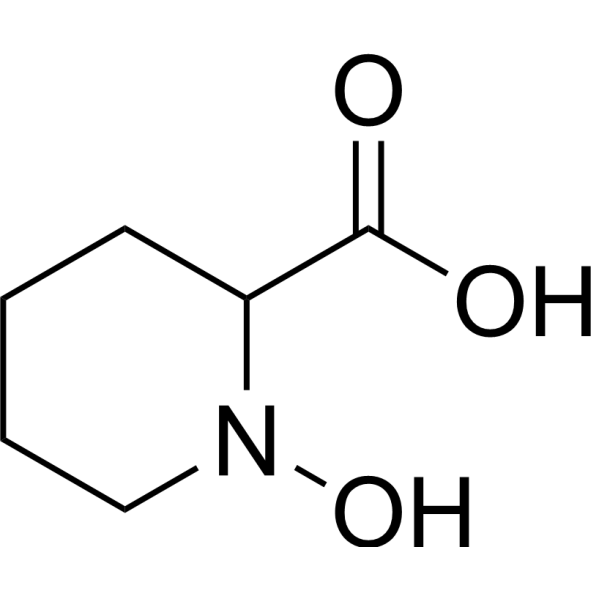
    N-Hydroxypipecolic acid
    5 Publications Verification

    1-Hydroxy-2-piperidinecarboxylic acid; NHP

    Bacterial Inflammation/Immunology
    N-Hydroxypipecolic acid (1-Hydroxy-2-piperidinecarboxylic acid), a plant metabolite and a systemic acquired resistance (SAR) regulator, orchestrates SAR establishment in concert with the immune signal salicylic acid. N-Hydroxypipecolic acid accumulates systemically in the plant foliage in response to pathogen attack. N-Hydroxypipecolic acid induces SAR to bacterial and oomycete infection .
    N-Hydroxypipecolic acid
  • HY-W004461

    MMTS

    Endogenous Metabolite Bacterial Infection
    S-Methyl thiomethanesulfonate (MMTS) is a sulfur-containing volatile organic compound produced by plants and bacteria and is an effective anti-oomycete agent .
    S-Methyl thiomethanesulfonate
  • HY-N8393

    Bacterial Fungal Infection
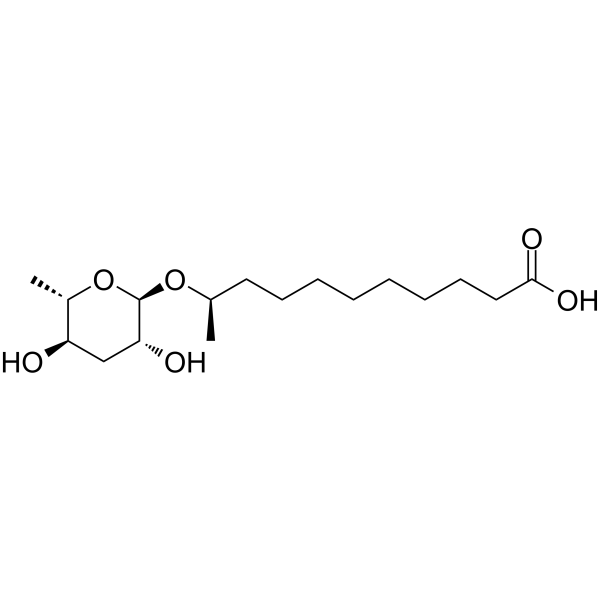
    Ascr#18, an ascaroside, is a hormone of nematodes. Ascr#18 is expressed during nematode development. Ascr#18 increases resistance in Arabidopsis, tomato, potato and barley to viral, bacterial, oomycete, fungal and nematode infections .
    Ascr#18
  • HY-23155
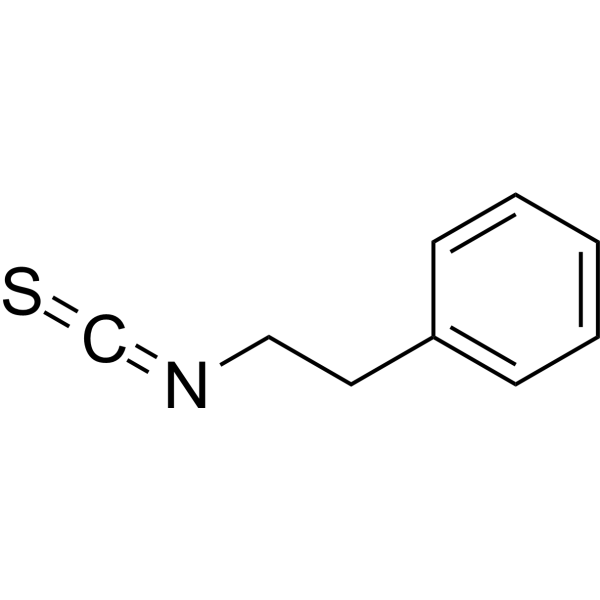
    2-Phenylethyl isothiocyanate
    1 Publications Verification

    2-PE ITC

    Fungal Infection
    2-Phenylethyl isothiocyanate is a potent antifungal agent. 2-Phenylethyl isothiocyanate significantly inhibited spore germination and mycelial growth of Alternaria alternata, with a MIC (minimum inhibitory concentration) of 1.22 mM. The antifungal effect of 2-Phenylethyl isothiocyanate against Alternaria alternate might be via reduction in toxin content and breakdown of cell membrane integrity .
    2-Phenylethyl isothiocyanate
  • HY-W714076

    Fungal Infection Inflammation/Immunology
    Ametoctradin is a potent Qo site inhibitor of bc1 complex in mitochondrial respiration. Ametoctradin is a highly selective and effective Oomycete-specific fungicide that can be used against late blight and downy mildews .
    Ametoctradin
  • HY-125776

    BAS 490 F

    Environmental Pollutants Mitochondrial Metabolism Fungal Infection
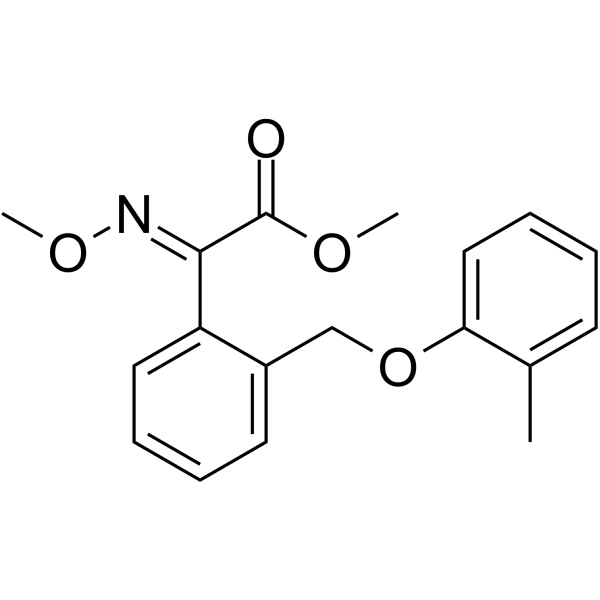
    Kresoxim-methyl (BAS 490 F), a Strobilurin-based fungicide, inhibits the respiration at the complex III (cytochrome bc1 complex). Kresoxim-methyl binds to complex III from yeast with an apparent Kd of 0.07 μM proving a high affinity for this enzyme .
    Kresoxim-methyl
  • HY-168398

    Endogenous Metabolite Infection
    9(S),12(S),13(S)-TriHODE is a plant oxylipin and trihydroxylated fatty acid. 9(S),12(S),13(S)-TriHODE can be used in research on bacterial infection and fungal infection .
    9(S),12(S),13(S)-TriHODE
  • HY-B2008

    DPX-JE874

    Environmental Pollutants Fungal Infection
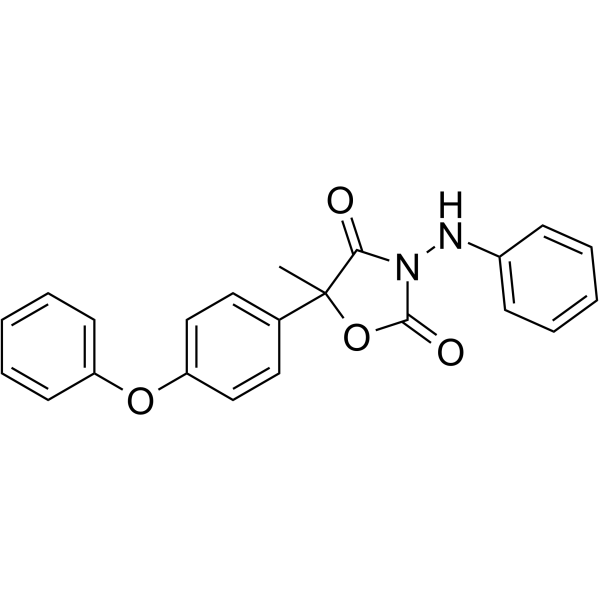
    Famoxadone is a fungicide active against various oomycetes. Famoxadone induces rapid lysis of zoospores of P. viticola and P. infestans, and inhibits sporangial differentiation, zoospore release, sporangial germination and mycelial growth. Famoxadone exerts a preventive control effect on plant diseases. Famoxadone can be used in research related to grape downy mildew, potato late blight, tomato late blight and plant oomycete diseases .
    Famoxadone
  • HY-114979

    Antibiotic Fungal Apoptosis Infection Cancer
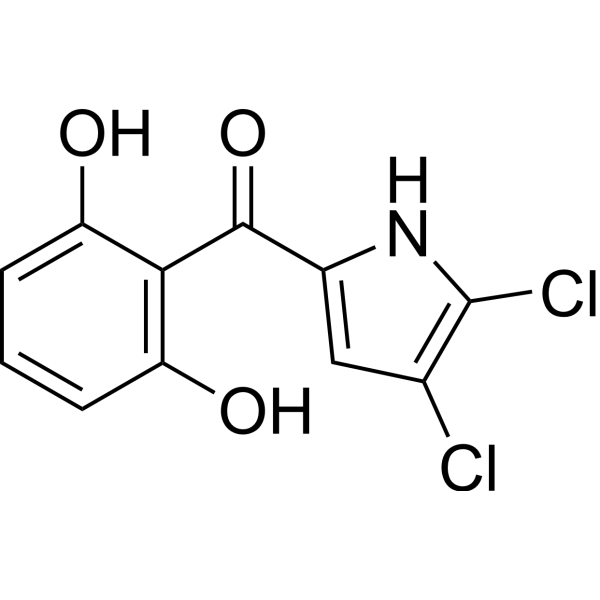
    Pyoluteorin is an antibiotic that inhibits Oomycete fungi, including the plant pathogen Pythium ultimum, and suppresses plant diseases caused by this fungus . Pyoluteorin induces human triple-negative breast cancer MDA-MB-231 cells apoptosis in vitro. Pyoluteorin can be used for the research of human triple-negative breast cancer .
    Pyoluteorin
  • HY-112176
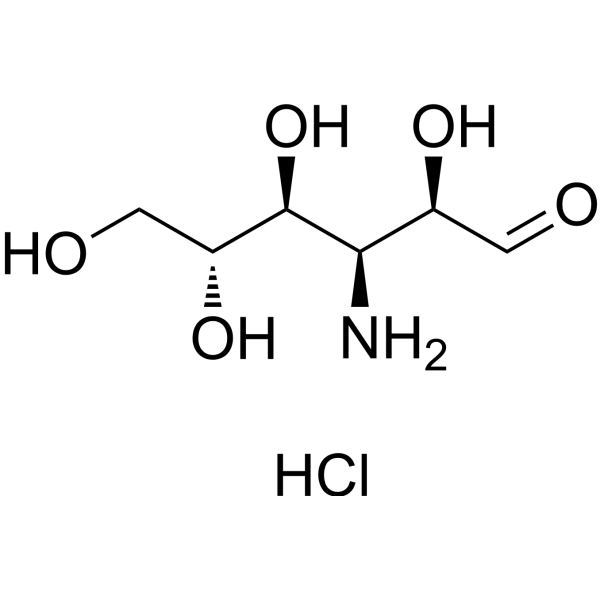
    Kanosamine hydrochloride
    2 Publications Verification

    Fungal Bacterial Antibiotic Infection
    Kanosamine hydrochloride is an antibiotic which inhibits the growth of plant-pathogenic oomycetes, certain fungi and a few bacterial species. Kanosamine inhibits Phytophthora medicaginis M2913 and Aphanomyces euteiches WI-98 with MICs of 25 and 60 μg/mL, respectively.
    Kanosamine hydrochloride
  • HY-B2053

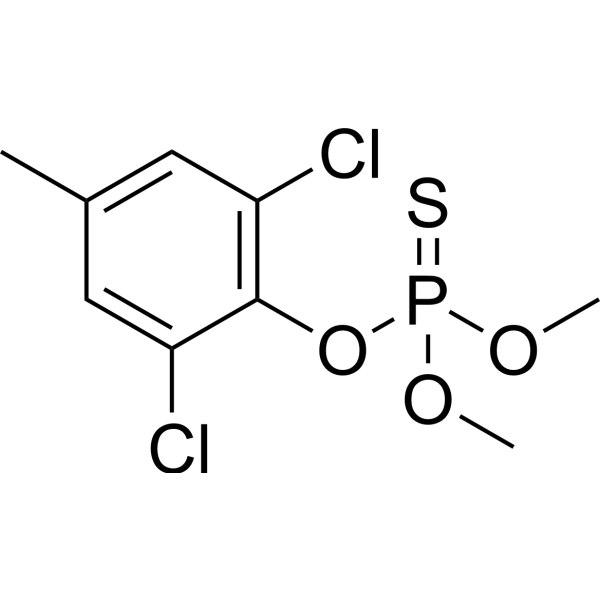
    Fungal Infection
    Tolclofos-methyl is an organophosphorus fungicide. Tolclofos-methyl undergoes photoinduced oxidative degradation to form oxo-analog derivatives. Tolclofos-methyl inhibits spore division in fungi and oomycetes, induces cytoplasmic leakage, and interferes with flagellar movement. Tolclofos-methyl is rapidly metabolized and excreted in rodents. Tolclofos-methyl can be used in studies related to fungal infections .
    Tolclofos-methyl
  • HY-118448

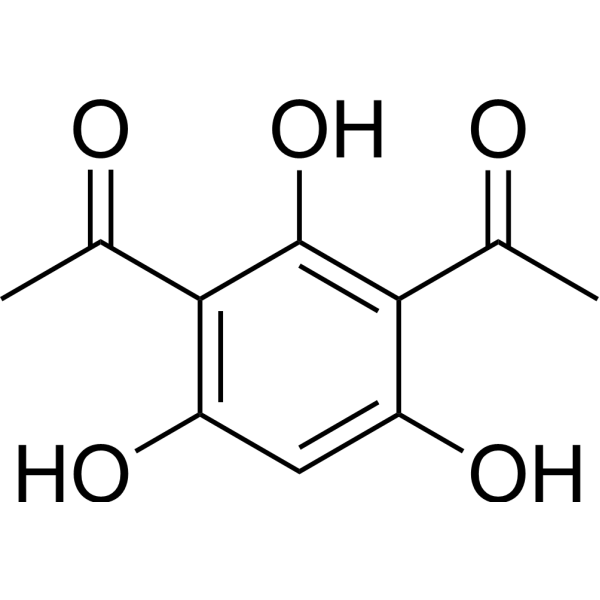
    Antibiotic Bacterial Fungal Parasite Infection
    2,4-Diacetylphloroglucinol is a polyketide antibiotic produced by Pseudomonas fluorescens. 2,4-Diacetylphloroglucinol exhibits broad-spectrum toxicity against various organisms such as bacteria, fungi, oomycetes, and nematodes. 2,4-Diacetylphloroglucinol can also inhibit plant pathogens and affect the root development of tomato seedlings .
    2,4-Diacetylphloroglucinol
  • HY-107492

    Intego solo

    Microtubule/Tubulin Fungal Infection
    Ethaboxam is a β-tubulin inhibitor that can be used as anti-oomycete fungicide .
    Ethaboxam
  • HY-N10751

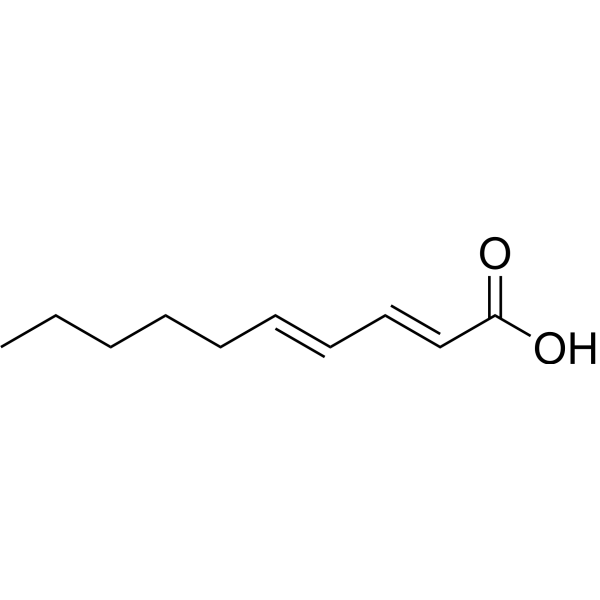
    Bacterial Infection
    (2E,4E)-Decadienoic acid is an anti-oomycete aliphatic compound that can be found in Coculture of Bacillus subtilis and Trichoderma asperellum .
    (2E,4E)-Decadienoic acid
  • HY-175038

    Fungal Infection
    Oomycete-IN-1 (Compound X4) is a selective inhibitor targeting the PH domain of PcORP1 in Phytophthora species. Oomycete-IN-1 shows EC50 values ranging from 1 to 4 μg/mL against six oomycetes. Oomycete-IN-1 disrupts lipid transport and metabolism, leading to mycelium hyperplasia and cell membrane ruffling in P. capsici. Oomycete-IN-1 can be used in the research of preventing and controlling oomycete diseases (such as P. capsici infection) .
    Oomycete-IN-1
  • HY-123155

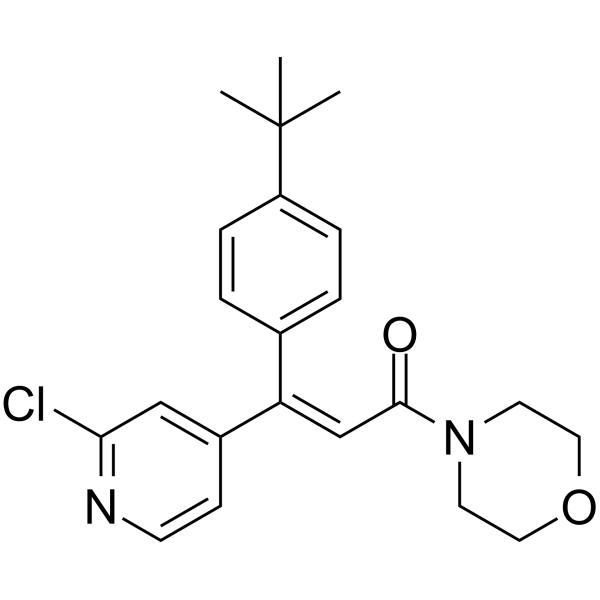
    Fungal Infection
    Pyrimorph is a fungicide with excellent antifungal activity against oomycetes .
    Pyrimorph
  • HY-125652

    Antibiotic Infection
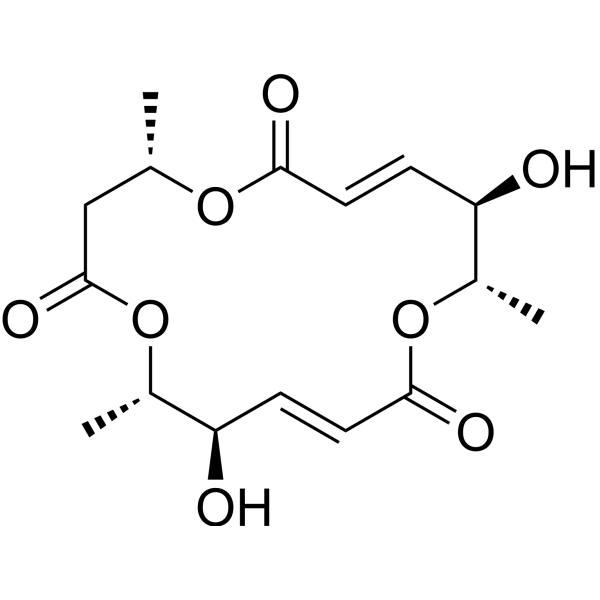
    Macrosphelide A is a macrolide antibiotic. Macrosphelide A inhibits growth of some ascomycetes, basidiomycetes, oomycetes and all four Gram-positive bacteria tested, including the medically important Staphylococcus aureus with a MIC of ≤500 μg/mL .
    Macrosphelide A
  • HY-120921

    RH-7281

    Fungal Microtubule/Tubulin Infection
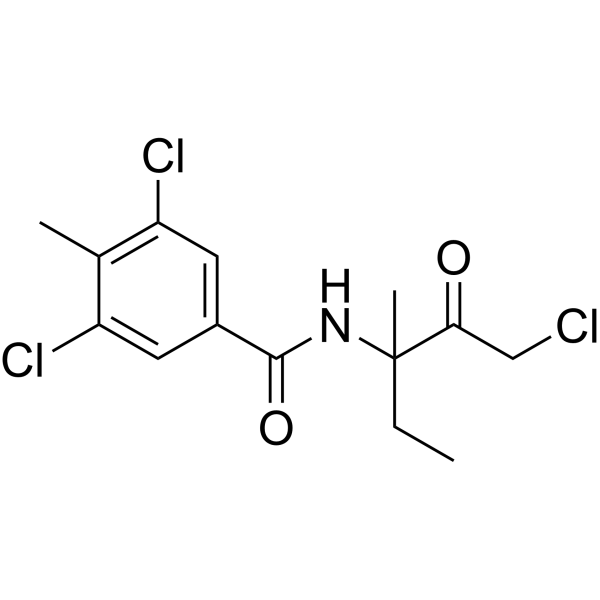
    Zoxamide (RH-7281) is an oomycete Fungicide and covalent β-tubulin inhibitor. RH-7281 inhibits the assembly of tubulin into microtubules in vitro. Zoxamide binds covalently to β-tubulin, disrupting microtubule assembly and the cytoskeleton. Zoxamide blocks nuclear division in germinated hyphae of Phytophthora capsici and inhibits hyphal growth of Phytophthora capsici .
    Zoxamide
  • HY-121214

    Environmental Pollutants Apoptosis Fungal Reactive Oxygen Species (ROS) Mitochondrial Metabolism Infection Cardiovascular Disease
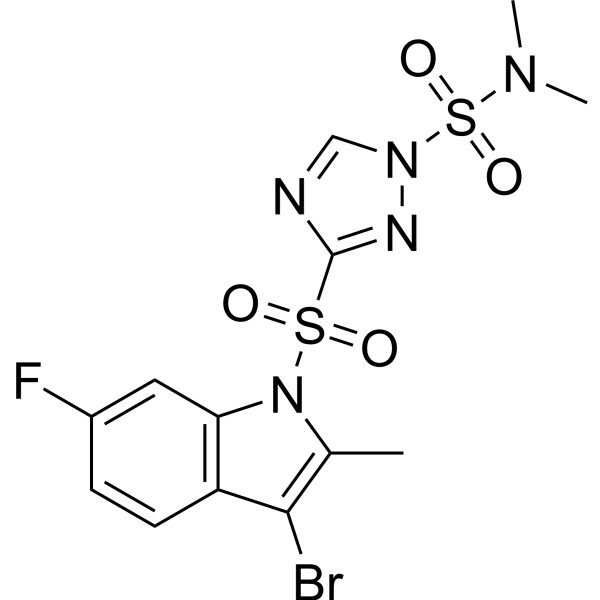
    Amisulbrom is a sulfonamide fungicide used to control oomycete diseases. Amisulbrom inhibits the cytochrome-bc1 complex of the mitochondrial electron transport system.
    Amisulbrom
  • HY-17518A

    (S,S)-IR5885; (S,S)-Valiphenal

    Fungal Infection
    (S,S)-Valifenalate ((S,S)-IR5885) is an acylamino acid fungicide and is used to control a wide range of fungi belonging to the class of Oomycetes. (S,S)-Valifenalate ((S,S)-IR5885) interferes with the cell-wall synthesis thus affecting the growth stages of the pathogens controlled, both outside (on the spores) or inside the plant (on the mycelium) .
    (S,S)-Valifenalate
  • HY-23155R

    2-PE ITC (Standard)

    Fungal Reference Standards Infection
    2-Phenylethyl isothiocyanate (Standard) is the analytical standard of 2-Phenylethyl isothiocyanate. This product is intended for research and analytical applications. 2-Phenylethyl isothiocyanate is a potent antifungal agent. 2-Phenylethyl isothiocyanate significantly inhibited spore germination and mycelial growth of Alternaria alternata, with a MIC (minimum inhibitory concentration) of 1.22 mM. The antifungal effect of 2-Phenylethyl isothiocyanate against Alternaria alternate might be via reduction in toxin content and breakdown of cell membrane integrity .
    2-Phenylethyl isothiocyanate (Standard)
  • HY-120921R

    RH-7281 (Standard)

    Fungal Reference Standards Infection
    Zoxamide (Standard) is the analytical standard of Zoxamide. This product is intended for research and analytical applications. Zoxamide (RH-7281) is an oomycete fungicide. Zoxamide arrests nuclear division in Phytophthora capsici germlings and destroyed the microtubule cytoskeleton .
    Zoxamide (Standard)
  • HY-W714076R

    Reference Standards Fungal Infection Inflammation/Immunology
    Ametoctradin (Standard) is the analytical standard of Ametoctradin. This product is intended for research and analytical applications. Ametoctradin is a potent Qo site inhibitor of bc1 complex in mitochondrial respiration. Ametoctradin is a highly selective and effective Oomycete-specific fungicide that can be used against late blight and downy mildews .
    Ametoctradin (Standard)
  • HY-N14441

    Fungal Infection
    Haliangicin A has anti-filamentous fungi activity, and it also has effect on oomycetes, but has no antibacterial activity .
    Haliangicin A
  • HY-N14443

    Fungal Infection
    Haliangicin C has anti-filamentous fungi activity, and it also has effect on oomycetes, but has no antibacterial activity .
    Haliangicin C
  • HY-N14444

    Fungal Infection
    Haliangicin D has anti-filamentous fungi activity, and it also has effect on oomycetes, but has no antibacterial activity .
    Haliangicin D
  • HY-N14442

    Fungal Infection
    Haliangicin B has anti-filamentous fungi activity, and it also has effect on oomycetes, but has no antibacterial activity .
    Haliangicin B
  • HY-B2008R

    DPX-JE874 (Standard)

    Reference Standards Fungal Infection
    Famoxadone (Standard) is the analytical standard of Famoxadone. This product is intended for research and analytical applications. Famoxadone is a fungicide active against various oomycetes. Famoxadone induces rapid lysis of zoospores of P. viticola and P. infestans, and inhibits sporangial differentiation, zoospore release, sporangial germination and mycelial growth. Famoxadone exerts a preventive control effect on plant diseases. Famoxadone can be used in research related to grape downy mildew, potato late blight, tomato late blight and plant oomycete diseases .
    Famoxadone (Standard)
  • HY-W705792

    Intego solo-d5

    Isotope-Labeled Compounds Microtubule/Tubulin Fungal Infection
    Ethaboxam-d5 (Intego solo-d5) is the deuterium labeled Ethaboxam (HY-107492). Ethaboxam is a β-tubulin inhibitor that can be used as anti-oomycete fungicide .
    Ethaboxam-d5
  • HY-121801

    Fungal Microtubule/Tubulin Mitosis Infection
    Zarilamid is a fungicide which is active against a broad spectrum of Oomycete fungi. Zarilamid inhibits nuclear division in germinating zoospore cysts of Phytophthora capsici. Zarilamide inhibits growth of tobacco roots and causes swelling of the root tips, destructs microtubule cytoskeleton and inhibits mitosis .
    Zarilamid
  • HY-125776R

    BAS 490 F (Standard)

    Reference Standards Fungal Mitochondrial Metabolism Infection
    Kresoxim-methyl (Standard) is the analytical standard of Kresoxim-methyl. This product is intended for research and analytical applications. Kresoxim-methyl (BAS 490 F), a Strobilurin-based fungicide, inhibits the respiration at the complex III (cytochrome bc1 complex). Kresoxim-methyl binds to complex III from yeast with an apparent Kd of 0.07 μM proving a high affinity for this enzyme .
    Kresoxim-methyl (Standard)
  • HY-N7378A

    1-Hydroxy-2-piperidinecarboxylic acid potassium; NHP potassium

    Bacterial Inflammation/Immunology
    N-Hydroxypipecolic acid potassium (1-Hydroxy-2-piperidinecarboxylic acid potassium), a plant metabolite and a systemic acquired resistance (SAR) regulator, orchestrates SAR establishment in concert with the immune signal salicylic acid. N-Hydroxypipecolic acid potassium accumulates systemically in the plant foliage in response to pathogen attack. N-Hydroxypipecolic acid potassium induces SAR to bacterial and oomycete infection .
    N-Hydroxypipecolic acid potassium
  • HY-124894

    Fungal Infection
    (+)-Benalaxyl is a broad-spectrum benzamide fungicide. (+)-Benalaxyl inhibits the growth of the freshwater algae S. obliquus, with an EC50 value of 8.441 mg/L. (+)-Benalaxyl can induce the production of chlorophyll a and b, as well as increase the activity of superoxide dismutase (SOD) and the generation of malondialdehyde (MDA). (+)-Benalaxyl has inhibitory effects on catalase (CAT). (+)-Benalaxyl is effective against diseases caused by oomycetes .
    (+)-Benalaxyl
  • HY-118448R

    Reference Standards Antibiotic Bacterial Fungal Parasite Infection
    2,4-Diacetylphloroglucinol (Standard) is the analytical standard of 2,4-Diacetylphloroglucinol (HY-118448). This product is intended for research and analytical applications. 2,4-Diacetylphloroglucinol is a polyketide antibiotic produced by Pseudomonas fluorescens. 2,4-Diacetylphloroglucinol exhibits broad-spectrum toxicity against various organisms such as bacteria, fungi, oomycetes, and nematodes. 2,4-Diacetylphloroglucinol can also inhibit plant pathogens and affect the root development of tomato seedlings .
    2,4-Diacetylphloroglucinol (Standard)
  • HY-B2053R

    Reference Standards Bacterial Infection
    Tolclofos-methyl (Standard) is the analytical standard of Tolclofos-methyl (HY-B2053). This product is intended for research and analytical applications. Tolclofos-methyl is an organophosphorus fungicide. Tolclofos-methyl undergoes photoinduced oxidative degradation to form oxo-analog derivatives. Tolclofos-methyl inhibits spore division in fungi and oomycetes, induces cytoplasmic leakage, and interferes with flagellar movement. Tolclofos-methyl is rapidly metabolized and excreted in rodents. Tolclofos-methyl can be used in studies related to fungal infections .
    Tolclofos-methyl (Standard)
  • HY-133087

    Fungal Infection
    Oxathiapiprolin is an anti-phytopathogenic oomycete agent. Oxathiapiprolin inhibits mycelial growth, sporangium production, zoospore release and zoospore motility in specific oomycetes. Oxathiapiprolin exhibits both protective and therapeutic activities against Phytophthora capsici infection in pepper plants. Oxathiapiprolin can be used in studies related to plant diseases .
    Oxathiapiprolin
  • HY-N8393R

    Bacterial Reference Standards Fungal Infection
    Ascr#18 (Standard) is the analytical standard of Ascr#18 (HY-N8393). This product is intended for research and analytical applications. Ascr#18, an ascaroside, is a hormone of nematodes. Ascr#18 is expressed during nematode development. Ascr#18 increases resistance in Arabidopsis, tomato, potato and barley to viral, bacterial, oomycete, fungal and nematode infections .
    Ascr#18 (Standard)
  • HY-N19663

    Fungal Infection Others
    12-O-Methyl chebulic acid is an antifungal agent, methylated chebulic acid derivative and probable isolation artifact from Terminalia dhofarica leaves. 12-O-Methyl chebulic acid inhibits growth of several plant pathogens. 12-O-Methyl chebulic acid can be used for the research of phytopathogenic fungal infection and phytopathogenic oomycete infection .
    12-O-Methyl chebulic acid
  • HY-W043791

    Fungal Infection
    4-Dodecyl-2,6-dimethylmorpholine is a morpholine fungicide and plant-growth regulator. 4-Dodecyl-2,6-dimethylmorpholine targets phytopathogenic fungi including Oomycetes, Ascomycetes and Basidiomycetes. 4-Dodecyl-2,6-dimethylmorpholine acts synergistically with acylalanine fungicides to enhance antifungal efficacy and regulate plant growth. 4-Dodecyl-2,6-dimethylmorpholine can be applied to the study of plant fungal diseases and phytopathogenic fungal infections .
    4-Dodecyl-2,6-dimethylmorpholine
  • HY-170378

    Fungal Infection
    Laccase-IN-5 (Compound 2b) is the inhibitor for Laccase with an IC50 of 0.82 μM. Laccase-IN-5 increases the cell membrane permeability, limits the growth of hyphae, destorys the cell wall, and induces oxidative stress responses. Laccase-IN-5 exhibits antifungal activity against various plant pathogenic fungi and oomycetes, inhibits B. dothidea with an EC50 of 0.96 mg/L .
    Laccase-IN-5
  • HY-N7378R

    1-Hydroxy-2-piperidinecarboxylic acid (Standard); NHP (Standard)

    Bacterial Reference Standards Inflammation/Immunology
    N-Hydroxypipecolic acid (Standard) (1-Hydroxy-2-piperidinecarboxylic acid (Standard); NHP (Standard)) is the analytical standard of N-Hydroxypipecolic acid (HY-N7378). This product is intended for research and analytical applications. N-Hydroxypipecolic acid (1-Hydroxy-2-piperidinecarboxylic acid), a plant metabolite and a systemic acquired resistance (SAR) regulator, orchestrates SAR establishment in concert with the immune signal salicylic acid. N-Hydroxypipecolic acid accumulates systemically in the plant foliage in response to pathogen attack. N-Hydroxypipecolic acid induces SAR to bacterial and oomycete infection .
    N-Hydroxypipecolic acid (Standard)
  • HY-183705

    Fungal Mitochondrial Metabolism ATP Synthase Infection
    Antimicrobial agent-50 (Compound C2) is an anti-oomycete and Fungicidal agent. Antimicrobial agent-50 inhibits the activity of Mitochondrial respiratory chain complex III with an IC50 of 6.05 mg/L. Antimicrobial agent-50 inhibits ATP synthesis. Antimicrobial agent-50 exhibits protective activity against Phytophthora capsici in vivo. Antimicrobial agent-50 potently inhibits mycelial growth of Gaeumannomyces graminis, Rhizoctonia solani and Phytophthora capsici, with EC50 values of 2.97 mg/L, 1.86 mg/L and 0.74 mg/L, respectively .
    Antimicrobial agent-50
  • HY-182471

    Fungal Infection
    Aminopyrifen is a GWT-1 inhibitor. Aminopyrifen inhibits the inositol acylation of phosphatidylinositol, disrupting the maturation process of GPI-anchored proteins and the integrity of fungal cell walls. Aminopyrifen strongly inhibits germ tube elongation of Botrytis cinerea, delays spore germination, prevents appressorium formation, and blocks the infection of plant tissues by pathogenic fungi. Aminopyrifen is effective against field populations of eggplant gray mold and cucumber powdery mildew, and can be used for research on various plant fungal diseases such as gray mold and powdery mildew .
    Aminopyrifen
  • HY-165191

    Fungal Infection
    LY214352 is an antifungal agent that targets dihydroorotate dehydrogenase (DHO-DH). LY214352 exhibits antifungal activity against Aspergillus nidulans and agriculturally important ascomycete fungi. LY214352 can be used in studies related to grape gray mold, apple scab, and fungal infections caused by ascomycetes .
    LY214352
  • HY-N19785

    Fungal Infection
    11,12-Dimethyl chebulate is a phenolic acid chebulate derivative that can be found in Acer saccharum fall leaves and Terminalia dhofarica leaf extracts. 11,12-Dimethyl exhibits antifungal activity and DPPH scavenging activity.11,12-Dimethyl chebulate can be used for the research of fungal infection .
    11,12-Dimethyl chebulate
  • HY-N19784

    Fungal Infection
    12,13-Dimethyl chebulate is a methylated chebulic acid derivative that can be found in sugar maple fall leaves and Terminalia dhofarica leaves. 12,13-Dimethyl chebulate exhibits antifungal activity and DPPH scavenging activity. 12,13-Dimethyl chebulate can be used for the research of fungal infection .
    12,13-Dimethyl chebulate

Inquiry Online

Your information is safe with us. * Required Fields.

Salutation


Country or Region *

Applicant Name *


Organization Name *

Department *


Email Address *


Product Name *

Cat. No.


Requested quantity *

Phone Number *


Remarks

Inquiry Online

Inquiry Information

Product Name:
Cat. No.:
Quantity:
MCE Japan Authorized Agent:

